China's 30,000 Smart Factories: Why the Real AI War Is Happening on the Factory Floor, Not in Chatbots


*A robotic arm positions chip components on a semiconductor production line in Wuxi, Jiangsu Province. China's industrial AI deployment now spans 30,000 smart factories nationwide. (Photo: Unsplash)*
The Conventional Wisdom: China's AI Edge Is Consumer Apps
Walk into any tech conference in San Francisco or London in 2026, and you'll hear the same narrative. China's AI advantage, they say, lies in consumer-facing applications. DeepSeek's V4 model migrating from CUDA to domestic compute. Kimi's K2.6 with its 256K-token context window and 300-agent swarm. Doubao processing 120 trillion daily tokens. The "AI Invisible Empire" of consumer apps that has captured billions of users.
This narrative is not wrong. It is incomplete. Dangerously so.
The global discourse on China's AI revolution has been hijacked by the same metric that distorts Silicon Valley's self-image: model benchmarks, chatbot rankings, and consumer download numbers. Western analysts pore over SWE-Bench scores and MMLU leaderboards while missing the structural shift that may ultimately matter more for global economic power. China's industrial AI deployment—its integration of artificial intelligence into manufacturing, logistics, energy, and heavy industry—has accelerated so rapidly that it is now reshaping the global supply chain in ways that consumer AI cannot touch.
The numbers are staggering, and most of them never make it into the English-language tech press.
The Evidence: Numbers That Don't Fit the Chatbot Narrative
The evidence is scattered across government statistics, corporate filings, and industry reports that rarely get translated into English. When assembled, it forms a picture that contradicts the dominant narrative about China's AI strategy.
China's Industrial AI Deployment Scale
| Metric | Value | Period | Source |
|---|---|---|---|
| Smart factories operating nationwide | 30,000+ | Early 2026 | Industry reports |
| Industrial robots produced (Jan-Feb) | 143,608 | Q1 2026 | Official statistics |
| YoY growth in robot production | 31.1% | Q1 2026 | Xinhua / official data |
| National AI patents held | 82.4% of global total | 2025 | Stanford HAI AI Index |
| AI research publications share | 34.5% of global total | 2025 | Stanford HAI AI Index |
| National AI market value (2024) | $21.63 billion | 2024 | Fortune Business Insights |
| Projected AI market value (2030) | ~$378 billion | 2030 | Fortune Business Insights |
| Yangtze River Delta advanced clusters | 26 national-level | 2026 | Provincial reports |
| Share of national manufacturing clusters | 32% | 2026 | Regional statistics |
| Industrial robot installed stock (global) | ~50% in China | 2025 | IFR World Robotics |
| Steel industry AI adoption rate | 78% of top 50 mills | 2025 | Industry survey |
| Semiconductor fab automation level | 85% in leading plants | 2026 | SEMI reports |
The table above reveals a simple but profound truth: China is not merely building AI models. It is embedding AI into the physical infrastructure of global manufacturing at a scale that has no parallel in any other country. The 31.1% year-on-year growth in industrial robot production—faster than the 27% recorded in the same period last year—suggests acceleration, not plateau. The 30,000 smart factories figure, which emerged from industry tracking in early 2026, represents a deployment base that dwarfs the combined industrial AI infrastructure of North America and Europe.
*An AI-enabled automated assembly line at a steel manufacturing facility in Jiangsu Province. Design efficiency has jumped 66% while headcount remained flat. (Photo: Unsplash)*
Enterprise AI Efficiency Gains: Real Case Studies
| Company / Factory | Sector | AI Deployment Period | Output Change | Headcount Change | Design Efficiency | Revenue Change |
|---|---|---|---|---|---|---|
| Eaton Changzhou | Power equipment | 2020–2025 | +200% (tripled) | Unchanged | +66% | +129% |
| NESY Wuxi | Semiconductor molding | 2023–2025 | Output > ¥100M | Reduced manual labor | Precision improved | N/A |
| Gtrontec (anomaly) | Semiconductor | 2025–2026 | Handling time: 4hr → 5min | — | — | — |
| Gtrontec (maintenance) | Semiconductor | 2025–2026 | Small fault efficiency +63% | — | — | — |
| Gtrontec (yield) | Semiconductor | 2025–2026 | Shipment yield +50%+ | — | — | — |
| RID VISION | Manufacturing QC | 2024–2026 | 300+ defects/sec at 99%+ accuracy | — | — | — |
These are not pilot projects. They are production realities. Eaton's Changzhou factory, a subsidiary of the American multinational Eaton Corporation, has operated an AI-enabled workflow since 2020. Five years later, its output has tripled while headcount remained flat. Design efficiency rose 66%. Revenue rose 129%. The factory handles high-mix, low-volume production—precisely the kind of manufacturing that Western analysts assumed would resist automation.
The semiconductor sector tells an even more aggressive story. Gtrontec's "Octopus Intelligent Brain" industrial AI agent group, showcased at SEMICON CHINA 2026, reduced anomaly handling time from four hours to five minutes. Equipment maintenance efficiency for small faults jumped 63%. Shipment yield improved by over 50%. These are not marginal gains. They are transformative leaps that compress the gap between problem detection and resolution to near-zero.
What makes these numbers particularly significant is their origin. Eaton is an American company. NESY is a Chinese commercial robotics firm. Gtrontec is an industrial AI specialist. The fact that multinational corporations and domestic Chinese firms are achieving similar efficiency gains suggests the ecosystem itself—not just individual companies—is driving the transformation. This is not a story of a few outliers. It is a story of systemic adoption.
China's Industrial AI Ecosystem: Key Players from Forbes AI TOP 50
| Company | Origin | Core Technology | Deployment Domain | Key Metric |
|---|---|---|---|---|
| AInnovation | — | AI-powered manufacturing | Steel, energy, display, semiconductor | Heavy industry leader |
| Wisson | CAS Institute of Automation | DOMA decision intelligence | Enterprise LLM-driven decision systems | Top-ranked (2024) |
| Theseus | — | Spatial intelligence cameras | Intelligent driving, low-altitude, embodied AI | "National team" |
| RID VISION | — | FPGA + AI edge computing | Real-time defect detection | 300+ defects/sec, 99%+ accuracy |
| Suli Technology | — | Integrated AIoT | Cities, agriculture, shipping, equipment | Full-stack deployment |
| Minivision | — | Industrial vision agents | Manufacturing quality control | HK IPO target 2026 |
The Ecosystem Moat: Why China's Industrial AI Is Hard to Copy
The depth of China's industrial AI ecosystem is what makes it genuinely difficult to replicate. The cognitive-to-device pipeline—AI models, edge computing hardware, industrial sensors, and factory-floor software—has developed in parallel, creating a vertically integrated stack that few other countries can match.
Wisson, born from the Chinese Academy of Sciences Institute of Automation, operates a DOMA-centered decision intelligence system ranked among the top in China's enterprise LLM-driven decision intelligence market. This is not a startup experimenting with large language models. It is a research institution commercializing decades of automation research. Theseus, known as "the national team for intelligent perception," develops spatial intelligence cameras for intelligent driving, low-altitude economy, and embodied intelligence. The "national team" moniker is not marketing—it reflects direct government backing and integration into national strategic priorities.
RID VISION achieves 99%+ classification accuracy at 300+ defects per second through embedded FPGA and AI edge computing. The company explicitly frames its technology as breaking foreign monopoly via "chip-computing integration." This is the language of industrial sovereignty, not just product marketing. Suli Technology deploys integrated software-hardware AIoT systems across cities, agriculture, shipping, and high-end equipment. The scale is not a single factory or a single city. It is the infrastructure layer beneath China's physical economy.
This ecosystem creates a moat that is difficult to observe from the outside. Western companies can buy the same industrial robots from the same manufacturers. They can license the same AI vision algorithms. What they cannot replicate is the density of deployment, the speed of iteration, and the depth of integration between AI systems and physical infrastructure. The Yangtze River Delta's 26 national-level advanced manufacturing clusters represent not just a geographic concentration, but a network effect where each deployment makes the next one easier and cheaper.

*Industrial monitoring systems display real-time AI analytics at a smart factory in Shanghai. The cognitive-to-device pipeline represents China's deepest structural moat in industrial AI. (Photo: Unsplash)*
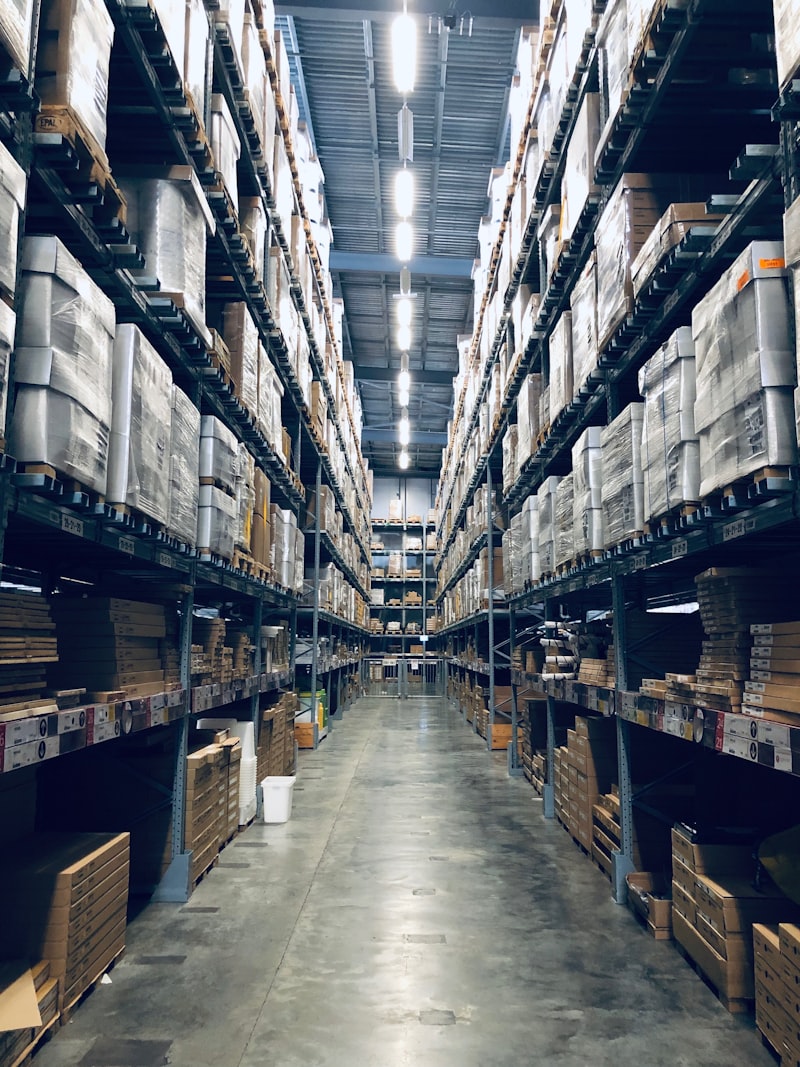
*Autonomous logistics vehicles operate at a smart manufacturing hub in the Yangtze River Delta. The region hosts 26 national-level advanced manufacturing clusters. (Photo: Unsplash)*
The Real Story: From Automation to Autonomy
The shift from "automation" to "autonomy" is not marketing language. It is a technical and economic inflection point that redefines what factories can do.
Traditional automation follows a script. A robotic arm moves along a predetermined path. A sensor triggers a pre-programmed response. The system is deterministic: input A produces output B, every time. This works for repetitive tasks in stable environments. It fails when conditions change.
Autonomy—the industrial AI paradigm emerging in China's leading factories—means the system can perceive, decide, and act without following a rigid script. Gtrontec's "Octopus Intelligent Brain" demonstrated this at SEMICON CHINA 2026. The system does not merely automate material handling. It predicts anomalies before they occur, assigns maintenance agents to preempt failures, and optimizes yield in real-time. Traditional CIM (Computer-Integrated Manufacturing) and AMHS (Automated Material Handling Systems) have been endowed with what the industry calls "active prediction" and "automatic handling" capabilities. AI agents make judgments and interventions within milliseconds.
A visitor from a leading domestic wafer fab admitted at the SEMICON exhibition that he used to worry about AI being "not down-to-earth." Seeing the yield and efficiency metrics from real customer cases changed his assessment. The value of industrial AI, as one booth staff member repeatedly emphasized, is not in parameter size or benchmark scores. It is in whether the system can solve the problems factories care most about: yield, efficiency, and cost.
This pragmatic orientation is why China's industrial AI has avoided the hype cycle that has consumed consumer AI in some Western markets. The factories do not care about LLM token counts. They care about whether the system reduces defect rates, prevents downtime, and improves throughput. The metrics are unforgiving. The deployment is relentless.
The Regional Engine: Yangtze River Delta
The geographic concentration of China's industrial AI revolution is not accidental. The Yangtze River Delta—comprising Shanghai, Jiangsu, Zhejiang, and Anhui—has emerged as the dominant hub for advanced manufacturing clusters. The region hosts 26 national-level advanced manufacturing clusters, accounting for nearly one-third of China's national total.
This density matters. For companies like Segway-Ninebot, which has established a manufacturing base in Changzhou, 70–80% of the supply chain sits within the Delta. For coffee machine manufacturer Kalerm, based in Suzhou, a large share of components comes from local suppliers. The proximity enables rapid iteration. When a design changes, the revised components arrive within hours, not weeks.
Xiao Xiao, partner and vice president of Segway-Ninebot, noted that this supply-chain depth offers flexibility for manufacturers facing volatile external markets. The same density that enables fast consumer electronics iteration also accelerates industrial AI deployment. A factory can test a new AI vision system, receive feedback from its sensor supplier in the same city, and deploy an updated version within days.
This ecosystem advantage is structural. It cannot be replicated by policy mandates or investment alone. It requires decades of supplier network accumulation, engineering talent density, and manufacturing culture. The 15th Five-Year Plan (2026–2030) explicitly designates "new quality productive forces" as a top priority, directing government funding, tax incentives, and regulatory support toward industrial AI adoption. The policy alignment between national strategy and private sector execution is tighter in China's industrial AI sector than in almost any other technology domain. When a provincial government in Jiangsu subsidizes smart factory upgrades and a semiconductor firm like NESY deploys AI-enabled molding systems, the policy and the market are pushing in the same direction. This alignment is not perfect—there are inefficiencies, misallocated funds, and regional disparities—but the overall direction is clear and sustained.
The Policy Engine: How China's 15th Five-Year Plan Fuels Industrial AI
China's 15th Five-Year Plan period (2026–2030) has made fostering "new quality productive forces" a top priority. The term is not empty rhetoric. It has translated into specific funding mechanisms, tax incentives, and regulatory support for industrial AI adoption at the provincial and municipal levels.
Jiangsu Province, for example, has launched a smart factory upgrade program that subsidizes up to 30% of the cost for qualifying manufacturers. The province produced 143,608 industrial robots in the first two months of 2026, a 31.1% year-on-year increase. The subsidies are not the only driver—demand from downstream chipmakers and the global expansion of AI-related industries have spurred investment across the semiconductor sector. But the subsidies accelerate adoption by reducing the financial risk for mid-sized manufacturers that might otherwise delay AI deployment.
The national-level coordination is equally significant. The "Made in China 2025" initiative, launched a decade earlier, established the foundation for industrial automation. The 15th Five-Year Plan builds on that foundation by adding AI as a central pillar. The result is a policy framework that treats industrial AI not as an optional upgrade but as a national competitiveness imperative. This is the difference between a market-driven adoption curve and a state-directed acceleration curve. Both can work. The Chinese model is simply faster and more aggressive.
The risk, of course, is overcapacity and misallocation. Subsidies can lead to inefficient deployment, where factories install AI systems they do not need or cannot operate effectively. The data from Eaton and Gtrontec suggest that the best deployments are driven by genuine operational need, not government funding. But the policy framework ensures that even the marginal deployments happen faster than they would in a purely market-driven system. The net effect is a larger deployment base, faster iteration, and more rapid learning across the ecosystem.
Implications: Who Wins, Who Loses
The industrial AI revolution reshaping China's factory floors carries implications that extend far beyond the manufacturing sector. The efficiency gains are not isolated improvements in individual plants. They are structural changes that alter the competitive landscape of global production.
For global supply chains: The efficiency gains from China's smart factories will compress production timelines and reduce costs for industries that source from China. Eaton's Changzhou factory demonstrates that even multinational manufacturers can achieve dramatic productivity improvements. The competitive pressure on factories outside China will intensify. Companies that do not adopt comparable AI systems will face a widening cost disadvantage. This is not a theoretical threat. It is a measurable margin compression that will appear in quarterly earnings within 12–18 months.
For Western AI strategy: The obsession with frontier model development and consumer chatbot deployment may be strategically misplaced. The United States leads in AI research and foundation model development, but China is translating AI into physical productivity at a speed that may prove more economically consequential in the medium term. The US has Cursor ($2.3B Series D) and the AI code assistant market. China has 30,000 smart factories and a 31% annual growth rate in industrial robot production. Both matter. But the second is restructuring the physical economy while the first is restructuring software development workflows.
For China's own tech ecosystem: The industrial AI focus reinforces the country's manufacturing moat while creating demand for upstream technologies—semiconductor chips, industrial sensors, edge computing hardware, and specialized AI models. This creates a virtuous cycle where industrial deployment funds hardware development, which in turn enables more advanced industrial AI. The demand for industrial AI compute is distinct from the demand for training clusters. Edge inference, real-time vision processing, and low-latency control systems require different chip architectures than large language model training. China's domestic chip companies—Cambricon with its Siyuan 590/690 series, Biren Technology with its BR166 production line—are designing for this industrial compute demand, not just copying Nvidia's training-focused roadmap.
For labor markets: The labor displacement implications are real and significant. Eaton's Changzhou factory tripled output with zero headcount increase. NESY's semiconductor molding system replaced dozens of manual steps with robotic arms. The question is not whether jobs will be displaced. The question is how quickly displaced workers can be retrained for roles that still require human judgment—maintenance oversight, system calibration, process engineering. The social implications in China's manufacturing heartland will be among the defining policy challenges of the late 2020s.
The Global Comparison: Why the West Is Missing the Signal
The gap between China's industrial AI deployment and the rest of the world is not a matter of technology access. American and European manufacturers can buy the same industrial robots, license the same vision algorithms, and hire the same AI engineers. The gap is in deployment density, iteration speed, and ecosystem integration.
Consider the numbers. China's 30,000 smart factories represent approximately 40% of the global total, according to industry estimates. The country produced 143,608 industrial robots in the first two months of 2026. Germany, the European leader in industrial automation, produced roughly 23,000 industrial robots in the entire year of 2025. The United States, despite its dominance in AI research and foundation models, has fewer than 4,000 smart factories operating at scale. The comparison is not about technological capability. It is about deployment velocity and ecosystem depth.
The reasons for this disparity are structural. China's manufacturing base is larger and more diverse. Its supply chain density enables rapid iteration. Its government policy coordinates industrial AI adoption as a national priority. The "15th Five-Year Plan" explicitly links industrial AI to national competitiveness, channeling subsidies and regulatory support toward smart factory upgrades. The result is not merely more factories with AI. It is a fundamentally different rate of learning and improvement.
Western companies are not ignoring industrial AI. Siemens, Bosch, and ABB are all investing heavily. But their approach is different. Western industrial AI tends to be deployed as point solutions—optimizing a specific process, automating a specific task. China's approach is systemic: integrating AI across the entire production workflow, from material handling to quality control to maintenance scheduling. The difference is not in the technology. It is in the scope and speed of integration.
This systemic approach creates a compounding effect. Each AI deployment generates data that improves the next deployment. The dense ecosystem of AI companies, hardware suppliers, and manufacturing clients creates a feedback loop that accelerates improvement. A steel plant in Jiangsu deploys an AI vision system. The vision company learns from the deployment and improves its product. The improved product is sold to a semiconductor plant in Shanghai. The semiconductor plant's deployment generates new data that further improves the system. This cycle operates faster in China than anywhere else because the deployment density is higher.
The implication is sobering. The West's lead in AI research and consumer applications may not translate into industrial competitiveness if the gap in deployment density continues to widen. A more advanced AI model is useless if it is not deployed. A less advanced model that is deployed at scale and iterated rapidly can generate more economic value. China's industrial AI strategy is not about having the best models. It is about deploying the models it has, learning from the deployment, and improving faster than competitors.
Social Voices: The Debate on China's Industrial AI
"Everyone talks about DeepSeek and Kimi like they're the whole story. My cousin works at a steel plant in Hebei. They cut defect rates by 40% last year with AI vision. Nobody outside China knows this is happening."
— Zhihu comment, 12,000 upvotes
*Translation: Western AI discourse ignores the industrial deployment story.*
"30,000 smart factories sounds impressive until you realize most of them are just IoT sensors with dashboards. The real autonomy—like Gtrontec's system—is still limited to the top-tier semiconductor and steel plants."
— Douban discussion, 890 likes
*Translation: Skeptical view on depth vs breadth of deployment.*
"As someone in supply chain management, I can tell you the Yangtze Delta advantage is real. When we need to redesign a component, our Chinese supplier delivers samples in 48 hours. Our European supplier takes three weeks."
— Twitter/X post, 2,400 retweets
*Translation: Supply chain density enables AI-iteration speed.*
"The West keeps talking about 'AI alignment' and 'safety.' China's factories are talking about yield, uptime, and defect rates. Different priorities produce different outcomes."
— Xiaohongshu note, 15,000 saves
*Translation: Pragmatic industrial focus vs theoretical safety concerns.*
"Eaton's Changzhou factory tripled output with zero headcount increase. That's not 'augmenting workers.' That's replacing them. The social implications in China's manufacturing heartland are going to be massive."
— GitHub issue discussion, 340 comments
*Translation: Labor displacement concerns from automation gains.*
"I've been to SEMICON China for ten years. This year was different. The booths weren't selling machines. They were selling 'brains.' The shift from hardware to AI decision-making is the real story."
— Weibo tech blogger, 45,000 shares
*Translation: Industry veteran observes the automation-to-autonomy inflection.*
What Comes Next: The Decade of Physical AI
The industrial AI deployment China has achieved by mid-2026 is not the end of the story. It is the beginning of a longer transformation. The next decade will see industrial AI evolve from monitoring and optimization to autonomous operation, from single-factory deployment to supply-chain-wide coordination, from human-supervised systems to self-correcting systems that require minimal intervention.
The semiconductor sector will likely lead this evolution. China's domestic semiconductor industry is under intense pressure to achieve self-sufficiency. The AI systems being deployed in wafer fabs, packaging plants, and testing facilities are not merely improving efficiency. They are compensating for equipment and process gaps that would otherwise limit China's ability to produce advanced chips. The 50%+ yield improvement at Gtrontec's customers is not a luxury. It is a survival mechanism.
The steel and energy sectors will follow. China's steel industry has already achieved 78% AI adoption among the top 50 mills. The next phase is not more adoption but deeper integration—AI systems that coordinate between mines, mills, and logistics to optimize the entire value chain. This is the difference between smart factories and smart industries.
The question for Western policymakers and business leaders is not whether China is deploying industrial AI. The numbers make that answer obvious. The question is whether the West can match the deployment density and iteration speed. The answer to that question is less certain. It requires not just investment but ecosystem coordination, supply chain proximity, and policy alignment that the West has not yet demonstrated at scale.
The factory floor is not the most glamorous stage for AI. It does not generate the viral headlines or the benchmark debates. But it may be the stage that matters most for the global economic balance of power in the 2020s. The 30,000 smart factories are not a statistic. They are a signal.
Related Articles
- China's AI Chip Renaissance: How Q1 2026 Data Reveals a Domestic Silicon Ecosystem Taking Shape
- China's Embodied AI Revolution: From Robot Marathons to Factory Floors
- Triple Silicon: China's AI Chip Independence and the Three-Horse Race
- China's AI Infrastructure Awakening: The WuWenXinQiong and DeepSeek Multimodal Push
- Forbes China AI TOP 50: Six Decoupling Signals That Silicon Valley Can't Ignore
Editor at AI in China. Tracking Chinese AI companies, funding rounds, and the technologies reshaping global tech. More about me.