The Rise of
Chinese AI

Independent analysis of Chinese AI companies, models, and market intelligence — for global investors and builders. Deep dives on DeepSeek, Alibaba, Huawei, ByteDance, and the stack reshaping global technology.


By topic

Browse the archive across the beats we cover — from frontier models to chip sovereignty to the policy shaping it all.

Silicon Diplomacy: How China Is Using APEC to Rewrite the Rules of Global AI
Chips

Silicon Diplomacy: How China Is Using APEC to Rewrite the Rules of Global AI

On November 15, two days before the APEC CEO Summit opened in Shenzhen, China formally proposed artificial intelligence cooperation with the United States. The overture is not a softening of Beijing's AI ambitions — it is their acceleration. Behind the diplomatic language sits a sophisticated strategy: use the world's largest trade forum to legitimize a parallel AI governance architecture that Washington did not design and cannot control.

November 17, 202616 min read
The Canary Just Died: DeepSeek's Compute Rationing Exposes China's AI Famine
Infrastructure

The Canary Just Died: DeepSeek's Compute Rationing Exposes China's AI Famine

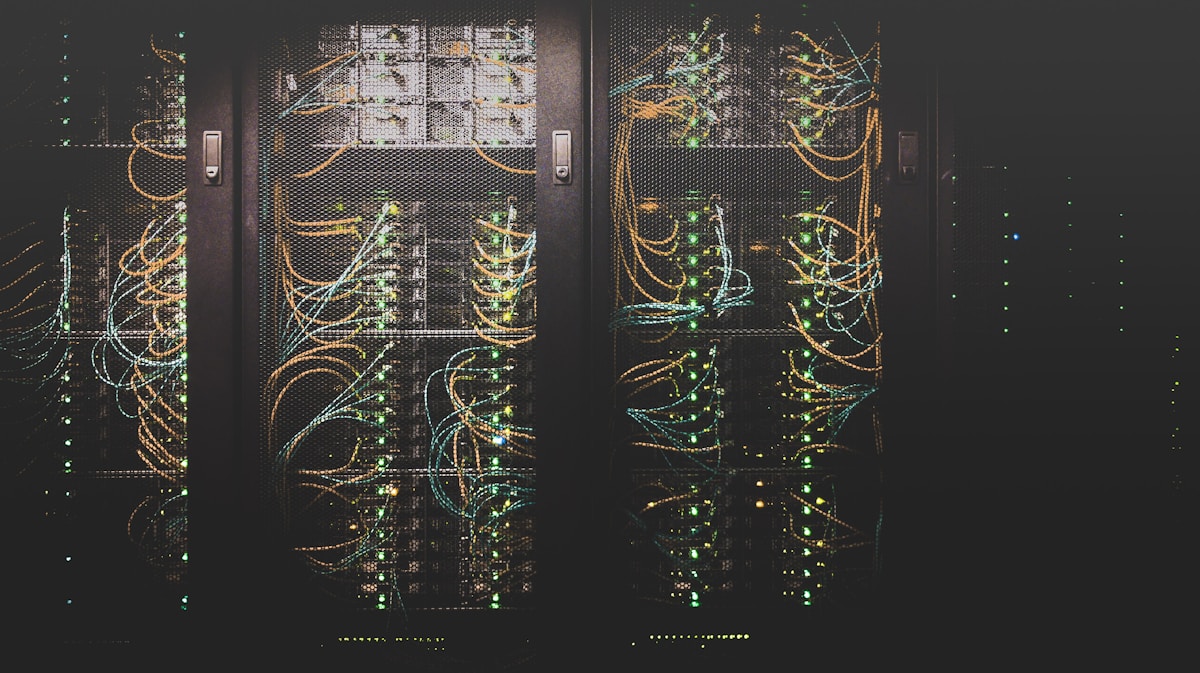
On November 16, DeepSeek users woke up to daily chat quotas, 40,000-character input caps, and week-old conversations silently deleted. The company blamed 'insufficient computing capacity.' The lab that was supposed to prove efficiency could defeat scarcity just became the most visible casualty of China's compute famine — and the consensus narrative about Chinese AI's resilience is due for a rewrite.

November 17, 202616 min read
The Everything API: How DeepSeek Turned AI's Entire App Stack Into a Utility
Models

The Everything API: How DeepSeek Turned AI's Entire App Stack Into a Utility

On Friday night, November 13, DeepSeek did something no frontier lab has done: it opened every capability inside its consumer app — search, OCR, speech recognition, speech synthesis, file parsing — as standalone APIs priced so low they undercut Western rivals by an order of magnitude. ASR at $0.058 per hour. TTS at a fifth of OpenAI's price. The message is not about features. It is about what kind of company DeepSeek intends to be.

November 16, 202616 min read
The Operator: How Tencent's 770B Hy4 Learned to Drive Your Computer
Infrastructure

The Operator: How Tencent's 770B Hy4 Learned to Drive Your Computer

On November 4, Tencent shipped an open-weight model that can read your screen, click your buttons, and beat three rival Chinese models in a blind finance evaluation. The 770-billion-parameter Hy4 is not another chatbot — it is a software operator. What the evidence actually supports, and what remains unproven, tells a more interesting story than the press release.

November 16, 202616 min read
The Silent Launch: How Alibaba Shipped Qwen4-Max and Told You Nothing
Models

The Silent Launch: How Alibaba Shipped Qwen4-Max and Told You Nothing

On November 11, Alibaba opened the Qwen4-Max preview with a one-million-token context window and a 393,216-token output ceiling — and published no benchmarks, no parameter count, and no price. The loudest Chinese AI launch of the year was, deliberately, a quiet one. Here is what the silence means.

November 15, 202616 min read
The Slow Lane: Zhang Yiming Tells ByteDance AI Won't Catch OpenAI Until 2029
Analysis

The Slow Lane: Zhang Yiming Tells ByteDance AI Won't Catch OpenAI Until 2029

In a rare all-hands address to ByteDance's AI team, founder Zhang Yiming said the company can compete with OpenAI and Anthropic — but truly catching the frontier will take until 2029 or 2030 at the earliest. The admission, and the unconventional doctrine behind it, say more about China's AI race than any leaderboard.

November 15, 202616 min read
The Blackwell Fingerprints: Why Nvidia's Scandal Makes Chip Export Controls Unenforceable
Chips

The Blackwell Fingerprints: Why Nvidia's Scandal Makes Chip Export Controls Unenforceable

On November 12, 2026, a forensic analysis proved that six Chinese frontier AI models were initialized on Nvidia's most advanced export-controlled chips. The same day, Jensen Huang resigned as CEO. Conventional wisdom says tighter export controls will follow. The evidence says they are already structurally unenforceable.

November 14, 202616 min read
Two Walls: How US Chip Controls and China's AI Export Controls Became Mirror Images
Chips

Two Walls: How US Chip Controls and China's AI Export Controls Became Mirror Images

On November 15, 2026, the comment period closes on China's first-ever outbound AI export controls. Announcement No. 48 did not appear in a vacuum. It is the mirror image of four years of American restrictions — and together, the two regimes are quietly building the architecture of a bifurcated AI world.

November 14, 202616 min read
After Jensen: How Nvidia's Succession Crisis Rewires China's AI Compute Map
Chips

After Jensen: How Nvidia's Succession Crisis Rewires China's AI Compute Map

Jensen Huang resigned on November 12, ending a 33-year tenure and leaving no successor, no succession plan, and a $300 billion personal guarantee book. For China's AI labs, the loss is not sentimental. The man who informally underwrote their compute supply is gone — and nothing about their hardware future will be negotiated the same way again.

November 14, 202616 min read

The weekly
briefing

One email a week — the funding rounds, model releases, and policy moves that matter in Chinese AI. No noise.

Follow @AInChina5 on X →Analysis drops daily · Briefing summaries weekly