China's Low-Altitude Economy: How Drones, AI, and eVTOLs Are Building a $500 Billion Airspace Industry
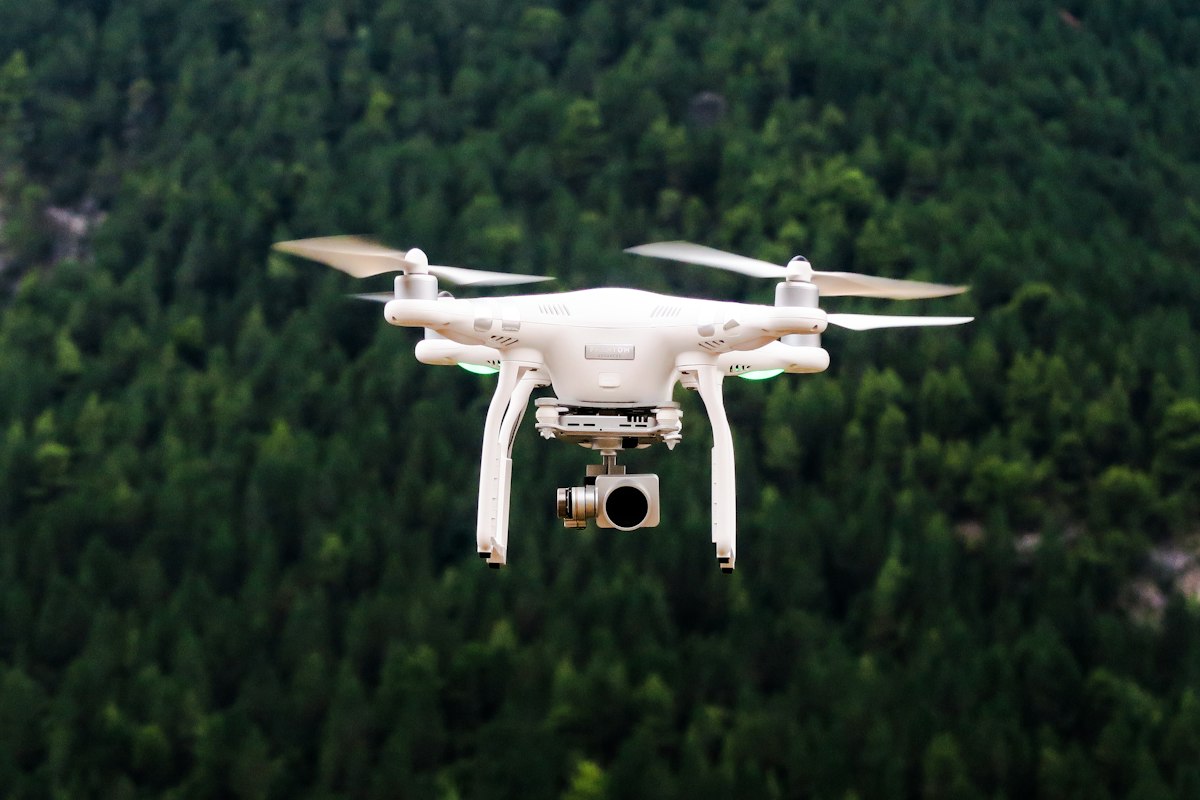

*A Meituan delivery drone descends toward a rooftop landing pad in Shenzhen's Nanshan district, where low-altitude logistics has become part of daily urban infrastructure. Photo: Xinhua*
The Number That Changes Everything
1.2 million. That is how many cargo drone flights Shenzhen logged in 2025 — a 29% increase from the year before. Not test flights. Not demonstrations. Commercial cargo operations, moving everything from lunch orders to medical samples across a network of 310 active logistics routes and 1,200 takeoff-and-landing facilities.
If that figure seems large, consider the context. In the same year, the entire United States recorded fewer than 50,000 commercial drone delivery flights. Wing, Alphabet's drone subsidiary and one of the most advanced operations outside China, has surpassed 2 million cumulative deliveries globally after nearly a decade of operation. Meituan, China's food delivery giant, reached 900,000 commercial drone orders by May 2026 — and it is scaling at a pace that could match Wing's global total within 18 months, concentrated almost entirely in Chinese cities.
The low-altitude economy — commercial activity involving manned and unmanned aircraft below 1,000 meters — has been designated a strategic emerging industry in China's 15th Five-Year Plan (2026-2030). The CAAC projects the domestic market will reach 3.5 trillion yuan (approximately $500 billion) by 2035. What began as a policy aspiration in the 2024 Government Work Report has, within 24 months, become an operational reality with measurable revenue, defined infrastructure, and global competitive advantages.
The Shenzhen Ecosystem: Where 70% of the World's Consumer Drones Are Born
No city illustrates China's low-altitude dominance more vividly than Shenzhen. The metropolis that built the world's consumer electronics supply chain has now layered an airspace manufacturing ecosystem on top of it. According to official data released in June 2026, Shenzhen produces approximately 70% of China's consumer drones and 50% of its industrial drones. The city hosts over 1,700 low-altitude economy enterprises and generated an output value exceeding 96 billion yuan in 2023, with growth accelerating since.
| Shenzhen Low-Altitude Economy Metrics | 2023 | 2024 | 2025 | 2026 (Projected) |
|---|---|---|---|---|
| Low-altitude enterprises | ~1,200 | ~1,500 | ~1,700 | ~2,000+ |
| Output value (RMB billion) | ~96 | ~110 | ~130 | ~160+ |
| Takeoff/landing facilities | ~400 | ~800 | 1,200+ | 1,500+ |
| Logistics routes | ~150 | ~200 | 310 | 400+ |
| Cargo drone flights | ~500,000 | ~700,000 | 1,000,000+ | 1,300,000+ |
| Cross-city eVTOL routes | 0 | 1 (test) | 1 (test) | 2+ (commercial) |
| Drone delivery orders (Meituan) | ~200,000 | ~450,000 | ~700,000 | 900,000+ (May) |
The density of this ecosystem creates compounding advantages. DJI holds approximately 70% of the global consumer drone market. Meituan operates its drone production facility locally, reducing costs through direct supply chain integration. EHang, XPeng AeroHT, AutoFlight, and dozens of smaller eVTOL developers maintain R&D and manufacturing operations within a 50-kilometer radius.
"Shenzhen's rise as a low-altitude economy hub is no accident," Yang Jincai, president of the Shenzhen UAV Industry Association, told Xinhua in June 2026. "It grew out of more than four decades of industrial accumulation, as the city moved from basic manufacturing to innovation-driven, smart manufacturing."
That accumulation is quantifiable. From 2020 to 2024, Shenzhen's total R&D investment grew from 151 billion yuan to 245 billion yuan, representing an average annual growth of 12.9%. Much of that spending now flows into autonomous navigation, battery energy density, and lightweight materials — the three technical pillars of low-altitude commercial aviation.
The Logistics Revolution: Meituan's 900,000 Flights and Counting
The most commercially advanced segment of China's low-altitude economy is not passenger transport. It is food delivery.
Meituan launched its drone delivery program in 2017. By May 2026, the service had completed more than 900,000 commercial orders across six cities with routes expanding into multiple provinces. The company operates three international pilot hubs: mainland China, Hong Kong, and Dubai.
| Meituan Drone Delivery Growth | 2022 | 2023 | 2024 | 2025 | May 2026 |
|---|---|---|---|---|---|
| Cumulative commercial orders | ~100,000 | ~200,000 | ~450,000 | ~700,000 | 900,000+ |
| Active cities | 2 | 3 | 5 | 6 | 6+ |
| Logistics routes | 15 | 25 | 43 | 53 | 60+ |
| Product types delivered | ~30,000 | ~50,000 | ~70,000 | ~90,000 | 90,000+ |
| Peak daily orders per site | ~150 | ~200 | ~250 | 303 | 423 (with night ops) |
| Cost reduction (YoY) | — | ~30% | ~40% | ~45% | ~50% |
The economics are approaching viability faster than most analysts predicted. Mao Yining, Meituan's vice president and head of drone business, told reporters in Shenzhen on May 21, 2026, that the company has reduced per-order drone operating costs by 40–50% annually for three consecutive years. The reductions come not from expensive hardware upgrades but from structural improvements — lighter drone designs, proprietary dispatch software, and battery recycling programs.
"The first use cases likely to reach scalable profitability will probably not be mainstream food delivery in China, but rather specialized vertical scenarios such as medical emergency logistics and high-value intra-city cargo," Mao said. "Meituan's drone operations have already achieved positive gross margins in medical delivery."
The technical architecture behind this scaling is significant. Meituan's fourth-generation drone operates across temperatures from -20°C to 50°C, moderate rain, snow, and winds up to level six. Night delivery launched in Shenzhen in September 2025, with order volume doubling shortly after. The company's cloud-based dispatch system coordinates drone assignment, pickup synchronization, route planning, and order forecasting simultaneously.
Most critically, Meituan has solved the urban density problem that has stymied Western drone delivery. Rather than delivering to doorsteps — which requires navigating complex building layouts — Meituan uses pickup kiosks and compact transfer hubs. The newest hub occupies just 1.4 square meters, allowing small shops to join without significant real estate investment.
The Policy Architecture: From Regulatory Sandbox to National Department
China's low-altitude economy is not scaling despite regulation. It is scaling because of it — or more precisely, because regulation is being constructed in parallel with commercial operations, rather than as a retrospective constraint.
The policy evolution has been deliberate and rapid:
| China Low-Altitude Economy Policy Timeline | |
|---|---|
| December 2023 | Low-altitude economy designated as "strategic emerging industry" in national planning documents |
| March 2024 | First mention in Government Work Report as a new growth driver |
| November 2024 | Six cities selected as eVTOL pilot zones, including Shenzhen |
| December 2024 | Shenzhen enacts first dedicated low-altitude economy legislation on mainland China |
| April 2025 | Meituan receives nationwide certification for commercial drone delivery operations |
| May 2026 | CAAC establishes dedicated Low-Altitude Safety Department |
| May 2026 | Revised Civil Aviation Law and mandatory UAV identification standards announced |
| 2026-2030 | 15th Five-Year Plan formally incorporates low-altitude economy development |
The establishment of the CAAC's Low-Altitude Safety Department in May 2026 is particularly significant. It represents institutional recognition that low-altitude operations have graduated from experimental status to permanent national infrastructure. The department will coordinate development plans, safety frameworks, dispatch platforms, and flight service station systems — effectively creating air traffic control for the skies below 1,000 meters.
Mao Yining's assessment of the new regulations was characteristically direct: "The rules have no material negative impact on Meituan's drone operations, as the company has long operated in full compliance and actively participated in shaping industry standards. Industry standardization is an inevitable step toward sustainable development. Short-term pains are unavoidable, but in the long run, it will create greater room for growth for compliant businesses."
This regulatory approach — building standards while scaling operations — contrasts with the United States, where the FAA's Beyond Visual Line of Sight (BVLOS) waiver system has limited commercial growth. The FAA projects the global drone package delivery market will reach $33.4 billion by 2030; China is capturing that growth now, while American operators navigate permit applications.
The Technology Stack: AI Navigation, Autonomous Systems, and Battery Density
The low-altitude economy is, at its core, an AI problem disguised as an aviation problem. Autonomous flight in urban environments requires real-time obstacle detection, dynamic path planning, weather adaptation, and precision landing — all capabilities that depend on artificial intelligence.
| Low-Altitude Technology Stack Components | Leading Chinese Providers | Status (2026) |
|---|---|---|
| Flight controllers / autopilot systems | DJI, XAG, T-Drone | Mature, commercially deployed |
| AI-powered obstacle avoidance | DJI, Meituan (proprietary), EHang | Production-grade, all-weather capable |
| BeiDou precision positioning | China Satellite Navigation Office | Nationwide coverage, centimeter-level accuracy |
| LiDAR-based navigation | Hesai Technology, Livox (DJI) | Deployed for GPS-denied environments |
| Battery systems (energy density) | CATL, BYD, EVE Energy | 300+ Wh/kg in commercial use |
| Dispatch / fleet management AI | Meituan, DJI, EHang | Real-time optimization at 1,000+ drone scale |
| eVTOL propulsion systems | XPeng AeroHT, EHang, AutoFlight | Type certification in progress |
Li Xiaoliang, general manager of Shenzhen Base at United Aircraft Group, explained the technological convergence to CGTN in February 2026: "Three key elements: a reliable flight controller for steady operation in all conditions; a precise positioning system, like China's BeiDou system; and artificial intelligence-enabled obstacle avoidance and path planning. Together, these ensure safety and reliability."
That reliability is what allows operations at scale. Meituan's system can predict drone arrival times with a deviation of approximately two seconds — compared to the three-to-ten-minute uncertainty of traditional delivery. One operator in Meituan's centralized control room monitors approximately ten drones simultaneously, with AI handling routine navigation and human operators intervening only in emergencies.
The next frontier is removing the human operator entirely. Meituan anticipates that "human-machine collaboration will remain the dominant model" over the next three to five years, with drones handling trunk transportation while human riders manage last-mile fulfillment. Fully unmanned end-to-end delivery remains technically feasible but regulatorily distant.
The eVTOL Horizon: From Test Flights to Commercial Air Taxis
While drone logistics generates revenue today, electric vertical take-off and landing (eVTOL) aircraft represent the larger long-term market. And 2026 is shaping up as the pivotal year for certification and scaled delivery.
| Chinese eVTOL Market Leaders — Order Book & Status (June 2026) | |
|---|---|
| XPeng AeroHT (Aridge) | 7,000+ pre-orders; mass production scheduled for 2026; debuted in Dubai with 600 regional orders |
| EHang | 1,000+ orders for EH216 series; passenger operations launched in Thailand; demonstrations in UAE and Japan |
| AutoFlight | 2,000+ orders for V2000CG; Prosperity model targeting Shenzhen-Zhuhai route certification |
| Volanthe | 1,920+ orders; type certification in progress |
| United Aircraft Group (TD550) | 1,600 orders at Dubai Airshow; unmanned helicopter segment |
The Shenzhen-Zhuhai cross-city route is the most closely watched eVTOL project. First tested in April 2024, the 20-minute flight reduces what is typically a two-hour drive to a brief hop over the Pearl River Delta. Per-seat pricing is projected at 200–300 yuan — roughly equivalent to premium ride-hailing services. Commercial operations are expected to launch in 2026, pending final airworthiness certification.
EHang has moved faster on international commercialization. The company's EH216-S became the world's first certified autonomous passenger eVTOL in 2023, and by 2026 it had launched passenger operations in Thailand, with demonstrations in the UAE and Japan. The pattern is consistent across Chinese eVTOL manufacturers: accumulate international operational data while building certification credentials for export markets.
DJI, however, has struck a note of caution. In a white paper released May 22, 2026, the drone giant stated that large-scale urban drone logistics and eVTOL passenger services are unlikely to achieve mass commercial operation soon. If the industry's largest player is skeptical about near-term eVTOL scaling, the timeline for airborne taxis may extend beyond current projections.
The Global Expansion: Exporting Chinese Airspace Infrastructure
China's low-altitude economy is not a domestic-only phenomenon. The same manufacturing ecosystem that produces drones for Chinese consumers is now exporting airspace infrastructure globally.
| Chinese Low-Altitude International Expansion | |
|---|---|
| EHang | Passenger eVTOL operations in Thailand; demonstrations in UAE, Japan, Southeast Asia |
| XPeng AeroHT | Dubai debut with 600 regional orders; Middle East market focus |
| United Aircraft Group | 1,600 TD550 unmanned helicopter orders at Dubai Airshow; Middle East and Africa |
| Meituan | Pilot operations in Dubai; Hong Kong elderly meal delivery services |
| DJI | ~70% global consumer drone market; agriculture and industrial drones in 100+ countries |
| AutoFlight | European market entry through certification partnerships |
The export strategy reveals a sequencing pattern: Chinese manufacturers accumulate operational data in permissive regulatory environments (Middle East, Southeast Asia) while pursuing certification in stricter markets (EU, North America). This positions them as standard-setters rather than followers in the global low-altitude economy.
Jack Lin, a Taiwan-born entrepreneur who chose Shenzhen as the base for his aviation startup in 2024, captured the dynamic in a June 2026 China Daily interview. His company developed what it claims is Asia's first ultra-light, fully electric single-seat flying kart. The first 500 orders came from customers in the Middle East and Southeast Asia. "Many university students in Shenzhen are passionate about drones," Lin said. "We receive a huge number of internship applications, and that steady flow of young talent is helping drive the growth of both our company and the industry."
The Challenges: Safety, Profitability, and the Density Problem
For all its momentum, China's low-altitude economy faces structural challenges that could slow or redirect its growth.
Safety and airspace management remain the most immediate concerns. On December 8, 2024, a large number of drones in a flight performance in Quanzhou, Fujian went out of control and crashed. Four days later, a fixed-wing drone crashed at the Jingzhou Sports Centre in Hubei. The incidents prompted calls for stricter enforcement — including the suggestion from industry executives that "the future development of the low-altitude economy could require air traffic policing."
Profitability is the second challenge. While Meituan has achieved positive gross margins in medical delivery, mainstream food delivery remains in a "cost-optimization ramp-up phase." The company's projections suggest scalable front-end profitability is two to three years away for the drone business as a whole.
Urban density presents a paradox. China's dense cities create the demand that makes drone delivery economically interesting — but they also create the airspace complexity that makes it technically difficult.
| Low-Altitude Economy Risk Matrix | Likelihood | Impact | Mitigation Status |
|---|---|---|---|
| Major urban drone accident | Medium | High | CAAC safety department established May 2026 |
| eVTOL certification delays | Medium | Medium | Multiple models in type certification review |
| Battery technology plateau | Low | High | 300+ Wh/kg commercial; solid-state R&D active |
| International regulatory barriers | High | Medium | Sequencing strategy: permissive markets first |
| Profitability timeline extension | Medium | Medium | Medical/logistics verticals already margin-positive |
| Airspace congestion | Medium | High | 1,200+ landing facilities built; route coordination AI deployed |
The Investment Landscape: Market Size and Capital Flows
The capital markets have taken notice. In January 2026, Zhipu AI and MiniMax both listed on the Hong Kong Stock Exchange and reached market capitalizations exceeding $40 billion before subsequent corrections. While these are AI model companies rather than pure-play low-altitude firms, the investor appetite they demonstrate extends to the broader AI-enabled hardware sector.
| China Low-Altitude Economy Market Projections | |
|---|---|
| 2025 market size | ~1.5 trillion yuan (~$210 billion) |
| 2030 market size (CAAC projection) | ~2.0 trillion yuan (~$280 billion) |
| 2035 market size (CAAC projection) | ~3.5 trillion yuan (~$500 billion) |
| Agricultural drone stock (2025) | 300,000+ units, covering 3 billion mu |
| Power line inspection coverage | 4 million+ kilometers annually |
| Global drone market share (China) | ~70% consumer, ~50% industrial |
| Job creation (drone operators) | 2+ million registered drones; 1+ million operator shortage |
The investment thesis is straightforward: China is building the physical and regulatory infrastructure for low-altitude commerce at a pace no other nation can match. The 15th Five-Year Plan explicitly categorizes the low-altitude economy alongside quantum computing and AI as strategic national priorities. Local governments are issuing special bonds and designating zones. Manufacturers are scaling production. And operators like Meituan are generating real revenue with improving unit economics.
The question for international investors is not whether China's low-altitude economy will grow. It is whether they can access that growth through public markets, given that the sector's largest players — DJI (private), Meituan (listed in Hong Kong), EHang (NASDAQ) — offer limited pure-play exposure.
Voices from the Ground
@科技观察员小李 (Tech Observer Little Li) — Weibo, June 14, 2026
"美团无人机送药已经在深圳三甲医院跑了两年,急救样本15分钟送达,这玩意儿是真能救命的。比什么空中出租车实在多了。"
*(Translation: "Meituan's drone medical delivery has been running at Shenzhen's top hospitals for two years, delivering emergency samples in 15 minutes. This thing actually saves lives. Much more practical than air taxis.")*
@无人机飞手老王 (Drone Pilot Lao Wang) — Douyin, June 12, 2026
"考个无人机执照现在比考驾照还火,龙岗那个培训基地每个月300多人考试,还供不应求。低空经济这碗饭,越来越香了。"
*(Translation: "Getting a drone license is now more popular than getting a driver's license. That training base in Longgang has 300+ people taking exams every month and still can't meet demand. The low-altitude economy is becoming quite lucrative.")*
@财经辣评 (Finance Hot Takes) — X, June 10, 2026
"China's low-altitude economy is what happens when industrial policy actually works. Shenzhen has 1,200 landing pads. The US has... what, a dozen? The gap isn't technology. It's execution."
*(No translation needed — original in English.)*
@深圳宝妈陈姐 (Shenzhen Mom Sister Chen) — Xiaohongshu, June 13, 2026
"娃的外卖现在是无人机送来的,15分钟到小区取餐柜。以前高峰时段要等40分钟。科技改变生活,真的不是说说而已。"
*(Translation: "My kid's takeout now comes by drone, 15 minutes to the community pickup locker. Used to wait 40 minutes during peak hours. Technology really does change life — it's not just talk.")*
@航空迷张总 (Aviation Enthusiast CEO Zhang) — Zhihu, June 11, 2026
"eVTOL能不能成,关键不在飞机,在低空交通管理系统。中国现在在搞这个,美国还在扯皮BVLOS审批。等我们的系统跑通了,标准就是我们定的。"
*(Translation: "Whether eVTOL succeeds depends not on the aircraft but on the low-altitude traffic management system. China is building this now; America is still arguing about BVLOS approvals. Once our system is running, we'll be the ones setting the standards.")*
@中东投资客Khalid (Middle East Investor Khalid) — LinkedIn, June 9, 2026
"Just placed an order for 50 XPeng AeroHT units for Dubai's hospitality sector. Chinese eVTOL pricing is 40% below comparable Western platforms, and delivery timelines are half. The Gulf is becoming Chinese airspace hardware's first major export market."
*(No translation needed — original in English.)*
The Bottom Line
China's low-altitude economy has crossed the threshold from policy concept to operational industry. The numbers are no longer projections — they are audited flights, certified routes, and revenue-generating deliveries. Shenzhen produces 70% of the world's consumer drones. Meituan has logged 900,000 commercial drone orders. EHang operates passenger eVTOL services in Thailand. The CAAC has established a permanent regulatory department for airspace below 1,000 meters.
What distinguishes China's approach is not any single technology but the speed of integration. Manufacturing, AI navigation, battery systems, regulatory frameworks, and commercial operations are advancing in parallel. While Western markets debate BVLOS waiver reform and infrastructure financing, Chinese operators are building landing pads, training pilots, and optimizing dispatch algorithms.
The $500 billion question is whether this head start translates into sustained global leadership. DJI's caution about near-term eVTOL scaling is a useful reminder that physical infrastructure moves slower than software. Battery energy density, airspace management at scale, and public acceptance of autonomous aircraft remain genuine constraints.
But the trajectory is clear. In 2023, low-altitude economy was a policy term. In 2025, it was an operational logistics network. By 2030, it may be as unremarkable as mobile payments — simply part of how Chinese cities function.
The sky above China's cities is filling with purpose-built infrastructure. The rest of the world is still looking up, wondering when the drones will arrive.
In Shenzhen, they already have.
*Data and reporting for this article were compiled from Xinhua, CAAC, Shenzhen Government, Meituan corporate communications, CGTN, China Daily, The Science and Technology Innovation Board Daily, Frost & Sullivan, Omdia, and corporate filings. Market projections reflect official government estimates and analyst forecasts as of June 2026.*
Editor at AI in China. Tracking Chinese AI companies, funding rounds, and the technologies reshaping global tech. More about me.