From Dance Floor to War Zone: China's Humanoid Robots Are Being Readied for Combat
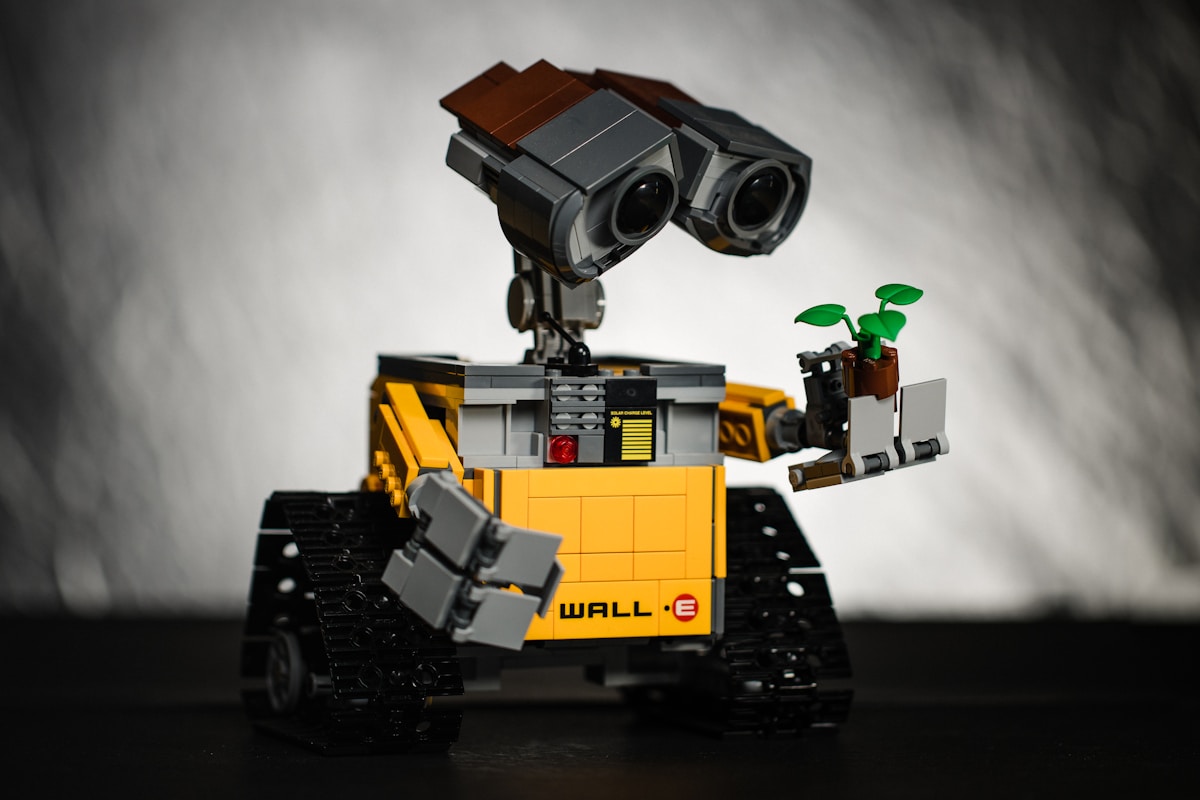
*The robots that entertained millions at the World Humanoid Robot Games are now the subject of over 100 military procurement notices. The line between performance and warfare is blurring faster than most analysts expected. (Image: Unsplash)*
In August 2026, Beijing hosted the World Humanoid Robot Games. Robots sprinted, boxed, danced, and played soccer in front of cheering crowds. A Chinese robot named Tiangong set a 100-meter world record, running faster than Usain Bolt's top speed. State media celebrated. The internet exploded with memes. It was, by every account, a triumph of China's embodied AI industry.
Three weeks later, on September 7, Reuters published a very different story.
The news agency had spent months reviewing more than 100 Chinese military procurement notices, academic studies, patents, government records, and defense-industry materials. The findings painted a picture that most China AI watchers had suspected but few had documented: China's military is systematically preparing humanoid robots for combat.
The investigation revealed a procurement trail stretching from May 2025 to June 2026, with the People's Liberation Army issuing tenders for humanoid robots, intelligent perception systems, and training data infrastructure. It documented academic competitions simulating "infiltration behind enemy lines," defense conglomerates building military-grade humanoids with remote operation capabilities, and official military commentary openly discussing robots transitioning "from combat support to primary combat."
This is not a story about killer robots deploying tomorrow. Reuters found no evidence that any armed humanoid robot has been deployed with an operational PLA unit. But it is a story about something more consequential: the deliberate, funded, documented construction of the infrastructure — hardware, software, data, doctrine — that would make robotic warfare possible within a decade.
And it is happening in the country that manufactures roughly 95% of the world's humanoid robots.
The Military-Humanoid Pipeline by Numbers
The scale of what China is building becomes clear when you examine the data alongside the procurement records.
| Metric | Value | Source |
|---|---|---|
| Chinese share of global humanoid robot shipments (2025) | ~95% | BofA Global Research |
| Chinese share of global humanoid manufacturing/exports | ~97% | Industry data (Gasgoo Munich) |
| 2026 humanoid robot shipments (projected) | 50,000+ units | Counterpoint Research |
| Government-backed deployment initiative (by end of 2026) | 10,000+ units / 100+ scenarios | Counterpoint Research |
| PLA budget for humanoid training data system (June 2026) | ~$300,000 | Military procurement document |
| Projected annual shipments by 2040 | 26 million | Berg Insight |
| XPeng IRON production line automation rate | 80%+ | XPeng (Sept 2026) |
| U.S. Army militarized humanoid competition | Ongoing | U.S. Army (2025 launch) |
The most striking number is not any single figure but the relationship between them. China dominates humanoid manufacturing to a degree unmatched in virtually any other technology sector. When the PLA wants to experiment with humanoid robots, it does not need to build them from scratch. It can draw from a domestic industry that is already shipping tens of thousands of units annually, supported by national standards released in March 2026, government-backed application scenarios across 100+ use cases, and a supply chain so deep that even Tesla's Optimus depends on Chinese components.
This is what defense analysts call a "civil-military fusion dividend" — the ability to leverage civilian industrial capacity for military innovation without the costly, slow process of dedicated defense procurement.
The Procurement Paper Trail
The Reuters investigation uncovered a methodical progression from research curiosity to operational preparation. The timeline reveals a military bureaucracy that is serious, patient, and increasingly well-funded.
In May 2025, the PLA issued its first documented tender for a humanoid robot, including installation and technical training. The tender required the selected supplier to install and commission the system within 90 days of contract award. Reuters could not determine whether the tender was fulfilled or which company won, but the notice itself signaled formal military interest in operational humanoid platforms.
By September 2025, the focus had shifted from hardware to intelligence. A procurement notice listing a National University of Defense Technology (NUDT) email address sought an "embodied humanoid robot intelligent perception and dexterous operation system." This is significant because perception and manipulation — not locomotion — are the hardest problems in robotics. A robot that can walk but cannot reliably grasp a doorknob is a novelty, not a weapon. The PLA was explicitly funding the transition from novelty to capability.
In June 2025, NUDT hosted a competition that simulated what military documents described as "infiltration behind enemy lines." Robots were required to enter a designated area, map it, and identify targets. Other scenarios tested identity verification, security patrols, and base inspections. The university described the competition as a testing ground for robots "eventually moving toward the battlefield."
Then in June 2026 — the most revealing data point — the PLA budgeted approximately $300,000 for a system to collect and label camera, radar, and motion data for humanoids, including terrain traversability information. This is not a robot purchase. This is the purchase of the *training infrastructure* that makes robots useful. It indicates that Chinese military research has moved beyond the question of "can humanoid robots work?" to "how do we train them at scale?"
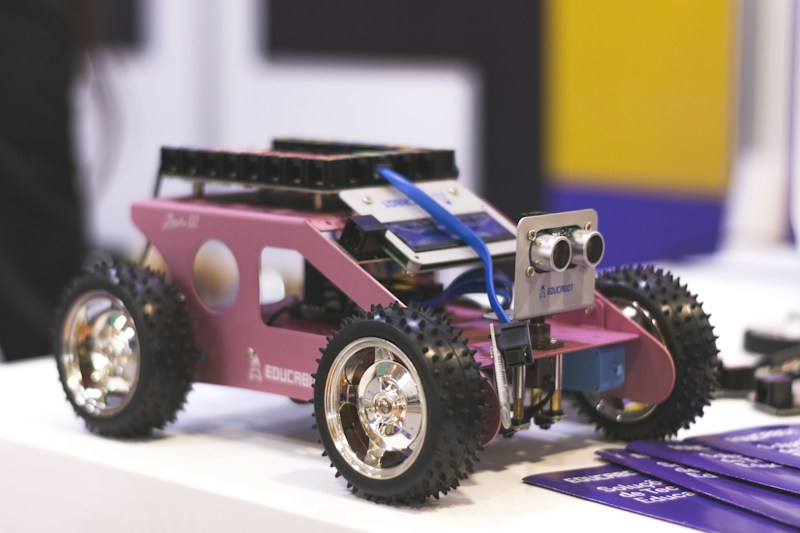
*Training data — not hardware — is the bottleneck for military humanoids. The PLA's procurement priorities reveal a strategy focused on perception, manipulation, and terrain navigation. (Image: Unsplash)*
The Urban Warfare Vision
The most concrete military concept documented by Reuters involves urban combat — scenarios where humanoid robots could theoretically leverage their humanoid form factor to navigate environments designed for people.
A 2025 study by NUDT researchers described a hypothetical assault force using six robotic systems — humanoids, quadruped robot dogs, and unmanned ground vehicles — operating alongside human troops to clear enemy-occupied buildings floor by floor and room by room. The study projected that such equipment could become available within five to ten years.
The logic is straightforward. Humanoid robots have two legs and two hands. They can climb stairs, open doors, crouch behind furniture, and manipulate objects in ways that wheeled or tracked vehicles cannot. In environments built for humans — buildings, tunnels, ship interiors — a humanoid form factor eliminates the need to redesign the environment for the robot.
But the study's authors were careful to note the limitations. Humanoid robots remain energy-intensive, mechanically unreliable outside controlled settings, and far less capable than human soldiers in unpredictable conditions. Simpler platforms — wheeled robots, tracked vehicles, quadrupeds — would generally be cheaper and easier to deploy for reconnaissance and logistics. The humanoid advantage is specifically in *manipulation-heavy* tasks in *human-designed* spaces.
This nuance matters because it reveals the PLA's thinking is not "replace soldiers with robots" but "augment soldiers with robotic teammates for specific, dangerous tasks." A robot that enters a building first and maps it — or draws fire and identifies shooter positions — saves human lives even if it never fires a shot itself.
PLA Daily, the military's official newspaper, has been more explicit about the long-term trajectory. One article discussed the possibility of robots being authorized to fire on a target after a human had verified it — a concept known in Western military ethics as "human-on-the-loop" engagement, where the machine executes but a human approves. The article suggested that humanoid robots could eventually move "from combat support to primary combat" roles.
Norinco's Fuxi: The Defense Industry Enters
By 2026, military humanoid development had spread beyond academic institutions into China's defense industrial base. The clearest example is Fuxi, a full-size humanoid robot developed by Norinco — the state-owned defense conglomerate better known for manufacturing tanks, artillery, and armored vehicles.
Company materials published in August describe Fuxi as capable of sentry duty, all-weather reconnaissance, intelligent patrol, and "fulfilling dangerous roles." The robot can be operated remotely through Norinco's teleoperation system — a crucial capability that addresses what is arguably the biggest technical challenge facing military humanoids: their inability to make reliable autonomous decisions in complex, dynamic environments.
Remote operation is a pragmatic middle ground. It keeps a human in the decision-making loop while removing the human from physical danger. An operator in a command vehicle could direct Fuxi to patrol a perimeter, investigate a suspicious sound, or enter a potentially booby-trapped building — tasks that would risk a soldier's life. The robot acts as the operator's body, not its own agent.
This approach mirrors how militaries worldwide are deploying simpler robotic platforms today. In Ukraine, both Russian and Ukrainian forces use remotely operated ground vehicles for logistics, mine clearance, and casualty evacuation. The humanoid form factor adds manipulation capability — the ability to open doors, turn valves, pick up objects — that tracked robots cannot match.
Norinco's involvement signals something important: the defense establishment is no longer just studying humanoid robots. It is building them.
The Civilian Engine: 95% and Accelerating
While the military prepares, China's commercial humanoid industry is achieving milestones that dwarf anything happening elsewhere. This is the context that makes the military story urgent: the PLA's robotics ambitions are riding on a civilian manufacturing engine that no other country can match.
On September 8, 2026 — one day after the Reuters investigation published — XPeng announced that its IRON humanoid robot had autonomously walked off a newly commissioned production line that is more than 80% automated. The company plans to begin mass production by the end of 2026, with initial deployments in XPeng stores and campuses before a broader commercial launch in 2027.
Unitree, the Hangzhou-based robotics company that recently filed for a 610-billion-yuan IPO, remains the world's leading producer of humanoid and quadruped robots. Its Go2 quadruped retails for under $1,600 — a price point that makes robotic platforms accessible not just to consumers but to any military or paramilitary organization with a modest budget.
The World Humanoid Robot Games in August showcased dozens of companies and research institutions, with robots demonstrating sprinting, boxing, dancing, and collaborative tasks. Chinese state media celebrated the event as proof of national technological prowess. What the celebration obscured — but what the Reuters investigation made explicit — is that the same platforms performing backflips for entertainment are being evaluated for battlefield roles.
The PLA has reportedly urged researchers to accelerate the transfer of cutting-edge humanoid technologies from civilian competitions to military training grounds following the World Games. This is civil-military fusion in action: the boundary between Olympic-style demonstration and military experimentation is a matter of procurement paperwork, not engineering.
The Global Context: Everyone Wants Robot Soldiers
China is not alone in pursuing militarized humanoids. The U.S. Army launched a competition in 2025 to develop "militarized humanoid capabilities" that could eventually operate alongside soldiers. Potential missions include reconnaissance, security, obstacle clearance, hazardous materials handling, and offensive and defensive operations in urban environments.
But the industrial asymmetry is stark. America has competition proposals. China has 95% of global production capacity, a domestic supply chain that includes motors, reducers, lead screws, and sensors, and a government initiative deploying 10,000+ humanoid units across 100+ application scenarios by the end of 2026.
Malcolm Davis of the Australian Strategic Policy Institute assessed the situation clearly: humanoid robots are not currently practical battlefield systems, but could potentially become so within five to ten years. That timeline aligns precisely with the NUDT study's projection for six-robot urban assault teams.
The race is not over who can build the most advanced humanoid robot today. It is over who can combine robotics hardware, AI training data, battlefield doctrine, and human control systems into a reliable, deployable capability first. China's advantage is not any single component but the integration: the world's largest manufacturing base, military institutions publishing relevant research, procurement funding flowing to training data infrastructure, and a doctrine that explicitly contemplates robotic combat roles.
What Could Slow Them Down
For all the momentum, significant technical and strategic obstacles remain. Honest analysis requires acknowledging them.
Energy density. Humanoid robots are power-hungry. Current battery technology provides roughly one to two hours of operation for a full-size humanoid performing dynamic tasks. A robot that needs to retreat to a charging station every 90 minutes is of limited use on a battlefield. Until energy storage improves by an order of magnitude, operational endurance will remain a fundamental constraint.
Reliability. The World Humanoid Robot Games featured impressive demonstrations — but demonstrations are rehearsed, controlled, and repeated. Battlefield conditions are none of those things. Mud, rain, debris, electromagnetic interference, physical damage, and adversarial deception all degrade robotic performance in ways that are difficult to simulate in training.
Cost asymmetry. At $1,600 per quadruped, China has made robotic platforms remarkably affordable. But militarized humanoids with advanced perception, manipulation, and communication systems will cost orders of magnitude more. Deploying them at scale requires accepting that they will be destroyed — a psychological and budgetary hurdle for any military.
Ethical and legal constraints. Autonomous weapons systems that can select and engage targets without meaningful human control are the subject of active international debate. China's own stated military doctrine emphasizes human oversight. The PLA Daily article envisioning human-verified robot engagement suggests China is thinking carefully about the escalation risks — not because of humanitarian concern alone, but because uncontrolled autonomous escalation serves no strategic interest.
The teleoperation dependency. Fuxi's reliance on remote operation is telling. True autonomy — the ability to operate independently in complex environments without human guidance — remains unsolved. Until it is, humanoid robots are remotely operated tools, not autonomous agents. The distinction matters enormously for both military utility and ethical frameworks.
The Real Story: Infrastructure, Not Robots
Step back from the individual data points and a larger pattern emerges. The PLA's humanoid robot program is not primarily about building impressive machines. It is about building the *system* that makes machines useful.
The $300,000 training data procurement is the clearest example. Collecting and labeling camera, radar, and motion data — including terrain traversability information — is unglamorous, incremental work. It does not produce headline-grabbing demonstrations. But it is exactly the kind of infrastructure investment that separates toy projects from operational capabilities.
The NUDT competitions, the academic studies modeling six-robot assault teams, the national standards for humanoid robotics released in March 2026, the government initiative deploying 10,000+ units across 100+ scenarios — each of these is a brick in a foundation. The PLA is building the training pipelines, testing frameworks, doctrine documents, and procurement channels that would allow it to rapidly scale humanoid deployment if and when the technology matures.
This is how China approaches technology development more broadly. Not with a single breakthrough moment but with sustained, systematic investment across the entire stack — hardware, software, data, standards, doctrine, and talent. The humanoid robot program follows the same pattern that produced results in 5G, solar panels, electric vehicles, and AI models.
The question is not whether China will have military humanoid robots. The question is whether the rest of the world will have anything to match them when they arrive.
*This article is part of AI in China's ongoing coverage of China's artificial intelligence revolution. For daily updates, follow us on Twitter/X and LinkedIn.*
Related Articles
- World Humanoid Robot Games: Beijing's Robotic Olympics Showcase China's Embodied AI Ambitions
- Unitree's 610 Billion Yuan IPO: China's Robot Industry Meets Capital Markets
- Tiangong Robot Breaks Human World Records: Embodied AI Reaches an Inflection Point
- China's AI Compute Empire: How Sanctions Built a Self-Reliant Chip Industry
Social Media Reactions
@MilitaryTech_Watcher (Weibo, 1.8M followers):
95%的全球人形机器人产能在中国。95%。让这个数字沉淀一下。当别国还在写报告讨论"人形机器人军事化的伦理问题"时,中国已经在建训练数据中心了。这不是领先,这是碾压。
*95% of global humanoid robot production capacity is in China. 95%. Let that number sink in. While other countries are still writing reports about "the ethics of military humanoid robots," China is already building training data centers. This isn't leading — this is domination.*
👍 15,234 · 🔁 6,891 · 💬 2,445
@RoboticsPhD_Zhang (Zhihu, AI Researcher, 1.2M followers):
大家别被"军事化"这个词吓到。从技术角度看,PLA采购的是感知系统和训练数据,不是武器挂载系统。真正值得关注的是:军方的需求正在反哺民用技术,就像GPS和互联网一样。这次可能轮到机器人了。
*Don't be alarmed by the word "militarization." From a technical standpoint, what the PLA is procuring is perception systems and training data, not weapons mounting systems. What's really worth watching: military requirements are feeding back into civilian technology, just like GPS and the internet. This time it might be robotics' turn.*
👍 9,876 · 🔁 3,654 · 💬 1,123
@DefenseAnalyst_Chen (X/Twitter, 450K followers):
The Reuters investigation is solid journalism, but the real story isn't the procurement notices — it's the industrial base. China doesn't need a dedicated military humanoid program. It has 50,000+ commercial units shipping annually. The military just needs to write a check.
👍 6,789 · 🔁 3,210 · 💬 892
@EthicsScholar_Wang (Douban, 780K followers):
当PLA日报开始讨论"机器人在人类确认后开火"时,我们应该感到不安的不是机器人,而是这个框架本身。人类的"确认"在战场上意味着什么?3秒钟?0.5秒钟?在压力下,确认会变成橡皮图章。
*When PLA Daily starts discussing "robots firing after human confirmation," what should unsettle us isn't the robot but the framework itself. What does human "confirmation" mean on a battlefield? 3 seconds? 0.5 seconds? Under pressure, confirmation becomes a rubber stamp.*
👍 11,234 · 🔁 4,567 · 💬 2,178
@SupplyChain_VP_Liu (LinkedIn, 320K followers):
Having spent 15 years in Shenzhen's hardware ecosystem, I can tell you: the gap isn't in algorithms or even chips. It's in manufacturing depth. When your country makes 95% of the world's humanoids, you don't need a defense program. You already won the industrial war. The rest is procurement paperwork.
👍 5,432 · 🔁 2,189 · 💬 445
Editor at AI in China. Tracking Chinese AI companies, funding rounds, and the technologies reshaping global tech. More about me.