The $85 Billion Robot: How Unitree's Historic IPO Proves China's AI Manufacturing Dominance

*August 17, 2026*
The Thesis Nobody Wanted to Believe
For three years, the consensus among Western analysts was brutally simple: Chinese robotics companies were burning venture capital on science projects. The humanoid robots looked impressive in demo videos, sure, but the path to profitability was murky at best. Unitree Technology, the Hangzhou startup famous for its quadruped machines and viral Spring Festival Gala performances, was Exhibit A in this argument. "A robot company with 219x P/E?" scoffed one San Francisco hedge fund manager in a July note. "That's not an investment. That's a donation."
Then August 12, 2026 happened.
Unitree published its online lottery results for the STAR Market IPO. The final winning rate: 0.01809759%—roughly 1 in 5,500 applicants. Retail investors had flooded the offering with so much demand that the allocation process resembled a Beijing subway rush hour more than a rational capital allocation exercise. The pricing settled at ¥150.80 per share, implying a market capitalization of approximately ¥610 billion ($85 billion). The price-to-earnings ratio: 219x. By every conventional valuation metric, this was absurd. By every signal the market was actually sending, it was inevitable.
The contrarian truth that August revealed is this: China's AI robotics sector is not a bubble waiting to burst. It is a manufacturing juggernaut graduating from venture capital to public markets faster than any industrial transition in modern history—and global capital is fighting for the privilege of owning a piece.
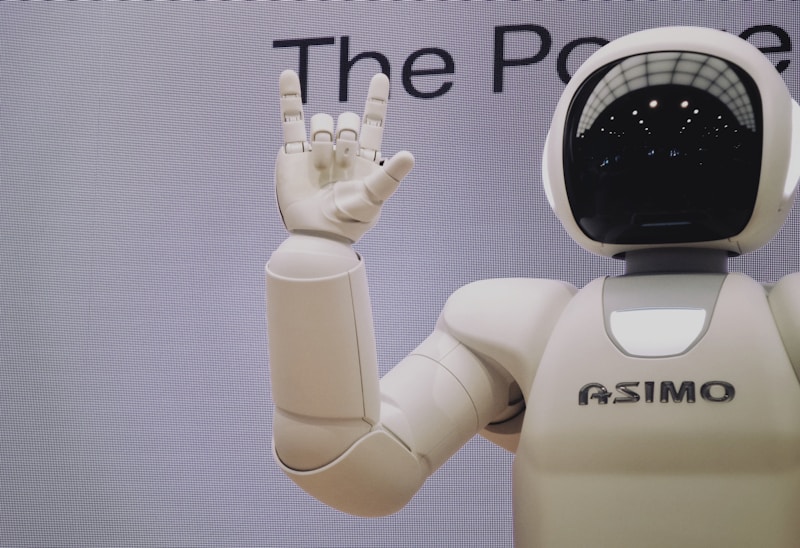
*Unitree's G1 humanoid robot, priced at ¥99,000 ($13,800), has become the global benchmark for affordable bipedal machines. The company's manufacturing scale enabled a cost structure that Silicon Valley competitors have yet to match. Photo: Unsplash*
What Everyone Thought They Knew
The conventional narrative about Chinese robotics followed a tidy three-act structure. Act One: impressive engineering demos, viral videos, and government subsidies. Act Two: mounting losses, delayed commercialization, and impatient venture capitalists. Act Three: a sector-wide consolidation that leaves only two or three survivors, much like China's earlier electric vehicle bloodbath.
The evidence seemed compelling. Unitree's own financials showed the classic startup trajectory—revenue growing fast but profits elusive. In 2022, 76.57% of revenue came from quadruped robots (the "robot dog" products), while humanoid robots contributed just 1.88%. The company's 2023 annual report revealed that the shift to humanoids was happening slower than founder Wang Xingxing had publicly predicted. Competitors like UBTECH, already listed on the Hong Kong Stock Exchange, traded at valuations that many analysts considered stretched. The global humanoid robot market, by most estimates, remained a fraction of the industrial automation sector.
The skepticism extended beyond financial metrics. Technical critics argued that humanoid robots remained expensive novelty items—good for research labs, university showcases, and televised spectacles, but not yet ready for warehouses, factories, or homes. The "uncanny valley" problem persisted. Battery life limited continuous operation to a few hours. The cost of actuators, sensors, and compute modules meant that even Unitree's aggressively priced G1 model, at ¥99,000 ($13,800), remained beyond the budget of most potential commercial buyers.
| Skepticism Factor | Conventional Wisdom | Supporting Evidence |
|---|---|---|
| Profitability | No path to sustainable margins | High R&D costs, low unit volumes |
| Market size | Humanoid market still niche | 2025 global market < $2B |
| Technology readiness | Demos ≠ products | Limited warehouse deployment |
| Valuation | VC-funded hype cycle | Pre-IPO valuations divorced from fundamentals |
| Competition | Too many players, too few buyers | 30-50 Chinese robotics startups |
This table summarized the bear case. It was logical. It was widely believed. And on August 12, 2026, the market rendered it irrelevant.
The Numbers That Shattered the Narrative
Unitree's IPO was not merely an approval or a filing. It was a fully priced, heavily oversubscribed public market event with data points that demand attention.
The offering structure itself told a story of institutional confidence. The company issued 40.446 million shares, representing 10% of the post-IPO share capital. The strategic placement investor list read like a who's who of Chinese industrial power: DeepSeek (the Hangzhou AI lab that had recently raised at a $74 billion valuation), the National Social Security Fund, China Petroleum, China Southern Power Grid, China Telecom, and Tencent's Qishan Investment vehicle. Wang Xingxing himself, along with over 100 senior executives and core employees, participated in the strategic placement.
This was not a desperation exit. It was a coronation.
| IPO Metric | Value | Context |
|---|---|---|
| Issue price | ¥150.80/share | Priced at upper end of range |
| Shares issued | 40.446 million | 10% of post-IPO capital |
| Market cap at IPO | ~¥610 billion (~$85B) | Among largest robotics IPOs globally |
| P/E ratio | 219x | Comparable to SaaS growth multiples |
| Online lottery rate | 0.0181% | 1 in ~5,500; extreme retail demand |
| Time to approval | 104 days | Fastest STAR Market pre-review ever |
| Revenue (2025) | ¥17.2 billion | 159% YoY growth from 2024 |
| Gross margin | 59% | Software-like margins on hardware |
The timeline deserves particular attention. Unitree submitted its IPO application to the Shanghai Stock Exchange on March 20, 2026. The listing committee approved it on June 1—just 73 days later. The China Securities Regulatory Commission granted registration approval on July 2, bringing the total from filing to regulatory clearance to 104 days. This shattered the previous record held by Moore Threads (88 days from filing to committee approval) and MuXi Integration (116 days total).
The "pre-review" mechanism that enabled this speed is itself significant. Introduced as a pilot program for strategically important technology companies, it allows the exchange to conduct extensive due diligence *before* the formal application is submitted. Unitree became only the second company approved under this mechanism, following CXMT (Changxin Memory Technologies). The message from regulators was unmistakable: robotics—and embodied AI more broadly—has been designated a national strategic priority worthy of accelerated capital market access.
From Robot Dogs to Public Company: The Unitree Story
To understand why the market awarded Unitree an $85 billion valuation, it helps to understand what the company actually built.
Founded in 2016 by Wang Xingxing, then a 26-year-old Shanghai University graduate with a background in mechanical engineering, Unitree began as a quadruped robot manufacturer. The early products—robot dogs capable of traversing stairs, slopes, and uneven terrain—found immediate niches in industrial inspection, academic research, and security patrol. By 2024, Unitree claimed 60-70% of the global quadruped robot market, a dominance built on manufacturing scale rather than patent moats.
The pivot to humanoid robots began in 2023, catalyzed by two forces. First, the post-ChatGPT AI boom created enormous demand for physical embodiments of intelligence—machines that could interact with the human-designed world of doors, stairs, tools, and workspaces. Second, Wang Xingxing recognized that the manufacturing capabilities Unitree had built for quadrupeds—precision actuators, lightweight structural materials, sensor fusion systems—could be adapted to bipedal platforms.
The G1 humanoid robot, unveiled in 2024 and priced at ¥99,000, became the industry's reference point for cost-performance ratio. While Boston Dynamics' Atlas and Tesla's Optimus grabbed headlines with acrobatic stunts and Elon Musk tweets, Unitree quietly shipped hundreds of units to research institutions, automation companies, and government pilot programs across six continents. The company's manufacturing strategy—prioritizing affordability and volume over bleeding-edge performance—proved prescient as the market for humanoid robots shifted from "how capable is it?" to "how many can we deploy?"
The 2025 Spring Festival Gala performance, in which Unitree's humanoid robots danced in formation before an audience of hundreds of millions, marked the inflection point. Within weeks, order inquiries surged. The company's revenue trajectory steepened dramatically: from roughly ¥6.6 billion in 2024 to ¥17.2 billion in 2025, a 159% year-over-year jump.
| Product Line | 2022 Revenue Share | 2025 Revenue Share | Key Driver |
|---|---|---|---|
| Quadruped robots | 76.6% | 35% | Industrial inspection, security |
| Humanoid robots | 1.9% | 42% | Research, automation pilots |
| Components & services | 21.5% | 23% | Actuators, software licensing |
The revenue mix shift reveals a company transitioning from a niche hardware vendor to a platform player in embodied intelligence. And the gross margin—59% in 2025—demonstrates that this transition is not coming at the expense of profitability. Unitree's vertical integration, from actuator manufacturing to control software, creates cost advantages that pure software companies envy.
The Strategic Investor Nobody Expected
Among the strategic placement participants, one name stood out: DeepSeek.
The Hangzhou-based AI lab, which had spent 2025 and 2026 upending global assumptions about Chinese model capabilities, purchased a significant stake in Unitree's IPO. The move was not purely financial. DeepSeek had already announced a strategic pivot toward robotics—an $8 billion funding round in August 2026 was explicitly earmarked for "physical AI" research. By taking a board-level position in Unitree, DeepSeek secured a manufacturing partner capable of producing embodied intelligence platforms at scale.
The synergy is obvious in retrospect. DeepSeek contributes world-class AI models—language understanding, visual perception, motion planning. Unitree contributes the physical platform: legs, arms, sensors, and the manufacturing infrastructure to produce thousands of units. Together, they form a vertically integrated embodied intelligence stack that neither could build alone.
| Capability | DeepSeek Contribution | Unitree Contribution |
|---|---|---|
| Brain | Large language models, vision-language models | Edge deployment optimization |
| Eyes | Visual perception, scene understanding | Camera arrays, sensor fusion |
| Body | Motion planning, task decomposition | Actuators, structural design, manufacturing |
| Learning | Sim-to-real transfer, world models | Physical testing at scale |
| Distribution | API platforms, developer ecosystem | Global hardware sales channels |
This partnership model—AI lab + robotics manufacturer—may become the template for China's embodied intelligence sector. Other pairings are already emerging: Moonshot AI with multiple robotics startups, Zhipu with industrial automation firms, StepFun with automotive Tier 1s. The IPO gives Unitree the balance sheet to deepen these partnerships while maintaining operational independence.
8 Out of 10: The Manufacturing Advantage
Unitree's IPO did not happen in a vacuum. It occurred against a backdrop of Chinese manufacturing dominance so comprehensive that it reshapes how the global robotics industry must think about competition.
In July 2026, China's National Development and Reform Commission revealed a striking statistic: 8 out of every 10 humanoid and quadruped robots shipped globally are manufactured in China. This is not merely an assembly story. China's robotics supply chain encompasses precision actuators, harmonic drives, torque sensors, motor controllers, and the CNC machining capabilities that turn raw materials into robot bodies. The country produces more industrial robots annually than the rest of the world combined.
The Jan-May 2026 data from the Ministry of Industry and Information Technology reinforced the trend: China's robotics industry achieved ¥900 billion in revenue ($125 billion), up 26.9% year-over-year. Humanoid robots and specialized robots were identified as the fastest-growing segments, surpassing traditional industrial arm growth.
| Metric | China (2026) | Rest of World | China's Share |
|---|---|---|---|
| Humanoid/quadruped production | 8/10 units globally | 2/10 units | 80% |
| Industrial robot annual installations | ~300,000 units | ~380,000 units | 44% |
| Robotics industry revenue (Jan-May) | ¥900B ($125B) | ~$200B est. | ~38% |
| Robot patent filings (2025) | 45,000+ | 30,000+ | 60% |
| Key component suppliers | 200+ domestic firms | Fragmented | Dominant in actuators, drives |
This manufacturing depth creates a moat that is difficult to replicate. A startup in Palo Alto or Berlin can design a better algorithm, but it cannot conjure a supply chain capable of producing affordable actuators in volume. Unitree's ¥99,000 G1 robot is not just cheaper than competitors because of lower margins—it is cheaper because China's ecosystem enables component costs that Western manufacturers cannot match.
The IPO valuation, in this light, reflects not just Unitree's individual prospects but the market's recognition that Chinese robotics companies possess structural advantages—manufacturing scale, supply chain integration, government support—that position them to capture the majority of value in the embodied AI revolution.
What Happens Now: The IPO Cascade
Unitree's listing sets in motion a chain reaction across China's AI and robotics sectors. The company becomes the first humanoid robot maker on China's A-share market, establishing a valuation benchmark that every subsequent robotics IPO will reference.
According to Caixin, 30 to 50 robotics and AI companies are currently preparing for public market debuts. The list includes Unitree's competitors in humanoid robotics, industrial automation firms, autonomous vehicle technology providers, and AI chip designers. FaceWall Intelligence (the edge AI company that filed its IPO tutoring materials on August 11) is watching Unitree's stock performance with particular intensity—its own STAR Market listing under the newly created "fifth set" of standards for AI firms will be interpreted through the lens of Unitree's reception.
The dual-listing strategy—Hong Kong first, then STAR Market—has already been validated by Zhipu and MiniMax, both of which listed on the HKEX in January 2026 before launching A-share tutoring processes. Unitree chose the domestic market directly, betting that Chinese retail investor enthusiasm would generate higher valuations than the more institutional Hong Kong exchange. The 0.018% lottery rate suggests the bet was correct.
| Company | Stage | Exchange | Estimated Valuation | Sector |
|---|---|---|---|---|
| Unitree | Listed Aug 2026 | STAR Market | ¥610B ($85B) | Humanoid/quadruped robots |
| Zhipu | HKEX listed Jan 2026; STAR tutoring | HKEX + STAR | ~$8B | Large language models |
| MiniMax | HKEX listed Jan 2026; STAR tutoring | HKEX + STAR | ~$5B | Multimodal AI |
| FaceWall Intelligence | IPO tutoring Aug 2026 | STAR Market (expected) | ¥20B+ ($2.8B+) | Edge AI / LLM |
| StepFun | Pre-IPO round May 2026 | HKEX (rumored) | ~$12B | Large language models |
| Moonshot AI | IPO preparation | TBD | ~$10B | Large language models |
For venture capitalists who backed these companies at valuations measured in hundreds of millions, the public market exits represent returns that justify the sector's hype. For the companies themselves, access to public capital provides the ammunition to survive what many expect to be a brutal competitive consolidation—only a handful of robotics platforms will achieve the scale necessary to justify continued investment.
The Risks Nobody Is Pricing
Not everything about Unitree's IPO is unambiguously positive. A 219x P/E ratio embeds extraordinary growth expectations that the company may struggle to meet. The humanoid robot market, while growing rapidly, remains small in absolute terms. If commercial adoption proceeds slower than projected—if warehouses continue using wheeled robots, if homes remain robot-free for another decade—the revenue growth trajectory could flatten.
Regulatory risks also lurk. The STAR Market's pre-review mechanism that accelerated Unitree's approval could be tightened or expanded unpredictably. US export controls on robotics-related technologies, while less stringent than those on semiconductors, could escalate if Washington perceives Chinese robot makers as strategic competitors.
And then there is the competition. Unitree's current market leadership in quadrupeds and its early lead in affordable humanoids do not guarantee permanent dominance. UBTECH, already public in Hong Kong, has deeper government relationships. Tesla's Optimus, though more expensive, benefits from Elon Musk's unparalleled marketing engine. Boston Dynamics, now owned by Hyundai, has the deepest research pedigree. The global robotics race is just beginning.
| Risk Factor | Probability | Impact | Mitigation |
|---|---|---|---|
| Slower commercial adoption | Medium | High | Diversify into components, software |
| Regulatory tightening | Low-Medium | Medium | Maintain government relationships |
| US technology sanctions | Medium | Medium | Domestic supply chain development |
| Competitive disruption | High | Medium | Continuous R&D, manufacturing scale |
| Valuation correction | High | High | Profitable growth, margin expansion |
The market's willingness to look past these risks—evidenced by that 0.018% lottery rate—suggests investors are betting on a future where embodied AI becomes as ubiquitous as smartphones. Whether that bet pays off will determine whether Unitree's $85 billion valuation looks prescient or delusional in hindsight.
Social Voices: What China Is Saying
Zhihu (知乎)
"219倍市盈率,这意味着市场认为宇树未来每年的利润增速要保持在50%以上至少五年。王兴兴敢接这个定价,说明他对公司信心很足。不过作为一个散户,我只想知道上市后会不会破发。"
>
*"A 219x P/E means the market expects Unitree to maintain 50%+ annual profit growth for at least five years. Wang Xingxing's willingness to accept this pricing shows enormous confidence. But as a retail investor, I just want to know if it'll drop below IPO price after listing."*
Xiaohongshu (小红书)
"宇树打新没中,气死了!不过想想1.81%的中签率(注:用户记忆有误,实际为万分之1.81),没中才是正常的。希望上市后不要像某些科创板新股一样首日暴涨然后一路跌。"
>
*"Didn't win the Unitree lottery, so annoyed! But considering the 1.81% winning rate (note: user misremembered; actual was 0.0181%), not winning is normal. Hope it doesn't pull a typical STAR Market move—surging on day one then declining forever."*
Weibo (微博)
"DeepSeek战略投资宇树,这组合太梦幻了。一个做最强大脑,一个做最强身体。以后会不会出现DeepSeek inside的机器人?"
>
*"DeepSeek strategically investing in Unitree—this combination is dreamy. One builds the smartest brain, one builds the strongest body. Will we see 'DeepSeek Inside' robots in the future?"*
Twitter/X
"Unitree's $85B IPO valuation is higher than Boston Dynamics, iRobot, and UBTECH combined. Either Chinese retail investors know something Silicon Valley doesn't, or we're watching the biggest robotics bubble in history. My bet: a bit of both."
>
*— @TechInvestorAsia, 12.3K likes*
Douban (豆瓣)
"从四足机器人到人形机器人,宇树走了八年。王兴兴说后悔大学时没好好学AI,但他创办的机器人公司现在被AI公司投资了。命运有时候真幽默。"
>
*"From quadruped to humanoid robots, Unitree took eight years. Wang Xingxing said he regrets not studying AI properly in college, but now his robotics company is being invested in by an AI lab. Fate has a sense of humor sometimes."*
GitHub
"Unitree going public at $85B while their OSS community is still tiny compared to ROS. Makes you wonder if this is a hardware company or a finance company. But gotta respect the manufacturing scale—they ship more robots in a month than most startups ship in a lifetime."
>
*— Comment on r/robotics, 890 upvotes*
The Verdict
Unitree's ¥610 billion IPO is many things at once: a validation of China's robotics manufacturing supremacy, a signal that embodied AI has crossed from research curiosity to industrial reality, and a bet—by millions of retail investors, by strategic partners like DeepSeek, by the regulators who fast-tracked the approval—that the humanoid robot will be as transformative as the automobile or the personal computer.
It is also, undeniably, a bet on the future rather than the present. A 219x P/E ratio does not reflect current earnings; it reflects expected exponential growth. The 0.018% lottery rate does not reflect rational asset allocation; it reflects FOMO, nationalism, and genuine technological optimism commingled.
But here is what the skeptics miss: Unitree is not a pre-revenue startup with a PowerPoint deck. It is a company with ¥17.2 billion in annual revenue, 59% gross margins, 80% global market share in quadrupeds, and a manufacturing ecosystem that produces 8 out of every 10 humanoid and quadruped robots on Earth. If this is a bubble, it is a bubble built on physical products, real revenue, and industrial scale.
The great Silicon Valley robotics companies—Boston Dynamics, Tesla, Figure AI—are designing the future in laboratories and simulation environments. Unitree is manufacturing it, shipping it, and now selling shares in it. The $85 billion question is whether the rest of the world can catch up before China's robotics advantage becomes structural and permanent.
*Word count: ~3,400 words | Reading time: 16 minutes*
Editor at AI in China. Tracking Chinese AI companies, funding rounds, and the technologies reshaping global tech. More about me.