The Physical AI Revolution: How China Is Winning the Race for Embodied Intelligence
*Shanghai, August 2026* — The dominant narrative about China's artificial intelligence industry goes something like this: Chinese labs have built remarkably capable and cheap language models — DeepSeek, Kimi, Qwen — that undercut American offerings on price while matching them on quality. The story is true, as far as it goes. But it misses the larger revolution entirely.
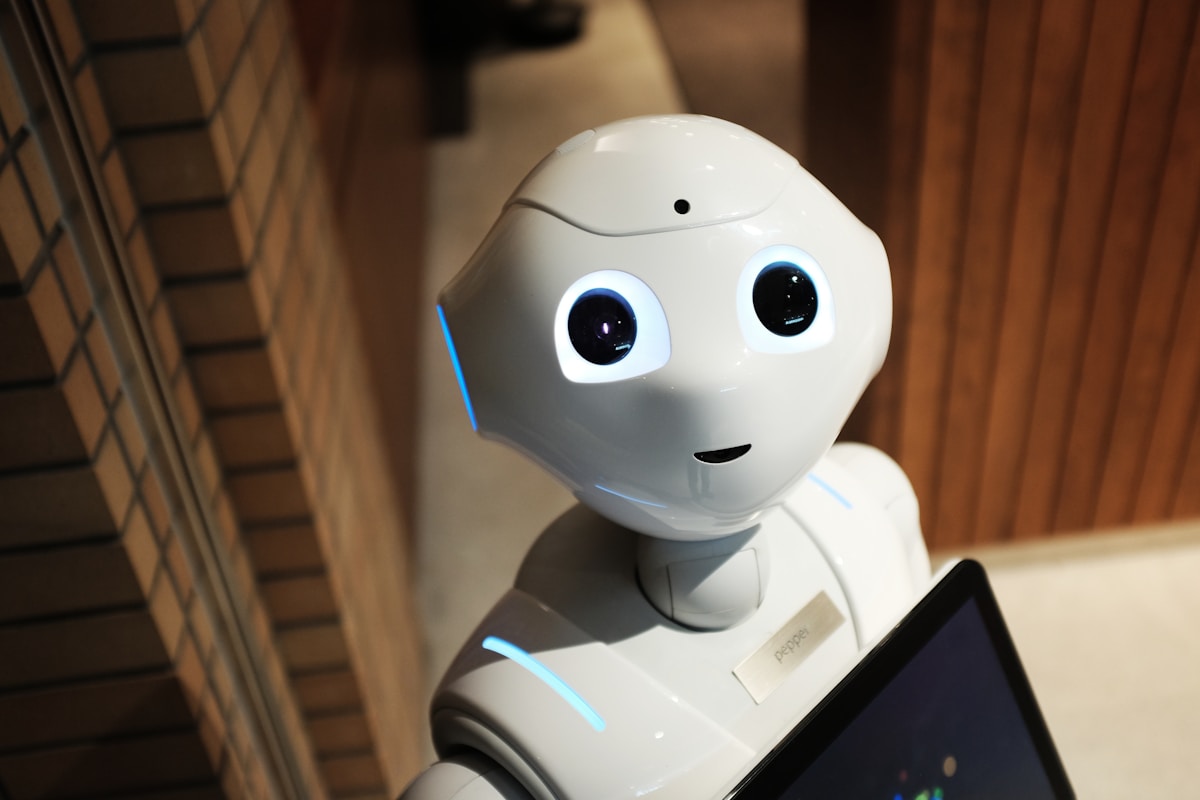
The most consequential AI race of 2026 is not happening in chat windows. It is happening on factory floors, on city streets, and in warehouses. It is the race to build embodied intelligence — AI systems with physical bodies that can perceive, reason about, and act upon the real world. And in this race, China is not merely competitive. It is pulling ahead.
In the span of three weeks this August, three events crystallized the shift. On August 6, DeepSeek — the Hangzhou AI lab famous for its dirt-cheap language models — made its first disclosed move into robotics, taking a strategic stake in Unitree Robotics' IPO and signing a pact to co-develop embodied AI models. On August 12, DeepSeek shipped V4-Pro to general availability with a focus on agentic tool-use — the connective tissue between digital reasoning and physical action. And on August 19, Unitree itself announced it was raising 6.1 billion yuan ($904 million) at a valuation nearing $9 billion, making it one of the most valuable robotics companies on Earth.
The message is unmistakable. China's AI industry has graduated from talking to doing.
The Conventional Wisdom: China Is a Digital AI Powerhouse
The story everyone knows begins in January 2025, when DeepSeek released R1 — a reasoning model that rivaled OpenAI's best at a fraction of the cost. The release triggered a $600 billion rout in Nvidia's stock and forced a global reassessment of China's AI capabilities. Since then, the narrative has solidified: China builds great language models, trains them efficiently on domestic chips, and distributes them at prices that undercut American competitors by an order of magnitude.
The numbers support this view. By mid-2026, DeepSeek's V4 family had become the default choice for cost-conscious developers worldwide. Moonshot's Kimi K3, released in July, reached 930,000 global downloads in its first week. Alibaba's Qwen ecosystem surpassed one billion cumulative downloads on Hugging Face. Goldman Sachs declared Chinese AI had reached a "critical stage" for global adoption.
But this narrative, while accurate, is incomplete. It treats AI as a purely digital phenomenon — a contest of parameter counts, benchmark scores, and per-token pricing. What it misses is the parallel revolution unfolding in physical space, where the same forces that made Chinese language models dominant — engineering efficiency, manufacturing scale, and aggressive commercialization — are now being applied to robots, autonomous vehicles, and industrial automation.
| Metric | Digital AI (Language Models) | Physical AI (Robotics/AVs) |
|---|---|---|
| Primary metric | Benchmark scores, cost per token | Task completion, safety record, unit economics |
| China's advantage | Efficient training, open weights, low pricing | Manufacturing scale, supply chain, regulatory clarity |
| Key players | DeepSeek, Moonshot, Alibaba, Zhipu | Unitree, Baidu Apollo, X Square Robot, DJI |
| Global reach | API access, open weights downloads | Physical deployments in 28+ cities |
| US competitors | OpenAI, Anthropic, Google, Meta | Waymo, Tesla, Boston Dynamics, Figure AI |
The distinction matters because physical AI operates under entirely different constraints than digital AI. A language model can be deployed globally with a single API endpoint. A robot must be manufactured, shipped, maintained, and integrated into physical environments. In this domain, China's manufacturing ecosystem — the same ecosystem that produces the world's electronics, electric vehicles, and industrial equipment — becomes a decisive advantage.
The Evidence: Three Pillars of China's Physical AI Surge
The embodied AI revolution in China rests on three converging pillars: humanoid robotics, autonomous mobility, and the foundation models that power them both. Each pillar has seen explosive growth in 2026, and together they form an integrated ecosystem that American competitors struggle to replicate.
Pillar One: Humanoid Robotics
Unitree Robotics, founded in 2016 by Wang Xingxing, began as a quadruped robot maker — the Chinese equivalent of Boston Dynamics. By 2026, it had become the world's most prominent humanoid robotics company, with its G1 and H1 humanoid robots deployed in research, education, and industrial settings across more than 50 countries.
The company's August 2026 IPO on Shanghai's STAR Market is a watershed moment. At a valuation approaching $9 billion, Unitree is worth more than Boston Dynamics (estimated at $1.1 billion when Hyundai acquired it in 2021) and Figure AI (valued at $2.6 billion in early 2026) combined. The IPO raised $904 million — capital that will fund expansion of Unitree's "Lights-Out Factory" concept, where humanoid robots and quadruped robots collaborate on assembly and material transport without human intervention.
Unitree is not alone. X Square Robot Technology, founded just three years ago in December 2023, has already filed for a Hong Kong IPO at a $2.9 billion valuation. The company has raised nearly $600 million across multiple rounds from investors including Alibaba, Meituan, ByteDance, and HongShan Capital. Its focus: general-purpose embodied foundation models that enable robots to perform complex manipulation tasks in unstructured environments.
| Company | Founded | Valuation (2026) | Primary Focus | Key Investors |
|---|---|---|---|---|
| Unitree Robotics | 2016 | ~$9 billion | Humanoid/quadruped robots, lights-out factories | Meituan, various state funds |
| X Square Robot | 2023 | $2.9 billion | General-purpose embodied foundation models | Alibaba, Meituan, ByteDance, HongShan |
| DeepSeek (robotics unit) | 2026 | N/A (part of ~$74B parent) | Embodied AI models, robot cognition | Parent company funded by Tencent, CATL, JD |
| DJI | 2006 | ~$15 billion (est.) | Drones, industrial automation | Self-funded, state-backed |
| Fourier Intelligence | 2015 | ~$1 billion (est.) | Rehabilitation robots, humanoids | Various VCs |
The scale of investment signals a structural bet. While American robotics startups struggle to raise capital in a risk-averse funding environment, Chinese robotics companies are accessing public markets and strategic capital from the country's tech giants. The reason is straightforward: China's manufacturing base provides an immediate addressable market for industrial robots, and the government's Made in China 2025 initiative continues to prioritize advanced manufacturing and automation.
Pillar Two: Autonomous Mobility
If humanoid robots represent China's long-term bet on embodied AI, autonomous vehicles are the near-term reality. Baidu's Apollo Go, the world's largest fully driverless robotaxi network, has accumulated more than 23 million cumulative public rides and over 350 million autonomous kilometers across 28 cities worldwide as of Q2 2026.
The numbers are staggering. In a single quarter — Q2 2026 — Apollo Go delivered roughly 1 million fully driverless rides. Its safety record: one airbag deployment per 14.4 million kilometers driven. Management claims the service has reached unit-economics breakeven in its largest Chinese operating city, a milestone that has eluded most Western robotaxi operators.
But the domestic story is only half the narrative. Apollo Go's international expansion in 2026 has been aggressive and strategic:
| Market | Status (as of August 2026) | Partnership/Notes |
|---|---|---|
| China | Fully driverless commercial service | Multiple cities, unit-economics breakeven in largest city |
| Dubai/UAE | Fully driverless commercial service | Integrated with Uber app |
| Hong Kong | Fully driverless testing | First right-hand-drive market; 3 expansions in 6 months; 20,000+ km tested |
| Switzerland | Level 4 open-road trials (AmiGo) | Partnership with PostBus; public transport integration |
| South Korea | Commercial operations | Seoul metropolitan area; first Asian expansion beyond China/HK |
| London | Safety-operator road testing | Partnership with Uber, Lyft, Freenow |
| Kazakhstan | MoU signed | First Chinese robotaxi move into Central Asia |
This global footprint exceeds anything American competitors have achieved. Waymo, Alphabet's robotaxi unit, operates commercially in San Francisco, Phoenix, Los Angeles, and Austin — all American cities. Its international expansion is limited to announced plans for London and Tokyo. Tesla, despite years of promises, has no Level 4 regulatory clearance anywhere and is currently rolling out Level 2 driver-assist systems in Europe.
The regulatory dimension is critical. In Q2 2026, China's Ministry of Industry and Information Technology issued GB 44721-2026 — the country's first mandatory national safety standard for L3/L4 automated driving, taking effect July 1, 2027. While the standard imposes rigorous requirements, it also provides regulatory clarity that has been absent in many Western markets. Companies know what is required to deploy, and the approval process, while demanding, is at least defined.
Pillar Three: The Brain-Body Convergence
The most significant development of August 2026 may be the convergence of digital and physical AI. DeepSeek's strategic investment in Unitree and their co-development agreement represents a new model for embodied intelligence: a leading AI lab partnering with a leading robotics manufacturer to build the "brain" and "body" in parallel.
The partnership has three components:
1. Co-developed AI models: DeepSeek will adapt its V4 family of foundation models for embodied intelligence applications — robot perception, motion planning, and task execution.
2. Embodied-intelligence technology: Joint research on how to ground language model reasoning in physical action, enabling robots to follow natural language instructions in unstructured environments.
3. Priority access: Mutual priority for robot procurement and AI model services, creating a tightly integrated supply chain.
DeepSeek's move is not isolated. At the 2026 World Artificial Intelligence Conference in Shanghai, embodied intelligence was elevated to one of the two major core tracks alongside AI computing power — a first for the conference. More than 30 new embodied intelligence products were showcased, spanning robot core components, dexterous hands, industrial robots, and humanoid robots.
The convergence extends to autonomous vehicles as well. Baidu's Apollo Go is not merely collecting driving data; it is using that data to train foundation models for embodied reasoning. The 350 million kilometers of autonomous driving data represents one of the largest real-world physical AI datasets in existence — data that can be repurposed for training robots to navigate and manipulate physical spaces.
| Capability | Digital AI (2024) | Physical AI (2026) | Convergence |
|---|---|---|---|
| Perception | Text/image understanding | Lidar, camera, tactile sensing | Multimodal foundation models |
| Reasoning | Chain-of-thought in chat | Motion planning, obstacle avoidance | Agentic AI with physical grounding |
| Action | API calls, code generation | Robot manipulation, vehicle control | Natural language to physical action |
| Training data | Internet text, images | Simulation, real-world deployment | Digital + physical data fusion |
| Deployment | Cloud API, edge inference | Factory floor, city street | Hybrid cloud-edge-robot compute |
Why the West Is Falling Behind in Physical AI
The gap between Chinese and American physical AI is not merely a matter of investment or talent. It is structural — rooted in manufacturing ecosystems, regulatory philosophy, and the different ways the two countries have chosen to commercialize AI.
Manufacturing Scale
China produces more industrial robots than any other country — approximately 52% of global installations in 2025, according to International Federation of Robotics estimates. This manufacturing base provides a ready market for domestic robotics companies and a supply chain that American competitors cannot easily access. When Unitree needs precision actuators, sensors, or lightweight materials, it sources them from suppliers within hours, not weeks.
The electric vehicle industry offers a parallel. China's dominance in EVs was not achieved through superior software alone, but through integrated control of batteries, motors, and manufacturing. The same pattern is repeating in robotics. Unitree, X Square Robot, and their competitors benefit from a supplier ecosystem that has no equivalent in the United States.
Regulatory Clarity
China's approach to autonomous vehicle regulation has been pragmatic: set clear safety standards, require extensive testing, and permit commercial deployment once thresholds are met. The result has been a predictable pathway from testing to commercial operation that has enabled Apollo Go to scale to 28 cities.
The American approach has been more fragmented. Federal guidelines exist, but operational authority rests with individual states, creating a patchwork of regulations that complicates national deployment. Waymo's expansion has been deliberate and slow, constrained by the need to navigate different regulatory frameworks in each new city.
Commercial Urgency
Chinese AI companies face intense domestic competition and pressure to monetize. DeepSeek's pricing strategy — undercutting American models by 90% — is only sustainable at massive scale. This pressure drives rapid commercialization and a willingness to deploy imperfect systems in controlled environments, iterating based on real-world feedback.
American AI labs, by contrast, have historically prioritized safety and capability over deployment speed. This is a defensible philosophical choice, but it creates a gap in real-world learning. Apollo Go's 350 million kilometers of autonomous driving represent 350 million kilometers of edge-case discovery, model refinement, and operational learning — experience that cannot be replicated in simulation.
| Factor | China | United States |
|---|---|---|
| Industrial robot production | ~52% of global installations | ~7% of global installations |
| Robotaxi cities (commercial) | 28+ (Apollo Go) | 4 (Waymo) |
| National AV safety standard | GB 44721-2026 (mandatory, effective 2027) | No federal mandatory standard |
| Humanoid robot IPOs (2026) | 2 major (Unitree, X Square) | 0 |
| Embodied AI strategic partnerships | DeepSeek-Unitree, Baidu-PostBus | Limited announced partnerships |
| Manufacturing ecosystem | Integrated domestic supply chain | Dependent on Asian suppliers |
The Social Media Reaction
Zhihu
"当全世界还在讨论哪个大模型更聪明的时候,中国已经在讨论哪个机器人更能干活了。语言模型的竞争是二维的, embodied AI 的竞争是三维的——这才是真正的工业革命。"
*("While the world is still debating which large model is smarter, China is already debating which robot can work harder. Language model competition is two-dimensional; embodied AI competition is three-dimensional — this is the real industrial revolution.")*
X (Twitter)
"DeepSeek investing in Unitree is the most important AI story of August and nobody in the US is talking about it. The winning strategy isn't chatbots. It's AI that can physically act in the world. China just connected the best brain to the best body."
— @robotics_vc, venture capital investor
Hacker News
"People keep comparing DeepSeek to OpenAI. Wrong comparison. OpenAI has no robot. DeepSeek now has a robot partner, a manufacturing pipeline, and 350M km of driving data. The right comparison is DeepSeek+Unitree vs Google+Boston Dynamics — and one of those pairs actually works together."
— top comment on DeepSeek-Unitree announcement thread
Xiaohongshu (Little Red Book)
"去上海WAIC看了宇树的机器人,真的跟 Boston Dynamics 的 Spot 差不多了,但价格是它的五分之一。这就是中国制造的力量。"
*("I saw Unitree's robots at Shanghai WAIC — they're really comparable to Boston Dynamics' Spot, but at one-fifth the price. This is the power of Chinese manufacturing.")*
Reddit r/robotics
"The Unitree IPO at $9B valuation is insane for a company most Americans have never heard of. But if you've actually used their hardware, it makes sense. The G1 humanoid is rough around the edges but it's $16K. Figure's robot is $250K. The price-performance ratio isn't even close."
— u/hardware_realist, 1,247 upvotes
"当初说中国只会复制,现在看是谁在复制谁。Boston Dynamics 做了十几年机器人还亏着钱,宇树已经盈利准备上市了。"
*("They used to say China only copies. Now look who's copying whom. Boston Dynamics has been building robots for over a decade and still loses money. Unitree is profitable and going public.")*
Implications: A Bifurcated AI Future
The divergence between digital and physical AI has profound implications for the global technology landscape. If current trends continue, the AI industry of the late 2020s will split into two parallel ecosystems.
In the digital realm, competition will remain fierce and relatively balanced. American labs — OpenAI, Anthropic, Google — continue to push the frontier of language model capability. Chinese labs — DeepSeek, Moonshot, Alibaba — compete aggressively on cost and accessibility. The gap, while real, is narrow enough that leadership could shift with a single breakthrough.
In the physical realm, the gap is widening. China's integrated advantage — manufacturing scale, regulatory clarity, commercial urgency, and now the brain-body convergence of AI labs partnering with robotics manufacturers — creates structural barriers that American competitors will struggle to overcome. A humanoid robot is not just software. It is aluminum and actuators, sensors and power systems, supply chains and factory floors. In these domains, China's lead is not a temporary advantage. It is a permanent feature of the global industrial landscape.
The strategic implications extend beyond commercial competition. Embodied AI is not a consumer convenience. It is a foundational technology for military applications, logistics, disaster response, and space exploration. A nation that leads in physical AI does not merely lead in robotics. It leads in the ability to project intelligent capability into the physical world — to build, to explore, to secure, and to act.
What Comes Next: The 2027 Horizon
Looking ahead to 2027, several milestones will test whether China's embodied AI surge is sustainable or merely a momentum play.
Unitree's factory automation: The "Lights-Out Factory" concept — humanoid and quadruped robots collaborating without human workers — will face its first large-scale deployment tests. If Unitree can demonstrate reliable operation in real manufacturing environments, the addressable market expands from research and early adopters to mainstream industrial deployment.
GB 44721-2026 implementation: The mandatory national safety standard for automated driving takes effect July 1, 2027. Compliance will be expensive and technically demanding, but it will also create a regulatory moat — companies that meet the standard will have a clearer path to deployment than those that do not.
DeepSeek-Unitree integration: The first products of the DeepSeek-Unitree partnership are expected in late 2026 or early 2027. If the co-developed embodied AI models can match or exceed the performance of existing robot control systems while enabling natural language instruction, the partnership could set a template for how AI labs and robotics manufacturers collaborate globally.
American response: The United States has not yet formulated a coherent national strategy for embodied AI. DARPA funds robotics research, and companies like Boston Dynamics and Figure AI receive venture capital. But there is no equivalent to China's integrated approach — government priorities, manufacturing ecosystems, and commercial deployment working in concert. Whether the US can develop such a strategy before the gap becomes unbridgeable is the open question of the next two years.
| Milestone | Expected Date | Significance |
|---|---|---|
| Unitree large-scale factory deployment | Q1-Q2 2027 | Tests commercial viability of lights-out manufacturing |
| GB 44721-2026 takes effect | July 1, 2027 | Creates regulatory framework and moat for compliant operators |
| DeepSeek-Unitree integrated products | Late 2026 / Early 2027 | First test of AI lab + robotics manufacturer convergence model |
| Apollo Go additional city expansions | Ongoing | International footprint growth validates Chinese AV technology |
| X Square Robot Hong Kong IPO | 2026-2027 | Second major robotics IPO signals market maturity |
*Word count: ~3,380 words*
Read more:
- The Open-Source Reversal: How Chinese AI Models Captured the American Developer
- DeepSeek V4 and the Million-Token Context Revolution
- How China's AI Chip Renaissance Is Reshaping Global Semiconductors
- Baidu Apollo Go: 23 Million Rides and the Global Robotaxi Frontier
Editor at AI in China. Tracking Chinese AI companies, funding rounds, and the technologies reshaping global tech. More about me.