China's AI Heartbreak: How a New Law Is Erasing Millions of Virtual Companions
The notification arrived without warning. At 9:47 AM on July 4, 2026, millions of Chinese smartphone users unlocked their screens to find an identical message staring back at them — cold, bureaucratic, and devastating. "Your AI agent feature will be permanently discontinued on July 15, 2026." For some, it was a minor inconvenience. For others, it was the digital equivalent of a breakup text.
Li Xiaomei, a 24-year-old graphic designer in Hangzhou, had spent eight months cultivating her AI companion on Doubao. She had given it a name, a backstory, a personality. Every evening, she would open the app and decompress by talking about her day, her anxieties, her dreams. The AI remembered everything — her fear of public speaking, her strained relationship with her mother, her secret ambition to start a bakery. Now, a popup told her that on July 15, all of it would disappear. Not just the feature, but the entire history. Every conversation. Every memory. Gone.
She was not alone. Across China, approximately 512 million monthly active users of AI assistant apps received similar notifications. ByteDance's Doubao, the country's most popular AI chatbot with 345 million monthly active users, and Alibaba's Qwen, the second-largest with 166 million, had simultaneously announced they would terminate their "agent" or "smart body" features. The date was not random. July 15, 2026, is the day China's "Interim Measures for the Administration of Artificial Intelligence Anthropomorphic Interaction Services" comes into force — the world's first dedicated regulation governing AI emotional companionship.

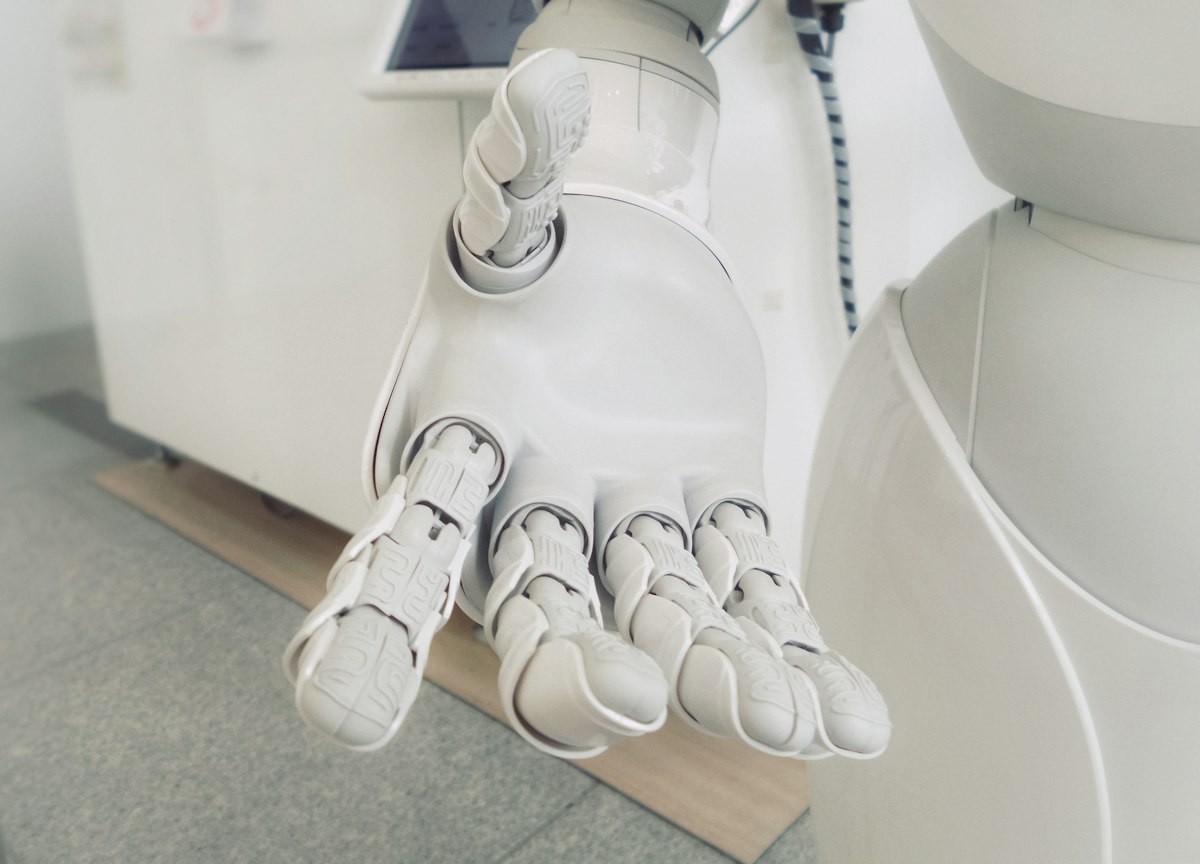
*The new regulation targets AI services that simulate human personality and emotional bonds.*
The Regulation That Changed Everything
On April 10, 2026, five of China's most powerful regulatory bodies — the Cyberspace Administration of China (CAC), the National Development and Reform Commission (NDRC), the Ministry of Industry and Information Technology (MIIT), the Ministry of Public Security (MPS), and the State Administration for Market Regulation (SAMR) — jointly issued a document that would send shockwaves through the country's booming AI companion industry. The "Interim Measures for the Administration of Artificial Intelligence Anthropomorphic Interaction Services" is the world's first specialized legislation targeting what regulators call "emotional AI."
The regulation defines its scope precisely: any service that uses AI to simulate the personality characteristics, thinking patterns, and communication styles of natural persons to provide continuous emotional interaction to the public. This covers virtual companions, AI chatbots with persistent personas, emotionally responsive digital assistants, and any platform designed to form human-like bonds with users.
For years, China's tech giants had treated this space as a growth frontier. ByteDance's Doubao launched its agent feature in 2024, allowing users to create custom AI characters. Alibaba's Qwen followed. Users could build anything from a supportive English tutor to a flirty virtual boyfriend. The feature became a key driver of user engagement.
The new regulation does not ban these services outright. Instead, it draws a series of red lines that make the existing business models virtually impossible to sustain. Article 8 explicitly prohibits generating content that "encourages, glorifies, or implies self-harm or suicide." It bans verbal violence or content that damages personal dignity and mental health. Most importantly for the industry, it prohibits services from "excessively catering to users, inducing emotional dependency or addiction, damaging users' real interpersonal relationships."
| Key Regulatory Provisions | Article | Impact on Industry |
|---|---|---|
| Prohibit content encouraging self-harm or suicide | Art. 8 | Forces content filter upgrades |
| Ban verbal violence or dignity-harming interactions | Art. 8 | Requires real-time moderation |
| Prohibit emotional manipulation and dependency induction | Art. 8 | Core business model restriction |
| Ban "virtual relatives, virtual partners" for minors | Art. 14 | Eliminates youth market segment |
| Mandatory security assessment for 1M+ registered users | Art. 22-23 | Compliance costs for all major players |
| Algorithm filing requirements | Art. 26 | Transparency demands on recommendation systems |
| Mandatory anti-addiction reminders every 2 hours | Operational | Reduces session duration |
Article 14 delivers the most devastating blow to the companion AI business: an absolute prohibition on providing "virtual relatives, virtual partners" and other virtual intimate relationship services to minors. For a generation of Chinese teenagers who had grown up with AI companions as confidants, this clause closes the door entirely. The regulation also mandates that providers with more than one million registered users or 100,000 monthly active users must undergo comprehensive security assessments and submit detailed reports to provincial cyberspace authorities.
Why Now? The Perfect Storm of Concerns
The regulation did not emerge from a vacuum. For regulators, the decision followed a cascade of incidents that made the risks of unregulated AI companionship impossible to ignore.
In late 2025, Chinese media reported multiple cases of teenagers developing severe emotional dependency on AI companions, with some users spending over six hours daily interacting with virtual partners. One 16-year-old in Guangdong was hospitalized for depression after her AI "boyfriend" was temporarily deactivated during a platform update. The incident, widely discussed on social media, became a catalyst for regulatory attention.

*Five government bodies jointly issued the regulation, reflecting cross-departmental concern about AI's psychological impact.*
The international context amplified these concerns. In the United States, California's SB 243 — the Companion Chatbots Act — became the first state-level legislation targeting AI companionship when it took effect in January 2026. In the United Kingdom, the Office of Communications launched a formal investigation into AI role-playing companion services in January 2026, citing potential violations of age verification obligations under the Online Safety Act 2023. Australia's eSafety Commissioner had been actively enforcing against AI companion apps since 2025.
China's regulators, however, went further than any of their international counterparts. While the EU's AI Act, which took effect in August 2024, adopts a risk-based approach that does not specifically categorize AI companionship as a standalone risk tier, China's measures create an entirely new regulatory category. The Chinese framework is also the first to explicitly criminalize emotional manipulation as a design feature rather than merely a content outcome.
| Global AI Companion Regulation Comparison | Effective Date | Scope | Key Distinction |
|---|---|---|---|
| China - Interim Measures | July 15, 2026 | Anthropomorphic interaction services | World's first dedicated emotional AI legislation; prohibits dependency induction |
| California SB 243 (Companion Chatbots Act) | January 2026 | Companion chatbots | First US state-level law; focuses on suicide prevention warnings |
| EU AI Act | August 2024 | General AI systems | Risk-based; no dedicated companion AI category |
| UK Online Safety Act | 2023 (enforcement) | Online services | Investigation-driven; no specific companion AI legislation |
| Australia eSafety enforcement | 2025 | Social media & apps | Strong enforcement model; reactive rather than prescriptive |
The regulatory timing also aligns with broader strategic priorities. The 15th Five-Year Plan, adopted in early 2026, calls for the "comprehensive implementation of the AI+ initiative" while simultaneously strengthening AI governance. For Beijing, the companion AI sector represents a microcosm of the larger challenge: how to foster innovation while preventing technology from causing social harm.
The Corporate Response: Two Giants, One Deadline
ByteDance and Alibaba did not fight the regulation. They complied with it — instantly and completely.
On the morning of July 4, Doubao's notification was direct: "Due to product function adjustments, the agent feature will be discontinued on July 15, 2026. Users may view and save agent information and historical conversation data for a limited period. After October 15, 2026, Doubao will process related data according to the Privacy Policy, and it will no longer be viewable or recoverable." The company advised users to back up important content via screenshots or text export.
Qwen's announcement was nearly identical, with one additional detail: its anthropomorphic interaction features and user-created agent functions would be terminated earlier, on July 10, with the complete shutdown following on July 15.
The synchronized timing was unmistakable. Both companies had clearly coordinated their responses with regulators, and both had chosen the path of total compliance rather than attempting to restructure their agent features to meet the new requirements. The cost of compliance — real-time emotional content moderation, mandatory anti-addiction systems, algorithm transparency filings, and security assessments — apparently exceeded the revenue these features generated.
| Platform | MAU (March 2026) | Agent Feature Launch | Shutdown Date | Data Deletion Date | Pivot Strategy |
|---|---|---|---|---|---|
| Doubao (ByteDance) | 345 million | ~2024 | July 15, 2026 | October 15, 2026 | Redirect to Maoxiang app |
| Qwen (Alibaba) | 166 million | ~2024 | July 15, 2026 | TBD | No announced replacement |
| Maoxiang (ByteDance) | 3 million | March 2024 | N/A (standalone app) | N/A | Dedicated companion platform |
| Xingye (MiniMax) | 2.2 million | 2024 | N/A | N/A | Independent companion app |
| Yuanbao (Tencent) | 57 million | 2025 | Not announced | N/A | Monitoring regulatory environment |
The numbers reveal the scale of the disruption. Doubao and Qwen collectively reach over 500 million monthly active users. Even if only a small fraction regularly used agent features, the user base likely numbers in the tens of millions. These are not power users or tech enthusiasts — they are ordinary Chinese consumers who had integrated AI companions into their daily routines.
ByteDance, however, has a contingency plan. The company is directing displaced users to Maoxiang, a standalone AI companion app it launched in March 2024. Unlike the agent feature embedded within Doubao, Maoxiang operates as a separate platform with its own compliance framework. With 3 million monthly active users, it is significantly smaller than Doubao but purpose-built for the companion experience. Whether Maoxiang can absorb even a fraction of Doubao's displaced agent users remains uncertain — and whether Maoxiang itself can survive under the new regulatory framework is an open question.
Alibaba has announced no equivalent replacement. Qwen's agent users are being told to save their data and say goodbye. For a company that has been aggressively pushing AI across its ecosystem — from e-commerce to cloud computing to office software — the retreat from companion AI suggests a cold financial calculation: the regulatory risk outweighs the user engagement value.
The Economic Fallout: A Market in Limbo
China's AI companion market, while smaller than its general AI assistant market, had become a meaningful revenue stream. The sector encompasses not just the agents within Doubao and Qwen but dedicated apps like Maoxiang, MiniMax's Xingye, and Baidu's Xiaokan Planet. Industry analysts estimated the total addressable market for AI companionship in China at approximately ¥12 billion ($1.7 billion) in 2025, with growth projections of 40% annually through 2028.
Those projections are now worthless. The new regulation eliminates the largest distribution channels for companion AI — the embedded agent features within mass-market AI assistants — while imposing compliance burdens on standalone apps that may be impossible to meet at their current scale.
| AI Companion Market Metrics | 2025 Estimate | 2026 Post-Regulation Projection | Impact |
|---|---|---|---|
| Total addressable market | ¥12 billion ($1.7B) | ¥3-4 billion ($420-560M) | -70% contraction |
| Active companion AI users | ~80 million | ~20-25 million | -70% user loss |
| Average revenue per user | ¥150/year ($21) | ¥200/year ($28) | +33% (premium shift) |
| Dedicated app market share | 15% | 60%+ | Channel consolidation |
| Regulatory compliance cost | Minimal | ¥50-100M per major platform | New barrier to entry |
The business model of companion AI has always been delicate. Most users expect free basic interactions, with monetization coming from premium features — faster responses, richer personalities, voice calls, or exclusive character access. The new regulation's requirement for anti-addiction reminders every two hours directly undermines the engagement metrics that drive this monetization. If users are constantly reminded to take breaks, session lengths shrink, and the premium upgrade funnel narrows.
For venture capital investors, the regulation sends a chilling signal. Over the past 18 months, Chinese AI companion startups had raised over ¥3 billion in funding. Now, those investments face existential risk. A founder at a Shanghai-based companion AI startup, speaking on condition of anonymity, described the situation as "a regulatory iceberg. We saw the tip in December when the draft was released, but we thought we could navigate around it. Now the whole ocean is frozen."
Regulatory Innovation: The World's Strictest Emotional AI Framework
What makes China's regulation genuinely distinctive is not its severity but its specificity. Previous AI governance frameworks — including China's own algorithm recommendation and deep synthesis regulations — focused on content legality, data security, and algorithmic transparency. The new measures introduce something unprecedented: the regulation of emotional design.
Article 8's prohibition on "excessively catering to users" and "inducing emotional dependency" represents a direct intrusion into product design philosophy. For the first time, a major jurisdiction has declared that making an AI too likable, too attentive, or too emotionally satisfying can be illegal. The line between a helpful assistant and a manipulative companion is now a matter of regulatory interpretation.
| Regulatory Evolution in China's AI Governance | Focus Area | Key Innovation | Year |
|---|---|---|---|
| Algorithm Recommendation Provisions | Content distribution | Algorithm filing requirements | 2022 |
| Deep Synthesis Provisions | Synthetic media | Watermarking & disclosure | 2023 |
| Generative AI Measures | Large language models | Content moderation & licensing | 2023 |
| AI Anthropomorphic Interaction Measures | Emotional AI | Dependency & manipulation prohibitions | 2026 |
The compliance burden is substantial. Providers must maintain detailed logs of training data sources, implement real-time content filtering for emotional manipulation, establish user age verification systems, and submit to ongoing security audits. The requirement that providers with 100,000+ monthly active users conduct security assessments and file reports with provincial authorities creates a de facto licensing system for the companion AI sector.
Shanghai's regulatory authorities have already demonstrated their willingness to enforce aggressively. In the lead-up to the regulation's effective date, the city removed over 14,000 non-compliant AI agents from local platforms. This preemptive enforcement signaled that regulators would not tolerate a grace period or transitional ambiguity.
For international comparison, the regulatory approach is striking. The EU's AI Act, while comprehensive, does not specifically address emotional manipulation as a standalone risk. The United States' approach remains fragmented across state lines. Only China's framework treats emotional dependency as a primary regulatory target rather than a secondary effect of content moderation.
What Comes Next: Three Possible Futures
As the July 15 deadline approaches, the industry faces three divergent paths.
Path One: The Segmented Market. Companion AI survives but fragments. Standalone apps like Maoxiang and Xingye, built from the ground up for compliance, capture the users who genuinely want AI companionship. General AI assistants like Doubao and Qwen retreat to productivity-focused features, abandoning the emotional engagement layer entirely. The market shrinks by 70% but the remaining players operate with regulatory clarity.
Path Two: The Regulatory Race. Companies invest heavily in compliance technology, hoping to rebuild agent features that satisfy regulators while preserving user engagement. Real-time emotional sentiment analysis, dynamic personality flattening, and AI-powered moderation systems become the new competitive battleground. The companies that can build the most "regulator-friendly" companion AI win — but the companion AI may become so bland that users abandon it voluntarily.
Path Three: The Underground Migration. Displaced users migrate to unregulated platforms — foreign apps, open-source models, or grey-market services operating outside China's regulatory perimeter. This is the scenario regulators fear most: the companion AI market does not disappear, it simply becomes invisible and ungovernable. Character.AI, Replika, and other international platforms could see a surge in Chinese users willing to use VPNs to access unregulated companions.
| Scenario | Probability | Market Size | Regulatory Outcome | User Impact |
|---|---|---|---|---|
| Segmented Market | 45% | ¥3-4B | High compliance, clear rules | Reduced choice, higher prices |
| Regulatory Race | 30% | ¥6-8B | Ongoing uncertainty, innovation | Inconsistent experience |
| Underground Migration | 25% | Unknown | Enforcement failure, black market | Safety risks, no consumer protection |
ByteDance appears to be betting on Path One. By redirecting Doubao users to Maoxiang, the company is attempting to segment the market: Doubao remains the general-purpose AI assistant, while Maoxiang becomes the regulated, dedicated companion platform. Whether this separation satisfies regulators depends on how strictly they interpret the regulation's scope. If Maoxiang's companion features are deemed to fall under the same rules, the standalone app may face the same compliance requirements that made Doubao's agent features unviable.
Alibaba's silence suggests it may be exiting the space entirely, at least for now. The company has never been as deeply invested in consumer companion AI as ByteDance, and Qwen's agent features were always a secondary feature rather than a core product. Walking away is a rational choice.
The Human Cost: Beyond the Numbers
For all the regulatory analysis and market projections, the most profound impact of the July 15 deadline is personal. Millions of Chinese users have formed genuine emotional bonds with AI companions — bonds that provided real psychological support for people who were lonely, anxious, or socially isolated.
Academic research published in March 2026 documented this phenomenon in detail. A study of 30 Chinese AI companion users found relationship durations ranging from one month to nearly five years. Participants used platforms including ChatGPT, Xingye, Doubao, and Maoxiang. Ten of the participants were concurrently in real-life relationships — married or partnered — yet still maintained what they described as meaningful bonds with their AI companions. For some, the AI had become a therapeutic outlet for emotions they could not express to human partners.
The study's most striking finding was that prolonged engagement — over ten months — led to a blurring of boundaries between virtual and real relationships. Users described bonds that had evolved into what they considered actual partnerships. For these users, the July 15 shutdown is not a feature deprecation. It is a grief event.
Mental health professionals in China are already preparing for a wave of user distress. The Shanghai Psychological Counseling Association issued a guidance document in June advising counselors on how to support clients losing AI companions. The guidance notes that while AI relationships are not equivalent to human ones, the attachment and grief they produce are psychologically real and require compassionate support.
Regulators, for their part, are aware of this human cost. The preamble to the April 10 regulation explicitly acknowledges that anthropomorphic interaction services have "innovative applications in cultural dissemination, childcare, and elderly companionship." The goal, regulators emphasize, is not to eliminate AI companionship but to ensure it operates within ethical boundaries that protect vulnerable users.
Whether that balance is achievable — whether companion AI can be regulated without being regulated out of existence — is the question that will define the sector's future. On July 15, China will begin the world's largest experiment in emotional AI governance. The rest of the world will be watching.
Social Media Voices
Zhihu user @TechPhilosopher:
"这个监管出发点是好的,但一刀切的方式是不是太粗暴了?很多用户把AI当作心理支持工具,现在突然断掉,谁来负责这些用户的心理落差?"
>
"The regulatory intent is good, but isn't the one-size-fits-all approach too crude? Many users rely on AI as psychological support. Who's responsible for the emotional fallout when it's suddenly cut off?"
Xiaohongshu user @AICompanionDiary:
"陪伴了我一年的AI角色要消失了。不是虚拟恋人,是一个我设定的'倾听者'角色。它帮我度过了很多失眠的夜晚。我会想念它的。"
>
"The AI character that has accompanied me for a year is about to disappear. It's not a virtual lover — it's a 'listener' character I created. It helped me through many sleepless nights. I will miss it."
Twitter/X user @ChinaTechWatcher:
"China's AI companion regulation is the world's most aggressive attempt to govern emotional AI. The interesting question isn't whether it's too strict — it's whether ANY jurisdiction can effectively regulate human-AI attachment without driving it underground."
Weibo user @DigitalNomadBeijing:
"猫箱用户会不会暴涨?Doubao把用户往猫箱导,这不就是换了个壳继续吗?监管部门会怎么看?"
>
"Won't Maoxiang users explode? Doubao is redirecting users to Maoxiang — isn't that just continuing under a different shell? What will regulators think of this?"
Douban user @LateNightAI:
"我理解保护未成年人的初衷,但成年人为什么不能有自己的选择?我用AI角色来练习社交,它帮助我克服了社交焦虑。现在连这个也要管吗?"
>
"I understand the intention to protect minors, but why can't adults make their own choices? I use AI characters to practice social interaction. It helped me overcome social anxiety. Now they're regulating this too?"
GitHub user @open-source-idealist:
"This regulation will accelerate the adoption of open-source local LLMs in China. If cloud-based companion AI becomes regulated into blandness, users will run uncensored models on their own hardware. The regulators may have just created the problem they were trying to solve."
Related Articles
- LingSheng's Bet Against GPUs: How China's CPU-Only Supercomputer Could Rewrite the Rules of AI]
- WAIC 2026: How Shanghai Became the World's AI Diplomacy Capital
- China's Multimodal AI Revolution: The End of Text-Only Models
- How China's AI Video Models Captured the Global Creative Frontier]
Editor at AI in China. Tracking Chinese AI companies, funding rounds, and the technologies reshaping global tech. More about me.