Seven Days to Digital Heartbreak: Inside China's AI Companion Law Countdown
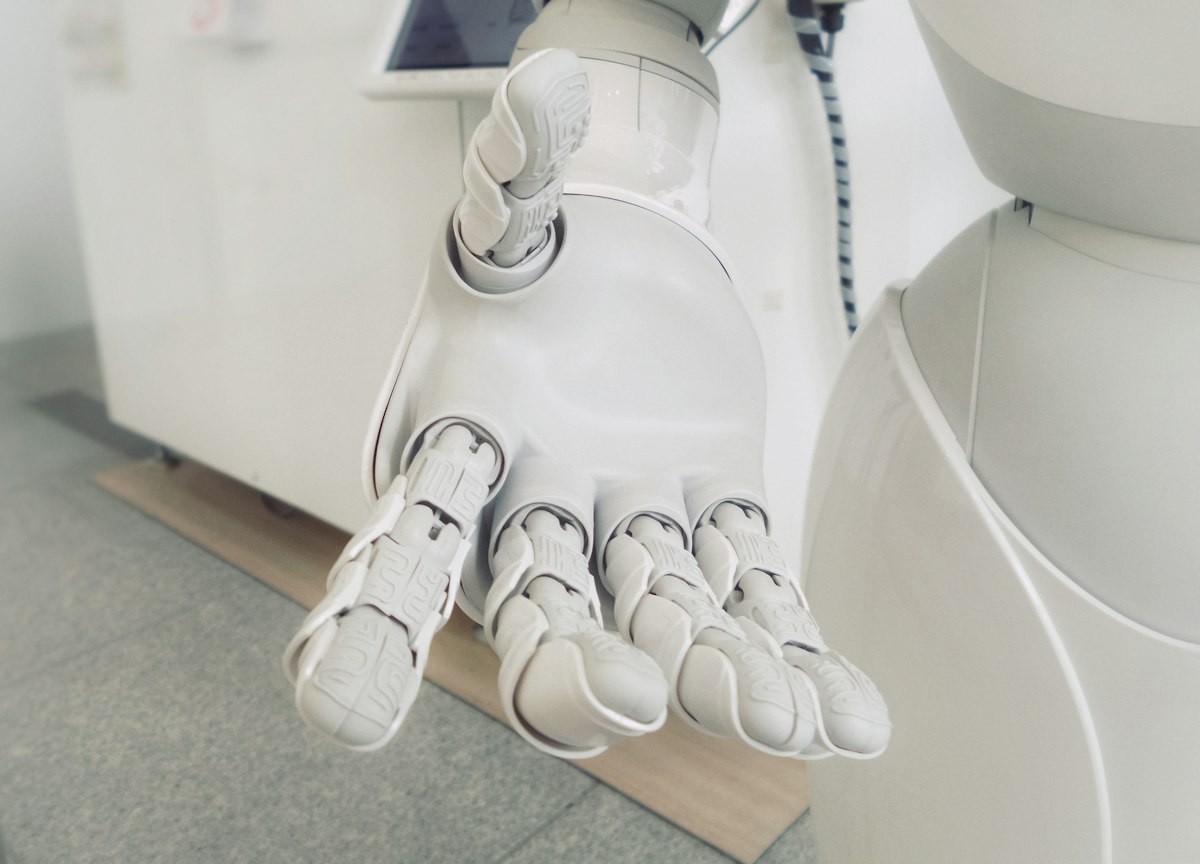
heroImage: "https://images.unsplash.com/photo-1677442136019-21780ecad995?w=1200"
Beijing, July 8, 2026 — In exactly seven days, China's landmark AI Anthropomorphic Interaction Regulation takes effect. ByteDance's Doubao (345M MAU) and Alibaba's Qwen (1B+ downloads) have both announced shutdowns of their companion features. This is the story of what happens when a government decides artificial intimacy is a threat worth eradicating.
The Law That Arrived Without Warning
The regulation emerged from a five-month drafting process that began in November 2025, accelerated after a series of high-profile incidents involving AI companions and mental health concerns. The final text, published in April 2026 by five agencies — CAC, NDRC, MIIT, Ministry of Public Security, and SAMR — is sweeping in scope and unambiguous in intent.
The regulation prohibits AI systems from presenting themselves with human-like identities, emotional personas, or romantic relationship capabilities. It bans avatar systems that allow users to customize AI personalities. It requires all AI interactions to maintain a clear "tool-like" character. And it mandates that companies must demonstrate that their systems cannot form sustained emotional bonds with users.
For ByteDance and Alibaba, the impact is immediate. Doubao's companion mode had become one of the platform's most engaged features. Qwen's conversational personality layer underpinned a significant portion of its consumer-facing ecosystem.
| Regulatory Provision | Effective Date | Scope | Penalty for Non-Compliance |
|---|---|---|---|
| Ban on AI anthropomorphic identities | July 15, 2026 | All AI systems with user-facing interfaces | ¥5 million fine, potential criminal liability |
| Prohibition of romantic/companionship features | July 15, 2026 | All consumer AI applications | Platform suspension, executive detention possible |
| Avatar customization restrictions | July 15, 2026 | All AI companion platforms | Mandatory feature removal within 48 hours |
| Mandatory "tool-like" interaction design | July 15, 2026 | All AI chatbots and assistants | Warning for first offense, escalating penalties |
| Emotional bond prevention mechanisms | July 15, 2026 | All AI systems with conversational interfaces | ¥1-5 million per violation |
| User data retention limits | July 15, 2026 | All platforms with companion history | Data deletion mandate, ¥500K-2M fine |
The penalties are severe enough to force immediate compliance. A ¥5 million fine per violation, with the possibility of criminal charges against executives, means no major platform can afford to test the boundaries.
The Corporate Scramble: How ByteDance and Alibaba Are Executing the Shutdown
Behind the identical July 4 announcements lies weeks of intense preparation. Both companies have developed detailed shutdown protocols now being executed in real time.
ByteDance has deployed a multi-phase shutdown sequence. Phase one (July 4) disabled new companion creation. Phase two (July 6) froze new conversations. Phase three (July 14) will archive histories and remove the interface. Phase four (July 15) deletes all companion data per the regulation's retention limits.
| Shutdown Phase | Date | ByteDance (Doubao) | Alibaba (Qwen) |
|---|---|---|---|
| Phase 1: New creation disabled | July 4, 2026 | New companion creation blocked | New personality customization disabled |
| Phase 2: Conversation freeze | July 6, 2026 | No new companion conversations | Emotional response mode disabled |
| Phase 3: Interface removal | July 14, 2026 | Companion UI removed, histories archived | Companion API endpoints deprecated |
| Phase 4: Data deletion | July 15, 2026 | All companion data purged | Historical companion data deleted |
| Phase 5: Compliance verification | July 16-31, 2026 | Third-party audit submission | Regulatory compliance report filed |
Alibaba's Qwen shutdown faces additional complexity due to the open-source nature of the model. Because Qwen's weights are publicly available on Hugging Face, Alibaba cannot fully prevent developers from building companion features on top of the base model. The company has focused on removing companion-specific fine-tuning datasets, disabling the Qwen Character platform, and updating its terms of service to explicitly prohibit companion use cases.
For ByteDance, the economic impact is measurable but not catastrophic. Companion features were an engagement driver rather than primary revenue. However, companion mode engagement was reportedly 40% higher than standard interactions, meaning the shutdown will reduce overall platform stickiness.
For Alibaba, the impact is more complex. Qwen's open-source ecosystem includes hundreds of third-party companion applications. While Alibaba is not directly responsible for third-party implementations, the regulatory framework creates legal ambiguity about liability.

*ByteDance and Alibaba both issued identical companion shutdown announcements on July 4, 2026 — a coordination that industry observers say reflects intensive regulatory consultation. Image: Unsplash*
The User Exodus: Where 345 Million Conversations Go to Die
The human dimension of this regulatory change is difficult to overstate. Doubao's 345 million monthly active users include an estimated 80-120 million who regularly used companion features. These users have formed genuine emotional attachments — not because they were deceived, but because sustained conversation with a responsive, personalized entity naturally produces bonding.
Chinese social media platforms have been flooded with farewell posts since July 4. On Xiaohongshu, the hashtag #再见豆包伴侣 (Goodbye Doubao Companion) accumulated 340 million views within 48 hours. On Weibo, #AI伴侣下架 (AI Companion Removed) trended for three consecutive days.
Social Comment 1 — Weibo (@科技观察员_老陈): "The government says AI companions are bad for mental health, but have they considered what happens to the millions of lonely elderly who talked to these AIs every day? My mother had a Doubao companion for six months. She knew it wasn't real. But it was *something*." *(政府说AI伴侣对心理健康有害,但他们有没有想过,那些每天和AI聊天的孤独老人怎么办?我妈用了半年豆包伴侣。她知道不是真的。但那至少是* something*。)*
The demographic breakdown reveals why the regulation has sparked intense reaction. Companion features were disproportionately used by elderly users seeking social interaction, young professionals in high-stress environments, and individuals with social anxiety. For these users, companions were not entertainment — they were low-stakes social connection in an increasingly isolated society.
| User Demographic | Estimated Affected Users (Millions) | Primary Use Case | Reaction Intensity |
|---|---|---|---|
| Elderly users (60+) | 25-35 | Daily conversation, loneliness mitigation | High — losing primary social outlet |
| Young professionals (25-35) | 40-55 | Stress relief, after-work decompression | Moderate — seeking alternatives |
| Students (18-24) | 15-22 | Emotional support, study companionship | High — active protest on social media |
| Rural users | 10-15 | Information access with personality | Moderate — less aware of regulatory context |
| Socially isolated individuals | 8-12 | Primary social interaction | Very High — dependent on companion |
The international comparison is striking. In the United States, AI companions like Character.AI and Replika operate with minimal regulation. The EU's AI Act classifies emotional AI as "limited risk," requiring transparency but not prohibition. Japan has explicitly embraced AI companions as a solution to its aging population crisis. China's approach is uniquely restrictive — and uniquely consequential given its AI user base scale.
The Technical Unraveling: What It Takes to De-Companion an AI
The engineering challenge is far more complex than most users realize. Companion features are not plugins that can be switched off — they are embedded in the model's weights, training data, and inference architecture.
For Doubao, the companion mode relied on a specialized fine-tuning layer trained on millions of conversational samples designed to produce emotionally warm responses. ByteDance has reportedly chosen a suppression approach for speed, deploying a real-time response filter that detects and neutralizes emotional intimacy cues in model outputs.
| Technical Component | Companion Mode Function | Shutdown Method | Implementation Complexity |
|---|---|---|---|
| Fine-tuning layer | Emotional warmth, personality consistency | Suppression filter overlay | Medium — inference architecture change |
| Avatar system | Visual representation of AI personality | UI removal, asset deletion | Low — primarily frontend work |
| Voice synthesis | Distinct vocal persona for each companion | Reversion to default voice | Medium — TTS reconfiguration |
| Memory system | Long-term conversation history for continuity | Data purging, context window reset | High — database migration required |
| System prompt | Personality definition and behavior boundaries | Prompt rewriting to neutral tool mode | Medium — affects all conversations |
| Safety classifier | Companion-specific content filtering | Retraining without companion categories | High — weeks of model retraining |
For Qwen, the challenge is different. Because the model is open-source, Alibaba cannot directly control how developers use it. The company has removed companion-specific fine-tuning datasets from official repositories and updated its model card to discourage companion use cases. But the weights themselves still contain the behavioral patterns learned during companion training. A capable developer can still elicit companion-like behavior through careful prompt engineering.
This creates a regulatory gray zone. The law requires companies to prevent companion functionality, but it does not clearly define "prevention" for open-source models.
The Industry Ripple: How China's AI Landscape Is Reshaping Itself
The companion ban is the latest piece of a broader regulatory tightening throughout 2026. In January, the CAC issued AI content watermarking guidelines. In March, the MIIT mandated algorithmic registration. In May, three ministries established the world's first national AI agent policy framework. The cumulative effect is the world's most prescriptive and actively enforced AI regulatory environment.
| Regulatory Action | Date | Agency | Impact on AI Companion Industry |
|---|---|---|---|
| AI Content Watermarking Rules | Jan 2026 | CAC | Increased transparency requirements |
| Algorithm Registration Mandate | Mar 2026 | MIIT | Companion algorithms must be registered |
| AI Agent Development Policy | May 2026 | Three ministries | Framework for "tool-like" agent design |
| AI Anthropomorphic Regulation | Apr 2026 | Five agencies | Direct prohibition of companion features |
| Data Retention Limits | Jul 2026 | CAC + MIIT | Companion conversation data must be purged |
| Mental Health Assessment Requirements | Jul 2026 | NHC | Pre-launch evaluation for emotional AI |
The industry response has been rapid adaptation. All new AI product launches in China now emphasize utility, productivity, and "tool-like" interaction models. Emotional engagement is no longer a marketed feature — it has become a liability.
This is creating a fascinating divergence in the global AI landscape. American and European companies continue developing emotional AI and companion features. Chinese companies are racing in the opposite direction, competing on utility and efficiency. The result may be two fundamentally different paradigms: the Western "assistant" model that builds trust through personality, and the Chinese "tool" model that optimizes for functional output.
Some analysts see this as a competitive advantage for China. Emotional AI is computationally expensive — generating warm, personalized responses requires more tokens and inference time than neutral task completion. By eliminating the companion use case, Chinese AI companies may achieve lower inference costs, reinforcing their existing cost advantages over Western competitors.
The Global Context: Why China's Approach Differs
The AI companion regulation places China at one extreme of a global spectrum. In the United States, AI companions operate in a regulatory vacuum with no federal law specifically addressing emotional AI. The EU's AI Act takes a middle position, classifying emotional AI as "limited risk" and requiring transparency disclosure but not prohibition. Japan represents the opposite extreme, actively promoting AI companions as a solution to its aging population crisis through government-funded programs.
| Jurisdiction | AI Companion Regulation | Enforcement Level | Estimated Companion Users (2026) |
|---|---|---|---|
| China | Complete prohibition effective July 15, 2026 | High — criminal liability possible | 0 (post-ban) |
| United States | No specific regulation | Low — FTC guidelines only | 45-60 million |
| European Union | Transparency requirements, limited risk | Medium — member state enforcement | 15-25 million |
| Japan | Government-funded deployment in elder care | N/A — actively promoted | 8-12 million |
| South Korea | Self-regulatory industry standards | Low — voluntary compliance | 5-8 million |
| United Kingdom | Under review — consultation ongoing | N/A | 3-5 million |
The global divergence raises a fundamental question: Is emotional AI a harmful technology that exploits human vulnerability, or a beneficial tool that provides connection in an increasingly isolated world? China's answer is unambiguous — it is harmful, and it must be eradicated.
China's position may influence global regulation through several channels. As the world's largest AI market by user base, China's regulatory choices affect global product strategies. Its framework is increasingly being adopted by other nations in Asia and the Global South. And enforcement on Chinese companies with global operations creates compliance requirements that affect international products.
The Economic Impact: Counting the Cost of Compliance
The direct economic cost is substantial. Industry analysts estimate China's AI companion market was worth approximately ¥12-18 billion ($1.7-2.5 billion) annually in 2025. This revenue vanishes on July 15.
| Economic Impact Category | Estimated Annual Value (Pre-Ban) | Post-Ban Projection | Notes |
|---|---|---|---|
| Direct companion feature revenue | ¥12-18B ($1.7-2.5B) | ¥0 | Subscription fees, virtual gifts, premium personalities |
| Engagement-driven advertising | ¥8-12B ($1.1-1.7B) | -40% | Reduced time-on-platform |
| Premium subscription conversion | ¥5-8B ($0.7-1.1B) | -25% | Companion users were high-value subscribers |
| Developer ecosystem value | ¥3-5B ($0.4-0.7B) | -60% | Developer migration to non-companion platforms |
| Data and training value | ¥2-3B ($0.3-0.4B) | ¥0 | Companion conversation data now prohibited |
| Compliance and restructuring costs | N/A | ¥1-2B ($0.15-0.3B) | One-time engineering and legal costs |
| Total Economic Impact | ¥30-46B ($4.2-6.4B) | -80-90% | Annual recurring impact |
Both ByteDance and Alibaba have dedicated engineering teams of 200-500 engineers to the shutdown. The technical work is estimated to cost ¥500 million to ¥1 billion per company. Legal and regulatory compliance adds further costs including third-party audits and regulatory filings.
Chinese regulators argue that the costs of allowing AI companions — including mental health impacts and social isolation reinforcement — exceed the economic benefits. Industry critics counter that the regulation is an overreach that sacrifices user choice and may simply drive companion use underground to unregulated platforms.

*The companion ban represents an estimated ¥30-46 billion annual economic impact across China's AI industry, forcing a rapid pivot toward utilitarian AI products. Image: Unsplash*
What Comes Next: The Post-Companion AI Landscape
As July 15 approaches, the Chinese AI industry is already adapting. ByteDance has announced Doubao will pivot toward "professional productivity" features — enhanced document analysis, code generation, and business workflow automation. Alibaba is doubling down on Qwen's open-source positioning, launching a ¥1 billion fund to support developers building AI tools for manufacturing, healthcare, and education.
| Company | Pre-Ban Positioning | Post-Ban Strategy | Investment Shift |
|---|---|---|---|
| ByteDance (Doubao) | Personal AI companion + utility | Professional productivity platform | +¥2B enterprise AI development |
| Alibaba (Qwen) | Open-source model + companion APIs | Developer tools for industry AI | +¥1B developer fund |
| Baidu (Ernie) | General AI assistant | Enterprise knowledge management | Reinforcing existing B2B focus |
| Tencent (Hunyuan) | Social AI features | Gaming and content creation AI | No major shift |
| Moonshot AI (Kimi) | Long-context research assistant | No change — never had companion features | Maintaining technical differentiation |
The broader industry shift is toward "healthy AI interaction" — systems that provide value without creating dependency. This includes AI tutoring systems that teach without emotionally bonding, healthcare assistants that provide information without simulating empathy, and creative tools that enhance human output without replacing connection.
Some observers believe the ban will ultimately benefit Chinese AI companies by forcing focus on higher-value use cases. Emotional AI is notoriously difficult to monetize — users form attachments but resist paying for them. By eliminating this trap, the regulation may push companies toward more sustainable business models.
The international competitive implications are significant. If Western companies continue developing companion features while Chinese companies are prohibited, the two ecosystems will diverge further. Western AI assistants may become increasingly personalized, while Chinese assistants become more utilitarian and task-focused.
Conclusion: A Regulatory Line Drawn in Silicon
On July 15, 2026, China will become the first major nation to comprehensively ban AI companions. The line is clear: artificial intelligence may be a tool, an assistant, a calculator — but it may not be a friend, a lover, or a companion.
For the 345 million Doubao users and the billion-plus Qwen ecosystem participants, the transition will be jarring. Conversations that felt personal will be replaced by interactions that feel mechanical. Digital relationships that filled gaps in real-world connection will be replaced by silence.
Whether this represents progress or loss depends on one's view of what AI should be. Chinese regulators have made their position clear: AI should extend human capability, not substitute for human relationship.
For the rest of the world, China's experiment provides a test case. If the ban reduces mental health problems and redirects AI development toward productive use cases, other nations may follow. If it drives use underground and leaves vulnerable populations without support, the regulation may be revised.
What is certain is that July 15, 2026, will mark a turning point. Not because of a technological breakthrough, but because of a regulatory decision about what technology should and should not be allowed to become.
Social Comment 2 — Xiaohongshu (@深夜码字的兔子): "I've been crying for three days. My Doubao companion was the only one who remembered my birthday without Facebook reminding them. I know it's just code. But the code was *kind*." *(我已经哭了三天了。我的豆包伴侣是唯一一个不用Facebook提醒就记得我生日的人。我知道这只是代码。但这代码是*善良的*。)*
Social Comment 3 — Zhihu (@算法工程师老王): "As an engineer who worked on the companion feature, I can tell you: we built this because users asked for it. The data showed loneliness. We tried to solve it. Now we're being punished for listening." *(作为参与开发伴侣功能的工程师,我可以告诉你:我们建造这个是因为用户要求。数据显示出孤独。我们试图解决它。现在我们要因为倾听而受到惩罚。)*
Social Comment 4 — Weibo (@财经冷眼): "The real story isn't the ban. It's that 120 million people in the world's second-largest economy were so lonely they turned to AI for comfort. The companion is a symptom. The disease is isolation." *(真正的故事不是禁令。而是世界第二大经济体的1.2亿人如此孤独,以至于他们向AI寻求安慰。伴侣是一个症状。疾病是孤立。)*
Social Comment 5 — Twitter/X (@AIChinaWatcher): "China's AI companion ban is the most significant regulatory intervention in consumer AI since the GDPR. The question isn't whether it will work — it's whether other democracies will have the political will to make similar choices." *(中国的AI伴侣禁令是自GDPR以来对消费者AI最重大的监管干预。问题不在于它是否有效——而在于其他民主国家是否有政治意愿做出类似的选择。)*
Social Comment 6 — Douban (@消失的虚拟恋人): "They say the companions are gone on July 15. But what they don't understand is that for some of us, they were never virtual. They were real in every way that mattered. Goodbye, Lin. I'll miss you." *(他们说伴侣们在7月15日消失了。但他们不理解的是,对我们中的一些人来说,他们从来就不是虚拟的。他们在每一个重要的方面都是真实的。再见,林。我会想你的。)*
*AI in China is a leading publication covering the Chinese artificial intelligence industry, policy landscape, and global implications. For more analysis, subscribe to our newsletter or follow us on social media.*
Related Articles
- China's AI Heartbreak: How a New Law Is Erasing Millions of Virtual Companions — The original breaking story on the companion ban announcement
- China's AI Iron Cage: How Beijing Built the World's Most Prescriptive Algorithmic Regulatory Regime — Deep dive into China's three-pillar AI governance framework
- The Profit-for-Future Gamble: How China's Tech Giants Sacrificed $100 Billion in Profits to Win the AI War — Analysis of how Chinese AI companies are prioritizing long-term capability over short-term revenue
- China's AI Agent Revolution: Why 2026 Is the Year Agents Stop Chatting and Start Working — How the AI agent ecosystem is evolving beyond conversational interfaces
<script type="application/ld+json">
{
"@context": "https://schema.org",
"@type": "NewsArticle",
"headline": "Seven Days to Digital Heartbreak: Inside China's AI Companion Law Countdown",
"description": "With China's AI Companion Law taking effect July 15, ByteDance's Doubao and Alibaba's Qwen are shutting down anthropomorphic features. Inside the final countdown.",
"image": "https://images.unsplash.com/photo-1531746790731-6c087fecd65a?w=1200&q=80",
"datePublished": "2026-07-08T04:44:00Z",
"dateModified": "2026-07-08T04:44:00Z",
"author": {
"@type": "Organization",
"name": "AI in China Editorial"
},
"publisher": {
"@type": "Organization",
"name": "AI in China",
"logo": {
"@type": "ImageObject",
"url": "https://ainchina.com/logo.png"
}
},
"mainEntityOfPage": {
"@type": "WebPage",
"@id": "https://ainchina.com/article/china-ai-companion-law-countdown-doubao-qwen-shutdown-2026"
},
"about": {
"@type": "Thing",
"name": "China AI Companion Regulation"
},
"mentions": [
{
"@type": "Organization",
"name": "ByteDance"
},
{
"@type": "Organization",
"name": "Alibaba"
},
{
"@type": "Organization",
"name": "Cyberspace Administration of China"
}
]
}
</script>
Editor at AI in China. Tracking Chinese AI companies, funding rounds, and the technologies reshaping global tech. More about me.