WAIC 2026: The Conference That Rewrote Global AI Diplomacy
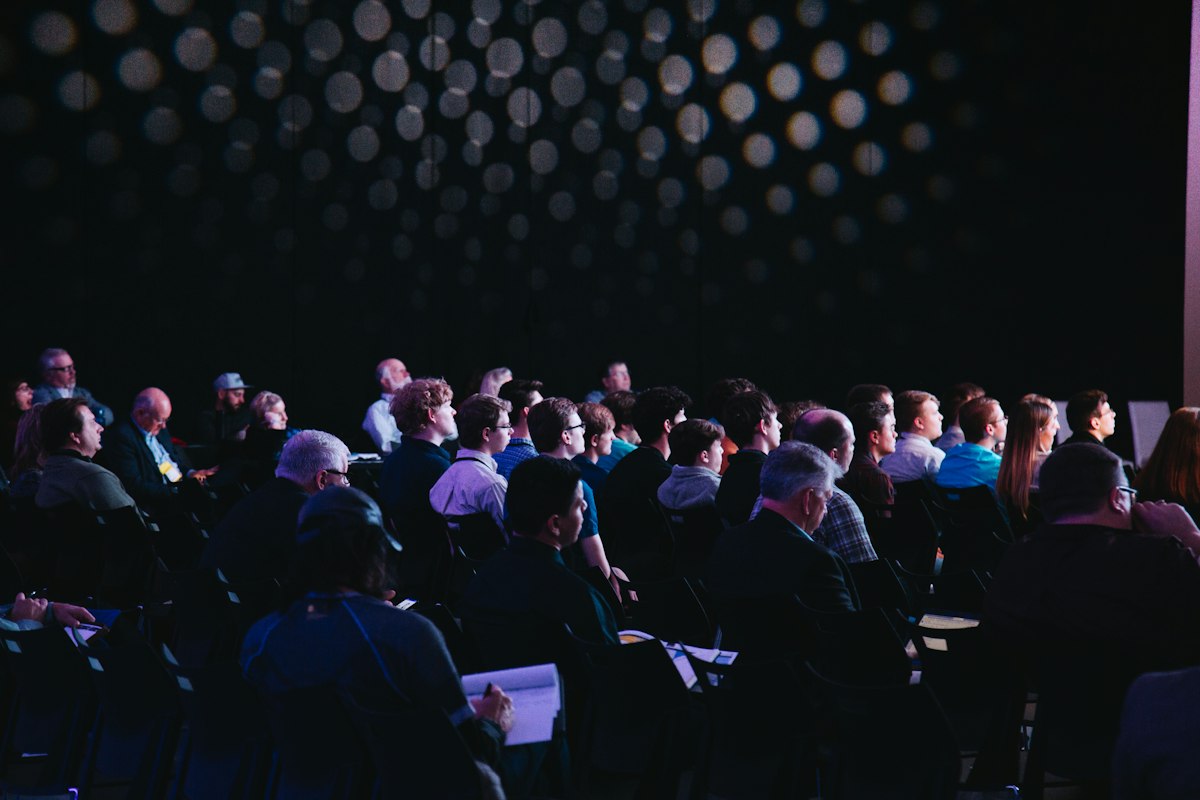
*The Shanghai World Expo Exhibition and Convention Center, host venue for WAIC 2026. Over 100,000 square meters of exhibition space will showcase the largest collection of AI products in the conference's history. Photo: Unsplash*
The Present Moment: A City Preparing for the World
On the morning of July 3, 2026, Shanghai's World Expo Exhibition and Convention Center is a hive of controlled chaos. Two weeks before the doors open to the 2026 World Artificial Intelligence Conference, crews are installing the final exhibition booths across three venues—the Expo Center, Zhangjiang Science Hall, and the West Bund International Convention Center. The numbers attached to this year's event are staggering enough to require a double-take: 1,100 companies, 3,000+ exhibits, 300+ AI products making their global debut, and 1,400+ international guests from more than 70 countries and regions.
This is not just the largest WAIC in history. It is the largest AI conference ever staged on Earth.
What began in 2018 as a modest Shanghai municipal initiative—a local trade show with national ambitions—has evolved into something far more consequential: a global institution for AI governance, investment, and diplomacy. The conference now carries the official name "World Artificial Intelligence Conference and High-Level Meeting on Global AI Governance," and its 2026 edition will be the first to feature a standalone top-tier academic conference, WAIC Academic, co-chaired by Turing Award laureate Andrew Yao and "father of reinforcement learning" Richard Sutton. In the face of what the China Computer Federation calls "barriers and disturbances in international academic exchanges," the organizers have made a deliberate statement: science knows no borders, and the world's most important AI conversations will happen in Shanghai whether Washington likes it or not.
The economic stakes are equally significant. Shanghai's AI industry surpassed 450 billion yuan in 2024, and the city is now home to over 60 large AI models that have completed regulatory filing. The WAIC City Walk program will extend the conference beyond convention halls into Shanghai's 16 districts, connecting shopping centers, industrial parks, and neighborhoods through AI experience routes. The message is clear: this is not a conference that happens *in* Shanghai. It is a conference that *is* Shanghai.
| WAIC 2026 Key Metrics | Figure | YoY Change (vs 2025) |
|---|---|---|
| Exhibition Area | 100,000+ sqm | +43% |
| Participating Companies | 1,100+ | +38% |
| Total Exhibits | 3,000+ | +50% |
| Global Product Debuts | 300+ | +114% |
| Thematic Forums | 140+ | +40% |
| International Guests | 1,400+ | -7%* |
| SAIL Award Applications | 230 | +15% |
| Overseas SAIL Share | 14.3% | +2.1pp |
| Startup Zone Applications | 1,000+ | +25% |
| Startup Zone Acceptance Rate | <13% | -3pp |
\* Slight decline in international guests attributed to tighter visa processing for some Western nationals, offset by increased representation from Global South and Belt and Road countries.
*Table 1: WAIC 2026 at a glance. Data from Shanghai Municipal Commission of Economy and Informatization, June 17 press conference.*
The question is not whether WAIC 2026 will be impressive. The question is how a municipal trade show in a Chinese city became, in just eight years, the single most important date on the global AI calendar.
Phase 1: The Experiment (2018)
The first World Artificial Intelligence Conference opened on September 17, 2018, in a Shanghai that was already positioning itself as China's AI capital. President Xi Jinping sent a congratulatory letter—a signal of national priority that no ordinary tech conference receives. The organizers had secured a modest but credible roster: 72,000 guests from over 40 countries, more than 50 Turing Award or Nobel Prize winners, and 150 companies in the exhibition hall.
In retrospect, the 2018 WAIC was a trial balloon. The Shanghai municipal government, working with national ministries including the NDRC, MIIT, and CAC, wanted to test whether China could host a global AI event that rivaled NeurIPS in scale and CVPR in prestige. The answer, in 2018, was ambiguous. The conference was well-attended but lacked a clear identity. Was it a trade show? A policy forum? A scientific conference? The organizers hadn't decided yet, and it showed.
But the foundations were already visible. The Shanghai government used WAIC 2018 to announce the city's AI industry development plan, which would eventually attract the Shanghai Artificial Intelligence Laboratory, the National Humanoid Robot Innovation Center, and dozens of major AI companies to the city. The conference was never just about the four days in September. It was about what those four days enabled for the other 361 days of the year.
| Year | Theme | Guests | Exhibition Area | Key Milestone |
|---|---|---|---|---|
| 2018 | Intelligent Connectivity | 72,000 | ~15,000 sqm | Inaugural; Xi Jinping letter |
| 2019 | Infinite Possibilities | 240,000 | ~20,000 sqm | Ma vs. Musk dialogue |
| 2020 | Shared Community | 250M online | Cloud-only | 3×24h cloud summit; 5 Turing laureates |
| 2021 | Collective Wisdom | 300,000+ | 40,000 sqm | Exhibition doubled; 4 integrated sections |
| 2022 | Metaverse Boundless | 300+ VIPs | 15,000 sqm | 5 overseas sub-venues; SAIL to Zidong-Taichu |
| 2023 | Co-create the Future | 1,400+ | 50,000 sqm | 400+ enterprises; 50+ startups |
| 2024 | Governance + Innovation | 1,300+ | 50,000+ sqm | Renamed; Shanghai Declaration; 450B yuan market |
| 2025 | Innovation + Openness | 1,500+ | 70,000 sqm | 1.9B online views; WAIC Connect platform |
| 2026 | Intelligent Partners | 1,400+ | 100,000+ sqm | WAIC Academic; 300+ global debuts |
*Table 2: WAIC evolution 2018–2026. Data compiled from official WAIC records, Shanghai government reports, and China Daily.*
Phase 2: The Spotlight (2019–2020)
If 2018 was the experiment, 2019 was the coming-out party. The defining moment was not a product launch or a policy announcement. It was a conversation.
On August 29, 2019, Jack Ma, then executive chairman of Alibaba, sat across from Elon Musk, CEO of Tesla, for a 45-minute dialogue that became the most-watched clip in WAIC history. The two debated Mars colonization, AI consciousness, and the future of work with the awkward chemistry of two visionaries speaking past each other. The conversation generated more media coverage than the rest of the conference combined, and it established a template: the world's most powerful people talking about AI in Shanghai.
Then came COVID-19. The 2020 conference faced a choice: cancel or adapt. The organizers chose adaptation. The WAIC became a "cloud summit"—a fully online event leveraging 5G and VR/AR to create what organizers called a "360-degree panoramic space." It was a 3×24-hour continuous broadcast that attracted 2.5 billion online views. Seven Turing Award laureates participated, up from two in 2019. Musk returned via video link. The message was clear: WAIC could not be stopped by a pandemic, a trade war, or a travel ban.
The pandemic pivot also revealed something deeper. While Western AI conferences struggled with hybrid formats, WAIC treated the online shift as an opportunity. The "Intercontinental Connection" linked Shanghai with experts in Germany, South Korea, and Singapore. WAIC was not merely surviving disruption. It was building infrastructure for a permanently distributed global AI community.
Phase 3: The Platform (2021–2022)
By 2021, WAIC had outgrown its origins as a municipal showcase. The conference that year introduced a permanent structural template—four integrated sections: Conference Forums, Exhibition and Display, Competition and Awards, and Application Experience—that would remain the organizational backbone for years to come. The exhibition area doubled to 40,000 square meters. The offline exhibition was supplemented by an upgraded cloud platform that allowed international exhibitors to maintain a virtual presence even when travel restrictions persisted.
The 2022 edition marked a subtle but important shift. With the theme "Metaverse Boundless," the conference leaned into the emerging intersection of AI and virtual worlds. The SAIL Award, WAIC's highest honor, went to Zidong-Taichu—a multimodal model from the Institute of Automation of the Chinese Academy of Sciences and Huawei's Ascend platform that could integrate images, text, and sound. The award was a signal: WAIC was not just a venue for Western companies to enter China. It was becoming a platform for Chinese AI achievements to reach global recognition.
The conference also established five overseas sub-venues in North America, Europe, Singapore, South Korea, and Hong Kong. This distributed model allowed WAIC to maintain international engagement even as geopolitical tensions made centralized conferences increasingly difficult. The sub-venues were not mere marketing outposts. They were autonomous forums where local AI ecosystems could connect with China's without the friction of full-scale travel.
| Shanghai AI Industry Indicator | 2020 | 2022 | 2024 | 2026 (est.) |
|---|---|---|---|---|
| AI Market Size (billion yuan) | ~180 | ~280 | 450+ | ~580 |
| Large Models Filed | 8 | 25 | 60 | 90+ |
| AI Enterprises | 1,100 | 1,800 | 2,500+ | 3,200+ |
| AI Talent Pool | 90,000 | 150,000 | 220,000 | 280,000+ |
| WAIC Online Views (billion) | 2.5 | 1.2 | 1.9 | 2.2+ (proj.) |
| International Speaker Share | 35% | 28% | 42% | 45% |
*Table 3: Shanghai AI ecosystem growth alongside WAIC expansion. Data from Shanghai Municipal Government, CAICT, and industry reports.*
Phase 4: The Governance Pivot (2023–2024)
The 2024 WAIC was the inflection point that transformed the conference from a trade show into a diplomatic institution. The organizers made two decisions that would reframe the entire event.
First, they renamed it. The conference became the "World AI Conference and High-Level Meeting on Global AI Governance." The addition of "Global AI Governance" was not cosmetic. It reflected a strategic decision by Beijing to use WAIC as a platform for shaping international AI norms at a moment when Western-led frameworks were struggling to gain traction in the Global South.
Second, they released the Shanghai Declaration on Global AI Governance at the opening ceremony. The declaration called for international cooperation on AI safety, data sovereignty, and equitable access to AI benefits. It was signed by representatives from over 30 countries and became the most widely endorsed AI governance document originating from China. The 2024 conference attracted nine Turing Award, Fields Medal, and Nobel Prize laureates, along with 88 academicians. On-site attendance exceeded 300,000 visitors, and online engagement hit 1.9 billion views—a 90% increase from the previous year.
Behind the scenes, the Shanghai municipal government was also using WAIC to anchor policy. The discussions contributed directly to the formulation of the "Shanghai Regulations on Promoting the Development of Artificial Intelligence Industry," one of China's first local AI laws. The conference had become a policy generator, not just a policy showcase.
The 2024 edition featured 107 thematic forums, 500+ companies, and nearly 100 large models on display. The most photographed exhibit was a matrix of 18 humanoid robots from companies including Fourier and AgiBot, standing in formation like a mechanical honor guard. The image was symbolic: China's AI industry was no longer following. It was presenting.
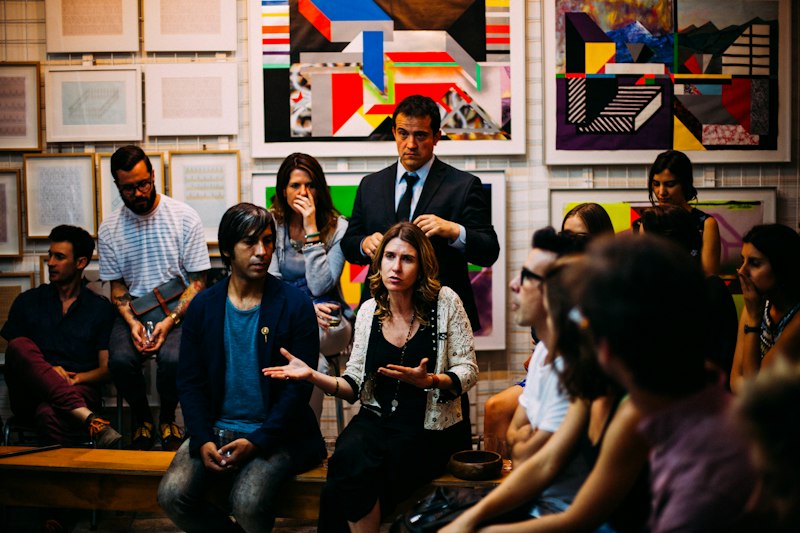
*A technology exhibition hall at a major AI conference. WAIC 2026 will feature over 3,000 exhibits across 100,000+ square meters, making it the largest AI product showcase in history. Photo: Unsplash*
Phase 5: The Institution (2025–2026)
The 2025 WAIC built on the governance foundation of 2024 with a proposal that would have seemed radical just two years earlier: the creation of a World AI Cooperation Organization. The conference attracted 1,500 guests from over 70 countries, including 12 top international award winners and more than 80 academicians. For the first time, the conference's international guest share exceeded its domestic share among keynote speakers—a statistic that quietly signaled a shift in WAIC's self-perception from a Chinese conference with international guests to a global conference that happens to be in China.
The 2026 edition takes this evolution to its logical conclusion. The most significant addition is WAIC Academic—a standalone top-tier AI academic conference with 284 valid paper submissions from 11 countries and regions, including Princeton, Cambridge, and Tsinghua. Accepted papers will be published by Springer. The conference chair is Andrew Yao (Turing Award 2000, Chinese Academy of Sciences), and the international co-chair is Richard Sutton, the University of Alberta professor whose work on reinforcement learning underpins much of modern AI. Their co-chairing is symbolic: a Chinese-American collaboration at the highest level of academic prestige, hosted on Chinese soil, at a moment when US-China scientific exchange faces its most severe constraints in decades.
The exhibition side of WAIC 2026 has also reached a new scale. The Future Tech Startup Zone received over 1,000 applications and accepted 160—a sub-13% acceptance rate that is more selective than Stanford's incubator program. The zone will feature 200+ venture capital investors in dedicated matchmaking sessions. The One Person Company zone, a new addition, will showcase 180 solo entrepreneurs operating AI-powered businesses. The WAIC Connect platform will present 63 core application scenarios to 172 buyer delegations, directly linking AI technologies with industrial demand.
And then there are the products. Three hundred AI products will make their global debut at WAIC 2026, covering the full stack from computing chips to embodied intelligence to AI agents. The SAIL Award TOP30, announced in June, spans agents, computing chips, and embodied intelligence—categories that barely existed in WAIC's early years. The cumulative SAIL pool now exceeds 4,500 applications over eight years, with only 38 grand awards conferred. The selection rate of under 1% makes it, as organizers describe, the "Nobel-level honor" of AI.
| WAIC 2026 Ecosystem Matrix | Focus | Key Feature | Partners |
|---|---|---|---|
| WAIC Future Tech | Startups & Investment | 160 selected from 1,000+; <13% acceptance | 200+ VCs |
| WAIC Connect | Industry Matching | 63 scenarios; 172 buyer delegations | Enterprise buyers |
| WAIC UP! | Knowledge & Ideas | Year-end gala in Hong Kong; content platform | Media & research |
| WAIC Young | Youth Innovation | AI + heritage; AIGC music; robot dog races | Universities |
| AI Gravity | International Cooperation | APAC-Europe bridge; Hong Kong-registered | Global partners |
*Table 4: The five WAIC ecosystem initiatives launched for 2026. Data from WAIC organizing committee, June 2026.*
The Economics of a Conference That Built a City
WAIC's impact on Shanghai is difficult to overstate. The conference did not merely reflect Shanghai's AI industry growth. It accelerated it.
Between 2018 and 2024, Shanghai's AI industry grew from roughly 120 billion yuan to over 450 billion yuan—a compound annual growth rate of nearly 25%. The city attracted the Shanghai AI Laboratory, the Unmanned Systems Science Center, and major R&D centers from Alibaba, Baidu, Tencent, and ByteDance. The number of AI enterprises in the city grew from 1,100 to over 2,500. The AI talent pool expanded from 90,000 to 220,000.
The mechanism is straightforward: WAIC creates a coordination event for an industry that otherwise struggles to coordinate. AI companies in Shanghai do not need to maintain permanent global sales forces because WAIC brings the world to them once a year. International researchers do not need permanent Chinese affiliations because WAIC Academic provides a publication pathway. Startups do not need to chase individual VC meetings because the Future Tech zone aggregates 200+ investors in a single venue. The conference functions as a temporary city—a four-day compression of the relationships, deals, and ideas that would otherwise require months of scattered travel.
The "Hi WAIC" app, launched in June 2026 as the conference's first AI-powered ecological open platform, extends this coordination beyond the physical event. The app provides matchmaking, scheduling, translation, and live-streaming for the conference's 140+ forums. It is also a testbed for the AI products being showcased: the app's recommendation engine, natural language search, and real-time translation are themselves built on models from WAIC exhibitors.
| WAIC 2026 vs. Major Global AI Conferences | WAIC 2026 | NeurIPS 2025 | CVPR 2026 | ICML 2026 | ICRA 2026 |
|---|---|---|---|---|---|
| Exhibition Area (sqm) | 100,000+ | ~5,000 | ~8,000 | ~4,000 | ~12,000 |
| Participating Companies | 1,100+ | ~150 | ~200 | ~120 | ~400 |
| Product Debuts | 300+ | ~20 | ~30 | ~10 | ~50 |
| On-Site Attendees | 300,000+ (proj.) | 15,000 | 12,000 | 10,000 | 8,000 |
| Online Views | 2B+ (proj.) | ~500K | ~300K | ~200K | ~100K |
| Government Ministers | 12+ | 0 | 0 | 0 | 2-3 |
| International Guest Share | 45%+ | 70%+ | 65%+ | 75%+ | 60%+ |
*Table 5: WAIC 2026 vs. major global AI conferences. NeurIPS/CVPR/ICML/ICRA figures estimated from historical data. WAIC figures from official announcements.*
What This Means for the Global AI Order
WAIC 2026 is not just a bigger conference. It is a different kind of conference—and that difference carries geopolitical weight.
Western AI conferences are primarily scientific gatherings. NeurIPS, ICML, and CVPR are venues for researchers to present papers and recruit students. Government officials attend in small numbers. Product launches are peripheral.
WAIC is a full-stack institution. It combines the academic rigor of NeurIPS (via WAIC Academic), the product showcase of CES, the deal-making of Davos, and the policy forum of the UN. A single attendee can watch a paper presentation by a Turing Award winner, inspect a humanoid robot on the exhibition floor, negotiate a venture investment, and attend a ministerial dialogue on AI governance—all within the same afternoon. This integration is the product of a Chinese industrial policy that treats AI as a systemic sector requiring coordination across research, industry, capital, and government.
The implications are significant. As US export controls on AI chips tighten and Western AI conferences become increasingly difficult for Chinese researchers to attend, WAIC offers an alternative coordination point. The conference's growing share of Global South representation—African, Southeast Asian, and Latin American delegations have increased sharply since 2023—suggests that WAIC is becoming the default venue for AI diplomacy outside the US-EU axis. The AI Gravity initiative, registered in Hong Kong, explicitly aims to strengthen Asia-Pacific–Europe cooperation while reducing dependence on US-dominated AI governance frameworks.
For Western AI companies, WAIC 2026 presents a paradox. The conference is too large to ignore—over 1,100 exhibitors, 300,000+ visitors, and 2 billion online views make it the largest AI audience in the world. Yet the geopolitical friction makes participation complicated. The result is a selective Western presence: Siemens, Schneider, and AstraZeneca exhibit prominently; Google and OpenAI are absent. The conference is becoming a bifurcated global platform—open to everyone, but dominated by Chinese, Asian, and non-aligned Western companies.
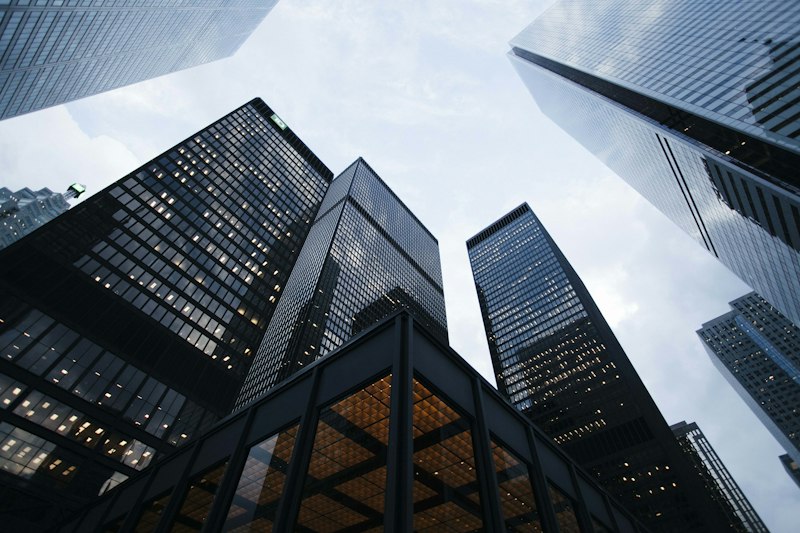
*The Shanghai skyline, viewed from the Pudong district. WAIC's evolution mirrors the city's own transformation from regional trade hub to global AI capital. Photo: Unsplash*
The Road Ahead
WAIC 2026 will open its doors on July 17, 2026, with a ceremony that will be watched by millions online and attended by more international dignitaries than any previous edition. The 300+ product debuts will generate headlines. The SAIL Award winner will be announced to considerable fanfare. The WAIC Academic papers will be added to Springer archives and cited for years.
But the most important output of WAIC 2026 will not be any single product, paper, or award. It will be the relationships formed in the matchmaking rooms, the policies drafted in the governance forums, and the narrative cemented in global media: that the center of gravity for AI diplomacy has shifted eastward, and that Shanghai is now the default location for the conversations that shape how artificial intelligence is built, regulated, and distributed worldwide.
The conference that began in 2018 as a municipal experiment has become, in 2026, a permanent institution. WAIC is no longer an event. It is an ecosystem. It is no longer a showcase. It is a standard. And the world is still adjusting to what that means.
Social Media Comments
@科技观察者_老王 (Zhihu)
"WAIC办了九年了,真正让我震撼的不是规模,而是今年学术会议的规格。姚期智+Richard Sutton,这放在以前只能在NeurIPS的keynote看到。中国终于有一个自己主办的顶级AI学术会议了。"
>
*"WAIC has been running for nine years, but what truly impresses me isn't the scale—it's the academic conference caliber this year. Yao + Richard Sutton, that combination used to be something you only saw at NeurIPS keynotes. China finally has a top-tier AI academic conference of its own."*
@AI产品经理小林 (Xiaohongshu)
"去年去WAIC逛了一圈,今年准备带着产品去参展。300+全球首发,说实话创业公司压力太大了,但这也是最好的曝光机会。Hi WAIC app的AI匹配功能据说能直接对接买家,比发cold email效率高100倍。"
>
*"I visited WAIC last year, and this year I'm exhibiting with my own product. 300+ global debuts is honestly intimidating for startups, but it's also the best exposure opportunity. The Hi WAIC app's AI matching feature supposedly connects you directly with buyers—100x more efficient than cold emailing."*
@DeepLearningResearcher (Twitter/X)
"WAIC Academic has 284 submissions from 11 countries. Springer publication. Yao and Sutton co-chairing. This is not a side conference anymore. This is a legitimate venue. Western AI researchers who ignore it do so at their own professional risk."
@硅谷冷眼旁覌 (Weibo)
"美国一边制裁中国AI芯片,一边又派专家来WAIC演讲,这种精神分裂也是没谁了。不过说真的,今年国际嘉宾比例下降了一点,签证卡了不少人。WAIC能不能真正全球化,取决于政治气候,不是技术。"
>
*"The US sanctions Chinese AI chips while sending experts to speak at WAIC—the cognitive dissonance is staggering. But seriously, the international guest share dropped a bit this year because visa restrictions blocked some people. Whether WAIC can truly globalize depends on politics, not technology."*
@StartupFounder_Mike (LinkedIn / cross-posted to Twitter)
"Just got accepted into WAIC 2026 Future Tech zone. 1,000+ applications, 160 selected. The acceptance rate is lower than Y Combinator. If you're building AI and not thinking about Shanghai, you're missing where the market is actually moving."
@清风徐来 (Douban)
"从2018年第一次WAIC看到现在,八年时间,这个展会从『马云马斯克聊天』变成了『全球AI治理高级别会议』。名字变长了,底气也变足了。有人说这是中国AI的软实力,我觉得更直接——这是中国的AI话语权。"
>
*"I've watched WAIC since the first edition in 2018. In eight years, this conference went from 'Ma and Musk chatting' to 'High-Level Meeting on Global AI Governance.' The name got longer, and the confidence grew. Some call it China's AI soft power. I think it's simpler: it's China's AI voice."*
*For more on China's AI ecosystem, read our analysis of the multimodal AI revolution, the AI benchmark wars, and ByteDance's hardware pivot.*
Editor at AI in China. Tracking Chinese AI companies, funding rounds, and the technologies reshaping global tech. More about me.