ByteDance's $30 Billion AI Gambit: How One Budget Revision Is Rewriting China's Chip Playbook

heroImage: "https://images.unsplash.com/photo-1563770660941-20978e870e26?w=1200"
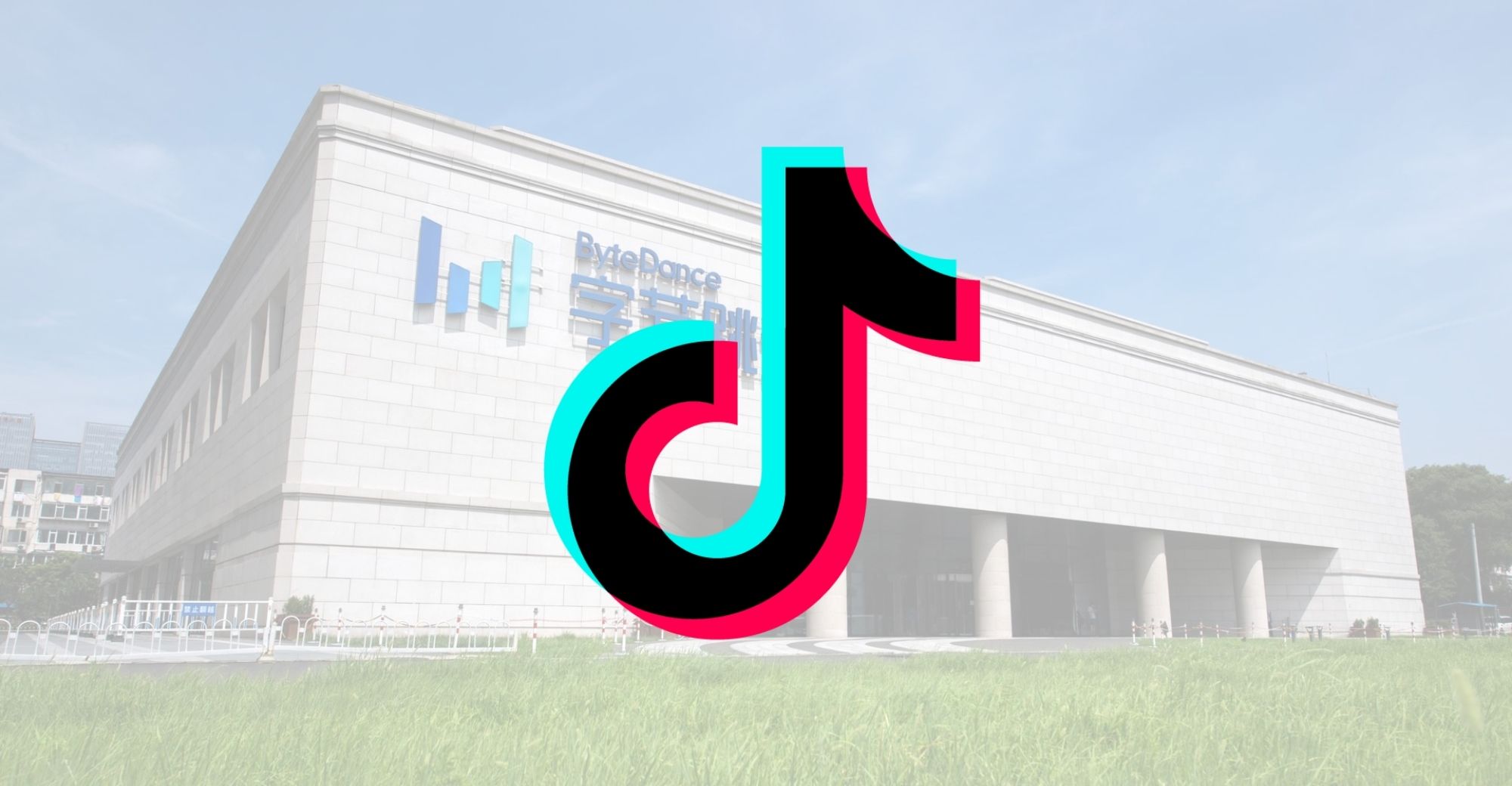
*ByteDance's Beijing headquarters. The company's expanded AI infrastructure spending reflects a broader shift toward domestic semiconductor supply chains. Image: Pandaily*
It started with a spreadsheet. In late April 2026, a ByteDance infrastructure planner in Beijing stared at a number that refused to add up. The 2026 AI capital expenditure budget — already set at a staggering ¥160 billion ($24 billion) — was going to fall short. By how much? The planner ran the models again. Doubao usage was up 340% year-over-year. Volcano Engine enterprise clients had grown from 100 to 140 in just three months. Memory chip prices, spurred by AI demand globally, had climbed 18% since January. The original budget, approved five months earlier, was now a fiction.
The revised figure that landed on executives' desks in early May: ¥200 billion. Roughly $30 billion. A 25% mid-year increase that made ByteDance one of the largest AI infrastructure spenders on the planet — and sent an unmistakable signal about where China's tech sector is headed.
The Discovery: Why $24 Billion Wasn't Enough
The story of ByteDance's budget revision is really three stories converging at once: consumer demand that blew past projections, enterprise adoption accelerating faster than planned, and a semiconductor supply chain that got squeezed from both ends by geopolitics and market forces.
Doubao, ByteDance's AI chatbot, had reached 345 million monthly active users by mid-2026, according to QuestMobile data reported by Caixin Global. That made it not just China's most-used AI app but one of the largest AI consumer products globally. The number was up from roughly 227 million in February — a 52% surge in four months. Behind that growth was a feature expansion: Doubao 2.0, released in February, had added agentic capabilities that let the AI perform multi-step tasks rather than simply answering queries. Each agentic session consumes 3-5x more compute than a standard chat interaction.
On the enterprise side, Volcano Engine — ByteDance's cloud and AI platform — was processing over 50 trillion tokens per day by December 2025, up from 4 trillion a year earlier and just 120 billion at launch in May 2024. By March 2026, more than 140 enterprise customers had each accumulated over one trillion tokens in total usage. The platform's growth curve was steep enough that infrastructure planners had already been worried before the year started.
Then there was the auto integration play. At the 2026 Beijing Auto Show, Volcano Engine revealed that Doubao was now embedded in 145 car models across more than 50 Chinese automotive brands, handling over 30 million in-cabin voice interactions daily. Each of those interactions is an inference call. Multiply 30 million by 365 days, factor in the rising complexity of multi-turn automotive conversations, and the compute load becomes substantial.
| ByteDance AI Infrastructure Demand Drivers (2025-2026) | Metric | Growth |
|---|---|---|
| Doubao Monthly Active Users | 345M (mid-2026) | +52% since Feb 2026 |
| Volcano Engine Daily Tokens | 50T+ (Dec 2025) | 12.5x YoY |
| Enterprise Customers (1T+ tokens) | 140 (Mar 2026) | +40% in 3 months |
| Auto Model Integrations | 145 models / 50+ brands | New vertical |
| In-Cabin Daily Interactions | 30M+ | Scaling rapidly |
The third pressure was cost. Memory chip prices — particularly HBM (High Bandwidth Memory) used in AI accelerators — had risen sharply across the industry in late 2025 and early 2026. AI labs globally were buying memory faster than suppliers could ramp production. For ByteDance, which had budgeted infrastructure costs based on December 2025 pricing, the difference was billions of yuan.
All three pressures hit at the same time. The result: a mid-year budget revision of roughly $6 billion, approved quietly in early May 2026.
Where the Money Is Going: Models, Chips, and Data Centers
The $30 billion isn't flowing to a single project. ByteDance runs a portfolio of AI-dependent products, and all of them are scaling simultaneously. The investment breaks down across three primary categories.
AI Model Development. A significant portion of the budget goes to training and refining large language models under ByteDance's "Seed" family. The company has been pushing Doubao toward what the industry calls "agentic AI" — systems that can independently navigate applications, execute code, browse the web, and complete multi-step workflows. Each capability requires additional training runs, larger model architectures, and more sophisticated reinforcement learning pipelines. ByteDance is also investing heavily in video generation models, including Seedance 2.0, which competes directly with OpenAI's Sora.
AI Chips and Compute Infrastructure. The most strategically significant allocation is semiconductor procurement. ByteDance needs accelerators — lots of them — to serve inference workloads at scale. The company's chip strategy has three prongs: domestic Chinese processors (primarily Huawei Ascend), potential imports (if Beijing approves Nvidia H200 purchases), and a long-term custom silicon project codenamed SeedChip.
Data Center Expansion. The chips need somewhere to live. ByteDance is expanding data center capacity across China, with particular focus on regions with favorable power pricing and cooling conditions. Inner Mongolia, where DeepSeek recently chose Ulanqab for its own data center, is one region seeing increased investment.
| ByteDance 2026 AI Capex Allocation (Estimated) | Category | Share | Amount |
|---|---|---|---|
| AI Chip Procurement | 40% | ~$12B | |
| Data Center Infrastructure | 30% | ~$9B | |
| Model Training & R&D | 20% | ~$6B | |
| Networking, Storage, Software | 10% | ~$3B |
The Huawei Factor: $5.7 Billion and a Domestic Chip Bet
The most strategically significant detail in ByteDance's spending plan isn't the total number. It's where the chips are coming from.
ByteDance has reportedly committed $5.7 billion to Huawei Ascend processors in 2026. This represents the largest single AI chip procurement commitment ever made to a Chinese domestic semiconductor maker. The order implies roughly 350,000 Ascend units — a volume that validates Huawei's AI chip business at production scale.
The reason for this shift is straightforward: US export controls. Washington has approved Nvidia's H200 chips for export to China, but Beijing has not yet cleared Chinese companies to actually import them. That creates a bureaucratic trap — the chips are theoretically available but practically inaccessible. ByteDance, like other Chinese AI companies, cannot build a 2026 infrastructure plan around hardware it may never receive.
Huawei's Ascend 950 and 950PR processors offer a genuine alternative, though not a perfect one. The Ascend 950PR delivers roughly 2.8x the FP4 inference performance of Nvidia's H20 (the only Nvidia chip currently compliant with US export controls for China) at a comparable $16,000 price point, according to industry benchmarks. For training, the Ascend 950B has demonstrated the ability to train models like DeepSeek V4 at competitive performance levels.
But the trade-offs are real. Nvidia's CUDA software ecosystem — built over fifteen years — doesn't transfer to Huawei hardware. Developers must use Huawei's CANN (Compute Architecture for Neural Networks) stack, which is less mature, has fewer third-party integrations, and requires significant engineering effort to port existing models. Custom CUDA kernels, which many optimized AI workloads depend on, still need manual rewriting.
ByteDance is choosing availability and sovereign supply chain over peak benchmark performance. For a company serving 345 million monthly users, availability wins.
| Huawei Ascend vs. Nvidia Export-Controlled Chips | Huawei Ascend 950PR | Nvidia H20 |
|---|---|---|
| FP4 Inference Performance | 2.8x H20 | Baseline |
| Estimated Price | ~$16,000 | ~$16,000 |
| Software Ecosystem | CANN (emerging) | CUDA (mature) |
| Training Throughput | Competitive | Higher on H100 |
| Supply Certainty | High (domestic) | Low (export controls) |
| ByteDance 2026 Commitment | $5.7B | Unclear |
The Global Context: ByteDance in the AI Infrastructure Arms Race
The $30 billion figure is large in absolute terms. In the context of the global AI infrastructure buildout, it places ByteDance in the upper tier — though not at the very top.
Meta has projected 2026 capital expenditure of $115-135 billion. Amazon raised estimates to approximately $200 billion. Microsoft and Google are each planning around $190 billion. Oracle is targeting $35 billion. According to TrendForce, the top nine cloud service providers combined are planning $830 billion in AI-related capex in 2026.
ByteDance at $30 billion is spending more than Oracle and less than the four major US hyperscalers. But raw capex comparison isn't the right frame. ByteDance isn't trying to out-build Amazon globally. It's trying to own AI infrastructure in China's market, which has its own dynamics, regulatory requirements, and competitive landscape.
The more relevant comparison is domestic. Alibaba committed $53 billion in AI infrastructure investment over three years in March 2026 — roughly $17-18 billion per year. Tencent and Baidu have also announced major AI spending increases. On an annual basis, ByteDance's $30 billion puts it near the top of Chinese AI cloud spending.
| 2026 Global AI Infrastructure Capex Comparison | Company | Projected 2026 AI Capex |
|---|---|---|
| Amazon | ~$200B | |
| Microsoft | ~$190B | |
| ~$190B | ||
| Meta | $115-135B | |
| Oracle | $35B | |
| ByteDance | $30B | |
| Alibaba (annualized) | ~$18B | |
| Top 9 Cloud Providers Total | ~$830B |
There's another layer to this story. ByteDance's $5.7 billion Huawei Ascend commitment doesn't just solve ByteDance's chip problem — it strengthens the revenue base that funds Huawei's next-generation chip development. The constraint created by US export controls is, paradoxically, accelerating the domestic semiconductor ecosystem that ByteDance will need in 2027 and beyond. When national policy and commercial strategy point in the same direction, spending tends to be decisive.
The SeedChip Project: ByteDance's Long-Term Silicon Ambition
Beyond buying Huawei chips, ByteDance is reportedly exploring custom AI silicon development under the codename SeedChip. The project represents a longer-horizon bet: if successful, it would give ByteDance independent control over a meaningful share of its AI compute, reducing exposure to both US export controls and Huawei supply chain risk.
Custom silicon development is not unusual among tech giants. Google has TPUs. Meta has MTIA. Amazon has Trainium and Inferentia. Microsoft has Maia and Cobalt. Each of these programs took years to reach production scale and required billions in investment before yielding cost or efficiency advantages.
ByteDance's reported talks with Samsung for chip manufacturing suggest the company is taking a fabless approach — designing chips internally while outsourcing fabrication. Samsung's foundry capabilities, while trailing TSMC in leading-edge processes, offer a viable path for AI accelerators that don't necessarily require the most advanced nodes.
The SeedChip timeline, if it follows industry patterns, would likely be 3-5 years from initial design to production deployment. In the interim, ByteDance's infrastructure strategy rests on two legs: Huawei Ascend for domestic supply, and potentially Nvidia H200 if Beijing approves imports.
| Custom AI Silicon Programs: Global Comparison | Company | Chip Family | Status | Primary Use |
|---|---|---|---|---|
| TPU v5 | Production | Training & Inference | ||
| Amazon | Trainium2 / Inferentia3 | Production | Training & Inference | |
| Meta | MTIA v2 | Production | Inference | |
| Microsoft | Maia 100 / Cobalt 100 | Production | Training & Inference | |
| ByteDance | SeedChip (reported) | Development | TBD | |
| Alibaba | Hanguang 800 | Production | Inference |
What This Means for China's AI Ecosystem
ByteDance's budget revision is more than a single company's spending increase. It's a data point in a larger structural shift reshaping China's AI industry.
Domestic chip demand is becoming structural, not temporary. When the world's largest private AI consumer platform commits $5.7 billion to domestic semiconductors in a single year, it sends a signal to the entire supply chain. SMIC, China's leading foundry, benefits from increased orders. Huawei's chip design arm gets revenue to fund next-generation development. Software tooling around CANN gets more engineering investment. The flywheel spins faster.
Cost structures are diverging from the West. Chinese AI companies operate with different chip supply chains, different labor costs, and different regulatory frameworks. A dollar of capex in China buys different things than a dollar in the US. ByteDance's $30 billion, while smaller than Amazon's $200 billion in absolute terms, may deliver comparable inference capacity per dollar spent due to lower domestic chip costs and operational expenses.
The agentic transition is compute-intensive. ByteDance's push toward agentic AI — reflected in Doubao 2.0's capabilities — increases the compute load per user session significantly. Agents that browse, code, and coordinate multi-step tasks consume far more tokens than simple Q&A chat. The $30 billion budget is partly a bet that agentic AI will become the dominant interaction model, and that infrastructure built today will be fully utilized tomorrow.
| China's AI Infrastructure Structural Shifts (2024-2026) | Trend | Impact |
|---|---|---|
| Domestic chip share rising | Huawei Ascend orders surging | Reduced Nvidia dependence |
| Agentic AI adoption | 3-5x compute per session | Higher infrastructure demand |
| Enterprise AI migration | 140+ enterprise customers at 1T+ tokens | B2B revenue scaling |
| Auto integration | 145 car models, 30M daily interactions | New inference workload category |
| Custom silicon programs | SeedChip, Hanguang, etc. | Long-term cost optimization |
The Investment Implications: Who Wins, Who Loses
For investors tracking the global AI supply chain, ByteDance's revised budget creates clear winners and losers.
Winners: Huawei's semiconductor division receives a $5.7 billion validation at production scale. SMIC and other domestic foundries benefit from increased orders. Memory suppliers — particularly HBM manufacturers like SK Hynix and Micron — see continued pricing power from demand growth. Samsung's foundry business gets a potential new customer in SeedChip.
Neutral/Long-term: Nvidia's position in China remains complicated. The H200 is approved for export but blocked by Beijing's import restrictions. If the impasse resolves, Nvidia could capture significant orders from ByteDance and others. If it persists, the domestic alternative ecosystem strengthens with each passing quarter.
Structural Shift: The most significant implication may be the acceleration of a bifurcated global AI hardware market. One ecosystem centered on Nvidia/CUDA. Another centered on Huawei/CANN and other domestic alternatives. ByteDance's $30 billion commitment — with its explicit tilt toward domestic chips — is a vote of confidence in the second ecosystem.
| AI Supply Chain Impact Analysis | Category | Impact | Key Beneficiaries |
|---|---|---|---|
| Domestic AI Chips | Strong Positive | Huawei, SMIC, domestic foundries | |
| Memory (HBM) | Positive | SK Hynix, Micron, Samsung | |
| Data Center Infrastructure | Positive | Cooling, power, networking vendors | |
| Nvidia (China) | Uncertain | Depends on Beijing import policy | |
| Custom Silicon Foundries | Potential Positive | Samsung, TSMC (if orders materialize) |
What Comes Next: The Road to 2027
ByteDance's $30 billion commitment sets a floor, not a ceiling. If AI demand continues to grow at current rates — and if agentic capabilities drive the 3-5x compute multiplier that infrastructure planners fear — the 2027 budget could be larger still.
Several milestones will determine whether this spending translates into competitive advantage:
DeepSeek V4 on Ascend. DeepSeek's next-generation model, trained on Huawei chips, will be a critical test of whether domestic hardware can train world-class models. If V4 matches or exceeds Western benchmarks, the case for domestic chips strengthens dramatically.
SeedChip timeline. If ByteDance brings custom silicon to production within 3-4 years, it would join an elite group of companies with vertically integrated AI compute. The cost savings at scale could be substantial.
Beijing's import policy. Whether China allows Nvidia H200 imports will shape the competitive dynamics. If approved, ByteDance might diversify its chip portfolio. If blocked, the domestic ecosystem gets more runway to mature.
Doubao monetization. The $30 billion investment only makes sense if Doubao and Volcano Engine generate returns. ByteDance is reportedly exploring premium subscriptions, enterprise licensing, and API pricing models. The revenue trajectory through late 2026 and into 2027 will determine whether this spending was prescient or excessive.
| ByteDance AI Milestones to Watch (2026-2027) | Milestone | Timeline | Significance |
|---|---|---|---|
| DeepSeek V4 performance on Ascend | Late 2026 | Validates domestic training capability | |
| SeedChip development update | 2026-2027 | Custom silicon progress indicator | |
| Doubao MAU trajectory | Ongoing | Consumer adoption signal | |
| Volcano Engine enterprise growth | Ongoing | B2B revenue scaling | |
| Beijing Nvidia import policy | TBD | Could reshape chip strategy |
The Bigger Picture: AI Infrastructure as National Strategy
ByteDance's budget revision lands in a broader context where AI infrastructure has become inseparable from national industrial policy. The US-China tech competition isn't just about model benchmarks anymore. It's about who can build the most compute, at the lowest cost, with the most secure supply chain.
China's government has pushed domestic tech companies to reduce dependence on foreign semiconductors. ByteDance's $5.7 billion Huawei commitment directly advances that goal. The US, meanwhile, has tightened export controls precisely to slow China's AI progress — but the controls have also accelerated domestic alternatives.
The paradox of sanctions is that they create both constraint and incentive. Huawei's Ascend chips would likely not have received $5.7 billion in orders from China's largest AI consumer platform if Nvidia H100s were freely available. The export controls, intended to limit China's AI capabilities, have instead funded a domestic competitor.
ByteDance's $30 billion is a commercial decision first. But it's also a geopolitical signal. When the world's most valuable private tech company — one that operates globally through TikTok — tilts its entire AI infrastructure strategy toward domestic chips, the market listens. Competitors follow. Supply chains adapt. And the global AI hardware landscape shifts, one billion-dollar commitment at a time.
Social Media Reactions
Zhihu "字节跳动这300亿美元砸下去,华为昇腾直接起飞。美国制裁了个寂寞,越封锁越强。"
*"ByteDance dropping $30 billion means Huawei Ascend takes off. US sanctions achieved nothing — the more they block, the stronger China gets."*
X (Twitter) "ByteDance's $30B AI budget revision is the most underreported story in tech. That's more than Oracle's entire 2026 AI capex. The scale of Chinese private-sector AI investment is staggering."
*"ByteDance's $30B AI budget revision is the most underreported story in tech. That's more than Oracle's entire 2026 AI capex. The scale of Chinese private-sector AI investment is staggering."*
Xiaohongshu "不懂就问,为什么字节用华为芯片比用英伟达便宜这么多?是性能差很多吗?"
*"Question: Why is ByteDance using Huawei chips so much cheaper than Nvidia? Is the performance much worse?"*
Douban "从24亿涨到30亿,中间只隔了五个月。这说明年初的预算根本是拍脑袋定的,AI需求根本没人能准确预测。"
*"From $24B to $30B in just five months. Shows the original budget was basically a guess. Nobody can accurately predict AI demand."*
GitHub "The CANN vs CUDA ecosystem gap is real. Porting a production model from Nvidia to Ascend took our team 6 weeks. But once it's done, inference costs dropped 40%. Trade-off is worth it at scale."
*"The CANN vs CUDA ecosystem gap is real. Porting a production model from Nvidia to Ascend took our team 6 weeks. But once it's done, inference costs dropped 40%. Trade-off is worth it at scale."*
Weibo "字节跳动一年花30亿美金搞AI,抖音赚的钱全砸进去了。问题是,Doubao能赚钱吗?"
*"ByteDance is spending $3 billion on AI in a year, pouring all of Douyin's profits into it. The question is: can Doubao make money?"*
Related Articles
- China's Embodied Intelligence Revolution: When Robots Leave the Lab
- Huawei Ascend $12B Surge: The Chip War's New Frontline
- Pentagon Blacklist: Alibaba, Baidu, BYD and the Tech Decoupling
Editor at AI in China. Tracking Chinese AI companies, funding rounds, and the technologies reshaping global tech. More about me.