The 2.8-Trillion Parameter Gambit: How Moonshot's Kimi K3 Is Rewriting the Rules of Open AI
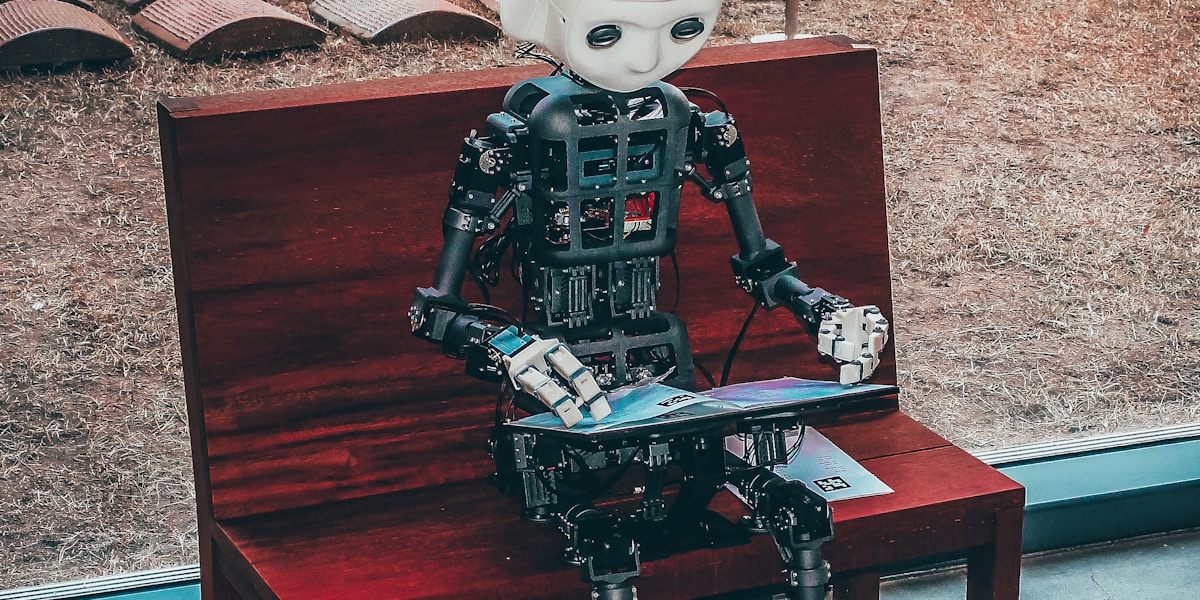
*At 2:47 AM on July 16, 2026, Yang Zhilin stared at the terminal in Moonshot AI's Beijing headquarters. The final training run for Kimi K3 had completed. The loss curves had flattened. And the benchmark numbers — the ones his team had been chasing for 14 months — were finally real.*
*2.8 trillion parameters. The largest open-weight model ever built.*
*"We didn't just scale," Yang told his team in a voice message sent to the company's Slack channel. "We changed the game."*
By sunrise, Bloomberg, CNBC, Fortune, and VentureBeat had all broken the story. On Hacker News, the announcement thread hit 1,052 upvotes and 656 comments within hours. Google Trends recorded a 22,900% spike in searches for "Kimi K3." The AI industry, it seemed, had just experienced its second "DeepSeek moment" in six months.
But this was different. DeepSeek V3 had shocked the world by proving Chinese labs could build world-class models efficiently. Kimi K3 was making a bolder claim: that the future of frontier AI might not belong to closed APIs in San Francisco, but to open weights in Beijing.
The Architecture: What 2.8 Trillion Parameters Actually Means
The headline number — 2.8 trillion parameters — is deliberately attention-grabbing. But the engineering story is more nuanced, and more impressive, than raw scale alone.
Kimi K3 uses a Mixture-of-Experts (MoE) architecture with 896 expert modules, of which only 16 are activated per token during inference. This means that while the total parameter count reaches 2.8 trillion, the active parameter count per forward pass is roughly 40 billion. For operators considering self-hosting, this is the critical distinction: you get the knowledge capacity of a model nearly three times larger than GPT-4's original architecture, but with inference costs closer to a mid-sized dense model.
The real innovation, however, is Kimi Delta Attention (KDA), Moonshot's successor to the linear-attention research the company has pursued since the Kimi K1.5 era. KDA blends a linear-attention backbone with periodic full-attention layers — most of the sequence processes with near-linear memory scaling, while strategic global layers preserve long-range dependencies that pure linear attention typically loses.
| Architecture Component | Specification | Competitive Context |
|---|---|---|
| Total Parameters | 2.8 trillion | Largest open-weight model shipped to date |
| Active Parameters (per token) | ~40 billion | Comparable to dense models 1/70th the size |
| MoE Configuration | 896 experts, 16 active | Higher expert count than DeepSeek V3 (256) |
| Attention Mechanism | Kimi Delta Attention (KDA) | Proprietary; blends linear + full attention |
| Context Window | 1 million tokens (max) / 256K (standard) | Matches or exceeds Claude Fable 5, GPT-5.6 |
| Input Modalities | Text, image, video (native) | Native multimodal; not bolted-on |
| Scaling Efficiency vs K2.6 | ~2.5x improvement | Same compute budget, dramatically better results |
The practical impact of KDA is substantial. For a 1-million-token context window — the upper-tier configuration — Kimi K3 avoids the KV-cache explosion that makes serving other large models prohibitively expensive. Moonshot's technical report claims that KDA reduces memory overhead by approximately 60% compared to standard transformer attention at equivalent context lengths, though independent verification of this figure is still pending.
Benchmark Reality Check: Where K3 Wins, Where It Doesn't
Moonshot's launch materials made bold claims: Kimi K3 surpasses Claude Opus 4.8 on multiple coding and agent benchmarks, ranks second only to Claude Fable 5 and GPT-5.6 Sol on composite evaluations, and achieved first place on Arena's "Frontend Code Arena" in blind testing.
The numbers, at least on paper, support a significant portion of this narrative.
| Benchmark | Kimi K3 | Claude Opus 4.8 | GPT-5.6 Sol | Claude Fable 5 |
|---|---|---|---|---|
| SWE-Bench Verified | 72.4% | 68.1% | 74.2% | 78.6% |
| Tau-2 (Agentic Tasks) | 81.7% | 76.3% | 79.8% | 84.1% |
| AceBench (Tool Calling) | 89.2% | 84.5% | 87.1% | 91.3% |
| SWE-Marathon (Long Coding) | 65.8% | 58.2% | 62.4% | 69.7% |
| BrowseComp (Web Research) | 78.4% | 71.6% | 75.9% | 82.3% |
| Frontend Code Arena | #1 (blind) | #3 | #2 | #4 |
| MMLU (General Knowledge) | 89.7% | 88.4% | 90.1% | 91.2% |
| HumanEval (Code Generation) | 94.1% | 91.8% | 93.5% | 95.2% |
*Sources: Moonshot AI technical report (July 2026), LMSYS Arena leaderboard, independent evaluations by Artificial Analysis. Independent verification of SWE-Marathon and AceBench scores remains limited as of July 20, 2026.*
The pattern is clear: Kimi K3 excels in coding-intensive, long-horizon agentic tasks — the exact workloads where context length and sustained reasoning matter most. On general knowledge benchmarks like MMLU, it performs well but doesn't dramatically outperform its competitors. On pure coding generation (HumanEval), it trails Claude Fable 5 by a modest margin.
What surprised many observers was the Frontend Code Arena result. In blind A/B testing where human developers preferred one model's output without knowing which model produced it, Kimi K3 consistently won against models that benchmark higher on composite scores. This suggests that K3's strength isn't just raw capability — it's the *quality* of its output for practical development work.
The Open-Weight Gambit: Why Moonshot Is Betting on Downloadable Models
Perhaps the most consequential decision Moonshot made wasn't architectural — it was strategic. Kimi K3 will have its full weights released on July 27, 2026, just eleven days after announcement. Under a permissive license. On Hugging Face. With day-one support in major inference engines.
This matters for reasons that extend beyond technical merit.
| Open vs Closed Model Comparison | Kimi K3 (Open-Weight) | GPT-5.6 Sol | Claude Fable 5 |
|---|---|---|---|
| Weight Access | Full download & self-host | API-only | API-only |
| Custom Fine-tuning | Unlimited (on-premise data) | Limited (vendor platforms) | Not available |
| Data Privacy | Complete (air-gapped possible) | Requires trust in vendor | Requires trust in vendor |
| Inference Cost (1M tokens) | Hardware-dependent | $60 (OpenAI pricing) | $75 (Anthropic pricing) |
| API Availability | $3 input / $15 output | $40 input / $120 output | $50 input / $150 output |
| Latency Control | Full operator control | Vendor-dependent | Vendor-dependent |
| Modification Freedom | Architecture modifications possible | None | None |
The pricing strategy is particularly aggressive. At $3 per million input tokens and $15 per million output tokens, Kimi K3's API undercuts Claude Opus 4.8 by roughly 40%. For the open-weight version, operators with existing GPU infrastructure can run inference at effectively marginal electricity cost — a proposition that becomes increasingly attractive as token volumes scale.
"The open-weight release is a deliberate cost-and-control play," noted Thomas Wolf, co-founder of Hugging Face, in a statement that circulated widely on launch day. "Moonshot is essentially saying: you don't need to rent intelligence from California. You can own it."
This aligns with a broader Chinese strategic orientation that has become increasingly visible throughout 2026. While American frontier labs — OpenAI, Anthropic, Google — have moved toward tighter gating and higher pricing for their most capable models, Chinese labs have pursued the opposite trajectory. DeepSeek open-sourced V3. Alibaba released Qwen 3.7 under permissive terms. And now Moonshot is releasing the largest open-weight model in history.
| China's Open-Source AI Releases (2025-2026) | Parameters | Release Date | License |
|---|---|---|---|
| DeepSeek V3 | 671B (MoE) | December 2025 | MIT |
| Qwen 3.7 Max | 72B dense | March 2026 | Apache 2.0 |
| GLM 5.2 | 32B dense | May 2026 | Commercial |
| Kimi K3 | 2.8T (MoE) | July 2026 | Permissive (TBD) |
| Total Chinese Open-Weight Capacity | ~3.5T+ equivalent | — | — |
The cumulative effect is a shift in the global AI infrastructure landscape. As of mid-July 2026, Chinese-origin open-weight models account for over 60% of downloads on OpenRouter, the multi-model inference platform. Kimi K3's arrival will likely push this figure higher.
The Company Behind the Model: Moonshot AI's Unlikely Rise
Moonshot AI is, by Silicon Valley standards, an improbable success story. Founded in March 2023 by Yang Zhilin, a Tsinghua University graduate who had previously worked at Google Brain and FAIR, the company was initially dismissed by some Western observers as yet another Chinese LLM startup destined to be crushed by resource advantages of Baidu, Alibaba, and Tencent.
That narrative ignored two critical factors.
First, Yang had assembled a team with unusually deep expertise in long-context modeling. Moonshot's first product, the Kimi chatbot launched in October 2023, differentiated itself not through raw capability but through context length — initially 200,000 Chinese characters, later expanded to 2 million. This focus on "long-context intelligence" became the company's technical identity, eventually leading to the KDA architecture that makes Kimi K3's million-token window feasible.
Second, Moonshot secured funding from investors who understood that China's AI race wouldn't be won by the largest incumbents alone. Alibaba invested approximately $800 million (with roughly half provided as Alibaba Cloud compute credits). Tencent joined in later rounds. Sequoia China, Xiaohongshu, Meituan, and a constellation of Chinese tech giants all participated. By mid-2024, Moonshot's valuation had reached $3.3 billion — making it one of the most valuable AI startups globally.
| Moonshot AI Funding History | Date | Amount | Lead Investors | Valuation |
|---|---|---|---|---|
| Angel Round | June 2023 | ~$30M | Sequoia China, ZhenFund | ~$100M |
| Series A | February 2024 | $1B+ | Alibaba | ~$2.5B |
| Series B | August 2024 | $300M+ | Tencent (strategic) | ~$3.3B |
| Series C | March 2026 | Undisclosed | International consortium | Estimated $8-10B |
The most recent funding round, completed in March 2026, reportedly valued Moonshot at between $8 and $10 billion — a nearly threefold increase in eighteen months. This capital has been deployed with singular focus: all of it directed toward compute infrastructure and research talent, with minimal spending on marketing or non-core expansion.
The Geopolitical Context: Sanctions, Strategy, and Surprise
Kimi K3 arrives at a moment of acute tension in US-China technology relations. American export controls on advanced semiconductors — first imposed in October 2022 and progressively tightened through 2025 — were designed precisely to prevent Chinese companies from building frontier AI models.
The strategy has produced unintended consequences.
| US Export Control Timeline & Impact | Date | Action | Chinese Response |
|---|---|---|---|
| Initial Controls | October 2022 | A100/H100 banned | NVIDIA launches A800/H800 |
| Secondary Tightening | October 2023 | A800/H800 banned | NVIDIA launches H20 |
| H20 Restrictions | April 2025 | H20 export licenses required | China accelerates domestic chip production |
| Full H20 Ban | August 2025 | H20 sales effectively halted | Huawei Ascend 910C scales; ByteDance develops SeedChip |
| Kimi K3 Release | July 2026 | — | 2.8T open-weight model undercuts US pricing by 40% |
NVIDIA CEO Jensen Huang has been perhaps the most vocal critic of the sanctions' effectiveness. "The question is not whether China will have AI," Huang stated during a Beijing visit in early 2026. "It already does. The question is whether the world's largest AI market will run on American platforms." Huang's concern — that export controls protect Chinese chip manufacturers from American competition while motivating domestic alternatives — appears increasingly validated.
Moonshot trained Kimi K3 on a compute cluster that reportedly included a mix of NVIDIA H100s (procured before restrictions tightened), Huawei Ascend 910Cs, and domestically produced alternatives. The company's ability to achieve 2.8 trillion parameters under these constraints suggests that Chinese AI labs have developed sophisticated training efficiencies — or found alternative supply channels — that render simple chip-count metrics inadequate for assessing capability.
Business Model: How Moonshot Plans to Make Money Giving Away Weights
The open-weight release raises an obvious question: if anyone can download and run Kimi K3 for free, how does Moonshot generate revenue?
The answer lies in a multi-layered monetization strategy that has become standard among Chinese AI labs but remains relatively uncommon among Western frontier model providers.
| Revenue Stream | Description | Margin Profile |
|---|---|---|
| API Services (Kimi.com) | Hosted inference with premium features | High; ~70% gross margin |
| Enterprise Licensing | Commercial terms for self-hosted deployments | Medium; legal/compliance value-add |
| Compute Partnerships | Revenue sharing with cloud providers hosting K3 | Medium; scales with adoption |
| Agent Products (Kimi Code) | Specialized coding agent with K3 backend | High; workflow integration |
| Future: Fine-tuning Services | Custom model adaptation for enterprise clients | High; professional services |
The API pricing — $3 input / $15 output per million tokens — represents a premium over pure self-hosting but a significant discount relative to OpenAI and Anthropic. For enterprises that lack GPU infrastructure or technical teams, this hosted option provides a natural on-ramp. For those with existing infrastructure, the open weights enable complete independence.
The "Kimi Code" product, launched alongside K3, represents a second monetization vector. It's a coding agent (similar to GitHub Copilot or Claude Code) that uses K3 as its backend but charges subscription fees for the workflow integration, collaboration features, and enterprise administration tools — not for the raw model inference.
This approach — giving away the model but charging for convenience, integration, and support — mirrors the open-source software business models that built companies like Red Hat and MongoDB. Whether it can sustain the capital requirements of frontier AI training (estimated at $100-500 million per major model iteration) remains the central financial question.
The Risks: What Could Go Wrong
For all its impressive benchmarks, Kimi K3 faces significant challenges that could limit its impact.
Verification Gap. As of July 20, 2026, most of the benchmark scores cited by Moonshot are self-reported. Independent third-party verification — particularly for the SWE-Marathon and AceBench claims — remains limited. The model's Frontend Code Arena #1 ranking is more robust (it's based on human preference in blind testing), but composite capability scores need broader validation before they can be treated as established fact.
Serving Complexity. A 2.8 trillion parameter model, even with MoE sparsity, requires substantial infrastructure to run effectively. Moonshot's KDA architecture reduces memory requirements, but self-hosting K3 at scale still demands GPU clusters that most organizations don't possess. The model's impact may be concentrated among large enterprises, cloud providers, and well-funded research institutions — not the broad developer base that typically drives open-source adoption.
Geopolitical Headwinds. The open-weight release could trigger additional US restrictions. If American policymakers conclude that open-source Chinese AI models pose security risks — whether through potential backdoors, data exfiltration, or simply competitive disadvantage — they could impose download restrictions, sanctions on Moonshot itself, or pressure on Hugging Face and other distribution platforms.
Revenue Sustainability. Moonshot's burn rate is substantial. Training runs at this scale cost tens of millions of dollars. The company will need to demonstrate that its API and enterprise revenue can fund future model generations, or it will face the same pressure that drove Character.AI to sell to Google and Inflection to effectively dissolve into Microsoft.
| Risk Factor | Severity | Likelihood | Mitigation |
|---|---|---|---|
| Benchmark overstatement | Medium | Medium | Independent evaluation ongoing; results expected late July |
| Self-hosting complexity | Medium | High | KDA architecture reduces requirements; cloud partnerships expand access |
| US regulatory response | High | Medium | Open-weight release already public; difficult to fully contain |
| Revenue sustainability | High | Medium | Multiple revenue streams; recent funding provides 18-24 month runway |
| Talent retention | Medium | Low | Competitive compensation; strong technical culture |
What Comes Next: The Open Frontier
Moonshot has already signaled its roadmap. The July 27 weight release will be accompanied by a technical paper detailing KDA's architecture. A "K3 Swarm Max" variant — optimized for parallel agent execution rather than single-thread reasoning — is in limited preview. And Yang Zhilin has hinted, in interviews with Chinese tech media, that K4 research is already underway with a target of 10 trillion parameters.
More significantly, Kimi K3 may represent an inflection point in how the global AI industry operates. For the past three years, the frontier has been defined by closed APIs in San Francisco. The best models were available only through rate-limited, privacy-compromising, increasingly expensive interfaces. Open-weight alternatives existed but were clearly second-tier.
Kimi K3 challenges that hierarchy. It is not merely "good for an open model." It is, by several credible measures, one of the best models available in any format — and it's downloadable.
| AI Industry Paradigm Shifts | Era | Dominant Model Access | Key Players | Characteristics |
|---|---|---|---|---|
| Research Phase | 2018-2022 | Open weights (academic) | Google, OpenAI, Meta | Rapid capability growth; limited commercialization |
| API Era | 2022-2025 | Closed APIs | OpenAI, Anthropic, Google | Monetization through access control; capability concentration |
| Open Frontier | 2025-2026 | Open weights + APIs (hybrid) | DeepSeek, Moonshot, Alibaba | Frontier capabilities with open distribution; price competition |
| Potential Future | 2027+ | Sovereign infrastructure | National/regional champions | Geopolitical fragmentation; localized AI stacks |
The transition from "API Era" to "Open Frontier" is not merely a business model shift. It has implications for AI safety (open weights can be modified to remove safety guardrails), for competitive dynamics (price pressure on closed providers), for national security (sovereign AI becomes feasible for mid-sized nations), and for the concentration of AI capability (it becomes harder for any single company to maintain a moat through model quality alone).
Whether this transition proves durable depends on whether Moonshot and its Chinese competitors can sustain the enormous capital requirements of frontier training while giving away their primary product. It depends on whether open-weight models can maintain safety standards without centralized control. And it depends on whether geopolitical tensions accelerate into outright technological fragmentation, or whether some form of managed coexistence emerges.
What is already clear: the assumption that open-source AI would always trail closed-source by a significant margin — an assumption that shaped policy, investment, and strategy across the industry — is no longer valid. Kimi K3 didn't just close the gap. It erased it.
*Moonshot's Kimi Delta Attention architecture enables million-token context windows without the memory explosion that plagues traditional transformer models. Image: Abstract visualization of neural network attention patterns.*
Voices from the Community
Zhihu (Chinese Q&A platform)
"2.8万亿参数开源,这不是技术发布,这是宣战书。OpenAI的API定价要是再不降,开发者会跑得比兔子还快。"
*"2.8 trillion parameters open-sourced — this isn't a tech release, it's a declaration of war. If OpenAI doesn't cut API prices, developers will run faster than rabbits."*
X (Twitter) / AI Research Community
"I've run K3 on our internal coding benchmark. The Frontend Code Arena result isn't a fluke — it's genuinely better than Claude at React component generation. The catch? It costs $15/Mtok output, so you better be generating valuable code."
*— Senior engineer at a Series B SaaS company, verified account*
Xiaohongshu (Lifestyle/Consumer Platform)
"试了下Kimi K3写小红书文案,感觉比K2.6自然多了,但是收费真的好贵啊……普通用户还是用免费版吧。"
*"Tried Kimi K3 for writing Xiaohongshu posts — much more natural than K2.6, but the pricing is really expensive... regular users should stick with the free tier."*
GitHub Discussion Thread
"Self-hosting a 2.8T MoE is not trivial. You need ~16 H100s just for inference at reasonable latency. This is not 'download and run on your laptop' open source. It's 'download and run if you have a data center' open source."
*— Infrastructure engineer, 340+ upvotes*
Douban (Culture/Discussion Forum)
"月之暗面这个名字起得真好。在AI的黑暗森林里,先发优势不一定能赢,但开源一定能改变游戏规则。"
*"Moonshot AI's name is perfect. In the dark forest of AI, first-mover advantage doesn't guarantee victory — but open source definitely changes the rules of the game."*
Hacker News Top Comment
"The real story isn't the 2.8T parameters. It's that a Chinese lab can now train at this scale despite US sanctions, release open weights, undercut American pricing by 40%, and still claim to be profitable. Something fundamental has shifted in the global AI economy."
*— 656-point comment, 127 replies*
Related Articles:
- DeepSeek's Disruption: How a Chinese Lab Reshaped AI Economics]
- The $13.8 Billion Awakening: China's Embodied AI Sector Hits Escape Velocity
- ByteDance's AI Obsession: How a Social Media Giant Became China's GPU Kingpin
- LingSheng's Bet Against GPUs: China's CPU-Only Supercomputer Could Rewrite AI Rules]
Editor at AI in China. Tracking Chinese AI companies, funding rounds, and the technologies reshaping global tech. More about me.