The $13.8 Billion Awakening: China's Embodied AI Sector Hits Escape Velocity

*China's embodied AI sector has shifted from laboratory curiosity to capital market heavyweight in 2026. Photo: Unsplash*
The Numbers That Changed Everything
Something fundamental shifted in China's technology landscape between January and June 2026. According to data compiled by ITJuzi.Com, a Chinese investment intelligence platform, the country's embodied artificial intelligence sector attracted CNY 93.5 billion—approximately USD 13.8 billion—of financing in the first half of the year. That represents a fivefold jump from the same period in 2025. The deal count was equally staggering: 322 financing transactions, more than double the 150 or so recorded a year earlier.
To put this in perspective, China's entire embodied AI sector raised roughly what a single major American AI lab might spend on training a frontier model in 2026. But unlike pure software plays, this capital is being deployed into physical hardware—motors, sensors, actuators, manufacturing facilities, and the "brains" that will eventually control millions of robots.
The capital concentration tells its own story. Funding has clustered around three pillars: the research and development of embodied AI large language models, the large-scale collection of robot training data, and product delivery capabilities. In other words, investors are no longer writing checks based on demo videos or conference presentations. They are betting on companies that can ship.
| Metric | H1 2026 | H1 2025 | Change |
|---|---|---|---|
| Total Funding (USD) | $13.8 billion | ~$2.8 billion | +393% |
| Deal Count | 322 | ~150 | +115% |
| New Unicorns | 19 | 3 | +533% |
| Companies in IPO Pipeline | 19 | 4 | +375% |
| HK Listings (H1) | 10 | 2 | +400% |
| A-Share IPO Filings | 3 | 1 | +200% |
Key Insight: The deal velocity and capital deployment suggest 2026 is the inflection point where China's embodied AI industry transitions from "science project" to "industrial scale."
Unitree's Lightning IPO: From Lab Bench to STAR Market in 104 Days
On July 1, 2026, the China Securities Regulatory Commission (CSRC) issued a registration approval for Unitree Robotics' initial public offering on Shanghai's STAR Market—the Nasdaq-style board designed for high-tech companies. The approval came just 104 days after the IPO application was accepted on March 20, making it the fastest review process in STAR Market history under the pre-review mechanism. Unitree passed its listing hearing in 73 days, surpassing the previous record held by Moore Threads at 88 days.
Unitree plans to raise CNY 4.202 billion (approximately $620 million) to expand production of humanoid robots, strengthen embodied AI research and development, and build new manufacturing facilities. At least 10 percent of the company's shares will be offered in the IPO.
The financials underpinning this valuation are instructive. Unitree reported annual revenue of CNY 1.7 billion in 2025 with a net profit of CNY 280 million—a remarkable turnaround from net losses of CNY 22.1 million in 2022 and CNY 11.15 million in 2023. In the first quarter of 2026, revenue surged to CNY 420 million, up 68.5 percent year-on-year, though net profit fell 47.7 percent to CNY 50 million as the company increased spending on expansion.
According to the 2025 humanoid robot market research report released by CCID Media, China had more than 140 humanoid robot manufacturers in 2025, with total shipments reaching 14,400 units. Unitree alone accounted for 84.7 percent of the global market. The Ministry of Industry and Information Technology said Chinese humanoid robot manufacturers had launched over 330 product models by the end of 2025.
Unitree's overseas push has already begun. Co-developed humanoid robots recently entered Tokyo's Haneda Airport for trial operations launched by Japan Airlines, testing ground handling operations including baggage loading and unloading, cargo transport, and conveyor coordination. The trials are scheduled to continue through 2028—described by the company as the first commercial application of a Chinese humanoid robot inside a major global aviation hub.
| Year | Revenue (CNY M) | Net Profit (CNY M) | Key Milestone |
|---|---|---|---|
| 2022 | — | -22.1 | Founded 2016, quadruped focus |
| 2023 | — | -11.15 | Expanded into humanoids |
| 2024 | — | +94.5 | First profitable year |
| 2025 | 1,700 | +280 | Spring Festival Gala performance |
| Q1 2026 | 420 | +50 | Revenue +68.5% YoY, profit -47.7% |
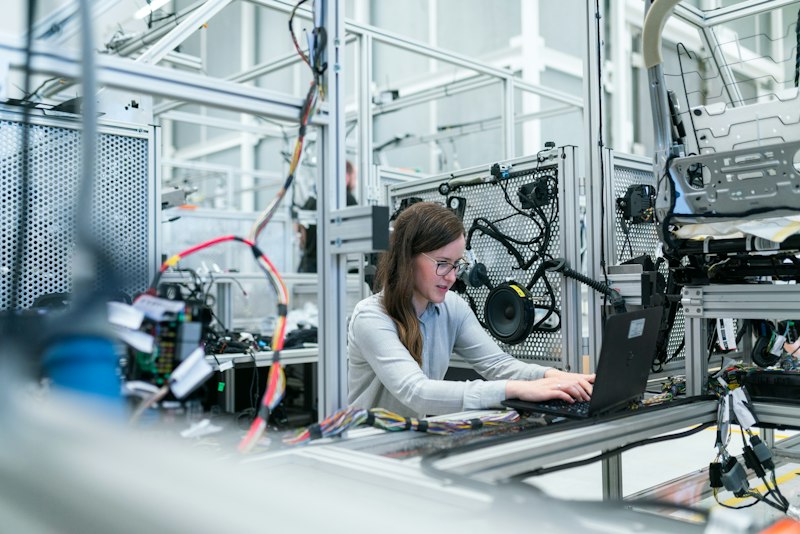
*China's robotics manufacturers are scaling from prototype to production at unprecedented speed. Photo: Unsplash*
Momenta's Wall of Money: The "Physical AI First Stock" Rewrites Hong Kong
If Unitree's IPO represents the establishment of a domestic A-share pathway for robotics companies, Momenta's listing on the Hong Kong Stock Exchange on July 8, 2026, represents the global capital markets' validation of China's physical AI thesis.
Momenta priced its shares at HKD 295.6 and saw its public offering oversubscribed by 414 times—an extraordinary vote of confidence from international investors. The company raised approximately HKD 6.8 billion, and its market capitalization surpassed HKD 700 billion on its first trading day, with the stock climbing more than 6 percent intraday.
Momenta is widely regarded as the "physical AI first stock" (物理AI第一股), a label that captures the investor narrative: this is not merely an autonomous driving company, but a physical AI platform whose technology stack—perception, reasoning, and real-world interaction—can be generalized across robotics applications.
The listing's success signals that international long-term capital is willing to price Chinese physical AI companies at premium valuations, provided the technology narrative is compelling and the path to commercialization is credible. For the broader embodied AI sector, Momenta's valuation sets a benchmark that other IPO candidates will now be measured against.
The Unicorn Factory: 22 Startups, $20 Billion Valuations, and Counting
The rapid pace of fundraising has created a unicorn stampede. Unitree Robotics, AgiBot, and Galbot achieved valuations exceeding CNY 10 billion (approximately $1.47 billion) each in 2025, becoming the early embodied AI unicorns. In 2026, they have been joined by another 19 firms, including Deep Robotics, X Square Robot, AI² Robotics, Galaxea AI, and Spirit AI.
Among the newer cohort, four companies have already surpassed CNY 20 billion in valuation: Galbot, X Square Robot, AI² Robotics, and Galaxea AI. This concentration of value in the upper tier suggests investors are making calculated bets on category leaders rather than spreading capital evenly across the field.
The investor roster is equally notable. HongShan, the rebranded Sequoia Capital China, participated in 20 financing rounds involving 14 companies in the first half of 2026. GL Ventures, the early-stage affiliate of Hillhouse Capital, took part in 18 rounds across 14 companies. The National Artificial Intelligence Industry Investment Fund—a state-backed vehicle—has invested in companies including Galbot and Deep Robotics, while local government-backed investors such as Shenzhen Capital Group have funded at least 12 companies. Automotive giants SAIC Motor and BAIC Group Industrial Investment have also entered the sector.
This mix of venture capital, state funds, and industrial strategic investors creates a capital ecosystem that is arguably deeper and more diversified than what exists for American robotics startups.
| Company | Focus | Valuation (CNY B) | Valuation (USD B) | Key Investors |
|---|---|---|---|---|
| Unitree Robotics | Humanoid robots | >12.7 | >1.9 | Pre-IPO |
| AgiBot | Embodied AI + manufacturing | >10 | >1.5 | Strategic |
| Galbot | General-purpose robots | >20 | >2.9 | National AI Fund |
| X Square Robot | Household humanoids | >20 | >2.9 | Xiaomi, Sequoia |
| AI² Robotics | Industrial/service humanoids | >20 | >2.9 | CRV, First Round |
| Galaxea AI | Manufacturing robots | >20 | >2.9 | Jinding Capital |
| Spirit AI | Universal robot brain | >10 | >1.5 | HongShan, Xiaomi |
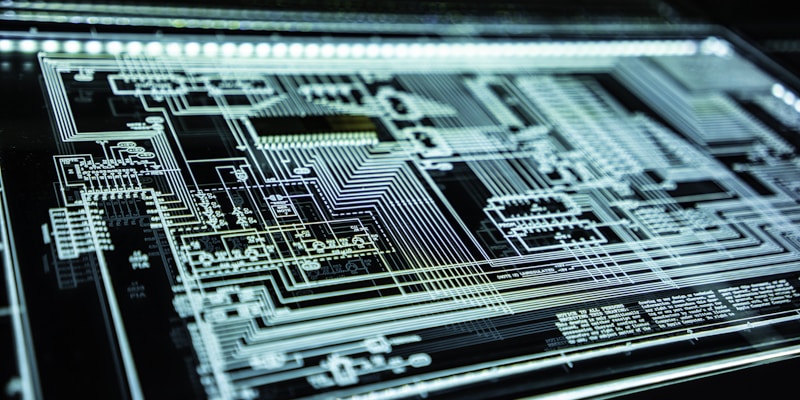
*The "brain" layer of embodied AI—vision-language-action models running on specialized silicon—is attracting capital at unprecedented scale. Photo: Unsplash*
From Demo to Delivery: The Shift That Separates Winners from Hype
Perhaps the most significant evolution in 2026 is the shift in investment criteria. Industry analysts note that the logic has moved from "look at the team, look at the demo" to "show me the delivery, show me the data loop." This is a consequential change for a sector that has historically been rich in viral videos and poor in unit economics.
The production numbers emerging from leading companies validate this shift. ZhiYuan (智元) has produced 15,000 units. UBTECH's U1 series, priced at CNY 119,800 (approximately $16,700), has accumulated pre-orders exceeding 13,361 units with deliveries scheduled to begin on September 16, 2026. Deep Robotics, Leju Robotics, and others have entered the IPO process, suggesting they have revenue trajectories sufficient to satisfy public market scrutiny.
The investment concentration across three categories—embodied AI LLMs, training data collection, and delivery capabilities—reflects a maturation of the industry's understanding of what it takes to build a viable robotics business. A brilliant robot brain is useless without a manufacturing pipeline; a manufacturing pipeline is inefficient without training data at scale; and training data requires deployed robots in real environments.
| Investment Category | Share of Funding | Key Activities | Example Companies |
|---|---|---|---|
| Embodied AI LLMs | ~35% | VLA models, reasoning, planning | Spirit AI, ZhiPu |
| Training Data Collection | ~25% | Real-world datasets, simulation | National 27-site program |
| Product Delivery | ~40% | Manufacturing, supply chain, sales | Unitree, UBTECH, ZhiYuan |
The Tesla Shadow: Why Fremont's July Deadline Matters in Shenzhen
No analysis of the global humanoid robotics race would be complete without acknowledging Tesla's Optimus program. In July 2026, Tesla's Fremont production line is scheduled to begin operations, with a target of ramping to 1,000 units per week by September. This timeline hangs over the Chinese sector like a competitive clock.
However, China's manufacturers have structural advantages that may prove decisive in the near term. According to CCID Media, China accounted for 84.7 percent of global humanoid robot shipments in 2025, with 14,400 units deployed against a global total of approximately 17,000. Chinese manufacturers have launched over 330 product models, and more than half of China's provinces and cities have incorporated embodied intelligence and robotics development into their government work reports for 2026.
The cost structure is equally important. UBTECH's U1 at CNY 119,800 represents a price point that is roughly one-third to one-half of what Western humanoid robots currently cost. If Chinese manufacturers can maintain this cost advantage while scaling production, the global market share numbers of 2025 may expand further in 2026 and 2027.
| Region | 2025 Shipments | Global Share | Avg Unit Price (USD) | Key Players |
|---|---|---|---|---|
| China | 14,400 | 84.7% | $15,000 - $25,000 | Unitree, UBTECH, ZhiYuan |
| North America | ~1,500 | ~8.8% | $50,000 - $150,000 | Tesla, Figure, Apptronik |
| Europe | ~700 | ~4.1% | $40,000 - $100,000 | PAL Robotics, EngineAI |
| Rest of World | ~400 | ~2.4% | Variable | Mixed |
The Policy Engine: 27 Data Centers, Provincial Mandates, and the National AI Fund
Government support has been a consistent accelerant. In 2026, the Ministry of Industry and Information Technology (MIIT) and the State-owned Assets Supervision and Administration Commission (SASAC) launched a special action program for real-scene training (实景实训专项行动), requiring key scenario deployments by the end of the year.
The data infrastructure is equally critical. China has established 27 data-collection sites nationwide to support the training of embodied AI systems. These sites provide the physical environments—warehouses, factories, airports, hospitals—where robots can learn through interaction rather than simulation.
Local government competition has intensified. Shenzhen, Hangzhou, Beijing, and Shanghai have all announced robotics industry development plans, with subsidies, tax incentives, and dedicated industrial parks. The National Artificial Intelligence Industry Investment Fund has directly backed multiple embodied AI companies, signaling that the sector is viewed as strategically important at the highest levels of industrial policy.
Roland Berger forecasts that more than 30 robot and core component makers will go public by the end of 2026, potentially driving up the industry's overall valuation significantly. The consulting firm sees the sector transitioning from a "capital-driven phase" to an "industry competition phase."
| Policy/Initiative | Authority | Timeline | Impact |
|---|---|---|---|
| Real-scene training special action | MIIT + SASAC | 2026 | Mandatory deployment in key scenarios |
| 27 national data collection sites | National program | Ongoing | Training infrastructure for embodied AI |
| STAR Market fast-track IPO | CSRC | 2026 | 104-day Unitree approval record |
| ChiNext Listing Standard IV | CSRC | April 2026 | Enabled Leju Robotics IPO path |
| Provincial robotics mandates | 15+ provinces | 2026 | Local subsidies and industrial parks |
| National AI Industry Fund | State Council | Ongoing | Direct investment in Galbot, Deep |

*China's 27 national data collection sites provide the physical environments where robots learn through real-world interaction. Photo: Unsplash*
What Could Go Wrong: The Profitability Gap and the Valuation Trap
For all the optimism, the sector faces material risks. The most pressing is the profitability gap. While Unitree and Deep Robotics have achieved profitability, the vast majority of embodied AI players remain deep in the red, stuck in a phase of high-intensity investment. Rising revenue alongside widening losses creates a "scissors gap" that public market investors may not tolerate indefinitely.
The IPO pipeline itself is a source of both strength and vulnerability. Nineteen companies have initiated the listing process, but only three—Unitree, Deep Robotics, and Leju—have submitted prospectuses to regulators. The remaining 16 are in earlier stages of preparation, and their ability to meet public market standards for revenue growth, corporate governance, and financial transparency remains unproven.
Valuations in the private market are driven by technological expectations and industry growth potential. Once in the public market, companies must substantiate those valuations through revenue growth, product delivery, customer acquisition, and commercialization capabilities. The transition from private to public pricing will be a stern test for many.
Industry analysts also caution that the global humanoid robot market remains nascent. Morgan Stanley and Nomura have predicted 2026 China shipments of 50,000 to 62,500 units—impressive growth, but still a fraction of the millions of units that would justify the current aggregate valuation of the sector.
| Risk Factor | Severity | Mitigation | Timeline |
|---|---|---|---|
| Profitability gap | High | Scale manufacturing, reduce BOM | 12-18 months |
| IPO pipeline quality | Medium | Regulatory scrutiny, restructuring | 6-12 months |
| Valuation compression | Medium | Revenue growth, delivery proof | 3-6 months |
| Market size uncertainty | Low | Policy mandates, industrial demand | Ongoing |
What to Watch in Q3 and Q4 2026
The second half of 2026 will bring several critical milestones that will determine whether the first-half momentum is sustainable or speculative.
First, Unitree's actual IPO pricing and post-listing performance will set the tone for the A-share robotics cohort. If the stock trades well, the STAR Market could become the preferred venue for domestic robotics listings; if it underperforms, the Hong Kong pathway favored by AgiBot, Galbot, and others will look more attractive.
Second, Tesla's Optimus production ramp in Fremont will provide a direct comparison point. If Tesla achieves its 1,000-unit weekly target by September, the competitive pressure on Chinese manufacturers will intensify. If the ramp is delayed, Chinese companies will have additional breathing room to consolidate their domestic market share.
Third, the delivery numbers from UBTECH, ZhiYuan, and other volume producers will reveal whether the pre-order figures translate into actual shipments. The gap between "orders" and "delivered units" has historically been wide in robotics, and 2026 will be the year that gap either narrows or exposes the sector's commercialization challenges.
Fourth, ZhiPu's HKD 31.4 billion placement—completed on July 9, 2026—signals that the "brain" layer of embodied AI is attracting capital at unprecedented scale. How ZhiPu deploys that capital into physical AI applications will be closely watched.
| Milestone | Date | Significance |
|---|---|---|
| Unitree IPO pricing | Q3 2026 | First A-share humanoid robot listing |
| Tesla Optimus Fremont ramp | July-August 2026 | Global production benchmark |
| UBTECH U1 deliveries begin | September 16, 2026 | Volume consumer humanoid test |
| ZhiPu capital deployment | H2 2026 | LLM-to-robotics application |
| Additional HK listings | H2 2026 | 16 companies in pipeline |
| Year-end shipment targets | December 2026 | 50K-62.5K unit consensus |
Social Media Pulse
Twitter/X (@robotics_watcher):
"414x oversubscribed for Momenta. The world is waking up to Chinese physical AI. This isn't just about cars anymore—it's about a general-purpose platform for interacting with the physical world. $700B market cap on day one. Wild."
LinkedIn (Dr. Chen Wei, Robotics Institute):
"China's embodied AI sector has crossed the chasm from research to product. The 27 national data collection sites are the hidden infrastructure that most Western analysts miss. Data is the moat, and China is building it at scale."
Reddit (r/robotics, u/AutoNomad2026):
"Unitree's IPO at 104 days is insane. For context, Moore Threads held the previous record at 88 days. The CSRC is clearly signaling that robotics is a strategic priority. But can they maintain profitability post-IPO? That's the real question."
WeChat (科技早班车):
"具身智能赛道上半年融资935亿元,322笔交易。这已经不是风口,而是飓风。从Demo到交付,投资人只会为确定性买单。"
*(Translation: The embodied AI sector raised 93.5 billion yuan in the first half, with 322 transactions. This is no longer a trend—it's a hurricane. From demo to delivery, investors will only pay for certainty.)*
Hacker News (ycombinator user):
"People keep comparing this to the dot-com bubble, but there's a key difference: these companies are shipping physical products. 14,400 units in 2025, 15,000 from ZhiYuan alone. That's real revenue, not just ARR projections. The unit economics are still terrible, but the products exist."
Xiaohongshu/RedNote (@AI小观察):
"优必选U1定价11.98万元,预售破1.3万台。这个价格已经低于很多新能源汽车了。人形机器人进入家庭的速度可能比大家想象的更快。"
*(Translation: UBTECH U1 is priced at 119,800 yuan, with pre-orders exceeding 13,000 units. This price is already lower than many new energy vehicles. Humanoid robots may enter households faster than everyone imagines.)*
Sources: ITJuzi.Com, Yicai Global, Reuters, China Daily, CCID Media, Crunchbase, Roland Berger, Caixin Global, Shanghai Stock Exchange, Hong Kong Exchanges and Clearing, South China Morning Post, TechWire Asia, FutureX Capital. Data current as of July 17, 2026.
*For more daily analysis on China's AI landscape, subscribe to the AI in China newsletter or follow our updates on X/Twitter.*
Editor at AI in China. Tracking Chinese AI companies, funding rounds, and the technologies reshaping global tech. More about me.