The Great Patent Reversal: How Huawei Flipped 25 Years of Qualcomm Royalties
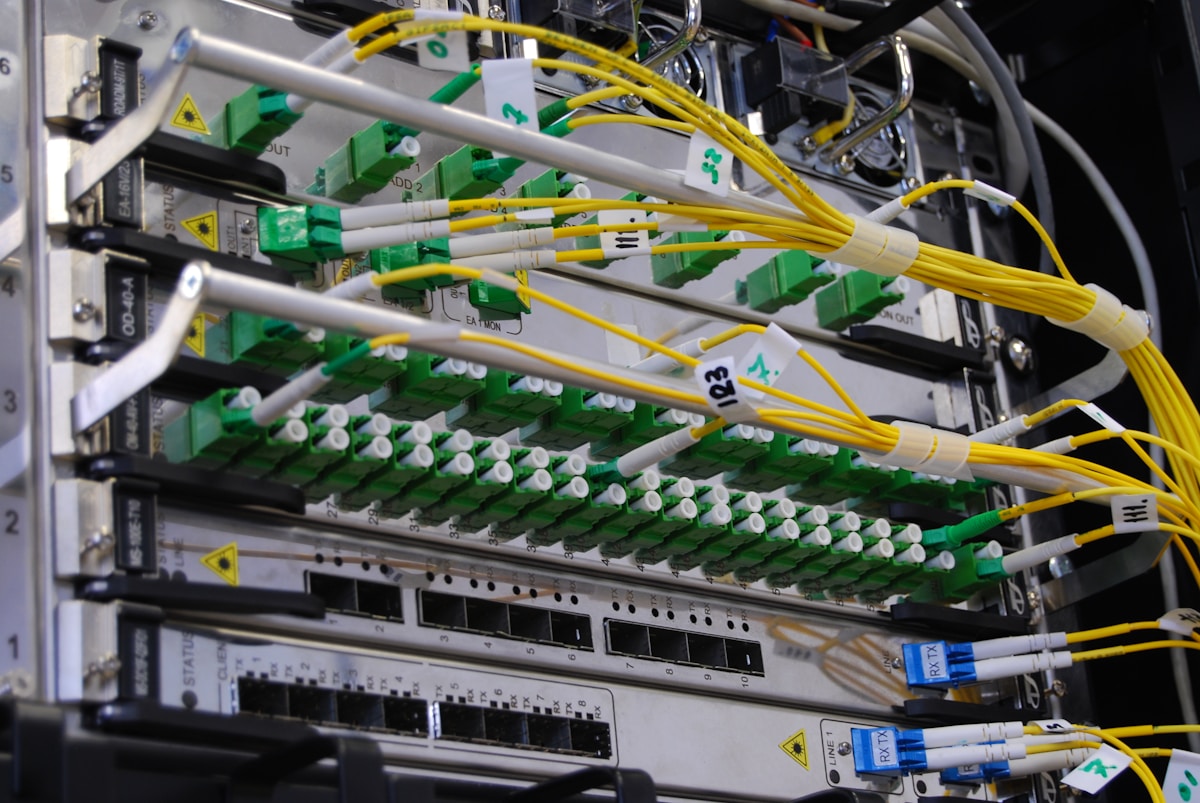
For twenty-five years, the arrangement was simple: Huawei built the networks, Qualcomm collected the rent. Every phone Huawei shipped, every base station it deployed, a slice of the revenue flowed west to San Diego — payment for the standard-essential patents that Qualcomm had woven into the DNA of every cellular network on Earth.
On October 5, 2026, that flow reversed.
Huawei and Qualcomm announced a multi-year, broad patent license agreement that includes cross-licenses covering 5G, compute, AI, and networking technologies — along with Qualcomm's purchase of certain Huawei U.S. patents in those same fields. It is the first patent licensing agreement between the two companies to cover 5G, and for the first time since 2001, the royalty money will flow from Qualcomm to Huawei.
Huawei says the deal will push the cumulative value of its patent licensing agreements above $6.9 billion. Qualcomm's stock rose more than 3% in pre-market trading.
*Semiconductor wafers like these carry the patented innovations that now flow in both directions between Shenzhen and San Diego. Photo: Unsplash*
The headlines will tell you this is a patent deal. It is much more than that. It is the formal recognition that the global technology stack — the one built on the assumption that American companies invent and Chinese companies manufacture — has inverted. And buried inside the agreement is a detail that most coverage has missed: Qualcomm is licensing patents underlying Huawei's LogicFolding chipmaking technique, the three-dimensional architecture that allowed Huawei's Kirin 9050 Pro to bypass US semiconductor sanctions entirely.
To understand what actually happened on October 5, you have to trace the full arc — from the first licensing check Huawei wrote to Qualcomm in 2001, through the sanctions that were supposed to cripple it, to the moment the world's most aggressive patent licensor decided it needed Chinese intellectual property more than the Chinese needed its chips.
The Deal, in Plain Terms
Before the history, the facts. The agreement announced on October 5, 2026 has two components: a broad cross-license between the two companies' patent portfolios spanning 5G, compute, AI, and networking, and Qualcomm's purchase of specific Huawei U.S. patents covering compute, AI, networking, and other technologies. The transaction closes after regulatory approvals. Financial terms were not disclosed.
| Deal Component | Details |
|---|---|
| Cross-License Scope | Patent portfolios in 5G, compute, AI, and networking |
| Patent Purchase | Qualcomm acquires certain Huawei U.S. patents in compute, AI, networking |
| 5G Coverage | First-ever 5G patent agreement between the two companies |
| LogicFolding | Qualcomm licenses patents underpinning Huawei's 3D chip-stacking technique |
| Financial Terms | Not disclosed |
| Huawei Cumulative Licensing Value | Exceeds $6.9 billion upon closing |
| Closing Condition | Regulatory approvals required |
| Principles | Structured around FRAND (Fair, Reasonable, Non-Discriminatory) |
Both companies framed the deal around FRAND principles — the licensing framework that governs how standard-essential patents are monetized globally. Huawei's Chief Intellectual Property Officer Alan Fan described the agreement as demonstrating "the value of Huawei's innovations" while recognizing "Qualcomm's foundational contributions to modern communication technologies." Qualcomm's John Han said the deal "reaffirms industry recognition of Qualcomm's 5G technology leadership" and "reflects Qualcomm's recognition of Huawei's continued innovation and intellectual property."
The diplomatic language masks a tectonic shift. For the first time in the history of the mobile industry, Qualcomm — the company that invented the business of charging royalties on cellular patents — is writing checks to a Chinese company for access to core technology. To appreciate the magnitude of that reversal, we need to go back to the beginning.
Phase 1: The Qualcomm Tax (1995–2010)
Qualcomm's business model has always been unusual. While companies like Intel made money selling chips and Ericsson made money selling infrastructure, Qualcomm discovered something more profitable: owning the standards themselves. By contributing essential patents to every generation of cellular technology — CDMA, 3G, 4G LTE — and then licensing those patents to every device maker on the planet, Qualcomm built what the industry quietly calls "the Qualcomm tax."
The model was ruthlessly effective. By 2010, Qualcomm's licensing division was generating billions in revenue with margins above 85%. The company had more than 300 licensing agreements covering over 23 billion devices. If you made a phone that connected to a cellular network, you paid Qualcomm. It didn't matter if your phone used a Qualcomm chip or a competitor's — the patents were embedded in the standard itself.
For Chinese companies entering the global mobile market in the 1990s and 2000s, this was simply the cost of doing business. Huawei, which had been founded in 1987 as a telecommunications equipment reseller, became a major Qualcomm licensee in 2001. That year marked its first licensing payment to the American chipmaker — the beginning of a royalty relationship that would span nearly a quarter-century.
| Era | Qualcomm Licensing Revenue Profile | Huawei's Position |
|---|---|---|
| 1995–2000 | CDMA/2G licensing expansion | Equipment maker, no licensing income |
| 2001 | Huawei becomes licensee | First payment to Qualcomm |
| 2003–2007 | 3G licensing scales globally | Huawei builds own chip division (HiSilicon) |
| 2008–2010 | 4G LTE SEP portfolio established | Huawei becomes top-3 global telecom equipment vendor |
During this period, the relationship was purely one-directional. Huawei paid. Qualcomm collected. The amounts were never publicly disclosed for the Huawei agreement specifically, but the 2020 settlement — in which Huawei paid Qualcomm $1.8 billion in back licensing fees — offers a sense of the scale involved.
What made this arrangement remarkable, in retrospect, is that while Huawei was paying Qualcomm for access to cellular standards, it was simultaneously building one of the largest patent portfolios in the world. The company just wasn't monetizing it yet.
Phase 2: The Quiet Build-Up (2011–2018)
Huawei received its first patent licensing revenue in 2011 — from Motorola, not Qualcomm. It was a modest sum compared to what it was paying out, but it marked the beginning of a deliberate strategy: build enough intellectual property that one day, the licensing flows would balance.
The numbers from this period reveal just how aggressively Huawei invested in that future.
| Year | Huawei R&D Investment | Notable Patent Milestones |
|---|---|---|
| 2011 | ~CNY 23.7 billion | First licensing revenue (from Motorola) |
| 2014 | ~CNY 40.8 billion | Top global filer under WIPO PCT system |
| 2016 | ~CNY 76.4 billion | 5G standard contributions accelerate |
| 2018 | ~CNY 101.5 billion | Cross-licensing talks begin with major Western firms |
By the end of 2018, Huawei held more than 87,000 active patents globally.

*Huawei's patent portfolio grew from a defensive shield into a revenue-generating asset. Photo: Unsplash*
Its contributions to the 5G standard were substantial — particularly in areas like polar codes, a near-physical-limit signal transmission technique that became part of the 5G standard and would later become a centerpiece of its licensing narrative.
Crucially, during this period, Huawei's patent strategy was defensive, not offensive. The company accumulated patents to protect itself from litigation — to have something to countersue with if a competitor or patent troll came after it. The idea that Huawei would one day extract significant licensing revenue from Western companies seemed far-fetched. The company's core business was selling equipment and, increasingly, smartphones. Patents were insurance, not a product.
The 2019 US sanctions changed that calculation entirely.
Phase 3: The Sanctions Inflection (2019–2023)
When the US Department of Commerce added Huawei to its Entity List in May 2019, the stated goal was to cut off the company's access to American technology — advanced chips, Google's Android services, and the semiconductor manufacturing tools needed to produce cutting-edge processors.
The immediate impact was severe. Huawei's smartphone business, which had briefly overtaken Samsung as the world's largest in 2020, collapsed outside China. Its access to TSMC's leading-edge fabrication was cut off. The company appeared, to many observers, to be facing an existential crisis.
But the sanctions had an unintended consequence: they transformed Huawei from an equipment maker that happened to hold patents into a company whose patents became one of its most valuable and monetizable assets.
| Year | Sanctions Impact | Huawei's Patent Response |
|---|---|---|
| 2019 | Entity List designation; Google services cut off | R&D spending accelerates to CNY 131.7 billion |
| 2020 | TSMC access restricted; $1.8B paid to Qualcomm settlement | HiSilicon pivot to domestic manufacturing |
| 2021 | Smartphone market share collapses globally | IP licensing business turns profitable |
| 2022 | Revenue declines at consumer unit | R&D hits CNY 161.5 billion (25% of revenue) |
| 2023 | Mate 60 ships with domestically-produced 7nm Kirin 9000S | Patent licensing revenue grows as offset |
The logic was straightforward: if Huawei couldn't sell chips or phones in key markets, it could at least charge the companies that could. With R&D spending consuming more than 20% of revenue — reaching CNY 192.3 billion in 2025, with cumulative decade spending exceeding CNY 1.38 trillion — the patent portfolio was one of the few assets that could generate returns without depending on supply chains the US could disrupt.
By 2023, Huawei's intellectual property licensing business was not just surviving — it was profitable and growing. The company had entered into more than 260 patent licensing agreements with major ICT companies across the US, Europe, Japan, and South Korea. It held more than 165,000 active patents worldwide, including over 30,000 granted U.S. patents.
The portfolio had become, in effect, a parallel business — one that didn't depend on shipping physical products at all.

*Compute and networking patents — the deal extends far beyond cellular into AI infrastructure. Photo: Unsplash*
Phase 4: The Monetization Era (2024–2026)
The transition from defensive patent holder to aggressive licensor became unmistakable in 2024 and 2025. Huawei began signing licensing deals with a frequency and visibility that signaled a strategic shift.
In August 2026, Huawei announced a patent licensing agreement with HP covering Wi-Fi technology. It was a relatively modest deal, but it established a pattern: Huawei was now actively approaching Western technology companies and offering — or demanding — licenses to its portfolio.
The Qualcomm deal represents the culmination of that strategy.
| Huawei Licensing Agreements | Period | Technology Area |
|---|---|---|
| Motorola (first revenue) | 2011 | Telecommunications |
| Samsung, Ericsson (cross-licenses) | Various | 4G/5G SEPs |
| Automotive and IoT licensees | 2023–2025 | Connected vehicle, industrial IoT |
| HP (August 2026) | 2026 | Wi-Fi |
| Qualcomm (October 2026) | 2026 | 5G, AI, compute, networking, LogicFolding |
What makes the Qualcomm deal different from every previous agreement is the direction and nature of the technology transfer. This is not a defensive cross-license between two companies that need each other's patents to avoid litigation. Qualcomm is affirmatively purchasing Huawei U.S. patents and licensing technology that it needs for its future product roadmap.
Specifically, Qualcomm needs Huawei's patents in three areas where its own portfolio is relatively thin: advanced AI inference architectures, 3D chip stacking (LogicFolding), and certain networking optimizations for data center applications — the same data center market where Qualcomm is building its next growth engine.
The LogicFolding Factor
To understand why Qualcomm agreed to pay Huawei — and why the deal extends beyond traditional cellular patents into compute and AI — you have to understand what LogicFolding is and why it matters.
LogicFolding is Huawei's answer to the most fundamental problem in semiconductor design: as transistors shrink toward physical limits, the wires connecting them become the bottleneck. Instead of shrinking transistors further along a single plane — the approach that requires EUV lithography machines Huawei cannot buy — LogicFolding stacks two full dies vertically using wafer-to-wafer hybrid bonding at a 1.5-micron pitch. The result is that long, slow, power-hungry horizontal connections inside a chip become short, fast, efficient vertical hops between tiers.
The performance numbers are striking. On the Kirin 9050 Pro — the first mobile SoC to use LogicFolding — transistor density jumped 55% in a single generation, from roughly 155 to 238 million transistors per square millimeter. Power consumption fell dramatically: 66% on the NPU, 58% on the GPU, and 41% on the CPU performance core at matched benchmark performance.
| LogicFolding Metric | Kirin 9050 Pro (2026) | Kirin 2027 (In Development) |
|---|---|---|
| Hybrid Bonding Pitch | 1.5 μm | 1.0 μm |
| Vertical Interconnects | ~50 million | >100 million |
| Transistor Density | 238M/mm² | Projected further increase |
| NPU Power Reduction | 66% | Continuing improvement |
| GPU Power Reduction | 58% | Continuing improvement |
| CPU Power Reduction | 41% | Continuing improvement |
For Qualcomm, which is aggressively expanding into AI inference chips and data center processors as its smartphone licensing business matures, access to LogicFolding patents isn't optional — it's strategic. The company needs 3D stacking technology to compete with NVIDIA, AMD, and Apple's custom silicon in the AI accelerator market. Huawei, having developed this technique under sanctions constraints, now holds patents that the world's leading chip designers need.
This is the inversion in its purest form: the company that was supposed to be cut off from advanced semiconductor technology has developed techniques that the world's leading chip designer wants to license.
The AI Patent Dimension
The deal's AI component deserves separate attention. The cross-license explicitly covers AI technologies, and Qualcomm's purchase of Huawei U.S. patents in "compute, AI, and networking" suggests the American company is acquiring foundational IP that extends beyond cellular.
This is significant because the AI patent landscape in 2026 is fundamentally different from the 5G landscape of 2010. In 5G, the standards process meant that essential patents were declared and their holders were obligated to license them on FRAND terms. In AI, there is no equivalent standard-setting process. Patents covering model architectures, training methods, inference optimization, and hardware acceleration exist in a legal gray zone where their scope and enforceability are largely untested.
| Patent Landscape | 5G (2010–2025) | AI (2024–2026) |
|---|---|---|
| Standards Body | 3GPP, ITU | None (de facto) |
| SEP Declaration | Mandatory | Not applicable |
| Licensing Framework | FRAND | Ad hoc, litigation-driven |
| Leading Holders | Qualcomm, Ericsson, Nokia, Huawei, Samsung | OpenAI, Google, Microsoft, Huawei, Alibaba, NVIDIA |
| Annual Licensing Market | ~$15 billion (5G) | Emerging, estimated $30B+ by 2030 |
Huawei's AI patent portfolio is substantial. The company has filed thousands of patents covering neural network architectures, model compression techniques, AI inference on resource-constrained devices, and — critically for this deal — the intersection of AI and chip design. Its LogicFolding technique itself is AI-relevant: the vertical stacking approach is particularly advantageous for AI accelerators, where matrix multiplication operations benefit enormously from reduced interconnect latency.
By acquiring Huawei U.S. patents in AI and compute, Qualcomm is not just avoiding future litigation — it's building a defensive moat for its AI chip business. And Huawei, in turn, gains validation that its AI and chip design IP is valuable enough that the world's leading mobile chipmaker will pay for it.
What the Reversal Actually Means
The Huawei-Qualcomm deal is not an isolated transaction. It fits into a broader pattern of 2026 in which the assumed technological hierarchy between the US and China has been quietly inverting across multiple domains.
| Assumption (2019) | Reality (2026) |
|---|---|
| US chip designers lead, Chinese companies follow | Huawei's LogicFolding leads; Qualcomm licenses it |
| Sanctions will cripple Chinese innovation | Sanctions accelerated alternative innovation paths |
| Chinese companies pay IP rents to US firms | $6.9B cumulative licensing value flows to Huawei |
| US companies don't need Chinese IP | Qualcomm is buying Huawei U.S. patents |
| China's AI is derivative | Chinese models (DeepSeek, Qwen, GLM) set global efficiency benchmarks |
The financial stakes are meaningful but not transformative — Qualcomm's licensing revenue exceeds $5 billion annually, and the Huawei deal's undisclosed terms are unlikely to materially change that. What matters is the precedent. When the world's most aggressive and successful patent licensor agrees to pay a Chinese company for access to core technology — including chip fabrication techniques developed under sanctions — it signals to every other Western technology company that Chinese IP is not just enforceable but essential.
The deal also complicates the US policy landscape. Qualcomm's purchase of Huawei U.S. patents requires regulatory approval — presumably from the Committee on Foreign Investment in the United States (CFIUS) or equivalent bodies. Approving the deal means acknowledging that Huawei's technology is valuable and worth protecting under US law. Rejecting it means telling an American company it cannot acquire intellectual property that its product roadmap requires, potentially putting it at a competitive disadvantage against rivals who could license the same technology in other jurisdictions.
For the global 5G patent market — estimated at $15 billion annually — the deal recalibrates the balance of power among the top holders. Huawei, Qualcomm, Samsung, and Ericsson have long been the four leading 5G patent holders by volume and quality. The new agreement creates a framework where the two most aggressive licensors among them are now cross-licensed, reducing litigation risk but also consolidating their joint position relative to smaller players and implementers.
The Road Ahead
Several milestones will determine whether the October 5 deal proves to be a symbolic milestone or a genuine inflection point.
Regulatory approval. The deal cannot close without regulatory approvals. Given the US government's posture toward Huawei, the review process could be lengthy and politically fraught. Qualcomm's simultaneous lawsuit against Arm — which opened in Delaware federal court on the same day the Huawei deal was announced — adds another layer of complexity to its licensing strategy.
Follow-on deals. Huawei has now signed licensing agreements with HP and Qualcomm within two months. If other Western technology companies follow — particularly in AI, cloud computing, and automotive — the cumulative effect could reshape the global IP licensing landscape within years.
LogicFolding adoption. If Qualcomm integrates LogicFolding techniques into its AI inference chips, it would represent the first time a major US semiconductor company has adopted a Chinese-developed fabrication approach at the core of its product line. That would be a watershed moment for the global semiconductor industry.
Huawei's licensing trajectory. With cumulative licensing value exceeding $6.9 billion and the business profitable since 2021, Huawei's IP division is approaching the scale where it could become a meaningful revenue contributor — not just for Huawei, but as a model for how Chinese technology companies can monetize innovation without depending on hardware exports.
What is already clear is that the "Qualcomm tax" — the model that defined the economics of the mobile industry for three decades — has a Chinese counterpart now. And for the first time, the company that invented that model is paying it.
Social Voices
Zhihu (知乎)
高通给华为交专利费,这在十年前想都不敢想。制裁把华为逼成了专利流氓——不,专利大亨。
>
*"Qualcomm paying Huawei patent fees — unthinkable ten years ago. Sanctions turned Huawei into a patent tycoon."*
Xiaohongshu (小红书)
逻辑折叠这个技术真的太厉害了,没有EUV光刻机也能做出先进芯片,高通都要来买专利,说明华为的路线走通了!
>
*"LogicFolding is incredible — advanced chips without EUV lithography, and now Qualcomm is buying the patents. Huawei's approach has been validated!"*
Twitter/X
Qualcomm licensing Huawei's LogicFolding is the most underrated tech story of 2026. The sanctions were supposed to stop Chinese semiconductors. Instead they created a new IP powerhouse that the West now has to pay.
>
*— @TechDiplomacyWatch, 2.1K likes*
Weibo (微博)
美国制裁华为7年,结果华为现在反过来收美国公司的专利费。这剧本谁写的?
>
*"The US sanctioned Huawei for 7 years, and now Huawei is collecting patent fees from American companies. Who wrote this script?"*
Hacker News
The interesting part isn't the 5G cross-license — it's the LogicFolding patents. Huawei built a viable alternative to leading-edge EUV lithography and now the world's biggest chip designer needs it. Sanctions created the incentive; Huawei created the technology.
>
*— hn_user, 284 points*
Douban (豆瓣)
从2001年交钱到2026年收钱,25年。这就是坚持研发投入的回报。中国科技企业应该都看看。
>
*"From paying fees in 2001 to collecting them in 2026 — 25 years. This is the reward for persistent R&D investment. Every Chinese tech company should take note."*
Related Articles
- Huawei Atlas 950 SuperPod: China's AI Chip Independence Play
- DeepSeek Open Sources Huawei Ascend AI Toolchain
Editor at AI in China. Tracking Chinese AI companies, funding rounds, and the technologies reshaping global tech. More about me.