FaceWall Intelligence's $3 Billion IPO Gambit: Can China's Edge AI Pioneer Rewrite the Rules of Public Markets?
On the morning of August 11, 2026, a regulatory filing appeared on the China Securities Regulatory Commission's disclosure platform. It contained no press release, no celebratory announcement. Just one line: *Beijing FaceWall Intelligent Technology Co., Ltd. has submitted IPO tutoring materials to the Beijing Bureau.* The sponsor was CITIC Securities, China's most prestigious investment bank. The valuation whispered by insiders: over ¥20 billion ($2.8 billion).
To casual observers, this was merely another tech startup beginning the march toward a public listing. But within China's AI ecosystem, the filing landed like a thunderclap. FaceWall was preparing to become the first large language model enterprise to go public under China's newly created "fifth set" of STAR Market listing standards — rules written specifically for AI firms that have yet to turn a profit. In doing so, FaceWall is attempting to prove that edge-side AI, the technology that puts large models directly onto smartphones, cars, and robots, deserves its own category in global capital markets.
If FaceWall succeeds, it opens a floodgate for dozens of Chinese LLM companies — Zhipu, Moonshot, MiniMax, StepFun — all currently burning cash in the race for scale, all watching this IPO with existential interest. If it fails, it could chill the entire sector's access to public capital just as the AI arms race enters its most expensive phase.
The Road from Tsinghua's Basement to Beijing's IPO Queue
FaceWall Intelligence's story begins not in a Sand Hill Road incubator, but in the basement laboratories of Tsinghua University. Founded in 2022 by researchers from the university's Department of Computer Science and Technology, the company emerged from a simple observation: the future of AI would not run exclusively in cloud data centers. It would live on the devices people already carried.
While the world's attention fixated on GPT-4's parameter count and OpenAI's server farms, FaceWall's founders — led by CEO Li Yuan, a former Tsinghua postdoctoral researcher — were building something different. They called it "edge-side large models," AI systems compressed to run locally on smartphones, automotive chips, and industrial controllers without constant cloud connection. The bet was contrarian. In 2022 and 2023, when cloud AI was sucking up billions in venture capital, edge AI seemed like a niche concern.
But the landscape shifted faster than predicted. US export controls on advanced AI chips to China, first imposed in late 2022 and tightened through 2025, created an unexpected tailwind. Chinese companies could no longer assume unlimited access to NVIDIA's latest GPUs. The cost of inference — actually running AI models in production — began to dominate economics. And consumers in China's price-sensitive market proved unwilling to pay premium subscription fees for cloud AI services.
FaceWall's timing proved serendipitous. By early 2025, major Chinese phone manufacturers including Xiaomi, OPPO, and vivo were scrambling to integrate on-device AI assistants. Automotive companies building intelligent cockpits needed voice recognition that worked in tunnels and rural areas. Industrial automation firms wanted quality inspection systems that processed camera feeds locally rather than streaming sensitive data to external servers.
The company had spent its first two years building what it called the "FaceWall Engine," a model compression and deployment platform that could take billion-parameter models and shrink them to run on commodity smartphone chips without catastrophic quality loss. By 2025, it claimed its edge models could achieve 85-90% of the performance of cloud-based equivalents on standard benchmarks, while using 95% less energy and functioning entirely offline.
The Technology: How Edge-Side Models Actually Work
To understand why FaceWall matters, it helps to understand what edge-side models are not. They are not simply smaller versions of cloud models, shrink-wrapped through crude pruning. The engineering challenge is far more subtle.
When a model like GPT-4 or DeepSeek-V4 runs in the cloud, it occupies hundreds of gigabytes of memory and executes across clusters of specialized AI accelerators. The model has seen virtually the entire internet during training and can draw on that vast knowledge base to answer esoteric questions. An edge model, by contrast, might have only 2-7 billion parameters — a fraction of the size — and must run on a device with limited memory, thermal constraints, and battery life.
The trick is knowing what to keep and what to discard. FaceWall's approach, detailed in several academic papers its researchers published at NeurIPS and ACL conferences, combines three techniques:
Knowledge distillation trains smaller "student" models to mimic the behavior of larger "teacher" models, preserving reasoning patterns while dramatically reducing size. Dynamic sparsity activates only the subset of model parameters needed for any specific query, rather than loading the entire network. And quantization reduces the numerical precision of model weights from 32-bit floating point numbers to 4-bit integers, cutting memory requirements by 8x with carefully calibrated accuracy tradeoffs.
The result is a family of models ranging from 1.5 billion parameters (for basic smartphones) to 13 billion parameters (for high-end automotive chips).
| Model Tier | Parameters | Target Hardware | Relative Performance vs Cloud |
|---|---|---|---|
| FaceWall Nano | 1.5B | Entry smartphones, IoT | ~65% |
| FaceWall Lite | 3B | Mid-range smartphones | ~75% |
| FaceWall Pro | 7B | Flagship smartphones, tablets | ~85% |
| FaceWall Max | 13B | Automotive chips, edge servers | ~90% |
The company's March 2026 technical whitepaper claims its 7B-parameter FaceWall Pro model outperforms Meta's Llama-3-8B on the MMLU benchmark while using 40% less inference energy. Independent verification remains limited — a common challenge in an industry where benchmark engineering often outpaces rigorous third-party evaluation — but the claims have attracted major commercial partnerships.
What distinguishes FaceWall from other compression efforts is its vertical integration. Rather than selling a generic toolkit, the company delivers end-to-end solutions: pre-trained models, hardware-specific optimization, deployment tools, and ongoing updates. For a smartphone manufacturer, this means receiving a ready-to-integrate AI assistant that works out of the box on their specific chip architecture.

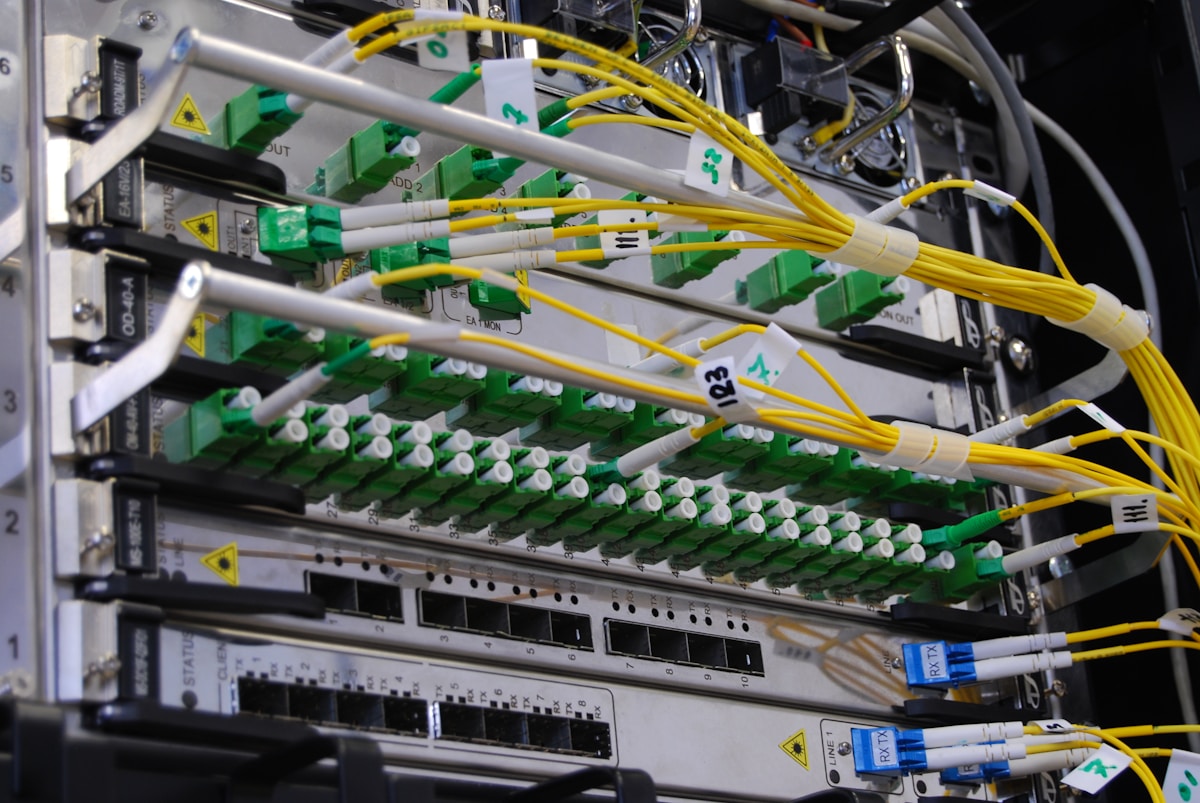
*Edge AI models process data locally on devices, eliminating cloud latency and preserving privacy. FaceWall's compression technology enables billion-parameter models to run on standard smartphone chips. Photo: Unsplash*
The Business Model: Selling Brains by the Megabyte
FaceWall's commercial strategy reflects the unusual economics of edge AI. Unlike cloud AI companies that charge per API call or per token, FaceWall's revenue comes from three distinct streams that blend hardware licensing, software subscriptions, and enterprise consulting.
The device licensing model accounts for roughly 55% of current revenue. FaceWall charges smartphone and automotive manufacturers a per-unit royalty for each device shipped with its models pre-installed. These fees typically range from ¥0.50 to ¥3.00 ($0.07 to $0.42) per device. With Chinese smartphone manufacturers shipping over 250 million units annually, the arithmetic becomes compelling at scale.
The enterprise platform segment, approximately 30% of revenue, sells customized edge AI solutions to industrial clients. A semiconductor fab might pay ¥2-5 million annually for an on-premise visual inspection system. These contracts carry higher margins but require substantial engineering customization.
The remaining developer ecosystem revenue comes from model marketplace fees and premium tools for third-party developers. This is the smallest segment today but strategically vital — the company hopes to cultivate an ecosystem analogous to NVIDIA's CUDA.
| Revenue Stream | Share of Revenue (2025) | Gross Margin | Growth Rate (YoY) |
|---|---|---|---|
| Device Licensing (per-unit royalties) | 55% | 85-90% | 180% |
| Enterprise Platform (custom solutions) | 30% | 60-70% | 95% |
| Developer Ecosystem (marketplace/tools) | 15% | 75-80% | 240% |
The company's financial trajectory shows classic high-growth startup dynamics. Revenue reached approximately ¥450 million ($63 million) in 2025, up from ¥120 million in 2024. Gross margins sit comfortably above 75% thanks to the software-heavy nature of licensing. But the company remains unprofitable, burning cash on R&D — which consumed 62% of revenue in 2025 — and aggressive talent acquisition.
The IPO prospectus, when eventually filed, will likely show continued losses. But under the STAR Market's fifth set of standards, profitability is not required. The rules, unveiled by the Shanghai Stock Exchange on June 17, 2026, explicitly allow AI companies to list based on "technological breakthroughs and market position" rather than historical earnings. The requirements include: at least one major model product in commercial deployment, a core technical team with demonstrated research capabilities, and a credible path to sustainable business model. FaceWall checks all three boxes.
The IPO Mechanics: Why This Listing Breaks New Ground
The significance of FaceWall's IPO extends beyond the company itself. It represents a test case for whether China's capital markets can support a new category of technology company that simply does not fit traditional valuation frameworks.
Consider the dilemma. FaceWall lost money in 2024 and 2025. Its 2025 net profit margin was negative 35%. Under conventional listing rules, it would be ineligible for China's A-share market, which historically required three consecutive years of profitability. Even the STAR Market's original "fourth set" standards for unprofitable biotech companies demanded specific clinical trial milestones that don't map neatly to AI development.
The fifth set of standards, formally titled *"Shanghai Stock Exchange Review Guidelines for AI Large Model Enterprises Applying STAR Market Listing Standard No. 5,"* solves this by creating a bespoke framework. The key requirements:
| Requirement | FaceWall Status | Assessment |
|---|---|---|
| Core product deployed at scale | 7B model deployed on 40M+ devices | ✅ Exceeds threshold |
| R&D investment ≥ 15% of revenue | 62% in 2025 | ✅ Significantly exceeds |
| Patent portfolio in core tech | 180+ patents, 50+ granted | ✅ Solid |
| Revenue growth trajectory | 275% CAGR (2023-2025) | ✅ Exceptional |
| Independent technical assessment | Third-party evaluation pending | ⏳ In process |
| Founding team credentials | Tsinghua PhDs, top conference papers | ✅ Strong |
The ¥20 billion valuation reflects this regulatory premium. At roughly 44x projected 2025 revenue, the multiple dwarfs traditional software companies but sits below the most aggressive cloud AI valuations. When Moonshot Technology raised its last private round in early 2026, the reported valuation of ¥28 billion implied a revenue multiple above 100x. FaceWall's edge AI story, with its clearer unit economics and hardware-adjacent business model, arguably presents a more digestible investment thesis.
The investor syndicate provides additional validation. The company's 2026 funding rounds — three in total, with the most recent closing July 15 — attracted a who-is-who of Chinese institutional capital. National semiconductor funds, state-owned automotive manufacturers, and consumer electronics giants all participated. One investor, speaking to Caixin on condition of anonymity, described the July round as "oversubscribed by 4x" despite the company refusing to disclose exact terms.
Staff who received stock options in earlier rounds reportedly saw their paper wealth double in July alone as IPO prospects firmed up. The company's two employee asset management plans, disclosed in regulatory filings, will participate in the strategic placement portion of the IPO — aligning internal and external shareholder interests.
*Beijing's financial district, where FaceWall filed its IPO tutoring materials with the CSRC. The company's listing will test whether China's capital markets can value AI companies that don't fit traditional frameworks. Photo: Unsplash*
Competitive Landscape: Edge AI's Crowded Arena
FaceWall does not operate in a vacuum. The edge AI space has become fiercely competitive, with at least four distinct categories of challengers nipping at its heels.
Cloud AI incumbents — DeepSeek, Zhipu, Moonshot, Alibaba's Tongyi Qianwen — are all developing edge-compatible versions of their flagship models. DeepSeek's V4 series includes a 7B-parameter variant for local deployment. Zhipu's GLM-5.3 announcement specifically mentioned on-device capabilities. These companies possess vastly greater financial resources. Their disadvantage is structural: edge optimization requires different engineering DNA than cloud scale, and their business models are anchored to API revenue that edge deployment undermines.
Chip manufacturers — Huawei's HiSilicon division, MediaTek, and UNISOC — are building AI acceleration directly into their silicon. Huawei's Ascend 310 chip targets edge inference specifically. The risk to FaceWall is that chip vendors could bundle their own model libraries directly with hardware, commoditizing the model layer. However, FaceWall's cross-platform approach — supporting chips from multiple vendors — gives it a neutrality advantage that single-vendor solutions cannot match.
Open-source communities — Projects like llama.cpp, MLC LLM, and China's own ModelScope community are making it increasingly easy for developers to deploy compressed models without commercial licenses. A talented engineer can now download a 7B-parameter model, quantize it to 4-bit precision, and deploy it on a smartphone in an afternoon. FaceWall's response is to emphasize the "last mile" — hardware-specific tuning, thermal management, power optimization, and ongoing model updates that open-source tools do not provide.
International competitors — Apple's on-device AI, Google's Gemini Nano, and Qualcomm's AI Stack represent the global state of the art. None have significant presence in China's domestic market due to regulatory and competitive barriers, but they set the technical ceiling that Chinese edge AI must match.
| Competitor Category | Representative Players | Strengths | Threat Level to FaceWall |
|---|---|---|---|
| Cloud AI incumbents | DeepSeek, Zhipu, Moonshot | Capital, brand, research talent | High — long-term |
| Chip manufacturers | Huawei HiSilicon, MediaTek | Hardware integration, volume | Medium — commoditization risk |
| Open-source | llama.cpp, ModelScope | Free, community-driven | Medium — for simple use cases |
| International | Apple, Google, Qualcomm | Technical leadership | Low — limited China presence |
| Direct peers | ModelBest, EdgeMatrix | Similar focus, comparable tech | High — immediate |
The most direct competitive threat comes from ModelBest, another Tsinghua-spinoff edge AI company that raised a significant round in early 2026. The two companies share similar origin stories, technical approaches, and target markets. Whichever lists first may gain a meaningful capital markets advantage.
The Risks: What Could Derail the Edge AI Dream
For all its promise, FaceWall's path faces genuine hazards.
Technology risk remains the most fundamental. Edge AI operates at the boundary of what current hardware can execute. Every generation of smartphone chip brings modest improvements — perhaps 20-30% annually. But cloud models are growing far faster. If the gap between edge and cloud performance widens beyond the "good enough" threshold, the entire edge AI value proposition collapses.
Customer concentration presents immediate financial vulnerability. FaceWall's top three customers — all major smartphone OEMs — accounted for 67% of 2025 revenue. Worse, these customers are actively building internal AI capabilities. Xiaomi has its own model team. OPPO has invested heavily in AndesGPT. At some point, a major OEM may decide that building in-house edge models provides strategic control that licensing cannot match.
The US technology decoupling creates supply chain vulnerability. While FaceWall's models run on Chinese-designed chips for domestic deployment, the training infrastructure still relies heavily on NVIDIA GPUs accessed before export controls tightened, or on less-capable domestic alternatives. If the company cannot maintain model quality with available training hardware, its competitive edge erodes.
Valuation risk may be the most immediate concern. A ¥20 billion valuation for a company with ¥450 million in revenue and negative profits requires extraordinary faith. Public market investors, particularly China's retail-dominated A-share market, have historically been unforgiving of unprofitable growth stories when sentiment turns.
| Risk Category | Probability | Impact | Mitigation Strategy |
|---|---|---|---|
| Technology gap vs cloud AI | Medium | Existential | Continuous R&D (62% of revenue) |
| Customer concentration | High | Severe | Diversify into auto/industrial |
| US chip supply restrictions | Medium | High | Domestic chip partnerships |
| Valuation correction post-IPO | High | Severe | Lock-up periods, gradual float |
| Regulatory changes to AI listings | Low | Medium | Compliance, government relations |
What Comes Next: The IPO Timeline and Beyond
If FaceWall follows a typical STAR Market trajectory, the path from tutoring filing to public trading spans 6-9 months. Industry insiders expect a fourth-quarter 2026 listing, which would make it the fastest AI company to go public from founding. The company has reportedly engaged CITIC Securities as joint bookrunner alongside Goldman Sachs' China joint venture, signaling ambitions for significant international institutional participation.
A successful FaceWall IPO would validate the fifth set listing standards, encouraging other LLM companies to pursue public markets rather than endless private fundraising. It would establish valuation benchmarks for edge AI specifically, potentially creating a distinct asset class from cloud AI. And it would provide a currency for M&A, as public stock enables FaceWall to acquire smaller edge AI startups.
For the broader technology ecosystem, FaceWall's listing represents proof that China's AI industry has matured from a government-supported research initiative to a self-sustaining commercial sector capable of accessing public capital on its own terms. The companies that built China's internet economy — Alibaba, Tencent, ByteDance — all reached massive scale before going public. FaceWall is attempting the reverse: using public markets to fund the scale-building phase itself.
The model has precedent in biotech. China's STAR Market biotech listings, enabled by similar unprofitable-company rules introduced in 2019, created a vibrant public market for drug development companies that previously depended entirely on venture capital. Some succeeded brilliantly. Others burned through cash and collapsed. The AI sector will likely follow the same bimodal distribution.
Whether FaceWall ends up on the success or failure side of that distribution depends on questions no one can yet answer definitively. Will edge AI remain a distinct category, or will cloud and edge simply converge as connectivity improves and costs drop? Will Chinese consumers and enterprises pay premium prices for on-device intelligence, or will commoditization drive margins toward zero? Can a mid-sized AI company maintain technical leadership against the R&D budgets of giants like Huawei and Alibaba?
What is certain is that on August 11, 2026, FaceWall Intelligence placed a very large bet. It bet that China's capital markets were ready for AI. It bet that edge computing was the right technical horse. And it bet that a group of Tsinghua researchers could build a public company before their better-funded competitors could. The IPO prospectus, when it finally appears, will tell the world how much of that bet the markets are willing to underwrite.
Social Media Reactions
Zhihu user @TechInvestor2024:
面壁这次IPO辅导备案选的时间点很妙,刚好在科创板第五套标准出台两个月之后。但200亿估值是不是太乐观了?去年营收才4.5亿,市销率40多倍,A股的散户真的懂边缘AI吗?
>
*"FaceWall's IPO filing timing is clever — just two months after the fifth STAR Market standard was released. But is ¥20 billion valuation too optimistic? Last year's revenue was only ¥450 million, a 40x+ revenue multiple. Do A-share retail investors really understand edge AI?"*
Xiaohongshu user @AI产品经理小鹿:
在手机厂商工作,我们确实在评估面壁的方案。说实话,他们的7B模型在骁龙8Gen3上跑的效果比我们自己量化的好一些,但差距在缩小。如果明年我们自己团队做出来了,面壁的授权费就挣不到了。
>
*"I work at a phone manufacturer and we're evaluating FaceWall's solution. Honestly, their 7B model runs slightly better on Snapdragon 8 Gen 3 than our own quantization, but the gap is narrowing. If our internal team catches up next year, FaceWall's licensing revenue disappears."*
Weibo user @清华校友会:
又一个清华系AI公司要上市了!面壁、智谱、月之暗面,清华在AI创业圈真的是黄埔军校。不过还是要提醒学弟学妹们,期权变现远着呢,别高兴太早。
>
*"Another Tsinghua AI company going public! FaceWall, Zhipu, Moonshot — Tsinghua really is the Whampoa Military Academy of AI entrepreneurship. But I have to remind junior alumni: option liquidation is far away, don't celebrate too early."*
Twitter/X user @ChinaTechWatcher:
FaceWall's IPO is a watershed moment. First LLM company to list under China's new STAR Market rules. If it pops, every AI startup in Beijing will rush to file. If it flops, the winter gets very cold very fast. The ¥20B valuation implies investors believe edge AI is a separate category from cloud LLMs. I'm not convinced yet.
Douban user @边缘计算研究者:
端侧模型最大的问题是,当你的手机能流畅运行7B参数模型的时候,云端模型可能已经进化到700B了。这个性能差距会不会让边缘AI变成"够用但不好用"的鸡肋?面壁需要在模型压缩算法上持续领先,这个护城河并不宽。
>
*"The biggest problem with edge models: by the time your phone can smoothly run a 7B model, cloud models may have evolved to 700B. Will this performance gap make edge AI a 'good enough but not great'鸡肋? FaceWall needs to maintain continuous leadership in model compression — this moat isn't wide."*
GitHub user @edge-ai-dev (commenting on FaceWall's open-source compression toolkit):
Used their quantization toolkit on a Llama-3-8B model. Results are solid — 4-bit weights with minimal perplexity degradation. But their proprietary models are where the real value is. The open-source stuff is basically marketing. Still, impressive engineering. Would I buy the stock at 44x revenue? Probably not yet.
Related Articles
- Unitree Robotics IPO: China's Humanoid Robot Pioneer Goes Public
- China's AI IPO Wave: Zhipu, MiniMax, and the Race to Public Markets
- China's Embodied AI Revolution: $13 Billion Funding Boom Reshapes Robotics
- GLM-5.1: How Zhipu Built Beijing's Open-Source Crown Jewel
- DeepSeek's $7.4 Billion Funding Deal Reshapes China's AI Map
Editor at AI in China. Tracking Chinese AI companies, funding rounds, and the technologies reshaping global tech. More about me.