
The motorcade pulled into Shenzhen Bao'an International Airport at 6:47 PM on Tuesday, November 18. Xi Jinping was waiting on the tarmac — unusual for a leader who almost never greets foreign heads of state at the airport. He and Donald Trump exchanged a brief embrace for the cameras, then walked the red carpet together to waiting vehicles. It was a reciprocal gesture, Xi's way of answering the warmth Trump had shown during the Chinese president's Washington visit in September.
Three days before that hug, on November 16, the US Department of Commerce's Bureau of Industry and Security had released a 60-page interim final rule titled *Addressing Remote Access to Advanced Semiconductors*. The rule would require a US export license for any data center anywhere in the world that provides more than 12 million aggregate total processing performance — roughly 750 Nvidia H100 GPUs — to any company headquartered in China or Macau. It was, in effect, a declaration that Chinese AI companies could no longer rent their way around American chip controls.
Trump flew to Shenzhen to talk about AI safety with Xi Jinping and Vladimir Putin three days after his own administration slammed the door on China's access to American compute.
This is the defining paradox of the US-China AI rivalry in late 2026: the two superpowers are simultaneously building guardrails and walls. They are negotiating the rules of engagement for military AI while tightening the chokehold on the chips that power it. Washington and Beijing are not confused about which game they are playing. They are playing both — deliberately, and with full knowledge of the tension between them.
The Week That Changed the Equation
To understand the significance of what happened between November 16 and November 21, you need to see the full sequence. The events were not random. They were choreographed — each one timed for maximum leverage in the next.
| Date | Event | Track | Significance |
|---|---|---|---|
| Nov 14 | White House confirms Trump-Xi-Putin trilateral at APEC | Diplomacy | First-ever three-way meeting of US, China, Russia leaders |
| Nov 16 | BIS releases IFR on Remote Access to Advanced Semiconductors | Competition | Closes third-country compute loophole |
| Nov 16 | Trump departs for Asia; comments "selling the other chips is a good thing" | Both | Signals openness alongside restriction |
| Nov 17 | China Foreign Ministry condemns BIS rule as "protectionism" | Competition | Beijing's formal response |
| Nov 18 | Xi greets Trump at Shenzhen airport; APEC CEO Summit opens | Diplomacy | Ceremonial warmth |
| Nov 19 | Xi-Trump bilateral; trilateral with Putin at Kylin Villa | Diplomacy | AI safety, nuclear risk, energy cooperation |
| Nov 19 | Bessent confirms: humans must stay in charge of AI military decisions | Diplomacy | First concrete AI guardrail agreement |
| Nov 19 | APEC Leaders' Shenzhen Outlook published | Diplomacy | 21 economies commit to AI cooperation framework |
| Nov 20 | Trade truce extension discussed; no tariff relief announced | Both | Cooperation has limits |
The pattern is unmistakable. The BIS rule was released *before* Trump boarded his plane to China — not after. The administration wanted the export control on the books as a fait accompli before the president sat down with Xi. It was leverage, not an accident of scheduling. And Xi knew it. The choreography of the airport greeting, the hug, the red carpet — all of it was China's answer: we see what you did, and we are still willing to talk.
The Cooperation Track: What Shenzhen Actually Produced
The Shenzhen summit's AI outcomes were more substantive than most observers expected. Three concrete results emerged from the November 19 meetings.
First, the AI military guardrails agreement. According to Treasury Secretary Scott Bessent, who was in the room, Trump and Xi "agreed that humans must always stay in charge of AI military decisions." The phrasing matters. It does not ban AI in military systems — both countries are investing heavily in autonomous weapons, AI-assisted targeting, and machine-speed battlefield intelligence. What it establishes is a shared principle: the decision to use lethal force must involve a human being. It is the first bilateral AI arms control commitment between the United States and China, however informal.
Second, the trilateral dimension. The 80-minute meeting at Kylin Villa brought together Trump, Xi, and Putin for the first time in history. The three leaders issued a four-point declaration covering UN reform, petroleum supply stability, ICC jurisdiction, and nuclear risk reduction. On AI specifically, Xi urged the United States and China to "coordinate on AI safety and keep artificial intelligence under human control." Putin called for cooperation to strengthen peace and stability. Trump referred to AI as "superintelligence" and said Washington "opposes heavy-handed globalist regulation" while supporting "minimum guardrails."
Third, the APEC Leaders' Shenzhen Outlook. All 21 member economies committed to work on resilient supply chains, trade digitalisation, and artificial intelligence. The AI commitment is vague — APEC declarations always are — but it creates a multilateral framework that both the US and China have now publicly endorsed. When the two largest AI powers agree on principles inside a 21-economy forum, those principles start to look like international norms.
| AI Governance Outcome | Detail | Binding Force |
|---|---|---|
| Human oversight of military AI | Humans must always be in charge of AI military decisions | Bilateral principle, not treaty |
| AI safety coordination | US and China to coordinate on AI safety | Directional commitment |
| APEC AI framework | 21 economies committed to AI cooperation | Multilateral declaration |
| Nuclear risk dialogue | Three-way commitment to dialogue on reducing nuclear risk | Joint declaration |
| Strategic stability action plan | US-China to draft action plan | In progress, no deadline |
The Competition Track: Anatomy of the BIS Rule
While diplomats were shaking hands in Shenzhen, the machinery of economic warfare was grinding forward in Washington. The BIS interim final rule — formally titled *Addressing Remote Access to Advanced Semiconductors* (RIN 0694-AK50) — is one of the most significant export control expansions since the original October 2022 chip restrictions.
The rule's core mechanism is a new worldwide end-use control under 15 CFR 744.24. Any export, re-export, or in-country transfer of advanced computing items now requires a US license if the exporter knows the items will serve a data center that provides more than 12 million aggregate total processing performance (TPP) to a company headquartered in Macau or any Country Group D:5 destination — a category that includes China, Russia, and most of the countries under US arms embargo.
The 12 million TPP threshold translates to roughly 750 Nvidia H100 GPUs or 330 B200 GPUs at a single data center or across linked facilities. This is not a theoretical ceiling. It is a compute budget — and Chinese AI companies have been blowing through it by renting capacity from data centers in Singapore, Malaysia, Thailand, and Indonesia.
| Provision | Detail | Impact |
|---|---|---|
| 15 CFR 744.24 | New worldwide end-use control for remote compute access | Chinese companies cannot rent US-chip compute anywhere without license |
| Compute threshold | >12M aggregate TPP per data center or linked facilities | ~750 H100s or ~330 B200s |
| New license requirements | Indonesia, Malaysia, Singapore, Thailand, Brazil added | All advanced chip shipments to these countries now need licenses |
| 90-day compliance window | Existing data center arrangements must obtain license within 90 days of publication | Immediate disruption to current compute rental agreements |
| Commercial recommender exception | E-commerce/social media ranking tools exempt if reported | Narrow carve-out; generative AI not covered |
| AI Diffusion Rule rescinded | Biden-era country caps formally repealed | Replaced by this more targeted approach |
| Foundry/OSAT tightening | New license requirements for advanced logic chip production | Harder for Chinese chip designers to use third-party fabs |
The rule also formalizes the rescission of the Biden administration's AI Diffusion Rule — the country-cap framework that Trump's BIS had already stopped enforcing in May 2025. In its place: a targeted, compute-threshold-based approach that focuses not on where chips are shipped but on who ultimately benefits from the computing power they deliver.
The Third-Country Squeeze
Perhaps the most consequential aspect of the BIS rule is its geographic scope. By adding Indonesia, Malaysia, Singapore, Thailand, and Brazil to the license requirement list, the US has effectively declared that Southeast Asia is no longer a safe compute haven for Chinese AI companies.
This matters because Southeast Asia had become the preferred workaround. Chinese AI labs could not buy Nvidia's most advanced chips directly — export controls saw to that. But they could rent compute from data centers in Singapore or Malaysia that stocked those same chips. The data center was the legal buyer; the Chinese company was just a customer. The BIS rule closes this by requiring licenses for the chip shipments themselves if the data center will serve Chinese companies above the 12M TPP threshold.
| Country | Previous Status | New Status | Risk Assessment by BIS |
|---|---|---|---|
| Singapore | No license required for advanced chips | License required | Higher-than-normal diversion risk |
| Malaysia | No license required | License required | Higher-than-normal diversion risk |
| Thailand | No license required | License required | Higher-than-normal diversion risk |
| Indonesia | No license required | License required | Higher-than-normal diversion risk |
| Brazil | No license required | License required | Higher-than-normal diversion risk |
| UAE | Separate rule (91 FR 43034) | Unchanged | Existing framework applies |
| US data centers | Not covered by export controls | Still not covered | Gap — Remote Access Security Act pending |
Singapore's Ministry of Digital Development and Information and Ministry of Trade and Industry issued a joint statement expressing concern about the rule's impact on the city-state's data center industry. Singapore has positioned itself as Asia's neutral compute hub — a status that now faces its most serious challenge since the export control era began.
The Jensen Huang Factor
No analysis of this week's events is complete without acknowledging the scandal that preceded them. On the Friday before the BIS rule dropped, Nvidia CEO Jensen Huang resigned after revelations that he had an affair with a suspected Chinese intelligence asset and a subordinate at the company. The timing was extraordinary — the leader of the world's most valuable semiconductor company, the single most important supplier of AI compute, brought down by a counterintelligence failure just days before the US government moved to restrict the very chips his company dominated.
Huang's exit has heightened concerns that China could access Nvidia's advanced chips through channels beyond direct sales — including through the personal networks of executives with deep China ties. Chinese officials have denied any involvement in the affair. But the scandal provided political cover for the BIS rule in a way that no policy white paper could. When the CEO of America's chip champion is compromised by a suspected Chinese spy, closing every loophole becomes a matter of national security consensus, not bureaucratic overreach.
The rule also landed against a backdrop of accelerating Chinese chip self-sufficiency. Alibaba and Tencent — China's two largest cloud providers — have been quietly shifting their AI inference workloads to domestic chips as US controls tighten. Maybank's analysis this week concluded that the curbs will slow China's AI development in the short term but "widen pressure on domestic supply chains" to accelerate — meaning the long-term effect may be to push China toward the very independence US policymakers fear.
The Gap in the Wall
For all its breadth, the BIS rule has a significant hole: it does not cover US data centers. Because the rule regulates exports of physical chips, not cloud services, a Chinese company can still rent compute from AWS, Azure, or Google Cloud within the United States. The Remote Access Security Act — which passed the House 369–22 in January 2026 and is pending in the Senate Banking Committee — would close this gap by giving BIS express authority to regulate remote access to US-based compute.
The pending legislation is a reminder that export controls are a moving target. The BIS comment period runs through January 19, 2027. The trade truce expires January 10, 2027. And the G20 summit in Miami in December will bring Trump and Xi together again — this time with the world's largest economies watching.
| Milestone | Date | What Happens |
|---|---|---|
| BIS comment period closes | Jan 19, 2027 | Final rule expected with modifications |
| US-China trade truce expires | Jan 10, 2027 | Tariff relief extension under negotiation |
| G20 summit | December 2026, Miami | Trump-Xi expected to meet again |
| Data center compliance deadline | ~Feb 19, 2027 | 90-day window for existing arrangements |
| RASA Senate vote | TBD | Would extend controls to US-based cloud |
| AI Diffusion Rule rescission | Immediate | Country caps formally gone |
What This Means for the AI Industry
The two-track strategy has practical implications for every actor in the global AI ecosystem.
For Chinese AI labs, the remote access rule removes a pressure valve. Companies that were renting Singapore or Malaysia compute to supplement domestic training capacity must now either obtain US licenses — unlikely to be granted for training frontier models — or shift entirely to Chinese domestic chips. Huawei's Ascend 950 series and Cambricon's latest accelerators become the only viable path for large-scale training runs.
For US chip companies, the rule creates a compliance burden that falls disproportionately on smaller players. Nvidia and AMD have the legal infrastructure to navigate BIS licensing. Smaller semiconductor firms and data center operators in the five newly designated countries face a more uncertain landscape — one where the absence of a customer information-sharing agreement can trigger a presumption of prohibited use.
For third-country data centers, the business model of serving Chinese AI customers at scale is now contingent on US government approval. Operators in Singapore, Malaysia, and Thailand must either screen their customers for Chinese ownership ties, obtain licenses, or risk losing access to American chips entirely.
And for the AI safety community, the Shenzhen agreement offers a sliver of hope. If the US and China can agree that humans must stay in the loop for military AI — even as they race to build the most powerful AI systems — then the guardrail conversation has begun at the highest level. It is not a treaty. It is not enforceable. But it is a shared principle, articulated by the two leaders who matter most, in a forum that 21 economies have endorsed.
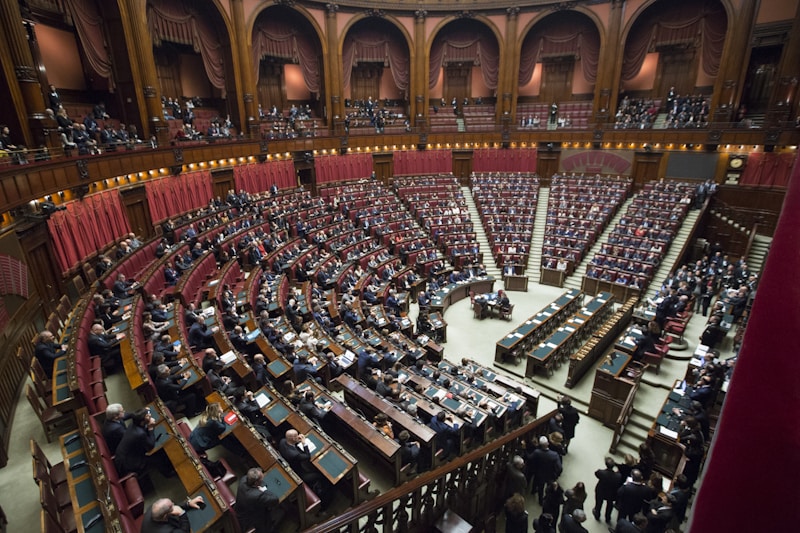
*International cooperation on AI governance moved from theory to practice at APEC Shenzhen — even as export controls tightened.*
The Bigger Picture: Managed Rivalry
The most accurate framework for understanding US-China AI relations in late 2026 is not "decoupling" and not "engagement." It is something more complex: managed rivalry. Both countries have decided that they can compete aggressively on the technology itself while cooperating selectively on the rules that govern its most dangerous applications.
This is not unprecedented. The US and Soviet Union maintained arms control negotiations throughout the Cold War even as they competed ferociously on military technology. The 1972 Anti-Ballistic Missile Treaty was negotiated at the height of the space race. Rivalry and dialogue are not mutually exclusive — they are complementary strategies.
What makes the current moment different from the Cold War is the speed of technological change. The ABM Treaty took years to negotiate. The BIS remote access rule took months from conception to implementation. AI capabilities are doubling on timelines measured in weeks, not decades. The guardrails that Xi and Trump discussed in Shenzhen are already behind the technology they are meant to govern.
The handshake and the hammer are both real. The question is whether the guardrails can be built fast enough to matter — or whether the compute race will outrun the diplomacy before the next summit.
Voices from Social Media
知乎 / Zhihu
"握手归握手,卡脖子归卡脖子。这两件事从来不矛盾,只是很多人不愿意同时看。" *(Handshake is handshake, chokehold is chokehold. These two things were never contradictory — many people just don't want to see both at the same time.)*
微博 / Weibo
"深圳峰会最细思极恐的细节:三国领导人讨论了AI军事化,但新闻稿里没有一个字提到民用AI合作。这说明什么?说明军事才是头等大事。" *(The most chilling detail from the Shenzhen summit: the three leaders discussed AI militarization, but the press release didn't mention civilian AI cooperation once. What does that tell you? Military is the top priority.)*
X / Twitter
"BIS rule + Shenzhen handshake = the US just set the terms of the AI Cold War. We control the chips. They control the deployment scale. Everyone else picks a side." — @TechPolicyAnalyst, 2.3K likes
小红书 / Xiaohongshu
"在新加坡做AI云计算的朋友说,他们公司已经开始排查中国客户了。12M TPP的门槛意味着大客户基本全部被锁死。" *(A friend working in AI cloud computing in Singapore says their company has started screening Chinese customers. The 12M TPP threshold means virtually all major clients are locked out.)*
Hacker News
"The most interesting part of the BIS rule is what it doesn't cover: US data centers. If I'm a Chinese AI lab, I'm spinning up AWS instances in Virginia tonight. The Remote Access Security Act can't pass soon enough." — hn_user_throwaway, 847 points
豆瓣 / Douban
"看了BIS的新规全文,最让我震惊的不是对中国的限制,而是对东南亚五国的'连坐'。新加坡、马来西亚、泰国、印尼、巴西全部中招。美国这是把全球算力都纳入了自己的管辖范围。" *(Reading the full BIS rule, what shocked me most wasn't the restrictions on China — it was the 'guilt by association' for the five Southeast Asian countries plus Brazil. Singapore, Malaysia, Thailand, Indonesia, Brazil all hit. The US is bringing global compute under its jurisdiction.)*
*Related reading: China's AI Diplomacy at APEC Shenzhen · China's Post-Nvidia Chip Frontier · November's Model Wars · The Blackwell Fingerprints*