The delegation badges were still being printed when the proposal went out. On November 15, 2026 — forty-eight hours before the APEC CEO Summit's opening ceremony in Shenzhen — Chinese officials formally called for artificial intelligence cooperation with the United States through the summit's diplomatic channels. The language was deliberate, the timing unmistakable. Beijing was not waiting for the CEO Summit's AI panels or the Economic Leaders' Meeting on November 18-19 to make its move. It wanted the agenda set before anyone stepped on stage.
The proposal itself, as reported by diplomatic correspondents and confirmed through multiple official channels, covers three areas: joint research collaboration, harmonization of AI safety standards, and coordinated approaches to cross-border AI governance. It arrives at a moment when the ground beneath US-China tech relations has been shifting for months — a state visit by Xi Jinping to Washington in September, a trade truce extended through January 2027, tariff relief on roughly $30 billion of trade in each direction, and the quiet ratification by China's National People's Congress Standing Committee of the World Artificial Intelligence Cooperation Organization on November 9, barely a week before the summit opened.
To read this as a thaw is to misread it. What Beijing is offering Washington is not a retreat from competition. It is an invitation to compete on terms China has already been building — in an institutional architecture it designed, headquartered in Shanghai, and populated with 38 member states that do not include a single G7 democracy.
The Proposal, Decoded
The November 15 overture is the latest move in a diplomatic campaign that has been running on parallel tracks for over a year. The surface track is cooperative: research exchanges, safety standards, shared governance frameworks. The structural track is competitive: building institutions, setting norms, and anchoring the Global South in a China-centered AI order that operates independently of Western frameworks.
| Diplomatic Move | Date | Venue | Significance |
|---|---|---|---|
| Li Qiang proposes WAICO | July 2025 | WAIC, Shanghai | Concept announced; no institutional detail |
| Xi reiterates WAICO at APEC | October 2025 | 33rd APEC Meeting, (host nation) | First major multilateral pitch |
| 35 nations sign AI Opportunity Statement | June 2026 | US-led Pax Silica initiative | Washington's counter-framework |
| WAICO founding agreement signed | July 16, 2026 | Shanghai | 29 countries sign; HQ in Shanghai |
| Xi unveils WAICO at WAIC keynote | July 17, 2026 | Shanghai | "Symphony of international cooperation" |
| Xi state visit to Washington | September 24, 2026 | Washington DC | Bilateral thaw; Trump-Xi dialogue |
| China proposes 23 AI tech export controls | October 16, 2026 | Beijing | Leverage-building ahead of APEC |
| WAICO ratified by NPC Standing Committee | November 9, 2026 | Beijing | Legal commitment to the organization |
| China proposes AI cooperation with US | November 15, 2026 | Via diplomatic channels | The Shenzhen gambit |
The sequencing reveals the strategy. China did not propose cooperation from a position of weakness. It proposed cooperation after establishing the institutional foundation — WAICO — that gives it a seat at the table with something to offer and something to withhold. The November 9 ratification was the domestic legal lock. The November 15 proposal was the diplomatic deployment. The summit itself is the stage.
What Beijing is offering, at its core, is a framework within which the US and China can cooperate on AI safety and governance without requiring either side to abandon its competitive position. What Beijing is asking, implicitly, is recognition — not of WAICO specifically, but of the principle that global AI governance is a multipolar enterprise in which China is a co-author, not a participant in frameworks written elsewhere.
The WAICO Architecture
To understand what China is bringing to Shenzhen, it is necessary to understand what WAICO actually is — and what it is not.
WAICO is an intergovernmental organization, not a treaty. It has no binding enforcement mechanisms, no sanctions framework, and no compliance review body with teeth. What it has is a headquarters in Shanghai, a founding agreement signed by 29 countries on July 16, 2026, and a mission statement that borrows its language directly from Xi Jinping's Global AI Governance Initiative: "people-centered" AI, "extensive consultation and joint contribution for shared benefit," and a focus on bridging the compute divide between technology-haves and have-nots.
| WAICO Element | Detail | Strategic Function |
|---|---|---|
| Headquarters | Shanghai, China | Physical anchor; China hosts secretariat |
| Founding signatories | 29 countries (July 16, 2026) | Russia, Brazil, Indonesia, Pakistan, South Africa, Malaysia, Kazakhstan, Senegal, Laos; no G7 members |
| Current membership | 38 countries (as of Nov 2026) | Growing; Beijing targets 40+ |
| Xi Jinping's pledge | 5,000 AI training slots for developing countries | Capacity-building as soft power |
| Regional centers | 6 tracks: ASEAN, Arab League, African Union, CELAC, SCO, BRICS | Regional bloc penetration |
| Governing principle | UN Charter alignment; people-centered AI | Legitimacy framing vs. Western "values-based" AI |
| Legal status | Intergovernmental organization; China first to ratify | Institutional permanence |
| Western participation | None | Parallel architecture, not inclusive |
The comparison with Washington's competing framework is instructive. Pax Silica, launched in 2025, is a US-led initiative focused on securing semiconductor supply chains, AI infrastructure, and critical minerals. Its June 2026 declaration drew 35 signatories. Its orientation is supply-chain security and technology dominance. WAICO's orientation is governance norms and capacity-building for the Global South.
These are not competing products in the same market. They are different products for different markets. Pax Silica speaks to countries worried about chip supply and Chinese dominance of critical minerals. WAICO speaks to countries worried about being permanent AI consumers in a world where the technology, standards, and infrastructure are controlled by a handful of wealthy nations.
China's bet — and it is a well-reasoned one — is that the second anxiety is larger, more widespread, and more durable than the first.
The Shenzhen Stage
The choice of Shenzhen as host city is not incidental. Shenzhen is where China's AI story is most legible to a foreign audience — a city that went from fishing village to technology megalopolis in four decades, home to Huawei, Tencent, BYD, and the world's most concentrated hardware innovation ecosystem. The Shenzhen-Hong Kong-Guangzhou cluster has topped the World Intellectual Property Organization's Global Innovation Index for two consecutive years.
For the APEC delegations arriving this week, Shenzhen is not just a venue. It is an argument — a physical demonstration of what a determined state can build when it treats technology as national priority rather than regulatory problem.
| Shenzhen Asset | Relevance to APEC AI Agenda |
|---|---|
| Huawei (HQ) | Ascend AI chips; domestic silicon ecosystem; WAICO's tech patron |
| Tencent (HQ) | Hy4 open-weight model; AI applications at consumer scale |
| BYD (HQ) | AI-powered manufacturing; robotics; EV-embodied AI convergence |
| DJI (HQ) | Computer vision; embodied AI; drone governance debates |
| Shenzhen-HK-Guzhou cluster | #1 global innovation cluster (WIPO GII, 2 consecutive years) |
| Qianhai cooperation zone | Cross-border data flows; digital trade pilot |
| 15th Five-Year Plan (2026-2030) | AI as core industrial policy priority |
The business turnout reinforces the city's gravitational pull. US companies account for the largest number of corporate participants among APEC economies other than China — Amazon, Walmart, Apple, Google, ExxonMobil, and Microsoft all confirmed attendance. Companies from all 21 APEC economies registered, alongside firms from the UK, France, Germany, and Switzerland.
The CCPIT's spokesperson, Wang Wenshuai, framed the US turnout as evidence of "the American business community's confidence in the Asia-Pacific market and its expectations for deeper China-U.S. business cooperation." The framing is deliberate: the business community as the counterweight to the security hawks. Beijing wants the narrative in Shenzhen to be about commerce, not containment.
The Business Reality Beneath the Diplomacy
While the diplomatic track makes headlines, the commercial track is where the APEC summit's real impact will be felt. The proposed Free Trade Area of the Asia-Pacific (FTAAP) — a concept China has championed for over a decade — is on the formal agenda. So are cross-border data flows, digital trade frameworks, and the integration of AI into supply chains.
The ABAC (APEC Business Advisory Council) has spent the year building toward this moment. Three meetings — Jakarta, Mexico City, Bangkok — produced 14 outcome documents, including two statements supporting the FTAAP and regional connectivity. The fourth ABAC meeting concluded in Shenzhen on November 16, one day before the CEO Summit opened, with a mandate to deliver the APEC CEO Summit Shenzhen Initiative 2026 at the summit's close.
| ABAC Output | Content | Status |
|---|---|---|
| FTAAP support statements | Two formal statements backing the free trade area | Adopted at 2026 meetings |
| Regional connectivity framework | Infrastructure and digital interconnectivity | Under review at Shenzhen |
| Digital innovation agenda | AI adoption, cross-border data, digital trade | Finalizing in Shenzhen |
| Sustainability commitments | Green transition, clean energy integration | Annual framework |
| CEO Summit Shenzhen Initiative 2026 | Consolidated business consensus document | To be released at summit close |
The trade backdrop matters. The US-China trade truce, extended through January 2027, has created a window of relative commercial stability. Both sides have proposed tariff relief on roughly $30 billion of trade in each direction. Neither side has described this as a resolution — the word "truce" is doing heavy lifting — but for the businesses attending the CEO Summit, the distinction between truce and treaty is less important than the fact that tariffs are not currently escalating.
What the CEO Summit can deliver, even without formal agreements, is momentum. Business commitments, memoranda of understanding, and public-private partnership announcements create the political space for leaders to announce broader agreements at the Economic Leaders' Meeting on November 18-19. The AI cooperation proposal from November 15 is designed to be one of those broader agreements — or at least the foundation for a framework that can be developed at the G20 in Miami in December, where Trump and Xi are expected to meet again.
The Two-Bloc Question
The most consequential structural question in global AI governance is not whether the US and China can cooperate. It is whether the world is converging on a single AI governance architecture or bifurcating into two parallel ones that do not interoperate.
The evidence increasingly points to bifurcation — but bifurcation with nuance.
| Dimension | US-Led Track (Pax Silica) | China-Led Track (WAICO) |
|---|---|---|
| Core focus | Supply chain security, chip access, critical minerals | Governance norms, capacity-building, compute equity |
| Membership model | Invitation-based; security-aligned | Open accession; "no political conditions" |
| Founding size | 35 signatories (AI Opportunity Statement, June 2026) | 29 founding → 38 current members |
| Institutional form | Policy framework/initiative | Intergovernmental organization with HQ |
| Enforcement | Export controls, investment screening | Normative consensus; no binding enforcement |
| Technology posture | Restrict advanced chip exports to China | Open-weight models as "global public good" |
| Global South engagement | Security partnerships; supply chain diversification | Training programs; regional cooperation centers |
| Key vulnerability | Perceived as exclusionary; G7-centric | Perceived as China's foreign policy instrument |
The bifurcation is not clean. India, notably, is a member of neither bloc — it attended WAICO's launch as an observer but did not sign, and it has maintained strategic autonomy on AI governance that frustrates both Washington and Beijing. Indonesia, Malaysia, and Brazil are playing both sides: members of WAICO while maintaining deep commercial ties with US technology companies. The EU is running a third track entirely, with its AI Act enforcement timeline proceeding independently of both Washington's and Beijing's frameworks.
What APEC offers — and what makes this summit different from the July WAIC launch or the June Pax Silica signing — is the possibility of bridge-building between the tracks. APEC's 21 member economies include the US, China, Japan, South Korea, Russia, and the major ASEAN economies. It is the only forum where all the relevant parties are in the room with an economic rather than security mandate. If the AI cooperation proposal from November 15 gains any traction, it will be because APEC provides the only venue where "cooperation" does not require either side to formally recognize the other's institutional framework.
What the Skeptics Say
The case against taking China's proposal at face value is substantial, and it deserves honest treatment.
First, the timing is self-serving. China proposed cooperation at the moment when its AI industry faces the most acute compute constraints in its history. DeepSeek's recent rationing of free-tier access, the ongoing HBM shortage, and the structural limits of domestic chip production mean that Beijing's labs are operating under a ceiling that US labs do not face. A "cooperation" framework that loosens export controls — even partially, even temporarily — serves China's immediate industrial needs. The proposal is not purely altruistic, and it would be naive to read it as such.
Second, the WAICO ratification one week before the summit sends a mixed signal. China is simultaneously proposing bilateral cooperation with the US and locking in a multilateral organization from which the US is excluded. The two moves are not contradictory from Beijing's perspective — they are complementary. But from Washington's perspective, the ratification can look like a hedge: cooperate with us if you want, but we are building our own architecture regardless.
Third, China's October 16 proposal to add 23 AI technologies to its export-control catalog demonstrates that Beijing is also playing the restriction game. The technologies on the proposed list have not been publicly detailed, but the move mirrors Washington's own export-control regime. Cooperation proposals and export controls are not mutually exclusive in Beijing's calculus. They are negotiating instruments.
Fourth, the substantive content of the "cooperation" proposal remains undefined. Joint research collaboration between US and Chinese AI labs has been essentially frozen since 2023. Academic exchanges face visa restrictions, security clearances, and institutional review boards on both sides. Harmonizing safety standards requires both sides to agree on what the safety standards are — a conversation that has not produced consensus even among Western democracies, let alone between Washington and Beijing.
The skeptical read, then, is that the November 15 proposal is a positioning exercise: demonstrate openness, frame Washington as the obstacle if cooperation fails, and extract whatever concessions are available without committing to anything binding.
This read is not wrong. But it is also incomplete.
Why Beijing Might Actually Mean It
The strongest argument that China's cooperation proposal is more than theater comes not from China's diplomacy but from China's economics.
China's AI industry has hit a structural constraint that no amount of algorithmic efficiency can fully resolve. The compute famine is not a temporary bottleneck. It is the result of export controls on advanced chips, an HBM supply chain that China cannot currently localize, and power infrastructure that cannot scale fast enough to match exponential demand growth. Every Chinese AI lab — from DeepSeek to Zhipu to Baidu — is operating under this constraint.
Cooperation with the United States, even limited cooperation, offers a potential pathway to easing these constraints. Not through formal relaxation of export controls — that requires congressional action and is politically implausible in the current environment — but through the quiet reestablishment of academic research exchanges, the resumption of joint safety evaluations, and the creation of technical working groups where Chinese engineers can participate in international standard-setting processes that currently exclude them.
There is also a normative dimension that Beijing understands keenly. The country that frames the global conversation about AI governance shapes the default assumptions of the next decade. Right now, the dominant framing in Western discourse is that AI safety requires democratic values — a framing that structurally excludes China's governance model. WAICO is Beijing's counter-framing: AI governance should be about capacity, inclusion, and development, not about political systems. The November 15 proposal is an attempt to inject that framing into the US-China bilateral channel, where it can be discussed without the multilateral optics that make Washington defensive.
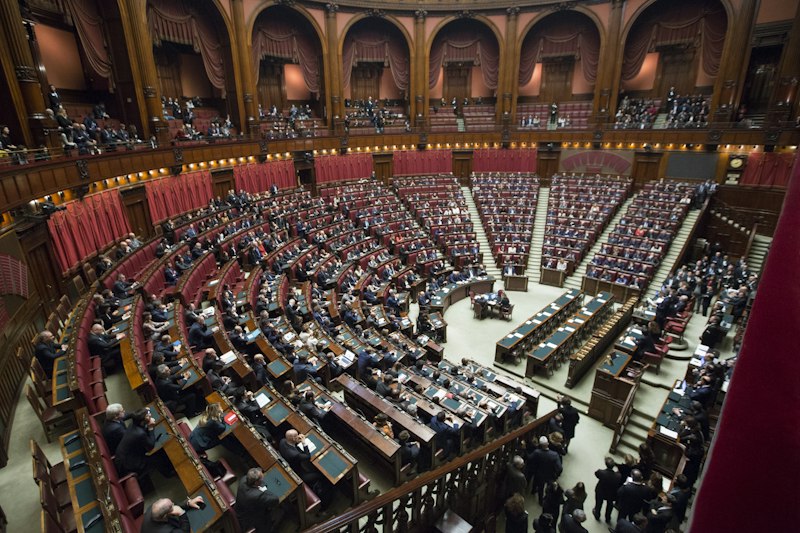
*The APEC Economic Leaders' Meeting on November 18-19 represents the highest-level opportunity for US-China AI dialogue since the WAICO launch. (Image: Unsplash)*
The economic case is equally concrete. China's AI application layer — the consumer apps, the enterprise deployments, the robotics integration — is the world's largest by user base. But it is running on infrastructure that costs more and delivers less than what US labs enjoy. If the AI cooperation framework results in even marginal improvements in chip access, HBM supply chain stability, or joint R&D on efficiency techniques, the return on that diplomatic investment is measured in billions of dollars of competitive advantage.
Beijing is not proposing cooperation because it has given up on competition. It is proposing cooperation because it has calculated that the net present value of selective cooperation exceeds the value of pure confrontation. That is a rational-actor calculation, not a sentimental one. But rational-actor calculations are more durable than sentiment.
What Comes Next
Three outcomes are possible from this week's summit, in declining order of probability.
Outcome 1: The Framework Declaration. Trump and Xi, both present in Shenzhen, issue a joint statement acknowledging the AI cooperation proposal and directing their respective administrations to develop a formal framework. The framework would cover research exchanges, safety dialogue, and technical standard coordination. It would not address export controls. This outcome is the most likely because it costs both leaders nothing, generates positive headlines, and creates a process that can be expanded or quietly abandoned depending on domestic politics in both countries.
Outcome 2: The Quiet Working Group. No joint statement, but a low-profile agreement to establish a bilateral AI working group — the functional equivalent of the US-China climate working groups that operated for years before producing substantive agreements. This outcome is plausible if either side's domestic politics make public cooperation untenable. It delivers less optics but potentially more substance, because working groups can operate below the political radar.
Outcome 3: The Missed Opportunity. The summit produces no AI-specific deliverable. The AI cooperation proposal is not mentioned in any joint statement. The leaders focus on trade, Taiwan, and the mechanics of the truce extension. This outcome is possible if the summit is dominated by other bilateral tensions or if either side calculates that the domestic political cost of appearing to compromise on AI outweighs the diplomatic benefit.
The base rate for US-China tech diplomacy over the past five years suggests Outcome 1 or 2 is more likely than 3, primarily because both leaders have invested political capital in the appearance of stability. Trump's September state visit to Washington — the first by a Chinese president since before the pandemic — established a personal rapport that both sides want to leverage. Xi needs the summit to demonstrate that his AI governance strategy is producing results, not just institutions. Trump needs it to show that his trade approach is delivering economic benefits, not just truce extensions.
The G20 in Miami next month is the backstop. If Shenzhen produces only a framework, Miami can produce substance. If Shenzhen produces nothing, Miami becomes the last realistic venue before the trade truce expires in January 2027 and the political window for cooperation narrows sharply.
What is clear, regardless of outcome, is that China has already won a partial victory simply by setting the agenda. The question being discussed in Shenzhen this week is not whether global AI governance needs Chinese participation. It is what form that participation takes. That reframing — from whether to how — is the product of months of institutional investment, from the WAICO launch to the NPC ratification to the carefully timed November 15 proposal.
The symphony, as Xi Jinping put it in July, requires more than one performer. China's wager is that it has composed enough of the score that the other musicians have no choice but to follow along.
Social Voices
@国际AI观察 on Zhihu
"中国提出AI合作不是为了让步,是为了上桌。WAICO已经38个成员国了,美国不来,自然有其他国家来。APEC就是个展示舞台,让全世界看看谁才是真正推动AI合作的力量。这不是软外交,这是硬实力的软包装。"
>
"China's AI cooperation proposal isn't about making concessions — it's about getting a seat at the table. WAICO already has 38 member states. If the US doesn't come, others will. APEC is the showcase stage to demonstrate who is genuinely driving AI cooperation. This isn't soft diplomacy. It is hard power in soft packaging."
@geopolitics_tech on X
"China proposing AI cooperation while simultaneously adding 23 technologies to its export control list is not contradictory. It's Negotiation 101: establish leverage before you sit down. The question is whether Washington recognizes the play or mistakes it for weakness."
@深圳科技圈 on Weibo
"APEC峰会在深圳开,华为、腾讯、比亚迪全部出场。这不只是政治峰会,这是深圳科技产业的一次全球路演。五年前谁能想到,深圳会成为全球AI治理讨论的举办地?从世界工厂到世界实验室,深圳用40年完成了这个转型。"
>
"APEC summit in Shenzhen — Huawei, Tencent, BYD all on stage. This is not just a political summit. It is a global roadshow for Shenzhen's tech industry. Who would have thought five years ago that Shenzhen would host global AI governance discussions? From world's factory to world's laboratory — Shenzhen made that transition in 40 years."
@trade_policy_wonk on Hacker News
"Everyone's focused on the AI cooperation proposal, but the real story might be FTAAP. If the business community coalesces around a free trade area framework that includes digital trade provisions, that's a structural shift in how AI services get traded across the Pacific. The AI diplomacy is the headline. The trade architecture is the story."
@AI政策笔记 on Xiaohongshu
"WAICO刚通过人大批准,中国就提出和美国AI合作。时间点选得太精准了——先有筹码,再上桌谈判。38个成员国就是中国的筹码。美国Pax Silica有35个签署国,但不等于35个都会死心塌地跟到底。AI治理的阵营分化才刚刚开始。"
>
"WAICO just passed NPC ratification, and China immediately proposed AI cooperation with the US. The timing is surgical — secure the chips first, then sit down at the table. 38 member states are China's chips. The US has 35 Pax Silica signatories, but that doesn't mean all 35 will stay committed. The bloc division in AI governance has just begun."
@shenzhen_engineer on V2EX
"作为深圳人,看到APEC在家门口开,心情很复杂。一方面确实骄傲,深圳的技术实力摆在那里。另一方面也清楚,峰会带来的实际技术合作可能有限。不过哪怕只是让世界重新认识深圳,这个峰会的价值就够了。太多人对中国的AI实力还停留在DeepSeek V3的阶段。"
>
"As a Shenzhen resident, seeing APEC hosted here brings mixed feelings. On one hand, I'm genuinely proud — Shenzhen's technical strength speaks for itself. On the other hand, I'm realistic that the summit's actual technical cooperation outcomes may be limited. But even if it just helps the world rediscover Shenzhen, that's enough value. Too many people still think Chinese AI is at the DeepSeek V3 stage."
*Related reading: DeepSeek Compute Rationing: China's AI Famine · Huawei MACaQ: Open-Source Quantization · Tencent Hy4: Open-Weight Giant · US-China AI Export Controls: The Mirror Regime*