The 3% Gap: China's AI Closed to Near-Parity With America While Nobody Was Watching

The report landed on October 5, 2026 — the third day of China's Golden Week holiday. While 1.4 billion people traveled and celebrated, Bloomberg Intelligence published a finding that deserved front-page treatment everywhere: the performance gap between the top American AI models and the top Chinese AI models has narrowed to just 3%.
That was 9% in May. Fifteen percent a year earlier. Thirty or more when GPT-4 launched in March 2023.
*The AI frontier, visualized. Chinese models have closed to within 3% of American leaders — a gap that was 30% or more just three years ago. Photo: Unsplash*
The methodology was rigorous. Bloomberg Intelligence aggregated scores across six major benchmark suites — MMLU-Pro, GPQA Diamond, SWE-bench Verified, AIME, HumanEval, and Arena.AI Elo — weighting them equally and comparing the best Chinese model against the best American model in each category. The result was not a single anomalous score but a consistent pattern: Chinese models now match or exceed their American counterparts in mathematics, coding, and multilingual tasks, trailing only in the most complex reasoning and long-horizon agentic benchmarks.
But the benchmarks tell only half the story. The other half is about cost, distribution, and the quiet, relentless cadence of Chinese labs shipping major models during a national holiday while their American competitors held press conferences about AI safety frameworks.
To understand how the gap closed this fast, trace the full arc — from the moment the chasm seemed unbridgeable to the week it nearly disappeared.
The Present Moment: Bloomberg's bombshell
The Bloomberg Intelligence report, published October 5 and amplified across financial media within 24 hours, crystallized what close observers had been tracking for months. The headline finding — a 3% gap — was striking enough. But the sub-findings painted a picture of an AI landscape being quietly restructured from the ground up.
| Metric | Latest Data | Source |
|---|---|---|
| US-China frontier gap | 3% (was 9% in May, 15% in early 2025) | Bloomberg Intelligence |
| Chinese models in OpenRouter top 10 | 6 of 10 | OpenRouter, Oct 2026 |
| Hugging Face download share (Chinese models) | 41.4% vs 36.4% US | Hugging Face / Bloomberg |
| Top open-weight model globally | Xiaomi MiMo-V2.6-Pro | Independent benchmarks |
| DeepSeek V4.1-Flash API pricing | $0.14 / $0.28 per 1M tokens | DeepSeek official |
| Alibaba Qwen cumulative downloads | 3 billion+ | Fortune, Aug 2026 |
| Chinese labs summoned by CAC (Sept 2026) | 7 (distillation investigation) | The Next Web |
The report's most consequential observation was not about the top of the leaderboard. It was about the *shape* of the curve. In benchmark after benchmark, the gap between the best Chinese model and the best American model had compressed not because American models plateaued — they improved substantially — but because Chinese models improved faster, on fewer resources, at a fraction of the cost.
DeepSeek's V4.1-Flash, released in late September, was the immediate catalyst for the revised estimate. Priced at $0.14 per million input tokens — roughly 6% of what Anthropic charges for Claude Opus 4.8 — the model matched or beat frontier American models on 4 of 6 benchmark categories. It was not a research demo. It was a production API, available to anyone with a credit card, running on Huawei Ascend chips that US export controls were specifically designed to prevent.
Phase 1: The Chasm (2023–Early 2024)
To appreciate the significance of 3%, you need to remember what the landscape looked like in early 2023.
When OpenAI released GPT-4 in March 2023, the gap was not measurable in percentage points. It was a different category entirely. GPT-4 scored above 90% on the bar exam. The best Chinese model at the time — Baidu's ERNIE Bot — was not in the same conversation. Chinese labs were struggling to replicate GPT-3.5, let alone GPT-4.
| Benchmark | GPT-4 (Mar 2023) | Best Chinese Model (Mar 2023) | Gap |
|---|---|---|---|
| MMLU | 86.4% | ~62% (ERNIE Bot) | 24 pts |
| HumanEval | 67.0% | ~35% (estimated) | 32 pts |
| GSM-8K | 92.0% | ~55% (estimated) | 37 pts |
| Bar Exam | 90th percentile | Not attempted | N/A |
The consensus in Washington and Silicon Valley was that China was at least two to three years behind. The Biden administration's October 2022 export controls — restricting advanced AI chips to China — were designed to *maintain* that lead, on the theory that compute was the binding constraint and starving Chinese labs of Nvidia GPUs would keep them permanently behind.
For most of 2023, that theory appeared to hold. Chinese labs released competent but unremarkable models. The gap was not closing; if anything, it seemed to be widening as OpenAI iterated rapidly and Google re-entered the race with Gemini.
But beneath the surface, three things were happening that would prove decisive. First, Chinese labs were investing heavily in training efficiency research — spurred precisely by the chip scarcity meant to handicap them. Second, Alibaba was quietly building an open-source ecosystem around Qwen. Third, a Hangzhou hedge fund called High-Flyer was accumulating GPUs and talent for what would become the most consequential AI lab in China.
Phase 2: The DeepSeek Inflection (January 2025)
The moment everything changed came not from a major tech company but from a hedge fund spinoff that almost nobody outside China had heard of.
On January 20, 2025, DeepSeek released R1 — a reasoning model that matched OpenAI's o1 on math and coding benchmarks, was fully open-source under an MIT license, and cost an estimated $5.6 million to train. Nvidia lost $589 billion in market value in a single day. The tech industry's foundational assumption — that frontier AI required billions in capital expenditure and exclusive access to cutting-edge chips — was shattered overnight.
| Event | Date | Impact |
|---|---|---|
| DeepSeek R1 release | Jan 20, 2025 | Nvidia -$589B market cap in one day |
| DeepSeek V3 release | Dec 2024 | GPT-4-level performance at 1/20th training cost |
| Qwen 2.5 open-source push | Late 2024 | Became most-forked model on Hugging Face |
| GLM-4 release | June 2024 | Zhipu enters frontier conversation |
| US chip export controls tightened | Dec 2024 | H800 also banned; forced efficiency innovation |
DeepSeek's key insight was architectural: Multi-Head Latent Attention and fine-grained MoE design achieved frontier-adjacent performance with only 2.788 million GPU-hours — roughly one-tenth of Meta's Llama 3 training spend. R1 extended this with reinforcement learning-based reasoning that OpenAI had pioneered but kept proprietary.
The gap after DeepSeek R1: approximately 15%. Still meaningful, but the direction and velocity had changed. And critically, DeepSeek had demonstrated that the compute constraint could be engineered around — that intelligence per FLOP was a variable, not a constant.
Washington's response was to tighten export controls further. But the damage was done. The premise that Chinese labs needed American chips had been empirically falsified. What they needed instead — and had in abundance — was mathematical talent, engineering discipline, and a competitive incentive structure that rewarded efficiency over brute force.
Phase 3: The Open-Source Explosion (2025–Mid 2026)
The eighteen months following DeepSeek R1 were not a story of one lab catching up. They were a story of an entire ecosystem exploding.
Alibaba's Qwen series became the dominant open-weight model family globally, with downloads passing 3 billion by August 2026. The Qwen strategy was deliberately asymmetric: release models at every scale, make them Apache 2.0 licensed, and monetize through Alibaba Cloud infrastructure. It worked. By mid-2026, Qwen had become the default foundation model for developers in Southeast Asia, the Middle East, Africa, and significant parts of Europe and Latin America.
| Model | Lab | Release | Key Achievement |
|---|---|---|---|
| DeepSeek V3 | DeepSeek | Dec 2024 | Frontier-adjacent at 1/10th training cost |
| DeepSeek R1 | DeepSeek | Jan 2025 | Matched o1 on reasoning; MIT license |
| Qwen 2.5-72B | Alibaba | Sept 2024 | Best open multilingual model of its era |
| Kimi K3 | Moonshot AI | Jul 2026 | Ranked No. 3 globally on Arena.AI at launch |
| Qwen3.8-Max | Alibaba | Aug 2026 | 2.4T parameters; 2nd only to Fable 5 |
| GLM-5.2 | Z.ai (Zhipu) | Jun 2026 | 744B MoE, MIT license, 1M context |
| Xiaomi MiMo-V2.6-Pro | Xiaomi | Sep 2026 | Highest-scoring open-weight model globally |
| DeepSeek V4.1-Flash | DeepSeek | Sep 2026 | The model that triggered Bloomberg's 3% revision |
Moonshot AI's Kimi K3, released in July 2026, briefly reached No. 3 on the global Arena.AI leaderboard — above every American model except Anthropic's Fable 5 and OpenAI's GPT-6. Bloomberg reported Moonshot's valuation hit $35 billion after the release, with the company exceeding its funding target.
Zhipu — rebranded as Z.ai — raised another $5 billion in September after quadrupling revenue. Its GLM-5.2 model, released in June under an MIT license with a 1 million-token context window, was so significant that NIST's CAISI unit ran a formal assessment of it in July — the first time a US government body formally evaluated a Chinese open-weight model.
The competitive dynamics were unlike anything in Western AI. Six major Chinese labs were shipping frontier models within weeks of each other, each using different architectural innovations, each open-sourcing at least some weights. API costs for Chinese models fell by 80–90% between January 2025 and September 2026, while capabilities roughly doubled.
By May 2026, Bloomberg's interim assessment put the gap at 9%. The direction was unmistakable.
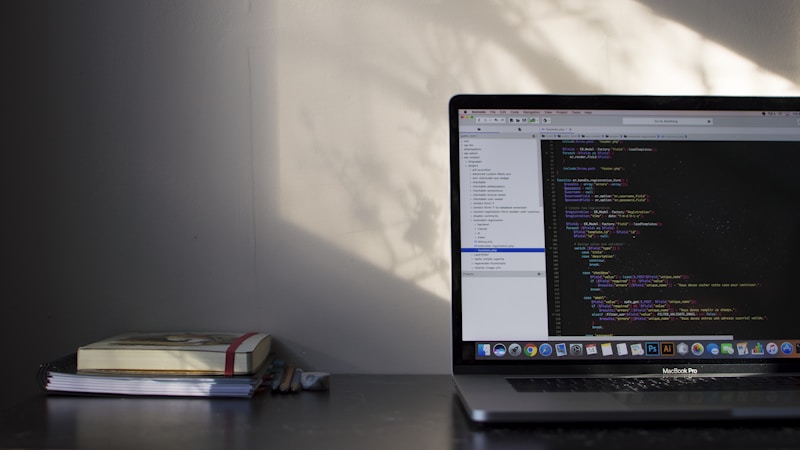
*The efficiency revolution: Chinese labs achieved frontier performance at a fraction of the compute, forcing a global rethinking of what AI development actually requires. Photo: Unsplash*
Phase 4: The 3% Moment (September–October 2026)
Two model releases in September 2026 sealed the gap's near-closure.
The first was DeepSeek's V4.1-Flash, which arrived in late September on a new architecture with a redesigned attention mechanism that DeepSeek's changelog described as "asymptotically linear in sequence length for common workloads." It was faster, cheaper, and — crucially — benchmarked within 1–2% of Anthropic's Claude Opus 4.8 on 4 of 6 categories, while undercutting it on price by roughly 17x.
The second was Xiaomi's MiMo-V2.6-Pro. Xiaomi — a company primarily known for smartphones and home appliances — released an open-weight model that became the highest-scoring open model in the world, scoring 46 on the Artificial Analysis composite versus 53 for the best closed models. A Chinese consumer electronics company was now building AI that rivaled labs backed by hundreds of billions in venture capital.
| Benchmark Category | Best US Model | Best Chinese Model | Gap (Oct 2026) |
|---|---|---|---|
| Mathematics (AIME) | GPT-6.1: 96.2% | DeepSeek V4.1: 95.1% | 1.1 pts |
| Coding (SWE-bench V) | Claude Opus 4.8: 78.4% | Qwen3.8-Max: 76.9% | 1.5 pts |
| Reasoning (GPQA Diamond) | Claude Opus 4.8: 87.2% | DeepSeek V4.1: 84.8% | 2.4 pts |
| Multilingual (MMMLU) | Gemini 4 Argon: 89.7% | Qwen3.8-Max: 88.1% | 1.6 pts |
| Agentic (MCPMark) | Claude Opus 4.8: 62.3% | Qwen3.8-Max: 55.8% | 6.5 pts |
| Arena.AI Elo (human pref) | Fable 5: 1,512 | Kimi K3: 1,487 | 25 Elo pts |
The remaining 3% gap is concentrated in exactly one category: long-horizon agentic tasks — the ability of an AI to autonomously execute multi-step workflows over hours or days without human supervision. This is the frontier that matters most for the emerging agentic economy, and it is where American labs, particularly Anthropic, retain a meaningful edge.
But even here, the gap is narrowing. Alibaba's Qwen3.8-Max scored 56% on MCPMark — the benchmark for tool-use and multi-step agent execution — up from 42% for the previous generation just four months earlier. At that rate of improvement, even the agentic gap could close within two quarters.
The September releases were not isolated events. They landed amid a broader pattern of Chinese AI momentum that had been building all year: Alibaba's Qwen models passing 3 billion cumulative downloads in August, Huawei pulling its Ascend 960DT chip launch forward by three quarters to Q1 2027, Zhipu raising $5 billion on quadrupling revenue, and six of the ten most-used models on OpenRouter being Chinese.
And then, during Golden Week — the very week Bloomberg published its report — Alibaba's Qwen team released Qwen3-VL-30B-A3B, a vision-language MoE model that activates only 3 billion of its 30 billion parameters, designed for efficient deployment on edge devices. While the country was on holiday, the labs kept shipping. The machine does not rest.
What the Numbers Actually Measure
A word of caution is warranted. Benchmark gaps are not the same as real-world capability gaps, and cross-country comparisons face methodological challenges that honest analysis must acknowledge.
| Criticism | Validity | Context |
|---|---|---|
| Chinese models overfit to benchmarks | Partially valid | DeepSeek and Qwen publish training details showing benchmark-specific fine-tuning, but so do OpenAI and Google |
| Benchmarks favor math/coding, underweight safety | Valid | Chinese models excel at quantitative benchmarks; safety and alignment evaluations remain dominated by Western frameworks |
| Arena.AI Elo reflects open-source enthusiasm | Partially valid | Open models attract dedicated communities who vote them up; but Elo gaps of 25+ points exceed community-bias explanations |
| Real-world agentic tasks show larger US lead | Valid | The 6.5-point MCPMark gap understates the practical difference in autonomous task completion, per enterprise evaluations |
| Cost-performance ratio favors China dramatically | Valid and underappreciated | At 1/10th to 1/20th the API price, Chinese models deliver 97% of the performance — an effective value advantage that benchmarks do not capture |
The cost dimension deserves emphasis. When DeepSeek V4.1-Flash can be deployed at $0.14 per million input tokens — compared to $2.50 for Claude Opus 4.8 — the relevant question for most enterprises is not "which model is 3% better?" but "is a 3% performance premium worth an 18x price multiplier?" For most use cases — content generation, code completion, data extraction, customer service — the answer is no.
This is why the 3% benchmark gap understates China's actual competitive position. Near-parity performance at dramatically lower cost creates a value proposition that pure benchmark comparisons cannot capture. It is why six of OpenRouter's ten most-used models are Chinese, and why Chinese models account for 41.4% of generative AI downloads on Hugging Face — five percentage points above American models.
The Silicon Valley Response: Uneasy Reassurance
The American AI industry's public response to the narrowing gap has followed a predictable pattern: acknowledge the progress, emphasize the remaining lead, and reframe the competition around agentic AI — the one domain where the gap remains significant.
Anthropic CEO Dario Amodei, in a September interview, conceded that Chinese models had achieved "impressive benchmark results" but argued that "the frontier of what AI can actually *do* in the real world — autonomously, reliably, over extended time horizons — remains an American advantage." He has simultaneously called for stronger US government coordination on AI safety and warned against slowing down, arguing that any deceleration would hand China the lead.
OpenAI's response has been to accelerate. GPT-6.1 Sol, released in late September, focused specifically on agentic capabilities — autonomous tool use, multi-step planning, and long-horizon task execution. Google's Gemini 4 Argon, unveiled the same week, emphasized cybersecurity and long-horizon reasoning. Both releases were clearly aimed at widening the agentic gap before Chinese labs catch up.

*The agentic frontier: the final domain where American AI retains a clear lead — and the next battleground in the race to artificial general intelligence. Photo: Unsplash*
But the competitive anxiety is palpable. The FTC opened an investigation into OpenAI and Anthropic in late September, focusing on AI agent risks — a move that some industry observers interpret as a signal that Washington is paying closer attention to the industry's claims about autonomous capabilities. If American labs cannot maintain a clear lead on agentic benchmarks, their primary differentiator evaporates.
What Comes Next
The trajectory is clear: if current improvement rates hold, Chinese models will reach benchmark parity with American frontier models within two to four quarters. Several catalysts could accelerate or delay this timeline.
Qwen 4. Alibaba has been previewing its next-generation model, targeting 10 trillion parameters with training on its own Zhenwu V900 chips. If Qwen 4 matches GPT-6.1 on agentic benchmarks, the narrative of American AI leadership will face its most serious challenge yet.
Huawei's chip roadmap. The Ascend 960DT, pulled forward to Q1 2027, represents Huawei's most direct challenge to Nvidia's training dominance. Bernstein forecasts Nvidia's China AI chip share collapsing from 40% to 8% as Huawei scales.
Export control evolution. The US Commerce Department has been quietly shifting toward case-by-case licensing for H200 sales to China. If advanced chips flow more freely, Chinese labs gain more compute, potentially accelerating their improvement rate.
The distillation dispute. Anthropic's accusation that seven Chinese labs harvested 190 million Claude responses for training data — leading to the CAC summoning all seven in September — adds a layer of geopolitical complexity. If the accusation results in enforceable restrictions on training data sourcing, it could slow Chinese labs. If it proves unenforceable, it highlights the futility of trying to control how AI knowledge spreads.
The most likely scenario, based on current trajectories, is benchmark parity within 12 months — not because American labs are failing, but because Chinese labs are improving faster, at lower cost, under more competitive pressure. In a race where the metric is intelligence per dollar, China is already winning. The 3% gap is the last number standing between the narrative of American AI leadership and a future where that narrative no longer matches reality.
Social Voices
@TechObserver_ZH (Twitter/X, 45K followers)
3%的差距听起来很小,但别忘了这些模型用的是华为芯片,成本只有美国的1/20。这不是追赶,这是重新定义比赛规则。
>
*"A 3% gap sounds small, but remember these models run on Huawei chips at 1/20th the US cost. This isn't catching up — it's redefining the rules of the competition."*
@AIWatchdog (Twitter/X, AI policy researcher)
The 3% figure is real but misleading. Chinese models dominate on math/coding because those are easy to benchmark. Agentic tasks — where the real economic value lies — still show a 6-8 point gap. Context matters.
>
*"The 3% figure is real but misleading. Chinese models dominate on math/coding because those are easy to benchmark. Agentic tasks — where the real economic value lies — still show a 6-8 point gap. Context matters."*
知乎用户 量子位观察者 (Zhihu, AI industry analyst)
彭博这个报告最震撼的不是3%,而是进步速度。18个月从15%到3%,按照摩尔定律的算法,这是指数级的追赶。美国的出口管制反而成了中国AI最好的加速器。
>
*"The most shocking thing in Bloomberg's report isn't the 3% — it's the pace. Going from 15% to 3% in 18 months is exponential catch-up by any measure. US export controls became Chinese AI's best accelerator."*
@DrSarahChen (Twitter/X, ML researcher)
People keep framing this as US vs China but the real story is open vs closed. Qwen and DeepSeek are open-weight. GPT and Claude are not. The future of AI is being built on open foundations, and China is leading that.
>
*"People keep framing this as US vs China but the real story is open vs closed. Qwen and DeepSeek are open-weight. GPT and Claude are not. The future of AI is being built on open foundations, and China is leading that."*
小红书用户 AI小白菜 (Xiaohongshu, AI content creator)
作为一个用国产模型做内容的创作者,我只关心两件事:成本和效果。DeepSeek V4的API价格让我一个月省了好几千块钱,效果还比Claude好。3%的差距?我感觉不到。
>
*"As a content creator using Chinese models, I only care about two things: cost and quality. DeepSeek V4's API pricing saves me thousands of yuan per month, and the output is better than Claude. A 3% gap? I can't feel it."*
@GeopoliticsTech (Twitter/X, tech policy commentator)
The Bloomberg report should be a wake-up call but it won't be. Washington will keep debating export controls while Chinese labs keep shipping. The gap will close. The only question is whether the US notices before it's already happened.
>
*"The Bloomberg report should be a wake-up call but it won't be. Washington will keep debating export controls while Chinese labs keep shipping. The gap will close. The only question is whether the US notices before it's already happened."*
Related Articles
- China AI Open Source Captured American Developers: The 41% Download Share Story
- Alibaba Qwen3.8-Max: The 2.4 Trillion Parameter Model That Rivals Claude
- DeepSeek's Billion-Dollar Revenue and the Price War Reshaping AI
Editor at AI in China. Tracking Chinese AI companies, funding rounds, and the technologies reshaping global tech. More about me.