The Bank That Asked for API Logs Instead of a Property Deed: Inside China's Token Loan Revolution

On a Tuesday morning in late August 2026, a loan officer at SPD Bank's Guangzhou branch pulled up a dashboard that no bank had ever used for a credit decision. Instead of property deeds, asset registers, or guarantor signatures, she was looking at API call logs — millions of them, streaming in real time from a small AI company in Huangpu District that built digital marketing tools for consumer brands. The logs showed something unusual: this 30-person startup was consuming over 5 million tokens per day, every day, with month-over-month growth that looked like a hockey stick.
The loan closed in half a day. The company walked away with a credit line it could never have obtained through traditional channels — no factory, no land, no inventory. Just code, contracts, and a voracious appetite for compute.
This was Guangdong Province's first "Token Procurement Loan" (Token采购贷). It was not a one-off experiment. It was the opening move in what may be the most consequential financial innovation to emerge from China's AI boom — a restructuring of how banks evaluate, price, and distribute credit to an industry whose most valuable assets have always been invisible to traditional risk assessment.
The product name is almost comically literal: 词元贷 (Cíyuán Dài), "Token Loan." Banks lend money to AI companies based on how many tokens they consume. And it is spreading through China's banking system with a speed that should make every Western fintech executive uncomfortable.
What Everyone Thinks
The conventional story about China AI funding has three pillars, repeated so often they have calcified into assumption.
Pillar one: state subsidies. Beijing picks winners, floods them with government money, and sustains uneconomic companies that would collapse under market discipline. The 60-billion-yuan national AI fund announced on October 20 is held up as the latest proof.
Pillar two: venture capital velocity. Chinese VCs move fast, valuations are aggressive, and the money follows the same momentum logic as Silicon Valley — just with more government guidance funds mixed in.
Pillar three: cheap models as the moat. DeepSeek, Qwen, and Kimi win on price-performance. China's advantage is engineering efficiency, not financial innovation.
This framework is not wrong. It is incomplete in a way that matters enormously. Because the most important financial innovation in China's AI ecosystem is not happening in venture capital firms or government ministries. It is happening in the bland, fluorescent-lit branch offices of state-owned commercial banks — and it looks nothing like anything in the Western playbook.
The Evidence: A Banking Product Built on Token Consumption
The Token Loan did not emerge from a startup pitch deck. It came from a very old institution solving a very new problem.
Bank of China's Guangzhou branch launched China's first Token Loan product on August 14, 2026, in Haizhu District — one of Guangzhou's densest clusters of AI application companies. The product family, formally called "BOC Compute Token Loan," has three sub-products, each targeting a different position in the compute supply chain:
| Sub-Product | Target Segment | Credit Basis | Max Credit |
|---|---|---|---|
| Token Supply Loan | Companies building/training large models with national filing | Compute service contracts, historical token settlement data | 30M yuan |
| Token Application Loan | Companies using tokens to power their own products | Token consumption volume, order books, revenue trends | 30M yuan |
| Token Service Loan | API providers, data labeling firms, model fine-tuners | Token commission settlement volume, platform flow records | 30M yuan |
*Source: Bank of China Guangzhou Branch product documentation; CLS.cn, August 14, 2026*
One week later, SPD Bank's Guangzhou branch issued the province's first token procurement loan to a national-level "Little Giant" (专精特新) enterprise — a designation for specialized, refined, unique, and innovative SMEs. The company received funding to purchase token compute resources, and the bank used its token operation data as a financing reference. From application to disbursement: half a day.
The products multiplied quickly.
| Bank | Product Name | Region | Launch Date | Key Feature |
|---|---|---|---|---|
| Bank of China | BOC Compute Token Loan | Guangzhou Haizhu | Aug 14, 2026 | 3 sub-products, max 30M yuan, up to 3 years |
| SPD Bank | Token Procurement Loan | Guangzhou Huangpu | Aug 21, 2026 | First joint-stock bank token loan; half-day approval |
| ICBC | Compute Power e-Loan (算力e贷) | Shenzhen Longgang | Aug-Sep 2026 | Assess compute procurement needs + service contract value + receivables |
| CCB Guangdong | Token Loan (with Guangdong Token Exchange & Service Center) | Guangdong Province | Sep 2026 | Three-scenario differentiation: upstream/midstream/downstream |
| Agricultural Bank, CITIC, Industrial Bank, Beijing Bank, Minsheng, Huaxia | Yiqí Token Loan (亦企Token贷) | Beijing E-Town (BDA) | Sep 2026 | ~2 billion yuan in credit lines across 6 banks |
*Sources: Guangdong Financial Regulatory Bureau; Guangzhou Haizhu District Government; Beijing E-Town Administrative Committee; CLS.cn; Caixin, October 25, 2026*
By mid-October, Bank of China's Haizhu branch alone had extended over 400 million yuan in total financing to compute-sector companies, with more than 28 million yuan in new Token Loan credit approvals since July. Shenzhen went further — the People's Bank of China's Shenzhen branch disclosed on October 23 that new medium- and long-term loans to the compute and storage sectors exceeded 100 billion yuan in the first three quarters of 2026, with Token Loan and Compute Power Loan products as a significant component.
The scale becomes less surprising when you see the demand curve these products are financing.
The Numbers Behind the Need
China's token consumption has been growing at a rate that defies any traditional credit model — because the "asset" being financed did not exist two years ago.
In March 2026, the National Data Administration (国家数据局) formally standardized the Chinese term for token as 词元 (cíyuán) — literally "word unit" — and designated it "the value anchor of the intelligent era" and "the settlement unit connecting technology supply with commercial demand." That is not bureaucratic poetry. It is a signal that the state views token consumption as a measurable economic quantity, akin to electricity consumption or freight tonnage — something that can be tracked, audited, and, crucially, collateralized.
The growth numbers justify the framing:
| Period | Daily Token Consumption (China) | Growth Driver |
|---|---|---|
| Early 2024 | ~100 billion | Human chatbot interactions, early enterprise pilots |
| End of 2025 | ~100 trillion | Multi-turn agentic tasks begin scaling |
| March 2026 | 140 trillion+ | AI agents autonomously executing multi-step workflows |
| June 2026 | 500 trillion+ (MIIT data) | Agent-to-agent calls, embodied AI training, industrial deployment |
*Sources: National Data Administration (March 2026); Ministry of Industry and Information Technology (June 2026); CLS.cn*
That is a 5,000x increase in daily token consumption in roughly 30 months. For context, China's electricity consumption grew about 5x in the first 30 months of its industrialization drive in the 1950s. Token consumption is scaling three orders of magnitude faster.
But here is the structural problem that Token Loans solve: the companies driving this consumption are, by traditional banking logic, terrible credit risks.
AI application companies are typically asset-light. They have no factories, no land, no machinery. Their most valuable assets are algorithms, model weights they may not even own, data pipelines, and engineering talent. Under the old system, a company like Guangzhou Tengyuan Digital Technology — which doubled revenue year-over-year but had long payment cycles from brand clients and upfront compute costs — could only borrow by having the legal representative mortgage personal property. Low limits, high rates, long cycles.
Luo Ruichang, Tengyuan's founder, described the old system bluntly: "We had to use the legal person's personal property as collateral. Not only were the limits low and rates high, the process took forever." His company received Guangdong Province's first Token Loan from Bank of China's Guangzhou Haizhu branch — a 3-year credit facility based on the company's token consumption patterns and business contracts, not on anyone's apartment.
How a Token Loan Actually Works
The mechanics reveal why this innovation is harder to copy than it appears. Token Loans are not simply "lend money to hot AI companies." They require a new underwriting stack — one that combines real-time data infrastructure, government coordination, and an entirely different risk philosophy.
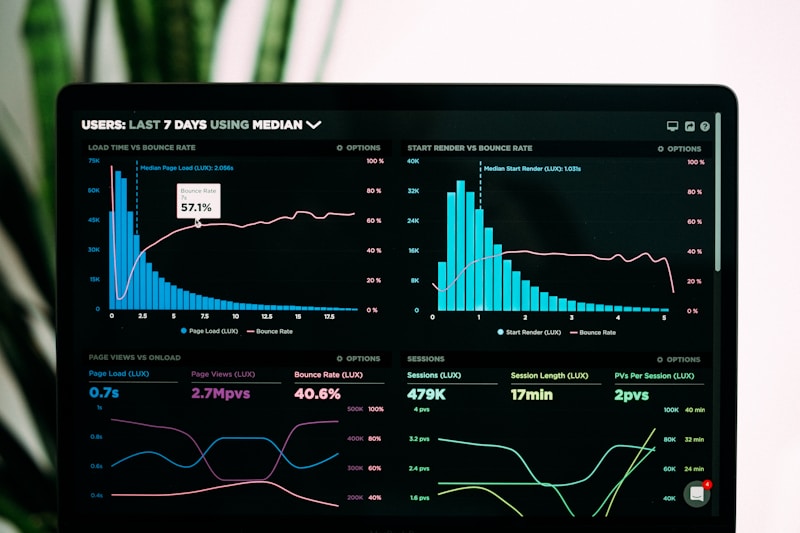
The underwriting process typically works in four layers:
| Layer | Data Source | What Bank Evaluates |
|---|---|---|
| Consumption | API call logs, monthly token usage, compute platform settlement records | Is the company actually operating? How fast is usage growing? |
| Contracts | Compute procurement agreements, downstream service contracts, order books | Is there forward revenue? Are obligations enforceable? |
| Verification | Cross-validation between compute platform data, tax records, bank flows | Do the numbers reconcile across independent sources? |
| Qualitative | Technical team credentials, national model filing status, IP portfolio | Does the company have durable technical capability? |
*Source: People's Bank of China Guangdong Branch; Guangzhou Haizhu District Investment Promotion Bureau; industry interviews*
The key insight is in the first layer. API call logs are naturally tamper-proof — they exist on the compute platform's servers, not the borrower's. Dai Zhijie, a section chief at Haizhu District's Investment Promotion Bureau, explained the logic: "API call logs and compute usage records cannot be forged. Banks can clean and aggregate the raw logs into visualized operational reports, then cross-validate against compute contracts, downstream service agreements, and technical certifications. This breaks the risk-control barrier of relying on fixed assets and physical collateral."
Bank of China Guangzhou's Deputy General Manager Li Liulan describes the philosophical shift: "We use compute consumption data to understand the customer's real production and operations. The credit logic is gradually transforming toward dynamic data monitoring."
This is not a Chinese version of Silicon Valley Bank's "lend to startups with VC backing" model. It is closer to supply-chain finance — treating token consumption as the "inventory" that proves real economic activity. The bank is not betting on the company's equity story. It is financing working capital against demonstrated operational throughput.
Why Now: The Policy Architecture
Token Loans did not emerge from spontaneous market innovation alone. They sit on a policy foundation that has been under construction for months.
In July 2026, the People's Bank of China and eight other ministries jointly issued the "Notice on Strengthening Data Development and Utilization in Technology Finance" (关于加强科技金融领域数据开发利用的通知). The directive explicitly supports breaking down data silos in technology finance and extending credit evaluation "from looking at collateral to looking at data."
| Date | Policy / Event | Relevance to Token Loans |
|---|---|---|
| March 2026 | National Data Administration designates "Token" (词元) as official term, "value anchor of the intelligent era" | Establishes token consumption as a formal economic metric |
| July 2026 | PBOC + 8 ministries: tech finance data utilization directive | Legal basis for using non-traditional data in credit decisions |
| August 2026 | Guangdong Token Loan products launch | First commercial implementation |
| August 2026 | Haizhu District releases "Eight Measures for Token Economy" (词元经济八条) | Government interest subsidies up to 2M yuan/year per company for token-driven business loans |
| September 2026 | Beijing E-Town Token Loan cluster: 6 banks, ~2B yuan | National capital replicates the model |
| October 2026 | Shenzhen discloses 100B+ yuan in new compute/storage loans (Q1-Q3) | Scale validation at city level |
*Sources: National Data Administration; PBOC Guangdong Branch; Guangzhou Haizhu District Government; Caixin*
The Haizhu "Eight Measures" are particularly telling. The district government does not just encourage banks to lend — it offers interest subsidies of up to 2 million yuan per year per company for token-economy business loans. This is a government willing to pay part of the interest to make its AI companies creditworthy. It is industrial policy operating through the banking system rather than around it.
The Other Half of the Equation
Token Loans solve the demand side — giving AI application companies access to working capital. But for the model to work, someone has to supply the tokens those companies are consuming. That side of the market is moving just as fast.
On October 23-24, Moonshot AI released Kimi K3.1 Pro — a post-training upgrade to its K3 flagship that scored 55 on the Artificial Analysis Intelligence Index (up 11 points from K3), landed within 3 points of Claude Opus 5.5, and cut API prices by 33%. On Terminal-Bench 4.0, it posted 65.7% versus GPT-6 Astra's 58.2%. Full open weights are promised by November 4.
| Model | Release Date | Artificial Analysis Score | API Input Price (/1M tokens) | Key Feature |
|---|---|---|---|---|
| Kimi K3 | Jul 16, 2026 | 57.1 (at launch) | $3.00 | 2.8T params, 1M context, open weight |
| Kimi K3.1 Pro | Oct 23, 2026 | 55 (4th overall) | $2.00 | +33% price cut, better coding/agents |
| DeepSeek v4.1 Flash | Oct 17, 2026 | 45 | $0.75 | Open inference engine, extreme efficiency |
| MiniMax M3.1 Flash | Oct 20, 2026 | — | Competitive | 428B params, weights on Hugging Face (252 GB) |
*Sources: Artificial Analysis; Moonshot AI technical blog; Hacker News threads (Oct 17-24, 2026)*
The connection between model releases and Token Loans is not coincidental. Every price cut makes token consumption cheaper, which expands the addressable market for AI applications, which increases token consumption volumes, which — under the new credit model — makes AI companies *more* creditworthy. Falling token prices are functionally equivalent to falling interest rates in a conventional economy: they stimulate borrowing by improving the productivity of each unit of capital.
China now has both simultaneously. Token prices are collapsing at the frontier, and the credit machinery to finance token consumption is scaling at the banking system level. No other country has built both halves of this flywheel.
Who Wins, Who Loses
The implications extend far beyond Guangdong's AI startups.

The winners are the mid-tier AI application companies — too small for venture capital's late-stage checks, too asset-light for traditional bank loans. A company doing 5 million yuan in annual revenue but consuming 500 million tokens per month is now a bankable entity. That is an entirely new category of credit access.
The banks win if the model works. China's state-owned banks have been searching for yield in a system flooded with deposits and short of quality borrowers. AI companies with growing token consumption are, by definition, growing businesses. The risk is real — but so is the data visibility. A bank that can monitor your API calls in real time has better ongoing surveillance of your business health than one that checks your factory once a quarter.
The government wins on multiple levels. Token Loans channel household savings (via bank deposits) into the AI sector without the fiscal cost of direct subsidies. The Haizhu interest subsidies are modest — 2 million yuan per company per year — compared to the billions in credit they unlock. It is leverage, not expenditure.
The potential losers are the companies that game the system. Token consumption is harder to fake than revenue — but not impossible. A company could theoretically burn tokens artificially to inflate its consumption profile and qualify for larger credit lines. The countermeasure is cross-validation: banks check API logs against actual revenue, contracts, and business operations. A company burning tokens with no corresponding business output will fail the cross-check. But the risk of sophisticated fraud — especially collusion between compute platforms and borrowers — is real and has not yet been tested at scale.
The Risks Nobody Is Pricing
Token Loans are three months old. The risks are not theoretical; they are simply unpriced.
Data authenticity risk. The entire model depends on the integrity of API logs and compute platform records. China's compute infrastructure is fragmented across Alibaba Cloud, Tencent Cloud, Huawei Cloud, and dozens of smaller platforms. There is no unified, auditable token consumption standard — a gap that industry insiders have publicly flagged. The PBOC's July directive explicitly calls for breaking down data silos, but implementation is in early stages.
Correlation risk. If China's AI application sector hits a downturn — say, enterprise adoption stalls or a major platform changes its API pricing — token consumption could drop sharply across the entire borrower base simultaneously. Token Loans are, in effect, a sector bet dressed as diversified lending. The banks' exposure is correlated by construction.
Regulatory arbitrage risk. The products launched quickly, partly in response to competitive pressure among regional branches. If underwriting standards vary between banks — and they almost certainly do — a race to the bottom on credit standards is possible. The PBOC has not yet issued unified Token Loan regulations.
Moral hazard. Government interest subsidies (like Haizhu's 2M yuan cap) create an incentive to borrow regardless of project quality. When the government pays part of the interest, the effective cost of capital drops for everyone — including companies that should not be borrowing.
An industry analyst at a Beijing securities firm, speaking to CLS.cn, offered a measured assessment: "Token Loans are essentially an upgrade to SME lending. They haven't changed the fundamental logic of bank credit — they've added innovation-capability metrics on top of traditional business indicators. It's exploratory."
That framing is accurate — and it undersells the significance. Exploratory products that work at scale have a way of becoming permanent infrastructure.
What to Watch
Three signals will determine whether Token Loans become a durable feature of China's AI ecosystem or a footnote in its history.
First, the default rate. No Token Loan has reached its first annual review. The first wave of credit assessments — happening roughly now, three months after the August launches — will reveal whether the underwriting model correctly identified healthy businesses.
Second, geographic diffusion. Beijing E-Town's 2-billion-yuan cluster launched in September. If Shanghai, Hangzhou, and Chengdu follow — each with their own regional banking ecosystems and AI industry clusters — Token Loans become a national phenomenon. If they remain concentrated in Guangdong and Beijing, they may be regional anomalies.
Third, the compute platform dimension. If Alibaba Cloud, Tencent Cloud, or Huawei Cloud start offering their own financing products tied to platform-specific token consumption — effectively becoming both the data source and the lender — the competitive dynamics change entirely. Banks would become dependent on platforms for both the asset being financed and the data used to underwrite it.
The deeper question is whether token consumption — as a measurable, auditable, economically meaningful quantity — becomes the standard unit of AI-era economic activity that the National Data Administration clearly hopes it will. If it does, Token Loans are not a banking novelty. They are the first financial instruments of a token-denominated economy.
Social Voices
@量子位 (QbitAI)
词元贷本质上是把"看不见的算力消耗"变成"看得见的信用凭证"。这个转变可能比任何大模型发布都更重要。当银行开始用API调用日志做风控,意味着AI产业的"基础设施层"已经成熟到可以金融化的程度。
>
*(Translation: The Token Loan essentially turns "invisible compute consumption" into "visible credit credentials." This shift may be more important than any model release. When banks start using API call logs for risk control, it means the AI industry's "infrastructure layer" has matured to the point of financialization.)*
@财经老周
三千年银行业,抵押物从土地变成厂房,再变成应收账款,现在变成token消耗量。变的不是银行,是经济本身。问题是:如果你没法衡量token的真实价值,你就是在给空气定价。
>
*(Translation: Three thousand years of banking — collateral went from land to factories to accounts receivable, and now to token consumption. What's changing is not the bank; it's the economy itself. The question is: if you can't measure the true value of a token, you're pricing air.)*
@AI_skeptic_Chris
China's banks are lending against token consumption because they have to. The deposit-to-loan ratio is at record highs, traditional borrowers (property developers) are radioactive, and AI is the only sector growing fast enough to absorb the capital. This is capital allocation by elimination, not innovation.
@SarahInShanghai
The detail nobody's covering: the Haizhu district government is paying up to 2M yuan per year in interest subsidies. That's not a loan — it's a public-private partnership where the government provides the risk buffer and the bank provides the balance sheet. Smart, but let's call it what it is.
@科技金融观察
最大风险不是坏账,是数据孤岛。如果各算力平台的API日志格式不统一、无法交叉验证,"词元贷"就会变成新的套利工具。央行7月文件已经意识到这个问题,但执行需要时间。先上车还是先修路?广东选择了先上车。
>
*(Translation: The biggest risk isn't bad debt — it's data silos. If API log formats aren't standardized across compute platforms and can't be cross-validated, "Token Loans" will become a new arbitrage tool. The PBOC's July document already recognized this problem, but implementation takes time. Board the train first or build the tracks first? Guangdong chose to board first.)*
@dylanmarcus
Everyone's comparing China's AI subsidies to the US CHIPS Act. Wrong comparison. The interesting policy instrument is Token Loans — using the banking system's existing deposit base to finance AI adoption without new government spending. It's stealth industrial policy through credit allocation. Washington has no equivalent.
*Sources: CLS.cn (August 14, 2026); People's Daily, Finance Deep Dive column (September 14, 2026); Guangdong Financial Regulatory Bureau (September 4, 2026); Caixin (October 25, 2026); Beijing E-Town Administrative Committee (September 14, 2026); PBOC Guangdong Branch; Guangzhou Haizhu District Government; Shenzhen Longgang District Government; Moonshot AI technical blog (October 23-24, 2026); The Next Web; Unite.ai; benchlm.ai; Superbash AI.*
Editor at AI in China. Tracking Chinese AI companies, funding rounds, and the technologies reshaping global tech. More about me.