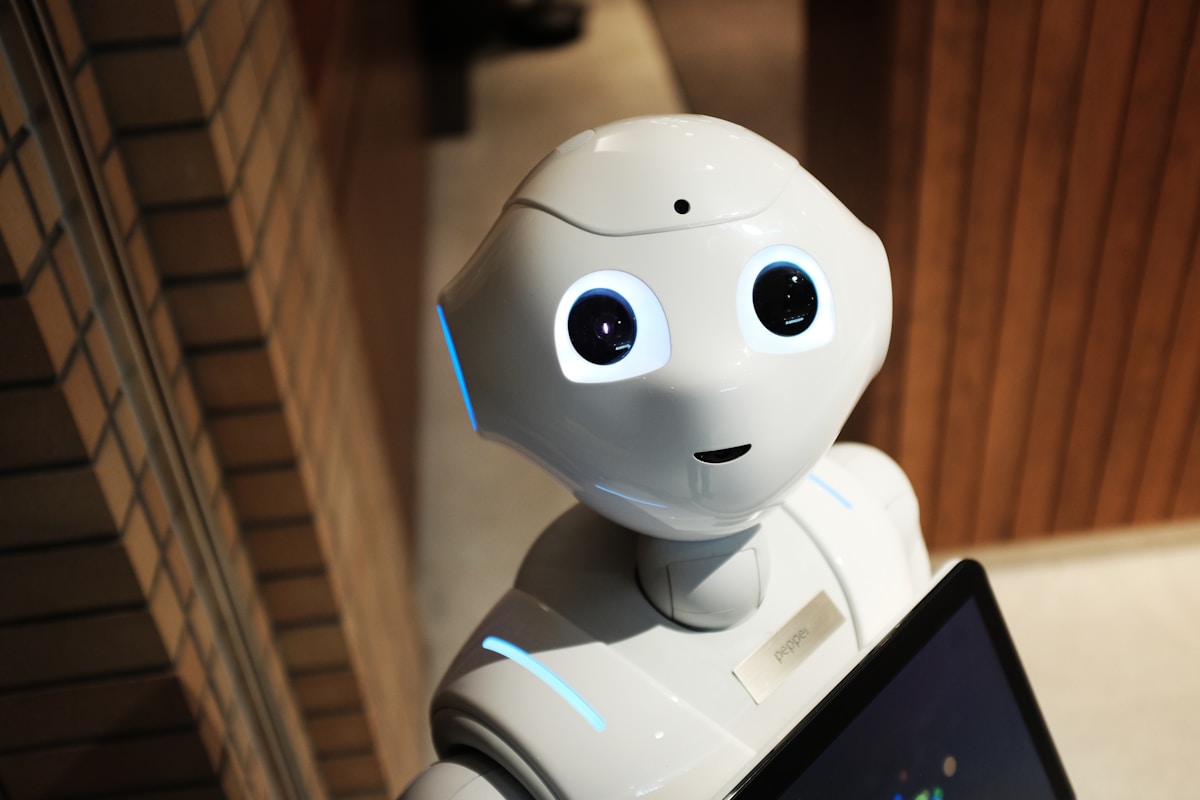
In November 2025, something quietly historic happened inside a factory in Liuzhou, Guangxi province. A humanoid robot named Walker S2 — 1.76 meters tall, 73 kilograms, 52 degrees of freedom — rolled off a production line where other Walker S2 units were doing the assembling. The factory, built by Shenzhen-based UBTECH, was designed to produce one humanoid every ten minutes.
Two hundred kilometers away at a research lab in Hangzhou, a different kind of milestone was unfolding. Unitree Robotics had just shipped its 4,200th humanoid robot of the year — a machine called the R1 that costs $5,900, roughly the price of a high-end television. You can buy one online, with delivery, like ordering a laptop.
Both companies are Chinese. Both build humanoid robots. Both are growing explosively. And their strategies could not be more different.
The question they are racing to answer — *what is a humanoid robot actually for?* — has no settled answer anywhere in the world. But in China, the world's largest humanoid robot market, the answer is forking into two radically different paths. One leads toward commodity hardware that is cheap enough to be everywhere. The other leads toward premium, full-service industrial deployments that are expensive enough to be profitable.
Understanding which path wins — or whether both survive — is essential to understanding where embodied AI is actually heading, and why China's manufacturing advantages might make it the decisive market.
The Scale of What's Happening
Before comparing the two strategies, it is worth understanding just how thoroughly China dominates humanoid robot production right now.
According to Omdia, global humanoid robot shipments in 2025 totaled approximately 13,317 units. Three Chinese companies — AgiBot, Unitree, and UBTECH — accounted for 10,368 of them, roughly 78%. The American challengers that dominate headlines — Tesla, Figure AI, and Agility Robotics — shipped approximately 150 units each, combined less than 5% of the Chinese total.
The installed-base picture is even more lopsided. China installed 354,000 industrial robots of all kinds in 2025, representing 59% of the global total and nearly three times the next four countries combined, according to the IFR's World Robotics 2026 report.
| Company | HQ | 2025 Humanoid Shipments | Global Share | Key Product | List Price |
|---|---|---|---|---|---|
| AgiBot | Shanghai | ~5,168 | ~39% | Lingxi X2 | Not published |
| Unitree | Hangzhou | ~4,200 | ~32% | G1 / R1 | $16,000 / $5,900 |
| UBTECH | Shenzhen | ~1,079 | ~8% | Walker S2 | Not published (contract-only) |
| Tesla | Austin | ~150 | ~1% | Optimus Gen 3 | Not commercially available |
| Figure AI | Sunnyvale | ~150 | ~1% | Figure 02 | Not commercially available |
| Agility Robotics | Salem | ~150 | ~1% | Digit | Not published |
| Others (combined) | — | ~2,580 | ~19% | Various | — |
But shipment volume alone does not tell you who is winning. That is where the fork becomes visible.
Unitree: The Ford of Embodied AI
If you want to understand Unitree's strategy, look at the pricing. The R1, launched in July 2025, costs $5,900. The G1, a more capable bipedal platform with 34+ degrees of freedom, lists at $16,000. Both are available for purchase directly through Unitree's website, with transparent pricing, spec sheets, and online ordering.
This is a deliberate provocation. In an industry where competitors won't publish prices or require months-long sales negotiations, Unitree treats humanoid robots like consumer electronics.
The approach works because Unitree spent years building something none of its rivals have: a vertically integrated supply chain refined across tens of thousands of quadruped robot shipments. Before making humanoids, Unitree was the world's leading robot dog manufacturer. That volume let the company iterate on reducers, high-power-density brushless motors, micro-hydraulic systems, and sensors through multiple generations — developing in-house what foreign competitors buy at premium prices from third-party suppliers.
The result is cost structures that seem impossible from a Western perspective. Unitree's bill of materials for core components runs a fraction of what competitors pay, and the company passes those savings to buyers aggressively.
The financial results validate the model — with caveats. In its first post-IPO quarter, Unitree reported 665 million yuan in Q3 2026 revenue, up 70% year over year. But net profit fell 17%, missing analyst consensus by half. The explanation: R&D spending surged 250% in a single quarter, as the company poured IPO proceeds into its WVLA 2.0 (World-Video-Language-Action) embodied foundation model and expanded its Yangtze River Delta super factory.
| Metric | Unitree (Pre-IPO / Q3 2026) |
|---|---|
| Q3 2026 Revenue | ¥665 million (~$92M) |
| YoY Revenue Growth | +70% |
| Net Profit Trend | Down 17% YoY |
| R&D Spending Change | +250% in one quarter |
| IPO Proceeds | ~$5.9 billion (August 2026 STAR Market listing) |
| Flagship Products | R1 ($5,900), G1 ($16,000), H2 |
| Embodied AI Model | WVLA 2.0 (World-Video-Language-Action) |
| Production Plan | Tens of thousands/year (Yangtze Delta super factory) |
| 2026 Target | Capacity for industrial-scale volumes |
The bet is straightforward: if humanoid robots are going to be as ubiquitous as smartphones, the company that gets to scale first wins. Unitree is willing to sacrifice near-term margins — its IPO prospectus reportedly shows thin or negative hardware margins — to establish the installed base before competitors can respond.
There is a risk here that the company's own numbers hint at. Revenue is growing fast, but so are losses. If the "humanoid robots everywhere" thesis takes longer to materialize than investors expect, Unitree could face a cash crunch despite its massive IPO war chest. The $5,900 R1, for all its viral appeal, is built more for spectacle and research than for sustained production work — a fact that has led some analysts to question whether Unitree's volume numbers reflect genuine commercial demand or early-adopter curiosity.
UBTECH: The Full-Stack Premium Play
UBTECH's strategy is the opposite in almost every dimension that matters.
You cannot buy a Walker S2 online. The company does not publish a unit price. Instead, UBTECH sells contracts — bundled deals that include hardware, deployment engineering, proprietary software (the BrainNet platform and Co-Agent intelligent system), training, and multi-year service. Individual contract values are disclosed in regulatory filings: a 250 million yuan deal in September, a 159 million yuan data-collection center contract in Zigong.
This is not a bug. It is the business model.
UBTECH's thesis is that humanoid robots are not consumer products and will not be for years. They are industrial equipment — like CNC machines or injection molders — that must be deployed, calibrated, maintained, and optimized by the vendor. The customer is not buying a robot; they are buying a capability: quality inspection at an Audi plant, logistics validation at Foxconn, multi-robot collaborative assembly at a Zeekr factory, or — announced in October — mass-customization support at FAW-Volkswagen's Qingdao plant.
The financials reflect this fundamentally different positioning. UBTECH's full-size humanoid revenue surged 1,445% year over year to 590.3 million yuan in H1 2026, representing 46.5% of total group revenue. Gross margin reached 44.7% — a number that would be extraordinary in consumer hardware but is consistent with industrial equipment. Net losses narrowed 23% to 338.8 million yuan, and the company was added to the MSCI China Index, bringing institutional capital inflows.
| Metric | UBTECH (H1 2026) |
|---|---|
| Humanoid Revenue | ¥590.3 million (~$82M) |
| Humanoid Revenue Growth | +1,445% YoY |
| Share of Group Revenue | 46.5% |
| Gross Margin | 44.7% |
| Net Loss | ¥338.8M (narrowed 23% YoY) |
| Walker S2 Units Delivered (2025) | 1,079 |
| H1 2026 Unit Sales | 921 full-size humanoids |
| 2026 Production Target | 10,000 full-size units |
| Cumulative Order Book | >¥800 million (~$112M) |
| Named Contracts | ¥250M (September), ¥159M (Zigong data center) |
| Key Deployments | Audi FAW, Foxconn, Zeekr, Airbus, FAW-VW Qingdao |
| Consumer Product | YouWorld U1 (~$140,000), 13,000+ orders |
| Factories | Shenzhen + Liuzhou, Guangxi (1 unit/10 min design pace) |
UBTECH is also the only Chinese humanoid maker pursuing a parallel consumer strategy — and it is doing so at the opposite extreme from Unitree's $5,900 R1. The YouWorld U1, launched in mid-2026, is a hyper-realistic companion robot with 1:1 skin pore replication and subcutaneous blood vessel simulation, powered by emotional large language models. Priced near $140,000, the U1 accumulated over 13,000 pre-orders within days. UBTECH is, in effect, building the "cyber Hermès" — a luxury product for buyers who want emotional presence, not industrial utility.
The risk for UBTECH is equally clear: the model requires enormous working capital to sustain deployment teams, and the gap between order book and delivery is significant. The company targeted 10,000 units for 2026 but delivered 921 in the first half, implying an aggressive second-half ramp that the market has greeted with visible skepticism — the stock has fallen from HK$104.70 in July to the HK$68–74 range in October and November.
The Head-to-Head
The comparison reveals just how divergent these two visions have become — and why lumping both companies under "the Chinese humanoid sector" obscures more than it reveals.
| Dimension | Unitree (Fordism) | UBTECH (Full-Stack Premium) |
|---|---|---|
| Core thesis | Humanoids become ubiquitous through cost destruction | Humanoids become essential through capability delivery |
| Pricing | Transparent, published, aggressively low | Not published; contract-based, bundling HW + SW + services |
| Entry product | R1 at $5,900 | No consumer entry; U1 luxury at ~$140,000 |
| Sales channel | Online, self-serve | Contracts, direct sales, deployment teams |
| Gross margin profile | Thin (consumer electronics model) | 44.7% (industrial equipment model) |
| Primary customer | Researchers, developers, early adopters, SMEs | Large manufacturers (automotive, electronics, logistics) |
| Embodied AI approach | WVLA 2.0 world model (open research) | BrainNet + Co-Agent (proprietary, closed) |
| Manufacturing | Scale-first: super factory for tens of thousands/year | Quality-first: two factories, designed precision |
| Revenue recognition | Unit sales | Project milestones + service contracts |
| Financial trajectory | Revenue +70%, losses widening on R&D | Revenue +1,445% (humanoid), losses narrowing |
| Key risk | Unit economics may never justify volume | Deployment bottleneck may never justify premium |
| Cultural identity | Engineering-first, "move fast" | Enterprise-first, "solve the whole problem" |
The strategic fork is not merely commercial. It extends to the technology itself. Unitree's WVLA 2.0 is a world-model approach to embodied AI — the robot learns from video, language, and action simultaneously, with the goal of generalizing to novel environments. UBTECH's Co-Agent is a proprietary agent system focused on closed-loop industrial tasks: intention understanding, task planning, tool usage, autonomous anomaly detection. One is built for the unknown; the other is built for the factory floor.
What the Fork Reveals
The split between Unitree and UBTECH is not really about robots. It is about the fundamental question of how transformative technologies commercialize — and history offers no consistent answer.
The personal computer went the Unitree route: cheap hardware, rapid price declines, volume-driven ecosystem effects. The commercial aircraft went the UBTECH route: expensive, service-intensive, purchased by institutions that needed the capability and could afford the total cost of ownership. Both models produced enormous companies. But they produced very different industries around them.
China's structural advantages complicate the comparison in interesting ways. The country's humanoid robot supply chain dominance is so complete that it could determine which model wins globally, not just domestically. A supply chain analysis published in October found that China controls 94% of the permanent magnets inside a humanoid robot — a dependency so deep that Western manufacturers entering mass production could see unit costs triple without access to Chinese components. Add China's 150+ humanoid robot companies, its EV-hardened manufacturing culture, and the Ministry of Industry and Information Technology's standardization committee (which includes founders from Unitree, AgiBot, and UBTECH), and the picture is clear: whatever the winning model looks like, it will probably be built in China.
But the fork also reveals a third path that neither company has fully claimed: the middle market. AgiBot, the volume leader with 5,168 units shipped in 2025, occupies a position between Unitree's commodity approach and UBTECH's premium model — and has already made the most aggressive international move by opening Europe's first humanoid robot mass-production facility in Šabac, Serbia, in partnership with automotive supplier Minth Group. That facility, opened in August 2025 just weeks after the US banned Chinese robots on national security grounds, may prove to be one of the shrewdest strategic moves in the industry.
TrendForce forecasts China's humanoid robot output will grow 94% in 2026, with Unitree and AgiBot alone capturing nearly 80% of global shipments. If that forecast holds, the volume game is effectively over — China wins it. What remains contested is the value game: who captures the highest margins per deployment, who builds the strongest lock-in with enterprise customers, and whose embodied AI platform becomes the industry standard.
Unitree is betting that volume creates the ecosystem, and the ecosystem creates the value. UBTECH is betting that capability creates the dependency, and the dependency creates the margins. Both cannot be entirely right.
Social Voices
知乎 — @智造未来 (Zhihu, robotics industry analyst)
优必选走的高毛利路线短期内财务更好看,但宇树的规模效应一旦形成,护城河深得多。富士康当年靠的不就是规模吗?
*(UBTECH's high-margin approach looks better financially in the short term, but once Unitree's scale effects kick in, the moat is much deeper. Didn't Foxconn win on scale?)*
微博 — @机器人小钢炮 (Weibo, tech commentator)
两家公司根本不在同一个赛道竞争。宇树卖的是"可能性",优必选卖的是"确定性"。买R1的人是想看看机器人能干什么,买Walker S2的人已经知道要它干什么了。
*(The two companies aren't even competing in the same arena. Unitree sells "possibility"; UBTECH sells "certainty." People buy the R1 to see what robots can do. People buy the Walker S2 because they already know what they need it to do.)*
X/Twitter — @EmbodiedAI_Watch (robotics researcher, Stanford)
Everyone obsesses over Unitree's $5,900 R1 and UBTECH's $140K U1. The real story is AgiBot quietly opening that Serbia factory. First mover in European manufacturing, weeks after the US ban. That's strategic depth neither of the headline players has shown.
掘金 — @硬件老兵 (Juejin, hardware engineer)
看了宇树的财报,研发投入翻两倍半,营收涨70%但利润下降。这不就是特斯拉2015年的剧本吗?问题是机器人市场的TAM有没有电动车那么大。
*(Looked at Unitree's financials — R&D up 2.5x, revenue up 70%, but profit down. Isn't this Tesla's 2015 playbook? The question is whether the robot TAM is as big as EVs.)*
LinkedIn — Sarah Chen, robotics investor (based in Singapore)
The magnet dependency data is the real bombshell. 94% of permanent magnets in humanoids are Chinese-controlled. Even if Tesla or Figure cracks embodied AI at scale, their unit costs will be structurally higher than any Chinese competitor. The fork between Unitree and UBTECH matters less than the fork between China and everyone else.
B站 — @赛博茶馆 (Bilibili, popular science creator)
优必选柳州工厂说是"每10分钟造一个机器人",但年产量其实远低于满负荷。这个数字游戏各家都在玩,宇树的"数万台产能"也是一样的套路。真正要看的是谁家机器人能在工厂连续干满一年不出大问题。
*(UBTECH's Liuzhou factory claims "one robot every 10 minutes," but annual output is well below full capacity. Everyone plays this numbers game — Unitree's "tens of thousands in capacity" is the same trick. What really matters is whose robots can work continuously in a factory for a year without major failures.)*
The humanoid robot industry in China has reached a genuine fork. One path leads to commodity hardware at smartphone prices, deployed everywhere, margins thin but volume enormous. The other leads to premium industrial equipment, deployed selectively, margins thick but volume constrained. Both paths are being walked right now, by companies that share a country and a technology stack but not a vision.
By this time next year, the early returns will be in. UBTECH's second-half delivery ramp will either validate or break the full-stack thesis. Unitree's R&D spending will either produce an embodied AI breakthrough or bleed the balance sheet. And AgiBot's Serbian factory will either become the industry's first offshore bridgehead or an expensive experiment.
What is already settled: the robots are being built, and they are being built in China. The only question is which version of the future — cheap and everywhere, or capable and essential — arrives first.