Concrete Empire: China's $560 Billion Data Center Gold Rush
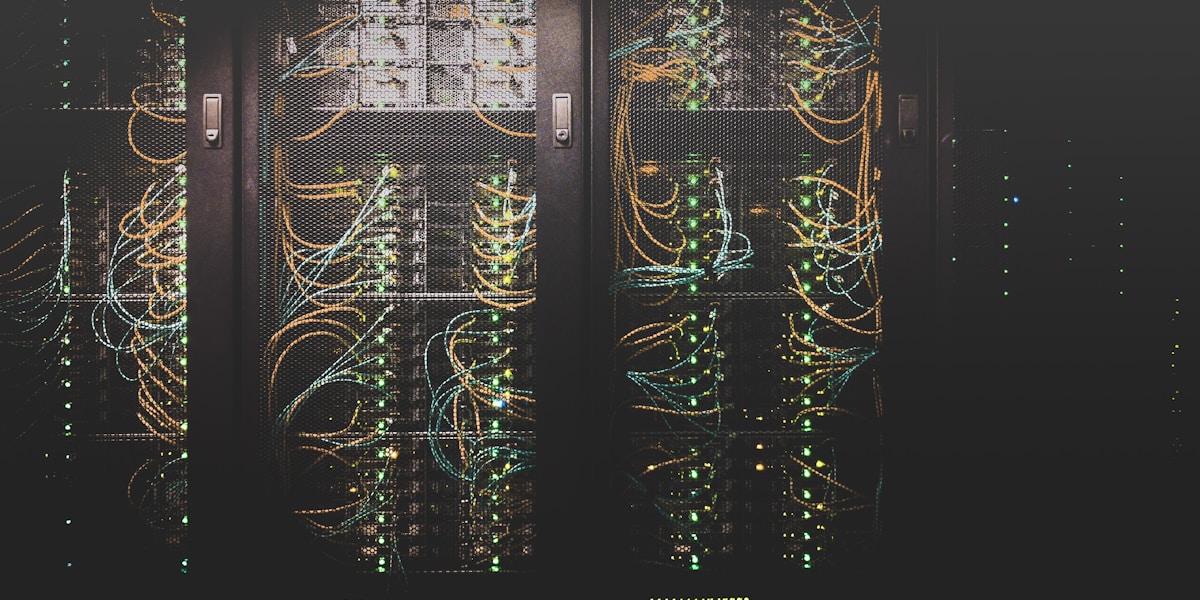
At 4 a.m. in Ulanqab, the cranes are already moving.
The city sits on the Inner Mongolian plateau at 1,300 meters above sea level, where winter temperatures plunge below minus 20 degrees Celsius and the wind never stops. For most of its history, Ulanqab was known for potatoes, lamb, and a high-speed rail line connecting it to Beijing 300 kilometers to the southeast. Now it is becoming something else: the epicenter of the largest data center construction boom in human history.
Drive through the suburbs and the scale becomes visible. Row after row of concrete shells stretch across former farmland, each one the size of an aircraft hangar. Construction crews work in shifts around the clock. High-voltage power lines march across the brown grasslands toward substations that did not exist two years ago. The hum of diesel generators mingles with the clank of steel and the beeping of reversing trucks.
According to a CNN investigation published on October 13, nearly 90 data center projects are planned or under construction in Ulanqab alone. The city is one node in a national network of computing hubs that Beijing hopes will power its artificial intelligence ambitions for the next decade — a network backed by an estimated 4 trillion yuan ($560 billion) in combined state and private investment over five years.
The AI race between the United States and China is often framed as a contest of algorithms: who has the smartest model, the best benchmark score, the most capable agent. But standing in the cold dawn light of Ulanqab, a different picture emerges. The real contest may be less about intelligence and more about concrete — who can pour more of it, faster, and connect it to enough electricity to run the machines that train and serve AI models at planetary scale.
This is the story of China's concrete AI empire: where it came from, who is building it, and whether it will be enough.
The Map of a Hidden Empire
The geography of China's data center buildout follows a logic that would be familiar to any logistics planner. Eastern cities like Beijing, Shanghai, and Shenzhen have the demand — tech companies, financial institutions, hundreds of millions of users. But they lack the three things data centers need most: cheap land, cheap power, and cool weather.
Western and northern provinces have all three in abundance. The result is a national redistribution of computing power that rivals any infrastructure program in modern history.
| Cluster | Province | Key Advantage | Notable Projects | Status |
|---|---|---|---|---|
| Ulanqab | Inner Mongolia | Cold climate, cheap land, wind power | ~90 planned/under construction | Rapid buildout (2025–2027) |
| Gui'an New Area | Guizhou | Hydropower, mild climate, tax incentives | 40+ operational data centers | Established hub since 2015 |
| Zhongwei | Ningxia | Solar resources, central location | China Telecom mega-campus | Expanding since 2021 |
| Zhangbei | Hebei | Wind power, proximity to Beijing | Alibaba cloud campus | Operational, liquid-cooled |
| Horinger | Inner Mongolia | Coal + renewable mix, low PUE targets | Multiple hyperscale builds | Under construction |
| Chengdu-Chongqing | Sichuan | Hydropower, western connectivity | State telecom clusters | Designated national hub |
| Guian-Guiyang | Guizhou | Government backing, established ecosystem | Apple iCloud, Huawei campus | Mature, expanding |
| Bayannur | Inner Mongolia | Renewable corridor, land availability | Early-stage projects | Planning phase |
Ulanqab has become the flagship. The city's advantages are almost comically specific: land costs roughly one-tenth of Beijing prices, the average annual temperature of 4.3 degrees Celsius reduces cooling costs by up to 40 percent compared to southern provinces, and the region sits at the intersection of multiple high-voltage transmission corridors carrying both coal and wind power. Local officials told CNN that nearly 90 projects are planned, with several already operational and serving clients including major Chinese cloud providers and, reportedly, some international customers routing around US-based infrastructure.
Guizhou province, meanwhile, has been at this longer. The mountainous southwestern province — one of China's poorest — rebranded itself as "China's Big Data Valley" nearly a decade ago, offering tax incentives, cheap hydropower, and a climate mild enough to reduce cooling demands. Apple began storing Chinese iCloud data in Guizhou in 2018. Huawei built a massive campus there. The province now hosts dozens of data centers and has become the template for what Ulanqab hopes to become.

Ningxia, Gansu, and Inner Mongolia's other cities are following similar playbooks: provincial governments hungry for investment, abundant land and energy, and national policy that treats computing power as strategic infrastructure.
The $560 Billion Number
The investment figures are staggering even by the standards of national infrastructure programs. In June 2026, Bloomberg reported that China's National Development and Reform Commission was drafting a blueprint for a roughly 2 trillion yuan ($295 billion) public investment plan to build interconnected computing hubs over five years, with state-owned enterprises like China Mobile and China Telecom operating the majority of facilities. The plan reportedly mandates that at least 80 percent of core technology, including AI chips, come from domestic suppliers — effectively squeezing NVIDIA and AMD out of the largest infrastructure procurement program in the country's history.
But that $295 billion represents only the public component. When private capex is included, the total balloons.
| Investment Source | Estimated Amount (USD) | Timeline | Key Detail |
|---|---|---|---|
| National computing hub plan (public) | $295 billion | 2026–2030 | 80% domestic tech mandate |
| Alibaba cloud/AI infrastructure | $52.4–69 billion | 2025–2028 | Potential increase reported Feb 2026 |
| Tencent data center expansion | $15–20 billion | 2025–2028 | Selective, focused on existing sites |
| ByteDance inference infrastructure | $10–15 billion (est.) | 2025–2027 | Undisclosed, inferred from hiring |
| Provincial subsidies & SOE capex | $50–80 billion (est.) | 2025–2030 | Including power grid upgrades |
| Combined total | ~$560 billion | 2025–2030 | State + private combined |
Alibaba alone has committed 380 billion yuan ($52.4 billion) over three years for cloud and AI infrastructure, with reports from February 2026 indicating the company was considering an increase to 480 billion yuan ($69 billion). Tencent has been more cautious, focusing on selective expansion rather than greenfield construction. ByteDance, whose recommendation algorithms and AI products demand enormous inference capacity, has been quietly building data centers across multiple provinces.
When you combine state spending, provincial subsidies, SOE investment, and private capex, the five-year total approaches 4 trillion yuan — approximately $560 billion. For context, that is more than the entire GDP of Sweden, spent on a single category of infrastructure in half a decade.
GlobalData estimates the worldwide pipeline of large-scale data center projects at $2.3 trillion. China's share of that pipeline — driven by both state mandate and private demand — represents roughly a quarter of all planned data center investment on the planet. No other country comes close to this level of concentrated, state-coordinated infrastructure spending for AI.
East Data, West Computing
The policy framework driving this buildout is called *Dong Shu Xi Suan* — "East Data, West Computing." Announced by the National Development and Reform Commission in 2022 and accelerated dramatically through 2025 and 2026, the program treats computing capacity as strategic national infrastructure on par with electricity grids and high-speed rail.
Under the policy, China has designated eight national computing hubs. The architecture is straightforward: latency-sensitive workloads — financial trading, real-time gaming, autonomous vehicle inference, consumer-facing applications — stay in the eastern hubs, close to users and businesses. Compute-intensive but latency-tolerant workloads — AI model training, batch data processing, content archiving — migrate west, where land is cheap and power is abundant.
| National Hub | Region Type | Primary Workloads | Key Operators | Power Source |
|---|---|---|---|---|
| Beijing-Tianjin-Hebei | Eastern | Real-time inference, finance | China Unicom, Alibaba | Mixed grid |
| Yangtze River Delta | Eastern | Enterprise cloud, SaaS | Alibaba, Tencent, China Telecom | Mixed grid |
| Greater Bay Area | Eastern | Consumer AI, fintech | Tencent, Huawei, China Mobile | Nuclear + grid |
| Chengdu-Chongqing | Western | Training, backup | China Telecom, China Mobile | Hydropower |
| Inner Mongolia | Western | Training, batch processing | Alibaba, China Telecom | Wind + coal |
| Ningxia | Western | Training, cold storage | China Telecom, China Unicom | Solar |
| Gansu | Western | Training, archive | State telecoms | Wind + solar |
| Guizhou | Western | Cloud services, storage | Apple, Huawei, China Mobile | Hydropower |
The policy solves a real problem. Before *Dong Shu Xi Suan*, data center development was heavily concentrated in a handful of eastern cities that faced severe power constraints and land scarcity. Beijing effectively banned new data centers in its core districts. Shanghai imposed strict energy efficiency requirements that made new construction economically marginal. The western provinces, meanwhile, had power to spare but lacked the demand to justify building facilities.
The national computing hub framework bridges this gap with incentives, mandates, and infrastructure investment. It is industrial policy at a scale that no Western democracy could realistically replicate — and it is reshaping the physical geography of China's digital economy in ways that will persist for decades.
The Power Equation
Here is the paradox at the heart of China's data center boom: the country generates more electricity than any nation on Earth but struggles to deliver it where and when it is needed. China's grid still relies on coal for roughly 60 percent of generation. Renewable capacity is growing explosively — the country installed more solar panels in 2025 than the rest of the world combined — but grid integration remains a persistent bottleneck. Wind and solar projects in Inner Mongolia routinely curtail output because transmission lines cannot carry all the available power to coastal demand centers.
| Metric | China (2026) | United States (2026) | Notes |
|---|---|---|---|
| Total electricity generation | ~9,900 TWh | ~4,400 TWh | China ~2.2x US |
| Coal share of generation | ~58% | ~16% | China heavily coal-dependent |
| Renewable additions (2025) | >500 GW solar | ~40 GW solar | China >12x US |
| Data center PUE mandate | ≤1.25 (new builds) | No federal mandate | Voluntary in US |
| Average data center PUE | ~1.30 (new Chinese) | ~1.50 (US average) | Efficiency gap widening |
| Grid interconnection queue | 2–4 years (west) | 3–5 years (all regions) | Both face delays |
For data center operators, this creates both opportunity and risk. Western provinces offer cheap renewable power through purchase agreements with local wind farms, at rates well below the national industrial average. But grid reliability in remote regions is lower than in eastern cities, and backup diesel generators — visible at every construction site — remain essential.
The government has responded with mandatory efficiency targets. Since 2021, new data centers in China must achieve a Power Usage Effectiveness (PUE) of 1.25 or lower, with a target of 1.2 or better in eastern regions. PUE measures total facility energy divided by IT equipment energy; a PUE of 1.0 would mean all power goes directly to computing. For context, the global average PUE was approximately 1.58 in 2024, according to the Uptime Institute. China's mandates are pushing operators toward aggressive targets that would be difficult to achieve without the natural cooling advantages of northern and western locations.
The drive for efficiency has also accelerated adoption of liquid cooling. Alibaba's data centers in Zhangbei — another northern location — have deployed direct liquid cooling for high-density AI clusters, reducing cooling energy consumption by up to 70 percent compared to traditional air cooling. The company has begun licensing its cooling technology to other operators, creating a secondary revenue stream from its infrastructure expertise. As rack densities push past 100 kW per rack for AI training clusters, liquid cooling is transitioning from differentiator to necessity.
Chips in the Cracks
No amount of concrete can compensate for what goes inside the data centers, and this is where US export controls bite hardest. The American restrictions on advanced AI chip exports to China have created a bifurcated global semiconductor market. NVIDIA's most powerful accelerators are officially unavailable in China, though the company has created China-specific variants like the H20 that operate below performance thresholds set by US regulators. The recent NVIDIA order saga and the broader chip supply dynamics have only complicated the picture.
The domestic substitution mandate embedded in the national computing hub plan — the requirement that 80 percent of core technology come from Chinese suppliers — has given companies like Huawei an enormous captive market. Huawei's Ascend series of AI accelerators, while still trailing NVIDIA's flagship chips in raw performance, have improved rapidly. The Ascend 910B is widely estimated to deliver roughly 80 percent of the H100's training throughput for certain workloads, and the rumored 910C aims to close the gap further.
| Chip | Company | Process | Estimated Performance | Deployment Status |
|---|---|---|---|---|
| Ascend 910B | Huawei | SMIC 7nm (N+2) | ~80% of H100 (training) | Widely deployed |
| Ascend 910C | Huawei | SMIC improved 7nm | H100-competitive (claimed) | Limited rollout |
| Zhenwu (custom) | Alibaba | TSMCo/中芯 hybrid | Workload-optimized | 10,000-chip deployment (Apr 2026) |
| Biren BR100 | Biren | TSMC 7nm (pre-ban) | H100-class (claimed) | Constrained by foundry access |
| Cambricon MLU590 | Cambricon | SMIC 7nm | Inference-focused | Government contracts |
| H20 (China variant) | NVIDIA | TSMC 4N | Below H100, compliant | Available but restricted |
Alibaba has pursued a parallel strategy with its proprietary Zhenwu AI chip. In April 2026, the company deployed 10,000 Zhenwu chips in a new data center built in partnership with China Telecom — a significant milestone in vertical integration that allows Alibaba to co-design hardware and software for its specific workloads. Other domestic players, including Cambricon, Biren, and Moore Threads, are competing for slices of the government-mandated procurement market.
The chip constraint does not make the data center buildout meaningless — facilities can be built with flexible infrastructure that accommodates whatever chips become available. But it does introduce a timing risk. If domestic chip production cannot scale to fill the facilities under construction, the centers risk becoming expensive shells with world-class cooling systems and no compute to cool.
Who Builds, Who Pays
The cast of characters in China's data center boom spans state-owned enterprises, tech giants, and provincial governments — each with different incentives and risk tolerances.
| Player | Type | Estimated Investment | Strategy | Key Advantage |
|---|---|---|---|---|
| China Mobile | SOE (telecom) | $20–30B (est.) | Operate national hub facilities | Fiber backbone, state funding |
| China Telecom | SOE (telecom) | $15–25B (est.) | Western hub buildout | Existing western infrastructure |
| Alibaba | Private tech | $52–69B | Vertical integration, cloud services | Software-hardware co-design |
| Tencent | Private tech | $15–20B | Selective expansion | Existing data center portfolio |
| Huawei | Private tech | Undisclosed | Chip + infrastructure bundle | End-to-end stack |
| Provincial governments | State | $50–80B (subsidies) | Land, tax incentives, grid upgrades | Local coordination |
| ByteDance | Private tech | $10–15B (est.) | Inference capacity for AI products | Massive internal demand |
State-owned telecom operators — China Mobile, China Telecom, and China Unicom — are the workhorses. They control the fiber backbone, have existing real estate and power connections across the country, and can access state funding at below-market rates.
Tech giants bring different motivations. For Alibaba, cloud infrastructure is both revenue stream and competitive moat. Tencent has been more cautious, focusing on existing facilities. ByteDance, whose recommendation algorithms and Doubao AI assistant demand enormous inference capacity, has been quietly building across multiple provinces.
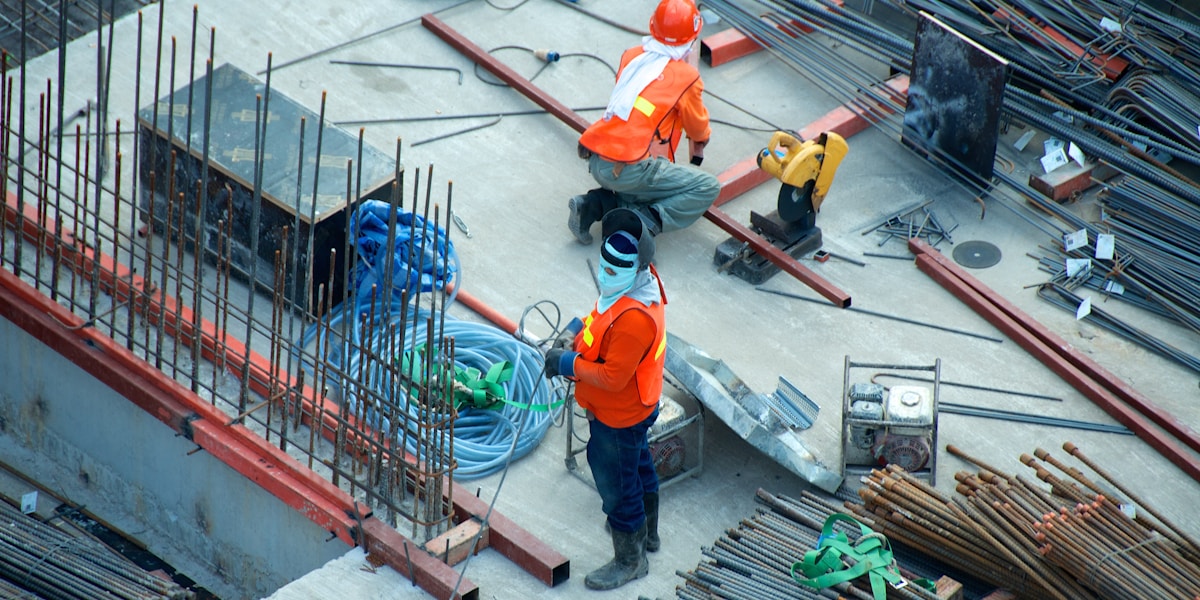
The financial structure is equally distinctive. In the United States, data center investment is overwhelmingly private. In China, the state is a direct participant: provincial governments provide land at subsidized rates, state banks offer below-market loans, and the national government mandates technology substitution. The result is a buildout that can proceed at a pace impossible in a purely market-driven system — for better or worse.
The Ghost City Problem
Not everyone is convinced the buildout will pay off. China has a well-documented history of infrastructure overinvestment — "ghost cities" of empty apartment blocks and underutilized industrial parks that were built on the assumption that demand would eventually materialize. Some analysts see echoes of that pattern in the data center boom.
| Risk Factor | Likelihood | Potential Impact | Mitigation |
|---|---|---|---|
| Chip supply shortfall | High | Facilities underutilized | Domestic chip ramp, flexible rack design |
| Power grid instability | Medium | Downtime, generator costs | On-site renewables, battery backup |
| Demand shortfall | Low-Medium | Stranded assets | AI compute demand growing rapidly |
| Overcapacity in west | Medium | Price war on cloud compute | Geographic distribution, latency pricing |
| Regulatory shift | Low | Mandate changes | Policy continuity across 5-year plans |
| Water scarcity (cooling) | Medium | Operational constraints | Liquid cooling, air-cooled designs |
The concern is not that facilities will sit empty — AI compute demand is growing rapidly, and China's domestic market alone could absorb much of the new capacity. The concern is utilization efficiency. Training runs are bursty and unpredictable. A data center built for peak demand may sit half-empty much of the time, and margins on AI compute are under pressure from falling chip prices, algorithmic efficiency gains, and intense competition among Chinese cloud providers.
There is also the chip timing risk. If domestic production cannot scale to fill the facilities under construction, the centers risk becoming expensive shells. The 80 percent domestic technology mandate helps Huawei and other local suppliers but limits operators' ability to mix and match the best available hardware.
The Global Context
To understand China's buildout, it helps to see it in comparison with what is happening elsewhere. The United States is simultaneously undergoing its own data center boom, driven by the capex commitments of Meta (approximately $72 billion for 2026), Microsoft, Google, and Amazon. But the American approach is fundamentally different — private companies building on private land with private capital, subject to local zoning battles, power interconnection queues, and community opposition.
| Factor | China | United States |
|---|---|---|
| Primary driver | State industrial policy | Private tech capex |
| Total 5-year investment | ~$560 billion (state + private) | ~$400+ billion (private only) |
| Land acquisition | Government-coordinated | Market purchase, zoning battles |
| Power procurement | State-negotiated PPAs | Open market, interconnection queues |
| Chip sourcing | 80% domestic mandate | Global (NVIDIA dominant) |
| Construction timeline | 12–18 months (typical) | 24–48 months (typical) |
| Community opposition | Minimal | Significant (NIMBY, environmental) |
| Grid interconnection | 2–4 years (west) | 3–5 years (major markets) |
China's advantage is speed and coordination. When the central government decides Ulanqab becomes a computing hub, land is allocated, permits issued, and grid connections built — often within months. The disadvantage is efficiency: without market signals, overbuilding risk is real.
The American advantage is market discipline and access to the best chips. The disadvantage is speed: NIMBY opposition, environmental reviews, and power interconnection delays stretch projects across years. As explored in our coverage of the DeepSeek federal ban and the open-source backlash, US policy tools are often blunter than China's coordinated approach.
Conclusion
Back in Ulanqab, the cranes are still moving. The city that was once known for potatoes and lamb is becoming something new: a node in the invisible machinery that powers the world's most demanding computational workloads. Whether that transformation proves visionary or wasteful will depend on factors no construction schedule can control — the pace of chip domestication, the reliability of the power grid, and the ultimate shape of AI demand.
What is certain is that China's bet is enormous, state-directed, and accelerating. While Washington debates export controls and American tech giants jockey for benchmark supremacy, Beijing is pouring concrete. The AI race may not be won by the smartest model or the most efficient algorithm. It may be won by whoever pours the most concrete, connects the most power, and keeps the machines running longest.
The algorithmic frontier shifts weekly. The concrete frontier shifts once — and then it is set for a generation. China is betting that this generation belongs to compute.
Social Media Reactions
Hacker News — *@grid_skeptic*
"90 data centers in one city sounds impressive until you ask what's inside them. If they're running Huawei 910Bs at 80% of H100 performance, you need 25% more chips to match the same compute. The concrete is the easy part. The silicon is the bottleneck."
>
*(226 points, 89 comments)*
Reddit r/MachineLearning — *u/throwaway_gpu*
"The PUE mandates are actually more significant than people realize. 1.25 is aggressive — most US data centers are still running at 1.4+. If China can maintain that standard at scale, the operational cost advantage compounds significantly over a 10-year facility lifetime. The real question is whether they're actually hitting those numbers or just reporting them."
Zhihu (知乎) — *@云计算从业者*
乌兰察布的数据中心建设速度确实惊人,但芯片供应是个大问题。很多机房建好了,里面跑的还是H20,性能受限。不过华为昇腾的产能确实在爬坡,910C如果能量产,情况会好很多。另外电价优势是真实的,比北京便宜40%以上。
>
*(Translation: The data center construction speed in Ulanqab is indeed astonishing, but chip supply is a major problem. Many server rooms are built but running H20s with limited performance. However, Huawei Ascend production capacity is indeed ramping up — if the 910C can reach mass production, the situation will improve significantly. Also, the electricity price advantage is real, more than 40% cheaper than Beijing.)*
Weibo (微博) — *@科技观察君*
5600亿美元建数据中心,这是什么概念?相当于每个中国人出400美元。但问题是,这些算力最后谁会用到?普通老百姓能感受到AI带来的便利吗?还是说最后都变成了大公司的算力储备?
>
*(Translation: $560 billion to build data centers — what does that even mean? It's equivalent to every Chinese person contributing $400. But the question is, who will actually use this compute? Will ordinary people feel the benefits of AI? Or will it all just become compute reserves for big companies?)*
X (Twitter) — *@infra_analyst_ca*
"Everyone's focused on chip export controls but the under-discussed constraint is grid interconnection. China has 2-4 year queues in the west, the US has 3-5 year queues everywhere. The country that solves power delivery first wins the infrastructure race, regardless of who has better chips."
Hacker News — *@pragmatic_dev*
"I work in cloud infrastructure. The 'ghost city' concern is overblown for data centers specifically — unlike apartment buildings, they can be repurposed. A training cluster can become an inference farm. An inference farm can become a rendering farm. The concrete is fungible in a way that residential real estate isn't. The real risk is power contracts, not vacancy."
*Data sources: CNN (October 13, 2026), Bloomberg (June 2026), GlobalData Infrastructure Report (January 2026), Uptime Institute Annual Survey (2024), company disclosures. Investment figures are estimates based on publicly reported commitments and may not reflect actual spending.*
Editor at AI in China. Tracking Chinese AI companies, funding rounds, and the technologies reshaping global tech. More about me.