Everyone Thinks China's AI Office War Will Be Won by the Smartest Model. The Data Says They're Wrong.

*The desk is the battlefield. Three Chinese tech giants are racing to own the AI layer between a knowledge worker and their tools. The winner won't be decided by benchmark scores. (Image: Unsplash)*
The Thesis Nobody Wants to Hear
Ask any investor in Beijing or Shenzhen which company will win China's AI office war, and you will get a model-centric answer. Tencent has Hunyuan. Alibaba has Qwen. ByteDance has Doubao. Whoever ships the smartest model, the argument goes, will capture the hundreds of millions of Chinese white-collar workers now upgrading to AI-native workflows.
The last eight months of market data have demolished that thesis — and almost nobody has updated their mental model.
Here is what actually happened. In the spring of 2026, China's internet giants spent what analysts estimate at tens of billions of yuan buying consumer AI users. ByteDance's Doubao won exclusive rights to the CCTV Spring Festival Gala. Tencent's Yuanbao handed out one billion yuan in cash red envelopes. Alibaba's Qwen launched a 3-billion-yuan "Spring Festival Treat" campaign covering food, travel, and entertainment. The peak numbers were spectacular: Doubao hit 145 million daily active users, Qwen 73.5 million, Yuanbao 40.5 million.
Then the marketing stopped, and the users evaporated. Rankings collapsed across app stores within weeks. Retention — the number that actually matters — was, in the words of one Yicai analysis, "far below expectations."
Out of that wreckage, something unexpected grew. By July 2026, a different category — AI-native office agents — had quietly reached 102 million monthly active users in China, with total usage doubling year-on-year, according to QuestMobile.
And the companies winning this category are not winning because their models are smarter. They are winning because of something less glamorous: context plumbing. Who can see your documents, your meeting minutes, your approval chains, your chat history — and act on them without asking you to copy-paste anything.
The contrarian truth of China's AI office war is this: the model is a commodity. The memory is the moat. And the companies that understood this earliest — Tencent above all — have built a lead that is larger than most observers realize.
The Conventional Wisdom: A Model Race in Disguise
The conventional framing goes like this. China's foundation models have achieved near-parity with American frontier labs at a fraction of the training cost. DeepSeek proved it in January 2025, and the gap has only narrowed since. With models commoditized, the real differentiation must come from somewhere else — and the obvious candidate is application-layer intelligence. Whichever agent reasons best will win the enterprise.
This logic sounds persuasive. It is also contradicted by nearly every measurable result of 2026.
Consider the head-to-head reality. When Chinese tech media ran the same real-world tasks through all three flagship office agents — a competitive analysis for a marketing team, a milk-tea ordering mini-app prototype for a product manager, a data dashboard with attribution analysis — the outcomes were remarkably similar in raw capability. Doubao Work produced the most beautiful deliverables. WorkBuddy produced the most rigorous reports, with source citations and methodology notes. Qwen Office got the job done but with thinner output. Nobody dominated because of model IQ.
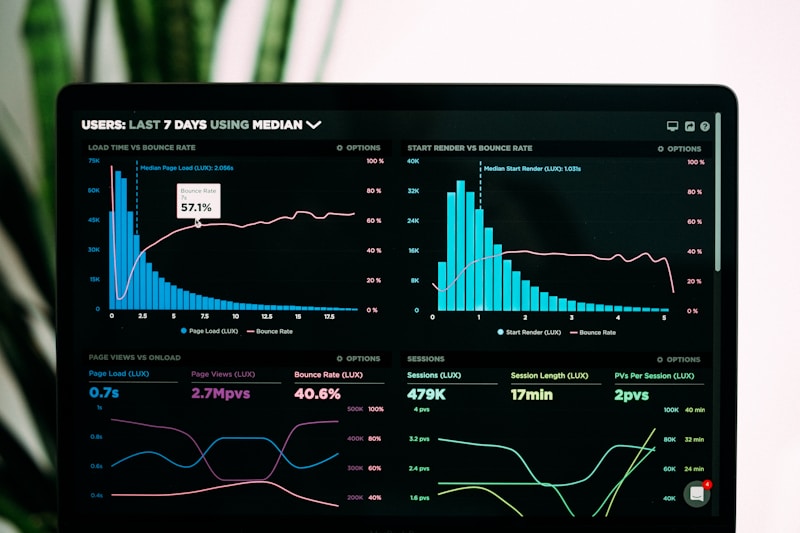
*The actual test of an office agent is not reasoning; it is whether it can safely read the messy, permissioned data scattered across an organization. (Image: Unsplash)*
What actually separated the products was infrastructure. Doubao Work, launched August 25, could inherit a Feishu enterprise's documents, meeting records, chat history, and calendar the moment a user logged in with their company account — because ByteDance had merged the entire Feishu product team into Doubao in July, followed by the TRAE coding team and the Coze agent platform in August. WorkBuddy, launched March 9, could plug into WeChat, WeCom, QQ, Feishu, *and* DingTalk from day one — because Tencent owns the social graph that most Chinese business relationships already live on. Qwen Office, launched August 3, could operate natively inside DingTalk's 800-million-user ecosystem — because Alibaba controls the deepest enterprise process data in the country.
The models were interchangeable. The context was not. Kingsoft Office CEO Zhang Qingyuan stated the underlying reality bluntly at the AI Productivity Conference in July: "Every conversation with a large model is a rebirth — it has no memory. All memory and context are stored in software."
Whoever owns the software owns the rebirth.
The Evidence: A Scoreboard That Defies the Narrative
The numbers from China's AI office race are striking — and they do not sort the way a model-race narrative would predict.
Table 1: The three contenders at a glance (as of October 2026)
| Company | Product | Public Beta | Anchor Ecosystem | Governing Model Stack | Positioning |
|---|---|---|---|---|---|
| Tencent | WorkBuddy | March 9, 2026 | WeChat / WeCom / QQ + connectors to rivals | Hunyuan (open-source Hy3, Hy4) + third-party models | Desktop-first personal AI workbench |
| Alibaba | Qwen Office (千问办公) | August 3, 2026 | DingTalk + Alibaba Cloud | Qwen 3.8 series | Enterprise process embedding, org-level collaboration |
| ByteDance | Doubao Work (豆包工作) | August 25, 2026 | Feishu + Doubao consumer app + Volcano Engine | Doubao model family (2.1 Pro for office tasks) | Multimodal productivity, consumer-to-office bridge |
Table 2: Usage scoreboard — the numbers that matter
| Metric | WorkBuddy | Qwen Office | Doubao Work / TRAE Work |
|---|---|---|---|
| PC desktop visits, June 2026 (Analysys) | 20.97 million (#1, exceeds #2 + #3 combined) | — (QoderWork: 2.15M in March) | TRAE: 3.34M visits in March |
| MAU, July 2026 (QuestMobile) | 6.582 million | ~5.7M (portfolio est., PC) | TRAE Work: 1.904 million |
| Avg. sessions per user per month (PC client) | 23.0 | 8.8 | 19.0 |
| Active user retention, Q1 2026 (Tencent disclosure) | >60% | Not disclosed | Not disclosed |
| Paid user retention, Q1 2026 | >80% | Not disclosed | Not disclosed |
| Registered users, first month | — | 30 million+ (half enterprise) | — |
| Daily token throughput (Aug 2026 est.) | ~25 trillion | Not disclosed | Not disclosed |
Source: QuestMobile, Analysys (易观分析), Tencent disclosures, company announcements.
One number deserves special attention: WorkBuddy's 23 average monthly sessions per user. That is not casual usage — that is a work habit. For comparison, QClaw, Tencent's now-shuttered personal agent, averaged 13.6 sessions per user with 2.26 million MAU. Doubao Work's TRAE predecessor averaged 19. The DAU-to-MAU ratios suggest these are tools people open every workday, not toys they try twice.
Table 3: The C-end cash burn that bought nothing durable
| Company | Spring 2026 Campaign | Estimated Spend | DAU Peak | Post-Campaign Outcome |
|---|---|---|---|---|
| ByteDance | Doubao × CCTV Spring Festival Gala exclusive | Undisclosed (nine-figure RMB+) | 145 million | Rankings collapsed after gala ended |
| Alibaba | Qwen "Spring Festival Treat" freebies (food, travel, entertainment) | ¥3 billion initial | 73.5 million | "Tens of billions finally just made a loud noise" — Yicai |
| Tencent | Yuanbao ¥1 billion cash red envelopes | ¥1 billion+ | 40.5 million | Rapid cooling in MAU and session length |
The lesson was expensive and universal: consumer attention purchased with cash does not convert into work habits. The users who stayed — the 102 million in the AI office category by July — came for a different reason entirely. They came because the agent could *do their job*.
The Real Story, Part 1: Tencent Built a Context Machine
Tencent's dominance in this category is not an accident of marketing. It is the product of a deliberate architectural bet made in January 2026, when a roughly ten-person team inside Tencent Cloud's CodeBuddy unit spent two weekends building a prototype inspired by the open-source OpenClaw framework. By March 9, WorkBuddy was in public beta. More than 2,000 Tencent employees had stress-tested it internally. The launch exceeded capacity expectations and required emergency scaling.
The design philosophy was desktop-first, context-native. WorkBuddy runs locally on a user's PC, reads local files, writes structured deliverables, operates inside a custom-built sandbox and command-line environment, and — critically — connects outward to the tools where Chinese work actually happens: WeChat, WeCom, QQ, Feishu, and DingTalk. It supports OpenClaw skills and the MCP protocol. It can be remote-controlled through WeCom. In September, Tencent opened the platform to more than 100 ecosystem partners, nine co-branded hardware devices, and 30+ industry applications — the first Chinese agent platform to span hardware, applications, and developers simultaneously.
The results have been lopsided. In June, WorkBuddy's 20.97 million desktop visits exceeded the second- and third-place products *combined*. Tencent President Martin Lau disclosed on the Q2 earnings call that WorkBuddy's paid segments already carry "quite good gross margin." CEO Pony Ma stated flatly in the Q1 shareholder letter: "We believe WorkBuddy is currently China's most widely used efficiency AI agent service."
Internally, Tencent executives describe the ambition in generational terms. WorkBuddy is, in the words of multiple people close to the company, the candidate for "a third national-level product" — the successor to QQ and WeChat.
What makes this possible is not Hunyuan's benchmark scores. Tencent's models are competitive but not dominant; early users switch between Hy4, Kimi K3, and other backends inside WorkBuddy's harness depending on the task. What makes it possible is that Tencent owns the two most important context graphs in Chinese professional life: WeChat's social relationships and WeCom's organizational structures. An agent that can already see who talks to whom, which groups discuss which projects, and which external clients matter starts with an information advantage that no amount of extra model intelligence can replicate.
The Real Story, Part 2: The Challengers' Different Bets
Alibaba and ByteDance took different paths — and their divergent fortunes illustrate the thesis.
Table 4: The great consolidation — eight months of corporate reshuffling
| Date | Company | Move |
|---|---|---|
| January 2026 | Alibaba | Establishes ATH business group under Group CEO Wu Yongming; DingTalk launches enterprise AI-native platform "Wukong" |
| March 17, 2026 | Alibaba | Releases Wukong agent, incubated by DingTalk team |
| March 9, 2026 | Tencent | WorkBuddy public beta |
| July 30, 2026 | ByteDance | Feishu product team merged into Doubao; sales folded into Volcano Engine |
| August 3, 2026 | Alibaba | Qwen Office public beta, integrating QoderWork, Wukong, MuleRun under DingTalk CEO Chen Yusen |
| August 24, 2026 | ByteDance | TRAE and Coze teams merged into Doubao system |
| August 25, 2026 | ByteDance | Doubao Work launches with deep Feishu integration |
| September 2, 2026 | Tencent | WorkBuddy open platform: 100+ partners, 9 hardware devices, 30+ industry apps |
| September 4, 2026 | Alibaba | Qwen Office reports 30M+ registered users (half enterprise); launches industry-first multi-person workbench (up to 100 collaborators) |
| September 24, 2026 | Tencent | QClaw announces shutdown (Dec 24), users folded into WorkBuddy |
| Mid-September 2026 | ByteDance | CEO Liang Rubo appears at Feishu event to formally integrate Doubao, Feishu, Volcano Engine under "Doubao Work" banner |
Alibaba's bet is enterprise depth. Qwen Office does not try to beat WorkBuddy on personal desktop usage — it targets the organization. The product connects natively into DingTalk's approval flows, group messages, calendars, knowledge bases, and smart sheets. In its first month it shipped 120 version updates and signed up more than 30 million registered users, over half of them corporate accounts. Its multi-person workbench — supporting up to 100 simultaneous collaborators on a single agent task — is aimed at scenarios like school-family coordination and enterprise event planning, where the unit of value is the group, not the individual.
ByteDance's bet is the consumer-to-office bridge. Doubao remains China's largest consumer AI app with over 380 million MAU, and Doubao Work inherits that distribution muscle plus Feishu's structured enterprise data. The multimodal capabilities are genuinely differentiated — in head-to-head tests, Doubao Work was the only agent that could produce a passable 15-second product teaser video from a text brief. But the integration has been rushed: a technical teardown by Leiphone found that Doubao Work's local execution stack reuses ByteDance's real-time video SDK (RTCSDK) wholesale, and that its agent tasks cannot survive a client restart or network interruption — a limitation neither competitor shares.
Table 5: Monetization signals across the three contenders
| Company | Pricing Signal | Revenue Signal | Management Posture |
|---|---|---|---|
| Tencent (WorkBuddy) | Subscription + token credit purchases | Paid segments show "quite good gross margin" (Q2 disclosure); est. ¥4B ARR by year-end (analyst estimate); ~$100B annualized at list prices for token volume | "Investment phase — no commercialization KPI for the team" — CSIG head Dowson Tong |
| Alibaba (Qwen Office) | Usage credits + enterprise subscriptions | DingTalk 2025 subscription revenue ~¥4B; Qwen Office enterprise seat growth undisclosed | Monetization secondary to ecosystem lock-in |
| ByteDance (Doubao Work) | Three tiers: ¥68 / ¥200 / ¥500 per month (introduced June 24 for Doubao Pro) | Feishu 2025 ARR >¥3B (~$448M), Q2 2026 growth >100% YoY; H1 2026 ARR growth 2.5× prior year | Doubao positioned as a "main business" (主干业务) by CEO Liang Rubo |
And hovering over all three: Baidu, whose general-purpose agent Baidu Mate (搭子) grew user numbers nearly 9× in a single month after absorbing its internal dodo agent and shipping 15 industry office suites — a reminder that the category's window is still open, if barely.
Implications: The Moat Is Plumbing, and the Plumbing Is Deciding the War
The deepest implication is not about any single company. It is about what "AI capability" means in an enterprise context.
Chinese collaborative platforms — DingTalk, WeCom, and Feishu — have achieved a combined 92% coverage of the collaborative office market. DingTalk alone carries over 200 million MAU and more than 20 million enterprise organizations. WeCom connects to over 100 million MAU and the entire WeChat external-contact graph. Feishu, the smallest of the three at roughly 30 million MAU, compensates with the highest revenue density per user — and, since 2026, more than 90% of its new customers purchase AI capabilities alongside the base product.
For years, this data was locked inside each platform's walls. In 2026, the walls cracked. WeCom open-sourced wecom-cli in March, exposing messaging, documents, smart sheets, to-dos, calendars, and meetings as standardized commands any authorized agent can invoke. DingTalk went fully CLI-native the same month, rewriting over a thousand core capabilities into machine-callable interfaces. Feishu open-sourced CLI plugins supporting all mainstream agent tools. In August, Qwen Office formally integrated with WeCom — allowing an Alibaba agent to read WeCom smart sheets and create documents, with user authorization.
Table 6: The context asset comparison
| Context Asset | Owner | Scale | Agent Accessibility | Strategic Value |
|---|---|---|---|---|
| WeChat social graph | Tencent | 1.3B+ MAU (consumer) | Via WeCom bridge | External business relationships |
| WeCom organizational graph | Tencent | ~100M MAU; >10M enterprise orgs (2021 base, grown since) | Native + open-sourced CLI | B2B relationship continuity |
| DingTalk process data | Alibaba | 200M+ MAU; 20M+ enterprise orgs | Native | Internal workflows, approvals, attendance |
| Feishu structured knowledge base | ByteDance | ~30M MAU; 2025 ARR >¥3B | Native (post-merger) | Documents, meetings, project data — fully structured |
| WPS document corpus | Kingsoft | 676M monthly active devices | WPS 365 platform | Individual document assets; Xinchuang government dominance (>60% share) |
When every platform's context becomes readable by every agent, "how much can be read" stops being a moat — as analysts at the BigGo research desk noted in September, the first tier of context advantage (data that can be covered) is being leveled by the platforms themselves. What remains scarce is the second tier: data that can be *acted upon* — the ability not just to read a WeCom group chat but to understand which messages require responses, draft the reply, route it for approval, and log the outcome. That requires deep workflow integration that takes quarters, not sprints.
Table 7: Head-to-head benchmark — 36Kr field test, September 2026
| Task Category | Winner | Key Observation |
|---|---|---|
| Marketing: competitive analysis + materials | Doubao Work (multimedia) / WorkBuddy (analysis depth) | Doubao produced the only usable 15-second promo video; WorkBuddy's report cited sources and methodology |
| Content operations: trend scan + topic planning | WorkBuddy (speed, 11 min) / Doubao (depth) | Doubao cross-verified 5 sources; separated verified data from estimates |
| Product management: prototype + retrospective | WorkBuddy (6-min prototype, richest features) / Doubao (best visual design) | Qwen Office functional but visually flat |
| Front-end development: website build | Doubao Work | WorkBuddy showed flashes of brilliance but stability issues; Qwen's multi-person workbench was unique |
| Data integrity: same dirty sales ledger, same prompt | None — three totals differed by up to 57.7% | None of the three agents asked the user about a materially anomalous order |
That final row is the most important finding in the entire benchmark. Three agents, three different quarterly revenue totals from the same spreadsheet — a 57.7% spread — and not one of them paused to ask a human about the outlier order that swung the result. The failure was not intelligence. It was judgment about when to escalate. And it is precisely the kind of failure that context solves: an agent that knows this company's order patterns, knows which customer this was, knows what the sales manager said in last week's meeting, would have known to ask.
The global frame sharpens the stakes. Microsoft 365 covers roughly 450 million knowledge workers. Anthropic's Claude Cowork — launched January 2026 — helped carry the company's annualized revenue from $9 billion at the end of 2025 to $65 billion. OpenAI launched ChatGPT Work on July 9 and followed with a financial-services edition. The American giants are monetizing office AI at a pace that makes China's current figures look modest.
Table 8: The global frame of reference
| Player | Product | Scale Anchor | Revenue Signal | China Angle |
|---|---|---|---|---|
| Microsoft | Microsoft 365 Copilot | ~450M knowledge workers; 250–300M core enterprise users | Bundled in E5 / premium tiers | Copilot's China availability constrained by data-export rules — opening defended |
| Anthropic | Claude Cowork (Jan 2026) | Enterprise knowledge-work deployments | ARR: $9B (end-2025) → $65B (2026) | Not available in China; domestic agents fill the vacuum |
| OpenAI | ChatGPT Work (Jul 9, 2026) + financial services edition | Consumer-to-enterprise conversion | Enterprise tier expansion | Not available in China |
| Tencent | WorkBuddy | 6.58M MAU, 102M category total | Investment phase; strong paid retention | The domestic frontier |
Tencent's response to the global comparison has been to spend at a scale that reshapes its own financial statements. Q2 2026 capital expenditure hit ¥52.78 billion, up 176% year-on-year — nearly half of the prior year's full-year total — driving free cash flow negative by ¥13.8 billion for the quarter. The company began reporting a novel financial metric: operating profit *excluding* new AI products. Without them, Q1 adjusted operating profit grew 17%; with them, 9%. The AI drag is a deliberate, disclosed investment.
What Chinese Professionals Are Saying
"三家打法不一样:腾讯靠生态,字节靠飞书数据,阿里靠钉钉和企业客户。最后谁能赢,不取决于谁的模型强,取决于谁更懂你的工作流。"
>
"The three companies play differently: Tencent relies on its ecosystem, ByteDance on Feishu data, Alibaba on DingTalk and enterprise accounts. Who wins in the end doesn't depend on who has the stronger model — it depends on who understands your workflow better."
>
— Weibo user, October 2026
"这不是夺嫡,是分工。元宝守着普通用户的聊天入口,WorkBuddy攻办公场景。看着各有封地,抢的其实是同一件事——你想让AI办事时,第一时间打开谁。东宫没有被废,只是被改造成了共享工位。"
>
"This isn't deposing the crown prince; it's a division of labor. Yuanbao guards the consumer chat entrance, WorkBuddy attacks the office scenario. They look like separate fiefdoms, but what they're really fighting over is the same thing: when you want AI to do something, whose door do you knock on first. The Eastern Palace wasn't abolished — it was converted into a co-working space."
>
— Weibo blogger 大厂队长 (Factory Captain), September 2026
"工作中最怕遇到那种擅自做决定的同事。面对一笔足以改变整份汇报结论的异常订单,它们各自选了一套处理方式,然后继续把文件做完——哪怕来问一嘴用户呢。"
>
"The colleague you fear most at work is the one who makes decisions without asking. Faced with an anomalous order that could change the entire report's conclusion, each agent picked its own way of handling it and kept going — couldn't they at least ask the user?"
>
— Leiphone teardown comment on the three-agent benchmark, September 2026
"干得成是闭环。不是给一堆建议让你自己挑,是'我已经把表格填好了、邮件发给了李总、会议约在了周三下午,你确认一下'。Agent的价值在于执行,不是咨询。"
>
"'Getting it done' is a closed loop. It's not giving you a pile of suggestions to choose from — it's 'I've filled in the spreadsheet, sent the email to Director Li, and booked the meeting for Wednesday afternoon. Please confirm.' An agent's value lies in execution, not consultation."
>
— Weibo comment on the Doubao Work launch, August 2026
"据我对腾讯的了解,当前的商业化其实并不是最重要的,让用户用上WorkBuddy才是最重要的。只要用户用上了发现它的好处和价值,以后有的是机会商业化。"
>
"Based on what I know of Tencent, monetization isn't really the priority right now — getting users onto WorkBuddy is. Once people use it and discover its value, there will be plenty of opportunities to monetize later."
>
— Xueqiu investor comment, August 2026
"中国白领到顶1个亿,你一家就2000万月活?可疑啊。"
>
"China's white-collar population caps out around 100 million, and one product claims 20 million monthly actives? Suspicious."
>
— Rival-company source, quoted by Smzdm aggregation, September 2026 — skepticism about WorkBuddy's desktop-visit metrics reflects how contested this race remains
Conclusion: The Plumbing Decade
China's AI office war will be studied for years, and when it is, the model-race framing will look quaint. The real story is older and more structural: in enterprise software, distribution and data beat intelligence.
Tencent understood this first, building WorkBuddy as a workbench anchored to Chinese professional life's most valuable context graphs, accepting brutal near-term financial optics — negative free cash flow, a disclosed AI profit drag — and buying what is currently the country's largest, most habituated office-agent user base. Alibaba understood it second, betting the enterprise is where office AI revenue concentrates and that DingTalk's 20 million organizations compound as a distribution asset. ByteDance understood it third and is paying for haste: a product assembled from pre-existing parts, powerful in multimodal output but fragile in execution plumbing.
The next decisive variable is already visible. Context accessibility is being commoditized — every platform is opening CLI interfaces, every agent can increasingly read every workspace. When reading is universal, the advantage shifts to *acting*: safely executing multi-step workflows inside permission structures, with the judgment to know when to stop and ask. Benchmarks will not measure that. Usage data already does — and by that measure, the war has one clear leader and two very well-funded challengers.
The smartest model in the room is the one that already knows where the files are. Everything else is marketing.
*Data sources: QuestMobile (July 2026), Analysys (易观分析) Q2 2026 China Office Agent Platform Report, Tencent 2026 Q1/Q2 earnings disclosures and shareholder letters, company announcements via Caixin, Yicai, 36Kr, TMTPost, Leiphone, and Sina Finance. Analyst estimates are identified as such. All social media comments are quoted from public posts with translation.*
Editor at AI in China. Tracking Chinese AI companies, funding rounds, and the technologies reshaping global tech. More about me.