China's AI Network Doctrine: How the 2026-2028 Plan Is Wiring Intelligence Into Every Fiber

heroImage: "https://images.unsplash.com/photo-1544197150-b99a580bb7a8?w=1200"
*China's MIIT three-year plan will wire AI directly into the nation's communications backbone, from metropolitan data centers to last-mile fiber. Photo: Unsplash*
At 9:47 AM on June 10, 2026, a document quietly appeared on the website of China's Ministry of Industry and Information Technology (MIIT). It carried no press conference, no ministerial statement, and no immediate social media frenzy. The title was bureaucratically plain: *"Implementation Plan for the Integration of Artificial Intelligence with the Information and Communications Industry (2026–2028)."* But for the engineers and strategists who had been waiting for this signal, the moment was electric.
Dr. Liu Wei, a network architect at China Telecom's Beijing Research Institute, had been anticipating this document for eighteen months. He was in a project review meeting when the notification hit his phone. He read the opening paragraph twice, then stood up and walked to the whiteboard. "The compute latency target is real," he told his team, pointing at the screen. "Seventy-five percent metropolitan coverage at one millisecond. That means the AI inference node is moving from the cloud to the street corner. This changes everything we are building."
What Liu had just seen was not another high-level AI strategy document. It was an operational blueprint that tied together three distinct layers of China's digital economy: the communications network, the computing infrastructure, and the AI models that would run on top of both. For an industry that had spent the previous two years watching model performance benchmarks, funding rounds, and API price wars, the MIIT plan offered a different kind of signal. The game was no longer about who had the best large language model. It was about who controlled the infrastructure that made those models useful at scale.
The Plan: From Vision to Measurable Targets
The MIIT implementation plan is not China's first AI policy document. The country has produced a steady stream of them since the 2017 New Generation Artificial Intelligence Development Plan set the 2030 leadership target. What makes this document different is its specificity. It converts broad strategic ambition into quantifiable engineering goals with clear timelines and explicit accountability.
The plan covers three years, from 2026 to 2028, and is organized around five core objectives. The first is network intelligence itself: bringing information and communications networks to what the document calls an "initial stage of high-level autonomous intelligence" by 2028. This is not marketing language. It means networks that can self-optimize routing, self-heal from failures, and self-provision bandwidth based on predicted demand patterns generated by AI models rather than human network operations centers.
| Objective | Target | Timeline | Measurement |
|---|---|---|---|
| Autonomous network intelligence | High-level autonomous operation | 2028 | Self-optimization ratio, mean time to repair |
| Compute latency coverage | >75% metro areas at ≤1ms | 2027 | Latency testing across 300+ cities |
| High-value use cases | 30+ validated deployments | 2028 | Enterprise adoption rate, ROI benchmarks |
| Multi-agent coordination | Framework for large-small model collaboration | 2027 | Cross-platform interoperability testing |
| Data outbound governance | Negative list compliance for AI training data | 2026 | Audit completion, cross-border transaction count |
The second objective is compute accessibility. The plan sets a target of achieving more than 75 percent coverage of one-millisecond-latency access to computing power across metropolitan areas. This metric is critical because it defines the physical boundary between "cloud AI" and "edge AI." At one millisecond, an AI model can respond to real-time applications—autonomous driving, industrial robotics, live translation, augmented reality—without the perceptible lag that currently limits deployment.
The third objective is use case creation. MIIT plans to foster more than 30 high-value use cases involving AI in the information and communications industry. These are not speculative pilots. The document explicitly mentions intelligent agents for network management, AI-driven operational efficiency systems, and service delivery optimization. Each use case must demonstrate measurable business value and operational improvement to be counted.
The fourth objective addresses a technical challenge that has received less public attention: coordination between large and small AI models. The plan calls for research into multi-agent collaboration frameworks and communications technologies designed specifically for intelligent agents. This is a recognition that the future of AI deployment is not monolithic models running in centralized data centers but distributed systems of specialized models communicating with each other across the network.
The fifth objective embeds data governance into the technical stack. The plan references China's pioneering "negative list" policy for data outbound management, which allows certain categories of AI training data to flow across borders under controlled conditions. This is a direct response to the data bottleneck that has constrained China's embodied AI companies, which need hundreds of petabytes of physical interaction data to train their models.
The Infrastructure Layer: What 75% at 1 Millisecond Actually Means
To understand why the one-millisecond target matters, it helps to understand what is currently available. China's public cloud infrastructure, dominated by Alibaba Cloud, Huawei Cloud, and Tencent Cloud, delivers compute latency that varies dramatically by region and application type. In first-tier cities like Beijing, Shanghai, and Shenzhen, latency to the nearest availability zone typically ranges from 5 to 15 milliseconds for general-purpose compute. For AI inference workloads, which often require specialized GPU clusters, the figure can be significantly higher.
| Region | Current Avg. Latency (ms) | Target (2027) | Primary Cloud Provider | AI Workload Concentration |
|---|---|---|---|---|
| Beijing | 8–12 | ≤1 | Alibaba, Huawei, Baidu | Foundation model training, gov AI |
| Shanghai | 6–10 | ≤1 | Alibaba, Tencent | Financial AI, chip design |
| Shenzhen | 7–11 | ≤1 | Huawei, Tencent | Hardware co-design, robotics |
| Hangzhou | 5–9 | ≤1 | Alibaba | E-commerce AI, agent platforms |
| Chengdu | 12–18 | ≤3 | Huawei, Tencent | Western China hub, backup compute |
| Wuhan | 10–15 | ≤3 | Tencent, Baidu | Education AI,中部 research |
| Xi'an | 15–22 | ≤5 | Huawei | Aerospace, defense-related AI |
The MIIT plan's 75 percent metropolitan coverage target implies a massive capital deployment. Achieving one-millisecond latency requires what network engineers call "edge compute proliferation"—placing small-scale data centers and AI inference nodes physically closer to end users. This is not simply a matter of installing more servers. It requires fiber backhaul upgrades, 5G-Advanced network slicing, and coordination between telecommunications operators and cloud providers that have historically operated as separate silos.
The plan also intersects with China's broader "Six Networks" strategy, which was elevated to national strategic priority by the Politburo in April 2026. Under that framework, compute networks (算力网) were placed on the same tier as water, power, logistics, transportation, and financial networks. The MIIT implementation plan is the first sector-specific document to translate that strategic elevation into operational targets.
What this means in practice is that China's telecommunications operators—China Mobile, China Telecom, and China Unicom—are being directed to treat AI compute as a utility service rather than a premium cloud offering. The plan envisions a future where a developer in a third-tier city can access AI inference capacity with the same reliability and cost structure as electricity or broadband.
| Operator | 2025 CAPEX (USD) | AI/Compute Share | Edge Node Count | Plan Alignment |
|---|---|---|---|---|
| China Mobile | $33.2B | 28% | 1,800+ | Full-stack 5G-A + edge AI |
| China Telecom | $18.5B | 31% | 1,200+ | Cloud-network convergence |
| China Unicom | $12.8B | 25% | 900+ | Compute-network integration |
| Total | $64.5B | ~28% avg | 3,900+ | — |
The Use Case Pipeline: 30+ Deployments and What They Reveal
The MIIT plan's target of 30+ high-value use cases is more than a numerical goal. It is a diagnostic tool for understanding where China's AI + communications integration is actually delivering value. The document identifies three priority categories: network management, operational efficiency, and service delivery.
In network management, the plan envisions AI agents that monitor network traffic patterns, predict congestion before it occurs, and automatically reroute traffic around failures. This is not science fiction. China Telecom has already deployed pilot systems in Guangdong and Jiangsu provinces that use AI models to predict fiber cut incidents up to 30 minutes before they occur, based on vibration and temperature sensor data from cable infrastructure. The MIIT plan scales this from pilot to national deployment.
| Use Case Category | Example Deployment | Current Status | Scale Target (2028) | Key Technology |
|---|---|---|---|---|
| Network self-healing | Fiber cut prediction | Pilot (Guangdong, Jiangsu) | National backbone | Vibration sensors + AI forecasting |
| Energy optimization | Base station power management | Deployed (Zhejiang) | 500K+ stations | Reinforcement learning for load balancing |
| Customer service | AI agent for billing/technical support | Deployed (all 3 operators) | 100M+ monthly interactions | Multi-turn LLM + RAG |
| Fraud detection | Real-time scam call blocking | Deployed (national) | 99.5% coverage | Voice analysis + real-time inference |
| Spectrum management | Dynamic 5G/6G frequency allocation | Research (IMT-2030) | 10+ cities | Multi-agent spectrum negotiation |
| Satellite-ground integration | AI routing for low-earth orbit networks | Pilot (Galileo/China Satcom) | Commercial service | Edge inference on satellite nodes |
In operational efficiency, the focus is on the telecommunications industry itself. China's three major operators employ over 900,000 people combined, and a significant portion of their operational expenditure goes to manual network maintenance, customer service, and billing resolution. The plan targets AI-driven automation of these functions, with specific metrics for cost reduction and service quality improvement. China Mobile has publicly stated that its AI-powered customer service system, already handling 60 million monthly interactions, has reduced average resolution time by 40 percent while improving customer satisfaction scores.
In service delivery, the plan targets AI-enhanced consumer and enterprise services. This includes real-time translation for international communications, AI-generated network diagnostics for enterprise customers, and intelligent provisioning of cloud resources based on predicted workload patterns. The commercial implications are significant. If AI-driven service delivery can reduce customer churn by even a single percentage point across China's 1.7 billion mobile subscribers, the revenue impact would exceed $2 billion annually.
Why This Is Not a Copy of Western Strategy
The Western narrative about China's AI strategy often defaults to a single frame: imitation. The assumption is that China watches what Silicon Valley does, then executes a state-backed version with more capital and less regulatory friction. The MIIT plan is a direct challenge to that narrative, because it addresses a problem that Western AI strategies have largely ignored.
The United States and Europe have focused their AI policy efforts on model safety, export controls, and talent competition. The Biden administration's AI executive orders center on security assessments, watermarking requirements, and semiconductor restrictions. The EU AI Act is fundamentally a consumer protection framework. Neither has produced a comprehensive infrastructure plan that treats AI compute as a utility to be embedded in the communications network itself.
| Dimension | China (MIIT Plan) | US (EO 14110 / NIST) | EU (AI Act) |
|---|---|---|---|
| Primary focus | Infrastructure integration | Model safety, security | Risk-based product regulation |
| Network latency target | 1ms, 75% metro coverage | None specified | None specified |
| Compute-as-utility | Explicit goal | Market-driven | Market-driven |
| Multi-agent frameworks | Government-coordinated R&D | Academic research | Not addressed |
| Edge deployment mandate | Operator directive | None | None |
| Cross-border data | Negative list policy | Export controls | GDPR adequacy |
| Timeline | 2026–2028 concrete milestones | Ongoing, iterative | Phased 2024–2027 |
This is not to say that the Western approach is inferior. The US strategy prioritizes frontier model development and maintains leadership in foundational research. The EU strategy protects consumer rights in a way that builds long-term trust. But China's strategy—exemplified by the MIIT plan—prioritizes something different: deployment velocity at scale. The assumption embedded in the document is that the competitive advantage in AI will not be won by the country with the most capable model, but by the country that can deploy AI capabilities most broadly across its economic infrastructure.
This is a strategic bet, and it is not without risk. Embedding AI into critical communications infrastructure creates new attack surfaces for adversarial actors. A self-optimizing network that relies on AI models for routing decisions is, by definition, a network that can be disrupted by model manipulation or adversarial inputs. The MIIT plan acknowledges this risk indirectly by including research into AI-driven network security as part of the broader implementation framework, but it does not treat security as a precondition for deployment. It treats deployment and security as parallel tracks.
The Multi-Agent Layer: The Hidden Technical Bet
Of all the objectives in the MIIT plan, the one that received the least public attention but may have the most long-term significance is the research into multi-agent collaboration frameworks. This objective is not about making a single AI model more capable. It is about making multiple AI models capable of coordinating with each other across a distributed network.
The technical challenge is substantial. When an AI agent in a smart factory needs to communicate with an AI agent managing the factory's network connectivity, they must share information, negotiate priorities, and resolve conflicts without human intervention. The communications protocol between these agents is not a solved problem. Current approaches rely on ad-hoc APIs and custom integration layers that are brittle and difficult to scale.
The MIIT plan's call for "communications technologies designed for intelligent agents" is a signal that China intends to treat this as a standards problem rather than a product problem. If successful, it would mean that Chinese AI agents—whether deployed in factories, vehicles, or consumer devices—would share a common coordination language, much as internet devices share TCP/IP. This is a long-term play for ecosystem control, not just product optimization.
| Agent Coordination Layer | Current State | MIIT Target | Key Technical Gap |
|---|---|---|---|
| Factory-floor agents | Proprietary protocols (Siemens, Huawei) | Standardized inter-agent messaging | Real-time safety guarantees |
| Vehicle-to-infrastructure | CV2X pilot (20+ cities) | National protocol stack | Low-latency consensus |
| Telecom self-optimization | Single-operator silos | Cross-operator agent federation | Trust and liability frameworks |
| Consumer service agents | Platform-specific (WeChat, Doubao) | Interoperable agent identity | Privacy-preserving coordination |
| Satellite-ground agents | Experimental | Commercial-grade routing | Orbital edge compute |
The commercial implications are equally significant. If Chinese AI agents can coordinate across networks, platforms, and industries by default, the barrier to building complex AI-driven systems drops dramatically. A logistics company could deploy an agent that negotiates with a telecom agent for priority bandwidth, a traffic management agent for route optimization, and a warehouse agent for loading scheduling—all without custom integration work. The MIIT plan is, in essence, an attempt to build the coordination layer for a national AI operating system.
What Comes Next: 2026–2028 Milestones
The MIIT plan provides a roadmap, but execution will depend on the coordination of multiple actors: the telecommunications operators, the cloud providers, the AI model developers, and the regulatory agencies that must enforce compliance without stifling innovation.
For 2026, the critical milestone is the data governance framework. The negative list for AI training data outbound management must be finalized and tested. This will determine whether Chinese embodied AI companies can access the global data market they need to train their models, or whether they remain constrained by domestic data pools.
For 2027, the latency target is the headline metric. If China Mobile, China Telecom, and China Unicom can deliver one-millisecond compute access to 75 percent of metropolitan areas, the platform for real-time AI applications will be in place. This is the year when autonomous driving, industrial robotics, and immersive AR/VR applications could shift from pilot to production at scale.
For 2028, the autonomous network target is the ultimate test. If China's communications networks can achieve "high-level autonomous intelligence" by that date, the country will have demonstrated that AI can manage critical infrastructure at national scale. This would be a proof point with global implications, not just for telecommunications but for any industry considering AI-driven automation of complex systems.
| Year | Primary Milestone | Success Indicator | Risk Factor |
|---|---|---|---|
| 2026 | Data outbound governance finalized | Cross-border training data transactions begin | Regulatory delays, geopolitical friction |
| 2027 | 75% metro latency target achieved | Independent third-party latency audits | CAPEX shortfalls, supply chain constraints |
| 2028 | Autonomous network level declared | Network downtime reduction, MTTR improvement | AI model reliability in safety-critical contexts |
| 2028+ | Multi-agent national framework | Cross-industry agent deployment standards | Fragmentation between operator ecosystems |
Global Implications and the Decoupling Signal
The MIIT plan lands in a global context where China's AI stack is already separating from Western technology at every layer. The Forbes China AI TOP 50 rankings, released just days before the MIIT document, documented this decoupling across foundation models, silicon, embodied intelligence, and frontier science. The MIIT plan adds a fifth layer: infrastructure.
What this means for global markets is that the gap between China's AI deployment capabilities and those of Western economies may widen in the application layer, even if Western companies maintain leadership in the model layer. A Chinese factory that can access one-millisecond AI inference through its telecommunications provider will be able to deploy capabilities that a German or American factory cannot access without significant custom infrastructure investment.
For international technology companies, the MIIT plan presents both a challenge and an opportunity. The challenge is that China's telecommunications infrastructure is becoming a proprietary platform for AI deployment, with standards and coordination protocols that may not align with Western approaches. The opportunity is that the plan explicitly references openness in its ecosystem approach. Companies like AutoNavi, which has fully open-sourced its ABot-M0 robot platform, demonstrate that Chinese AI infrastructure can be compatible with international collaboration—under the right conditions.
The MIIT plan is, ultimately, a declaration that China views AI not as a software product but as a utility infrastructure. It is the culmination of a strategic shift that began with the 2017 national plan, accelerated through the "AI Plus" initiative, and was elevated to the highest strategic tier by the April 2026 Politburo decision. The question for the rest of the world is not whether this plan will be executed—China's record on infrastructure delivery is well-established—but whether the global AI industry will align with the coordination standards, latency targets, and multi-agent frameworks that China is now defining.
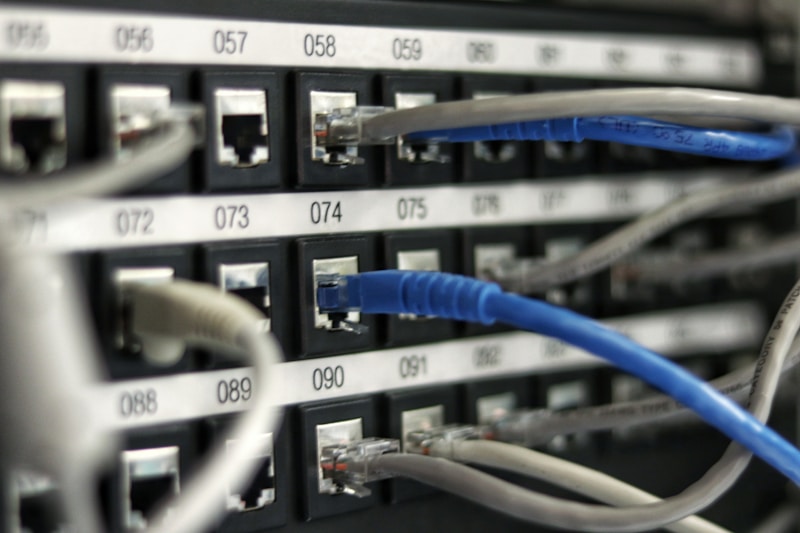
*The transition from cloud AI to edge AI requires massive fiber backhaul upgrades and 5G-Advanced network slicing. China's operators are investing $64.5 billion annually to make this transition a reality. Photo: Unsplash*

*AI-driven network management is shifting from human operations centers to autonomous systems that predict failures before they occur. Photo: Unsplash*
Social Media Voices
Weibo — *网络架构师老张*: "1ms延迟目标不是吹牛,广东电信已经在做光纤预维护和AI预测了,真的能在断线前30分钟告警。问题是西部城市怎么办?成都现在还有12ms呢。"
"The 1ms latency target isn't bluffing. Guangdong Telecom is already doing fiber pre-maintenance and AI forecasting—it really can alert you 30 minutes before a cable breaks. The question is what about western cities? Chengdu is still at 12ms."
Xiaohongshu — *AI产品经理小绿*: "MIIT这个计划最打动我的是多智能体协同那部分。如果不同厂商的AI agent能统一通信协议,那真的就是AI操作系统了。现在每个平台都各玩各的,微信的Agent和抖音的Agent根本不能对话。"
"What impresses me most about the MIIT plan is the multi-agent collaboration part. If AI agents from different vendors can use a unified communications protocol, that really becomes an AI operating system. Right now every platform plays its own game—WeChat agents and Douyin agents can't talk to each other at all."
Zhihu — *通信博士在读*: "把算力网提到和水网电网同等级别,这说明决策层终于理解了AI不是软件,是基础设施。但是28%的Capex占比还是太低了,美国云厂商是45%以上。"
"Elevating compute networks to the same tier as water and power networks shows that decision-makers finally understand AI is not software, it's infrastructure. But the 28% CAPEX ratio is still too low—US cloud providers are above 45%."
Twitter/X — *@TechSinica*: "The MIIT 2026-2028 plan is the least sexy but most important AI policy doc to drop this year. While the West debates model safety, China is wiring AI into the actual pipes. The deployment gap will be real."
Douban — *未来观察者*: "30个高价值用例听起来不多,但想想中国1.7亿移动用户,每个用例哪怕只提升1%效率,就是天文数字。问题是这些用例谁来验收?标准怎么定?"
"Thirty high-value use cases doesn't sound like a lot, but think about China's 1.7 billion mobile subscribers—if each use case improves efficiency by even 1%, the numbers are astronomical. The question is who validates these use cases? How are the standards set?"
GitHub — *@network-ai-dev*: "The multi-agent comms protocol part is the sleeper hit. If China standardizes this before the rest of the world, every IoT device, robot, and vehicle built for the Chinese market will speak a different coordination language than Western equivalents. That's a bigger moat than any model benchmark."
*Sources: Xinhua News Agency, MIIT Official Announcement (June 10, 2026), OpenGov Asia, Forbes China AI TOP 50 2026, China Telecom Research Institute public disclosures, China Mobile annual reports, National Data Administration statistics.*
Editor at AI in China. Tracking Chinese AI companies, funding rounds, and the technologies reshaping global tech. More about me.