The Summer AI Stopped Being Free: How China's Tech Giants Finally Flipped the Monetization Switch
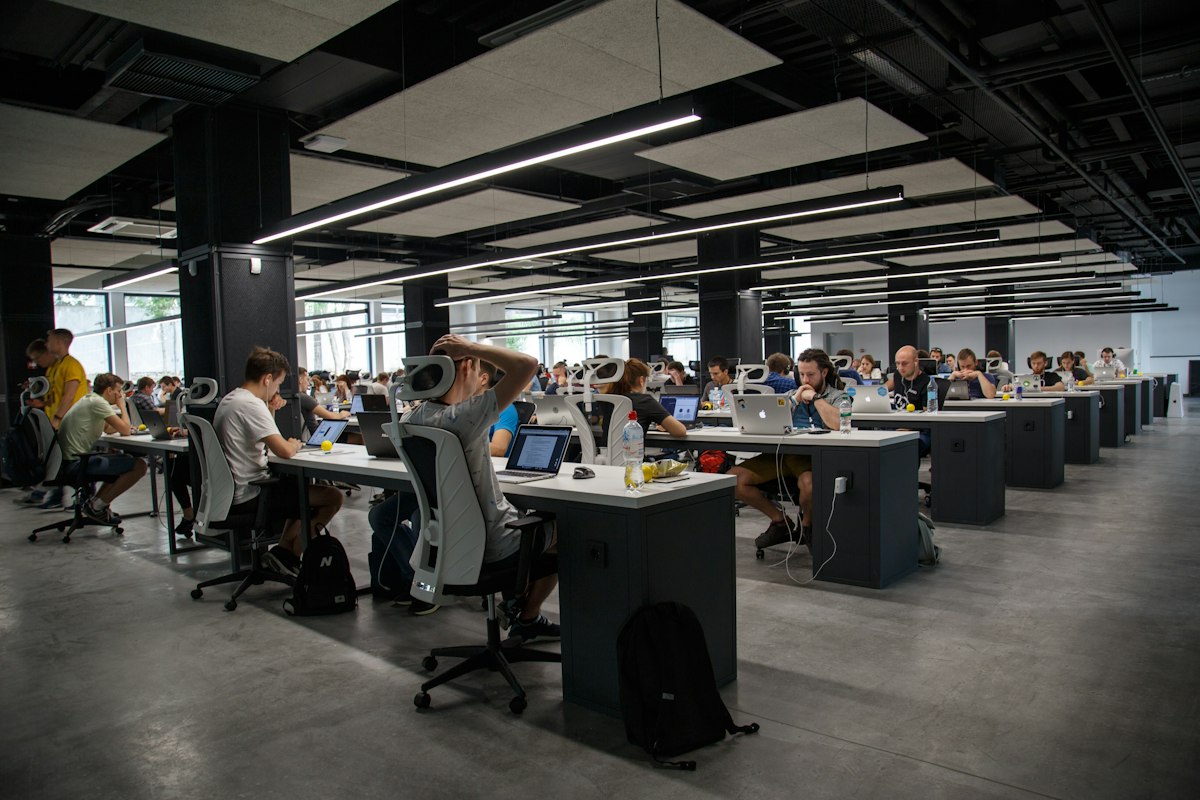
*Photo: The great AI monetization reversal of 2026 — when China's tech giants decided that intelligence, like everything else, must eventually carry a price tag. Image: Unsplash*
The 2:47 AM Alert
It was 2:47 AM on a Tuesday in late July when Chen Wei's phone buzzed on the nightstand. As a senior product manager at Tencent's Cloud & Smart Industries Group, she had learned to sleep with one eye metaphorically open. But this notification wasn't from a server outage or a security incident. It was a Slack message from her analytics team, and it contained a single number that made her sit upright in the dark.
WorkBuddy's paid conversion rate had crossed 8.3%.
Eight point three percent. For a product that had launched just four months earlier as a free desktop AI agent, this was unheard of. In the consumer internet world, conversion rates above 2% were considered exceptional. For enterprise SaaS in China, 5% was the ceiling most product teams prayed to hit. WorkBuddy had nearly doubled that benchmark in a market where Chinese users had spent the past two years treating AI as a birthright, not a billable service.
Chen Wei didn't go back to sleep. She opened her laptop and pulled up the competitive intelligence dashboard. What she saw confirmed what the number implied: this wasn't a Tencent anomaly. It was an industry-wide inflection point.
ByteDance's Doubao had quietly flipped its subscription switch on June 24, after testing paid tiers since May. The ¥68 entry price was already generating what internal sources described as "meaningful subscription revenue" from its 336 million monthly active users. Alibaba's Qwen had begun charging for advanced agent capabilities in early July, embedding paid AI features directly into Taobao's commerce workflow. Even Baidu, the company that had practically invented China's free-to-use internet model with its search engine, was now metering access to ERNIE's most powerful reasoning modes.
The era of free AI in China had ended—not with a product announcement or a keynote speech, but with a Slack notification at 2:47 AM on an ordinary Tuesday in Shenzhen.
The Reckoning: Why Free AI Died in Summer 2026
To understand why China's tech giants simultaneously decided to charge for AI in the summer of 2026, you have to understand the mathematics of inference costs—and the quiet panic that had been building inside boardrooms since early spring.
The numbers were brutal. ByteDance's Doubao was processing 120 trillion tokens per day by March 2026. Every one of those tokens required GPU cycles. Every GPU cycle required electricity, data center real estate, and cooling infrastructure. ByteDance had poured ¥200 billion (approximately $29.4 billion) into AI capital expenditure for 2026, a figure that represented a 25% upward revision from its original plan. Bloomberg reported in May that total capex under consideration could reach as high as $70 billion.
The result? ByteDance's net profit had fallen by more than 70% in 2025, even as international revenue surged nearly 50%. The company was effectively subsidizing every Doubao query with profits from TikTok and Douyin advertising—a transfer that could not continue indefinitely.
Tencent faced a similar calculus. Its Hy3 (Hunyuan) model had achieved flagship-level performance, but the WorkBuddy platform's per-user token consumption had increased more than tenfold within three months of launch. Unlike traditional internet services with near-zero marginal costs, each AI model invocation carried a real, measurable cost. As Tencent President Martin Lau noted during an earnings call: "Identifying high-value scenarios is at least as important as user scale, if not more critical."
The industry had reached an inflection point. The playbook that built China's internet giants—burn money to acquire users, monetize later—was colliding with a fundamental truth about generative AI: intelligence has variable costs that scale with usage.
Table 1: China's AI Giants — The Cost of Free (2025-2026)
| Company | AI Product | Daily Tokens (Peak) | 2026 AI Capex | Profit Impact (2025) |
|---|---|---|---|---|
| ByteDance | Doubao | 120 trillion | ¥200B+ ($29.4B) | Net profit -70%+ |
| Alibaba | Qwen / Bailian | ~50 trillion (est.) | ¥380B over 3 years | Cloud AI triple-digit growth |
| Tencent | Yuanbao / WorkBuddy | ~15 trillion (est.) | Q2 capex +190% YoY | Operating profit growth lagging |
| Baidu | ERNIE Bot | ~25 trillion (est.) | Not disclosed | AI rev ¥2.5B (+3% YoY) |
*Sources: 36Kr, Caixin Global, Bloomberg, Tencent earnings calls*
Four Giants, Four Tollbooths
What made the summer of 2026 remarkable wasn't just that China's tech giants started charging for AI. It was that each company chose a radically different pricing architecture—revealing fundamentally different beliefs about where AI value resides.
ByteDance: The Subscription Ladder
Doubao's pricing strategy was the most aggressive. When the App Store listing updated in May 2026, it revealed three paid tiers: ¥68 ($10) for standard features, ¥200 ($28) for enhanced capabilities, and ¥500 ($69) for professional-grade access. The pricing was deliberate: the entry tier undercut ChatGPT Plus ($20/month) by 50%, positioning Doubao as the affordable alternative while still generating meaningful per-user revenue.
The strategy worked because ByteDance had something no Western AI company could replicate: a 336-million-user base built through ecosystem integration rather than marketing spend. Doubao users weren't acquired through Google Ads or App Store optimization. They were converted from Douyin viewers, TikTok scrollers, and Feishu (Lark) workers. The acquisition cost was effectively zero.
But the real genius lay in what ByteDance chose to charge for. Basic chat remained free. The paywall surrounded high-compute productivity features: PowerPoint generation, data analysis, video production, and code assistance. These were tasks that professionals valued enough to pay for—and tasks that consumed the most inference resources.
Tencent: The Credit Economy
Tencent took the opposite approach. Rather than selling subscriptions to intelligence, WorkBuddy sold credits—consumption units that could be spent across multiple models and tools. Users could route requests through Hy3 (Tencent's own model), DeepSeek, GLM, Kimi, or MiniMax. Each call consumed credits based on the model used and the complexity of the task.
The pricing structure was a masterclass in platform economics. When a user chose Kimi, Tencent earned platform commission. When they chose Hy3, Tencent earned commission plus first-party model revenue. The house always won.
In July 2026, Tencent expanded from a two-tier system (Free / ¥58 Professional) to four tiers: Free Trial, Standard (¥99/month), Premium (¥199/month), and Flagship (¥999/month). The Standard plan offered a 30% discount for continuous monthly payment, bringing the effective price to ¥70—directly competitive with Doubao's entry tier.
Crucially, Tencent explicitly stated it had set no commercialization KPIs for the WorkBuddy team. This wasn't a revenue play in the traditional sense. It was market positioning—a bet that embedding AI into workflow would create switching costs that no competitor could match.
Alibaba: The Commerce Tax
Alibaba's monetization strategy was the most invisible—and potentially the most lucrative. Rather than charging users directly for Qwen access, Alibaba embedded paid AI features into commerce transactions.
In May 2026, Alibaba linked Qwen directly to Taobao. Users could search, compare, and complete orders through natural language inside the AI chat interface. Within Taobao itself, a Qwen assistant handled virtual try-on, discount calculations, and deal hunting across more than 4 billion products. The AI didn't charge a subscription fee. It took a commission on every transaction it facilitated.
This was Alibaba playing to its strengths. While ByteDance and Tencent were building AI products, Alibaba was building an AI marketplace. The intelligence layer became a tollbooth on commerce—a model that scaled with transaction volume rather than user count.
Baidu: The Metered Search
Baidu's approach was the most conservative, reflecting both the company's DNA as a search engine and its position as the laggard among the four giants. ERNIE Bot's most powerful reasoning modes became metered in July 2026, with users receiving a daily quota of free "deep thinking" queries before hitting a paywall.
The strategy made sense for Baidu's user base. ERNIE's 220 million monthly active users were primarily casual searchers, not power users. A metered approach captured revenue from the most engaged subset without alienating the mass market that Baidu needed for search advertising.
Table 2: The Four Tollbooths — China's AI Monetization Strategies Compared
| Dimension | ByteDance (Doubao) | Tencent (WorkBuddy) | Alibaba (Qwen) | Baidu (ERNIE) |
|---|---|---|---|---|
| Pricing Model | Tiered subscription | Credit-based + subscription | Transaction commission | Metered usage |
| Entry Price | ¥68/mo ($10) | ¥99/mo ($14) | Free (commission on sales) | Free tier + metered |
| Premium Tier | ¥500/mo ($69) | ¥999/mo ($138) | N/A (percentage-based) | Paid quota packs |
| What You Pay For | PPT, data analysis, video | Multi-model agent credits | Commerce facilitation | Deep reasoning queries |
| Free Tier | Basic chat remains free | Limited credits + free trial | Full chat + basic shopping | Standard search + limited deep queries |
| User Base (MAU) | ~336M | Yuanbao ~73M, WorkBuddy growing | Qwen ~166M | ~220M |
| Strategic Logic | Freemium conversion | Workflow embedding | Commerce tollbooth | Search monetization extension |
*Sources: 36Kr, Caixin Insight, company earnings calls, App Store listings*
The Consolidation: Fourteen Days That Reshaped the Industry
If individual pricing announcements were the symptom, the cause became visible in late July 2026. Over a fourteen-day period, Tencent, Alibaba, and ByteDance each consolidated their desktop agent product lines—moves that signaled the market had reached a winner-take-most phase.
ByteDance made the most dramatic move. On July 30, CEO Liang Rubo issued an internal email merging the Feishu product team into Doubao. Feishu's sales organization moved to Volcano Engine. A standalone product line that had competed with Slack and Microsoft Teams effectively disappeared inside a chatbot brand.
The logic was ruthless. Feishu had never achieved the market penetration of DingTalk or WeChat Work. But Doubao had 336 million users. Combining Feishu's enterprise infrastructure with Doubao's consumer reach created a unified AI-workforce platform that no competitor could match in scale.
Tencent consolidated its "Buddy" family—WorkBuddy, CodeBuddy, and QClaw—under a single platform strategy. Alibaba merged QoderWork and Wukong into a unified office agent suite. The message from all three was identical: parallel product bets no longer paid. The desktop agent entry point rewarded first movers, and switching costs meant the winner would capture the market for years.
Table 3: Desktop Agent Market Consolidation (July 2026)
| Company | Pre-Consolidation Products | Post-Consolidation Strategy | Desktop Visits (June 2026) |
|---|---|---|---|
| ByteDance | TRAE IDE, TRAE Work, Feishu | Doubao + Volcano Engine enterprise | 14.41M (includes TRAE IDE) |
| Tencent | WorkBuddy, CodeBuddy, QClaw | Unified "Buddy" platform | 20.97M (WorkBuddy alone) |
| Alibaba | QoderWork, Wukong | Unified office agent suite | 9.19M |
| Total Market | — | — | 60.62M |
*Source: Analysys Q2 2026 China Office Agent Platform Market Insight Report, via 36Kr*
The Global Context: Why China Matters
The monetization reversal in China isn't just a domestic story. It has profound implications for the global AI economy.
For two years, Western AI companies have pointed to China's "free AI" model as evidence that Chinese companies couldn't build sustainable AI businesses—that the industry was destined to be a perpetual money-loser subsidized by advertising and government support. The summer of 2026 proved that narrative wrong.
Consider the conversion benchmarks. ChatGPT, after three years of subscription offerings and a massive global brand, had achieved a paid conversion rate of approximately 6.1% by early 2026. WorkBuddy crossed 8.3% in four months. Doubao's early data suggested similar or better performance among its professional-tier subscribers.
These numbers matter because they demonstrate something the Western AI industry has struggled to prove: that AI agents embedded in workflow can command higher willingness-to-pay than standalone chatbots. WorkBuddy's conversion rate was high precisely because it wasn't a chat interface—it was a desktop agent that planned multi-step workflows, read local files, called tools, and returned finished documents. Users weren't paying for conversation. They were paying for completed work.
Table 4: AI Monetization Benchmarks — China vs. Global (Mid-2026)
| Metric | China (Doubao) | China (WorkBuddy) | Global (ChatGPT) | Global (Claude) |
|---|---|---|---|---|
| MAU | ~336M | Growing rapidly | ~905M WAU | ~50M (est.) |
| Paid Conversion | Early data strong | 8.3% | 6.1% | Not disclosed |
| Entry Price | $10/mo | $14/mo | $20/mo (Plus) | $20/mo (Pro) |
| Premium Price | $69/mo | $138/mo | $200/mo (Pro) | $200/mo (Team) |
| What Users Pay For | Productivity features | Agent credits + models | Speed + plugins | Extended usage |
| Monetization Model | Freemium SaaS | Platform marketplace | Subscription | Subscription |
*Sources: The Information, 36Kr, company disclosures, industry estimates*
The Price of Intelligence: What This Means for the Future
The great monetization reversal of 2026 reveals three truths about the future of AI that every company building in this space should internalize.
First: Variable costs kill the "grow now, monetize later" playbook.
The internet era was built on near-zero marginal costs. Adding a user to Facebook, Instagram, or WeChat cost essentially nothing. AI is different. Every query, every token, every generated image carries a compute cost that scales linearly with usage. The companies that recognized this earliest—ByteDance with its aggressive pricing, Tencent with its credit model—are the ones best positioned for sustainable growth.
Second: Workflow embedding beats standalone access.
The highest conversion rates aren't coming from chatbots. They're coming from desktop agents that embed into existing workflows. WorkBuddy's 8.3% conversion wasn't achieved by being a better conversationalist. It was achieved by being a better employee—one that could draft reports, analyze spreadsheets, and write code without the user switching contexts.
Third: The platform layer wins regardless of which model wins.
Tencent's model-agnostic approach is the most revealing strategic signal. By routing users to DeepSeek, GLM, Kimi, or Hy3 based on the task, Tencent has positioned itself to capture value regardless of which model achieves technical superiority. This is the same platform strategy that made AWS the most profitable division of Amazon—owning the infrastructure layer above which all applications run.
Table 5: AI Business Model Evolution — 2023 to 2026
| Era | Period | Dominant Model | Key Characteristic | Sustainability |
|---|---|---|---|---|
| Research Phase | 2022-2023 | API access | Pay-per-token, developer-focused | Profitable but limited scale |
| User Acquisition | 2023-2025 | Free consumer apps | Burn subsidies, maximize MAU | Unsustainable at scale |
| Monetization | 2026+ | Tiered SaaS + embedded agents | Pay for productivity, not chat | Emerging sustainable models |
| Platform Era | 2027+ (projected) | Model-agnostic marketplaces | Commission on all AI transactions | Potentially highest-margin |
What Comes Next: The Intelligence Economy
As the dust settles from the summer of 2026, several trends are becoming clear.
Price differentiation will intensify. ByteDance's ¥68 entry tier and Tencent's ¥70 discounted Standard plan represent a floor that will be difficult for Western competitors to match. ChatGPT Plus at $20/month is nearly 3x more expensive than Doubao's entry tier. This pricing gap will drive global south adoption toward Chinese platforms and force Western providers to introduce lower-cost tiers—exactly what OpenAI attempted with ChatGPT Go at $8/month.
Enterprise AI will separate winners from losers. The consumer subscription model, while necessary, is unlikely to generate the revenue needed to justify ¥200 billion capex budgets. The real money is in enterprise deployment—where WorkBuddy's ¥999 Flagship tier and Doubao's enterprise MaaS services command significantly higher per-seat revenue. ByteDance's Volcano Engine already serves Mercedes-Benz and China Merchants Bank. Tencent's enterprise cloud division grew 23% year-over-year in Q2 2026.
Hardware integration will create new monetization vectors. ByteDance's Doubao Phone (launched December 2025 in partnership with ZTE's Nubia brand) sold out its initial 30,000-unit run at ¥3,499. Xiaomi's MiMo-V2-Pro, integrated with its AI assistant, captured 21.1% of China's AI model market by weekly token volume in Q2 2026. The AI-hardware bundle—where intelligence is monetized through device sales rather than subscriptions—represents a path that no Western AI company can easily replicate.
Table 6: Projected AI Revenue Models — 2026-2028
| Revenue Stream | 2026 Estimate | 2027 Projection | 2028 Projection | Key Players |
|---|---|---|---|---|
| Consumer Subscriptions | ¥20-30B | ¥40-60B | ¥80-120B | Doubao, Qwen, Yuanbao |
| Enterprise SaaS | ¥12-18B | ¥30-50B | ¥80-150B | WorkBuddy, Volcano Engine, Bailian |
| API / MaaS | ¥18-20B | ¥35-50B | ¥70-100B | Volcano Engine, Qwen API, DeepSeek |
| Commerce Commission | ¥5-8B | ¥15-25B | ¥40-60B | Taobao AI, Douyin AI shopping |
| Hardware Bundles | ¥15-25B | ¥30-50B | ¥60-100B | Xiaomi, ByteDance, Huawei |
*Sources: Faxiang Gongchang 2026 China AI LLM Report, industry estimates*
Social Voices: How China's Internet Reacted
Zhihu user @产品经理老张
"WorkBuddy涨到99一个月,但我的团队已经离不开它了。以前做一个竞品分析要3小时,现在20分钟。算笔账:我的时薪大概200块,省下的2小时40分钟值530块。99块的月费?这ROI我能算得过来。"
*"WorkBuddy went up to ¥99 a month, but my team can't live without it anymore. A competitive analysis used to take 3 hours. Now it's 20 minutes. My hourly rate is roughly ¥200, so the 2 hours 40 minutes saved is worth ¥530. A ¥99 monthly fee? The ROI math is obvious."*
Xiaohongshu user @AI工具测评师
"Doubao收费那天,我卸载了。然后第二天又装回来了。免费的Kimi确实也能聊天,但做PPT和数据分析真的差太远。68块一个月,少喝两杯奶茶的事。"
*"The day Doubao started charging, I uninstalled it. Then I reinstalled it the next day. Free Kimi can chat fine, but for PPTs and data analysis, there's no comparison. ¥68 a month—that's two fewer bubble teas."*
Weibo user @科技观察者
"当年视频网站收费被骂成狗,现在人人充会员。AI收费也是一样的道理。习惯了免费的人永远会骂,但真能提高效率的产品,该付的钱一分不会少。"
*"Video streaming sites got roasted when they started charging. Now everyone has memberships. AI pricing is the same logic. People who are used to free will always complain. But products that genuinely improve efficiency? Users will pay every penny."*
Twitter/X user @ChinaTechWatch
"The West keeps saying Chinese AI companies can't monetize. WorkBuddy's 8.3% conversion in 4 months says otherwise. China's not behind on AI business models—it's ahead on workflow integration, which is what actually drives willingness to pay."
*English original, no translation needed.*
Douban user @理性消费主义
"真正的问题不是收不收费,而是收费之后能不能保持体验。百度网盘收费了,速度还是一样慢。希望AI产品别走这条路。"
*"The real question isn't whether to charge. It's whether the experience stays good after charging. Baidu Netdisk charges and it's still slow. Hope AI products don't go down that road."*
GitHub user @dev-in-shanghai
"As a dev, I'm paying for WorkBuddy Team at $40/seat. It routes to DeepSeek for coding tasks and saves me from managing API keys across five providers. The convenience tax is real, but so is the time saved."
*English original, no translation needed.*
*The summer of 2026 will be remembered as the moment China's tech giants stopped subsidizing intelligence and started selling it. For users, it means the end of an era of free AI abundance. For the industry, it means the beginning of sustainable economics—and a new competitive battlefield where the prize isn't user count, but revenue per user. The tollbooths are built. The traffic is flowing. And China's AI companies are finally collecting the toll.*
*Published September 13, 2026. Data current as of September 2026. Market figures sourced from 36Kr, Caixin Global, Tencent earnings disclosures, App Store listings, and industry analyst reports.*
Editor at AI in China. Tracking Chinese AI companies, funding rounds, and the technologies reshaping global tech. More about me.