China's $480 Billion AI Crash: The Bubble Burst in the Market, Not in the Technology

In July 2026, the STAR50 — Shanghai's technology board that had become the beating heart of China's AI investment narrative — traded at roughly 250 times trailing earnings. To put that number in perspective, if every company in the index doubled its profits every year for the next eight years, it would still be expensive by historical standards.
By late October, the index had fallen 40%, erasing approximately $480 billion in market value. The broader CSI 300 entered a bear market, down more than 20% from its June high. Chinese equities in total have lost $3.5 trillion since their May peak. Reuters called it plainly: the AI bubble has burst in China.
Here is the contrarian argument: the bubble that burst was in stock prices, not in technology. While the STAR50 was collapsing, China's actual AI infrastructure buildout — data center construction, token consumption, model capability, enterprise deployment — accelerated. The crash cleaned out speculative froth that had detached equity valuations from any plausible earnings reality. What remains underneath is an industrial transformation that has not slowed down at all.
This article examines the anatomy of the crash, why valuations became so extreme, why the underlying technology story is intact, and what happens next for the companies, investors, and policymakers caught in the unwinding.
What the Headlines Tell You — and What They Miss
The mainstream narrative is straightforward: China's AI stock rally was a speculative mania fueled by retail investors, government cheerleading, and stimulus hopes. It followed the classic bubble pattern — vertical price appreciation, extreme valuations, frenzied retail participation, and a catastrophic collapse. Dong Baozhen, a Beijing-based fund manager, captured the sentiment in a widely quoted comment to Reuters: "The stock market later evolved into a speculative crazy bull. And now we see the bubble bursting."
That narrative is not wrong. But it is incomplete in a way that matters for anyone trying to understand what happens next.
The critical distinction is between a market bubble — where asset prices detach from fundamentals — and a technology bubble — where the underlying innovation fails to deliver real value. The dot-com crash of 2000 was both: Cisco's stock fell 85%, but so did the viability of thousands of speculative internet companies that had no real business. The Chinese AI crash of 2026 appears to be primarily the former. The companies whose stock prices halved are, in many cases, the same companies building the data centers, training the models, and shipping the chips that power China's AI infrastructure.
The evidence for this distinction is in the fundamentals. Consider what happened in China's AI sector while stock prices were falling:
| Metric | Mid-2026 (Peak) | October 2026 (Post-Crash) | Direction |
|---|---|---|---|
| STAR50 Index Level | July peak (250x trailing P/E) | Down 40% (~100x trailing P/E) | Collapsed |
| CSI 300 Index | June high | Down 20%+ (bear market) | Falling |
| China's AI Token Consumption | Rapidly growing | Still accelerating | Growing |
| Data Center Construction (CAPEX) | Record levels | Record levels | Unchanged |
| Model Capability (Benchmark Scores) | Rapidly improving | Still improving | Improving |
| Enterprise AI Adoption Rate | Expanding | Expanding | Unchanged |
| AI Patent Filings (China) | Leading globally | Leading globally | Unchanged |
The stock market crashed. The technology buildout did not.
This is not to minimize the crash's severity. $480 billion in wealth destruction in under four months is a genuine crisis with real consequences for retail investors, startup funding, and Beijing's economic planning. But understanding whether this is a technology failure or a valuation correction determines everything about how to interpret what comes next.
The Anatomy of a $480 Billion Collapse
The STAR50 — formally the SSE STAR 50 Index — tracks the 50 largest companies listed on the Shanghai Stock Exchange's Science and Technology Innovation Board. Created in 2019 as China's answer to the Nasdaq, the board was designed to attract high-growth, pre-profit technology companies, with listing rules that explicitly permit firms with no earnings to go public.
That structural design proved to be a double-edged sword. On the way up, it channeled enormous retail capital into exactly the companies Beijing wanted to scale. On the way down, the same concentration amplified the collapse.

*Data visualization terminals across Shanghai's financial district tracked the STAR50's decline in real time as $480 billion in market value evaporated in under four months.*
The damage has been severe across virtually every major AI-related listing:
| Company | Sector | Peak to October 2026 | Notes |
|---|---|---|---|
| MetaX Integrated Circuits | GPU Design | ~50% down | Surged 700% on 2025 debut |
| Moore Threads Technology | GPU Design | ~50% down | Surged 400% on 2025 debut |
| Unitree Robotics | Humanoid Robots | ~50% down since August | IPO oversubscribed 8,000x |
| Zhongji Innolight | Optical Components | ~60% down from July | Goldman conviction buy list |
| Eoptolink Technology | Optical Components | ~60% down from June | Supplying data center optics |
| CXMT (ChangXin) | Memory Chips | ~25% down from peak | Goldman conviction buy list |
| SMIC | Chip Manufacturing | Sharp decline | China's largest foundry |
| Z.AI (Zhipu AI) | AI Models | Sharp decline | Combined $150B loss with MiniMax |
| MiniMax Group | AI Models | Sharp decline | Newly listed in Hong Kong |
| Alibaba (HK) | Cloud / AI | Notable decline | Broader tech selloff |
The losses extend beyond the STAR50. In Hong Kong, Alibaba fell 6.1% in a single session during the worst of the selling. NetEase dropped 6.7%. JD.com fell 4.6%. Newly listed AI model developers Z.AI and MiniMax fell 9.4% and 6.9% respectively. The CSI 300 — which is dominated by banks, insurers, and consumer staples rather than pure-play technology — entered bear market territory, a sign that the selling had spread far beyond the AI names at the center of the storm.
The concentration data explains why the impact is so broad. According to Goldman Sachs research cited by Reuters, AI-related stocks account for 42% of China's combined domestic and Hong Kong market capitalization and 57% of A-share and H-share trading turnover. When more than half of all trading activity is concentrated in one sector, a crash in that sector is felt across virtually every portfolio in the market.
How Did Valuations Get This Extreme?
The STAR50's peak valuation of approximately 250 times trailing earnings was not an anomaly — it was the endpoint of a two-year rally driven by overlapping forces that reinforced each other into a feedback loop.

*Retail investors dominate STAR board trading volume, a dynamic that amplified gains on the way up and losses on the way down.*
The first force was policy. Beijing explicitly encouraged households to move savings from property and bank deposits into equities, partly to finance the domestic chip and AI buildout.
The second was retail participation. When Unitree's IPO was oversubscribed roughly 8,000 times by retail buyers, the market had clearly left fundamental analysis behind.
The third was geopolitical urgency. US export restrictions created a narrative that domestic chipmakers were not just viable but strategically essential — every new round of sanctions became a buying signal regardless of capability.
The fourth was leverage. Regulators eventually cracked down on leveraged positions and high-frequency trading strategies. When the leverage unwound, it accelerated the decline.
The comparison with US markets is instructive:
| Metric | STAR50 (China) | Nasdaq 100 (US) | Ratio |
|---|---|---|---|
| Peak Trailing P/E | ~250x | ~30x | 8.3x |
| Post-Crash Trailing P/E | ~100x | ~30x | 3.3x |
| AI Sector % of Market Cap | 42% | 49% (S&P 500, per JPMorgan) | 0.86x |
| AI Sector % of Trading Volume | 57% | Not disclosed | — |
| Market Drop from Peak | 40% | ~6% (Nasdaq from record) | 6.7x |
| Government Intervention | Active (National Team ETF buying) | None | — |
Even after a 40% decline, the STAR50 trades at more than three times the Nasdaq 100's earnings multiple. This is the fundamental reason why analysts like Morgan Stanley expect offshore Chinese stocks to fall another 10% to 15% before finding a bottom. A 40% decline from an extreme valuation can still leave you with a high valuation.
The Real Story: Four Forces Behind the Selloff
Understanding why the bubble popped requires separating at least four distinct forces that converged in the same period. Each force operated independently, but their simultaneous arrival turned a correction into a crash.
Force One: The Valuation Reckoning. At 250 times trailing earnings, the STAR50 was priced for a future that would take decades to arrive. When quarterly results began showing that AI revenue growth — while strong — could not possibly justify the multiples, the repricing was inevitable. The only question was timing.
Force Two: The Domestic Chip Price War. This is the most structurally important and least reported factor. As Chinese fabless chip designers scaled up production following US export restrictions, component prices across the supply chain collapsed. Companies that the STAR50 rally had priced for top-line revenue growth were suddenly facing margin compression from a price war they had not anticipated. Wang Zhuo, a partner at Shanghai Zhuozhu Investment Management, identified this as a structural driver beneath the crash: the market had priced hardware suppliers for growth without accounting for the competitive pressure that state-backed capacity expansion would impose on profits.
Force Three: US Export Policy Risk. Washington began moving toward excluding Chinese-made optical, networking, and server equipment from US data centers. For companies like Zhongji Innolight and Eoptolink, the threat of losing American market access introduced a risk premium that directly undermined valuations.
Force Four: Regulatory Crackdown and Tax Season. Chinese regulators moved to curb leveraged positions and high-frequency trading. Simultaneously, investors facing capital gains tax bills had a financial incentive to realize gains — which became sell orders when prices began to fall.
| Force | Trigger | Primary Impact | Severity |
|---|---|---|---|
| Valuation Reckoning | Earnings failed to justify 250x P/E | Broad index selloff | High — structural |
| Chip Price War | Domestic oversupply compressed margins | Hardware suppliers, chipmakers | High — structural |
| US Export Risk | Proposed data center equipment bans | Optical, networking, server suppliers | Medium — policy-dependent |
| Regulatory + Tax | Leverage crackdown, capital gains taxes | Retail-heavy names, leveraged positions | Medium — cyclical |
The interplay of these forces explains why the crash has been so persistent. It is not a single shock that can be absorbed by state intervention. It is a structural repricing driven by fundamentals — margins, competition, and policy risk — that happens to be occurring in a market where valuations had become untethered from reality.
The Crash Is in the Stocks, Not in the Technology
Here is where the contrarian argument meets the data. While the STAR50 was losing $480 billion in market value, China's AI sector was hitting milestones that suggest the technology trajectory is not just intact but accelerating.
The CAICT's October 2026 report projected China's AI token economy will exceed 500 quadrillion tokens per day by 2030 — a figure that implies a compounding infrastructure buildout on a scale that has no historical precedent. Data center construction across China's western provinces continues at record pace. The power generation contracts being signed to support AI compute — including a record-breaking solar deal in Inner Mongolia — are long-term commitments that no company would make if they believed demand was about to collapse.
Model capabilities continue to improve. In the same week that the STAR50 posted some of its largest single-day losses, Kimi K3.1 Pro from Moonshot AI scored within three points of the world's best closed-source model on the Artificial Analysis Intelligence Index. DeepSeek continues to open-source critical infrastructure. Qwen maintains its position as the most-downloaded open-weight model family on Hugging Face.
Enterprise adoption is expanding. The token loan products being rolled out by Chinese banks — treating AI compute tokens as a lendable asset class — represent a financial innovation that assumes continued growth in AI consumption, not its collapse.
| Technology Indicator | Evidence | Source |
|---|---|---|
| Token Consumption Growth | Accelerating; CAICT projects 500 quadrillion/day by 2030 | CAICT October Report |
| Data Center CAPEX | Record levels, concentrated in western provinces | Industry reports |
| Power Infrastructure | Record solar deals in Inner Mongolia for compute | Contract announcements |
| Model Benchmarks | Kimi K3.1 Pro within 3 points of frontier; Qwen #1 downloads | Artificial Analysis, Hugging Face |
| Open-Source Contributions | DeepSeek open-sources inference engine; Qwen releases continue | GitHub, Hugging Face |
| Enterprise AI Adoption | Token loans, AI banking, manufacturing deployment | Banking announcements |
| AI Patent Filings | China leads globally | WIPO data |
The most telling signal may be what institutional investors are doing. While retail investors have been selling indiscriminately, HSBC research shows that Asia institutional funds remain net overweight on Chinese equities. Goldman Sachs retained Zhongji Innolight and CXMT on its October conviction buy list even as the broader index collapsed. The National Team — state-run funds authorized to purchase domestic equity ETFs during market stress — deployed record inflows at the peak of the selloff, though notably directed their buying toward diversified blue-chip positions rather than the high-multiple AI names at the center of the crash.
This is not the behavior of investors who believe the technology story is broken. It is the behavior of investors who believe the stocks got too expensive and are now selecting the companies with real competitive positions at more reasonable prices.
The Ripple Effects: IPOs, Startups, and Beijing's Dilemma
The crash's most immediate second-order effect has been a freeze in the IPO pipeline. Hong Hao, chief investment officer at Lotus Asset Management, pointed to Unitree's post-listing performance as a warning signal. When a closely watched AI debut — oversubscribed 8,000 times — loses half its value within months, institutional allocation committees reassess their entire approach to new listings.
For the queue of Chinese AI companies seeking listing approval, this is a serious problem. The pipeline of potential AI and semiconductor IPOs that had been building through 2026 is now stalled — not because the companies are worse, but because the valuations they would need to go public are no longer defensible.
Beijing faces a genuine policy dilemma. On one hand, the government wants household savings flowing into equities to finance the domestic chip buildout. On the other hand, it does not want to reinflate a speculative bubble that was allocating capital at valuations bearing no relationship to earnings potential.
The National Team's intervention pattern reveals the tension. State buying has been directed toward broad, diversified blue-chip positions — the CSI 300-style names — rather than the STAR50's high-multiple technology stocks. William Bratton of BNP Paribas Securities described the intervention as more selective than in prior cycles, a signal that officials are comfortable letting AI-specific valuations compress further without direct sector support.
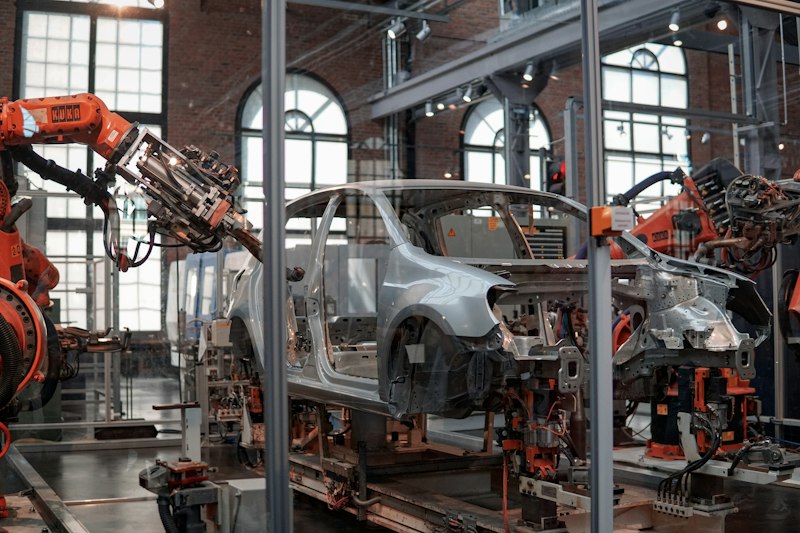
*With AI names representing 42% of China's market capitalization, the October selloff was felt across virtually every portfolio in the country.*
The IPO freeze has broader implications for China's AI startup ecosystem. Many of the most valuable private AI companies — including those that have been burning cash on model training and data center expansion — were counting on public market listings to fund their next phase of growth. With the IPO window effectively closed, these companies face a choice: raise capital at lower valuations from private investors, accept strategic investment from state-backed funds (with the governance implications that brings), or accelerate their path to profitability.
Who Wins and Who Loses
Every market crash redistributes wealth and opportunity. The China AI selloff is no different, and the winners and losers are not always who you would expect.
The clearest losers are retail investors who bought near the peak. With AI stocks representing 42% of China's market capitalization and 57% of trading volume, the retail-dominated mainland market ensured that millions of individual investors were caught in the decline. The $480 billion in market value that evaporated was, in large part, retail wealth.
Among companies, the biggest losers are those whose valuations were most detached from fundamentals — the recent IPOs that surged on debut and have since halved, the pre-profit chip designers trading on narrative rather than revenue, and the AI model developers whose path to profitability remains uncertain.
But there are also winners, or at least relative survivors. The companies with genuine competitive moats and real revenue — optical component suppliers with global supply chain positions, memory chip manufacturers with domestic market lock-in, cloud providers with sticky enterprise customers — are emerging from the crash with their businesses intact and their valuations closer to defensible levels.
| Stakeholder | Position | Impact | Outlook |
|---|---|---|---|
| Retail Investors | Bought near peak | Severe losses | Long recovery |
| Recent IPO Investors | Unitree, MetaX, Moore Threads | 50%+ losses | Depends on earnings |
| Institutional Investors (Asia) | Net overweight, selective | Moderate losses | Buying selectively |
| Goldman Conviction List | Innolight, CXMT | Paper losses | Maintained positions |
| AI Model Startups | IPO pipeline frozen | Funding squeeze | Private rounds at lower valuations |
| Beijing / National Team | State ETF buying | Financial cost | Policy tools remain |
| US AI Sector | Nasdaq down 6% | Minimal so far | Earnings test this week |
| Global Semiconductor Supply Chain | Suppliers to China | Moderate impact | Watching US policy |
The comparison with US markets adds another dimension. AI-linked stocks account for 49% of the S&P 500's value, according to JPMorgan — a higher concentration than China's 42% before its crash. Market commentators have begun drawing parallels, with some warning that US markets are "flashing the same warning signs" that preceded China's collapse. The Nasdaq, down roughly 6% from its record set three weeks ago, has so far taken a far smaller hit. This week's Big Tech earnings from Microsoft, Alphabet, and Amazon — combined with the Federal Reserve's rate decision — will test whether that relative resilience holds.
Three Scenarios for What Comes Next
The near-term trajectory of China's AI stocks depends on three variables: whether state buying can offset retail and institutional selling, whether Washington formalizes data center equipment exclusions for Chinese suppliers, and whether quarterly earnings demonstrate AI revenue that supports current valuations even at the reduced multiples.
Scenario One: Continued Decline. If earnings disappoint and US export restrictions tighten, the STAR50's still-elevated 100x earnings multiple has room for further compression. Morgan Stanley's forecast of another 10% to 15% decline in offshore Chinese stocks would be the baseline, with the STAR50 potentially falling further. In this scenario, the IPO freeze extends into 2027 and startup funding contracts sharply.
Scenario Two: Stabilization at Lower Levels. If state support deepens and export rules remain limited, the index could stabilize at current levels — down 40% from the peak but building a base for a more sustainable recovery driven by earnings growth rather than multiple expansion. This is the scenario that Goldman Sachs' selective buying and HSBC's overweight positioning seem to anticipate.
Scenario Three: Policy-Driven Rebound. Beijing has not exhausted its policy toolkit. More aggressive stimulus, further National Team buying directed at STAR50 names specifically, or regulatory easing could trigger a rebound. The risk is that this would reinflate the same speculative dynamics that created the bubble in the first place — a "slow bull" that becomes a fast bear again.
| Scenario | Trigger | STAR50 Outcome | Probability (Analyst Consensus) |
|---|---|---|---|
| Continued Decline | Weak earnings + US restrictions | Down another 15-25% | Moderate |
| Stabilization | State support + limited exports | Flat to modest recovery | Highest |
| Policy Rebound | Aggressive stimulus + targeted buying | Sharp recovery, bubble risk | Low-Moderate |
The most likely outcome is stabilization at lower levels — a period of digestion where valuations gradually realign with earnings growth, state buying provides a floor without reigniting speculation, and the AI technology buildout continues underneath the market turmoil.
Social Media Reactions
The crash has generated intense discussion across Chinese and international social media platforms, with reactions ranging from schadenfreude to genuine concern about broader economic implications.
@ChinaTechWatcher (X/Twitter):
China's STAR50 down 40%, $480B gone. The same analysts who said 'China is winning the AI race' six months ago are now saying 'the bubble has burst.' Maybe both things can be true at different price levels.
雪球用户 · 科技投资观察 (Xueqiu):
250倍市盈率的时候我就说过,这不是投资,这是赌博。现在跌到100倍了,还是贵。真正的AI好公司不需要250倍市盈率来证明自己的价值。(When it was at 250x P/E, I said this wasn't investing, it was gambling. Now it's fallen to 100x and it's still expensive. Real AI companies don't need 250x earnings to prove their value.)
@BullTheoryio (X/Twitter):
AI-linked stocks are 49% of the S&P 500's value. China's was 42% before the crash. The US is now flashing the same warning signs China did. The first AI bubble has burst. The question is whether the US is next.
知乎用户 · 量化交易员 (Zhihu):
国家队在买,外资在选,散户在跑。这三句话概括了当前中国市场的一切。区别是,国家队买的是指数,外资买的是个股,散户卖的是希望。(The National Team is buying, foreign investors are selecting, retail investors are running. These three sentences sum up everything in the Chinese market right now. The difference: the National Team buys indices, foreign investors buy individual stocks, and retail investors are selling hope.)
@DeepLearningAIA (X/Twitter):
Everyone focused on the $480B China wiped out. Meanwhile Kimi K3.1 Pro just scored within 3 points of the world's best AI model. The stocks crashed. The models kept improving. Which one is the bubble?
微信公众号 · 半导体行业观察 (WeChat):
国产芯片价格战才是真正的杀手。政府补贴让企业不计成本扩产,最后大家都没利润。股票跌40%只是结果,不是原因。(The domestic chip price war is the real killer. Government subsidies caused companies to expand production regardless of cost, and in the end nobody has margins. The 40% stock decline is the result, not the cause.)
The Bottom Line
China's AI stock crash of 2026 is a $480 billion lesson in what happens when retail enthusiasm, policy encouragement, and geopolitical urgency converge on a single sector without earnings to anchor valuations. The STAR50 at 250 times trailing earnings was not a sign of strength — it was a warning that the market had stopped pricing companies and started pricing narratives.
But the crash is not evidence that China's AI ambitions have failed. The data center construction continues. The token economy grows. The models keep improving. The engineers keep shipping. What has changed is the cost of capital for the companies doing the work — and for a sector that had been planning to fund its growth through public market listings, that cost has become very real, very quickly.
The companies that emerge from this crash with their businesses intact will be the ones that were building something more durable than a stock price. For everyone else — the retail investors who bought at the top, the pre-profit startups facing a frozen IPO window, the policymakers trying to channel household savings into productive investment — the lesson is the same one every bubble eventually teaches: prices can be wrong for a very long time, but they are never wrong forever.
*Related reading: China's 500 Quadrillion Token Economy · China's AI Compute Reckoning · DeepSeek's Revenue vs. the Price War · China's AI IPO Gold Rush*
Editor at AI in China. Tracking Chinese AI companies, funding rounds, and the technologies reshaping global tech. More about me.