The Outage Era: How China's AI Boom Outran Its Own Grid
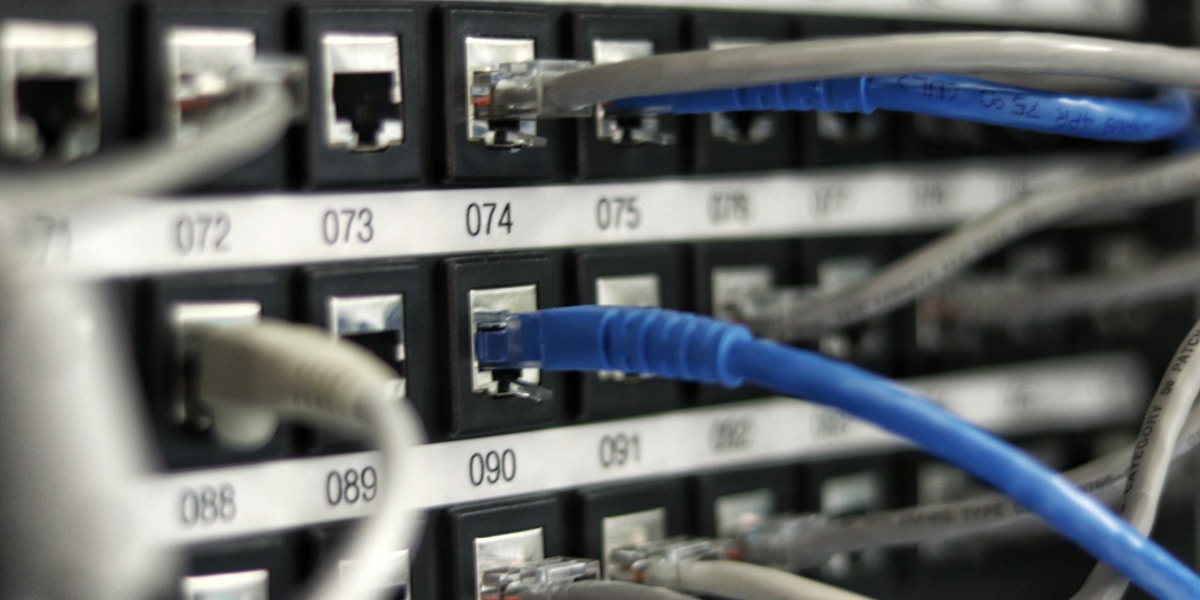
At 8:11 on the morning of October 15, 2026, DeepSeek's status page reported a partial interruption. The V4-Pro API was unstable. The V4.1-Flash API was unstable. Chat was degraded. By 9:08, chat was fully down. Developers who had built products on top of the cheapest capable API in the world watched their integrations fail in real time, and the outage did not clear until 13:04 — four hours and fifty-two minutes later.
For any other company, this would be an operations story. For DeepSeek, it was something stranger: a confession. The lab that two years ago humiliated the global industry by proving frontier-class AI could be trained with a fraction of the hardware — the lab whose entire strategic identity was *efficiency* — had become the most visible victim of China's compute famine. It was the company's thirteenth failure since September, its fifth of October, and the first month its cumulative downtime crossed ten hours.
Two days later, DeepSeek did something Chinese AI companies almost never do: it paid for the failure. Every user received a full refund of their entire consumption from October 8 through October 14, credited back as balance. In the same announcement, the company promised to "strip single-point dependencies" from its infrastructure — an admission, in engineering language, that the architecture behind the world's most cost-disruptive AI service had been held together at seams it could no longer hide.
The outage was not a bug. It was a boundary marker. On one side of it lies the era in which Chinese AI won by needing less. On the other side lies the era now beginning — of rationed subscriptions, peak-hour pricing, concrete pouring in Inner Mongolia, and a national construction program measured in gigawatts. This is the story of how China's AI success broke its own grid, and what is being built to replace it.
The Incident Log: A Company Meeting Its Own Success
The October 15 outage was not an anomaly. It was the latest entry in a failure log that has steepened through 2026 as DeepSeek's user base exploded.
| Month (2026) | Reported Failures | Character of Incidents |
|---|---|---|
| March | Multiple, incl. one ~12-hour outage | API and chat instability during early V4 traffic ramp |
| June | 3 | Partial API interruptions; monthly downtime ~3.1 hours |
| July | 8 | Escalating frequency as consumer and developer adoption surged |
| August | 0 | Brief stabilization after capacity additions and price rebalancing |
| September | 13 | Downtime crossed 10 hours/month for the first time |
| October (through the 15th) | 5 | October 15: near-5-hour full outage; compensation issued |
The pattern matters more than any single entry. Demand did not arrive in the smooth S-curve capacity planners dream about. It arrived as a step function: state agencies, banks, hospitals, and hundreds of thousands of developers re-platforming onto DeepSeek's APIs simultaneously, because DeepSeek's prices undercut everyone else's by an order of magnitude. The cheapest AI in the world attracted the most price-sensitive — and therefore least tolerant-of-failure — workload in the market. Every efficiency gain was instantly consumed by new demand. That is Jevons paradox operating at national scale, and DeepSeek is living inside it.
There is a deeper irony. The lab's famous cost discipline — the training-efficiency breakthroughs of January 2025 that triggered the first global AI stock rout — became the very mechanism of its overload. Pricing at a fraction of Western APIs was a market-share weapon. It was also a subsidy. And subsidies, as every infrastructure economist knows, do not reduce consumption; they relocate it, compress it, and then detonate it.
The Demand Shock: 417 Against 128
Strip away the individual company stories and the national numbers explain everything. According to the China Academy of Information and Communications Technology (CAICT), demand for intelligent computing power in China grew roughly 417% year-on-year in the first quarter of 2026. Supply grew 128%. Both numbers would be historic in any other year. Together, they describe a gap that widens even as the industry builds faster than it ever has.
| Indicator | Figure | Source / Period |
|---|---|---|
| Intelligent compute demand growth | +417% YoY | CAICT, Q1 2026 |
| Intelligent compute supply growth | +128% YoY | CAICT, Q1 2026 |
| High-end intelligent compute shortfall | ~35% of demand unmet | CAICT, Q1 2026 |
| H100-class chip gap alone | ~430,000 units | CAICT, Q1 2026 |
| Daily token calls in China | >140 trillion | Industry statistics, 2026 |
| Token volume growth | ~1,000x in two years | Industry statistics, 2026 |
One hundred forty trillion tokens a day is the number that bends the curve. Two years ago, China's daily token consumption sat at hundreds of billions — a rounding error against today's figure. Every bank customer-service script, every government document summarizer, every office copilot, every developer's agent loop now feeds the same pipes. AI has crossed from demo to default, and default means the infrastructure must serve not enthusiasts but everyone, all at once, during business hours.
Hence the strangest artifact of 2026: peak-hour pricing in a software industry. When DeepSeek raised V4-Pro API prices in August, it attached a schedule in which peak-period calls cost roughly double the off-peak rate — a concept lifted wholesale from electricity markets, because that is effectively what AI compute has become in China. A metered utility. Scarce, schedulable, and priced like the constrained commodity it now is.
The Year the Free Tier Broke
The consumer-facing symptoms arrived first, in spring. Between March and April 2026, Zhipu AI, MiniMax, and Moonshot's Kimi all suffered publicized API overloads and interruptions. Then, in April and again in July, Zhipu, Alibaba, and Moonshot did something almost unprecedented for consumer internet companies: they paused or restricted new consumer subscriptions, citing compute shortage.
| Period | Event | Companies | Stated Reason |
|---|---|---|---|
| Mar–Apr 2026 | API overloads and interruptions | Zhipu, MiniMax, Kimi | Traffic surges exceeding capacity |
| Apr 2026 | New consumer subscriptions paused/limited | Zhipu, Alibaba, Moonshot | Compute shortage |
| Jul 2026 | Subscription limits renewed | Zhipu, Alibaba, Moonshot | Sustained supply gap |
| Aug 2026 | V4-Pro API price increase with peak/off-peak schedule (peak ≈ 2x) | DeepSeek | Demand management and cost pass-through |
| Oct 2026 | Near-5-hour outage; week of fees refunded | DeepSeek | Infrastructure failure and remediation |
"Selling out" of a software subscription is a concept that would have been unintelligible two years ago. Software marginal cost was supposed to be zero. But inference is not software in the old sense — it is a factory that burns electricity and silicon hours per unit of output, and Chinese labs discovered in 2026 that their factories could hit capacity. The rational response was triage: protect enterprise contracts, throttle the consumer funnel, and let price do the queuing that queuing logic no longer could.
For the global observer, this is the detail to internalize. China's AI industry did not hit a demand problem in 2026. It hit the opposite — a demand deluge so large that the world's most aggressive capacity build-out could not absorb it. That is a fundamentally different problem from the one Silicon Valley keeps diagnosing from afar, and it produces a fundamentally different industry.
From Price War to Price Hikes
For two years, China's token price war was the story — DeepSeek cutting API prices by orders of magnitude, rivals matching, Western labs forced to respond. In 2026 the direction reversed. The reversal was not led by model companies choosing margin; it was led by input costs making the old prices physically impossible.
| Provider | Period | Increase | Scope |
|---|---|---|---|
| Alibaba Cloud | Mar 2026 | Up to +34% | AI compute, object storage, GPU server rental |
| Tencent / Baidu / Huawei Cloud | Mar–Apr 2026 | +10–25% | Core AI compute products |
| AWS | 2025 H2–2026 | >+20% (select services) | EC2 ML instances, storage |
| Microsoft Azure | 2025 H2–2026 | +15–30% | AI inference, cloud databases |
| Google Cloud | 2025 H2–2026 | +25%+ | Premium compute tiers |
| Nebius | From Jun 1, 2026 | ~+30% | H100/H200/B200/B300 on-demand rental |
| GPU rental market | 12 months to Q1 2026 | +40% (H100, to ~$2.35/hr); +73% (Blackwell) | Spot and contract rental |
The economics underneath are unforgiving. Compute rental is a heavy-asset business: hardware depreciation, power, and cooling dominate costs, and those inputs all rose simultaneously. When existing capacity was contracted at old prices and replacement capacity costs 30–60% more to build, every fully subscribed rack became an appreciating asset — and every provider simultaneously discovered the same incentive to reprice.
Note what did not happen: no major Chinese lab blamed the consumer, and none exited the market. The increases were framed, accurately, as cost pass-through. The price war did not end because anyone surrendered. It ended because physics sent a bill.
Why the Grid Can't Keep Up: The Cost Stack
Behind the price hikes sits a full-stack inflation story that begins at the mine and ends at the rack. Every layer of the AI hardware supply chain tightened in 2026, and the compounding effect made new data centers dramatically more expensive than the ones they are meant to relieve.
| Layer | 2026 Price Dynamic | Knock-On Effect |
|---|---|---|
| HBM / DRAM / NAND memory | Global capacity shortage; sharp annual increases | Server BOM up 30%+ |
| High-purity PPE resin (high-speed CCL feedstock) | ~+400% on overseas capacity contraction | PCB costs surge |
| AI-server PCB (18–24 layer, high-speed) | ~10x the value of traditional server PCB | Chassis and board costs jump |
| Optical modules (800G / 1.6T) | Capacity tight | Interconnect cost inflation |
| Server hardware overall | ~+60% vs three years ago | New-cluster capex repriced |
| Domestic AI accelerators | Rising quotes; idle cards reactivated and re-priced | Substitution is not cheap |
Two conclusions follow. First, the crunch cannot be arbitraged away by money alone: the binding constraints — advanced memory, high-speed substrates, accelerator yield ramps — carry expansion cycles measured in two to five years, not quarters. Second, the squeeze is worse for latecomers. Firms that locked in hardware and power before the inflation wave now operate appreciating assets at fixed depreciation; new entrants must pay today's prices for tomorrow's capacity. The industry is consolidating toward whoever already owns racks.
This is the context in which Chinese labs' behavior in 2026 — subscription pauses, peak pricing, outages — should be read. Not as mismanagement, but as rationing under a real physical constraint that no amount of model cleverness removes.
The Great Pivot: From Efficiency Doctrine to Concrete
The deepest strategic shift of 2026 is happening inside DeepSeek itself. The company spent two years as the high priest of efficiency — proof that architecture could substitute for silicon. This year it became a construction company.
The pivot has a documented timeline. In April 2026, DeepSeek posted its first infrastructure job openings in Ulanqab, the Inner Mongolian city remaking itself as China's "Token Capital." In late July, Bloomberg reported that DeepSeek was planning roughly one gigawatt of data-center capacity in Ulanqab — a mix of self-built and leased facilities, with partial operations targeted for late 2027 or early 2028. In early September, Bloomberg reported the hardware plan behind the concrete: at least 160,000 Huawei Ascend 950DT accelerators dedicated to inference, with training remaining on NVIDIA hardware. On September 30, DeepSeek open-sourced components of its Huawei Ascend toolchain and co-announced a 128-card Ascend 950-based supernode with Huawei. In October, the two extended the collaboration into joint AI chip-programming software.
| Date (2026) | DeepSeek Infrastructure Milestone |
|---|---|
| Apr | First Ulanqab infrastructure job postings |
| Jul 31 | ~1 GW Ulanqab data-center program reported (self-build + lease; partial ops targeted end-2027/early 2028) |
| Sep 4 | ≥160,000 Huawei Ascend 950DT accelerators reported for inference; training stays on NVIDIA |
| Sep 30 | Open-sources Ascend infrastructure components; 128-card Ascend 950 supernode with Huawei |
| Oct | Joint DeepSeek–Huawei AI chip-programming software |
Zhipu AI is running the same playbook in parallel: a roughly one-gigawatt data center built entirely on domestic chips, already partially operational, with GLM-5.3-Flash completing full domestic-chip inference validation. The rationale is identical. When your unit economics depend on hardware you can no longer assume is buyable at any price, owning the physical layer stops being vanity and becomes survival.
And the Huawei bottleneck frames the whole program. The Ascend 950DT is the most capable domestic accelerator available, but Huawei's annual output is measured in the low hundreds of thousands of units, with delivery waits exceeding a year. DeepSeek's order alone — 160,000 chips — represents a substantial fraction of a national production year. Every domestic lab is now competing for the same constrained fab output, which means the compute crunch has a second, political layer: allocation of sovereign silicon is becoming an industrial-policy decision, made in Shenzhen and Beijing, about who gets to scale.
Token Capital: The Westward Build-Out
The demand has to go somewhere, and China has an answer older than the AI boom: send it west, where land is cheap, power is abundant, and the wind blows. Ulanqab, three hundred kilometers northwest of Beijing, has become the symbol — and the statistical center — of the national build-out.
| Ulanqab Metric | Figure (H1 2026 unless noted) |
|---|---|
| Total compute | 172,000 PFlops (+112% YoY) |
| Share of national compute | ~8.7% |
| Intelligent-compute share of local total | >95% |
| Signed data-center projects | 100+ |
| Cumulative planned investment | ¥500B+ |
| Compute-service revenue (H1) | ¥3.66B |
| Data-center power consumption | 3.267B kWh (+89.5% YoY) |
| Planned power capacity | 12.5 GW |
| Connectivity | Two direct 144-core fiber lines to Beijing; ~4.2 ms latency |
| Cooling advantage | Average 4.3°C; up to 10 months of free air cooling; PUE <1.2 |
| Green power share of DC consumption | ~67% |
In August, the scale crossed into the absurd: the "Xinghe" (Star River) supernode project — about 1.2 million square meters, over two gigawatts, architected for up to one million accelerators and a theoretical million-PFlops peak — was unveiled as what its backers call the world's largest single AI data center. Goldman's framing of Ulanqab as one of Asia-Pacific's largest and fastest-growing AI computing clusters now reads as an understatement.
The macro logic is "compute–power coordination" (算电协同): more than half of China's planned data-center capacity now sits in the north and northwest, from Ningxia's Zhongwei to Gansu's Qingyang to Xinjiang's Karamay, where combined projects are approaching ten gigawatts. Inner Mongolia alone reports 280,000 PFlops of compute — 260,000 of it intelligent — running on over 80% clean electricity. The grid that China's AI boom broke is being rebuilt four hundred kilometers from the users it serves, at the speed of substations and steel.
Who Pays for the Crunch
Every structural shift redistributes. The compute crunch of 2026 is no different, and its ledger is already legible.
| Actor | Position | Why |
|---|---|---|
| Incumbent labs with locked capacity (DeepSeek, Alibaba, Zhipu, Moonshot, ByteDance) | Winners | Existing racks appreciate; subscriptions and peak pricing convert scarcity into revenue; self-built capacity removes rental dependence |
| Huawei | Decisive winner | Ascend demand now exceeds production; allocation power over the domestic stack moves to Shenzhen |
| Domestic memory, PCB, optical-module suppliers | Winners | Full-stack inflation is their pricing supercycle |
| Latecomers and startups | Losers | New capacity costs 60%+ more than incumbents' depreciated fleets; funding cannot buy a two-year memory fab |
| Enterprise AI adopters | Paying customers | 10–34% input price inflation flows through to contracts; but reliability and capacity are now purchasable again |
| Consumers | Mixed | Subscriptions return but priced in tiers; free-era expectations permanently retired |
The strategic question of the next twenty-four months is not whether China builds its way out — the concrete is already poured — but whether the new capacity arrives before the demand curve detonates again. The forecasts say the leasing market alone triples to roughly 1,346 EFlops by 2027. Against that, remember the constraint ladder: HBM capacity, substrate supply, accelerator yield, and grid interconnection each add years of lag. The most likely path is not resolution but managed scarcity — an industry learning to live inside its own success, pricing it, scheduling it, and apologizing with refunds when the seams show.
DeepSeek's October 15 outage, in that light, was not a scandal. It was the sound of a country finding out exactly how big its own appetite is.

*The new unit of competition: not parameters or benchmarks, but gigawatts, racks, and who owns them.*
Social Media Reactions
Zhihu — @云计算老炮 (18k likes)
"417%对128%,这组数字才是2026年中国AI的底层叙事。模型再强,没有卡就是空中楼阁。DeepSeek outages不是技术退步,是需求爆炸。乌兰察布的混凝土,比任何一篇论文都更能说明中国AI的真实阶段。"
"417 against 128 — those two numbers are the underlying narrative of Chinese AI in 2026. However strong the models are, without chips they're castles in the air. DeepSeek's outages aren't technical regression; they're a demand explosion. The concrete in Ulanqab explains the real stage of Chinese AI better than any paper."
X (Twitter) — @compute_econ, infrastructure analyst (2,104 likes)
"Peak-hour pricing for API calls is such an under-discussed signal. China has started treating intelligence as a constrained utility like electricity. The grid metaphors write themselves. The West is still pricing compute like it's abundant. One of these is a pricing error."
Weibo — @数码闲聊站搬运 (9.3k likes)
"160,000颗昇腾950DT,交付要等一年以上,华为一年产量才几十万颗。DeepSeek一家就吃掉全国相当一部分产能。以后谁能拿到国产卡,比谁的模型好更重要。算力分配权,才是真正的权力。"
"160,000 Ascend 950DT chips with over a year of delivery wait — Huawei's annual output is only in the hundreds of thousands. DeepSeek alone eats a huge share of national production. From now on, getting domestic chips matters more than having the better model. Allocation power over compute is the real power."
Hacker News — grumpy_sre (486 points)
"Thirteen failures in a month and they refunded a week of usage. The interesting part isn't the outage — every cloud has them. It's that a lab famous for needing *less* compute is now building gigawatts of it. Jevons paradox is the whole story in one sentence: efficiency didn't save compute, it consumed more of it."
Xiaohongshu — @AI创业小姐姐 (4.1k likes)
"做Agent应用的注意了:别再假设API永远便宜。今年阿里云涨了34%,DeepSeek搞峰时2倍计价,以后调度任务到凌晨跑可能变成基本功。成本结构变了,产品逻辑也要变。把算力当电费做预算,才是2026年的正确姿势。"
"Attention Agent builders: stop assuming APIs will be cheap forever. Alibaba Cloud raised prices 34% this year, DeepSeek introduced 2x peak pricing — scheduling your workloads to run at 3 AM is about to become table stakes. The cost structure changed, so product logic must change too. Budget compute like electricity — that's the correct posture for 2026."
GitHub — rack-scale-reader (maintainer, 8.2k stars project)
"Everyone racing to analyze the October 15 postmortem. Read it differently: DeepSeek open-sourced its Ascend toolchain *two weeks before* the outage. They knew. The open-source play was a capacity strategy — get the whole industry optimizing for domestic silicon so the ecosystem, not one lab, absorbs the shortage. The outage is the bug. The toolchain is the fix."
*For more on the infrastructure behind this story, read our coverage of Ulanqab's rise as China's Token Capital, the DeepSeek V4.1-Flash disruption, the end of China's token price war, NVIDIA's China exit and the domestic chip rise, and how sanctions built China's AI compute empire.*

*Allocation is the new moat: with demand up 417% and domestic accelerators rationed, ownership of physical capacity has replaced model cleverness as the binding constraint on Chinese AI.*
Editor at AI in China. Tracking Chinese AI companies, funding rounds, and the technologies reshaping global tech. More about me.