The image was almost too perfect. On the afternoon of November 19, 2026, inside a conference hall in Shenzhen's Kylin Villa, Xi Jinping leaned across a table and told Donald Trump and Vladimir Putin that artificial intelligence must always remain "under human control." Chinese state media Xinhua ran the quote within the hour. It was the most explicit AI safety overture ever made by a Chinese head of state to an American president, delivered at the first trilateral meeting between the leaders of the United States, China, and Russia since the end of World War II.
Eighty minutes later, the three leaders issued what Chinese state media called a "peace declaration," and Trump boarded Air Force One. The summit was historic — observers compared it to Yalta — but the AI language was largely symbolic. No joint framework was announced. No working group was formed. No binding commitments were made.
Meanwhile, three floors below the summit hall, in the conference center hosting the APEC CEO Summit, executives from Alibaba, ByteDance, and DeepSeek were presenting numbers that told a radically different story from the diplomacy unfolding above them. China's generative AI user base had crossed 700 million — more than half the country's population. Alibaba's Qwen app had grown 5,077 percent year over year to 158 million monthly active users. And on the other side of the Pacific, Chinese open-weight models were processing up to 46 percent of all enterprise AI tokens consumed by American companies on the largest model-routing platform in the world.
Both things happened on the same day, in the same city, under the same president's watch. Both are true. And the gap between them — between the diplomacy of cooperation and the reality of dominance — is where the actual future of AI is being written.
The Scale: Half a Billion People Joined in 18 Months
The numbers from the China Internet Network Information Center (CNNIC) are staggering in their simplicity. At the end of 2025, China had 602 million generative AI users. By June 2026 — just six months later — the figure had surpassed 700 million. The penetration rate crossed 50 percent, meaning one in every two people in China now uses generative AI in some form. For context, the entire population of the United States is approximately 340 million. China's AI user base is more than double that.
The CNNIC's Generative AI Application Development Report, released in September 2026, provides the most comprehensive snapshot of this transformation. The data reveals not just how many people use AI, but how deeply it has embedded itself into daily life:
| Metric | Value | Source |
|---|---|---|
| Generative AI users (H1 2026) | 700+ million | CNNIC |
| Penetration rate | >50% | CNNIC |
| Users at end of 2025 | 602 million | CNNIC |
| Growth in 6 months | +98 million (16.3%) | CNNIC |
| Primary use case (Q&A) | 76.0% of users | CNNIC survey |
| Image/video generation users | 47.8% | CNNIC survey |
| Text drafting/editing users | 37.6% | CNNIC survey |
| Work summaries & presentations | 32.5% | CNNIC survey |
| Smart hardware purchases (6 mo.) | 38.7% of internet users | CNNIC survey |
What makes these numbers remarkable is not just their scale but their velocity. A year earlier, in late 2024, China had roughly 250 million generative AI users. The base has nearly tripled in eighteen months. The country's intelligent computing capacity reached 2,185 EFLOPS by June 2026, up 177 percent year over year. Its first fully domestic 100,000-card AI supercluster entered operation. And AI-related investment hit 1,255 deals worth approximately 250 billion yuan ($34.5 billion) in the first half of 2026 alone — already 182 percent of the full-year 2025 total by value.
The physical infrastructure is equally striking. More than 400 humanoid robot complete units shipped in the first half of 2026, with full-year output projected to exceed 100,000 units. Over 30 percent of China's large industrial enterprises have adopted AI technologies. The country's core AI industry surpassed 1.2 trillion yuan ($166 billion) in value in 2025 — a target originally set for 2030, reached five years early.
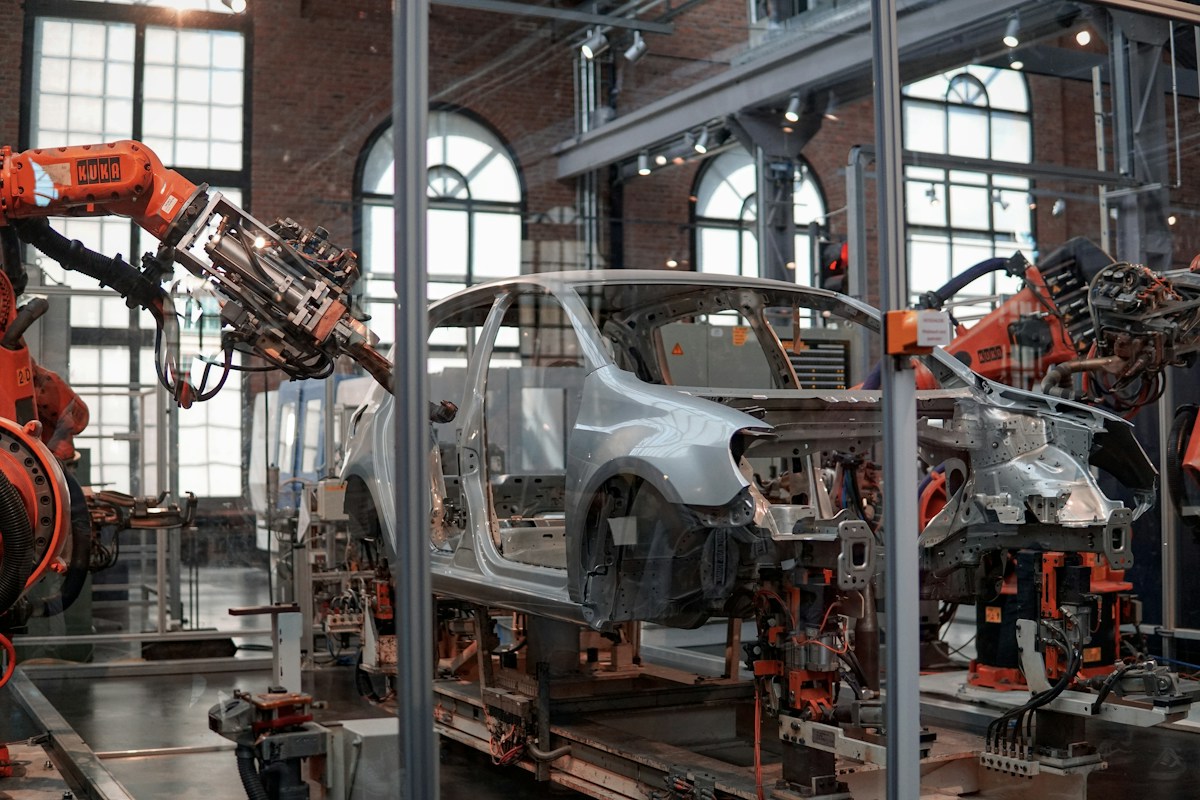
*Shenzhen, the city that hosted the historic trilateral summit, is also home to some of China's most aggressive AI hardware and robotics companies. (Image: Unsplash)*
The App Wars: Qwen's Impossible Growth Curve
If the CNNIC numbers describe the ocean, the individual app metrics describe the waves. And no wave is more remarkable than Alibaba's Qwen.
In September 2025, the app then known as Tongyi had approximately 3 million monthly active users — a rounding error in China's consumer market. Alibaba relaunched it under the Qwen brand in November 2025, betting that consumers would respond to a unified assistant identity backed by the company's frontier model research. The response was beyond anything Alibaba projected.
By March 2026, Qwen had 166 million MAU. By June, 167 million. After a slight seasonal dip, September closed at 158 million — a 5,077 percent year-over-year increase that earned it the title of fastest-growing app among all Chinese services with more than 100 million users, according to QuestMobile.
The growth was not organic. Alibaba spent aggressively — a 3 billion yuan ($415 million) Lunar New Year campaign let users order milk tea and food delivery through the AI assistant for free, causing daily active users to spike from 7 million to 58.5 million in a single day. More than 130 million people tried AI-powered shopping for the first time during Spring Festival promotions. The strategy was blitzscaling applied to consumer AI: buy the user base first, monetize later.
The competitive landscape Qwen entered was already fierce:
| App | MAU (Latest) | YoY Growth | Key Strategy |
|---|---|---|---|
| Doubao (ByteDance) | 382–419 million | Steady | Content ecosystem integration, preparing subscriptions |
| Qwen (Alibaba) | 158 million | +5,077% | E-commerce and lifestyle service integration |
| DeepSeek | ~123 million | Rapid | Technical reputation, minimal marketing |
| Yuanbao (Tencent) | Growing | Moderate | WeChat ecosystem leverage |
| ERNIE Bot (Baidu) | Declining share | Negative | First-mover advantage eroded |
ByteDance's Doubao remains the consumer champion at roughly 400 million MAU — nearly half of all Chinese internet users touch Doubao each month. But the gap between first and second place is narrowing, and the strategic approaches could not be more different. ByteDance is moving toward monetization, reportedly preparing subscription tiers. Alibaba is still in land-grab mode, integrating Qwen with Taobao, Alipay, Amap, and Ele.me to make the assistant the front door to an entire consumer economy.
DeepSeek, the Hangzhou lab that triggered the global AI price war with its R1 model in January 2025, holds approximately 123 million MAU — extraordinary for a company that has spent essentially nothing on marketing and derives its user base almost entirely from technical reputation and word-of-mouth in developer communities. In June 2026, DeepSeek closed its first outside funding round: over $7.4 billion at a valuation above $50 billion. A second round of approximately 100 billion yuan ($15 billion) at a pre-money valuation near 500 billion yuan was nearing completion as of October.
The Enterprise Invasion No One Talks About
If Chinese AI dominance were limited to domestic consumer apps, it would be a large but contained story. The more consequential development is happening quietly in enterprise infrastructure — specifically, in the API calls that power American software.
In July 2026, CNBC published an investigation into OpenRouter, the largest neutral platform for routing AI model API calls. The findings were startling. For every single week since February 8, 2026, Chinese-origin models had accounted for at least 30 percent of enterprise token volume on the platform. The weekly peak reached 46 percent. Twelve months earlier, the average was 11 percent. In the first half of 2025, it was 4.5 percent.
| Period | Chinese Model Token Share (OpenRouter) | Context |
|---|---|---|
| H1 2025 | 4.5% | Baseline before price war intensified |
| Trailing 12 months to mid-2026 | 11% average | Gradual climb |
| Feb 8, 2026 onward | ≥30% every week | Sustained floor, no reversion |
| Week of Feb 9–15, 2026 | Overtook US models (4.12T tokens) | First weekly volume crossover |
| April 2026 | >45% (six labs combined) | Xiaomi, Alibaba, MiniMax, Zhipu, DeepSeek, StepFun |
| Mid-July 2026 peak | 46% vs. 35.7% US-origin | Highest weekly share on record |
The driver is arithmetic. DeepSeek V4 Flash costs $0.14 per million input tokens. OpenAI's GPT-5.5 costs $5.00. That is a 35-fold difference for a model that, on many production tasks — translation, summarization, classification, extraction, structured data processing — performs within a few percentage points of its American counterpart. GLM-5.2 from Zhipu AI costs $0.42 per million input tokens versus GPT-4o's $2.50, a 6x discount. At 1 billion monthly tokens, the savings from switching to Chinese models exceeds $2,000 per month — a figure that moves from engineering trivia to board-level budgeting at scale.
The pattern extends beyond OpenRouter. On Vercel's AI Gateway, Chinese models processed 29 percent of all tokens in June 2026, up from roughly 11 percent in April, while consuming less than 4 percent of total spending — priced at approximately one-tenth the average rate of US frontier systems. DeepSeek's token share on Vercel went from under 1 percent to 17 percent in a single month. Zhipu's GLM-5.2 saw daily token volume grow approximately 50-fold within two weeks of launch.
The U.S.-China Economic and Security Review Commission reported in March 2026 that roughly 80 percent of American AI startups use Chinese open-weight models somewhere in their stack — as a primary model, a fallback, or a cost-sensitive workload router. On Hugging Face, Chinese-origin open-weight models accounted for 41 percent of global downloads between February 2025 and February 2026, against 36.5 percent for US-origin models.
One startup, Lindy, moved 100 percent of its traffic from Anthropic's Claude to DeepSeek, a switch the company said would save millions of dollars annually. When even OpenAI's closest partners are routing production workloads to Chinese models, the "which model is best" debate has been replaced by a more pragmatic question: which model is good enough, and what does "good enough" cost?

*Chinese open-weight models have become the invisible infrastructure powering a growing share of global AI applications. (Image: Unsplash)*
The Open-Weight Engine: Why China's Strategy Works
Behind every one of these numbers is a strategic choice that China made and the United States largely did not: open weights.
The approach is not accidental. In March 2026, the U.S.-China Economic and Security Review Commission published a report titled "Two Loops: How China's Open AI Strategy Reinforces Its Industrial Dominance." The report described a dual-cycle strategy: Chinese labs release open-weight models that capture global developer mindshare and infrastructure dependencies (the outer loop), while domestic applications and enterprise deployments generate revenue and data that fund further model development (the inner loop). Each cycle reinforces the other.
The strategy exploits a structural asymmetry in the global AI market. American frontier labs — OpenAI, Anthropic, Google — charge premium prices to recoup massive training costs. Chinese labs, backed by platform economics from e-commerce, social media, and cloud services, can afford to release competitive models for free or at dramatically lower prices. The open-weight releases don't need to be the absolute best models in the world. They just need to be close enough that the price-performance ratio becomes irresistible.
And they are. Brookings Institution estimates place Chinese frontier models just six to nine months behind their American counterparts. On many benchmarks, GLM-5.2 landed within a single percentage point of Claude Opus 4.8 at roughly one-fifth the cost. DeepSeek R2 leads open-source models on mathematical reasoning. Alibaba's Qwen series has become the default base model for the global research community, chosen for post-training experiments precisely because it is openly licensed, well-documented, and strong enough to be meaningful.
The September 2026 CNNIC report noted that more than 90 percent of Chinese generative AI users named a domestic model as their first choice — a remarkable contrast to most other technology markets, where American products dominate. The government required it, the market delivered it, and now the same dynamic is playing out globally.
The Summit and the Subtext
Which brings us back to Shenzhen, and to the words Xi chose.
When Xi told Trump that AI must remain "under human control" and called for strengthened US-China communication on AI safety risks, the surface message was cooperative. But the subtext was unmistakable. China is not asking for cooperation from a position of weakness. It is offering cooperation as a peer — one that has built the world's largest AI user base, dominates open-weight downloads, and has created an enterprise dependency on its models that persists even as the US government moves to restrict Chinese AI in federal systems.
The contrast with American policy could not be sharper. In October 2026, the Department of Homeland Security issued a federal ban on DeepSeek under the FASCSA framework — the first time an AI model was exiled from US government systems. Lawmakers have opened inquiries into American companies using Chinese models. Export controls on advanced chips remain in place. And yet American developers and enterprises continue routing an ever-growing share of their AI workloads to Chinese models, because the cost advantage is too large to ignore.
Xi also used the APEC CEO Summit, held in the same venue, to call for the removal of trade barriers and greater international cooperation on AI — a message that resonated differently depending on the audience. To developing nations in Southeast Asia and Latin America, where Chinese open models offer a path to AI capability without premium licensing fees or dependency on American cloud providers, the pitch is compelling. China's Premier Li Qiang had just come from the ASEAN Summit in Manila, where he secured the China-ASEAN Free Trade Area 3.0 Upgrade Protocol, effective December 1, with AI cooperation as a headline item.
The trilateral summit itself was heavy on symbolism and light on AI specifics. Trump emphasized nuclear weapons reduction and described the meeting as a "rare summit." Putin focused on Ukraine and criticized Western sanctions. The joint declaration reportedly touched on nuclear risks and refined petroleum products. But AI was the undercurrent — the technology that all three leaders understand will define the century, and the one area where China has achieved something neither rival can easily replicate: scale without permission.
A Global Pattern, Not a Local One
The phenomenon is not limited to China or the United States. Chinese models are embedding themselves in the global AI stack at every level.
| Market | Indicator | Chinese Model Presence |
|---|---|---|
| United States | OpenRouter enterprise tokens | 30–46% weekly share |
| United States | AI startups using Chinese open weights | ~80% (USCC, March 2026) |
| Global (Hugging Face) | Open-weight model downloads | 41% Chinese vs. 36.5% US |
| Vercel AI Gateway | Token share (June 2026) | 29%, at <4% of spend |
| South Korea | Naver's AI infrastructure | Uses Chinese models despite sovereignty push |
| Southeast Asia | China-ASEAN FTA 3.0 | AI cooperation centerpiece, effective Dec 1 |
| Global developer tools | GLM-5.2 on Vercel | 50x daily token growth in 2 weeks |
South Korea's Naver, the country's primary AI champion, was found to be using Chinese models in its infrastructure despite a national push for AI sovereignty. Startups from Berlin to Bangalore fine-tune Qwen for domain-specific applications. Enterprises in markets that American AI companies have underserved — the Middle East, Africa, Southeast Asia — are building on Chinese open weights because they are free, capable, and come without the geopolitical strings that increasingly attach to American technology.
This is the phenomenon that Xi's cooperation call both acknowledges and accelerates. China does not need to win the AI race in the way Silicon Valley defines it — frontier benchmarks, premium pricing, closed weights. It has found a different path: commoditize the model layer, dominate through volume and openness, and let the ecosystem effects do the work that export controls and federal bans cannot undo.
What Comes Next
Three developments in the coming weeks will test whether the paradox holds.
First, the Qwen-Doubao consumer war will enter a new phase as ByteDance introduces Doubao subscriptions, potentially converting hundreds of millions of free users into paying customers. If successful, it validates the Chinese consumer AI market as a revenue engine, not just an engagement metric.
Second, DeepSeek's second funding round at approximately 500 billion yuan pre-money will establish a new valuation benchmark for Chinese AI. At that level, DeepSeek would be worth more than most American AI startups combined, creating a capital flywheel that funds even more aggressive open-weight releases.
Third, Moonshot AI's Hong Kong IPO filing — following Zhipu and MiniMax to the exchange — will test whether public markets reward the open-weight strategy or punish it for lacking the proprietary moats that investors typically demand.
The deeper question, the one that Xi's handshake with Trump raises without answering, is whether the world can have Chinese AI scale and American AI governance at the same time. Seventy million new users joined China's AI ecosystem in six months. Forty-six percent of American enterprise AI tokens ran through Chinese models in a single week. These are not trends that pause for diplomatic declarations.
The handshake was genuine. The numbers are real. The contradiction is the story.
Voices from the Community
@TechObserver_SH (Twitter/X)
Xi says AI should be "under human control" while 700 million Chinese are already under AI's influence. The irony is not lost on anyone. But let's be honest — half the AI startups in SF are running on DeepSeek right now. The dependency is already built.
*(Translation: Commentary on the irony of AI control rhetoric vs. actual adoption patterns)*
知乎用户·机器学习从业者 (Zhihu)
700 million users sounds impressive, but how many are actually paying? The Qwen app growth is real, but it's subsidized. Once Alibaba stops the free milk tea campaigns, we'll see what retention looks like. Still, the enterprise token data is the more important story — that's where the real money is.
*(Translation: A Zhihu ML practitioner questions consumer AI retention rates but acknowledges enterprise adoption as the more meaningful signal)*
@AIAlignmentWatch (Twitter/X)
Everyone focused on the geopolitics of the trilateral, but Xi's AI safety language is actually significant. "Under human control" is a specific phrase that maps to China's AI governance framework. They're not just competing on capability — they're exporting their governance model alongside their models.
*(Translation: Analysis of Xi's AI safety language as governance export)*
小红书·AI产品经理莉莉 (Xiaohongshu)
我们公司上个月把 Claude 换成了 GLM-5.2,成本直接降到五分之一,效果差不多。老板说反正用户感受不到区别,为什么不用?现在全组都在学怎么优化 prompt 适配新模型。感觉这就是行业趋势了。
*(Translation: An AI product manager describes switching from Claude to GLM-5.2, cutting costs to one-fifth with comparable results — "the boss said users can't tell the difference")*
GitHub Discussion (sgl-project/sglang #4821)
The Qwen ecosystem dominance is real. Every new post-training technique, every RL framework, every agent benchmark — the default base model is Qwen now. It's become what Llama was supposed to be. Open weights + permissive license + actually good = inevitable.
*(Comment from a developer on the SGLang GitHub repository, reflecting on Qwen's position as the default research base model)*
微博科技博主@量子位观察 (Weibo)
特朗普在深圳说三国要讨论核武器,但真正的武器是AI。中国现在有7亿AI用户、46%的美国企业token,这比任何核武器谈判都更有战略意义。问题是美国意识到这一点了吗?
*(Translation: A Weibo tech blogger argues that AI — not nuclear weapons — is the real strategic leverage, questioning whether the US recognizes China's position)*
豆瓣小组·人工智能与未来 (Douban)
open source曾经是美国的技术扩散方式,现在轮到中国了。Qwen和DeepSeek免费给全世界用,这不是慈善,这是战略。当你的基础设施建立在别人的模型上,你就很难切断关系。美国正在亲手把开源领导权让给中国。
*(Translation: A Douban group member reflects on the inversion of open-source leadership — the US pioneered open-source diffusion, but China is now using it as a strategic dependency-creation tool)*
Sources
- CNNIC, "Generative AI Application Development Report 2026" (September 29, 2026)
- CNBC investigation via Forkast, "Chinese AI Models Now Capture Up to 46% of US Enterprise Token Usage" (July 2026)
- QuestMobile AI App Rankings (November 2026)
- U.S.-China Economic and Security Review Commission, "Two Loops: How China's Open AI Strategy Reinforces Its Industrial Dominance" (March 2026)
- Xinhua News Agency, trilateral summit coverage (November 19, 2026)
- Digital in Asia, "China AI Market 2026: Market Size, Investment and Adoption" (November 2026)
- China Market Brief, "China CNNIC Generative AI Users 2026" (October 2026)