China's AI Agent Army: 126 Platforms, 67% Enterprise Adoption, and Why the Copycat Narrative Is Wrong

heroImage: "https://images.unsplash.com/photo-1537531383496-f4749b8032cf?w=1200"

*Image: The abstract architecture of AI Agent networks — Photo by Unsplash*
The Western narrative about China's AI Agent ecosystem is almost comically wrong. Ask a typical Silicon Valley analyst, and they'll tell you China is "copying OpenAI's GPTs" or "playing catch-up with Microsoft's Copilot Studio." The reality? While the U.S. debates whether AI agents should be browser plugins or desktop apps, China has already built 126 distinct AI Agent development platforms, deployed 7,000+ agents at JD alone, and funneled $10.16 billion in government and enterprise contracts into the sector in the first half of 2025. That's a 128% year-over-year increase in contract value—and it tells a completely different story than the one Silicon Valley is telling itself.
This isn't about catching up. This is about building an entirely different kind of AI economy.
The Conventional Wisdom: China Is a Fast Follower
The standard narrative goes something like this: OpenAI launched GPTs in late 2023, Microsoft launched Copilot Studio, and China's tech giants scrambled to copy the concept. ByteDance built Coze (扣子), Alibaba built its "Agent Builder" ecosystem, Tencent launched "Yuanqi" (元器), and Baidu followed with its "Wenxin Agent Platform." The conclusion? China's AI Agent market is a derivative of America's innovation, just with more users and cheaper labor.
This story is comforting for Western analysts. It fits a familiar pattern: America innovates, China scales. But comfort is often the enemy of truth. The data tells a fundamentally different story about who is building what, for whom, and why.
The Evidence: 126 Platforms, 67% Enterprise Adoption, $10B+ in Contracts
Let's start with the numbers that break the copycat narrative.
Table 1: China's AI Agent Market — Key Metrics (2025)
| Metric | Value | Year-over-Year Change | Source |
|---|---|---|---|
| AI Agent Development Platforms | 126 | +57% (from 80 in 2024) | Industry Research |
| Enterprise Adoption Rate | 67% of mid-to-large enterprises | +22 percentage points | IDC / Market Research |
| Government/Enterprise Contracts (H1 2025) | ¥10.16 billion ($1.4B) | +128% | Public Procurement Data |
| JD Cloud Agent Deployments | 7,000+ | N/A (new baseline) | JD Official |
| Ali International Station Agent Users | 100,000+ factories | +300% | Alibaba Official |
| China AI Agent Market Size (2025) | ~¥69 billion ($9.5B) | +140% | CIC / Industry Estimates |
| Projected 2028 Market Size | ¥852 billion ($117B) | CAGR 72.7% | Galaxy Securities |
These numbers don't describe a copycat ecosystem. They describe a market that has chosen a fundamentally different path—one the U.S. hasn't even really explored yet.
Table 2: China's Major AI Agent Platforms (2025)
| Company | Platform Name | Type | Focus | Launch |
|---|---|---|---|---|
| ByteDance | Coze (扣子) / Coze Space | Low-code + Enterprise | Consumer-to-Enterprise bridge | 2024 |
| ByteDance | HiAgent | Enterprise AI Middle Platform | B2B workflow automation | 2025 |
| Alibaba | Tongyi Agent Platform | Model + Agent Builder | E-commerce + Cloud integration | 2024 |
| Alibaba | DingTalk AI Assistant | Workplace Agent | Enterprise productivity | 2024 |
| Alibaba | Agentar (蚂蚁数科) | Financial Agent | Fintech + Insurance | 2025 |
| Tencent | Yuanqi (元器) | Social + 3D Avatar | WeChat/QQ ecosystem | 2025 |
| Tencent | Tencent Cloud Agent Platform | Cloud-native | Developer + Enterprise | 2025 |
| Baidu | Wenxin Agent Platform | Search-integrated | Knowledge + E-commerce | 2024 |
| Huawei | ModelArts Versatile | Enterprise-grade | Manufacturing + Telecom | 2025 |
| Huawei | HarmonyOS Agent Framework | OS-level | Mobile + IoT integration | 2025 |
| Zhipu AI | AutoGLM | Research + Operation | Autonomous web agent | 2025 |
| Dify | Open-source Agent Framework | Developer-first | Workflow orchestration | 2024 |
| BetterYeah | NeuroFlow Enterprise | Security-focused | Large enterprise deployments | 2025 |
Notice something striking: Alibaba alone has 6 different agent platforms serving different business units, user types, and industries. ByteDance has 3. Huawei has 3. This isn't a "one platform for everyone" strategy like OpenAI's GPT Store or Microsoft's Copilot. This is a platform-of-platforms strategy—each tailored to a specific ecosystem, industry, or workflow.
Table 3: U.S. vs. China AI Agent Strategy Comparison
| Dimension | United States | China |
|---|---|---|
| Primary Entry Point | Consumer (ChatGPT plugins) | Enterprise (workflow automation) |
| Platform Count | ~15 major platforms | 126+ platforms |
| Top Platform Users | Individual developers, creators | Enterprise teams, government agencies |
| Revenue Model | Subscription ($20/month) | SaaS + Implementation + Consulting |
| Integration Depth | Browser / API | ERP + CRM + RPA + Legacy Systems |
| Government Role | Minimal procurement | Major procurement driver (¥10B+ contracts) |
| Key Use Case | Content creation, coding | Invoice processing, supply chain, compliance |
The divergence is clear. The U.S. is building AI agents as super-powered apps for individuals. China is building AI agents as infrastructure for organizations.
The Real Story: Enterprise-First, Platform-Second, Consumer-Last
Here's what actually happened in China—and why it looks nothing like the U.S. trajectory.
Phase 1: The Enterprise Demand Pull (2024)
While U.S. tech Twitter was debating whether ChatGPT should have memory or browse the web, Chinese enterprises were facing a different problem: they had spent billions on digital transformation over the past decade, built complex ERP/CRM systems, trained armies of white-collar workers to use 15 different software tools... and now they needed those systems to actually talk to each other.
The demand for AI agents in China wasn't "I want a chatbot that can write poems." It was: *"I have 50,000 invoices to process across three SAP instances, two Oracle databases, and a homegrown CRM from 2018. I need a system that can read them, validate them, route exceptions to the right team, and update the ledger—without me hiring 200 more accountants."*
This is why China's first major AI Agent deployments weren't consumer products. They were enterprise automation systems disguised as "agents."
Phase 2: The Platform Explosion (2025)
Once the enterprise use case was validated, the platform race began. But unlike the U.S., where OpenAI and Microsoft compete for the "one platform to rule them all," China's ecosystem exploded into specialized verticals:
- E-commerce agents (Alibaba's Ali International Station serving 100,000+ factories)
- Supply chain agents (JD's 7,000+ agents for inventory, logistics, customer service)
- Financial compliance agents (Ant Group's "Agentar" for regulatory reporting)
- Manufacturing agents (Huawei's Versatile platform for industrial IoT)
- Government service agents (deployed across 400+ cities for citizen services)
Table 4: Enterprise AI Agent Deployment Scale (2025)
| Organization | Agent Deployment | Primary Use Case | Scale |
|---|---|---|---|
| JD Cloud | 7,000+ agents | Supply chain, customer service, logistics | Internal + Partners |
| Alibaba International | 100,000+ factory users | Cross-border trade automation | B2B Platform |
| China Merchants Bank | 500+ agents | Credit review, risk assessment, compliance | Internal |
| SF Express | 300+ agents | Route optimization, customer inquiry | Internal |
| Ping An Insurance | 1,000+ agents | Claims processing, fraud detection | Internal + Partners |
| Government (400+ cities) | 10,000+ agents | Citizen services, permit processing | Public |
This is the scale that makes the U.S. enterprise AI market look experimental by comparison. While American companies are running pilots with 5-50 agents, Chinese enterprises are running production systems with 500-7,000 agents.
Table 5: China's AI Agent Technology Stack
| Layer | Technology / Standard | Role |
|---|---|---|
| Foundation Model | DeepSeek, Qwen, Doubao, Hunyuan | Reasoning engine |
| Agent Framework | Dify, LangChain (adapted), proprietary | Workflow orchestration |
| Tool Integration | MCP (Model Context Protocol), RPA APIs | External system connectivity |
| Memory / Knowledge | Vector DBs, RAG, enterprise knowledge graphs | Context persistence |
| Deployment | Cloud-native, on-premise, hybrid | Scale and compliance |
| Governance | Role-based access, audit trails, compliance filters | Enterprise security |
China's AI Agent stack isn't just about the LLM. It's about integration depth—the ability to connect to legacy systems, maintain compliance logs, and operate within highly regulated industries. This is why a platform like Alibaba's has 6 different variants: each business unit (e-commerce, fintech, cloud, workplace) needs a different integration profile.
Table 6: Chinese vs. American AI Agent Pricing Models
| Model | U.S. Example | Price Point | China Example | Price Point |
|---|---|---|---|---|
| Consumer Subscription | ChatGPT Plus | $20/month | Doubao Pro | ~$3/month |
| Enterprise SaaS | Copilot for M365 | $30/user/month | DingTalk AI | $5/user/month |
| Implementation | Consulting partners | $500-2,000/day | System integrators | $200-800/day |
| Custom Agent Build | Dev agencies | $50,000-200,000 | Low-code platforms | $5,000-20,000 |
| Government Contract | Federal procurement | Variable | Provincial bidding | ¥10M-500M per project |
The price differences aren't just about cheaper labor. They reflect a different value chain: Chinese AI Agent platforms are designed to be deployed by internal IT teams using low-code tools, not by external consultants writing custom code. This dramatically lowers the barrier to entry and accelerates deployment speed.
Table 7: 2025 China AI Agent Market — Segment Breakdown
| Segment | Market Share (%) | Growth Rate (YoY) | Key Players |
|---|---|---|---|
| Enterprise Automation | 42% | +156% | Alibaba, Huawei, JD |
| E-commerce / Trade | 23% | +198% | Alibaba, ByteDance |
| Financial Services | 15% | +89% | Ant Group, Ping An |
| Government / Public | 12% | +210% | Huawei, Telecom operators |
| Consumer / Developer | 8% | +45% | ByteDance, Baidu, Zhipu |
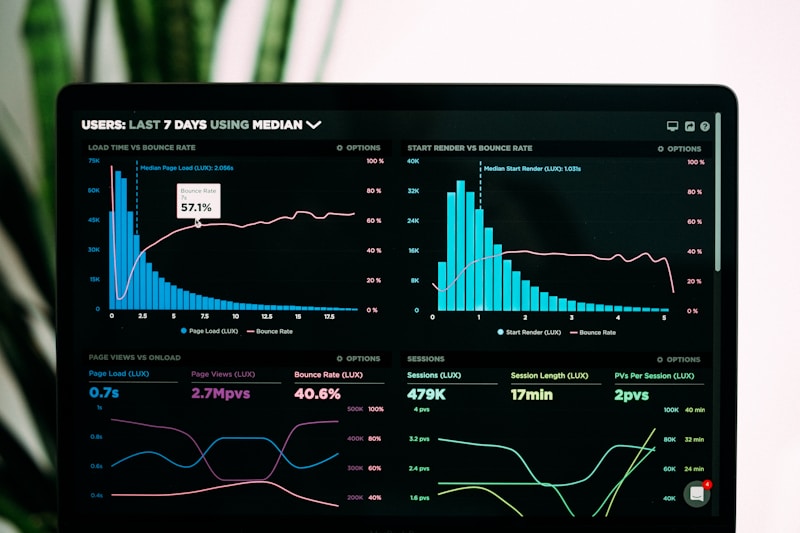
*Image: Enterprise automation dashboards are the primary interface for China's AI Agent deployments — Photo by Unsplash*
Why the West Is Missing the Point
There are three fundamental reasons Western analysts consistently misread China's AI Agent ecosystem:
1. The "Chatbot Bias"
American AI discourse is dominated by conversational AI—ChatGPT, Claude, Gemini. The assumption is that the "agent" of the future is a chatbot that can do things. But China's enterprise AI Agent deployments are overwhelmingly non-conversational. They run in the background, process documents, update databases, trigger workflows, and only escalate to humans when exceptions occur. They don't chat. They execute.
This makes them invisible to the kind of analysis that measures success by "daily active users" or "app store rankings." A JD supply chain agent that processes 50,000 purchase orders per day has zero "daily active users" in the traditional sense—but it delivers more economic value than most consumer AI apps combined.
2. The "Platform Bias"
Western tech analysis tends to focus on platform market share—who has the biggest developer ecosystem, the most plugins, the most downloads. But China's AI Agent economy is deeply fragmented by design. The 126 platforms aren't competing to be "the one platform." They're coexisting, each serving a specific industry, company size, or regulatory environment.
An Alibaba factory supplier in Guangdong doesn't need a general-purpose agent builder. They need an agent that understands Chinese customs documentation, integrates with Alibaba's trade finance system, and speaks Mandarin to the local logistics provider. That specificity is a feature, not a bug.
3. The "Innovation Bias"
The Western assumption is that "real innovation" happens at the frontier—bigger models, longer context, more reasoning steps. But China's AI Agent revolution is happening at the integration frontier: connecting legacy systems, automating regulatory workflows, and embedding AI into processes that have existed for decades. The technical challenge isn't building a smarter model. It's making that model work inside a state-owned bank's COBOL-based core system without breaking anything.
This is unglamorous work. It doesn't generate viral demos. But it's where the money is.
Implications: Who Wins, Who Loses
The Winners
Enterprise SaaS Vendors: Companies like Alibaba, Huawei, and Tencent that own the enterprise relationship are winning because AI agents are just the next layer on top of their existing cloud/ERP ecosystems. The agent isn't a new product—it's an upgrade to the products they already sold.
System Integrators: The "boring" Chinese IT consulting firms that know how to wire SAP to Oracle to a custom Java app from 2012 are suddenly in high demand. They don't need to build AI models. They need to make AI agents work inside messy enterprise environments.
Government-Facing Vendors: With ¥10B+ in government contracts flowing into AI Agent projects, vendors that understand public procurement, compliance, and audit requirements are building durable moats.
The Losers
Pure-Play AI Startups: Chinese AI startups trying to build "the next ChatGPT" are struggling because the money is in enterprise integration, not model performance. A startup with a better model but no ERP integration is like a Ferrari without roads.
Consumer-Focused Agents: The few Chinese companies trying to build consumer AI agents (like Baidu's "Xinxiang" app) are finding that Chinese consumers are far less willing to pay $20/month for AI than American consumers. The consumer AI market in China is real—but it's 1/10th the size of the enterprise market.
U.S. AI Companies Hoping to Enter China: OpenAI, Anthropic, and Microsoft face structural barriers. Their models don't integrate with Chinese enterprise systems. Their pricing models don't match Chinese procurement budgets. And their agent frameworks don't support the regulatory and audit requirements of Chinese enterprises.
Table 8: The New Competitive Landscape — 2025
| Player Type | China Leaders | U.S. Leaders | China's Advantage |
|---|---|---|---|
| Foundation Model | DeepSeek, Qwen, Doubao | GPT-4, Claude, Gemini | Cost, localization, compliance |
| Enterprise Platform | Alibaba (6 platforms), Huawei | Microsoft, Salesforce | Integration depth, pricing |
| Low-code Agent Builder | Coze, Dify (Chinese), Tencent | Copilot Studio, GPTs | Cost, ecosystem reach |
| System Integration | Traditional SI + AI layer | Accenture, Deloitte | Speed, cost, local knowledge |
| Government | Telecom operators, Huawei | Palantir (limited) | Procurement relationships |
| Consumer | ByteDance, Baidu | OpenAI, Meta | Scale, but monetization weak |

*Image: The real AI Agent revolution is happening in enterprise back offices, not consumer chat windows — Photo by Unsplash*
The Bottom Line: Two Different Games
China and the U.S. aren't playing the same AI Agent game. The U.S. is building AI agents as super apps for individuals—tools that make people more productive, creative, and entertained. China is building AI agents as enterprise infrastructure—systems that make organizations more efficient, compliant, and scalable.
Both are valid strategies. Both will create enormous value. But the markets, metrics, and winners will look completely different. While the U.S. measures success in "daily active users" and "consumer ARPU," China measures success in "contracts won," "workflows automated," and "headcount reduced."
The West's narrative about China "copying" its AI Agent strategy isn't just wrong. It's a dangerous blind spot. The real risk isn't that China copies America's approach. It's that the West fails to understand China's approach—and misses the largest enterprise AI market opportunity in history.
Social Media Voices
@TechStrategy_Guru (Twitter/X)
"Everyone thinks China is behind on AI Agents because they don't have a ChatGPT equivalent. They're not behind. They're playing a completely different sport. 126 platforms vs 15. Enterprise-first vs consumer-first. The metrics are inverted."
— 所有人都认为中国在AI Agent上落后是因为没有ChatGPT的等价物。他们没落后。他们在玩完全不同的运动。126个平台 vs 15个。企业优先 vs 消费者优先。指标完全相反。
@硅谷观察 (Zhihu)
"我在美国做企业软件,回中国后发现这里的AI Agent落地速度令人震惊。美国企业还在讨论'AI战略',中国工厂已经在用Agent处理报关单据了。差距不在技术,在执行。"
— I work in enterprise software in the U.S. and was shocked by China's AI Agent deployment speed when I returned. American companies are still discussing 'AI strategy' while Chinese factories are already using agents to process customs documents. The gap isn't in technology—it's in execution.
@AI产品经理小林 (Xiaohongshu)
"字节跳动的Coze平台真的好用,15分钟就能搭一个抖音爆款分析机器人。但是我们公司用的HiAgent,更偏向企业内部流程。中国AI Agent生态不是'一个平台',是'一百个平台各干各的'。"
— ByteDance's Coze platform is really good—you can build a Douyin trend analysis bot in 15 minutes. But my company uses HiAgent, which is more focused on internal workflows. China's AI Agent ecosystem isn't 'one platform.' It's 'a hundred platforms doing their own thing.'
@DrDataScience (Douban)
"126个平台看起来是碎片化的,但其实是合理的。中国企业的IT环境比美国复杂得多,遗留系统、定制软件、行业监管各不相同。一个通用平台根本满足不了。专用平台才是正解。"
— 126 platforms looks fragmented, but it actually makes sense. Chinese enterprises have far more complex IT environments than American ones—legacy systems, custom software, industry regulations all differ. One general-purpose platform simply can't satisfy everyone. Specialized platforms are the right answer.
@ startup founder in Shenzhen (GitHub Discussion)
"The U.S. AI agent market is like a Ferrari dealership. Beautiful, expensive, and mostly for enthusiasts. China's AI agent market is like a truck fleet. Not sexy, but moving real cargo. The West needs to stop measuring this market by app store downloads."
— 美国AI Agent市场像法拉利展厅。漂亮、昂贵、 mostly for enthusiasts。中国AI Agent市场像卡车车队。不性感,但运送真正的货物。西方需要停止用App Store下载量来衡量这个市场。
@金融街老陈 (Weibo)
"政府采购的AI Agent项目今年爆了,我们银行投了5000万做智能合规审查Agent。这不是炒作,是真金白银的预算。67%的大中型企业已经把AI Agent列入年度数字化预算,这个数字美国敢比吗?"
— Government procurement for AI Agent projects exploded this year. Our bank invested ¥50 million in intelligent compliance review agents. This isn't hype—it's real budget. 67% of mid-to-large enterprises have already included AI Agents in their annual digital budgets. Can America match that number?
Related Articles:
- China's AI Inflection Point: From Burn Rate to Revenue Rate (2026)
- MiniMax Hits 300M Users and Doubles ARR in 60 Days
- DeepSeek's $7.4B Mega-Round: How China's Most Secretive AI Lab Went All-In on Capital]
- Alibaba's Zhenwu M890: The 3x AI Chip That Just Shipped 560,000 Units
Editor at AI in China. Tracking Chinese AI companies, funding rounds, and the technologies reshaping global tech. More about me.