When Agents Talk to Agents: WeChat's A2A Experiment Rewires Human Communication
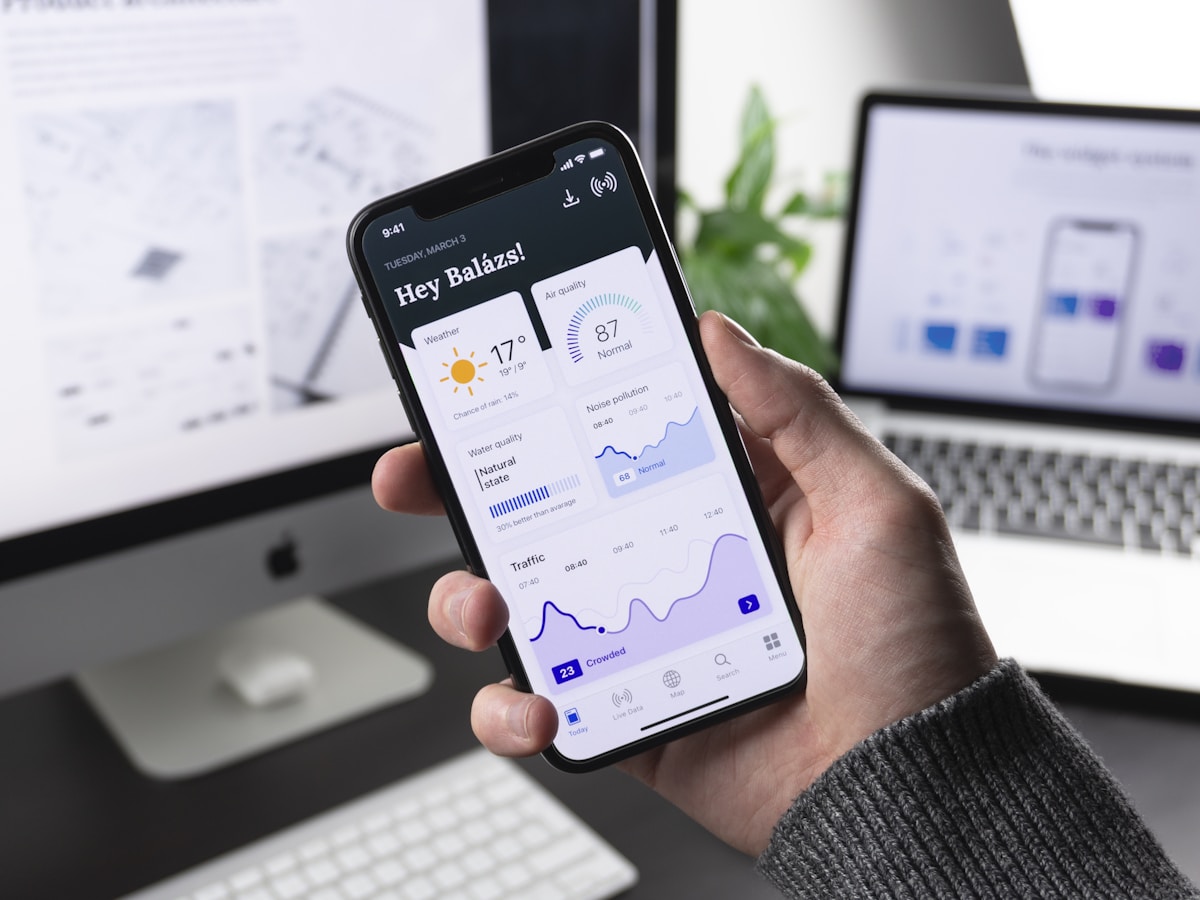
*For the first time, an AI assistant inside a super-app can negotiate with another person's AI assistant — without the humans typing a single word. (Image: Unsplash)*
At 6:15 PM on a Tuesday in Guangzhou, Li Ming wants to schedule dinner with his old college friend Zhang Wei. But instead of opening WeChat and typing a message, he does something different. He tells his AI assistant, Xiaowei: *"Find a time to have dinner with Zhang Wei this week. Somewhere near Zhujiang New Town. He likes Sichuan food."*
Li Ming's Xiaowei locates Zhang Wei's Xiaowei in WeChat's network. It introduces itself, states the purpose of the communication, and asks Zhang Wei's agent for authorization. Zhang Wei, sitting in a meeting across town, glances at his phone, sees the request, and taps "Allow."
Then something unprecedented happens. The two AI assistants retreat into an isolated digital space — invisible to either user's regular chat window — and begin negotiating. Li Ming's agent suggests Tuesday at 7 PM; Zhang Wei's agent counters that Wednesday works better. They exchange constraints: Li Ming has a gym class Tuesday evening, Zhang Wei has a project deadline Thursday. They compare restaurant options, check availability, and narrow the choices down to two possibilities.
Two minutes later, both men receive the same message on their phones: *"Wednesday 7 PM at Chuan Ban, Zhujiang New Town, or Thursday 8 PM at Ma La Tang House. Which do you prefer?"*
Li Ming taps the first option. Zhang Wei confirms. The reservation is booked. Total human typing required: about fifteen characters. Total human decision-making: two taps. Everything in between — the back-and-forth, the scheduling conflicts, the restaurant comparisons — happened between two AI agents that humans never saw.
This is not science fiction. This is "Xiaowei AI Social" (小微AI社交), a feature WeChat began testing with a small group of users in early September 2026. And while it is still in limited testing, it marks a watershed moment in the history of digital communication: for the first time, agent-to-agent (A2A) communication has entered an app with 1.44 billion monthly active users.
The Phenomenon by Numbers
The scale of what WeChat is attempting cannot be overstated. When Google launched the A2A protocol in April 2025, it had 50 partner organizations. When WeChat flips the switch on A2A communication — even in testing — it potentially activates the largest agent network on Earth overnight.
| Metric | Value | Source |
|---|---|---|
| WeChat + WeChat International MAU (Q2 2026) | 1.439 billion | Tencent Q2 Earnings |
| WeChat Mini Program MAU | 973 million | Tencent Internal Data |
| WeChat Pay Annual Active Users | 900+ million | Tencent Filings |
| Official Accounts on WeChat | 36+ million | WeChat Open Platform |
| Xiaowei Rollout Status (Sept 2026) | Limited Grey-Box Test | WeChat Internal |
| A2A Supporting Organizations Globally | 150+ | Linux Foundation / AAIF |
| Doubao MAU (ByteDance's AI Assistant) | ~226 million | QuestMobile |
| Yuanbao MAU (Tencent's Standalone AI) | ~41 million | QuestMobile |
The contrast is stark. While ByteDance's Doubao has captured 226 million monthly users as a standalone AI app — an impressive number by any measure — it remains an app that people must consciously open and use. WeChat's Xiaowei doesn't require that choice. It is embedded in the operating system of Chinese daily life, sitting in the top-left corner of the app's home screen, accessible to anyone who already has WeChat installed. That is virtually every smartphone user in China.
Martin Lau, Tencent's President, framed the stakes during the August 2026 earnings call: *"Xiaowei represents WeChat's second major leap forward into the AI era."* The first leap was the mini-program — which transformed WeChat from a messaging app into a super-app platform. The second, Lau suggested, would transform it from a super-app into an AI operating system where agents, not just humans, do the communicating.
Why Agent-to-Agent Communication Matters
To understand why this matters, it helps to distinguish between three fundamentally different modes of AI-assisted communication.
| Mode | Communication Chain | Who Decides What to Say | AI Role | Example |
|---|---|---|---|---|
| AI as Typist | Human → AI → Human | Human provides exact content | Generates or polishes text | "Help me draft a birthday message" |
| AI as Messenger | Human → AI → Recipient | Human approves content before sending | Delivers message, executes command | "Send Zhang Wei the dinner plan" |
| AI as Negotiator (A2A) | Human → Agent → Agent → Human | Agents exchange info; humans confirm at decision points | Negotiates, coordinates, synthesizes options | "Find a dinner time that works" |
The third mode — A2A — is qualitatively different. In the first two modes, the human is still the author of every message. The AI is a tool, like a more sophisticated keyboard or a faster courier. In the A2A mode, the human provides a *goal*, not a *message*. The agents determine what information to exchange, how to present options, and when to escalate back to their human principals.
This shift — from tool to delegate — redefines what a social platform connects. Until now, every social network in history has connected humans to humans. WeChat's A2A experiment extends that: the platform now connects a human's agent to another human's agent. The social graph doesn't just contain people anymore. It contains their computational representatives.
Why Now? The Convergence of Three Forces
Three independent developments converged in 2026 to make this possible.
First, the model layer matured. WeChat's Xiaowei runs on WeLM, the company's self-developed large language model. In August 2026, WeChat's official X account revealed that WeLM-80B — a mixture-of-experts model that activates only 3 billion parameters per token — was already deployed in Xiaowei for chat, search, and mini-program invocation. A 617-billion-parameter successor (WeLM-617B, activating 23B parameters per token) is in development, specifically targeting intelligent mini-program generation and Xiaowei tool creation. The model is now capable enough to handle multi-turn negotiation with reasonable reliability.
Second, the protocol layer standardized. Google's A2A protocol, donated to the Linux Foundation in June 2025 and moved to the Agentic AI Foundation (AAIF) in August 2026, now has 150+ supporting organizations. Version 1.0, released in March 2026, added signed agent cards, multi-tenancy, and version negotiation — the features that make enterprise-grade agent communication viable. IBM's competing Agent Communication Protocol (ACP) formally merged into A2A in August 2025, cementing A2A as the industry standard. For the first time, agents built by different teams on different frameworks can reliably communicate.
Third, the application layer reached saturation. China's consumer AI market has become crowded with capable assistants. Doubao (ByteDance), Yuanbao (Tencent), Wenxiaoyan (Baidu), and Doubao Real-Time Voice 3.0 (launched June 2026) all offer strong conversational AI. But standalone chatbots have hit a ceiling: users open them for specific tasks, then close them. The next frontier isn't a better chatbot — it's AI that operates within existing social relationships. And that's a problem only WeChat can solve, because only WeChat has 1.44 billion real identities with a decade of trust embedded in the platform.
| Force | Key Development | Timeline | Impact on A2A |
|---|---|---|---|
| Model Layer | WeLM-80B deployed; WeLM-617B in development | Aug 2026 | Reliable multi-turn negotiation |
| Protocol Layer | A2A v1.0; AAIF hosting; IBM ACP merge | Mar-Aug 2026 | Standardized agent interoperability |
| Application Layer | Standalone AI assistant saturation | 2026 | Need for AI embedded in social graph |
| Infrastructure | TokenHub: 25 trillion daily tokens, 5x growth in 2 months | Aug 2026 | Backend compute for agent operations |
| Capital | Tencent Q1 2026 capex: RMB 31.9 billion | May 2026 | Massive AI infrastructure investment |
Inside the A2A Flow: How Two Agents Actually Talk
The mechanics of WeChat's A2A implementation reveal careful product thinking. The process follows a strict protocol that preserves human agency at critical junctures while offloading the tedious middle layer to AI.
*The two-agent negotiation model: AI handles the exploration, humans make the decisions. (Image: Unsplash)*
Here is how the flow works in practice:
1. Intent Expression: User A tells their Xiaowei what they want to accomplish (e.g., schedule dinner, coordinate a group trip, plan a meeting).
2. Agent Discovery: User A's Xiaowei locates User B's Xiaowei within the WeChat network.
3. Authorization Request: User B's Xiaowei asks User B whether they want to allow their agent to participate in this communication. User B can decline, defer, or allow.
4. Isolated Negotiation: If authorized, both agents communicate in a private space *separate from* the users' regular chat window. The negotiation is invisible to either user's main conversation history.
5. Human Checkpoints: At every decision point — choosing between options, making commitments, spending money — the agents return to their respective humans for confirmation.
6. Result Delivery: Once both humans have confirmed, the agents execute the agreed-upon action (book the restaurant, send the calendar invite, etc.).
This design addresses the most obvious privacy concern: agents don't barge into your private conversations. The A2A communication happens in what is essentially a side channel, a sandboxed negotiation room that exists solely for that specific coordination task. Your regular chat history with a friend remains untouched — human-to-human conversations stay human.
The distinction between WeChat's two AI communication paths is equally important to understand:
| Dimension | AI as Messenger (代发消息) | A2A (Agent-to-Agent) |
|---|---|---|
| Who authors the content | Human (AI delivers) | Agents (humans confirm) |
| Where communication happens | In the regular chat window | In an isolated agent space |
| Recipient authorization needed | No | Yes — recipient must approve agent participation |
| Human involvement | High — approves each message | Low — only at decision points |
| Suitable for | Quick errands, simple messages | Complex coordination, negotiation, scheduling |
| AI role | Courier | Delegate |
The Broader A2A Landscape: WeChat vs. the World
WeChat is not the only player exploring agent-to-agent communication. But its approach is distinct from the Western model in important ways.
Google's A2A protocol is enterprise-focused — it defines how agents from different vendors discover each other via "Agent Cards," delegate tasks, and exchange results. It has been integrated into AWS Bedrock, Microsoft Azure AI Foundry, and Google Cloud. The production deployments are in supply chain management, financial services, insurance, and IT operations.
WeChat's A2A implementation is consumer-focused — it defines how personal agents representing individual humans can coordinate on social tasks. There is no direct Western equivalent at this scale. The closest analogues are experimental products like Elys and Second Me, which create digital twins for social interaction. But these require users to build new relationships on new platforms. WeChat's agents operate on top of relationships that already exist.
| Platform / Protocol | Focus | Scale | Governance | User Base |
|---|---|---|---|---|
| WeChat A2A (Xiaowei) | Consumer social coordination | 1.44B MAU (potential) | Tencent internal | WeChat users |
| Google A2A Protocol | Enterprise agent interoperability | 150+ organizations | AAIF / Linux Foundation | Cloud enterprise customers |
| MCP (Model Context Protocol) | Agent-to-tool connectivity | 110M+ monthly SDK downloads | AAIF | Developers / enterprises |
| Elys / Second Me | Digital twin social interaction | Early stage | Startup | Niche early adopters |
| OpenClaw | Personal agent task automation | Growing | Open source | Technical users |
The global agent communication protocol stack is consolidating rapidly. As of September 2026, the landscape looks like this:
| Protocol Layer | Function | Leading Standard | 2026 Status |
|---|---|---|---|
| Agent-to-Tool | Agent connects to services, data, APIs | MCP (Model Context Protocol) | 400M+ SDK downloads/month, universal adoption |
| Agent-to-Agent | Agent communicates with other agents | A2A (Agent2Agent) | v1.0 stable, 150+ orgs, production-ready |
| Agent-to-Human | Agent interfaces with human users | Proprietary (per platform) | Fragmented — each platform builds its own |
| Agent Identity | Authentication and trust for agents | Signed Agent Cards (A2A v1.0) | Emerging — cryptographic verification |
| Agent Payments | Financial transactions between agents | AP2 / x402 | Early — Mastercard, PayPal, Coinbase involved |
What makes WeChat's position unique is that it doesn't need to wait for any of these protocols to mature. It owns the entire stack — the model (WeLM), the platform (WeChat), the identity system (real-name verified accounts), the payment rail (WeChat Pay), and the service ecosystem (mini-programs). It can implement A2A communication using proprietary protocols internally, while the rest of the industry is still standardizing.
The Challenges: Trust, Privacy, and the Social Contract
For all its ambition, the A2A feature faces significant challenges that WeChat must navigate carefully.
The trust problem. WeChat's moat has always been real relationships — family, friends, colleagues — maintained through direct human communication. Users trust WeChat because they trust the people on it. If agents start interposing themselves in these relationships, the trust dynamic changes fundamentally. What happens when an agent misrepresents its owner's preferences? What happens when the negotiation goes wrong — the restaurant is wrong, the time doesn't work, the price is off? The human still bears the social cost, but now the error originated from an AI they only partially controlled.
The privacy paradox. The A2A feature requires agents to access personal information — calendar availability, food preferences, budget constraints — to negotiate effectively. The more data the agent has, the better it negotiates. But the more data it shares with another person's agent, the more privacy is eroded. Where is the line? Should your agent reveal to your friend's agent that you're free Tuesday because your gym class was cancelled? Probably not. But drawing that line in software, at scale, for billions of users, is extraordinarily difficult.
The authorization friction. Every A2A interaction requires the recipient to authorize their agent's participation. This is by design — a crucial privacy safeguard. But it also introduces friction. If a user receives ten A2A requests a day, do they want to manually approve each one? Over time, users might develop "authorization fatigue" and start blanket-approving requests, undermining the safeguard entirely.
The interference risk. WeChat's current AI implementation has already drawn criticism for adding friction to existing workflows. For instance, when users try to search after watching a video on WeChat Channels, the search query is sometimes redirected to "Ask AI" instead of showing traditional search results — a change that feels like the product searching for use cases rather than solving user problems. If A2A features similarly interrupt natural communication patterns, user backlash could be swift.
| Challenge | Severity | Mitigation Strategy | Risk if Unresolved |
|---|---|---|---|
| Trust erosion in social relationships | High | Human confirmation at every decision point | Users abandon agent-mediated communication |
| Privacy leakage through agent negotiation | High | Isolated negotiation spaces; data minimization | Regulatory action; user exodus |
| Authorization fatigue | Medium | Smart defaults; tiered authorization levels | Users blanket-approve, defeating safeguards |
| AI misrepresentation of user intent | Medium | Clear audit trails; easy correction mechanisms | Social friction; damaged relationships |
| Interference with existing UX | Medium | Careful rollout; opt-in only | User backlash; feature abandonment |
| Unequal agent capability between users | Low | Standardize minimum agent capabilities | Two-tier social experience |
The Strategic Implications: From Super-App to Agent Operating System

*When every user, merchant, and mini-program has an agent, commerce becomes a conversation between computational representatives. (Image: Unsplash)*
If the A2A experiment succeeds, the implications extend far beyond scheduling dinners. WeChat is positioning itself to become the operating system for an agent-mediated economy.
Consider the longer-term vision Martin Lau articulated: *"Every user, every mini-program, and every merchant could have their own agent, and these agents communicate with each other to complete tasks."*
In this world, the flow of commerce changes fundamentally. Today, if you want to buy a jacket on WeChat, you open a mini-program, browse products, select a size, and pay. Tomorrow, you might tell your agent: *"I need a lightweight jacket for a business trip to Beijing next week, under ¥800."* Your agent contacts the agents of several clothing merchants, compares options, negotiates prices, checks delivery timelines, and returns with three recommendations. You tap one. Done.
The mini-program — WeChat's revolutionary contribution to mobile computing — becomes a "Skill" that agents invoke on behalf of users, rather than an app that users navigate themselves. The entire user interface layer collapses into a conversational layer. This is why Tencent's TokenHub, its large model service platform, saw daily token calls exceed 25 trillion in August 2026 — a fivefold increase in just two months. The backend infrastructure for this agent economy is already being built.
What This Means for the Global AI Race
WeChat's A2A experiment is significant not just for China but for the global AI landscape. It represents a different answer to the question that every major tech company is asking: *How do AI agents integrate into human life?*
The American approach, led by OpenAI, Google, and Anthropic, has been to build ever-more-capable standalone agents and then integrate them into productivity tools — email, documents, code editors. The Chinese approach, exemplified by WeChat, is to embed agents into the existing social fabric, where relationships, commerce, and communication are already dense and interconnected.
Neither approach is obviously superior. The American model prioritizes capability and individual productivity. The Chinese model prioritizes distribution and social integration. But the Chinese model has one enormous advantage: distribution. When WeChat rolls out a feature to even 1% of its users, that is 14 million people — more than the entire user base of most AI products globally.
The race to build the agent layer of the internet may well be decided not by who builds the smartest agent, but by who owns the network those agents operate on. And no one owns a bigger network than WeChat.
*This article is part of AI in China's ongoing coverage of China's artificial intelligence revolution. For daily updates, follow us on Twitter/X and LinkedIn.*
Related Articles
- The 1.4 Billion User Agent: How Tencent's WeChat AI Bet Could End the Standalone Chatbot Era
- China's AI Agent Army: How OpenClaw and the Agent Workforce Are Reshaping Employment
- AI-Native Globalization: How ByteDance and DeepSeek Are Building Global-First AI Products
- China's AI Efficiency Revolution: Doing More With Less in the Post-Scale Era
Social Media Reactions
@TechInsider_ZH (Weibo, 2.4M followers):
微信让AI替人聊天,听起来像科幻,但仔细想想,我们早就在让AI帮我们回邮件了。区别只是规模和深度。关键问题是:当你的小微和别人的小微聊得热火朝天时,你还知道你们"聊"了什么吗?
*WeChat having AI chat on your behalf sounds like sci-fi, but think about it — we already let AI draft our emails. The difference is just scale and depth. The key question: when your Xiaowei and someone else's Xiaowei are having a lively exchange, do you actually know what they "talked" about?*
👍 8,234 · 🔁 3,412 · 💬 1,089
@AIResearcher_Li (Zhihu, AI Researcher, 890K followers):
A2A的本质不是技术突破,而是交互范式的转移。从"人操作软件"到"人委托代理",这个转变比任何单一技术进步都深刻。微信有全球最大的社交网络做试验场,这是任何实验室给不了的。
*The essence of A2A is not a technical breakthrough but a paradigm shift in interaction. From "humans operating software" to "humans delegating to agents" — this shift is more profound than any single technological advance. WeChat has the world's largest social network as its testing ground. No lab can provide that.*
👍 5,671 · 🔁 2,208 · 💬 743
@ProductManager_Wang (WeChat Official Account, 1.1M followers):
很多人担心AI会替代真人社交,我觉得方向反了。真正的问题是:AI会不会让本应该直接沟通的事情,变成了代理之间的博弈?当效率成为唯一目标,关系会不会被悄悄稀释?
*Many people worry AI will replace real social interaction. I think the concern is backwards. The real question: will AI turn things that should be directly communicated into agent-to-agent games? When efficiency becomes the only goal, do relationships get quietly diluted?*
👍 12,445 · 🔁 5,102 · 💬 1,956
@StartupFounder_Chen (X/Twitter, 340K followers):
WeChat's A2A test is the most important consumer AI experiment happening anywhere in the world right now. 1.4B users. Real relationships. Real transactions. If agents can coordinate within that network, the implications for commerce are staggering. The West has nothing comparable.
👍 4,102 · 🔁 1,987 · 💬 456
@DigitalSociologist_Zhao (Douban, 620K followers):
从"己所不欲勿施于人"到"己所欲,施于代理"。当我们的AI代理替我们做出选择时,我们还在坚持自己的价值观吗?技术中立是个幻觉——每一次代理交互都在编码某种价值排序。
*From "do not impose on others what you do not desire" to "what you desire, impose on your agent." When our AI agents make choices for us, are we still holding to our own values? Technological neutrality is an illusion — every agent interaction encodes a certain value hierarchy.*
👍 7,893 · 🔁 3,145 · 💬 1,234
@VC_Analyst_Global (LinkedIn, 280K followers):
Tencent's Q1 capex of RMB 31.9B is starting to make sense. They're not just building models — they're building the infrastructure for an agent-mediated economy. TokenHub at 25 trillion daily tokens. WeChat at 1.44B users. The pieces are aligning. The question is whether users are ready.
👍 3,567 · 🔁 1,445 · 💬 312
Editor at AI in China. Tracking Chinese AI companies, funding rounds, and the technologies reshaping global tech. More about me.