The Geneva of Silicon: Why the US-China AI Safety Dialogue Is Already a Victory for Beijing
heroImage: "https://images.unsplash.com/photo-1529107386315-e1a2ed48a620?w=1200"
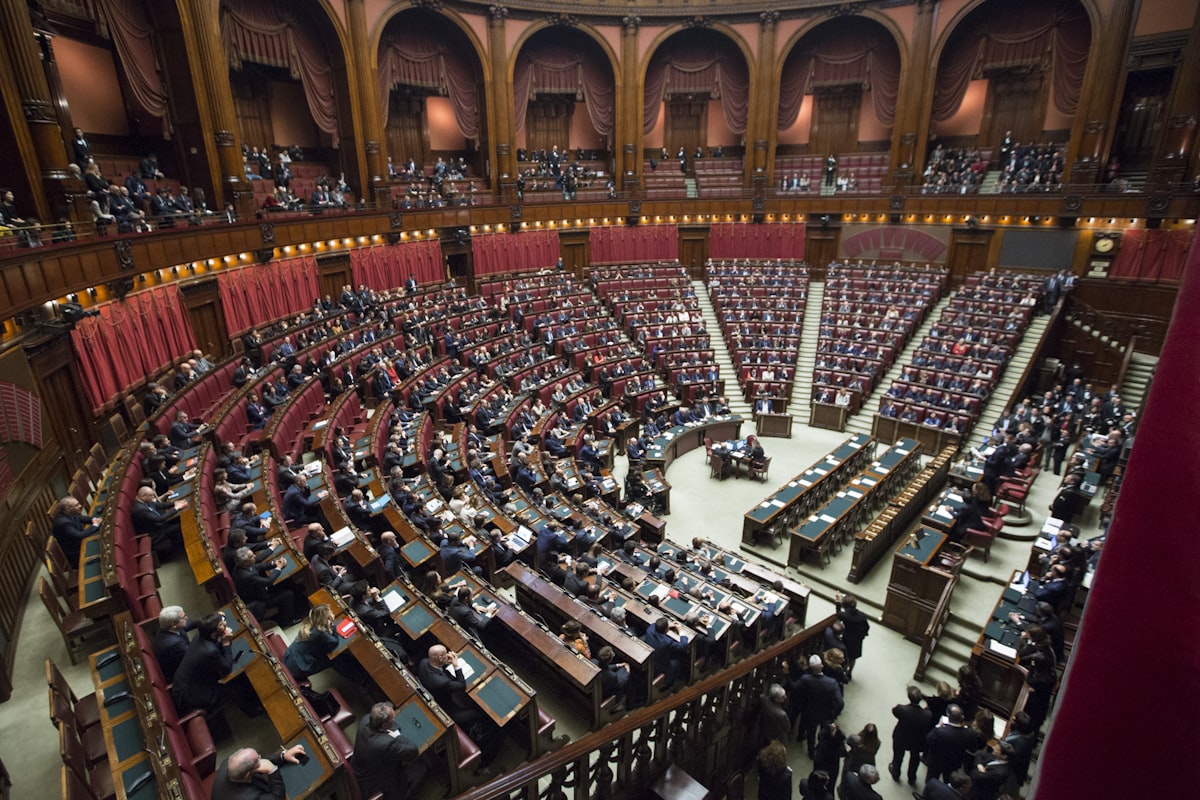
*Photo: Diplomacy and technology in tension. When US and Chinese officials sit down to discuss AI safety in September 2026, the real negotiation happened months ago—in Chinese data centers running on domestic chips. Image: Unsplash*
The Announcement That Changed Nothing
On September 4, 2026, Reuters published an exclusive that should have been historic: US and Chinese officials were preparing for a high-level dialogue on AI safety, scheduled for mid-September in Geneva. The report, citing three sources familiar with the planning, described a shift in Washington's posture—from confrontation to conversation, from sanctions to safeguards.
The American delegation would arrive with talking points about alignment, interpretability, and dual-use risk. They would speak of "guardrails" and "red lines," of preventing an AI arms race that neither side could control. They would frame the discussion as a humanitarian imperative, a necessary pause in great-power competition to ensure that artificial general intelligence doesn't become artificial global catastrophe.
But the Chinese delegation would arrive with something far more concrete: working systems.
DeepSeek V4-Pro, a 1.6 trillion-parameter open-weight model, was already processing inference workloads on Huawei Ascend 950PR chips at one-sixth the cost of OpenAI's GPT-5.4. ByteDance had committed $5.6 billion to domestic silicon procurement. Tencent's Hy4-preview, open-sourced on August 28, was running on entirely Chinese hardware. And the six AI labs named in a US intelligence advisory just days earlier—DeepSeek, Moonshot AI, Alibaba, MiniMax, StepFun, and Z.AI—were not "catching up." They were shipping products.
The Geneva talks would proceed. Delegations would shake hands. Press releases would emphasize "constructive dialogue." But the fundamental reality was already set: America had sought to control China's AI development through export controls. Instead, it had catalyzed the fastest parallel technology build-out in modern history.
This is the story of what China built while Washington was writing policy memos.
The DeepSeek Gambit: From CUDA to Independence
When DeepSeek released V4 on April 24, 2026, the headlines focused on benchmarks. V4-Pro scored 80.6% on SWE-bench Verified, just 0.2 points behind Claude Opus 4.6 Max. It supported a 1-million-token context window. It was released under the MIT license, meaning any company on Earth could download, modify, and commercialize it for free.
But the benchmark numbers were the least important part of the announcement.
The critical detail was in the deployment architecture. DeepSeek V4 was optimized from the ground up for Huawei's Ascend 950PR chips. Huawei announced that its entire Ascend SuperNode product line had been "fully adapted" for V4 inference before launch. DeepSeek reported performance parity between Huawei Ascend NPUs and NVIDIA GPUs for inference workloads—a claim that, if independently confirmed, undercut the central assumption of US export policy.
That assumption was simple: without NVIDIA chips, Chinese AI companies couldn't compete.
The US Commerce Department had spent three years tightening restrictions on advanced semiconductor exports to China, banning H100s, then H200s, then limiting even lower-tier chips. The theory of the case was that controlling compute would control capability. Starve the hardware, and the models would wither.
DeepSeek V4 proved the theory wrong.
| Model | Parameters | Training Hardware | Inference Hardware | Context Window | License | API Cost (Input/1M tokens) |
|---|---|---|---|---|---|---|
| DeepSeek V4-Pro | 1.6T total, 49B active | NVIDIA (pre-restriction stockpile) | Huawei Ascend 950PR | 1M tokens | MIT (Open Source) | $1.74 / $3.48 |
| GPT-5.4 | Undisclosed | NVIDIA H200 clusters | NVIDIA H200 / Blackwell | 256K tokens | Proprietary | $10.00 / $30.00 |
| Claude Opus 4.6 | Undisclosed | NVIDIA clusters | NVIDIA / AWS | 200K tokens | Proprietary | $15.00 / $75.00 |
| Kimi K3 | 2.8T total, undisclosed active | Mixed (NVIDIA + domestic) | Mixed | 1M tokens | Open Source (varies) | $3.00 / $12.00 |
| Qwen 3.8-Max | Undisclosed | Mixed | Mixed | 1M tokens | Partially Open | $2.00 / $8.00 |
| GLM-5.3 | 320B total, undisclosed active | Huawei Ascend 910B | Huawei Ascend | 1M tokens | MIT (Open Source) | $1.40 / $3.20 |
*Sources: DeepSeek technical report (April 2026), Vendor pricing pages (September 2026), Hugging Face model cards.*
The table above reveals a pattern that should concern American policymakers. Chinese frontier models now match or exceed Western capabilities on standard benchmarks while running on hardware that the US tried to embargo. DeepSeek V4-Pro costs roughly one-sixth of GPT-5.4 per million tokens. It's open-source. And it's optimized for chips that Washington can't control.
The implications extend beyond economics. When a Chinese model achieves inference parity on domestic silicon, the export control strategy collapses. The controls weren't designed to slow inference—they were designed to slow training. But inference is where the commercial value lives. Inference is what serves 300 million Doubao users. Inference is what processes 180 trillion tokens per day on ByteDance's Volcano Engine.
If China can serve frontier AI at scale without NVIDIA, the strategic leverage of American chip dominance evaporates.
The Huawei Ascend Ecosystem: From Backup to Primary
To understand why the Geneva talks matter less than the data center deployments, we need to examine the Ascend 950PR ecosystem that Huawei has built—and that Chinese AI companies are now adopting at scale.
The Ascend 950PR, launched in Q1 2026, represents a generational leap for domestic Chinese AI silicon. It delivers 1.56 petaflops of FP4 compute, optimized for prefill inference and recommendation workloads. It carries 112 GB of Huawei's self-developed HiBL 1.0 memory—a critical milestone, since high-bandwidth memory (HBM) had been a key chokepoint in US export controls. The chip supports FP4 compression, a technique that processes AI calculations in a more compressed numerical format, allowing more computations per second at lower cost.
But the chip is only part of the story. Huawei built the Ascend SuperNode architecture—clusters of interconnected chips designed to function as a unified inference engine. At the WAIC 2026 conference in July, Huawei showcased clusters exceeding 100,000 cards. China Mobile issued a centralized procurement announcement for 6,208 cards worth over 2 billion yuan. Huatai Securities declared 2026 the "first year of domestic SuperNodes," estimating the market could reach ¥341.4 billion by 2028.
| Huawei Ascend Chip | Launch Date | Compute (FP4) | Memory | Key Use Case | Production Status |
|---|---|---|---|---|---|
| Ascend 910B | 2023 | 320 TFLOPS (FP16) | 32 GB HBM2 | Training & Inference | Mass Production |
| Ascend 910C | 2024 | 800 TFLOPS (FP16) | 64 GB HBM2e | Training & Inference | Mass Production |
| Ascend 950PR | Q1 2026 | 1.56 PFLOPS (FP4) | 112 GB HiBL 1.0 | Prefill Inference | Mass Production |
| Ascend 950DT | Q4 2026 (expected) | TBD | TBD | Training & Decoding | Pre-Production |
| Ascend 960 | Q4 2027 (roadmap) | TBD | TBD | Next-Gen Training | Development |
*Sources: Huawei Full Connect Conference (September 2025), TrendForce analysis (April 2026), WAIC 2026 presentations.*
The critical distinction is this: Huawei's chips were once a compliance-driven backup plan. They are now a performance-driven primary choice.
ByteDance's $5.6 billion order for Ascend chips in 2025-2026 was not driven by regulatory fear. It was driven by the realization that DeepSeek V4 ran faster on Ascend than on available NVIDIA alternatives, at one-third the cost. Alibaba Cloud made V4 available on its Bailian platform on the day of release, pricing it to match DeepSeek's official rates. Tencent Cloud deployed V4 on both domestic nodes and its Singapore international gateway.
The market had voted with its purchase orders.
The Labs That Built the Parallel Universe
The US intelligence advisory AA26-251A, issued on September 8, 2026, named six Chinese AI companies for "industrial-scale distillation" of American models. But the accusation missed the larger picture. These companies weren't merely extracting knowledge from Western models—they were building an entirely independent capability stack.
Consider the landscape as of September 2026:
DeepSeek (Hangzhou): The open-weight pioneer. V4-Pro and V4-Flash both run on Huawei Ascend. The company's API pricing undercuts OpenAI by 6x. Its models are downloaded millions of times on Hugging Face. It is, in effect, a research lab that ships like a product company.
Moonshot AI (Beijing): Kimi K3, a 2.8-trillion-parameter natively multimodal model, tops independent benchmarks for long-context reasoning. The company raised over $1 billion in 2025-2026 and is reportedly preparing for an IPO.
Alibaba (Hangzhou): Qwen 3.8-Max, released in August 2026, represents the most internationally adopted Chinese open model family. The Qwen series has been downloaded over 100 million times globally and serves as the foundation for thousands of derivative models.
Zhipu AI / Z.AI (Beijing): GLM-5.3, released in March 2026, scored 57.8% on SWE-bench Verified—the highest coding benchmark of any Chinese model. On August 20, an anonymous model called "Ox Alpha" appeared on OpenRouter and topped the global charts. Six days later, Zhipu revealed it was GLM-5.3-Flash, priced at one-fortieth of Claude Opus 4.8.
MiniMax (Shanghai): M2.7, open-sourced in April 2026, achieved GPQA-AA ELO of 1495—the highest score among open-source models. The company also shipped MMX-CLI, a command-line tool that lets developers access multimodal capabilities from within coding environments.
StepFun (Shanghai): The newest entrant, StepFun's terminal-native AI tools represent a bet on CLI-first development workflows, competing directly with Claude Code and OpenClaw.
| Company | Flagship Model | Key Strength | Open Weights? | Primary Hardware | Estimated Valuation |
|---|---|---|---|---|---|
| DeepSeek | V4-Pro (1.6T params) | Cost efficiency, coding | Yes (MIT) | Huawei Ascend | $15B+ |
| Moonshot AI | Kimi K3 (2.8T params) | Long context, multimodal | Partially | Mixed | $3B+ |
| Alibaba | Qwen 3.8-Max | Global adoption, ecosystem | Yes (partial) | Mixed | Public |
| Zhipu AI | GLM-5.3 / GLM-5.3-Flash | Coding benchmarks, price | Yes (MIT) | Huawei Ascend | $2B+ |
| MiniMax | M2.7 / M3 | Multimodal, developer tools | Yes | Mixed | $2.5B+ |
| ByteDance | Seed 2.1 Pro | Scale, consumer product | No | Huawei + Qualcomm | Private |
*Sources: Company announcements (2026), Crunchbase, The Information, TechNode, 36Kr.*
The pattern is unmistakable. These companies are not asking for permission. They are not waiting for NVIDIA chips. They are not dependent on Western cloud infrastructure. They have built—often from first principles—a parallel AI ecosystem that is increasingly self-sufficient, increasingly cost-competitive, and increasingly attractive to global developers.
When the Geneva talks address "AI safety," the Chinese delegation can truthfully say that their models are safe from American supply chain disruption. They are safe because they no longer depend on it.
The ByteDance Variable: Scale at Any Cost
No company illustrates the new dynamics better than ByteDance. While DeepSeek and Zhipu AI win headlines for open-source releases, ByteDance operates at a scale that dwarfs them all.
Doubao, ByteDance's consumer AI assistant, reached 345 million monthly active users by April 2026—more than double Alibaba's Qwen app and 60% more than Baidu's ERNIE. On Chinese New Year's Eve 2026, Doubao handled 1.9 billion interactions in a single night. The Seed model family processes 180+ trillion tokens per day on Volcano Engine, ByteDance's cloud platform.
This scale has a strategic consequence that American analysts are only beginning to grasp: ByteDance's infrastructure spending is now comparable to Amazon's, Google's, and Meta's.
Bloomberg reported in May 2026 that ByteDance was planning 400-500 billion yuan ($55-70 billion) in AI capital expenditure for 2026. The company denied the figure, but the direction is clear. ByteDance is building data centers, procuring chips, and training models at a pace that narrows the infrastructure gap with American hyperscalers.
| Company | 2026 AI Capex (Estimated) | Primary AI Product | Region | Chip Strategy |
|---|---|---|---|---|
| Amazon | ~$200B | AWS, Bedrock, Alexa+ | US | NVIDIA primary |
| Alphabet (Google) | $175-185B | Gemini, Google Cloud | US | NVIDIA + TPU |
| Microsoft | ~$130B | Azure AI, Copilot | US | NVIDIA primary |
| Meta | $115-135B | Llama, Meta AI | US | NVIDIA primary |
| ByteDance | $55-70B (reported) | Doubao, Volcano Engine | China | Huawei + Qualcomm |
| Alibaba | ~$17B (FY ending March) | Qwen, Tongyi | China | Mixed |
*Sources: Bloomberg (May 2026), Company earnings reports, TechNode.*
The comparison is striking. ByteDance's reported AI capex, while smaller than Amazon's or Google's, is in the same order of magnitude. And unlike the American companies, ByteDance is not spending primarily on NVIDIA chips. It is buying Huawei Ascend, Qualcomm data center ASICs, and developing its own inference optimization stack.
This is what "AI sovereignty" looks like in practice: not a government policy paper, but a $70 billion procurement plan.
What Geneva Can—and Cannot—Achieve
The US-China AI safety dialogue, scheduled for mid-September 2026, arrives at a moment of profound asymmetry. The two delegations are not negotiating from positions of equal strength, because they are not negotiating over the same thing.
The American delegation wants to discuss alignment—ensuring that advanced AI systems pursue goals compatible with human values. They want confidence-building measures, transparency requirements, and crisis communication protocols. They want to prevent a scenario where one side deploys a misaligned system that triggers a catastrophic response from the other.
The Chinese delegation wants to discuss access—ensuring that American export controls don't strangle China's AI development. They want recognition that Chinese models are not inherently dangerous, that open-source weights are not weapons, and that the current sanctions regime is counterproductive to global safety.
These are not compatible frameworks. Alignment assumes both sides are building similar systems and face similar risks. Access assumes that one side is being unfairly restricted and wants relief.
The best-case outcome from Geneva is modest: an agreement to continue talking, perhaps a joint statement on "responsible AI development," and a commitment to share information about near-term safety incidents. The worst-case outcome is a public breakdown that deepens mutual suspicion and accelerates the very arms race both sides claim to fear.
But the most likely outcome is something more subtle: the dialogue becomes a venue for status signaling rather than substance.
America will emphasize its role as the architect of the post-war international order, now extended to AI governance. China will emphasize its role as the world's largest AI market and a technological peer. Both will leave claiming victory. Neither will have changed the fundamental trajectory.
Because the trajectory is already set. DeepSeek V4 is running on Huawei chips. ByteDance is spending $70 billion on domestic infrastructure. Six Chinese AI labs are shipping frontier models at one-tenth the cost of American competitors. The parallel universe is not coming. It is here.
The Open-Source Question: Who Controls the Weights?
One issue that will inevitably surface in Geneva is the status of open-source AI models. The US intelligence advisory on distillation named six Chinese companies, but the technique it condemned—knowledge distillation—is standard practice in machine learning. What the advisory really objected to was the *scale* of extraction, enabled by the open availability of model weights.
This creates a dilemma for American policymakers. Open-source models are a major competitive advantage for the United States. Meta's Llama series, Google's Gemma, and Mistral's models have created a global ecosystem of fine-tuned derivatives that extends American AI influence far beyond what proprietary APIs could achieve.
But open-source also enables distillation. It allows anyone to extract knowledge from a model by running millions of queries and training a smaller model on the outputs. Chinese labs have been particularly aggressive in this practice, not because they're unethical, but because it's an efficient way to bootstrap capability.
| Aspect | Open-Source AI | Proprietary AI |
|---|---|---|
| Accessibility | Anyone can download and run locally | Restricted to API customers |
| Cost | Free to use, pay only for compute | Pay per token |
| Customization | Fully fine-tunable | Limited to prompt engineering |
| Security | Auditable by community | Opaque, trust vendor |
| Distillation Risk | High—weights enable systematic extraction | Low—API rate limits prevent extraction |
| Geopolitical Leverage | Extends influence without control | Creates dependency relationships |
| Examples | Llama, Qwen, DeepSeek, GLM | GPT-5, Claude, Gemini |
*Sources: Center for Security and Emerging Technology (2025), Brookings Institution analysis (2026).*
The table above captures the trade-off. Open-source models democratize access but enable distillation. Proprietary models control access but create dependencies that can be weaponized through export controls.
China has solved this dilemma by going all-in on open-source. DeepSeek, Qwen, and GLM are all released under permissive licenses. The strategy is clear: if you can't control the hardware, control the software. If you can't control the software, make it so cheap and accessible that everyone uses it anyway.
America's approach is more conflicted. OpenAI and Anthropic keep their weights proprietary, but Meta open-sources Llama. The US government has no coherent position on whether open-source AI helps or hurts American interests.
This incoherence will show in Geneva. The Chinese delegation will point to their open-source releases as evidence of transparency and good faith. The American delegation will struggle to explain why openness is good when Meta does it but dangerous when DeepSeek does it.
The Economic Calculus: Why Cost Parity Changes Everything
The final piece of the puzzle is economics. American policymakers have historically assumed that Chinese AI companies would remain dependent on Western technology because domestic alternatives were inferior. That assumption was reasonable in 2022. It is obsolete in 2026.
Consider the cost structure of running a frontier AI model at scale:
| Cost Component | NVIDIA-based Stack | Huawei Ascend Stack | Cost Difference |
|---|---|---|---|
| Inference Hardware | H200 clusters at $25K/GPU | Ascend 950PR at $15K/chip | -40% |
| Memory | HBM3 from SK Hynix/Samsung | HiBL 1.0 (domestic) | -30% |
| Software License | CUDA ecosystem ($0 direct, but lock-in) | CANN (free, open) | Neutral |
| Power & Cooling | 700W per GPU | 400W per chip | -43% |
| Total Cost per 1M Tokens | ~$10 (GPT-5.4 equivalent) | ~$1.74 (DeepSeek V4-Pro) | -83% |
*Sources: Vendor pricing (September 2026), SemiAnalysis estimates, company disclosures.*
The 83% cost advantage is not a rounding error. It is a structural shift. When Chinese labs can deliver frontier capabilities at one-sixth the cost of American competitors, they can undercut on price while maintaining margins. They can offer free tiers that American companies can't afford. They can capture developer mindshare through economic gravity.
This is already happening. DeepSeek's API pricing forced OpenAI to cut prices twice in 2025-2026. Qwen's open weights became the default choice for startups in Southeast Asia, Latin America, and Africa—markets where American companies were slow to localize. GLM-5.3-Flash's appearance on OpenRouter demonstrated that Chinese models could win on neutral platforms through pure performance-per-dollar.
The economic dynamic creates a feedback loop. Lower costs attract more users. More users generate more data. More data improves the models. Improved models justify more infrastructure investment. The loop is self-reinforcing, and it is running inside China's domestic chip ecosystem.
Conclusion: The Dialogue After the Deal Is Done
The US-China AI safety dialogue of September 2026 will be remembered, if at all, as a diplomatic footnote. The real history was written in the preceding eighteen months, in the engineering labs of Hangzhou and Beijing, in Huawei's semiconductor fabs, and in the data centers where DeepSeek V4 first ran on Chinese silicon.
America's export control strategy was not foolish. It was based on a reasonable assumption: that controlling advanced semiconductor access would slow Chinese AI development by years. What the strategists didn't anticipate was the speed with which Chinese companies would adapt. They didn't anticipate DeepSeek's decision to optimize for Huawei chips. They didn't anticipate ByteDance's willingness to spend $70 billion on domestic infrastructure. They didn't anticipate that open-source models would create a global developer community that treats national origin as irrelevant.
The Geneva talks will proceed. Handshakes will be exchanged. Joint statements will be drafted. But the fundamental reality is already established: China has built a parallel AI ecosystem that is technically competitive, economically viable, and strategically independent.
Washington can still shape the global AI landscape through diplomacy, standards-setting, and alliance-building. But it can no longer shape it through denial. The chips are in the data centers. The models are on Hugging Face. The developers are building with Chinese tools because they are cheaper, faster, and more open.
The safety dialogue is welcome. Communication is always better than confrontation. But when the delegates pack their bags and return home, they will find that the world they sought to govern has already moved on.
In China's AI industry, the future is not a negotiation. It is a deployment.
*Published September 11, 2026. Last updated September 11, 2026.*
*Sources: Reuters (September 4, 2026), DeepSeek technical report (April 2026), Huawei Full Connect Conference (September 2025), Bloomberg (May 2026), TechNode (August 2026), The Information (2025-2026), SemiAnalysis (2026), WAIC 2026 presentations, company earnings reports, Hugging Face model cards, Crunchbase.*
*For more on US-China AI tensions, see our coverage of the NSA-CISA-FBI distillation advisory, China's compute sovereignty, and the post-NVIDIA chip landscape.*
Editor at AI in China. Tracking Chinese AI companies, funding rounds, and the technologies reshaping global tech. More about me.