Suiyuan's ¥6.1 Billion IPO: The Final Dragon Lands and China's AI Chip Market Hits an Inflection Point
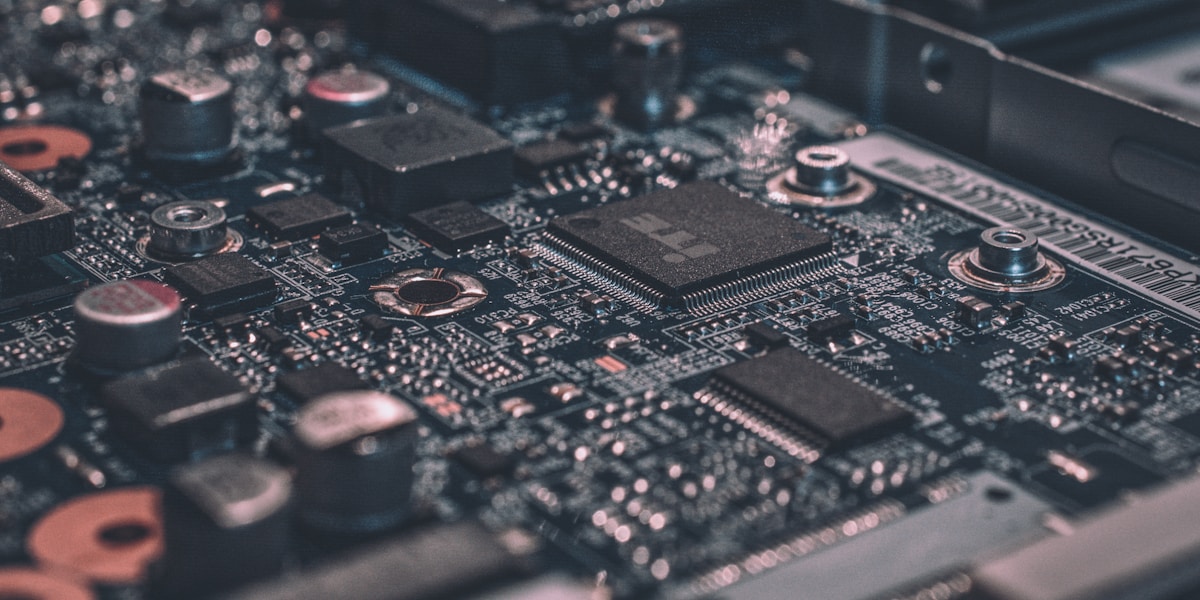
*China's domestic AI chip sector is entering a new phase of capital-market maturity. (Image: Unsplash)*
The 8 PM Call That Changed Everything
At 8:00 PM on August 31, 2026, in a conference room on the 42nd floor of CITIC Securities' Beijing headquarters, a single number flashed across the screen and sent a ripple through China's semiconductor industry. ¥142.18. That was the final IPO price for Suiyuan Technology's STAR Market listing—valuing the eight-year-old AI chip company at roughly ¥61.2 billion ($8.6 billion) and raising ¥6.12 billion in fresh capital.
For Zhao Lidong, Suiyuan's chairman and former AMD executive, the moment was less a celebration than a checkpoint. "We've been asked every year since 2020 when we'll go public," he told investors during the online roadshow three days later. "The real question was never timing. It was whether we had built something that could survive without the training wheels of private capital."
The answer, at least according to the 7.03 million retail investors who applied for shares, appears to be yes. Suiyuan's online lottery draw produced a staggeringly low winning rate of 0.0246%—roughly one in 4,000 applicants received an allocation. At the average first-day pop of 455% for STAR Market listings this year, a single winning lot of 500 shares could yield an instant paper gain of roughly ¥324,000 ($45,500).
But the IPO is about far more than retail speculation. With Suiyuan's debut, the so-called "Four Little Dragons" of China's domestic GPU sector—Moore Threads, MetaX (沐曦), Biren Technology (壁仞), and now Suiyuan—will all be publicly traded. The quartet, which didn't exist a decade ago, now commands a combined market capitalization exceeding ¥1 trillion ($140 billion). That is larger than the entire GPU revenue of AMD in 2025.
From Zero to ¥1 Trillion in Eight Years
To understand how four startups reached this point, you have to rewind to 2018. The Trump administration had just imposed the first round of semiconductor export controls on China. NVIDIA's A100 and H100 chips, the gold standard for AI training, were increasingly difficult to obtain. And a handful of Chinese engineers—many of them veterans of AMD, NVIDIA, and Huawei—began asking the same question: *What if we had to build this ourselves?*
Suiyuan was founded that year in Shanghai by Zhao Lidong and Zhang Yalin, both former AMD senior executives. Their initial strategy was deliberately contrarian. While most domestic chip startups chose to emulate NVIDIA's CUDA ecosystem—offering compatibility layers that let existing code run on Chinese hardware—Suiyuan committed to a fully proprietary architecture called DSA (Domain-Specific Architecture) paired with its own software stack.
"Compatibility is a trap," Zhang explained in a 2024 interview. "It gets you customers quickly, but your destiny is tied to NVIDIA's roadmap. If they change an instruction set or a driver API, you're scrambling. We chose the harder path because it's the only one that leads to real independence."
That harder path required extraordinary capital. Between 2023 and 2025, Suiyuan burned through ¥3.68 billion in R&D alone—more than its cumulative revenue over the same period. By the end of 2025, the company had accumulated unrecovered losses of ¥4.44 billion. Tencent, which invested across six funding rounds and now holds approximately 20.3% of Suiyuan's shares, became both the company's largest shareholder and its single biggest customer.
The patience is now paying off. In the first half of 2026, Suiyuan generated ¥1.12 billion in revenue—a 279% year-over-year surge that already exceeds its full-year 2025 total. For the first nine months of 2026, the company projects revenue between ¥2.3 billion and ¥3.0 billion, representing growth of 326% to 455%.
| Year | Revenue (¥B) | YoY Growth | Net Loss (¥B) | R&D Spend (¥B) |
|---|---|---|---|---|
| 2023 | 0.30 | — | -1.57 | 1.12 |
| 2024 | 0.72 | +140% | -1.50 | 1.45 |
| 2025 | 0.99 | +37% | -1.20 | 1.48 |
| H1 2026 | 1.12 | +279% | -0.44* | 0.89 |
*Suiyuan's H1 2026 loss of ¥444 million was 38% narrower than the prior year. The company expects to reach consolidated profitability by 2026 or 2027. Source: Company prospectus, Caixin.*
The Four Dragons: A Financial Snapshot
Suiyuan's IPO doesn't just validate one company. It completes a capital-market arc for the entire domestic GPU sector. The "Four Little Dragons" all went public within a 12-month window, and their H1 2026 financials tell a story of an industry transitioning from R&D to revenue.
| Company | Ticker | H1 2026 Revenue (¥B) | YoY Growth | Adjusted Loss (¥B) | Loss Change |
|---|---|---|---|---|---|
| Moore Threads | 688795.SH | 17.36 | +147% | -1.51 | Narrowing 52% |
| MetaX (沐曦) | 688802.SH | 13.20 | +45% | -0.49 | Narrowing 76% |
| Biren (壁仞) | 06082.HK | 12.40 | +1,998% | -3.37 | Narrowing 39% |
| Tianshu (天数) | 09903.HK | 9.46 | +192% | -5.10** | Expanding |
| Suiyuan (燧原) | 688801.SH | 11.20 | +279% | -0.44 | Narrowing 38% |
**Tianshu's reported H1 profit included ¥760 million in fair-value gains from strategic investments. Excluding this, core operations remained loss-making. Source: Company filings, Caixin, TechNode.*
The numbers reveal several patterns. First, revenue acceleration is real: every company except MetaX grew by triple digits, with Biren's nearly 20-fold surge reflecting a particularly low base in H1 2025. Second, losses are narrowing for three of the five, suggesting operational leverage is kicking in as scale increases. Third, R&D intensity remains brutal: Moore Threads spent 44% of revenue on R&D, Biren 65%, and Tianshu 59%. These are pharmaceutical-level burn rates.
But the most striking figure is the one that sits above all five companies. In H1 2026, Cambricon (寒武纪)—the elder statesman of the group, founded in 2016 and listed since 2020—reported revenue of ¥6.0 billion (up 108%) and a net profit of ¥2.31 billion. It has now been profitable for seven consecutive quarters. Cambricon's success proves the model can work. The question for the Four Dragons is who follows next.
The Demand Tsunami Nobody Saw Coming
The revenue explosion across the sector is being driven by a supply-demand imbalance that has turned China's AI chip market into a seller's paradise.
According to the China Academy of Information and Communications Technology (CAICT), domestic AI compute demand surged 417% year-over-year in Q1 2026. Supply, constrained by foundry capacity and the lingering effects of US export controls, grew only 128%. The result: shortages, price hikes, and a frenzied procurement environment where state-owned enterprises, cloud providers, and AI startups compete for every available card.
"Finding idle GPUs has become like finding an open parking spot in downtown Beijing during rush hour," said Xuan Shanming, CTO of SenseTime's AI infrastructure division, in a Caixin interview. "Operators are reactivating cards that sat unused for two years. Prices have jumped across the board."
The supply crunch has created a peculiar dynamic. Chinese tech giants that once relied almost entirely on NVIDIA are now actively building out domestic-chip data centers. ByteDance, Alibaba, and Tencent have all announced deployments of国产 (domestic) GPU clusters exceeding 10,000 cards. For Suiyuan specifically, Tencent accounted for 83.8% of revenue in 2025—a concentration risk the company is now racing to diversify by pushing its fourth-generation products into gray-scale testing at other internet clients.
| Demand Driver | Q1 2026 Growth | Primary Buyers |
|---|---|---|
| Large model training | +520% | ByteDance, Alibaba, Baidu |
| Inference scaling | +380% | Tencent, AI startups, gov |
| Smart city / surveillance | +210% | Local governments, SOEs |
| Scientific computing | +190% | Universities, CAS institutes |
| Edge / autonomous driving | +160% | EV makers, tier-1 cities |
*Source: CAICT, company disclosures. Growth figures are year-over-year for Q1 2026.*
The procurement shift is also getting policy tailwinds. In May 2026, China's Information Security Evaluation Center and the State Secrecy Technology Evaluation Center jointly released the first-ever AI chip security certification catalog. All nine domestic AI chips evaluated—including products from Huawei Ascend, Moore Threads, MetaX, and Suiyuan—received Grade I security ratings. For government and state-owned enterprise procurement, this certification is rapidly becoming a de facto prerequisite, effectively creating a protected domestic market even for chips that remain technically behind NVIDIA's latest offerings.
SMIC's Invisible Hand
None of this growth would be possible without the manufacturing layer. And here, the story gets more complex.
Morgan Stanley estimates that China's domestic production capacity for GPUs at 12nm and below—the node range where most AI accelerators are fabricated—will expand from roughly 80,000 wafers per month in 2025 to 170,000 wpm in 2026 and 300,000 wpm by 2027. Over 80% of this capacity comes from SMIC, which has spent the past four years optimizing yield rates on its N+2 process (broadly equivalent to 7nm) despite lacking access to extreme ultraviolet (EUV) lithography equipment.
JPMorgan supply-chain research suggests that the second-tier domestic GPU makers—Suiyuan, Biren, and Tianshu—only gained the ability to tape out chips on SMIC's advanced nodes in late 2025. This implies that the production ramp visible in H1 2026 revenue figures is merely the first wave. From the second half of 2026 onward, shipment volumes are expected to increase substantially as more designs complete verification and enter mass production.
| Year | SMIC 12nm+ GPU Capacity (wpm) | Estimated Domestic GPU Units (annual) |
|---|---|---|
| 2024 | ~45,000 | ~120,000 |
| 2025 | 80,000 | ~280,000 |
| 2026E | 170,000 | ~650,000 |
| 2027E | 300,000 | ~1,200,000 |
*Source: Morgan Stanley, JPMorgan supply-chain research. Unit estimates assume average die size of 600mm² and 80% yield at volume.*
The manufacturing constraint creates a winner-take-most dynamic. Companies that secured SMIC capacity early—primarily through multi-year agreements and strategic partnerships with the foundry—are now able to fulfill orders while competitors wait in line. Suiyuan's chairman disclosed during the IPO roadshow that the company's S60 product line has secured "full capacity guarantees from a cost-optimized supply chain"—a statement widely interpreted as confirmation of locked-in SMIC wafer commitments.
The Valuation Tightrope
For all the operational momentum, the financial markets are asking a harder question: What are these companies actually worth?
Suiyuan's IPO priced at a price-to-sales ratio of 61.8x based on 2025 revenue. That sounds astronomical until you compare it to Moore Threads and MetaX, which currently trade at roughly 165x sales. Cambricon, the only profitable member of the group, commands a market cap of approximately ¥443 billion despite 2025 revenue of just ¥6.5 billion—a P/S ratio north of 68x.
| Company | Market Cap (¥B) | P/S Ratio (2025) | P/S Ratio (2026E) | Profitability Status |
|---|---|---|---|---|
| Cambricon | 443 | 68x | ~37x | Profitable (7 qtrs) |
| Moore Threads | 268 | 165x | ~55x | Loss narrowing |
| MetaX | 244 | 165x | ~75x | Loss narrowing |
| Biren | ~78* | N/A | ~25x | Loss narrowing |
| Suiyuan (IPO) | 61 | 62x | ~12x** | Loss narrowing |
*Biren and Tianshu listed in Hong Kong; market caps fluctuate with HKEX trading. **Suiyuan's 2026E P/S based on company projection of ¥2.3-3.0B for first nine months. Source: Company filings, exchange data.*
The valuation dispersion reflects investor uncertainty about who will survive the inevitable shakeout. China's AI chip market, while growing explosively, is still a fraction of the global total—approximately ¥1.8 trillion ($250 billion) in 2025, or roughly 22% of worldwide demand. And unlike NVIDIA, which generates two-thirds of its revenue outside the US, the domestic Chinese GPU makers are almost entirely dependent on the home market. Moore Threads' overseas revenue dropped to 0% in H1 2026. Cambricon's was 0.5% in 2025.
This geographic concentration creates a structural ceiling. If China's AI investment cycle slows—or if the government tightens procurement budgets after a multi-year splurge—these companies have nowhere else to go. As one chip executive candidly put it in a Caixin interview: "The money we make on this generation of chips gets reinvested immediately into the next generation. We're not profitable because we choose not to be, but also because we can't afford to stop running."

*Domestic GPU clusters are being deployed at scales that were unthinkable three years ago. (Image: Unsplash)*
Suiyuan's Wager on Independence
What distinguishes Suiyuan from its three publicly listed rivals is its architectural bet. Moore Threads, MetaX, and Biren all pursued CUDA compatibility—software layers that translate NVIDIA's proprietary API calls into instructions their own chips can execute. This approach minimizes friction for customers migrating existing workloads. But it also means these companies are permanently playing catch-up to NVIDIA's software roadmap.
Suiyuan went the other way. Its TopsRider software platform and GCU chip architecture are entirely proprietary. The company has built its own compiler, runtime, and optimization libraries from scratch. For customers willing to invest in porting their models, Suiyuan claims 15-30% better inference efficiency than CUDA-compatible alternatives on equivalent silicon area.
The trade-off is clear: higher performance potential, but a steeper adoption curve. Suiyuan's customer concentration at Tencent—83.8% of 2025 revenue—reflects the reality that only deep-pocketed tech giants can afford the engineering investment required to migrate away from CUDA. The company's fourth-generation chips, currently in gray-scale testing with "multiple potential customers," are designed to lower this barrier by offering broader framework support for PyTorch, TensorFlow, and the DeepSeek model ecosystem.
| Architecture Approach | Representative Companies | Pros | Cons |
|---|---|---|---|
| CUDA Compatible | Moore Threads, MetaX, Biren | Easy migration, large software base | Dependent on NVIDIA roadmap, legal risk |
| Fully Proprietary | Suiyuan | Maximum optimization, true independence | Steep adoption, limited ecosystem |
| Hybrid (Open Standards) | Huawei Ascend | Government support, ecosystem investment | Performance gap at frontier |
| Domain-Specific (RPU) | Qingwei Intelligence | Ultra-low power, edge efficiency | Limited to inference workloads |
*Suiyuan's DSA+proprietary stack sits in a unique position among Chinese AI chip architectures. Source: IT Home, company disclosures.*
Whether this bet pays off will determine whether Suiyuan becomes the Cambricon of cloud AI—profitable, defensible, and strategically essential—or ends up as a cautionary tale about the costs of going it alone in a CUDA-dominated world.
The Global Context: NVIDIA's China Problem
The domestic GPU boom is inseparable from what is happening in Santa Clara. In NVIDIA's Q4 FY2026 earnings call, CFO Colette Kress confirmed a fact that would have been unthinkable three years earlier: the H200 chips that the US government had approved for export to China had generated zero revenue. Not a small amount. Zero.
This is the paradox of US semiconductor policy. Export controls designed to slow China's AI development have instead catalyzed a domestic replacement industry that is now growing at triple-digit rates. The domestic GPU market share in China, measured by shipment volume, rose from 8.3% in 2022 to 17.4% in 2024. Industry analysts project it could exceed 50% by 2029.
NVIDIA is not standing still. The company continues to develop China-specific variants of its chips—trimmed-down versions that comply with export regulations while offering superior performance to domestic alternatives. But the gap is closing faster than many expected. When DeepSeek released its R1 reasoning model in early 2025, trained predominantly on Huawei Ascend clusters, it demonstrated that world-class AI capabilities were achievable without NVIDIA silicon.
For the Four Dragons, the competitive landscape is now three-sided: they must catch up to NVIDIA's technology, outcompete Huawei's government-backed ecosystem, and fight each other for a finite pool of domestic customers. It is a brutal environment. But as Suiyuan's IPO pricing showed, investors are willing to bet that at least some of them will emerge as global-class competitors.
What Comes Next: Milestones on the Road to 2028
Suiyuan's prospectus offers a rare window into how the company sees its own future. The ¥6.12 billion in IPO proceeds is allocated with military precision: ¥1.5 billion for fifth-generation chip development, ¥1.2 billion for sixth-generation chips, and the remainder for intelligent computing system clusters and working capital.
The timeline is equally specific. Suiyuan expects small-batch delivery of fourth-generation products in 2026, with mass production scaling in 2027. The company projects breakeven on a consolidated basis by 2026 or 2027—a remarkably ambitious target for a firm that lost ¥1.2 billion in 2025.
For the broader sector, several milestones will determine whether the current euphoria translates into sustainable profitability:
| Milestone | Timeline | Significance |
|---|---|---|
| Second dragon achieves profitability | 2026-2027 | Validates revenue model beyond Cambricon |
| Domestic GPU market share >35% | 2027 | Tipping point for ecosystem network effects |
| SMIC 5nm-equivalent yield >70% | 2027-2028 | Enables competitive training chips |
| First major overseas contract | 2028+ | Proves global competitiveness |
| Consolidation: M&A among dragons | 2027-2029 | Inevitable shakeout reduces fragmentation |
The last point may be the most important. Five domestic GPU companies burning ¥20+ billion annually in collective R&D is not a stable equilibrium. Analysts widely expect consolidation—through mergers, acquisitions, or simple attrition—within the next three years. The companies that survive will be those that combine manufacturing access, software maturity, and customer relationships into a self-reinforcing flywheel.
Voices from the Ecosystem
The Suiyuan IPO has triggered intense debate across China's tech community. Here is what insiders, investors, and developers are saying:
@芯片老兵 (Zhihu)
"Suiyuan's 61x P/S looks cheap next to Moore Threads' 165x, but that's because Suiyuan has a much smaller customer base. If they can't diversify beyond Tencent before the next procurement cycle slows down, that 'cheap' multiple will look expensive fast."
*— "Suiyuan's 61x P/S looks cheap next to Moore Threads' 165x, but that's because Suiyuan has a much smaller customer base. If they can't diversify beyond Tencent before the next procurement cycle slows down, that 'cheap' multiple will look expensive fast."*
@AI infraDaily (X/Twitter)
"H1 2026 revenue for the 'Four Dragons' combined: ¥53B. NVIDIA's data center revenue in the same period: ~$45B. The gap is still enormous, but the growth vector is completely different. NVIDIA is optimizing for margin. Chinese chips are optimizing for survival. Sometimes survival wins."
*— "H1 2026 revenue for the 'Four Dragons' combined: ¥53B. NVIDIA's data center revenue in the same period: ~$45B. The gap is still enormous, but the growth vector is completely different. NVIDIA is optimizing for margin. Chinese chips are optimizing for survival. Sometimes survival wins."*
@算力租赁小老板 (Xiaohongshu)
"Deployed 200 Suiyuan cards last month for a LLM inference cluster. Power efficiency is actually better than our older NVIDIA A100 setup, but the software stack... let's just say our engineers worked overtime for two weeks. If you're not a Tencent shop, migration cost is real."
*— "Deployed 200 Suiyuan cards last month for a LLM inference cluster. Power efficiency is actually better than our older NVIDIA A100 setup, but the software stack... let's just say our engineers worked overtime for two weeks. If you're not a Tencent shop, migration cost is real."*
@半导体投研笔记 (Weibo)
"Cambricon proved the model works: 7 quarters of profit, ¥6B H1 revenue. The question is whether the others can replicate it. Moore Threads has the revenue scale. MetaX has the fastest loss narrowing. Suiyuan has the purest tech story. My bet: two of the four will be profitable by end of 2027. The other two get acquired or merge."
*— "Cambricon proved the model works: 7 quarters of profit, ¥6B H1 revenue. The question is whether the others can replicate it. Moore Threads has the revenue scale. MetaX has the fastest loss narrowing. Suiyuan has the purest tech story. My bet: two of the four will be profitable by end of 2027. The other two get acquired or merge."*
@GitHub user wailly7
"Tried porting a ResNet training pipeline to Suiyuan's TopsRider. Documentation is... improving. The compiler errors are cryptic but the performance once it works is genuinely impressive. Worth the pain if you're doing inference at scale. Training? Still wait for gen-5."
*— "Tried porting a ResNet training pipeline to Suiyuan's TopsRider. Documentation is... improving. The compiler errors are cryptic but the performance once it works is genuinely impressive. Worth the pain if you're doing inference at scale. Training? Still wait for gen-5."*
@豆瓣读书 AI专栏 (Douban)
"The real story isn't the IPO. It's that China's AI chip industry has gone from 'impossible because of sanctions' to 'inevitable because of sanctions' in exactly eight years. The US created the market conditions that made Suiyuan's ¥6B IPO possible. Irony doesn't pay dividends, but it does fund R&D."
*— "The real story isn't the IPO. It's that China's AI chip industry has gone from 'impossible because of sanctions' to 'inevitable because of sanctions' in exactly eight years. The US created the market conditions that made Suiyuan's ¥6B IPO possible. Irony doesn't pay dividends, but it does fund R&D."*

*The race for domestic AI chip sovereignty is reshaping China's entire semiconductor supply chain. (Image: Unsplash)*
The Bottom Line
Suiyuan Technology's ¥6.12 billion IPO is more than a financial event. It is the closing chapter of an eight-year experiment that asked whether China could build a domestic AI chip industry from scratch—and the opening chapter of a much harder question: whether that industry can become globally competitive.
The evidence so far is mixed but directionally encouraging. Revenue is accelerating. Losses are narrowing. Manufacturing capacity is expanding. And the policy environment—security certifications, procurement preferences, and the "AI+ Manufacturing" action plan—continues to tilt the playing field toward domestic players.
But the risks are equally real. Customer concentration, geographic isolation, software ecosystem gaps, and the sheer capital intensity of semiconductor R&D mean that not all of today's Four Dragons will survive. The next two years will determine whether China's AI chip sector produces a handful of world-class companies—or a graveyard of well-funded also-rans.
For now, the market has spoken. At ¥142.18 per share, with 7 million retail investors clamoring for allocation, Suiyuan's IPO sends a clear signal: China's bet on AI chip independence is no longer a speculative punt. It is a capital-market conviction.
Related Reading:
- China's AI Compute Sovereignty: ByteDance and Huawei's Chip Fortress
- NVIDIA's China Surrender: The DeepSeek-Huawei Ascend Tipping Point
- China AI Training Gold Rush: The Billion-Yuan Education Boom
- Huawei Atlas 950 SuperPod: China's AI Chip Independence Push
*Data sources: Suiyuan Technology prospectus, Caixin, company H1 2026 filings, CAICT, Morgan Stanley, JPMorgan supply-chain research, IT Home. All currency conversions use approximate rate of ¥7.1 = $1 USD.*
Editor at AI in China. Tracking Chinese AI companies, funding rounds, and the technologies reshaping global tech. More about me.