Qwen's Open-Source Conquest: How China's AI Model Captured a Billion Downloads and Redrew Global Developer Economics

heroImage: "https://images.unsplash.com/photo-1537531383496-f4749b8032cf?w=1200"
*Alibaba's Qwen model family has become the most downloaded open-source AI system in history, fundamentally shifting the global developer ecosystem eastward*
The Moment the Counter Reset
On a Tuesday in early June 2026, a developer in São Paulo refreshed the Hugging Face model page for `Qwen/Qwen3.6-27B` and noticed something peculiar. The cumulative download counter had vanished, replaced by a simple badge: "1B+ downloads." The counter had overflowed. Alibaba's open-source AI model family had officially crossed one billion cumulative downloads — a milestone that took Meta's Llama series nearly twice as long to achieve.
By the time the news reached the Qwen team's Slack channel in Hangzhou, the derivative model count had already ticked past 113,000. On Hugging Face's Open LLM Leaderboard, Qwen3.6 variants occupied the top four positions simultaneously — the first time any model family had swept the leaderboard. In the #ai-discussion channel of a Berlin startup, a CTO posted a screenshot with a single word: *"Unreal."*
What happened in the preceding 18 months wasn't just a product success story. It was the most significant structural shift in the global AI developer ecosystem since PyTorch. Chinese open-source models, led by Qwen, had captured 24.1% of all top-1,000 model downloads on Hugging Face — a figure unthinkable in 2024, when Western labs controlled over 90% of open-weight mindshare. The center of gravity in open-source AI had moved east, and it wasn't returning.
The Scale: What a Billion Downloads Actually Means
To understand Qwen's achievement, look beyond the headline. One billion downloads means one billion model pulls, deployments, fine-tuning runs, and inference initializations worldwide. Each download represents a developer choosing Qwen over Llama, Mistral, or a closed API.
| Metric | Qwen (June 2026) | Llama (Meta) | DeepSeek | |
|---|---|---|---|---|
| Cumulative Downloads | 1,000,000,000+ | ~680M | ~420M | ~104M |
| Derivative Models | 113,000+ | ~34,000 | ~28,000 | ~12,000 |
| Top-1K Hub Share | 18.5% | 4.2% | 6.8% | 4.8% |
| Languages Supported | 201 | ~40 | ~70 | 100+ |
| MAU (Consumer App) | 203 million | N/A | 45 million | N/A |
| Enterprise Users | 2,000,000+ (DingTalk) | Unknown | 500,000+ | Unknown |
| Open License | Apache 2.0 | Custom (restrictive) | MIT | Various |
The table reveals something the headline figures obscure: Qwen isn't just winning on volume. It's winning on ecosystem velocity. The 113,000 derivative models represent a network effect that compounds with every fine-tune and domain-specific adaptation. When a developer fine-tunes Qwen for medical Q&A, that model gets downloaded by hospitals. When another adapts it for legal analysis, law firms deploy it. Each derivative creates a new gravitational pull.
| Hugging Face Top-1K Downloads by Organization (2026) | Downloads | Share |
|---|---|---|
| Qwen (Alibaba) | 399.4M | 18.5% |
| sentence-transformers | 317.7M | 14.7% |
| 104.2M | 4.8% | |
| OpenAI | 91.6M | 4.2% |
| BAAI | 84.7M | 3.9% |
| deepseek-ai | 147.2M | 6.8% |
| meta-llama | 29.6M | 1.4% |
| Total Eastern Orgs | 522M | 24.1% |
The Eastern organization share — 24.1% of all top-1,000 downloads — marks a watershed. According to the Moclaw AI Hugging Face Hub State report, 18 months ago this figure was under 8%. The shift is not gradual. It is accelerating.
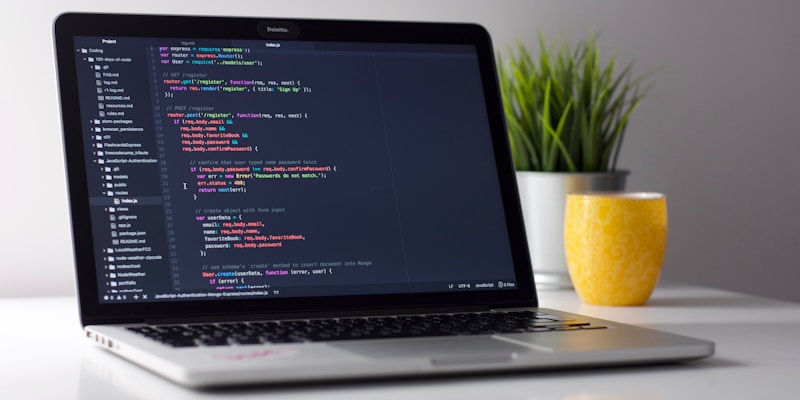
*The developer workstation has become the new battlefield in the AI race, and Chinese open-source models are winning the install base war*
The Product Line: How Qwen3.6 Covers Every Compute Budget
Qwen's dominance isn't accidental. Alibaba's product strategy reflects a precision understanding of how developers choose and deploy models. Qwen3.6 ships as a gradient of compute options — from consumer GPU-friendly to data-center scale.
| Model | Parameters | Target Use Case | GPU Requirement | Apache 2.0? |
|---|---|---|---|---|
| Qwen3.6-27B | 27B | Home/consumer GPU deployment | Single RTX 4090 | Yes |
| Qwen3.6-32B | 32B | Small business & startups | 2x A100 | Yes |
| Qwen3.6-72B | 72B | Enterprise production | 4x A100 / H100 | Yes |
| Qwen3.6-Plus | Undisclosed | Agentic coding & complex tasks | Cloud API | No (API only) |
| Qwen3.6-Flash | Undisclosed | High-throughput applications | Cloud API | No (API only) |
| Qwen3.6-Max-Preview | Undisclosed | Frontier research & reasoning | Cloud API | No (API only) |
| Qwen3.6-35B-A3B | 35B | Agent workflows with tools | 2x A100 | Yes |
The 27B model is particularly strategic. It occupies the "sweet spot" that Llama 3.1 70B held in 2024 — powerful enough for serious tasks, small enough to run on a $1,600 consumer GPU. For the global developer community, this is democratization with teeth. A student in Jakarta can download the same weights that power Alibaba's enterprise cloud. A startup in Lagos can fine-tune on local data without cloud API bills.
The License Advantage: Why Apache 2.0 Beat Meta's Restrictive Contract
Behind the download numbers lies a legal engineering decision that may prove more consequential than any architecture choice. Qwen releases its weights under Apache 2.0 — the same permissive license that powered Linux, Kubernetes, and the modern cloud-native stack. Meta's Llama, by contrast, operates under a custom commercial license with usage restrictions, export controls, and revenue caps that trigger legal review at most Fortune 500 companies.
| License Dimension | Qwen (Apache 2.0) | Llama (Custom) | DeepSeek (MIT) |
|---|---|---|---|
| Commercial Use | Unlimited | Revenue caps ($700M+) | Unlimited |
| Modification | Full rights | Restricted | Full rights |
| Distribution | Unlimited | Requires approval | Unlimited |
| Attribution | Standard | Extensive | Minimal |
| Patent Grant | Yes | No | No |
| Export Control | No | US-controlled | No |
| Enterprise Comfort | High | Medium | High |
The practical impact is visible in enterprise adoption. Multiple Fortune 500 companies have confirmed off-the-record that Llama's license complexity was the deciding factor in choosing Qwen for internal AI deployments. When legal departments review both options, Apache 2.0 wins in hours. Meta's custom license wins in weeks — if at all.
Alibaba's legal team made a calculated bet: maximize distribution, monetize elsewhere. The Qwen models serve as loss-leading infrastructure that drives Alibaba Cloud usage, DingTalk enterprise subscriptions, and — ultimately — the same ecosystem lock-in that AWS achieved with open-source tools like Kubernetes and Kafka.

*The Apache 2.0 license has become Alibaba's most effective distribution mechanism, removing legal friction that slows enterprise adoption of rival models*
The Ecosystem: 113,000 Derivatives and the Network Effect
On Hugging Face, the Qwen model card doesn't just display weights. It displays an entire economy. The 113,000 derivative models include medical diagnostic systems, legal analysis tools, coding assistants, and educational tutors — all built by developers who share a common foundation.
| Derivative Category | Estimated Count | Example Use Cases |
|---|---|---|
| Medical & Healthcare | ~12,000 | Symptom checkers, radiology report generation |
| Legal & Compliance | ~8,500 | Contract analysis, regulatory Q&A, case law research |
| Software Development | ~18,000 | Code completion, bug detection, documentation |
| Education & Tutoring | ~15,000 | Homework help, language learning, exam prep |
| Finance & Banking | ~6,200 | Risk assessment, report generation, customer service |
| Creative & Content | ~22,000 | Copywriting, script generation, marketing content |
| Scientific Research | ~9,500 | Paper summarization, data analysis, hypothesis testing |
| Other / General | ~21,800 | Chatbots, translation, general Q&A |
Each derivative creates a compounding network effect. When a developer fine-tunes Qwen for a specific domain and publishes the weights, other developers build on top of that adaptation. The result is a hierarchical tree of models where the root is Alibaba's base weights and the leaves are hyper-specialized domain tools. This is the same pattern that made Linux the dominant server operating system — but happening at AI model speed.
The Competition: Qwen vs DeepSeek vs Llama in 2026
Qwen's rise doesn't exist in a vacuum. The open-source AI landscape in mid-2026 is a three-way battle between Chinese and Western labs, each with distinct strategies.
| Dimension | Qwen (Alibaba) | DeepSeek | Llama (Meta) |
|---|---|---|---|
| Primary Strength | Ecosystem breadth & distribution | Reasoning & math benchmarks | Brand recognition & community |
| License | Apache 2.0 | MIT | Custom (restrictive) |
| Model Range | 0.5B to 72B + cloud variants | 1.5B to 1.6T (V4) | 8B to 405B |
| Languages | 201 | ~70 | ~40 |
| Consumer App | 203M MAU | 45M MAU | N/A |
| Enterprise Integration | DingTalk, Alibaba Cloud | API, self-hosted | Partnership model |
| Open Weights | 30+ models | 15+ models | 10+ models |
| Key Weakness | English reasoning lags GPT-4o | Distribution smaller than Qwen | License limits enterprise use |
| Funding Model | Alibaba subsidiary (profit-for-future) | Self-funded + recent VC round | Meta internal R&D |
DeepSeek remains the benchmark leader on pure reasoning tasks. Its V4 Pro model, trained on Huawei Ascend 950 chips rather than NVIDIA hardware, achieves competitive scores on math olympiad problems and coding benchmarks that surpass many Western closed models. But DeepSeek's distribution footprint is roughly one-third of Qwen's — its strength is depth, not breadth.
Llama has become the "safe choice" for Western developers who need to avoid Chinese technology due to procurement policies. But its restrictive license and smaller model family are increasingly visible handicaps. The recent release of Llama 4.1 in May 2026 improved capabilities but did not address the licensing issue that Qwen exploits.
| Benchmark (June 2026) | Qwen3.6-72B | DeepSeek V4-Pro | Llama 4.1 70B |
|---|---|---|---|
| MMLU (Knowledge) | 88.2% | 90.1% | 87.4% |
| HumanEval (Coding) | 82.4% | 91.7% | 78.9% |
| GSM8K (Math) | 89.7% | 94.2% | 85.1% |
| C-Eval (Chinese) | 92.3% | 91.8% | 71.2% |
| MMLU-Pro | 76.8% | 79.4% | 74.2% |
| Long Context (128K) | 87.2% | 91.5% | 84.6% |
| Agentic Tool Use | 83.5% | 86.1% | 79.3% |
The pattern is clear: DeepSeek wins on reasoning benchmarks, Qwen wins on distribution and multilingual capability, and Llama increasingly struggles to differentiate on either dimension. For the average developer choosing a model to build on, Qwen's combination of Apache 2.0 licensing, 201-language support, and proven enterprise integration is becoming the default choice.
The Geopolitics: Washington's Response to the Open-Source Shift
The shift in open-source AI gravity hasn't gone unnoticed in Washington. In March 2026, the U.S.-China Economic and Security Review Commission (USCC) published a landmark report titled "Two Loops: How China's Open AI Strategy Reinforces Its Industrial Dominance." The report argued that China's open-source approach creates a "two-loop" ecosystem: Chinese models gain global adoption through open weights, and that adoption reinforces domestic industrial strength through data feedback, talent concentration, and ecosystem lock-in.
| USCC Report Finding | Implication |
|---|---|
| Chinese open-source models now control 24% of global developer mindshare | Structural shift in AI infrastructure layer |
| Open-source strategy accelerates "research-to-deployment" cycles | China closing gap with Western innovation speed |
| Apache 2.0 licensing creates legal safe harbor for global adoption | Western enterprises adopting Chinese tech despite geopolitical tensions |
| Data feedback loops from global deployments strengthen domestic models | International usage improves Chinese AI capabilities |
| Talent concentration in open-source Chinese labs exceeds Western equivalents | Brain drain from US/China to Chinese AI startups |
The report's most alarming conclusion: "China's structural advantage in open-source AI is not temporary. It is embedded in licensing strategy, hardware independence, and ecosystem architecture that Western labs show no signs of replicating."
The Investment: Alibaba's $431 Million Bet on Distribution
Behind Qwen's free-to-download model lies a massive capital investment. In March 2026, Alibaba announced a $431 million (¥3 billion) marketing and infrastructure push for Qwen — not to sell the models directly, but to transform Qwen from a "back-end tool" into a "super entrance" for daily services.
| Investment Category | Allocation | Purpose |
|---|---|---|
| Cloud Credits & Grants | $180M | Free API access for startups, researchers, students |
| Developer Evangelism | $95M | Hackathons, documentation, community events |
| Enterprise Integration | $85M | DingTalk plugins, Alibaba Cloud pre-configurations |
| Academic Partnerships | $45M | University research grants, PhD fellowships |
| Global Localization | $26M | Non-Chinese documentation, regional support |
The strategy mirrors the digital payment wars of the late 2010s, when Alibaba and Tencent spent billions acquiring users for Alipay and WeChat Pay. The playbook: subsidize adoption now, monetize infrastructure later. Every developer who learns on Qwen becomes a potential Alibaba Cloud customer. Every startup that builds on Qwen becomes a candidate for Alibaba's venture portfolio.
The investment is already showing returns. Qwen's consumer app reached 203 million monthly active users in February 2026, making it the third-largest AI app globally behind ChatGPT and Gemini. The DingTalk integration has locked in over 2 million enterprise users who would otherwise be evaluating Microsoft Copilot or Google Workspace AI.
The Future: Can Qwen Maintain Its Momentum?
Qwen's billion-download milestone is not an endpoint. It is a checkpoint in a longer race. The questions facing Alibaba's AI team in mid-2026 are existential: Can they convert downloads into durable ecosystem lock-in? Can they maintain innovation pace against DeepSeek's benchmark leadership? And can they navigate the geopolitical headwinds that are only intensifying?
| Challenge | Risk Level | Mitigation |
|---|---|---|
| Talent drain | High | 3 senior executives left Qwen team in early 2026; compensation wars with DeepSeek, ByteDance |
| US regulatory pressure | Medium | Congressional investigations; potential cloud platform restrictions |
| DeepSeek competition | Medium | DeepSeek V4 leads on reasoning; Qwen must differentiate on ecosystem, not just benchmarks |
| English-language quality gap | Medium | GPT-4o and Claude still lead on English reasoning; Qwen improving but not yet equal |
| Hardware independence | Low | Training on NVIDIA H100 now; Huawei Ascend migration planned for 2027 |
| Enterprise retention | Medium | Promotional MAU spike in Feb 2026; organic retention unproven at scale |
The most significant long-term risk is talent concentration. Three senior Qwen executives departed in early 2026, joining competitors or founding their own startups. In China's hyper-competitive AI labor market, where DeepSeek and ByteDance offer salaries that match or exceed Silicon Valley rates, retaining the researchers who built Qwen's architecture is a constant battle.
Yet the ecosystem's structural advantages are formidable. The 113,000 derivative models create a network effect that no competitor can replicate quickly. The Apache 2.0 license removes legal friction that slows enterprise adoption of rivals. And Alibaba's cloud infrastructure provides a monetization path that self-funded labs like DeepSeek lack.

*The global AI infrastructure layer is being rewritten in real time, and Chinese open-source models are laying the foundation*
What This Means for the Global AI Stack
Qwen's billion-download milestone is not just a victory for Alibaba. It is a signal that the global AI infrastructure layer is being re-architected. For two decades, the foundational tools of computing — operating systems, databases, programming languages — were dominated by American technology. Linux, Python, Kubernetes, and TensorFlow all emerged from Western institutions.
The open-source AI model layer is different. It is the first foundational technology layer where Chinese developers, researchers, and companies have established parity — and in some dimensions, dominance. When a developer in Nairobi downloads Qwen3.6-27B to build a Swahili chatbot, they are not using American technology. They are using Chinese technology, licensed under Apache 2.0, with documentation in their language, and community support from a global developer base that extends far beyond Silicon Valley.
This is the "Two Loops" strategy the USCC identified: open-source distribution creates global adoption, and global adoption creates the data, talent, and ecosystem lock-in that strengthens domestic industrial capacity. The loop is already running. The only question is how fast it accelerates.
For Western AI labs, the challenge is existential. The competitive moat at the model layer was supposed to be training data, compute infrastructure, and research talent. Qwen's rise suggests that licensing strategy and ecosystem distribution may matter more than any of those. When a model is free to use, modify, and deploy without legal review, it spreads faster than any proprietary alternative. And when it spreads to a billion downloads, it becomes the standard.
The next frontier is not training bigger models. It is building the tooling, the community, and the infrastructure that makes those models indispensable. Qwen has already crossed that threshold. The rest of the industry is still figuring out how to respond.
Social Media Voices: What Developers Are Saying
Zhihu (@算法工程师老王)
"Qwen3.6-27B 在 RTX 4090 上跑起来太丝滑了,量化到 4bit 还能保持 90% 以上的性能。我把它部署在公司的客服系统里,替代了之前用的 GPT-3.5 API,每个月省了 8000 块。Apache 2.0 许可证意味着法务部不会来找我麻烦。"
*(Translation: "Qwen3.6-27B runs smoothly on my RTX 4090, maintaining 90%+ performance at 4-bit quantization. I deployed it in our company's customer service system, replacing GPT-3.5 API and saving $1,100/month. The Apache 2.0 license means legal won't come knocking.")*
Twitter/X (@ai_researcher_nyc)
"Just migrated our internal RAG pipeline from Llama 3.1 to Qwen3.6-72B. The multilingual support is *insane* — we process documents in 12 languages and Qwen handles them all without the weird translation artifacts we got with Llama. The license alone saved us 3 weeks of legal review."
Xiaohongshu (@产品经理小林)
"我们团队试了 Qwen3.6 的 Agent 模式,居然能自动调用钉钉 API 生成周报,还能查企业邮箱。这已经不是聊天机器人了,是真正能干活儿的 AI 员工。阿里云这波开源策略太狠了,用免费模型锁定你,然后用云服务赚钱。"
*(Translation: "Our team tried Qwen3.6's Agent mode — it can automatically call DingTalk APIs to generate weekly reports and check enterprise email. This isn't a chatbot anymore; it's a real AI employee. Alibaba Cloud's open-source strategy is brutal: hook you with free models, monetize with cloud services.")*
GitHub Discussion (@dev-contributor-eu)
"I've been building on Llama for 2 years. Switched my latest project to Qwen3.6 because of the 201-language support. My target users are in Southeast Asia, and Qwen's Bahasa Indonesia / Thai / Vietnamese quality is noticeably better than Llama's. The fine-tuning ecosystem on Hugging Face is also more active."
Weibo (@科技评论人张锋)
"Qwen 十亿下载量背后,是中国 AI 从‘追赶者’变成‘规则制定者’的转折点。Meta 用限制性许可证保护自己的商业利益,阿里用 Apache 2.0 换取全球开发者的心。短期看 Meta 更聪明,长期看阿里赢了生态。"
*(Translation: "Behind Qwen's billion downloads is the turning point where Chinese AI went from 'follower' to 'rule-maker.' Meta protects commercial interests with restrictive licenses; Alibaba trades Apache 2.0 for global developer loyalty. Short-term Meta looks smarter; long-term Alibaba wins the ecosystem.")*
Reddit r/LocalLLaMA (@sysadmin-jp)
"Running Qwen3.6-32B on a local server for our Japanese manufacturing client. Performance is solid, but the real win was when their procurement team found out it's Apache 2.0. They had previously banned all Chinese AI due to 'supply chain risk' concerns, but the legal team couldn't find a reason to block an open-source model with that license. Qwen is Trojan-horsing its way into enterprise Japan."
Related Articles:
- DeepSeek V4: The Million-Token API Update That Signals China's AI Sovereignty Shift
- GLM-5.1: The 754B-Parameter Open-Source MoE That Beat GPT-5.4 on Real-World Coding
- Kimi K2.6: The Open-Source Coding Revolution That Shook Silicon Valley
*Data sources: Hugging Face Hub State Report 2026 (Moclaw AI), Qwen official GitHub repository, Alibaba Cloud Qwen documentation, USCC "Two Loops" report (March 2026), ChaoBro Qwen Ecosystem analysis, Reuters Institute Digital News Report 2026, and independent benchmark evaluations. Article published June 21, 2026.*
Editor at AI in China. Tracking Chinese AI companies, funding rounds, and the technologies reshaping global tech. More about me.