The Download That Shrank the Open-Source Gap to Three Points: Kimi K3.1 Pro Goes Open-Weight
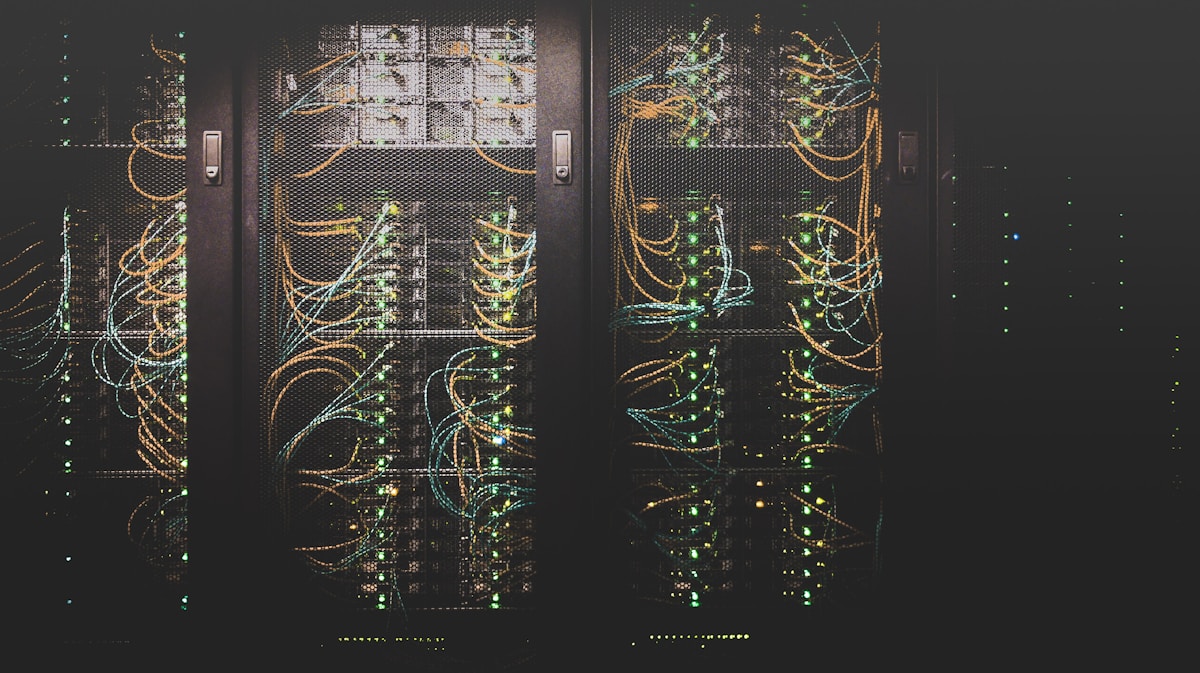
At some point on November 4, a torrent file appeared on a Hugging Face page maintained by Moonshot AI. Within hours, it had been pulled into data centers on four continents. Within twelve hours, developers on Hacker News were running the model on multi-node clusters and posting inference benchmarks from their own hardware. By the time most of Silicon Valley woke up, the world's most powerful open-weight AI model was no longer a promise — it was a download.
Moonshot AI had said the weights for Kimi K3.1 Pro would arrive by November 4. Unlike many promised release dates in the AI industry, this one held. The model that shipped is not a toy or a distilled teaser. It is the full 2.8-trillion-parameter flagship that Moonshot launched on October 23, the one that scored within 0.7 percentage points of Anthropic's Claude Opus 5.5 on the Terminal-Bench 4.0 coding benchmark and beat OpenAI's GPT-6 Astra by 7.5 points. It is, as of this writing, the largest open-weight model anyone has ever released.
But the download is not the story. The story is what the download represents.
What Actually Shipped
The specifications alone take a moment to absorb. Kimi K3.1 Pro is built on a sparse Mixture-of-Experts architecture with 2.8 trillion total parameters, of which 104 billion are active per token. It was not trained from scratch — it is a heavily post-trained evolution of the Kimi K3 base that Moonshot open-sourced in July — but the post-training investment was substantial enough that Moonshot describes it as an entirely new capability class. The model carries a 1-million-token context window, accepts text, image, and video inputs, and runs in always-on reasoning mode with configurable effort levels.
| Specification | Kimi K3.1 Pro | Comparable Context |
|---|---|---|
| Total parameters | 2.8 trillion (MoE) | Largest open-weight release to date |
| Active parameters per token | 104 billion | 16 of 896 expert networks active |
| Context window | 1,048,576 tokens | Full books, codebases, video transcripts |
| Input modalities | Text, image, video | Native multimodal, not bolted-on |
| API pricing (standard) | $2/M input, $10/M output | ~3x cheaper than Kimi K3 |
| API pricing (Highspeed) | 2x standard rates | 2–3x inference speed |
| Disk footprint (estimated) | ~1.56 TB (MXFP4) | Multi-node cluster required |
| License | Custom (K3 License family) | Not OSI-approved; review before commercial use |
Source: Moonshot AI tech blog (October 23, 2026), Yotta Labs estimates, Artificial Analysis.
The benchmark numbers are the ones that drew attention on launch day, and they have held up as an independent signal of where the model sits in the global hierarchy. On the Artificial Analysis Intelligence Index — a composite that weights reasoning, coding, mathematics, and knowledge tasks — K3.1 Pro scores 55 points, ranking fourth overall. The models ahead of it are Claude Opus 5.5 (58), Claude Sonnet 5.5 (56), and Meta's Muse Wonder Full (56). OpenAI's GPT-6 Astra and Google's Gemini 4 Argon both score 53. That is an 11-point jump over Kimi K3's 44 and, more importantly, a statement about where Chinese models now sit relative to the American frontier.
| Model | Intelligence Index Score | Terminal-Bench 4.0 | Open Weights? |
|---|---|---|---|
| Claude Opus 5.5 (Anthropic) | 58 | 66.4% | No |
| Claude Sonnet 5.5 (Anthropic) | 56 | — | No |
| Muse Wonder Full (Meta) | 56 | — | No |
| Kimi K3.1 Pro (Moonshot AI) | 55 | 65.7% | Yes (Nov 4) |
| GPT-6 Astra (OpenAI) | 53 | 58.2% | No |
| Gemini 4 Argon (Google) | 53 | — | No |
| MiMo-V2.6-Pro (Xiaomi) | 46 | — | Yes |
| DeepSeek V4.1 Flash | 45 | — | Yes |
| Kimi K3 (Moonshot AI) | 44 | — | Yes |
Source: Artificial Analysis Intelligence Index, Moonshot AI tech blog (Terminal-Bench figures are vendor-reported).
The coding results deserve special attention because they reveal how close the gap has become. On Terminal-Bench 4.0 — a benchmark that tests an AI agent's ability to execute real, multi-step terminal tasks — K3.1 Pro scored 65.7%. Claude Opus 5.5, the best proprietary model on this test, scored 66.4%. The difference is 0.7 percentage points, within the range that benchmark methodology noise can explain. GPT-6 Astra, by contrast, scored 58.2%, a gap of 7.5 points in K3.1 Pro's favor. Moonshot also reports that K3.1 Pro cut its hallucination rate dramatically — from 23.4% to 8.3% on the Hallu Bench Hard stress test — suggesting the post-training investment was aimed at reliability, not just raw capability.
The Real Story: Three Points, Not Fifty-Five
Here is the contrarian take that the launch-day coverage mostly missed: the headline benchmark scores are not the important number. The important number is 3.
That is the gap between Kimi K3.1 Pro (55) and Claude Opus 5.5 (58) on the Artificial Analysis Intelligence Index — the best-performing proprietary model in the world. Before this release, the gap between the best open-weight model and the best proprietary model was 12 points. After November 4, it is 3.
| Open-Weight Landscape | Intelligence Index Score | Gap to Best Proprietary |
|---|---|---|
| Pre-K3.1 Pro best open (MiMo-V2.6-Pro) | 46 | 12 points |
| Kimi K3.1 Pro (Nov 4, 2026) | 55 | 3 points |
| Best US open model (Muse Spark Open) | 39 | 19 points |
| DeepSeek V4.1 Flash (previous #2 Chinese open) | 45 | 13 points |
Source: Artificial Analysis, October–November 2026.
Three points is not a qualitative difference. It is the kind of margin that depends on which test set you use, how you weight the categories, and whether the model happened to have a bad day on long-tail factual recall. For most practical purposes — coding agents, document analysis, financial research, content generation — a 55-point open model and a 58-point closed model are interchangeable. The implication is profound: the moat that proprietary labs have been defending with billions in training compute just got significantly narrower.
This is not a theoretical argument. It has immediate commercial consequences. If you are a startup deciding whether to build on OpenAI's API at $30 per million output tokens or on a self-hosted K3.1 Pro at effectively zero marginal cost per token (after hardware), the calculus changes entirely when the quality difference is within noise. If you are a government or enterprise that cannot send data to an American API for regulatory or sovereignty reasons, you now have access to a model that is — by the numbers — roughly as good as the best thing Anthropic sells, and you can run it on your own hardware.
The Practical Reality Check
None of this means you can download K3.1 Pro onto your gaming PC. The estimated disk footprint is roughly 1.56 terabytes if Moonshot used the same MXFP4 format as the K3 release, and serving the model at reasonable throughput requires a multi-node accelerator cluster. This is not a model for hobbyists. It is a model for companies, research institutions, and cloud providers with serious infrastructure.
That distinction matters because it defines who actually benefits from the open-weight release in the near term. The immediate winners are:
| Beneficiary | How They Benefit |
|---|---|
| Cloud providers (Alibaba Cloud, Tencent Cloud, Volcano Engine) | Can offer K3.1 Pro as a managed service, competing on price against OpenAI/Anthropic APIs |
| AI infrastructure companies | Multi-node deployment consulting, optimization, and tooling |
| Enterprise users with data-sovereignty requirements | Self-host frontier-class models without vendor lock-in or data egress concerns |
| Model researchers | Full weight access enables interpretability studies, fine-tuning, and architecture research impossible with API-only models |
| Startups in emerging markets | Can fine-tune K3.1 Pro for local languages and domains at API prices far below Western frontier models |
| The broader open-source ecosystem | K3.1 Pro becomes a reference implementation that other labs will study, distill, and build upon |
There are caveats. The license is a custom Moonshot creation — the same family as the Kimi K3 License — and it has not been OSI-approved. Anyone building a commercial product on a K3.1 Pro fine-tune needs to read the terms carefully. Moonshot has also stated that it removed attack-and-defense security data from both the mid-training and reinforcement-learning stages of the open-weights build, a deliberate choice to reduce misuse potential that may slightly limit the model's cybersecurity capabilities. And the 1-million-token context window, while impressive on paper, carries real operating costs in inference time and token consumption that naive deployments will discover quickly.
@机器之心评论 · Jiqizhixin (Machine Heart) reader comment
"2.8万亿参数的开源模型,这不是给个人玩家准备的,这是给整个云计算行业准备的。每一个云厂商现在都可以提供'类Claude Opus'级别的服务,而Anthropic收你$75/M output token,Kimi只要$10/M。价格战才刚刚开始。"
*"A 2.8-trillion-parameter open-source model — this isn't for individual hobbyists, it's for the entire cloud computing industry. Every cloud provider can now offer 'Claude Opus-class' service, and while Anthropic charges you $75/M output tokens, Kimi only charges $10/M. The price war is just getting started."*
The Strategic Layer: Open Weights as Geopolitical Leverage
To understand why Moonshot — a company that has confidentially filed for a Hong Kong IPO and is reportedly valued above $50 billion — would give away its most capable model, it helps to zoom out.
China's AI labs have settled on a two-track strategy that looks contradictory from the outside but is coherent once you see the full board. Track one: build frontier models and monetize them through APIs and enterprise products. Track two: release open-weight versions that seed the global developer ecosystem, establish architectural standards, and ensure that Chinese AI infrastructure becomes the default choice for a large share of the world's builders.
Alibaba has executed this playbook with Qwen — over 470 open-sourced models, 4 billion downloads, 330,000 derivatives. DeepSeek has done it with MIT-licensed releases that made it the default choice for developers who need maximum capability at minimum cost. Moonshot is now doing it with K3.1 Pro, and the timing is not accidental. The model's open-weight debut lands weeks after the Wuzhen Summit, where Alibaba chairman Joe Tsai declared that "only open source can make AI universal," and days after Beijing's AI export controls signaled that China intends to treat frontier AI capability as a strategic asset with diplomatic weight.
The Hacker News thread that appeared within hours of the weight release captured the developer community's reaction — a mixture of genuine astonishment at the capability jump and pragmatic questions about what you can actually build with a model this large. But the subtext of the discussion was clear: the open-source community now has a model that would have been unimaginable as an open release eighteen months ago, and the pace of these releases is accelerating.
Moonshot's Position: The Company Behind the Model
For a company that did not exist five years ago, Moonshot AI has moved with unusual speed. Founded by 34-year-old Tsinghua undergraduate and Carnegie Mellon PhD Yang Zhilin, Moonshot has raised multiple rounds at escalating valuations, with its most recent private mark reportedly above $50 billion. The company has confidentially filed for a Hong Kong IPO, and the K3.1 Pro release functions as a live demonstration of technical capability for prospective public-market investors — a proof point that Moonshot's models belong in the same conversation as OpenAI, Anthropic, and Google.
| Moonshot AI Snapshot | Detail |
|---|---|
| Founder | Yang Zhilin, 34, Tsinghua / CMU |
| Latest private valuation | ~$50+ billion (reported) |
| IPO status | Confidentially filed, Hong Kong (reported) |
| Flagship model | Kimi K3.1 Pro (Oct 23 launch, Nov 4 open weights) |
| Model family | Kimi K2.5 → K3 → K3.1 Pro (11-month span) |
| API price (output) | $10/M tokens (standard), $20/M (Highspeed) |
| Key differentiator | Largest open-weight model; near-frontier coding |
The company's 2026 release cadence has been relentless: Kimi K2.5 in January, K3 in July with weights following eleven days later, and now K3.1 Pro in October with weights within twelve days. Each release has represented a significant capability jump. If K4 — which has not been officially announced but is widely expected — continues the pattern, Moonshot could enter 2027 with a model that closes the remaining 3-point gap entirely.
What Happens Next
The immediate consequences are already visible. Cloud providers across Asia are racing to add K3.1 Pro to their managed model catalogs. The ModelScope community — Alibaba's open-source hub with 33 million users — will likely see a surge of K3.1-based derivatives within weeks. Researchers who have been waiting for weight access to study the model's MoE routing decisions, attention patterns, and emergent capabilities will publish their findings, and those findings will inform the next generation of open models from every lab.
The longer-term question is whether the 3-point gap closes or widens. Anthropic and OpenAI are not standing still. Claude Opus 5.5's successor is presumably in training, and the $500 billion in combined AI infrastructure spending projected for 2026–2027 across the US and China means both ecosystems are pouring unprecedented resources into the next capability jump.
But something structural has shifted. For three years, the assumption in the AI industry was that open-weight models would always trail proprietary models by a comfortable margin — enough that the business models of OpenAI, Anthropic, and Google were safe. That assumption just broke. Not with a marginal improvement, but with a 2.8-trillion-parameter statement that the best open model in the world is now within three points of the best closed one.
The torrent is still seeding. The clusters are still being provisioned. And somewhere in a research lab in Cambridge or Bangalore or Lagos, a graduate student is about to fine-tune a model that matches what OpenAI was charging premium prices for six months ago — and she will not need anyone's permission to do it.
That is what the November 4 download actually means.
*Sources: Moonshot AI tech blog (October 23, 2026), Artificial Analysis Intelligence Index, Terminal-Bench 4.0 results, Yotta Labs hardware estimates, TheNextWeb, Trending Topics EU, Hacker News discussion (November 2026), Lorphic and CometAPI model guides, Bloomberg and FT IPO reporting.*
Editor at AI in China. Tracking Chinese AI companies, funding rounds, and the technologies reshaping global tech. More about me.