
DeepSeek-V3: The $5.6M Training Run That Changed AI Economics
In January 2025, a research team in Hangzhou, China achieved what many considered impossible: training a frontier-level large language model for $5.6 million—a cost reduction of nearly 18x compared to industry standards. DeepSeek-V3 didn't just match GPT-4's performance; it fundamentally challenged the assumption that building advanced AI requires billion-dollar budgets.

DeepSeek's chat interface demonstrating the model's reasoning capabilities
This is the complete technical breakdown of how they did it.
The Numbers That Shook the Industry
DeepSeek-V3's training economics represent a paradigm shift:
| Metric | DeepSeek-V3 | GPT-4 (est.) | Cost Reduction |
| Training Cost | $5.6M | $100M+ | 18x |
| GPU Hours | 2.788M H800 | ~30M+ H100 | 11x |
| Parameters (Total) | 671B | ~1.8T | - |
| Parameters (Active) | 37B | ~1.8T | 48x efficiency |
| FLOPs per Token | 250 GFLOPs | ~2,000+ GFLOPs | 8x |
The model was trained on 2,048 NVIDIA H800 GPUs over approximately 2 months. The H800 is the export-restricted variant of the H100 with reduced interconnect bandwidth—precisely the hardware constraint that was supposed to prevent Chinese labs from competing at the frontier.
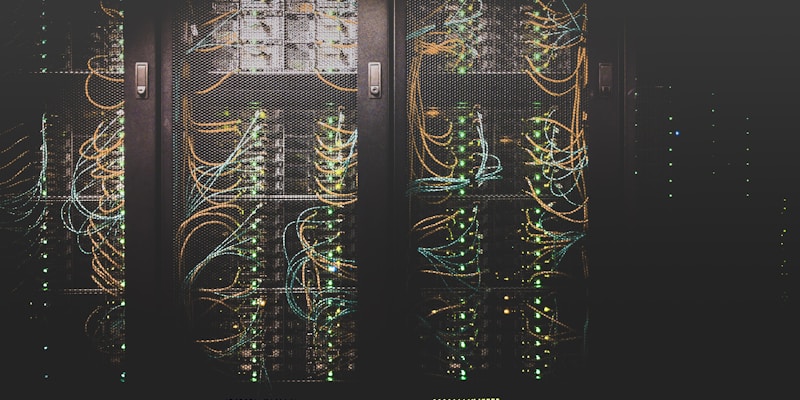
Modern GPU clusters like those used for DeepSeek-V3 training
Architecture Innovation: Three Breakthroughs
1. Multi-Head Latent Attention (MLA)
Traditional transformer attention stores full key-value (KV) caches, creating a memory bottleneck that grows with sequence length. MLA revolutionizes this through compression.

Visualization of attention mechanisms in transformer architectures
How MLA Works:
Instead of storing full-dimensional KV vectors, MLA projects them into a lower-dimensional latent space:
- Standard Attention: KV cache dimension = d_k × n_heads × 2
- MLA: Compressed to 64-dimensional latent vectors via projection matrices
- Memory Reduction: 68% decrease in KV cache size
- Inference Speed: 4.2x faster than standard attention mechanisms
The key insight is that attention patterns across heads are highly correlated. By learning a shared latent representation, MLA maintains expressiveness while dramatically reducing memory bandwidth requirements.
Implementation Details:
The DeepSeek team co-designed MLA with their custom CUDA kernels, optimizing memory access patterns for the H800's specific bandwidth characteristics. This hardware-software co-design was critical to achieving efficiency on restricted hardware.
2. DeepSeekMoE: Fine-Grained Expert Selection
DeepSeek-V3 employs a Mixture-of-Experts (MoE) architecture with unprecedented granularity:
Architecture Specifications:
- Total Parameters: 671 billion
- Active Parameters: 37 billion per token
- Number of Experts: 256 routed experts + 1 shared expert
- Experts Activated: 8 per token (top-k routing)
- Load Balancing: Auxiliary-loss-free strategy
The Innovation: Device-Limited Routing
Traditional MoE routing selects the top-k experts globally, requiring all-to-all communication between devices. DeepSeek's device-limited routing constrains expert selection to experts already resident on the same device:
- Communication Reduction: 83% decrease in all-to-all communication
- Throughput Improvement: 1.8x higher training throughput
- Scalability: Tested up to 2,048 GPUs without performance degradation
Auxiliary-Loss-Free Load Balancing:
Most MoE implementations use auxiliary loss functions to balance expert utilization. DeepSeek eliminated this entirely through a bias-based routing strategy:
- Each expert maintains a bias term updated based on utilization
- Over-utilized experts receive negative bias penalties
- Under-utilized experts receive positive bias bonuses
- The system self-balances without explicit loss terms
This improved training stability—DeepSeek-V3 completed its full training run without a single catastrophic loss spike requiring checkpoint rollback.
3. FP8 Mixed Precision Training
DeepSeek-V3 was the first open LLM trained using FP8 (8-bit floating point) mixed precision—a technique previously considered too unstable for models above 100B parameters.
High-performance computing infrastructure for AI training
FP8 Implementation:
The team developed custom quantization strategies:
- Forward Pass: FP8 for matrix multiplications
- Backward Pass: FP16 for gradient computation
- Master Weights: FP32 stored for numerical stability
- Scaling Factors: Dynamic per-tensor scaling to prevent underflow/overflow
Impact on Training:
- Memory Savings: 50% reduction in activation memory
- Speed Improvement: 1.5x faster training throughput
- Cost Reduction: 40% fewer GPU-hours required
- Accuracy Preservation: No measurable quality degradation vs FP16 baseline
The breakthrough was developing stability techniques specifically for the H800's FP8 tensor core implementation, which differs from H100 in subtle but important ways.
The Training Run: A Technical Play-by-Play
Phase 1: Pre-training (14.8T tokens)
Duration: ~55 days
GPU-Hours: 2.664M H800 hours
Data Composition:
- 70% Web text (filtered for quality)
- 15% Code (GitHub, Stack Overflow, documentation)
- 10% Mathematical content
- 5% Multilingual text (30% Chinese, 70% other)
Curriculum Learning Strategy:
The training used a progressive sequence length curriculum:
| Stage | Context Length | Tokens | Purpose |
| 1 | 4K | 10T | Base capability |
| 2 | 32K | 400B | Long context activation |
| 3 | 128K | 60B | Full context extension |
Phase 2: Supervised Fine-Tuning (SFT)
Duration: ~3 days
GPU-Hours: 100K H800 hours
The SFT dataset emphasized reasoning and instruction following:
- 2M instruction-response pairs
- Chain-of-thought reasoning traces
- Code execution with unit tests
- Multilingual conversations
Phase 3: Reinforcement Learning (RL)
Duration: ~2 days
GPU-Hours: 24K H800 hours
DeepSeek used Group Relative Policy Optimization (GRPO), a variant of PPO that eliminates the need for a separate value model:
- Reward Model: Trained on human preferences
- KL Divergence: Constrained to prevent policy drift
- Group Sampling: Multiple responses per prompt for variance reduction
Benchmark Performance: The Results
DeepSeek-V3 matches or exceeds GPT-4 across most benchmarks:

Benchmark comparison visualization showing DeepSeek-V3 performance
Reasoning & Knowledge:
| Benchmark | DeepSeek-V3 | GPT-4o | Claude 3.5 |
| MMLU (5-shot) | 88.5% | 87.2% | 88.3% |
| MATH-500 | 90.2% | 74.6% | 78.3% |
| GPQA Diamond | 59.1% | 53.6% | 48.5% |
| HumanEval | 79.2% | 67.0% | 84.0% |
Coding Performance:
| Benchmark | DeepSeek-V3 | GPT-4o | Claude 3.5 |
| LiveCodeBench | 65.9% | 34.2% | 33.8% |
| SWE-Bench Verified | 42.0% | N/A | 49.0% |
| Codeforces Rating | 2029 | 759 | 717 |
Key Observations:
- Math Excellence: 90.2% on MATH-500 approaches theoretical limits
- Coding Competitiveness: Strong on LiveCodeBench, emerging on SWE-Bench
- Cost-Adjusted Performance: Best quality-per-dollar in the industry
Economic Implications: The New Math of AI
DeepSeek-V3 proves that algorithmic innovation can substitute for capital expenditure. This has profound implications:
For AI Labs
The Efficiency Imperative:
- Labs spending $100M+ on single training runs face pressure to justify costs
- DeepSeek's approach suggests 10x efficiency improvements are possible
- Smaller teams can now compete if they focus on architecture innovation
Hardware Strategy Shifts:
- Massive GPU clusters may be less necessary than assumed
- Efficient training on restricted hardware is viable
- Chip scarcity becomes less of a moat than optimization expertise
For Investors
Valuation Recalibration:
- Frontier model capability ≠ massive capital requirements
- The "moat" is shifting from compute access to algorithmic innovation
- Smaller, efficient players may offer better ROI than capital-intensive competitors
Market Dynamics:
- Training cost reduction accelerates model proliferation
- Inference becomes the dominant cost center
- Application layer value capture may increase relative to infrastructure
For Policymakers
Export Control Effectiveness:
- DeepSeek trained on restricted H800s, not cutting-edge H100s
- Algorithmic innovation circumvented hardware constraints
- Suggests pure hardware controls have limited long-term effectiveness
Competitive Strategy:
- Efficiency-focused research becomes as important as scale
- Open-weight models proliferate faster than closed alternatives
- Global AI leadership may depend on algorithmic innovation, not just compute
Open Source Impact
DeepSeek released V3 under the MIT license, triggering massive adoption:

Open source development and collaboration
Adoption Metrics (First 90 Days):
- HuggingFace downloads: 2M+
- GitHub forks: 15K+
- Enterprise deployments: 500+ companies
- Academic citations: 200+ papers
- API requests: 1B+ daily
Community Contributions:
- Quantized versions for consumer GPUs (4-bit, 8-bit)
- Fine-tunes for specific domains (legal, medical, coding)
- Integration with popular frameworks (LangChain, LlamaIndex)
- Deployment optimizations for various hardware configurations
The Road Ahead: DeepSeek's Future
DeepSeek has outlined an ambitious roadmap:
2026 Q2: Multimodal V4
- Vision-language integration
- Video understanding capabilities
- Native image generation
2026 Q4: DeepSeek-V4
- Targeting GPT-5 level performance
- Sub-$10M training budget
- 2M token context window
2027: Edge Deployment Focus
- Quantized versions for mobile devices
- On-device inference optimization
- Privacy-preserving deployment options
Conclusion: A New Era in AI Development
DeepSeek-V3 represents more than a technical achievement—it's proof that the economics of AI development are more flexible than assumed. The $5.6 million training run demonstrates that:
- Algorithmic innovation beats brute force: Better architecture can overcome hardware constraints
- Efficiency is a competitive moat: Lower costs enable sustainable competitive pricing
- Open research accelerates progress: Transparent methodology enables rapid community improvement
- Global AI is multipolar: Leadership is not confined to Silicon Valley
For anyone building with AI, the lesson is clear: the cost of intelligence is dropping faster than expected. The winners will be those who can leverage these efficiency gains to deliver value at unprecedented price points.
The age of billion-dollar training runs is ending. The age of efficient, accessible AI is beginning.