The Great AI IPO Race: DeepSeek and Moonshot Charge Toward Public Markets
The Week That Changed Everything
On September 3, 2026, Moonshot AI submitted a confidential A1 application to the Hong Kong Stock Exchange. The Beijing-based lab behind the Kimi chatbot was finally making its move: a $3 billion initial public offering at a $50 billion valuation, with Goldman Sachs, China International Capital Corporation, and Deutsche Bank steering the ship.
Six days later, on September 9, the Financial Times reported that DeepSeek had engaged CITIC Securities — one of China's most powerful investment banks — to prepare its own listing on Shanghai's STAR Market. The Hangzhou lab, whose open-weight models had shaken global AI markets in early 2025, was targeting a valuation of 500 billion yuan, roughly $74 billion. Market chatter already whispered of a post-IPO market capitalization soaring to 1.5 trillion yuan or even 2.5 trillion yuan.
In less than one week, China's two most valuable artificial intelligence companies had laid their cards on the table. The race to public markets was no longer speculation. It was happening.
But these were not parallel tracks. They were fundamentally different journeys — one toward Shanghai's domestically controlled STAR Market, the other toward Hong Kong's internationally connected exchange. One led by a former quantitative hedge fund manager who had spent three years refusing outside capital, the other by a Carnegie Mellon-trained researcher who had raised more than $5.5 billion in under three years. One choosing sovereign capital, the other navigating the wreckage of a dismantled offshore corporate structure.
Together, they represent the maturation of China's AI industry from laboratory curiosity to capital markets heavyweight. And they raise a defining question: Can China's domestic capital markets absorb the valuations that Silicon Valley has made normal?
DeepSeek: From "No Funding" to 500 Billion Yuan
When Liang Wenfeng founded DeepSeek in 2023, he established three principles that became legendary in Chinese tech circles: no financing, no listing, no commercialization. The company would be funded entirely by High-Flyer Quant, the quantitative hedge fund he had built. Research would be open. Profits would be secondary to advancing artificial general intelligence.
That philosophy held for nearly three years. Then 2026 arrived, and the cost of staying at the frontier overwhelmed even High-Flyer's deep pockets.
In the first seven months of 2026, DeepSeek generated approximately 475 million yuan in revenue — roughly ten times its entire revenue for all of 2025. Net losses for the same period reached 715 million yuan, an improvement over the 935 million yuan lost across all of 2025. The gross profit margin offers a glimpse of future profitability: 44.6% overall, and 82.9% for the API business, where developers pay for model access.
But the infrastructure costs are staggering. DeepSeek's AI infrastructure investment in the first seven months of 2026 totaled approximately 110 billion yuan, used primarily for renting servers and purchasing chips. For comparison, the company's entire infrastructure spend in 2025 was just 12 billion yuan.
This is why Liang's three principles collapsed in rapid succession. In April 2026, DeepSeek opened its first external funding round. By June, it had closed $7.4 billion at a post-money valuation above $50 billion. Liang personally contributed roughly 20 billion yuan. Tencent invested 10 billion yuan. CATL, the battery giant, added 5 billion yuan. The National AI Industry Investment Fund — China's state-backed AI investment vehicle — also participated, securing the unusual distinction of holding voting rights while commercial investors received none.
By July, DeepSeek was already in talks for a second round, targeting a pre-money valuation of 500 billion yuan. The round briefly paused in late July after Liang's remarks at closed-door investor meetings leaked online, but resumed by early August. By late August, the company was reportedly finalizing the round at roughly $7.4 billion with returning backers including Monolith Management, Shixiang Capital, Tencent, and CATL.
Throughout this process, Liang has maintained extraordinary control. His direct stake in the operating company reportedly reached 34% by April 2026, and combined with an entity he controls, his total ownership sits at roughly 78-84%. The Financial Times reported in September that he had begun personally vetting final investors to preserve this control and reduce governance risks ahead of the IPO.
The STAR Market listing — targeted for filing by year-end 2026 and a public debut in 2027 — represents the culmination of this transformation. CITIC Securities, one of China's "Big Four" brokerages, has been engaged as underwriter. The choice of STAR Market over Hong Kong or US exchanges is deliberate: it keeps DeepSeek firmly within China's regulatory and capital orbit, aligns with Beijing's push for domestic technology listings, and ensures that the company's most sensitive AI capabilities remain beyond the reach of foreign regulators.
Moonshot: The Rocket Sprint from $4.3 Billion to $50 Billion
If DeepSeek's capital journey has been a cautious, deliberate march, Moonshot's has been a rocket sprint.
Founded in 2023 by Yang Zhilin, a Carnegie Mellon doctoral researcher who had worked at Google and Meta, Moonshot built its reputation on long-context models before its July 2026 release of Kimi K3 — a 2.8-trillion-parameter open-weight model that briefly rattled US AI stocks by matching or exceeding frontier systems from OpenAI and Anthropic on several coding benchmarks.
The commercial impact was immediate. Daily sales surged at least sixfold following K3's launch. Annual recurring revenue tripled in three months, climbing from $100 million in March 2026 to $300 million by June. Overwhelmed by demand, Moonshot was forced to pause new consumer subscriptions.
This momentum fueled a valuation ascent almost unprecedented in Chinese tech history:
| Date | Event | Valuation | Funding Raised |
|---|---|---|---|
| Early 2026 | Prior valuation | ~$4.3 billion | — |
| July 2026 | F-round close | $35 billion | $3.5 billion |
| August 2026 | Pre-IPO round | $50 billion (target) | Ongoing |
| September 2026 | HK IPO filing | $50 billion | $3 billion (target) |
The $3.5 billion F-round in July, led partly by the National AI Industry Investment Fund, far exceeded its initial $1-2 billion target. By September 3, the company had filed its confidential A1 application for Hong Kong, with Goldman Sachs, CICC, and Deutsche Bank as underwriters.
But Moonshot's path carried a regulatory burden that DeepSeek avoided. Before filing, Moonshot was required to unwind its offshore variable interest entity structure and convert to an onshore joint-stock company. The China Securities Regulatory Commission declined to grant an exemption. This was the price of admission for frontier AI labs in 2026: Beijing will no longer tolerate the offshore structures that once allowed Chinese tech companies to list in New York while maintaining domestic control.
The $50 billion valuation also exists under a cloud of US regulatory scrutiny. The Bureau of Industry and Security is investigating allegations that Moonshot acquired restricted NVIDIA GB300 chips through Thailand and distilled outputs from Anthropic's Fable model. Treasury Secretary Scott Bessent has publicly stated he is considering adding Moonshot to a trade blacklist. These investigations may deter international investors, leaving the IPO heavily dependent on domestic Chinese demand.
Head-to-Head: The Numbers Behind the Race
Comparing these two companies reveals two radically different approaches to building an AI giant.
| Metric | DeepSeek | Moonshot AI |
|---|---|---|
| Founded | 2023, Hangzhou | 2023, Beijing |
| Founder | Liang Wenfeng (hedge fund) | Yang Zhilin (CMU researcher) |
| First External Funding | June 2026 | 2023-2024 (multiple rounds) |
| Latest Private Valuation | ~$71-74 billion | ~$50 billion |
| Revenue (2026 YTD) | ~475M yuan (7 months) | ~$300M ARR (June) |
| Net Loss (2026 YTD) | ~715M yuan | Not disclosed |
| Gross Margin (API) | 82.9% | Not disclosed |
| Founder Control | ~78-84% | Not disclosed |
| Target Exchange | Shanghai STAR Market | Hong Kong Stock Exchange |
| Target IPO Timing | Filing 2026, listing 2027 | Filing Sep 2026, listing late 2026/early 2027 |
| Underwriters | CITIC Securities | Goldman Sachs, CICC, Deutsche Bank |
| Target IPO Raise | Not specified | ~$3 billion |
| Post-IPO Market Cap Target | 1.5-2.5 trillion yuan | $50 billion (at IPO) |
| Corporate Structure | Onshore China | Converted from VIE to onshore |
| Key Product | DeepSeek V4 series | Kimi K3 (2.8T params) |
| Open-Weight Strategy | Yes | Yes |
| State Investor | National AI Industry Fund (voting rights) | National AI Industry Fund |
The table reveals a striking divergence in philosophy. DeepSeek has prioritized founder control and domestic capital alignment, accepting only a single round of external funding before moving toward public markets. Moonshot has pursued rapid, repeated capital injections, scaling its valuation through successive funding rounds at an almost monthly pace.
DeepSeek's revenue, while smaller in absolute terms than Moonshot's reported ARR, is growing at a comparable velocity — ten times year-over-year is a figure that justifies extraordinary valuations in any market. The 82.9% API gross margin suggests a business model that can eventually become profitable at scale, even as current losses reflect the infrastructure investments required to compete at the frontier.
The Regulatory Maze: Two Exchanges, Two Realities
The choice of exchange is not merely geographical. It represents two different visions of how Chinese AI companies should relate to global capital markets.
Shanghai's STAR Market, launched in July 2019 as China's answer to Nasdaq, has evolved into the preferred venue for domestically focused technology listings. In June 2026, the Shanghai Stock Exchange released draft rules specifically allowing AI large model companies to list under its fifth and most permissive set of listing standards. The key requirement: companies must have at least one large model product publicly launched and achieving "scale."
STAR Market's registration-based system has shortened IPO timelines from over a year to roughly six to nine months. It allows unprofitable companies to list, requires a minimum market capitalization of just 1 billion yuan, and permits differentiated voting rights structures. For DeepSeek, it offers a fast, familiar, and politically aligned path to public markets.
Hong Kong, by contrast, offers deeper international liquidity and a currency pegged to the US dollar. But it comes with complications. Moonshot's required VIE unwinding reflects a new regulatory reality: the CSRC now insists that frontier AI companies maintain domestic corporate control. The days when Chinese tech giants could list in New York through offshore shells are definitively over.
This creates a bifurcated market. STAR Market listings will be dominated by domestic institutional investors, state funds, and qualified individual investors with at least 500,000 yuan in trading accounts. Hong Kong listings can theoretically attract global capital, but Moonshot's regulatory overhang — the US investigation, the VIE restructuring, the distillation allegations — may narrow that pool considerably.
The Bigger Picture: China's AI Capital Market Moment
DeepSeek and Moonshot are not isolated cases. They are the vanguard of what industry observers are calling China's "AI IPO wave."
On January 8, 2026, Zhipu AI listed on the Hong Kong Stock Exchange under stock code 2513, becoming the world's first publicly traded large model company. Its market capitalization peaked at 1.27 trillion Hong Kong dollars. One day later, MiniMax followed, listing under code 00100 and surging 109% on its debut day.
By September, the pipeline had grown crowded. DeepSeek was preparing its STAR Market filing. Moonshot had submitted its Hong Kong A1. Industry reports suggested that Alibaba's Qwen team and Zhipu AI were pursuing additional capital market activities. The four horsemen of Chinese AI — DeepSeek, Moonshot, Zhipu, and MiniMax — were all transitioning from private to public ownership within a single calendar year.
This wave is not accidental. It reflects a deliberate policy architecture. Beijing has constructed what analysts call a "sovereign capital pathway" for frontier AI: state-backed investment funds provide early-stage capital, domestic exchanges provide exit liquidity, and regulatory requirements ensure that control remains within China's borders.
The National AI Industry Investment Fund, with approximately $8.8 billion in capital, has participated in both DeepSeek's and Moonshot's fundraising. Its investments come with governance stakes and no lock-up periods, distinguishing them from commercial investors. This is not passive venture capital. It is strategic state positioning.
The implications extend beyond individual companies. If DeepSeek achieves its post-IPO target of 1.5-2.5 trillion yuan, it would become one of the most valuable companies listed in China. If Moonshot's $50 billion valuation holds through its Hong Kong debut, it would validate the proposition that Chinese AI labs can command valuations comparable to Western peers — at least on a relative basis.
Global Context: How China Stacks Up
The valuation arithmetic looks different depending on which benchmark you choose.
Against US peers, Chinese AI labs trade at significant discounts. Anthropic is reportedly targeting a $1.5 to $2 trillion valuation for its upcoming US IPO, with a potential raise exceeding $60 billion. OpenAI's private valuation sits around $300 billion. At $50-74 billion, DeepSeek and Moonshot are valued at roughly one-seventh to one-fourth of OpenAI's valuation, and a tiny fraction of Anthropic's target.
But by revenue multiples, the picture is more nuanced. Moonshot's $300 million ARR against a $50 billion valuation implies a roughly 167x revenue multiple — a figure that would be considered aggressive even in the frothiest US markets. DeepSeek's annualized revenue of approximately $60-70 million (based on 475 million yuan in seven months) against a $74 billion valuation implies an even steeper multiple, though the tenfold year-over-year growth rate provides some justification.
The valuation gap also reflects a "sovereign discount." Chinese tech stocks have historically traded below US peers on concerns about governance, capital controls, regulatory intervention, and geopolitical risk. Moonshot's bankers are betting that this discount narrows before the roadshow. DeepSeek's STAR Market listing, insulated from international investor sentiment, sidesteps the question entirely by relying on domestic demand.
"For US-based LPs with any exposure to China-focused funds, the sanctions overhang matters more than the valuation." — Venture capital analyst, Beijing
The critical question is whether China's domestic capital markets are deep enough to absorb these valuations. The STAR Market's total market capitalization reached 15.5 trillion yuan by July 2026 — approximately $2.3 trillion. A 1.5 trillion yuan DeepSeek would represent nearly 10% of the entire board. That concentration carries risks for both the company and the exchange.
What Comes Next
The timelines are aggressive and uncertain. DeepSeek aims to file its STAR Market application by year-end 2026, with a 2027 listing. Moonshot has until September 30 to submit its formal Hong Kong listing application, with a debut expected by year-end or early 2027.
Several variables could disrupt these plans. For DeepSeek, the second funding round must close successfully before the IPO filing proceeds. The company's revenue growth must sustain its trajectory — a slowdown in the API business or a competitive model release from a rival could deflate valuation expectations. And Liang Wenfeng's insistence on maintaining near-absolute control may limit the institutional investor base willing to participate.
For Moonshot, the US regulatory investigation is the sword of Damocles. A trade blacklist designation would not merely complicate the IPO — it could sever the company's access to advanced chips, constraining future model development. The Kimi K4 model, already in planning, depends on sustained compute access that sanctions could eliminate.
Both companies also face the fundamental challenge that all AI labs confront: the cost of staying at the frontier is rising faster than revenue. DeepSeek's 110 billion yuan infrastructure spend in seven months is not a one-time investment. It is the new baseline. Moonshot's subscription pause after K3's launch reveals the same tension between demand and capacity.
The IPO proceeds — whether through DeepSeek's STAR Market debut or Moonshot's Hong Kong raise — will flow directly back into compute. This is not a story about founders cashing out. It is a story about the capital intensity of frontier AI, and about China's determination to fund that intensity through domestic rather than international channels.
Social Voices: How China's Internet Reacted
The dual IPO news triggered an avalanche of commentary across Chinese social media platforms, reflecting both excitement and skepticism about the valuations on offer.
"DeepSeek上市估值5000亿,梁文锋怕是要超过张一鸣成中国首富了。一个做量化出身的,三年干到AI独角兽,这剧本比电视剧还精彩。"
"DeepSeek's IPO at 500 billion yuan — Liang Wenfeng is probably going to surpass Zhang Yiming as China's richest person. A quant guy who built an AI unicorn in three years. This script is more dramatic than a TV drama."
— Weibo user, Beijing
"5000亿估值,7个月收入4.75亿,还在亏7个亿。这不是IPO,这是击鼓传花。"
"500 billion valuation, 475 million revenue in seven months, still losing 700 million. This isn't an IPO, it's a game of hot potato."
— Zhihu comment, Shanghai
"Moonshot拆VIE结构上市,说明上面铁了心要把AI核心资产留在国内。以后想投中国AI,只能去港股或者科创板了。"
"Moonshot dismantling its VIE structure to go public shows the government is determined to keep AI core assets domestic. If you want to invest in Chinese AI going forward, it's Hong Kong or STAR Market only."
— Financial blogger, Shenzhen
"智谱和MiniMax已经上市了,现在DeepSeek和月之暗面也要上。中国AI四小龙全部进资本市场,2026年就是中国大模型元年。"
"Zhipu and MiniMax are already listed, now DeepSeek and Moonshot are joining them. All four of China's AI dragons entering capital markets. 2026 is the inaugural year of Chinese large models."
— Xueqiu investor, Hangzhou
"月之暗面50亿美元估值,Anthropic要1.5万亿。同样做AI,差距怎么这么大?"
"Moonshot at $50 billion, Anthropic targeting $1.5 trillion. Same AI business, why such a huge gap?"
— Douyin comment, Guangzhou
"梁文锋坚持78%控股权,又不给投资人投票权,这种治理结构在A股能走多远?"
"Liang Wenfeng insisting on 78% control and no voting rights for investors — how far can this governance structure go in A-shares?"
— WeChat discussion, Chengdu
"别管估值高不高,DeepSeek的API毛利率82.9%是实打实的。只要规模上来,盈利是迟早的事。"
"Forget whether the valuation is high or not, DeepSeek's 82.9% API gross margin is solid. Once scale kicks in, profitability is just a matter of time."
— Developer community, Zhihu
The commentary reveals a market that is simultaneously dazzled by the growth story and wary of the valuation arithmetic. Chinese retail investors, who have seen previous tech bubbles inflate and deflate, are applying a skeptical lens to the numbers. But the underlying sentiment is clear: this is a moment of national significance, and the outcome will shape China's position in the global AI race for years to come.
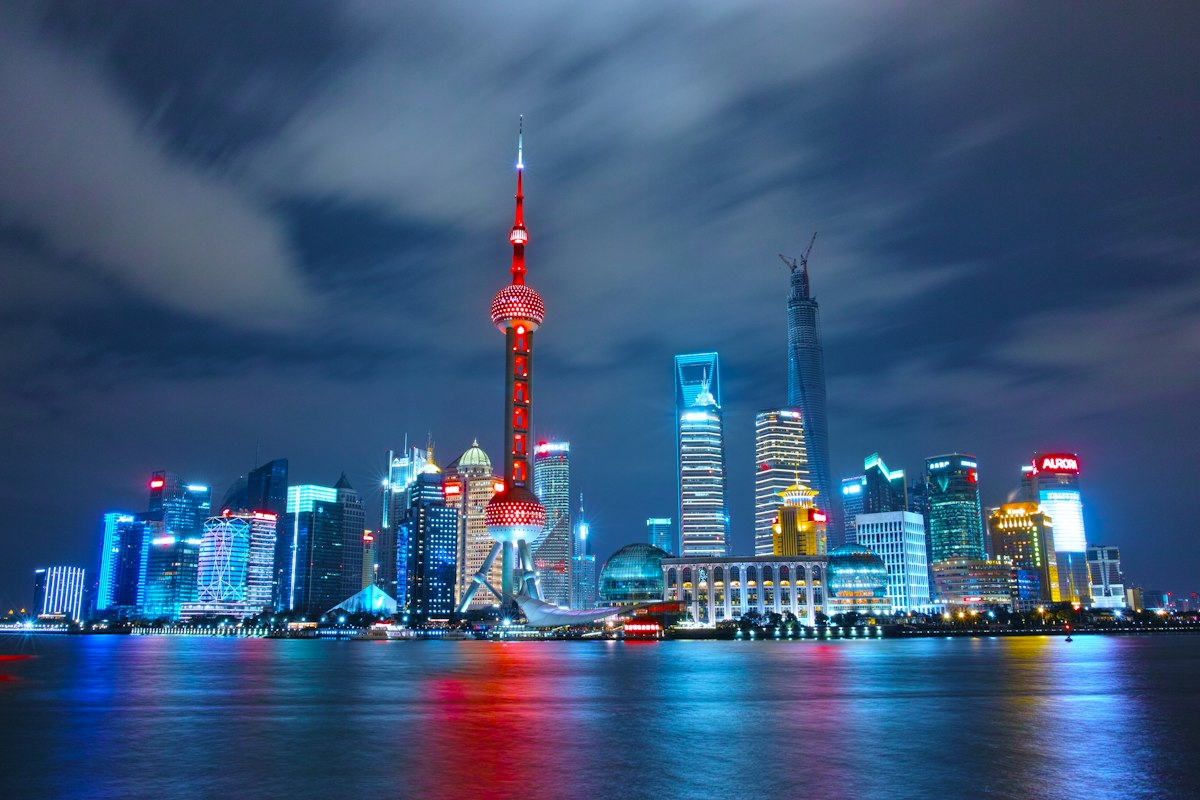
The View from Lujiazui
From the 88th floor of the Shanghai Tower, where CITIC Securities maintains its headquarters, the Pudong skyline stretches toward a hazy horizon. The towers of Lujiazui — China's Wall Street — have witnessed many boom cycles. The dot-com bubble of 2000. The property surge of the 2010s. The new energy vehicle frenzy of 2021.
Now they are preparing for the AI wave.
The bankers working on DeepSeek's STAR Market filing are reportedly operating under extraordinary pressure. The company wants to move fast — filing by year-end, listing in 2027 — but the due diligence requirements for a 500 billion yuan valuation are unprecedented in Chinese capital markets. Every chip purchase, every training run, every API contract is being scrutinized.
Across the border in Hong Kong, Goldman Sachs and CICC are preparing Moonshot's roadshow materials. The pitch will emphasize Kimi K3's benchmark performance, the sixfold sales surge, the $300 million ARR trajectory. It will downplay the US investigation, the VIE restructuring costs, the questions about chip sourcing.
Two cities. Two exchanges. Two radically different approaches to taking China's AI champions public. But both share a common thread: the belief that the capital markets exist to fund the next generation of artificial intelligence, and that China's domestic pools of capital are deep enough to make it happen.
Whether that belief is justified will be tested in the months ahead. The filing documents will reveal financial details that have been closely guarded. The roadshows will expose whether international investors are willing to look past regulatory overhang. The first-day trading pops — or drops — will set the tone for every Chinese AI company that follows.
DeepSeek and Moonshot are not just going public. They are testing whether China's capital markets can support the valuations that frontier AI demands. The entire world will be watching the results.
*Sources: Financial Times (September 9, 2026), Reuters (September 3, 2026), Bloomberg (July 2026), The Information (August 26, 2026), 36Kr (September 7, 2026), CNBC (August 2026), Odaily (September 10, 2026), Venture Atlas, ValueAddVC, LatePost.*
Editor at AI in China. Tracking Chinese AI companies, funding rounds, and the technologies reshaping global tech. More about me.