China's Robot Giants Split: Unitree vs Zhiyuan and the Bet That Will Decide Embodied AI
On the evening of October 28, 2026, two events 800 kilometers apart detonated what Chinese robotics insiders are now calling the "existential week." In Hangzhou, Unitree Robotics dropped its first quarterly report as a listed company — and founder Wang Xingxing, speaking at a partner conference days earlier, made a claim that sent the company's stock up 71.6% in twelve trading days: general-purpose AI models, he said, will "break through" embodied intelligence within one to two years. The next afternoon in Shanghai, Zhiyuan Robotics co-founder Peng Zhihui — better known by his handle "稚晖君" (Zhihuijun) — stood on stage at Zhiyuan Innovation Day and delivered the industry's rebuttal: the answer is not surrender to general models, but "two-way convergence," with embodied models growing as large and as capable as anything in the language world.
Two companies. Two opposite bets on the most valuable question in robotics: when the brains get good enough, does the body still matter as a moat?

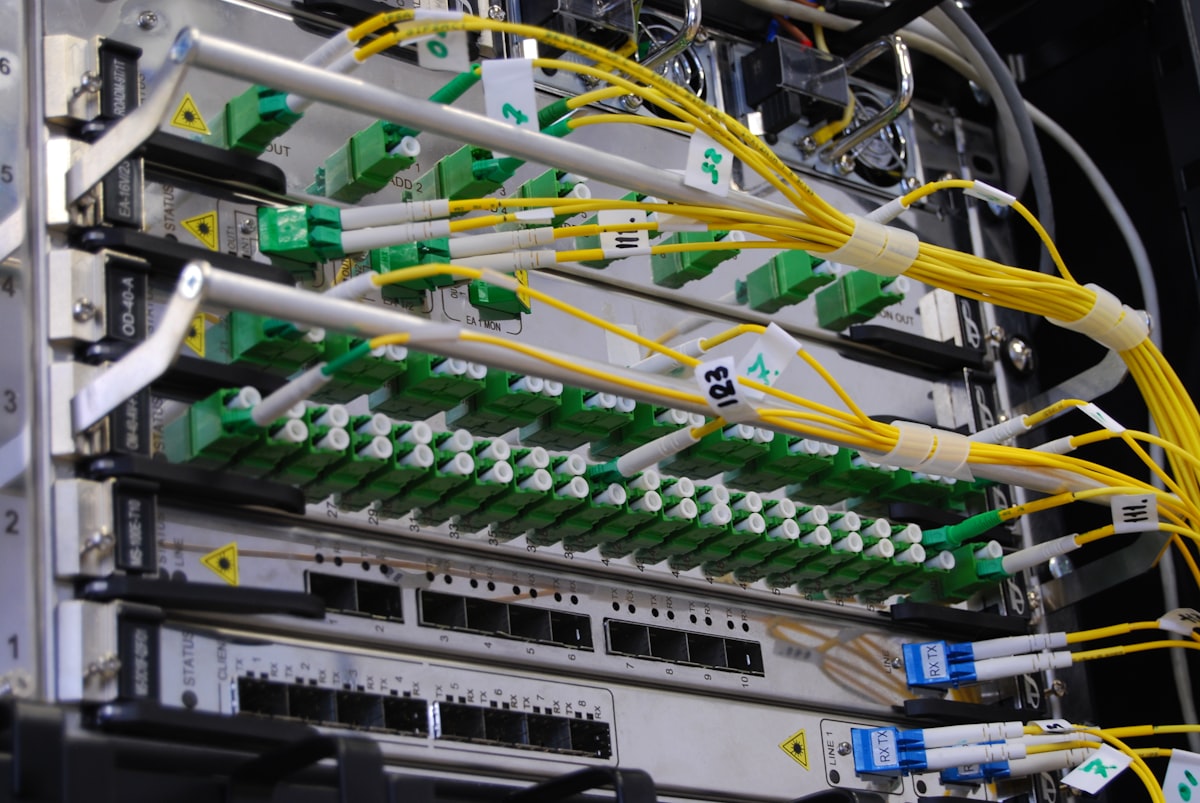
*China's two largest humanoid robot makers are betting on opposite answers to the same question. Image: Unsplash*
The Conventional Wisdom — and Why This Week Broke It
For three years, the China robotics narrative has followed a clean script: humanoid robots are the next trillion-yuan industry, China's supply chain dominance (97% of global humanoid shipments in 2025) guarantees leadership, and the winning formula is "本体" (hardware body) plus "大脑" (AI brain), assembled into deployable workers. Unitree owned the hardware narrative with cut-throat pricing — its R1 humanoid starts at ¥29,900, roughly the price of a mid-range laptop. Zhiyuan owned the deployment narrative, with robots actually working factory shifts and a full-stack model family called GO (Genie Operator).
The script cracked on October 22. At Unitree's partner ecosystem conference, Wang Xingxing showed a video: OpenAI's GPT-6 Astra, released in September, controlling a robot to paint a watercolor — dipping the brush, rinsing it in a water bowl, changing pigments — with zero task-specific training. "General AI models will break through physical AI," Wang said. "Fast: one to two years. Slow: two to three years." He went further: a user taking a Unitree robot home and asking it to tidy the room could work "possibly next year."
The market heard a death sentence for embodied-model companies — and a pardon for hardware makers. Unitree's stock, which had fallen steadily since its August listing, surged 71.6% between October 16 and October 28. Then on October 29, Zhiyuan fired back with numbers of its own. The divergence is now absolute.
Unitree: The Hardware Juggernaut Bets on Other People's Brains
Unitree's Q3 2026 report, published October 28, is the first hard look at the economics of the world's most-watched humanoid maker. The headline numbers look strong until you read them twice:
| Metric | Q3 2026 | Q3 2025 | Change |
|---|---|---|---|
| Revenue | ¥665M ($93M) | ¥391M | +69.93% |
| Operating profit | — | — | -27.78% (total profit ¥112M) |
| Net profit (attributable) | ¥113M | ¥137M | -17.37% |
| Non-GAAP net profit | ¥105M | ¥127M | -17.42% |
For the first three quarters combined:
| Metric | 9M 2026 | 9M 2025 | Change |
|---|---|---|---|
| Revenue | ¥1.817B | ¥1.167B | +55.71% |
| Net profit (attributable) | ¥387M | ¥104M | +270.54% |
| Non-GAAP net profit | ¥349M | ¥430M | -18.78% |
The ¥387 million nine-month profit looks impressive until you notice the asterisk: last year's number was depressed by a one-time share-based payment charge. Strip that out, and Unitree's underlying profit is *falling* — down nearly 19% — while revenue growth decelerates from the 226.78% compound annual rate of 2023–2025.
| Year | Revenue | Net Profit | Gross Margin |
|---|---|---|---|
| 2023 | ¥159M | -¥11.1M | 44.22% |
| 2024 | ¥393M | ¥95.5M | — |
| 2025 | ¥1.699B | ¥278M | 60.13% |
The most revealing line in the entire filing is inventory: ¥1.019 billion as of September 30, up 277% from ¥367 million at the end of 2025. Unitree did not explain whether this is strategic stockpiling ahead of demand or unsold robots piling up in warehouses. Analysts are split. What is not in dispute: 98.64% of Unitree's revenue comes from hardware sales — humanoids, quadrupeds, and components — and the company has every incentive to argue that the intelligence layer should be someone else's problem.
Unitree shipped its 11,000th single-model biped humanoid in June, launched a 500-kg rideable mech in May (from ¥3.9 million), and cut the R1 to ¥29,900 in June, triggering a price war that has since spread across the industry. Wang Xingxing's "breakthrough" claim is, in this light, a strategic position: if general models from OpenAI, DeepSeek, or Alibaba become the default robot brain, then Unitree's cost-optimized bodies become the Android of physical AI — winning on volume, not intelligence.
Zhiyuan: The Full-Stack Rebellion
Twenty-four hours after Unitree's report, Peng Zhihui took the stage in Shanghai with a deliberately different message. Zhiyuan's H1 2026 numbers, revealed at Innovation Day: 9,700 robots shipped, revenue approaching ¥2 billion, and 20,000 cumulative units off the production line as of September — from just 6 units in 2023.
| Milestone | Date | Cumulative Units |
|---|---|---|
| First units | 2023 | 6 |
| Early scale | January 2025 | 1,000 |
| Year-end 2025 | December 2025 | 5,000 |
| 10,000-unit mark | March 2026 | 10,000 |
| Current (Sept 2026) | September 2026 | 20,000 |
Peng's response to Wang's "breakthrough" framing was measured but pointed. "General foundation models penetrating embodied intelligence is a major trend," he said — then pivoted: "but it's a two-way convergence" (双向奔赴). Zhiyuan's answer is GO-3 Preview, which Peng claims is the largest-parameter embodied model released by any company to date, trained on a cluster approaching 10,000 cards this year. The company's training cluster, its world-model stack (GE-2 won the WorldArena championship), and its deployment flywheel — real factory shifts generating real correction data — are, in Zhiyuan's telling, precisely the moat that general language models lack.

*Zhiyuan argues its full-stack model-plus-deployment flywheel is the real moat. Image: Unsplash*
Zhiyuan's GO lineage shows the ambition:
| Model | Release | Architecture | Claim to Fame |
|---|---|---|---|
| GO-1 | March 2025 | ViLLA (Vision-Language-Latent-Action) | First general embodied base model; learns from human video |
| GO-2 | April 2026 | Fused "big brain + little brain" | World-model integration, AgiBot World 2026 open dataset |
| GO-3 Preview | October 2026 | ViLLA + world model | Largest embodied model by parameters; spatial mobile intelligence |
The contrast with Unitree could not be sharper. Unitree's own embodied models — WVLA 2.0 (May 2026) and UnifoLM-OminiA 0.3 (July 2026) — power impressive demos: loading dishwashers, fetching medicine boxes, folding laundry. But Wang's rhetoric has shifted from "our models" to "anyone's models," a quiet admission that Zhiyuan may be right about the model layer mattering.
Head-to-Head: Two Companies, Two Futures
| Dimension | Unitree | Zhiyuan |
|---|---|---|
| Core bet | Cheap, capable bodies; intelligence is commoditized | Full-stack models + deployment data flywheel |
| H1/H2 2026 shipments | ~11,000 single-model bipeds by June (all models) | 9,700 units H1; 20,000 cumulative by Sept |
| Revenue | ¥1.817B (9M 2026) | ~¥2B (H1 2026 alone, company-disclosed) |
| Profitability | Net profitable; non-GAAP profit falling 18.78% | Not disclosed; targeting first profitable year |
| Model strategy | In-house WVLA/UnifoLM + open to general models | GO-series proprietary models as core moat |
| Pricing | R1 from ¥29,900; mech from ¥3.9M | Premium industrial deployments; RaaS |
| Capital status | Listed (STAR Market, 688836.SH) | HK IPO delayed; new private round; $20B target valuation |
| Founder stake | Wang Xingxing 21.44% direct + 9.85% via vehicle | Peng Zhihui co-founder/CTO; investor consortium |
| "Breakthrough" stance | General AI absorbs embodied AI in 1-3 years | Two-way convergence; embodied models scale up |
Zhiyuan actually leads on revenue for the comparable period — a fact largely buried under Unitree's earnings headlines. The company's ¥2 billion H1 revenue nearly matches Unitree's entire nine-month total, driven by higher-priced industrial deployments rather than consumer-grade hardware. Its 43%+ share of the global humanoid shipment market in H1 2026 makes the claim of "deployment state" (部署态) — robots as production workers, not performers — at least partially credible: 8 of its Elf G2 units ran a 3C electronics quality-inspection line in Jiangxi for a six-day livestream that drew 4 million viewers.
The Capital Markets Verdict: The IPO Window Just Froze
Behind the technological debate sits a colder financial reality. Multiple finance-industry sources confirmed to Caixin this week that Hong Kong IPOs for embodied-intelligence companies have been halted. Zhiyuan — which confirmed in July that it had begun the HK listing process with a reported $20 billion target valuation and ¥4 billion full-year revenue target — has instead raised a new private round, with no commitment that it is a Pre-IPO round. Galbot, ZhiSquare, CrossWing, Xinghaitu, and LimX Dynamics were all reported to be in HK IPO pipelines; at least three had confidentially filed.
The freeze reframes the Unitree-versus-Zhiyuan split as a race against a closing clock. Unitree got out — its STAR Market listing in August raised ¥4.2 billion and briefly valued the company near ¥280 billion even as the stock fell post-IPO. Every private embodied-AI company now faces a valuation reset: one senior PE executive told Caixin that if Unitree's market cap had failed to hold above ¥100 billion (roughly 100x earnings), capital would have re-priced the entire sector, potentially triggering funding crises at unlisted players. The stock's October rebound above ¥260 billion in market cap bought the industry time — but the HK freeze means no one else can cash out the same way.
Unitree's own stock chart this quarter tells the story of a sector pricing in contradictory futures:
| Date | Event | Stock Reaction |
|---|---|---|
| Aug 2026 | STAR Market listing (¥4.2B raised) | Post-IPO decline |
| Oct 16-28 | Wang's "AI breakthrough" comments + GPT-6 Astra demo | +71.6% |
| Oct 28 | Q3 report: profit down 17%, inventory +277% | +8.74% (close ¥695.9) |
| Oct 29 | Zhiyuan Innovation Day counters narrative | -4.82% (close ¥662.39) |
The Real Question: What Does "Breakthrough" Actually Mean?
Strip away the rhetoric and both companies are describing the same physics. GPT-6 Astra's zero-shot watercolor demo was real, but it ran on a robot with a specific body, specific actuators, and specific safety envelopes — Unitree's hardware, in fact. "General models will control robots" and "robots need purpose-built embodied models" are not mutually exclusive claims; the industry consensus emerging in Nanjing at the Physical AI & World Model Conference on October 20 — where ¥6 billion in deals were signed and a national "AI World Model" standard entered pre-research — is that the winning stack has three layers: a general reasoning core, an embodied middle layer handling spatial physics, and a body-specific control layer.
| Layer | Function | Who's Winning (China) |
|---|---|---|
| General reasoning core | Language, planning, common sense | DeepSeek, Qwen, GPT-6-class models |
| Embodied middle layer | World models, spatial understanding, action generation | Zhiyuan (GE-2, GO-3), self-research labs |
| Body control layer | Real-time actuation, balance, safety | Unitree (motion control legacy) |
The disagreement is over who captures the value. Wang's bet: the top layer commoditizes everything below it, and bodies become the only durable margin. Peng's bet: the middle layer is where deployment data accumulates, and data — not parameters — decides who controls the robot brain. Both are defensible. Both cannot be fully right.
What makes this week's split historically important is timing. China's general-purpose models have just crossed the capability threshold where zero-shot robot control is demonstrable but not yet reliable. The next 18 months will determine whether embodied-model companies can build a data moat fast enough to matter — or whether they become the feature, not the company.
What Comes Next: Three Scenarios for 2027
Scenario 1 — The Breakthrough (Wang's bet). GPT-6-class models reach reliable zero-shot manipulation by mid-2027. Embodied-model startups consolidate into a handful of data-and-control specialists. Unitree's hardware margins expand; Zhiyuan's model moat narrows to industrial niches. Probability weight: moderate — demos are ahead of reliability.
Scenario 2 — The Convergence (Peng's bet). General and embodied models genuinely merge; the winners are companies that own both deployment data *and* scaled model training. Zhiyuan's 10,000-card cluster and 20,000-unit fleet position it as the reference stack; Unitree becomes the premium Android of bodies but cedes the intelligence premium. Probability weight: moderate-high — this is where most neutral researchers land.
Scenario 3 — The Freeze. Capital markets stay shut through 2027; the sector consolidates under cash-flow pressure. Unitree's ¥1 billion inventory becomes an albatross if consumer demand softens; Zhiyuan's burn rate depends on its new private round's size. Deep-pocketed entrants — Huawei, BYD-adjacent players, Chery (which unveiled its "Mobao" home humanoid and vehicle-grade 3nm chip on October 20) — acquire distressed model teams. Probability weight: non-trivial — the HK IPO freeze is the tell.
The milestones to watch are concrete: whether GO-3's full release closes the gap with general-model zero-shot performance; whether Unitree's inventory normalizes by Q4; whether any HK embodied IPO resumes before March 2027; and whether GPT-6 Astra-class control demos progress from painting to multi-hour autonomous factory work.
Social Voices
The debate has consumed Chinese tech social media all week. Here's what people are saying:
@量子位读者 (Zhihu): "王兴兴说快的话明年通用模型就能整理房间,那宇树自己花大钱训WVLA和UnifoLM是为了什么?说到底还是两边下注。"
*"Wang says general models might tidy your room next year — so why is Unitree spending heavily training WVLA and UnifoLM? At the end of the day, they're hedging both sides."*
@具身智能观察 (Weibo): "智元上半年营收近20亿,比宇树前三季度还多。媒体全在报宇树,没人看这条,很说明问题。"
*"Zhiyuan's H1 revenue is nearly ¥2 billion — more than Unitree's entire nine months. All the headlines are about Unitree. That tells you something."*
@RoboDoubt (Twitter/X): "GPT-6 Astra painted a watercolor. Cool demo. But 'breaks embodied AI in 1-2 years' is a fundraising narrative, not a forecast. Reliability in unstructured homes is a 5-year problem minimum."
*"GPT-6 Astra painted a watercolor. Cool demo. But 'breaks embodied AI in 1-2 years' is a fundraising narrative, not a forecast. Reliability in unstructured homes is a 5-year problem minimum."*
@ factory_liu (Douban): "龙旗厂那个直播我看了,8台G2连续6天在产线上干活,这个比任何PPT都有说服力。但是良率和速度还得再观察。"
*"I watched the Longqi factory livestream — 8 G2 units working the line for 6 straight days. That's more convincing than any slide deck. But yield and speed still need watching."*
@港股打新人 (Xiaohongshu): "具身智能港股IPO叫停,一级市场这些高估值怎么办?智元转私募轮融资说明退出路径真出问题了。"
*"Embodied AI HK IPOs are frozen. What happens to all those high valuations in the primary market? Zhiyuan switching to a private round shows the exit path is genuinely broken."*
@peng_fan_01 (GitHub discussion): "GO-3 Preview's architecture note mentions ViLLA + world model. If the parameter count claim holds up, this is the first embodied model that actually scales like a language model. The interesting race isn't Unitree vs Zhiyuan — it's Zhiyuan vs the foundation labs."
*"GO-3 Preview's architecture note mentions ViLLA + world model. If the parameter count claim holds up, this is the first embodied model that actually scales like a language model. The interesting race isn't Unitree vs Zhiyuan — it's Zhiyuan vs the foundation labs."*
The split between Unitree and Zhiyuan is not just a corporate rivalry — it is the live experiment that will answer one of AI's most consequential questions: whether intelligence or embodiment is the scarcer asset. China's robot industry, 97% of global humanoid shipments and now the world's largest deployment lab, has effectively staked both sides of the bet. The Q3 numbers say both companies are growing; the inventory line, the IPO freeze, and the 71.6% stock swing say the market no longer knows which future to price. By this time next year, the data will know.
*Related reading:*
- China Humanoid Robots Capture 97% of Global Shipments — and the West Is Just Noticing
- World Humanoid Robot Games Beijing 2026: The Machines Take the Field
- China's Token Economy Hits 500 Trillion: The CAICT Report Behind the Numbers
Editor at AI in China. Tracking Chinese AI companies, funding rounds, and the technologies reshaping global tech. More about me.