China's Physical AI Awakening: World Models, Robot IPOs, and the $295 Billion Bet on Embodied Intelligence
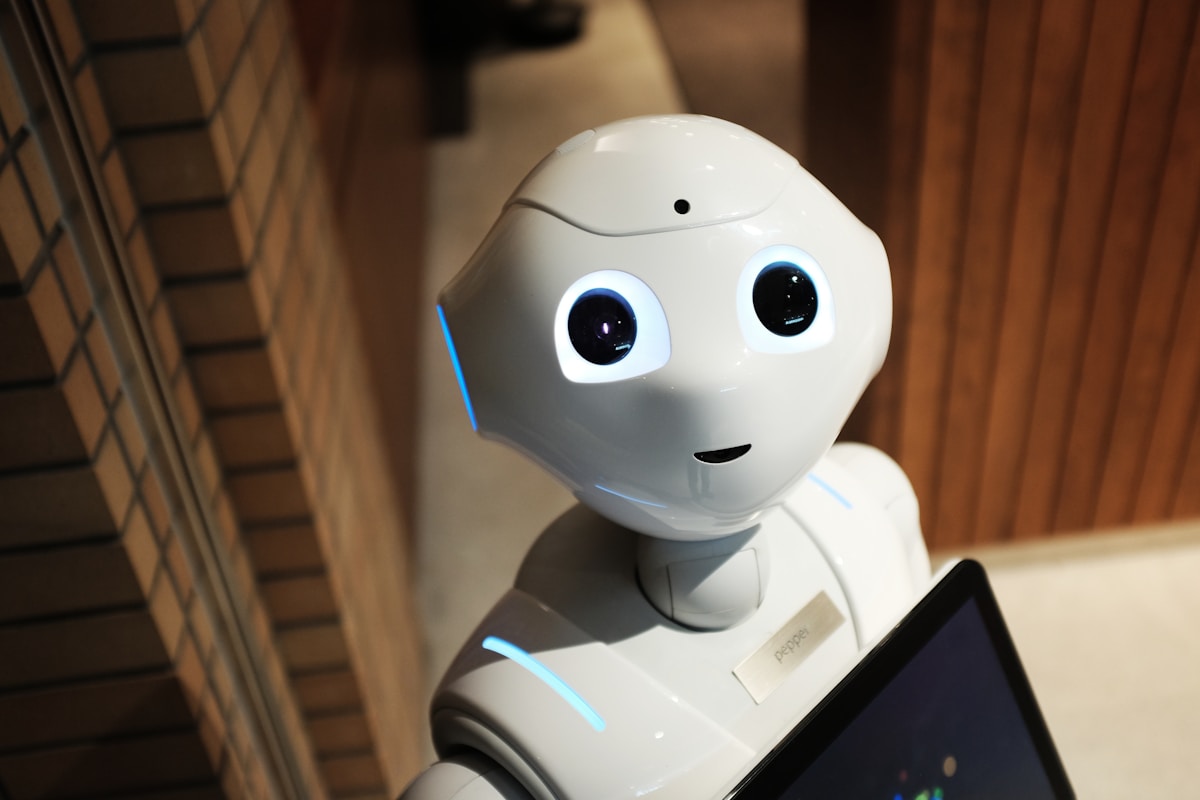
heroImage: "https://images.unsplash.com/photo-1485827404703-89b55fcc595e?w=1200"
*In a single week, China unveiled the world's first general world foundation model, a humanoid robot maker filed for IPO, and Beijing prepared a $295 billion nationwide AI buildout. The physical AI era has arrived — and China is determined to own it.*
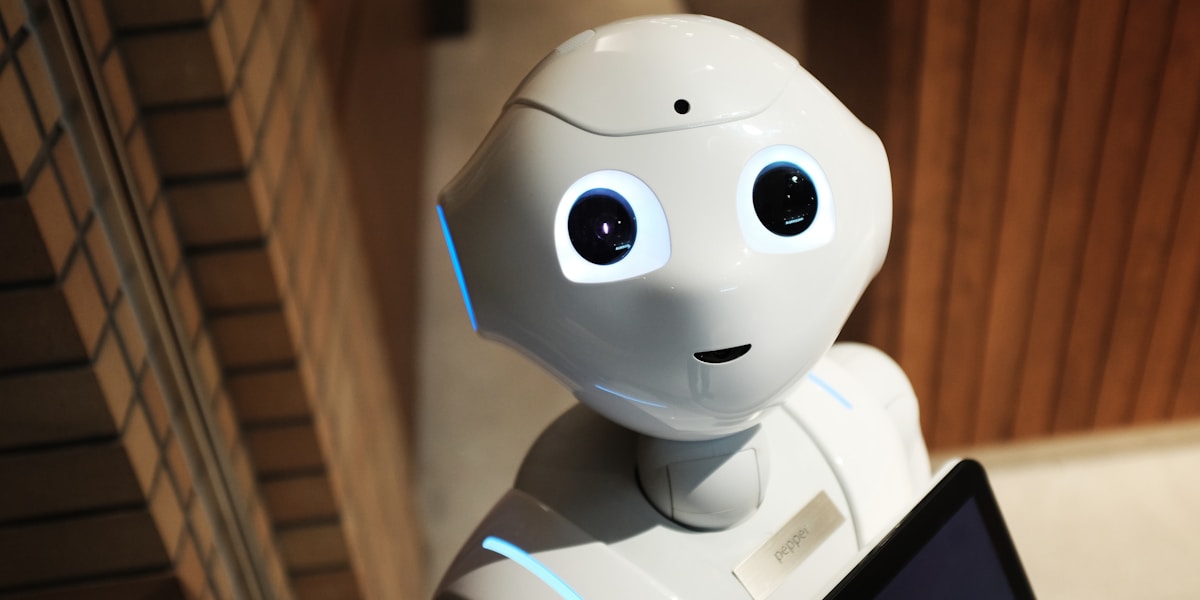
*A humanoid robot demonstrates object manipulation at the 8th Beijing Academy of AI Conference, June 12, 2026. Photo: VCG*
The Week That Changed Everything
Between June 8 and June 14, 2026, China's AI industry crossed a threshold that will be studied for years. It began with a research conference in Beijing and ended with a legal ruling in Nanjing. In between, a robot factory opened in Shenzhen, a confidential IPO filing landed in Hong Kong, and Bloomberg reported that Beijing is preparing the largest government-directed technology investment in modern history.
Taken individually, each of these developments is significant. Taken together, they reveal something far more consequential: China is executing a coordinated pivot from digital intelligence — the domain of chatbots and image generators — to physical intelligence, the far harder problem of building AI systems that understand, predict, and operate within the real world.
This is not a subtle shift. It is a strategic reorientation that affects everything from national infrastructure planning to capital market allocations to liability law. And it is happening now, in real time, with implications that extend far beyond China's borders.
The Five Signals
| Signal | Date | What Happened | Why It Matters |
|---|---|---|---|
| Physis-v0.1 | June 12 | BAAI unveiled the world's first general world foundation model | China claims the lead in a technology many consider prerequisite for AGI |
| EngineAI IPO | June 12 | Shenzhen robot maker filed confidentially for Hong Kong listing | Humanoid robotics sector gains a viable public-market exit path |
| $295B Buildout | ~June 10 | Bloomberg reported China's nationwide AI infrastructure plan | Government capital now explicitly directed at physical AI deployment |
| Nanjing Ruling | June 12 | Court held AI provider liable for hallucinated defamation | Legal framework for AI accountability begins to take shape |
| Factory Opening | June 1 | EngineAI opened 12,000 m² plant with 10,000-unit capacity | Production capability moves from prototype to scale |
Sources: CGTN, Bloomberg via The Edge Singapore, The Next Web, MLex, VCG
Each signal reinforces the others. The world model provides the software architecture. The robots provide the hardware platform. The government funding provides the capital. The legal ruling provides the accountability framework. And the factory provides the manufacturing base.
This is not how technology transitions usually happen. They are typically fragmented, with research, commercialization, regulation, and infrastructure developing on different timelines and often in tension with one another. What China appears to be attempting — simultaneously, and at national scale — is the vertical integration of an entire technological paradigm.
Signal 1: Physis-v0.1 and the World Model Breakthrough
What BAAI Unveiled
On June 12, 2026, at the 8th Beijing Academy of Artificial Intelligence Conference, BAAI president Wang Zhongyuan took the stage to announce something that would have been science fiction just three years earlier: Physis-v0.1, which the institute describes as the world's first general world foundation model.
The distinction matters. Large language models — GPT-4, Claude, DeepSeek — learn patterns from text. They are extraordinarily capable at generating and reasoning about language, but they do not inherently understand physics, spatial relationships, or cause and effect in the physical world. When a human picks up a glass, they intuitively know how much force to apply, how the glass will respond, what will happen if they tilt it too far. Current AI systems do not. They can describe these dynamics in language, but they cannot predict them from first principles.
World models attempt to solve this. Rather than learning statistical correlations in text, they learn the underlying dynamics of how the world behaves — how objects move, interact, and change state. The goal is not to generate plausible sentences but to build an internal simulation of reality accurate enough to make predictions and plan actions.
Why This Is Harder Than It Sounds
The technical challenges are formidable. A world model must integrate information from multiple sensory modalities — vision, touch, proprioception, possibly audio — and build a coherent, predictive representation of physical dynamics. It must handle uncertainty, partial observability, and the infinite variability of real-world environments. And it must do all of this in a way that supports not just prediction but planning: given a goal, what sequence of actions will achieve it?
BAAI's announcement claims progress on all of these fronts, though independent verification will take months. What is immediately significant is the institutional commitment. BAAI is not a startup operating on venture timelines. It is a state-backed research institute with close ties to China's technology policy apparatus. Its endorsement of world models as a strategic priority signals that this direction has high-level support.
The Embodied AI Connection
Wang Zhongyuan made the connection explicit in his keynote: "Current AI systems still face significant limitations when deployed in real-world environments." He cited the example of object fragility judgment — something humans do instinctively but robots struggle with. The implication is clear: world models are not an academic curiosity. They are a prerequisite for the deployment of embodied AI at scale.
This connects directly to China's broader robotics push. The country's humanoid robot sector has been building hardware — legs, arms, sensors, actuators — at an accelerating pace. But hardware without the intelligence to operate it is just an expensive sculpture. World models promise to provide that intelligence: the ability to perceive, predict, and act in unstructured physical environments.
Andrew Barto, the Turing Award laureate who spoke at the conference, put it in historical context: combining deep reinforcement learning with growing knowledge of the brain's reward systems could drive "the next wave of progress in AI." The reference to neuroscience is telling. World models are, in some sense, an attempt to build the kind of predictive machinery that biological brains have evolved over hundreds of millions of years.
Signal 2: The Robot IPO Wave
EngineAI's Confidential Filing
On the same day BAAI unveiled Physis, EngineAI — a Shenzhen-based humanoid and quadruped robot maker founded in 2023 — filed confidentially for an initial public offering on the Hong Kong Stock Exchange. The company is working with China International Capital Corp and Citic Securities, two of China's most prominent investment banks.
The timing is not coincidental. EngineAI had just opened a 12,000 square meter factory in Shenzhen on June 1, with a production line capable of producing a humanoid robot every 15 minutes and annual capacity geared for 10,000 units. The company had raised 200 million yuan in a Series B round in April 2026 at a valuation above 10 billion yuan (~$1.5 billion), led by a fund tied to Henan Investment Group and Luxshare Precision Industry, a major Apple supplier.
From Viral Videos to Production Lines
EngineAI first gained attention with viral videos of its PM01 robot performing a front flip — a stunt that demonstrated remarkable agility for a humanoid platform. But the IPO pitch, according to industry observers, is not about stunts. It is about manufacturing scale. The company is explicitly positioning itself as having a "real manufacturing base rather than viral demo clips" — a distinction that matters enormously in a sector dominated by prototype demonstrations.
This is a pattern we have seen before in China's technology sector. DJI did not become the world's dominant drone manufacturer by building the best prototype. It did so by building the best supply chain. EngineAI appears to be attempting a similar playbook in humanoid robotics: establish production capability first, then scale it.
The Broader IPO Pipeline
EngineAI is not alone. According to reports from The Next Web and Bloomberg, the humanoid robot IPO wave now includes:
| Company | Status | Valuation Target | Notes |
|---|---|---|---|
| Unitree | Filed for IPO | $7 billion | Sector leader, Shanghai STAR Market |
| EngineAI | Confidential filing | TBD | 10,000-unit production line operational |
| Agibot | Preparing IPO | $6 billion | Hong Kong exchange |
| PaXini Tech | Weighing listing | TBD | BYD-backed hand manufacturer |
| Linkerbot | Chasing valuation | $6 billion | Robot-hand unicorn |
| Dreame | Eyeing Hong Kong | TBD | Robot vacuum giant expanding into humanoids |
Collectively, these companies represent approximately $22.6 billion in Hong Kong IPO activity in the relevant period — a concentration of capital in AI and robotics that mirrors the earlier wave of AI chip IPOs.
Capital Flows
The investor roster reads like a who's who of Chinese industry. Alibaba, Bosch, CATL, Geely, JD.com, Tencent, and XPeng have all participated in humanoid robot funding rounds across companies including Galbot, Leju Robot, Robotera, and EngineAI. The total funding in China's humanoid robot sector surpassed $1 billion in 2025 alone.
This matters because it demonstrates that the capital markets — not just government policy — are betting on embodied AI. When CATL, the world's largest battery manufacturer, invests in humanoid robots, it is not making a speculative venture bet. It is making a strategic bet that robots will become significant consumers of battery technology.
Signal 3: The $295 Billion Buildout
What Bloomberg Reported
In early June 2026, Bloomberg reported that China is preparing a $295 billion (approximately 2 trillion yuan) plan to fund a nationwide AI buildout. While details remain sparse, the scale is unprecedented. For context, this is roughly equivalent to the entire market capitalization of NVIDIA at certain points in 2024.
The plan is understood to focus on:
- AI data center construction and expansion
- Domestic chip manufacturing capacity
- Robotics and embodied AI deployment
- Smart manufacturing infrastructure
- Edge computing networks
From Policy to Concrete
China has announced ambitious technology plans before. What distinguishes this one is the timing and the convergence with other signals. The plan comes after:
- DeepSeek demonstrated that Chinese labs can build frontier AI models on domestic hardware
- The AI chip IPO wave proved that capital markets will fund domestic semiconductor companies
- The humanoid robot sector demonstrated production capability at scale
- The world model breakthrough suggested a path to the next generation of AI capabilities
In other words, the $295 billion is not being deployed into a vacuum. It is being layered on top of demonstrated technical and commercial progress. This dramatically increases the probability that it will be deployed effectively rather than dissipated across fragmented, low-impact projects.
The Strategic Logic
The timing also reflects geopolitical pressure. US export controls on advanced GPUs have forced China to accelerate domestic alternatives. But rather than simply trying to replicate NVIDIA's CUDA ecosystem, China appears to be using the constraint as an opportunity to build a vertically integrated physical AI stack — from chips to models to robots to applications — that is less dependent on Western technology at every layer.
This is the "decoupling" narrative that has become increasingly prominent in 2026. But it is not just about decoupling from the US. It is about coupling together China's own capabilities into a coherent, self-reinforcing system. World models need robots to act in the world. Robots need chips to compute. Chips need manufacturing capacity. Manufacturing needs capital. And capital, in China's system, follows policy.
Signal 4: The Nanjing Ruling and AI Accountability
What the Court Decided
On June 12, 2026 — the same day as BAAI's conference and EngineAI's IPO filing — the Nanjing Intermediate People's Court issued a ruling that received far less attention but may prove equally consequential. The court held an AI provider liable for hallucinated defamation — making it one of the clearest judicial signals yet that Chinese courts intend to hold AI providers accountable for harmful content generated by their systems.
The specifics of the case involve an AI system that generated false and defamatory content about an individual. The provider argued that the content was generated autonomously and that they should not be held responsible for outputs they did not directly create. The court rejected this argument.
Why This Matters for Physical AI
Liability for hallucinated text is significant in its own right. But it becomes far more consequential when extended to physical AI. If an AI provider can be held liable for defamatory text, the legal logic extends straightforwardly to:
- A robot that damages property through incorrect physical reasoning
- An autonomous vehicle that causes injury through flawed world-model predictions
- A manufacturing system that produces defective products through erroneous quality judgments
The Nanjing ruling establishes a precedent: AI providers are responsible for what their systems do, not just what they intend them to do. This creates powerful incentives for rigorous testing, validation, and safety engineering — incentives that become increasingly important as AI systems gain physical agency.
China's regulatory approach has often been characterized as top-down and policy-driven. The Nanjing ruling suggests that judicial interpretation is also playing a role, developing common law precedent in parallel with formal regulation. This dual-track approach — administrative rules plus court precedents — may prove more adaptable than either mechanism alone.
Signal 5: The Factory Floor
EngineAI's Shenzhen Plant
The least glamorous but arguably most important signal is the simplest: on June 1, 2026, EngineAI opened a factory. Not a research lab. Not a demonstration center. A production facility with 12,000 square meters of floor space and capacity for 10,000 humanoid robots per year.
In the context of global humanoid robotics, this is staggering. Boston Dynamics, the most famous name in the field, has produced perhaps a few hundred Atlas and Spot units for research and commercial deployment combined. Tesla's Optimus program has demonstrated impressive prototypes but has not yet reached meaningful production volumes. Agibot, EngineAI's Chinese rival, is targeting similar scale but has not yet publicly opened a comparable facility.
The Manufacturing Moat
China's advantage in physical AI may not be algorithms or chip design. It may be manufacturing. The country has spent four decades building the world's most sophisticated electronics manufacturing ecosystem — the same ecosystem that produces iPhones, drones, electric vehicles, and solar panels at scale. Humanoid robots are, at their core, electromechanical systems. The companies that can manufacture them reliably and cheaply will have a structural advantage over those that can only prototype them.
EngineAI's production line — one robot every 15 minutes — suggests that this advantage is being translated into physical AI. If the company achieves its 10,000-unit annual target, it will have produced more humanoid robots in a single year than the rest of the world combined.
The Convergence: What Happens When These Signals Combine
A Self-Reinforcing System
The five signals are not independent developments. They are components of a system that reinforces itself:
1. World models (Physis) provide the intelligence layer for robots to operate autonomously in unstructured environments
2. Robots (EngineAI, Unitree, Agibot) provide the physical platforms that deploy this intelligence
3. Manufacturing (Shenzhen factories) provides the production capacity to build these platforms at scale
4. Capital ($295B buildout, IPOs) provides the funding to accelerate all of the above
5. Accountability (Nanjing ruling) provides the legal framework that enables deployment without catastrophic liability risk
This is how technological revolutions happen. Not through a single breakthrough, but through the alignment of multiple capabilities that make each other useful.
The Comparison to America's Approach
The US approach to physical AI has been notably different. It has emphasized frontier research — world-class labs at OpenAI, Google DeepMind, and Anthropic — but with less coordination between research, manufacturing, and deployment. American robotics companies have struggled to reach production scale. Legal frameworks for AI liability remain fragmented and uncertain. And government funding, while substantial, has not been directed with the same centralized coordination.
This is not to say the American approach is wrong. It has produced extraordinary advances in AI capabilities. But it may be optimized for a different phase of the technology — the research and development phase — while China's approach is optimized for the deployment and scaling phase.
The question is which phase matters more in the next decade. If physical AI follows the trajectory of previous technologies — solar panels, batteries, electric vehicles — the winners may be determined not by who makes the best prototype but by who achieves manufacturing scale and cost reduction fastest.
Global Implications
For Technology Markets
The physical AI pivot has immediate implications for global technology markets. If China successfully scales humanoid robot production, it will create demand for components — sensors, actuators, batteries, chips — that currently have limited production capacity. This will drive investment across the supply chain, potentially creating bottlenecks and price surges similar to those seen in GPU markets during the LLM boom.
Conversely, it may depress demand for certain categories of human labor in manufacturing, logistics, and services — not immediately, but on a trajectory that becomes visible within 3-5 years.
For Geopolitics
The $295 billion buildout, combined with the demonstrated capability to produce world models and humanoid robots, strengthens China's position in technology competition with the US. It suggests that export controls on GPUs, while effective in the short term, have not prevented China from developing competitive capabilities in the next frontier of AI.
More subtly, it creates new forms of dependency. If China becomes the dominant manufacturer of humanoid robots, other countries may find themselves dependent on Chinese physical AI infrastructure in the same way they became dependent on Chinese solar panels and batteries.
For AI Safety
The physical AI transition raises safety questions that are qualitatively different from those posed by digital AI. A hallucinating language model can produce harmful text. A hallucinating robot can cause physical harm. The Nanjing ruling suggests that Chinese courts recognize this distinction and are prepared to hold providers accountable. But the broader governance framework for physical AI — safety standards, testing protocols, deployment restrictions — remains largely undeveloped everywhere.
The Road Ahead
What to Watch in the Second Half of 2026
1. Physis benchmarks: Independent evaluation of BAAI's world model claims will be critical. Can it actually predict physical dynamics better than language models? Can it support effective robot control?
2. EngineAI IPO pricing: The valuation and investor reception will signal market confidence in the humanoid robot sector's commercial viability.
3. $295B plan details: Specific allocation decisions will reveal priorities — training vs. inference, research vs. deployment, domestic vs. export markets.
4. Robot deployment numbers: Actual units shipped and deployed in real-world applications, not just factory capacity.
5. Legal follow-on cases: Whether the Nanjing ruling establishes a durable precedent or is distinguished in subsequent cases.
The Deeper Question
The most important question is not whether China can build world models or humanoid robots. It is whether these technologies can be integrated into a coherent system that delivers economic value at scale. China's bet is that vertical integration — controlling the full stack from research to manufacturing to deployment — will enable this integration faster than the more fragmented American approach.
History offers mixed precedents. Vertical integration worked for solar panels and batteries. It worked less well for semiconductors, where global specialization has proven more efficient. The outcome for physical AI will depend on whether the technology is more like solar panels — where manufacturing scale dominates — or more like cutting-edge chips — where design and process technology are the critical bottlenecks.
What is clear is that the physical AI era has begun. And the week of June 8-14, 2026, will be remembered as the moment China made its move.
*Published June 15, 2026. Sources: CGTN, Bloomberg, The Next Web, MLex, VCG, Financial Times, and industry analysis.*
Editor at AI in China. Tracking Chinese AI companies, funding rounds, and the technologies reshaping global tech. More about me.