The Price War Is Over: Why China's AI Labs Are Raising Prices—and Getting Away With It

heroImage: "https://images.unsplash.com/photo-1576091160399-112ba8d25d1d?w=1200"
*Photo: The trading floor of a modern financial exchange. In August 2026, China's AI market experienced a pricing reversal that surprised analysts who had assumed the race to the bottom would continue indefinitely. Image: Unsplash*
The Notification That Changed the Math
At 10:47 AM on August 6, 2026, a push notification arrived on the phones of roughly 340,000 registered developers on the DeepSeek platform. The message was four sentences long:
"DeepSeek plans to adjust API service pricing in the near future. The expected increase is substantial. Please arrange your usage accordingly. Specific plans will be announced separately."
For a company that had built its global reputation on being the "price butcher" of the AI industry—a label earned in April 2024 when it first dropped API pricing to ¥1 per million input tokens—the announcement was surreal. DeepSeek had spent two years making AI inference cheaper than a text message. Now it was telling the world to expect the opposite.
The reaction in developer chat rooms was immediate and polarized. On V2EX, China's largest developer forum, a thread titled "DeepSeek is raising prices—time to migrate?" accumulated 2,400 comments in six hours. On Zhihu, the question "Why is DeepSeek raising prices after winning the price war?" attracted 890 answers within 24 hours. The consensus, after the initial shock subsided, was unexpected: most developers did not plan to leave.
"Where would we go?" wrote one engineer whose startup processes approximately 50 million tokens daily through DeepSeek's API. "Even after the price increase, DeepSeek is still cheaper than OpenAI by a factor of ten. The question isn't whether to pay more. It's whether to pay more to DeepSeek or a lot more to someone else."
That engineer's calculation would prove prophetic. When DeepSeek's new pricing took effect on August 17, the increases were even larger than the warning suggested. But instead of a mass exodus, the platform saw continued growth. The price war, it turned out, had ended not with a bang but with a shrug—and a new realization that Chinese AI companies had pricing power.
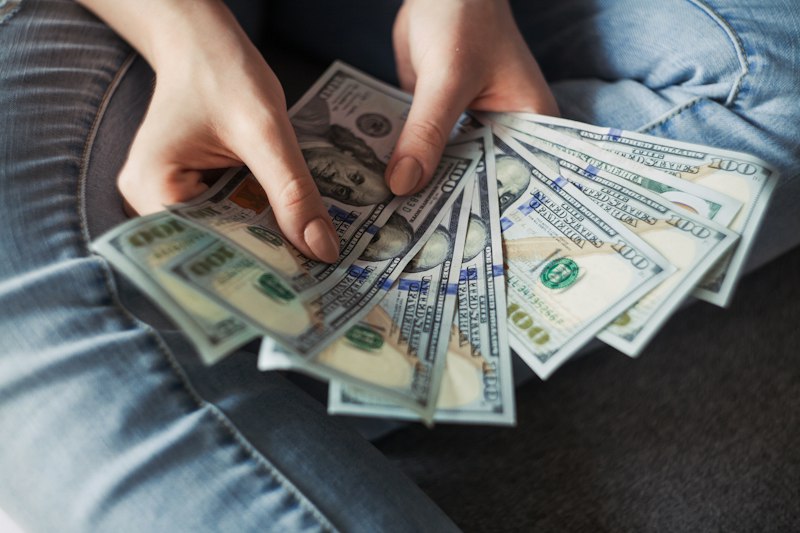
*Photo: Financial data analysis in a modern trading environment. The August 2026 pricing reversal forced enterprises to recalculate their AI infrastructure budgets across the board. Image: Unsplash*
The Numbers: How Much Prices Actually Rose
DeepSeek's August 17 price adjustment was not a modest course correction. It was a structural rewrite of the company's pricing architecture, introducing concepts from utility markets—peak and off-peak pricing—that had never before been applied to AI inference at scale.
Under the new system, DeepSeek V4-Pro's peak-hour output price rose from ¥6 to ¥27 per million tokens, a 350% increase. Its cache-hit input price—previously a near-free ¥0.025—jumped to ¥0.30, an 1,100% increase. V4-Flash, the model that had triggered global shock waves with its $0.14-per-million pricing just two weeks earlier, saw its peak output price rise from ¥2 to ¥9, also a 350% jump.
The peak hours themselves were precisely defined: 9:00 AM to 12:00 PM and 2:00 PM to 6:00 PM Beijing time, weekdays only. Outside those windows, prices dropped by 50%. The mechanism was transparent: DeepSeek's infrastructure was being overwhelmed by demand, and the company was using price signals to flatten the load curve.
| Model | Metric | Pre-August Price (¥/M tokens) | Post-August Peak (¥/M) | Post-August Off-Peak (¥/M) | Peak Increase |
|---|---|---|---|---|---|
| DeepSeek V4-Pro | Output | 6 | 27 | 13.5 | 350% |
| DeepSeek V4-Pro | Cache-hit input | 0.025 | 0.30 | 0.15 | 1,100% |
| DeepSeek V4-Pro | Standard input | 3 | 9 | 4.5 | 200% |
| DeepSeek V4-Flash | Output | 2 | 9 | 4.5 | 350% |
| DeepSeek V4-Flash | Standard input | 1 | 3 | 1.5 | 200% |
| DeepSeek V4-Flash | Cache-hit input | 0.025 | 0.10 | 0.05 | 300% |
*Table 1: DeepSeek API pricing before and after the August 17, 2026 adjustment. The introduction of peak/off-peak pricing marked a shift from flat-rate SaaS pricing to utility-style demand management. Data: DeepSeek official announcements, compiled from developer documentation.*
But DeepSeek was not acting in isolation. The price increases were industry-wide, and in some cases, they had begun months earlier.
Zhipu AI, the Beijing-based lab that became China's first publicly listed foundation model company in January 2026, had executed three discrete price increases before August. In February, it raised its GLM Coding Plan pricing by 30%. In March, the GLM-5-Turbo API price increased by 20%. In April, the GLM-5.1 release brought another 10% hike. By August, Zhipu's cumulative API price increase for the year reached approximately 83%. Yet its API call volume in the first quarter of 2026 grew by 400%—a classic "volume and price rising together" pattern that fund managers typically associate with pricing power, not desperation.
Moonshot AI, the maker of Kimi, took a different approach: it embedded the price increase into a product launch. When Kimi K3 was released in July 2026 with its 2.8 trillion parameters and million-token context window, its API output price was set at approximately ¥100 per million tokens—roughly 3.5 times the price of its predecessor, Kimi K2.7. The market's response was not outrage but enthusiasm. K3's release was so popular that Moonshot had to pause new consumer subscriptions within three days.
Tencent Cloud joined the trend in March 2026, raising prices on select Hunyuan series models by as much as 463%. Alibaba Cloud and Baidu Smart Cloud adjusted their AI compute pricing upward in early 2026. The industry that had spent eighteen months competing to charge the least was now competing to see who could raise prices without losing customers.
| Company | Model/Service | Price Action | Timing | Cumulative 2026 Increase |
|---|---|---|---|---|
| DeepSeek | V4-Pro / V4-Flash | +350% output, +1,100% cache hit | August 2026 | 350%+ (single event) |
| Zhipu AI | GLM series API | Three sequential increases | Feb, Mar, Apr 2026 | ~83% |
| Zhipu AI | GLM Coding Plan | Massive tier restructuring | July 2026 | Pro tier +261% |
| Moonshot | Kimi K3 (vs K2.7) | Embedded in product launch | July 2026 | ~3.5x output price |
| Tencent Cloud | Hunyuan series | Select model increases | March 2026 | Up to 463% |
| Alibaba Cloud | AI compute services | General upward adjustment | Early 2026 | Varies by tier |
| Baidu Smart Cloud | AI inference | General upward adjustment | Early 2026 | Varies by tier |
*Table 2: Chinese AI price increases in 2026. The synchronized reversal across multiple companies suggests a structural shift in market dynamics rather than isolated cost pressures. Data: Company announcements, financial filings, media reports.*
Why Now? The Demand-Supply Equation Flipped
The conventional explanation for price increases—rising costs—is only part of the story. Yes, AI accelerator prices have been climbing. NVIDIA's AI server hardware rose more than 15% in 2026. HBM memory supply constraints pushed DRAM prices up 90-95% in the first quarter. GPU rental rates for H100 clusters increased from $1.70 to $2.35 per GPU per hour.
But cost pressures alone do not explain why companies raised prices *and* retained customers. The more decisive factor was demand: it had grown so fast that supply could not keep pace.
On August 1, 2026—six days before DeepSeek's price-hike warning—OpenCode, a third-party platform that monitors API usage, recorded that DeepSeek V4-Flash alone processed 8 trillion tokens in a single day. On August 4, the API experienced capacity shortages during morning hours, with response times degrading and some requests timing out. The infrastructure built for a "price war" mentality had not been sized for the volume that the low prices had created.
The agentic AI wave of 2026 was the primary demand driver. When AI agents—systems that autonomously execute multi-step tasks by calling models in loops—became the dominant application architecture, token consumption exploded. A single user interaction with an AI agent might trigger 50 to 200 model calls. What had been measured in millions of tokens per user per month became billions.
GitHub's official blog stated it plainly in April 2026: "Agentic workflows are dramatically increasing compute demand. The cost of a single request now exceeds the price of an entire subscription plan." GitHub Copilot was forced to introduce session limits and seven-day token caps. The same dynamic was playing out across every company offering AI services: the more useful the models became, the more expensive they were to operate at flat-rate prices.
| Demand Driver | Impact on Token Consumption | Timeline |
|---|---|---|
| Agentic workflow adoption | 10-50x increase in calls per user session | H1 2026 acceleration |
| DeepSeek V4-Flash launch | 8 trillion tokens in single day (Aug 1) | August 2026 |
| OpenRouter weekly volume | DeepSeek V4-Flash at 11.31 trillion tokens/week | Early August 2026 |
| Zhipu API call volume | +400% in Q1 2026 despite 83% price increase | Q1 2026 |
| Global weekly token volume | ~56.8 trillion (OpenRouter aggregate) | July 2026 |
*Table 3: Demand indicators that preceded the August 2026 price adjustments. The data suggests that token consumption growth had outpaced infrastructure scaling across the industry. Data: OpenCode, OpenRouter, company filings.*
The peak/off-peak pricing mechanism that DeepSeek introduced was, in this context, not merely a revenue optimization tool. It was an admission that China's AI infrastructure was operating at its limits. The 2 trillion yuan national computing plan announced in June 2026—mandating 80% domestic chip content—was designed to address this constraint. But data centers take years to build. Price signals take minutes to implement.
The Global Paradox: China Raises, America Cuts
The timing of China's price increases created a striking global asymmetry. While Chinese labs were raising prices in August 2026, American labs were cutting them.
OpenAI had slashed GPT-5.6 Luna API prices by approximately 80% on August 3, dropping input costs from $10 to $2 per million tokens. Google offered Gemini 3.7 Flash at a limited-time 50% discount. Anthropic released Opus 5 at roughly half the price of its predecessor, Fable 5.
The direction of price movement had inverted. For three years, the narrative had been that American models were premium products and Chinese models were budget alternatives. In August 2026, Chinese models were becoming *more* expensive while American models were becoming *cheaper*.
| Model | Input Price ($/M) | Output Price ($/M) | Direction (Aug 2026) | vs. DeepSeek V4-Pro (peak) |
|---|---|---|---|---|
| DeepSeek V4-Pro (peak) | ~$1.25 | ~$3.75 | ↑ +350% | Baseline |
| Kimi K3 | ~$3.00 | ~$15.00 | ↑ +3.5x (vs K2.7) | 4x output |
| GLM-5.3 | ~$1.40 | ~$4.40 | ↑ Cumulative +83% | 1.2x output |
| GPT-5.6 Luna | ~$0.20 | ~$0.80 | ↓ -80% | 0.2x output |
| Claude Opus 5 | ~$2.00 | ~$10.00 | ↓ ~50% (vs Fable 5) | 2.7x output |
| Gemini 3.7 Flash | ~$0.15 | ~$0.60 | ↓ -50% (limited) | 0.16x output |
*Table 4: Global AI pricing direction in August 2026. Chinese labs raised prices while American labs cut them, inverting the traditional premium-versus-budget framing. Data: Official API documentation, compiled pricing tables. Currency conversion: $1 ≈ ¥7.2.*
The explanation for this paradox lies in market position, not cost structure. American labs were cutting prices because they were losing market share. Chinese labs were raising prices because they had market share to spare. OpenAI's price cut was defensive—an attempt to slow the migration of enterprise customers to Chinese alternatives. DeepSeek's price increase was offensive—an assertion that even at higher prices, the product remained the best value in the market.
JPMorgan captured this dynamic in an August 17 research note that upgraded its price targets for both Zhipu AI and MiniMax. The bank's analysts wrote that "GLM-5.3 upgrade plus DeepSeek price increases are reshaping China's AI industry," arguing that the pricing reversal signaled "a transition from market-share capture to value capture." Zhipu's target was raised from HK$1,600 to HK$1,800. The upgrade was based not on cost-cutting optimism but on the conviction that Chinese AI companies could now charge what their products were worth.
What Pricing Power Means for Chinese AI
The concept of pricing power—the ability to raise prices without losing customers—is rarely applied to technology markets, where Moore's Law and competitive pressure have historically driven costs down. But in August 2026, Chinese AI labs demonstrated that they possessed it.
The evidence was not merely that prices went up. It was that volumes went up alongside them. Zhipu's API call volume increased 400% in Q1 2026 even as prices rose 83%. DeepSeek's token throughput continued to grow after its August 17 price adjustment. Kimi K3's subscription pause was caused by too much demand, not too little.
| Company | Price Change | Volume Change | Interpretation |
|---|---|---|---|
| Zhipu AI | +83% (cumulative 2026) | +400% API calls (Q1) | Strong pricing power |
| DeepSeek | +350% (Aug 2026) | Continued growth post-hike | Demand inelastic |
| Moonshot (Kimi K3) | +3.5x (vs K2.7) | Subscription pause (oversubscribed) | Premium pricing accepted |
| Tencent Cloud | +463% (select models) | Stable enterprise uptake | B2B pricing power |
*Table 5: Price-volume dynamics across Chinese AI labs in 2026. The positive correlation between price and volume is the hallmark of pricing power. Data: Company filings, media reports, analyst estimates.*
Zhipu CEO Zhang Peng distilled the logic into a single sentence in the company's first annual report: "The bottleneck is compute, not customers." The statement inverted the standard assumption of the 2024-2025 period, when the dominant fear was that no one would pay for AI. In 2026, the dominant fear was that there would not be enough compute to serve everyone who wanted to pay.
This shift has structural implications for the industry's business models. In a market where demand exceeds supply, the competitive axis changes. Companies no longer compete primarily on price; they compete on reliability, capability, and the efficiency with which they convert expensive compute into valuable outputs. The metric that matters shifts from "cost per million tokens" to "cost per completed task"—a framing that favors models that do more with fewer calls.
| Metric | Price-War Era (2024-2025) | Value-Pricing Era (2026) |
|---|---|---|
| Primary competitive axis | Cost per million tokens | Cost per completed task |
| Customer priority | Lowest API bill | Best ROI on AI spend |
| Pricing model | Flat rate per token | Tiered, peak/off-peak, bundled |
| Infrastructure strategy | Rent GPU capacity | Build domestic superclusters |
| Business model goal | Capture market share | Capture value margin |
| Investor focus | User growth | Revenue per user, ARR |
*Table 6: The strategic shift from price-war competition to value-based competition in China's AI market. The transition mirrors patterns seen in cloud computing, ride-sharing, and other technology markets that matured from growth-at-all-costs to sustainable economics. Data: Industry analysis, compiled from media reports and analyst research.*
The Investor Response: From Growth Stories to Margin Stories
The pricing reversal did not go unnoticed by capital markets. Zhipu AI's stock, which had declined 16.6% on August 18 following the GLM-5.3 release, began a recovery that would continue into September. The initial sell-off reflected disappointment that GLM-5.3 was an incremental upgrade rather than a headline-grabbing parameter increase. The subsequent recovery reflected investor recognition that pricing power might be more valuable than model size.
Analysts at Guotai Haitong Securities wrote that DeepSeek's price increase "marked the acceleration of the industry's blind low-price competition phase coming to an end." The directional signal, they argued, was more significant than the magnitude of the increase itself. If the industry's price leader was raising prices, the floor for everyone else would rise.
Goldman Sachs, which maintained a "neutral" rating on Zhipu with a target of HK$1,610, noted that the company's API annual recurring revenue (ARR) had reached ¥1.7 billion—up 60-fold in twelve months. Even with the price increases, Zhipu's R&D spending of ¥3.18 billion in 2025 was still 4.4 times its revenue. Profitability remained distant. But the path to it had become visible for the first time.
The Morgan Stanley data was perhaps the most telling: China's average AI model API input price had risen 48% year-over-year, while output prices had risen 80%. The trend was unmistakable. The average API output price across Chinese models had climbed from approximately ¥12.2 per million tokens in Q1 2025 to ¥21.9 in Q2 2026. The era of "cabbage prices"—as Chinese developers called the rock-bottom rates of 2024-2025—was definitively over.
The View from the Developer Community
For the developers who had built applications on Chinese AI infrastructure, the price increases were a mixed blessing. Some saw validation. Others saw betrayal. The comments below, collected from Chinese and international developer forums, capture the range of reactions.
V2EX — @深度学习民工 (Deep Learning Laborer)
"DeepSeek从1块钱涨到27块,涨幅2600%。但问题是,同样质量的模型,OpenAI收你300块。你觉得贵,是因为你被白菜价惯坏了。"
*Translation: "DeepSeek went from 1 yuan to 27 yuan—a 2,600% increase. But the thing is, OpenAI charges you 300 yuan for the same quality. You think it's expensive because you've been spoiled by cabbage prices."*
Zhihu — @AI产品经理老周 (AI Product Manager Old Zhou)
"2024年我们选DeepSeek是因为便宜。2026年我们选DeepSeek是因为它好用。价格涨了,但没涨到让我想换的程度。迁移成本才是最大的成本。"
*Translation: "In 2024 we chose DeepSeek because it was cheap. In 2026 we choose DeepSeek because it works well. Prices went up, but not enough to make me want to switch. Migration cost is the real cost."*
GitHub Discussion — @startup_dev_shenzhen (Startup Developer, Shenzhen)
"We process about 50M tokens a day through DeepSeek. The August price hike added roughly ¥8,000 per day to our infrastructure costs. That's ¥240,000 a month. But our revenue from AI features is ¥4.2M a month. The price increase is 5.7% of our AI revenue. We'd need to see a 10x price increase before migration made economic sense."
Hacker News — @hn_user_dataeng
"The most important thing about DeepSeek's price increase is what it tells us about demand. If they could raise prices 350% and still keep users, it means AI inference is more inelastic than anyone thought. The 'AI commoditization' thesis may be wrong. Inference might be the new cloud compute: everyone needs it, and the cheapest provider doesn't always win."
Xiaohongshu — @程序员小妹妹 (Coder Little Sister)
"刚看到DeepSeek涨价的时候很慌,算了一下账发现:我一个月的API费用从200块涨到了700块。但用AI帮我写的代码创造的价值大概是3万块。所以…涨就涨吧,别崩就行。"
*Translation: "When I first saw DeepSeek's price increase I panicked. I did the math and found: my monthly API cost went from 200 yuan to 700 yuan. But the value of the code AI writes for me is about 30,000 yuan. So... raise away, just don't crash."*
Reddit r/LocalLLaMA — @enterprise_ai_buyer
"As someone who evaluates AI vendors for a Fortune 500, the Chinese price increases actually make me more confident in the ecosystem, not less. Sustainable pricing means sustainable companies. I'd rather pay 3x to a vendor that will exist in three years than 0.5x to one that will burn out."
What Comes Next: Three Scenarios
The pricing reversal of August 2026 is best understood not as an endpoint but as a transition. Where the market goes from here depends on how several variables resolve.
Scenario A: The New Normal (55% probability)
Chinese AI prices stabilize at levels roughly 2-4x above the 2024-2025 floor but still 5-10x below American equivalents. The industry enters a sustainable phase where companies generate meaningful revenue, fund R&D, and compete on capability rather than price. DeepSeek's peak/off-peak model becomes standard across the industry. American labs continue cutting prices to defend share, but the gap remains substantial.
Scenario B: The Capacity Catch-Up (30% probability)
China's 2 trillion yuan computing infrastructure buildout—100,000-card superclusters, the Ulanqab data center, domestic chip scaling—brings sufficient online capacity by mid-2027 to relieve supply constraints. Prices stabilize or drift downward as compute scarcity gives way to compute abundance. The pricing power of 2026 proves temporary, a function of infrastructure lag rather than structural market power.
Scenario C: The Premium Tier Emerges (15% probability)
Chinese labs segment the market explicitly, offering "standard" models at moderate prices and "premium" models at prices approaching or exceeding American levels. Kimi K3's launch at ¥100 per million tokens may be the first signal of this trend. If frontier models continue to advance rapidly, the top tier of Chinese AI could command prices comparable to OpenAI or Anthropic—while the mass market remains served by cheaper variants.
| Scenario | Price Trajectory | Market Structure | Key Assumption |
|---|---|---|---|
| A: New Normal | Stable at 2-4x above floor | Sustainable competition | Demand growth continues; infra keeps pace |
| B: Capacity Catch-Up | Gradual decline from peak | Return to cost-based pricing | Infra buildout outpaces demand by 2027 |
| C: Premium Tier | Bifurcated pricing | Two-tier market | Frontier models achieve true differentiation |
*Table 7: Scenario analysis for Chinese AI pricing through 2027. The base case assumes sustainable pricing at levels above the 2024-2025 floor but well below American equivalents. Data: Industry analysis, compiled estimates.*
The Bottom Line
The August 2026 pricing reversal in China's AI industry is, at its core, a story about maturation. The industry that spent two years proving it could build world-class models for pennies on the dollar has now proven something equally important: that those models are worth paying for.
The price increases are not a retreat from competitiveness. They are an assertion of it. DeepSeek did not raise prices because it had to. It raised prices because it could. The fact that Zhipu raised prices three times in eight months and still grew volumes by 400% is not a failure of market dynamics. It is market dynamics working as they should: when demand exceeds supply, prices rise, and the most efficient producers capture the surplus.
For the global AI market, the implications are significant. The narrative of Chinese AI as a "budget alternative" is becoming outdated. Chinese models are not merely cheaper; they are increasingly capable, increasingly dominant in token volume, and—after August 2026—increasingly expensive. The gap between Chinese and American pricing, while still substantial, is narrowing from the Chinese side upward rather than from the American side downward.
The developer who processes 50 million tokens daily through DeepSeek and shrugged at the price increase was making a rational economic judgment. Even at ¥27 per million output tokens, DeepSeek V4-Pro costs approximately one-thirteenth of what Claude's flagship model charges. The price war may be over, but the value advantage remains.
What comes next will depend on whether China's AI infrastructure can scale to meet the demand that its own success has created. The 2 trillion yuan national computing plan, the 100,000-card supercluster, the domestic chip substitution program—all of these will determine whether the pricing power of 2026 becomes a permanent feature of the market or a temporary artifact of supply constraints.
For now, one thing is clear: the era of cabbage-priced Chinese AI is over. The era of value-priced Chinese AI has begun.

*Photo: Strategic planning session. China's AI industry entered a new phase in August 2026, shifting from growth-at-all-costs to sustainable value capture. Image: Unsplash*
*Published: September 6, 2026 | Category: AI Business | Reading time: ~14 minutes*
Sources: DeepSeek official announcements; Zhipu AI financial filings; JPMorgan research notes; Goldman Sachs research; Morgan Stanley data; Guotai Haitong Securities; OpenRouter; OpenCode platform data; VentureBeat; 36Kr; Securities Daily; Caixin; industry analyst estimates.
Editor at AI in China. Tracking Chinese AI companies, funding rounds, and the technologies reshaping global tech. More about me.