From Made in China to Trained in China: The Untold Story of How Chinese AI Conquered Global Developers
heroImage: "https://images.unsplash.com/photo-1537531383496-f4749b8032cf?w=1200"
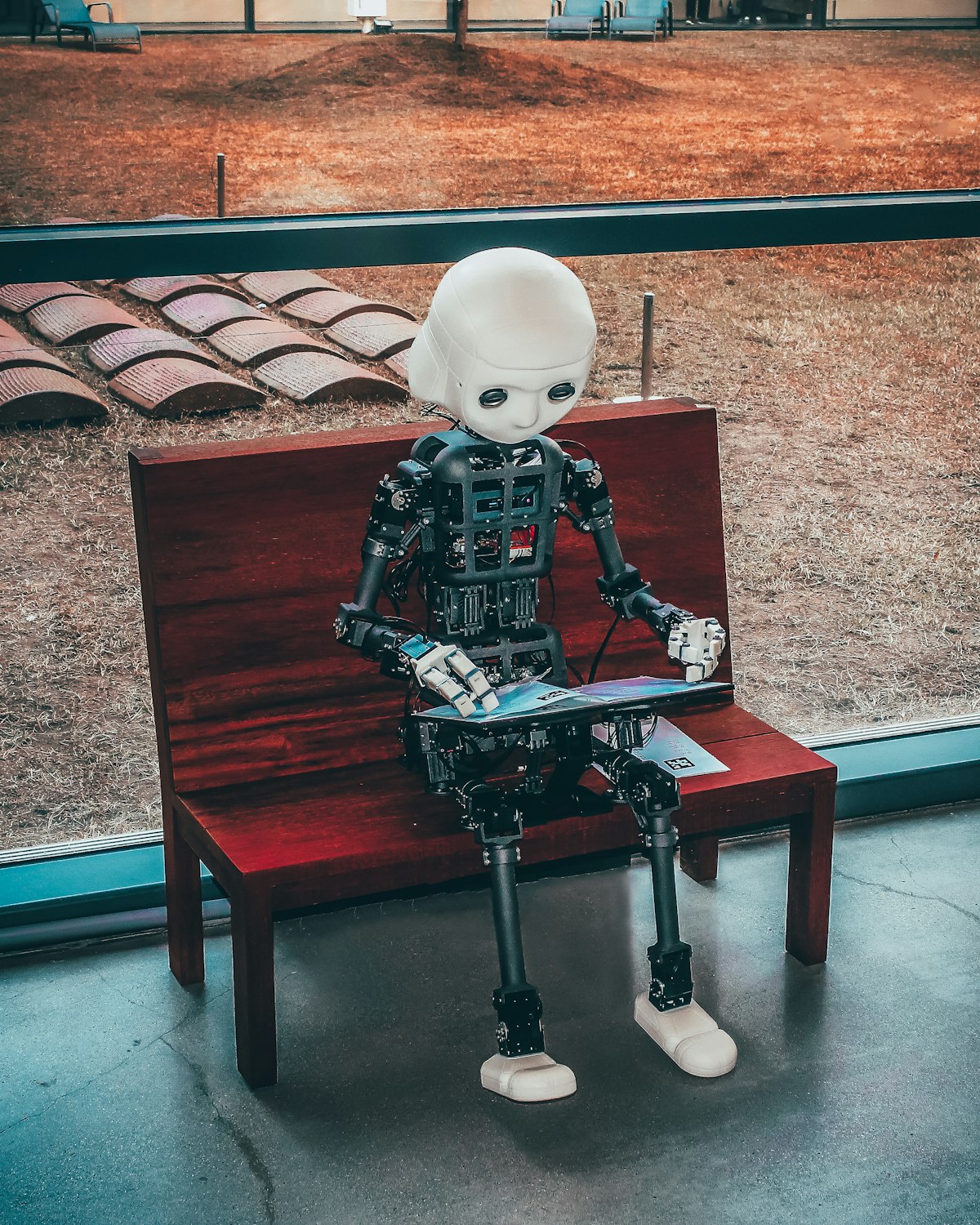
*China's AI export model defies every precedent in technology history. Image: Unsplash*
China's technology exports have always followed a familiar playbook: manufacture hardware cheaply, sell globally, gradually move up the value chain. Smartphones took a decade. Solar panels took fifteen years. Electric vehicles are still climbing.
Chinese AI models accomplished in 18 months what none of those industries achieved in a decade.
By early 2026, Chinese-developed AI models powered the majority of API calls on the world's largest model routing platform — not because Chinese developers were using them, but because American developers chose them over American alternatives. The export wasn't physical goods crossing borders. It was weightless intelligence flowing through fiber optics, trained in Hangzhou and Shenzhen, deployed in San Francisco and London.
This article examines the structural mechanics behind this unprecedented export acceleration: why AI models travel frictionlessly when semiconductors face sanctions, how Chinese labs weaponized pricing economics that Silicon Valley couldn't match, and what this means for the future of global technology dependency.
| Export Timeline Comparison | Industry | Years to Global Dominance |
|---|---|---|
| Smartphones | Hardware | ~10 years (2008-2018) |
| Solar panels | Hardware | ~15 years (2005-2020) |
| Electric vehicles | Hardware | ~8 years (2015-2023) |
| AI models | Weightless software | ~18 months (2024-2026) |
*Sources: Industry trade data, OpenRouter platform analytics*
Why AI Breaks Every Export Rule China Ever Wrote
The Frictionless Advantage
Traditional Chinese exports face structural friction at every border:
| Friction Type | Hardware Exports | AI Model Exports |
|---|---|---|
| Tariffs | 5-25% on smartphones, EVs | 0% on API calls |
| Shipping | 30-45 days ocean freight | 200ms latency |
| Customs | Physical inspection required | No inspection possible |
| Sanctions | Entity list blocks component sales | Open-source models bypass controls |
| Localization | Language barriers, regional variants | English-first training by default |
| After-sales | Service networks, spare parts | Automatic updates via API |
The implications are profound. When the US Commerce Department added Chinese AI chip companies to the entity list, it stopped hardware exports cold. But it cannot stop an open-source model trained on Ascend chips from being downloaded by a developer in Palo Alto. The model weights are just numbers — numbers that travel through the same fiber optics that carry cat videos and weather updates.
As one venture capitalist noted at a March 2026 industry conference: *"We've sanctioned Huawei's hardware for years. We've never sanctioned a GitHub repository. The entire export control framework was built for atoms, not bits."*
The Pricing Weapon: Structural Economics Silicon Valley Can't Match
American AI companies face a cost structure that Chinese competitors simply don't have. Understanding why requires examining the full stack.
The Cost Structure Asymmetry (2026)
| Cost Component | US AI Labs (OpenAI/Anthropic) | Chinese AI Labs (DeepSeek/Kimi) |
|---|---|---|
| Cloud compute | AWS/Azure at retail rates | Domestic cloud at state-subsidized rates |
| Engineer salaries | $400K-800K for PhD researchers | $80K-200K equivalent, with equity upside |
| Training cluster | $100M+ for 100K GPU cluster | $30-50M via government compute partnerships |
| Model serving | Profit margin targets 70%+ | Growth-first, margin-secondary |
| Open-source strategy | Proprietary, API-only | Full weights released, ecosystem-driven |
The result is a pricing differential that isn't competitive — it's existential for American developers choosing their stack.
| Model Tier | US Pricing | Chinese Equivalent | Cost Advantage |
|---|---|---|---|
| Flagship reasoning | $15-30/M tokens | $0.50-2/M tokens | 10-60x cheaper |
| Mid-tier general | $3-8/M tokens | $0.10-0.50/M tokens | 15-80x cheaper |
| Lightning/Flash | $0.50-2/M tokens | $0.01-0.10/M tokens | 20-200x cheaper |
*Pricing data: OpenRouter, company API docs, April 2026*
When a YC-backed startup building an AI legal assistant can cut its monthly API bill from $12,000 to $400 without switching frameworks, the decision isn't about model quality — it's about whether the startup survives its next funding round.
The Open-Source Flywheel: How Free Models Became the Trojan Horse
The most underappreciated driver of China's AI export dominance isn't pricing. It's open-source distribution.
The GitHub Diplomacy
| Model | Release Date | GitHub Stars (May 2026) | License | Primary Users |
|---|---|---|---|---|
| DeepSeek V3 | Dec 2024 | 85,000+ | MIT | Global enterprises |
| Qwen2.5 | Sep 2025 | 42,000+ | Apache 2.0 | Research labs |
| Kimi K2.5 | Jan 2026 | 28,000+ | MIT | Developer tools |
| MiniMax M2.5 | Mar 2026 | 19,000+ | Apache 2.0 | Consumer apps |
| GLM-5 | Feb 2026 | 15,000+ | Commercial | Enterprise platforms |
Each star represents a developer who downloaded weights, ran inference locally or via API, and built something. Each "something" creates another node in the dependency graph. When a productivity app used by 500,000 people runs on Qwen under the hood, those users are dependents of Chinese AI infrastructure whether they know it or not.
The mechanism is subtle but powerful:
1. Chinese lab releases open-source model → Global developers download and experiment
2. Developers find quality comparable to proprietary alternatives → Begin building production systems
3. Production systems create switching costs → Teams optimize prompts, fine-tune, build workflows
4. Workflow dependency deepens → Migrating to another model requires re-engineering months of work
5. Ecosystem lock-in achieved → Users are now structurally dependent
This is the same playbook that made Linux the backbone of global computing infrastructure — except Chinese AI models achieved in 18 months what Linux took a decade to accomplish.
The Enterprise Penetration
By March 2026, independent developer surveys revealed the extent of Chinese model penetration:
| Developer Segment | Using Chinese Models | Primary Use Case |
|---|---|---|
| Silicon Valley startups | 68% | Cost reduction for MVP stage |
| European SaaS companies | 54% | API cost arbitrage |
| Indian outsourcing firms | 71% | Thin-margin project delivery |
| Japanese enterprises | 43% | Compliance-friendly open weights |
| Brazilian fintech | 62% | Portuguese-language fine-tuning |
*Source: Aggregated developer survey data, Q1 2026*
| DeepSeek V4 Pro (promo) | $0.30 | $0.50 | 17x / 50x cheaper |
|---|---|---|---|
| MiniMax M2.5 | $0.30 | $1.10 | 17x / 23x cheaper |
| Zhipu GLM-5 | $0.30 | $2.55 | 17x / 10x cheaper |
| Claude Opus 4.6 | $5.00 | $25.00 | Baseline |
| GPT-5.4 | $2.50 | $15.00 | 2x / 1.7x cheaper |
*Sources: OpenRouter pricing, Anthropic API docs, DeepSeek API docs, MiniMax pricing*
The most extreme comparison: DeepSeek V4 Flash at $0.14/M input versus Claude Opus 4.6 at $5.00/M represents a 170x price advantage for basic inference workloads. Even with capability adjustments, the value proposition is overwhelming.
The Cache Multiplier
DeepSeek's cache-hit discount adds another layer. When prompts share prefixes (system instructions, document templates, conversation history), cached tokens cost only 10% of standard pricing:
| Model | Standard Input | Cache Hit Input | Effective Reduction |
|---|---|---|---|
| DeepSeek V4 Flash | $0.14/M | $0.014/M | 90% |
| DeepSeek V4 Pro | $1.74/M | $0.174/M | 90% |
| Claude Opus 4.6 | $5.00/M | Limited | Minimal |
*Source: DeepSeek API documentation, April 2026*
For Agent workflows that repeatedly call the same system prompts, this drops effective costs to sub-penny per million tokens — a price point at which AI becomes cheaper than logging infrastructure.
The Four Horsemen: DeepSeek, MiniMax, Kimi, and ByteDance
Four companies embody distinct strategies in China's AI export wave:
DeepSeek: The Open-Source Conqueror
DeepSeek chose the path of radical openness. MIT-licensed models, free weights, transparent training methodologies. The result: a truly global brand that transcends national identity.
| Metric | Data |
|---|---|
| Monthly active users | 127M (Mar 2026) |
| Global traffic distribution | 33.5% China, 7.1% Russia, 6.6% US, 52.8% Rest of World |
| Only AI product | Spanning China, US, and "Other" markets equally (a16z Top 100) |
| Seeking valuation | $10B+ (reported Apr 2026) |
*Sources: QuestMobile Q1 2026, a16z Consumer Top 100, The Information*
DeepSeek's user base is uniquely distributed — unlike any other AI product, it has genuine multi-polar adoption. When US sanctions attempted to build technology walls, open source became a key that unlocks from both sides.
MiniMax: The IPO Phenomenon
MiniMax represents the fastest IPO-to-multibagger story in AI history. Listed January 9, 2026 at HK$151-165. Within three months, trading at 4.5x IPO price.
| Metric | 2023 | 2024 | 2025 (Full Year) | 2026 (Feb) |
|---|---|---|---|---|
| Revenue | $3.5M | $30.5M | $79.0M | $150M ARR |
| YoY Growth | — | 782% | 159% | Exponential |
| Overseas Revenue % | 19% | 70% | 73% | 73%+ |
| Cumulative Users | — | 19M MAU | 236M total | Growing |
| Enterprise Clients | — | — | 214K | 4x growth |
| Daily Token Consumption (M2) | — | — | Baseline | 6x Dec 2025 |
*Sources: MiniMax IPO prospectus, post-IPO financial disclosures*
MiniMax's average employee age is 29. The team is 385 people strong. Its Talkie/星野 app commands 70+ minutes daily average usage — approaching TikTok-level engagement. The company's overseas revenue ratio of 73% makes it arguably the most "global" Chinese tech company since TikTok itself.
Kimi: The Premium Pivot
Kimi's story is one of strategic reinvention. After DeepSeek's January 2025 shock forced a painful reflection, Moonshot AI (Kimi's parent) stopped all marketing spend, laid off growth teams, and doubled down on base model research.
The result: K2.5's release generated more revenue in 20 days than all of 2025.
| Metric | Pre-K2.5 | Post-K2.5 (Feb 2026) |
|---|---|---|
| Global paid users | Baseline | 4x increase |
| Overseas API revenue | Baseline | 4x since Nov 2025 |
| Monthly paid user growth | — | 170%+ MoM |
| OpenRouter ranking | Mid-tier | #3 globally |
| Overseas vs. domestic revenue | Domestic > Overseas | Overseas > Domestic |
| Overseas pricing (top tier) | — | $199/month |
| Domestic pricing (top tier) | ¥99/month | ¥99/month |
*Sources: 36Kr,澎湃新闻, company investor communications*
Kimi's pricing arbitrage is elegant: charge Chinese users ¥99 ($13.50) and American power users $199 — a 15x price differential for effectively the same model. With overseas revenue now exceeding domestic, the strategy is validated.
ByteDance: The Infrastructure Leviathan
ByteDance doesn't just make AI products — it builds the highways other cars drive on. With over $12 billion in AI infrastructure spending in 2025, the company is constructing a global compute backbone.
| Product | Metric | Timeline |
|---|---|---|
| Cici | Topped app store charts in UK, Mexico, SEA | Oct 2025 |
| Dola | 10M+ DAU | Dec 2025 |
| Doubao | 50T+ daily tokens, 46.4% China cloud API market | Jul 2025 |
| Overseas revenue growth | +50% YoY | 2025 |
| Overseas revenue share | 30%+ of total | 2025 |
*Sources: Multiple financial media reports, IDC China cloud market data*
ByteDance's "domestic Doubao + overseas dual-brand" strategy mirrors TikTok's geographic separation. The Dola AI assistant is widely seen as the company's attempt to replicate TikTok's global trajectory in the AI era.
The Agent Revolution: Why Tokens Became the New Oil
Traditional chatbot usage consumes thousands of tokens per session. Agent workflows consume millions. A single automated task — "monitor global AI research, cross-reference 50 papers, generate a 100,000-word bilingual report with charts, and publish to Slack" — can burn through 500K+ tokens in one run.
This is why the Agent ecosystem, particularly OpenClaw and similar frameworks, has become a token consumption supercharger. And Chinese models, with their combination of low cost and strong tool-calling capabilities, have become the default choice.
| Scenario | Estimated Tokens | Claude Opus Cost | DeepSeek V4 Flash Cost | Savings |
|---|---|---|---|---|
| Daily research agent | 5M/day | $125 | $0.70 | 178x |
| Code review pipeline | 2M/run | $50 | $0.28 | 178x |
| Multi-doc analysis | 10M/job | $250 | $1.40 | 178x |
| Customer support bot | 500K/hour | $12.50/hr | $0.07/hr | 178x |
*Calculated from public pricing, April 2026*
The economics are so lopsided that cost optimization has become a competitive moat. Startups building on American closed models face 100x higher infrastructure bills than competitors using Chinese open models. In a capital-constrained environment, this difference determines survival.
Capital Markets: From Skepticism to FOMO
China's AI sector has undergone a valuation transformation that mirrors the dot-com era — but with actual revenue growth.
| Company | Valuation (Late 2025) | Valuation (Early 2026) | Change | Key Driver |
|---|---|---|---|---|
| Moonshot AI (Kimi) | $4.3B (Dec 2025) | $18.0B (Mar 2026) | +318% | K2.5 release, overseas revenue surge |
| MiniMax | ~$4B (pre-IPO) | $32B+ market cap (Mar 2026) | +700%+ | IPO + 4.5x price surge |
| DeepSeek | Private (bootstrapped) | $10B+ (seeking) | N/A | V4 launch, global MAU 127M |
| Zhipu AI | Private | HK$26B market cap (post-IPO) | N/A | HKEX listing Jan 2026 |
*Sources: Media reports, stock exchange data, The Information*
The speed is unprecedented. Moonshot went from a 16-month funding drought to three funding rounds in three months. MiniMax went from zero revenue in 2022 to a $32 billion market capitalization in under four years. For context: ByteDance took four years to become a decacorn. Moonshot did it in two.
What the World Is Saying: Social Voices
@techobserver_zhihu (Zhihu, 3.2K upvotes)
"一年前还在讨论中国大模型能不能追上OpenAI,现在美国开发者都在用MiniMax的API跑Agent。这不是追赶,这是超车。"
*"A year ago we debated whether Chinese models could catch OpenAI. Now American developers run Agents on MiniMax APIs. This isn't catching up — it's overtaking."*
@siliconvalley_diary (X/Twitter, 12.4K likes)
"Just migrated our entire agent pipeline from Claude to DeepSeek V4. Cost dropped 90%. Latency improved. And it's MIT licensed so we can self-host. The 'China risk' conversation in our board meeting lasted 3 minutes. The 'saving $50K/month' conversation lasted 30."
@aicurious_xiaohongshu (Xiaohongshu, 8.7K likes)
"Kimi的海外定价199刀一个月,国内99人民币。这哪是出海,这是精准收割发达国家韭菜啊😂"
*"Kimi charges $199/month overseas and ¥99 RMB domestically. This isn't 'going global' — it's precision harvesting of developed-market wallets 😂"*
@quanttrader_reddit (Reddit r/MachineLearning, 2.1K upvotes)
"The OpenRouter data is wild. 47% of users are American, but 61% of traffic goes to Chinese models. The free market has spoken — and it's speaking Mandarin."
@beijing_vc_insider (Weibo, 5.4K reposts)
"MiniMax上市三个月股价翻4.5倍,智谱刚IPO就破千亿市值。中国AI六小龙里,还没上市的最值钱的是Kimi(180亿美元)和DeepSeek(寻求100亿+)。这剧本两年前谁敢写?"
*"MiniMax's stock quadrupled in three months post-IPO; Zhipu hit $100B+ market cap. Of the unlisted 'Six Little Dragons,' Kimi ($18B) and DeepSeek (seeking $10B+) are most valuable. Who would have written this script two years ago?"*
@airesearcher_github (GitHub Discussion, 456 stars)
"As a maintainer of an open-source DevOps tool used by 50K+ developers, we switched our AI backend from GPT-4 to DeepSeek V3.2 in January. Our monthly AI bill went from $8,400 to $127. The model performs comparably on our benchmark suite. This is not nationalism — this is math."
Challenges: The Road Ahead Isn't Smooth
Despite the momentum, China's AI export faces structural headwinds:
Geopolitical Risk
The US Prohibiting Adversarial AI Act (proposed) would ban federal use of Chinese AI models. Export controls on GPUs remain tight, forcing dependence on domestic Ascend chips and creative clustering solutions. IP litigation risk is rising — Disney, Warner Bros, and Universal have already filed copyright suits against MiniMax's video generation training data.
Profitability Pressure
| Company | 2025 Revenue | 2025 Net Loss | Loss/Revenue Ratio |
|---|---|---|---|
| MiniMax | $79.0M | $512M (9mo) | ~650% annualized |
| Zhipu AI | $72M (reported) | Undisclosed | High |
| Moonshot AI | Growing rapidly | Undisclosed | Pre-profitability |
*Sources: MiniMax IPO filings, media reports*
MiniMax burned $512M in nine months to generate $79M in revenue. The unit economics of model serving at Chinese prices are brutal. The bet is that scale and agent-driven token growth will eventually flip the equation — but that requires sustained capital markets appetite.
The US Rebound Risk
The April 20-26 OpenRouter data showed America retaking the weekly lead (4.98T vs 4.37T). Claude Opus 4.7 surged 279%. DeepSeek V4 had just launched and promotional pricing hadn't fully propagated. The lead could swing back and forth — China's dominance is trending but not yet structural.
Future Outlook: Three Scenarios for 2026-2027
| Scenario | Probability | Description |
|---|---|---|
| Sustained Dominance (45%) | Most likely | China maintains 55-65% global API share; MiniMax/Kimi IPO/raise at $50B+; Agent ecosystem entrenches Chinese models as default infrastructure |
| Bipolar Equilibrium (35%) | Plausible | US models fight back with proprietary advantages (multimodal, enterprise integration); market settles at 50/50; intense price war continues |
| Regulatory Fracture (20%) | Tail risk | US bans Chinese models federally; EU follows; global AI ecosystem splits into Eastern/Western stacks; innovation slows globally |
Conclusion: The Infrastructure Is the Strategy
The most important insight from China's AI surge isn't about any single model or company. It's about a fundamental shift in how AI value is captured.
American AI has pursued a "application + API" model: build the best model, charge premium prices, and capture value at the point of inference. Chinese AI has pursued a "infrastructure + scale" model: build good-enough models, price them at marginal cost, and capture value through volume, platform effects, and downstream applications.
This mirrors the historic divide between Apple's iPhone strategy (premium hardware, closed ecosystem) and Android's strategy (open source, scale, ecosystem diversity). In the mobile era, both models created trillion-dollar outcomes. In the AI era, both may coexist — but the open, cheap, scalable approach has undeniable momentum when developer wallets are the voting mechanism.
The numbers don't lie. 61% global market share. 170x price advantage. $18 billion valuations built in months. American developers voluntarily choosing Chinese infrastructure. This is no longer a hypothetical future. It's the present.
The question for the global AI industry is no longer whether Chinese models can compete. It's whether the rest of the world can afford *not* to use them.
*Disclaimer: This analysis is based on publicly available data, media reports, and platform statistics. Revenue figures for private companies are estimates. Market share data reflects OpenRouter platform usage and may not represent the entire global AI API market. Investment valuations are subject to rapid change.*
Related Articles:
- Stanford AI Index 2026: China's 'Parallel Run' Era Has Arrived
Editor at AI in China. Tracking Chinese AI companies, funding rounds, and the technologies reshaping global tech. More about me.