China's AI Drug Discovery Revolution: How Algorithms Are Rewriting the Ten-Year, Ten-Billion-Dollar Rule
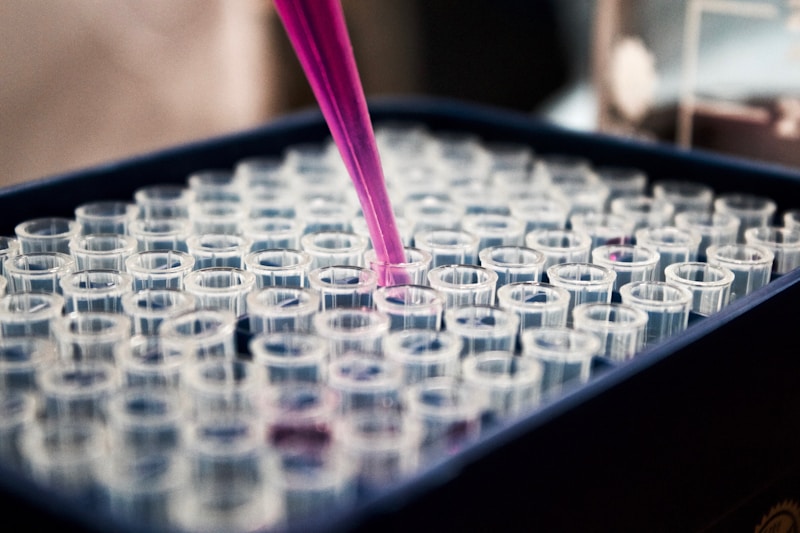
*A researcher works in a high-throughput screening lab. Across China, AI systems now design the molecules that humans test in facilities like this one. (Photo: Unsplash)*
For decades, the pharmaceutical industry lived by a brutal rule of thumb: it takes ten years and $2.6 billion to bring one new drug to market. Nine out of ten candidates that enter clinical trials fail. The process is so slow and expensive that industry veterans simply call it the "ten-year, ten-billion" problem — using the yuan figure for emphasis, since ¥10 billion is roughly what a single approved drug costs in China.
On September 18, 2026, Beijing issued a document that formally declared this era over.
Ten ministries led by the Ministry of Industry and Information Technology (MIIT) jointly released the *Pharmaceutical Industry Development "15th Five-Year" Plan* — the first national-level pharmaceutical industrial policy in China's history to explicitly name AI-driven drug discovery a "high-value application scenario" and call for "accelerating the paradigm transformation of AI-driven pharmaceutical R&D and production management."
The language matters. The 14th Five-Year Plan, published five years earlier, said China would "explore the application of artificial intelligence, cloud computing, and big data in R&D." The new plan says the goal is a *paradigm shift* — a fundamental restructuring of how drugs are discovered, tested, and manufactured. The policy path is specific: build high-quality pharmaceutical datasets, develop vertical AI models and agents for drug discovery, and deploy them across the entire chain from target identification to clinical trials to quality management.
Within three trading days, the market delivered its verdict. Insilico Medicine (03696.HK) surged more than 20%. XtalPi (02228.HK) jumped 9% after announcing a drug discovery collaboration with Stanford University on September 17. On the A-shares market, MGI Tech (华大智造) gained 32.49% in a single week. Chengdu Lead Biotech (成都先导) rose more than 30%. Hongbo Pharma (泓博医药) climbed 24.5%. Medicilon (美迪西), a preclinical CRO, added nearly 19%.
Something has changed. And it is not just about policy momentum.
The Scale: From a ¥67 Million Niche to a National Strategic Priority
To understand how quickly China's AI drug discovery sector has moved, it helps to look at the numbers.
The global AI-driven drug discovery market was worth $792 million in 2021. By 2024, it had more than doubled to $1.76 billion. Industry projections put it at nearly $3 billion in 2026, with Asia-Pacific growing fastest at a 33.9% compound annual rate through 2034. China's domestic AI pharma market, measured at just ¥67 million in 2019, reached ¥562 million by 2024 — a 53% compound annual growth rate that outpaces every other segment of the country's AI industry.
But market size understates what is happening, because the real story is in the pipeline. By mid-2026, at least 12 AI-discovered or AI-optimized drug candidates were in active clinical trials in China, with three having reached Phase II or beyond. The speed at which these programs have progressed — from target identification to Investigational New Drug (IND) filing in as little as 12 to 18 months — represents a structural break from the traditional 4-to-6-year preclinical timeline.
| Metric | 2019–2021 (Peak Euphoria) | 2026 (Current) |
|---|---|---|
| China AI pharma market size | ¥67M (2019) | ¥562M (2024), ~¥900M est. (2026) |
| AI candidates in clinical trials (China) | 0 | 12+ (3 in Phase II+) |
| Time from target to IND | 4–6 years | 12–18 months |
| Sector investment (cumulative) | ~$3B+ (global peak) | Selective recovery, BD-driven |
| Major pharma validation | None | Lilly, Sanofi, AstraZeneca, Pfizer, Stanford |
| Policy status | "Exploration" | "Paradigm transformation" (national plan) |
| Listed pure-play AI pharma cos. | 0 | 2+ (XtalPi HKEX, Insilico HKEX) |
*Table: China's AI drug discovery sector at a glance — from speculative frenzy to policy-backed commercialization.*
The shift is visible in how capital now flows into the sector. During the 2019–2021 boom, investment was driven by venture capital mega-rounds — XtalPi raised $318 million in Series C and $380 million in Series D, SoftBank Vision Fund deployed heavily, and valuations detached from fundamentals. The 2022–2024 correction wiped out most of the pure-play software companies. What survived — and what is now thriving — are companies with real wet-lab capabilities, proprietary pipelines, and business development (BD) revenue from pharmaceutical partners who pay for results, not promises.
*AI-designed molecular structures await experimental validation. China's leading AI pharma companies pair computational models with robotic wet labs to close the prediction-to-validation loop. (Photo: Unsplash)*
The Story Nobody Saw Coming: Insilico Medicine's Profitable Half-Year
In March 2026, Eli Lilly signed a deal with Insilico Medicine worth up to $2.75 billion — one of the largest AI drug discovery partnerships ever signed. The agreement covered oral therapeutics across multiple disease areas and included access to Insilico's Pharma.AI platform. It followed a January 2026 announcement that Lilly and NVIDIA were jointly establishing a $1 billion AI innovation lab for drug research.
For a company that had been dismissed by Western analysts as "a pitch deck with a wet lab" just three years earlier, the Lilly deal was vindication. But the real shock came with the first-half 2026 earnings report: Insilico's revenue surged more than 270% year-over-year, and the company flipped to profitability — a first for a pure-play AI drug discovery company anywhere in the world.
Since the beginning of 2026, Insilico has signed more than a dozen external collaborations totaling over $4 billion in combined value. Its most advanced proprietary pipeline asset, rentosertib (ISM001-055) for idiopathic pulmonary fibrosis, has the potential to become the world's first AI-driven drug to enter Phase III clinical trials. Phase IIa results published in *Nature Medicine* showed promising efficacy signals, and the Phase III launch is planned for late 2026 or early 2027.
Insilico's CEO Ren Feng has been direct about what this means: AI has compressed the drug discovery timeline to approximately one year for target identification and molecule design, compared to the traditional three to five years. The company's "AI + Biotech" model — using BD revenue from platform deals to fund proprietary pipeline development — is now being studied by every AI pharma competitor in China.
| Insilico Medicine Milestones | Date | Value/Status |
|---|---|---|
| Eli Lilly platform + therapeutics deal | March 2026 | Up to $2.75B |
| Sanofi platform deal (6 targets) | 2022 | $1.2B |
| Servier R&D collaboration | 2026 | $888M |
| Menarini/Stemline asset license | 2025 | $550M+ |
| Qilu Pharmaceutical partnership | 2026 | ~$120M |
| H1 2026 revenue growth | Aug 2026 report | +270% YoY, profitable |
| Rentosertib Phase IIa results | 2025 | Published in Nature Medicine |
| Rentosertib Phase III | Planned 2026–2027 | Potential world-first AI drug in Phase III |
| Total 2026+ collaborations | 2026 YTD | $4B+ across 12+ deals |
*Table: Insilico Medicine's partnership portfolio and pipeline milestones through September 2026.*
The Quiet Giant: XtalPi's Robotic Labs and Stanford Bet
While Insilico grabs headlines with blockbuster BD deals, XtalPi has been building something different: an end-to-end AI-plus-robotics R&D infrastructure that connects computational prediction to automated wet-lab validation.
The company's H1 2026 results showed RMB 200.1 million in drug discovery solutions revenue — down from the prior year's RMB 435.2 million, which included a $51 million upfront payment from a major licensing deal. But the collaboration progressed, with XtalPi receiving the second $19 million payment during the reporting period. The company swung to a reported H1 loss, which management attributed to the high base effect and continued platform investment.
The strategic moves are what matter. On September 17, XtalPi's research arm signed a drug discovery collaboration with Stanford University — sending its stock up 9% in a single session. The company also jointly launched the Open Ecosystem Alliance for Scientific AI with 26 partners spanning the scientific innovation value chain, and plans to introduce a "Science Token" as a unified access mechanism for research resources.
As of September 2026, XtalPi has more than 20 proprietary and co-developed programs at the preclinical candidate (PCC) stage or beyond, covering small molecules, biologics, peptides, siRNA, and cell therapy. Its 2025 deal with DoveTree Medicines — worth approximately $5.99 billion at the time — remains the largest single AI drug discovery contract ever signed.
Behind the Scenes: The Policy Engine
The September 18 plan did not emerge from nowhere. It is the capstone of a policy architecture that has been under construction for over a year.
In April 2025, seven ministries jointly issued the *Pharmaceutical Industry Digital Transformation Implementation Plan (2025–2030)*, setting targets of 10+ pharmaceutical large-model innovation platforms and 100+ digital technology application scenarios by 2027. In January 2026, eight ministries including MIIT released the *"AI+" Action Plan*, which specifically named AI drug discovery as a priority, calling for AI-driven new drug discovery platforms and multimodal efficacy prediction models. In April 2026, the National Medical Products Administration (NMPA) issued its implementation opinion on "AI + Drug Regulation," laying out a roadmap through 2030 for integrating AI into drug review, approval, and post-market surveillance.
The September plan goes further by setting quantifiable industrial targets: pharmaceutical industry revenue of at least ¥3.5 trillion by 2030 (up from ¥2.98 trillion in 2024), innovative drug industry growth of 20%+ annually, and first-in-class (FIC) drugs comprising at least 25% of global share. It identifies six regional pharmaceutical clusters — Beijing-Tianjin-Hebei, Yangtze River Delta, Greater Bay Area, Chengdu-Chongqing, Central China, and border-region traditional Chinese medicine — and explicitly mandates AI-powered drug development in each.
| Policy Document | Issuing Bodies | Date | Key AI Pharma Provision |
|---|---|---|---|
| Pharma Digital Transformation Plan (2025–2030) | 7 ministries | April 2025 | 10+ pharma LLM platforms, 100+ AI scenarios by 2027 |
| "AI+" Action Plan | 8 ministries | January 2026 | AI drug discovery platforms, multimodal prediction models |
| NMPA "AI + Drug Regulation" Opinion | NMPA | April 2026 | AI in drug review, approval, and surveillance through 2030 |
| Pharma Industry "15th Five-Year" Plan | 10 ministries | September 2026 | AI as "high-value application scenario," paradigm transformation |
*Table: The four-layer policy stack underpinning China's AI drug discovery strategy.*
The word choice in the September plan has drawn attention from policy analysts. The 14th Five-Year Plan said China would "explore" AI in R&D. The new plan says China will drive a "paradigm transformation." Industry observers at Caixin, China's leading financial publication, noted that the policy path is now explicit: high-quality data → vertical AI models and agents → real R&D scenarios. The government is not just encouraging AI adoption — it is building the data infrastructure and regulatory framework to make it mandatory.
The Capital Markets Rewiring
The financial markets have responded with remarkable speed. JPMorgan initiated coverage on both Insilico Medicine and XtalPi in July 2026 with "Overweight" ratings, setting target prices of HK$71 and HK$10 respectively. The bank's analysts wrote that China's AI drug discovery sector is "transitioning from exploration to early commercialization," driven by increasing business development activity and clinical catalysts.
Goldman Sachs' Asia healthcare research head, Chen Ziyi, noted in a September 20 analysis that AI has demonstrably accelerated early-stage drug discovery over the past 18 months, contributing to a recovery in preclinical CRO revenue. The brokerage pointed to companies like Medicilon and Hongbo Pharma as beneficiaries of AI-driven demand for experimental validation services.
The A-share rally in the week of September 14–18 tells the story in numbers:
| Stock | Ticker | Weekly Gain (Sep 14–18) | AI Pharma Angle |
|---|---|---|---|
| MGI Tech (华大智造) | 688114.SH | +32.49% | Gene sequencing infrastructure for AI model training |
| Chengdu Lead (成都先导) | 688222.SH | +30%+ | DEL library screening, AI-powered hit discovery |
| Hongbo Pharma (泓博医药) | 301230.SZ | +24.50% | AI-enabled CRO, computational chemistry services |
| Medicilon (美迪西) | 688202.SH | +19% | Preclinical CRO, AI-driven demand recovery |
| Insilico Medicine (英矽智能) | 03696.HK | +20%+ | Pure-play AI drug discovery, profitable H1 |
| XtalPi (晶泰控股) | 02228.HK | +9% (Sep 17) | AI + robotics platform, Stanford deal |
*Table: AI pharma stock performance during the week the national plan was released.*
Global Parallels: China vs. the West
The contrast with Western markets is striking. In the United States, AI drug discovery pioneer Schrödinger has seen its stock decline 43.8% from its peak. Generate:Biomedicines and Eikon Therapeutics completed IPOs in early 2026 raising roughly $400 million and $381 million respectively — respectable numbers, but a fraction of the $2.75 billion Lilly committed to a single Chinese AI pharma partnership.
The structural difference is in how the two ecosystems approach AI drug discovery. American companies have largely pursued the asset-light software model, selling platforms and tools to pharmaceutical companies that keep the R&D in-house. Chinese companies like Insilico and XtalPi built vertically integrated operations that combine computational AI with robotic wet labs and proprietary pipelines — capturing more value per program but requiring far more capital intensity.
That capital intensity nearly destroyed the sector during the 2022–2024 funding winter. But it also built the moat. When Lilly needed a partner with end-to-end AI drug discovery capability — not just software, but automated labs that could generate proprietary experimental data — the shortlist was overwhelmingly Chinese.
Insilico Medicine's December 2025 IPO on the HKEX Main Board raised HK$2.28 billion (~$293 million), and XtalPi's June 2024 listing anchored the sector's capital markets credibility. Hong Kong has emerged as the primary listing venue for AI-biotech companies in Asia, with both companies now covered by major international brokerages.
There is also a geographic dimension within China. Shanghai — home to Insilico Medicine and Structure Therapeutics — has become the undisputed capital of AI drug discovery, with Zhangjiang Hi-Tech Park hosting over 1,400 biotech companies and the municipal government committing ¥1.5 billion in matched funding for AI-pharma enterprises in Pudong. Beijing leads in foundational research and big-tech AI platforms (Baidu's BioMap signed a $1 billion+ deal with Sanofi). Shenzhen leverages Huawei's compute infrastructure for pharmaceutical applications.
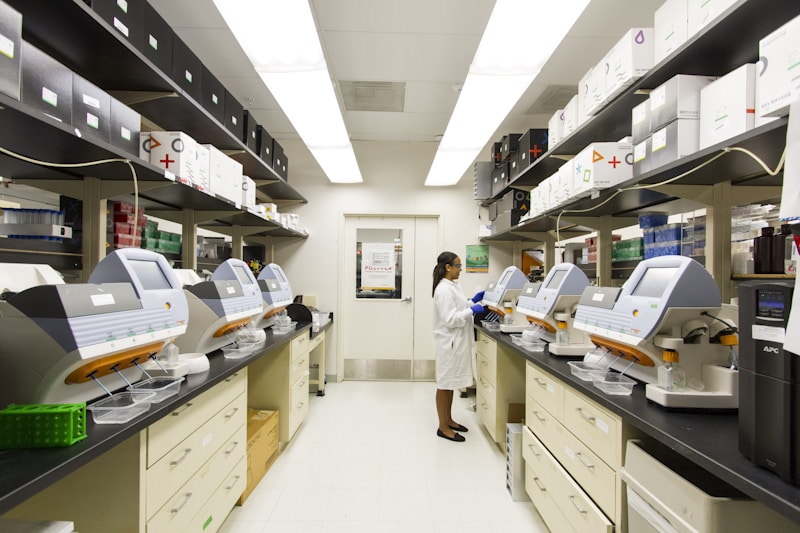
*High-throughput screening equipment in an automated lab. The combination of AI prediction and robotic validation — what XtalPi calls its 'AI + robotics integrated R&D system' — is China's structural advantage in pharmaceutical AI. (Photo: Unsplash)*
The Honest Caveats
None of this means the "ten-year, ten-billion" problem is solved. Industry data still shows that approximately 90% of drug candidates fail in Phase II clinical trials. Not a single drug designed entirely by AI has been approved by any major regulator anywhere in the world. The timeline compression figures — 12 to 18 months from target to IND — come largely from vendor-side reporting and measure only the earliest stages of a process that still requires years of clinical validation.
XtalPi's H1 loss, despite its platform maturity, is a reminder that even the most advanced AI pharma companies face lumpy revenue and high fixed costs from robotic lab infrastructure. The sector's valuation multiples, driven by policy enthusiasm and BD headline numbers, may be pricing in success that clinical data has not yet confirmed.
And the structural challenge remains: AI is very good at designing molecules that bind to targets. It is not yet good at predicting how those molecules will behave in human bodies over months and years. The gap between computational prediction and clinical reality is where the next decade of AI drug discovery will be won or lost.
What is different in 2026 — and what the September 18 plan codifies — is that China has stopped treating AI drug discovery as a speculative technology bet and started treating it as industrial policy. The datasets are being built. The regulatory pathway is being clarified. The capital markets are open. And for the first time, the companies at the center of it all are generating real revenue from real pharmaceutical partners who are paying for results.
Social Voices
The reaction across Chinese social media and international platforms has been swift and divided — a mix of genuine excitement, veteran skepticism, and cautious analysis.
Zhihu user "PharmaWatcher" (药物观察者):
英矽智能上半年扭亏为盈是标志性事件。这意味着AI制药第一次从讲故事变成了讲数字。
*"Insilico Medicine turning profitable in H1 is a landmark event. It means AI drug discovery has for the first time gone from storytelling to talking numbers."*
Weibo user "BiotechCat" (生物科技股猫):
十五五规划把AI制药写进国家级文件,A股相关股票一周涨了30%+。政策市的味道很重,但管线数据也确实在改善。追涨需谨慎。
*"The 15th Five-Year Plan put AI pharma in a national document, and A-share related stocks jumped 30%+ in a week. There's a strong policy-driven flavor, but pipeline data is genuinely improving. Caution needed when chasing."*
Xiaohongshu user "Dr. Molecular" (分子博士):
作为一名药物化学从业者,我觉得AI确实加速了苗头化合物发现阶段,但临床转化依然是瓶颈。我们组用AI辅助设计,命中率确实提高了,但离"AI设计药物上市"还很远。
*"As a medicinal chemistry practitioner, I think AI has genuinely accelerated the hit discovery stage, but clinical translation remains the bottleneck. Our group uses AI-assisted design and hit rates have improved, but we're still far from 'AI-designed drugs reaching the market.'"*
Twitter/X user @AIpharma_anon:
"Lilly paying $2.75B for Insilico access tells you everything about where the best AI drug discovery capability actually sits. It isn't Boston or SF. It's Shanghai and Shenzhen."
Douban user "ClinicalSkeptic" (临床怀疑论者):
90%的二期失败率不会因为是AI设计的就改变。药企付的是预付款,不是疗效证明。等第一个纯AI药物过了三期再说革命吧。
*"The 90% Phase II failure rate won't change just because the drug was AI-designed. What pharma companies paid are upfront fees, not proof of efficacy. Let's talk revolution after the first pure-AI drug passes Phase III."*
GitHub user mol-dy (commenting on an AI drug discovery open-source repo):
"China's advantage isn't just compute or data — it's the willingness to build the full stack: models + robotic labs + regulatory engagement + BD muscle. Western pure-software plays can't compete with that vertical integration."
What Comes Next
The milestones to watch are clear. Rentosertib entering Phase III would be the single most important validation event for the entire AI drug discovery thesis — not just in China but globally. XtalPi's Stanford collaboration could produce the first academic-industry AI drug discovery pipeline between China and a top-tier US research institution, with implications for technology transfer and geopolitical dynamics in biotech.
On the policy front, the NMPA's AI-tox guidance expected around 2028 will set the regulatory bar for AI-designed drug submissions. Beijing's ¥10 billion AI-pharma fund deployment pace will determine how quickly the next generation of companies can scale. And the first major acquisition of a Chinese AI drug discovery startup by a traditional pharmaceutical company — a scenario analysts consider inevitable — would mark the sector's full arrival as a mature industry.
The "ten-year, ten-billion" rule was never a law of nature. It was a description of a process designed by humans and constrained by the tools they had. Whether AI compresses that process to three years and $500 million, or merely shaves off 20% of the timeline, the fact that a national government has now staked industrial policy on the answer — and that capital markets, pharmaceutical giants, and research institutions are all placing parallel bets — means the experiment is no longer theoretical.
The molecules are being designed. The robots are running the assays. The patients are enrolling in trials. And for the first time, someone is making money doing it.
*Related reading:*
- China's AI IPO Gold Rush: DeepSeek, Moonshot, and the Capital Markets Frenzy
- China's AI Compute Empire: How Sanctions Created a Boomerang Effect
- China's AI Training Gold Rush: The Billion-Yuan Education Industry
Editor at AI in China. Tracking Chinese AI companies, funding rounds, and the technologies reshaping global tech. More about me.