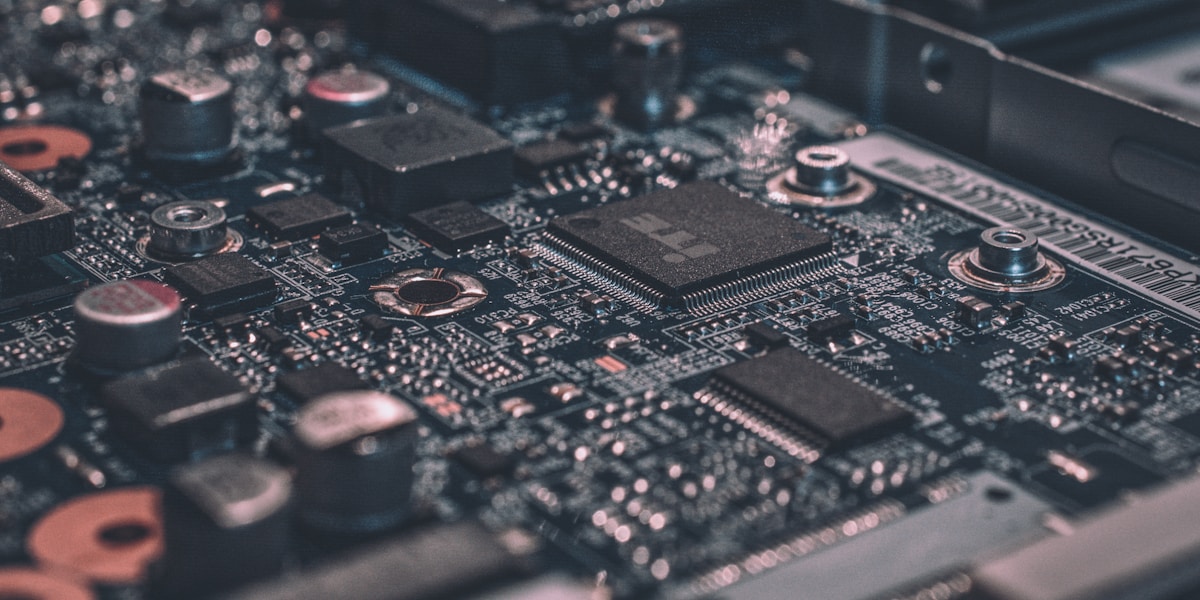
The Great Silicon Wall: How China's AI Industry Is Defying U.S. Chip Sanctions in 2026
The global AI chip landscape is being redrawn as Chinese companies pivot to domestic alternatives
Executive Summary: The Wall That Wasn't
In January 2025, when the Biden administration imposed sweeping restrictions on AI chip exports to China, the consensus in Silicon Valley was clear: Chinese AI development would slow dramatically. The thinking was simple—without Nvidia's cutting-edge GPUs, Chinese labs couldn't compete.
That prediction aged poorly.
Fifteen months later, the reality is starkly different. Not only have Chinese AI companies continued advancing, they're now building what industry insiders call a "parallel AI ecosystem"—one that runs on domestic chips, operates under different economic rules, and threatens to rewrite the global balance of technological power.
The numbers tell the story:
| Metric | Pre-Sanctions (Jan 2025) | April 2026 | Change |
| Chinese AI Token Usage | 1.2 trillion/week | 12.96 trillion/week | +980% |
| Huawei Ascend Deployment | 15,000 units | 180,000+ units | +1,100% |
| Domestic Chip Training Share | 8% | 42% | +34pp |
| Open-Source Model Releases | 23/year | 67/year | +191% |
*Sources: China Academy of Information and Communications Technology, company filings*
This isn't just about survival. It's about something far more consequential: China is proving that AI leadership doesn't require American silicon. And that has implications that extend far beyond the tech industry.
---
Chapter 1: The $5.6 Billion Bet That Changed Everything
ByteDance's Huawei Pivot
In December 2025, ByteDance signed a deal that would have been unthinkable two years earlier: a 40 billion RMB ($5.6 billion) contract with Huawei for Ascend AI chips. The deal, spanning three years with deliveries starting Q1 2026, represents the largest single commitment to domestic AI silicon in Chinese history.
The Delivery Timeline:
| Quarter | Milestone | Estimated Units | Value |
| Q1 2026 | Ascend 910 initial batch | ~5,000 | ~$800M |
| Q2-Q3 2026 | Ascend 910+ & 910 Pro | ~12,000 | ~$2.1B |
| 2027-2028 | Full workload integration | Remaining volume | ~$2.7B |
*Source: Industry supply chain reports*
But the financial scope only tells part of the story. What's more significant is what ByteDance is doing with these chips.
From Inference to Training
Initially, Chinese companies used domestic chips primarily for inference—running already-trained models. Training remained the domain of Nvidia hardware, with Chinese labs stockpiling H100s and H800s before sanctions tightened.
ByteDance's deal signals a strategic shift. According to sources familiar with the agreement, ByteDance plans to use Ascend chips for both training and inference workloads, with joint R&D labs established to optimize Doubao's training frameworks for Huawei's architecture.
**Technical Context**: The Ascend 910 delivers approximately 256 TFLOPS of FP16 performance—comparable to Nvidia's V100 but roughly 32% behind the H200. However, Huawei's MindSpore framework has closed significant ground through software optimization, with training efficiency reportedly improving 40% year-over-year.
This matters because training is where AI capabilities are born. If Chinese companies can train competitive models on domestic hardware, the strategic calculus of chip sanctions fundamentally changes.
---
Chapter 2: DeepSeek V4 and the Sovereignty Test
The Most Watched Launch in AI
Perhaps no upcoming release is more consequential than DeepSeek V4. The Hangzhou-based startup, which shocked markets in January 2025 with its $5.6 million training cost for R1, is preparing to unveil its next-generation model—and the industry is watching closely for one specific detail.
What chips trained it?
According to The Information and multiple industry sources, DeepSeek V4 is being trained on a hybrid infrastructure combining Huawei Ascend 910Cs with previously stockpiled Nvidia hardware. The exact ratio is a closely guarded secret, but analysts estimate domestic chips now constitute 60-70% of DeepSeek's training compute.
| DeepSeek Model | Training Cost | Primary Hardware | Release Date |
| V3 | $5.6M | Nvidia H800 (stockpiled) | Dec 2024 |
| R1 | $6.2M | Nvidia H800 + Ascend 910B | Jan 2025 |
| V4 | Est. $8-12M | Ascend 910C + residual Nvidia | Apr 2026 |
*Source: Company research papers, industry estimates*
Why This Launch Matters
"It's important to know [what chips were used]," explains Wei Sun, analyst at Counterpoint Research, "because this reveals, in a way, China's trajectory towards self-sufficiency in AI."
The DeepSeek V4 launch serves as a litmus test for three critical questions:
- Can domestic chips train frontier models? If V4 matches or exceeds GPT-4o performance while running primarily on Ascend hardware, it proves Chinese silicon is viable for frontier AI development.
- What's the cost differential? Training on Ascend chips is estimated to cost 30-50% more than equivalent Nvidia hardware due to lower efficiency and higher power consumption. Can Chinese labs absorb this premium?
- Will others follow? ByteDance's massive Huawei order may trigger a domino effect. Alibaba, Tencent, and Baidu are all reportedly evaluating similar commitments.
**Industry Insider Quote**: "DeepSeek V4 isn't just a model release. It's a political statement. If they can prove you can train GPT-4 level models on Chinese chips, the entire sanctions strategy looks questionable." — Anonymous chip industry executive
---
Chapter 3: The Nvidia H200 Wildcard
Trump's Surprising Move
In a twist that surprised many industry observers, the Trump administration approved the sale of over 400,000 Nvidia H200 chips to Chinese tech giants in early 2025. The deal, reportedly negotiated during a visit by Nvidia CEO Jensen Huang, allows ByteDance, Alibaba, and Tencent to each purchase approximately 200,000 units.
But there's a catch.
The licenses come with strict conditions:
- Companies must maintain a specific ratio of domestic to foreign chips (reportedly 1:1 by 2027)
- Chips cannot be used for military applications (standard restriction)
- All purchases must be reported quarterly to U.S. regulators
| Chip Model | FP16 Performance | Memory Bandwidth | Availability to China |
| Nvidia H200 | 989 TFLOPS | 4.8 TB/s | Approved (conditional) |
| Nvidia H100 | 989 TFLOPS | 3.35 TB/s | Banned |
| Huawei Ascend 910C | ~650 TFLOPS | ~2.8 TB/s | Domestic |
| Biren BR100 | ~480 TFLOPS | ~2.0 TB/s | Domestic |
*Performance comparisons are approximate due to architectural differences*
Strategic Hedging
Why did Trump approve these sales? Analysts offer several theories:
- Economic pragmatism: Nvidia's stock had already dropped 17% following DeepSeek R1's release. Further restrictions would hurt American companies more than Chinese competitors.
- Supply chain leverage: By allowing conditional access, the U.S. maintains visibility into Chinese AI development while keeping Nvidia's revenue flowing.
- The domestic chip trap: Some analysts suggest the approval is designed to slow domestic Chinese chip development—if companies can get H200s, they have less incentive to invest in Ascend alternatives.
Whatever the reasoning, the H200 imports have created a hybrid AI infrastructure in China—part American, part domestic—that will shape the industry for years to come.
---
Chapter 4: The Parallel Ecosystem Emerges
Software Stack Independence
Hardware is only half the story. China's AI sovereignty push extends to the entire software stack:
| Layer | Western Stack | Chinese Alternative | Maturity |
| Frameworks | PyTorch, TensorFlow | MindSpore, PaddlePaddle | 85-90% |
| Training Orchestration | Ray, Kubernetes | Volcano, KubeEdge | 80% |
| Model Serving | Triton, vLLM | MindIE, PaddleServing | 75% |
| Optimization | CUDA, cuDNN | CANN, DeepSpark | 70% |
*Maturity estimates based on feature parity with Western equivalents*
MindSpore's Meteoric Rise
Huawei's MindSpore framework has emerged as the cornerstone of China's AI software independence. Originally launched in 2020, MindSpore has seen explosive growth since U.S. sanctions tightened:
- GitHub stars: 37,000+ (up from 12,000 in 2023)
- Monthly active developers: 180,000+ (up from 45,000 in 2023)
- Supported models: 500+ including adaptations of LLaMA, Qwen, and DeepSeek
**Developer Quote**: "Two years ago, using MindSpore was career suicide. Now, if you want to work at ByteDance or Alibaba AI labs, it's practically mandatory. The entire talent pipeline has shifted." — Chinese AI engineer, Zhihu
The Price War Accelerates
The combination of domestic chip deployment and intense competition has triggered a price war that makes Western AI pricing look inflated:
| Provider | Model | Price per 1M Tokens (Input) | Price vs. GPT-4 |
| DeepSeek | V3 | $0.07 | -98% |
| Alibaba | Qwen-2.5-Max | $0.09 | -97% |
| ByteDance | Doubao Pro | $0.11 | -96% |
| 01.AI | Yi-Large | $0.13 | -95% |
| OpenAI | GPT-4 | $2.50 | Baseline |
*Prices as of April 2026. Competition continues to drive costs down.*
This pricing isn't sustainable for profit margins, but it serves a strategic purpose: democratizing AI access and accelerating adoption across Chinese industry. When AI costs 95% less, every factory, hospital, and school can afford to deploy it.
---
Chapter 5: The Big Five — How Each Giant Is Playing the Chip Game
Divergent Strategies
China's AI leaders are pursuing markedly different approaches to the chip challenge:
| Company | Primary Strategy | Huawei Investment | Nvidia Stockpile | Risk Profile |
| ByteDance | Full pivot to Ascend | $5.6B committed | Maintaining residual fleet | High reward, high risk |
| Alibaba | Hybrid approach | $2.1B committed | Aggressive H200 procurement | Balanced exposure |
| Tencent | Gradual transition | $1.8B committed | Largest H200 allocation | Conservative hedging |
| Baidu | In-house Kunlun focus | Minimal direct | Selective procurement | Vertical integration bet |
| DeepSeek | Efficiency-first | Leased capacity | Strategic stockpile usage | Resource constraint innovation |
ByteDance: The Bold Pivot
ByteDance's strategy is the most aggressive. By committing $5.6 billion to Huawei, they're essentially doubling down on domestic silicon while using their limited Nvidia allocation to train the largest, most complex models that Ascend can't yet handle.
Key metrics:
- Doubao token volume: 12 trillion/day (April 2026)
- Ascend 910C deployment: 8,000 units by Q2 2026
- Remaining Nvidia capacity: Reserved for video generation and multimodal training
Alibaba: The Pragmatic Balancer
Alibaba is taking a more measured approach, maintaining strong relationships with both ecosystems. Their Qwen models are optimized to run efficiently on both Nvidia and Ascend hardware.
Key metrics:
- Qwen model downloads: 30 million+ (open source)
- Cloud AI revenue: $1.8B quarterly (up 47% YoY)
- Chip mix target: 50/50 domestic/foreign by 2027
Baidu: The Vertical Integration Gamble
Unlike its rivals, Baidu is investing heavily in its Kunlun AI chip line. The Kunlun 2 delivers roughly 260 TFLOPS—competitive with Ascend 910B—and Baidu controls the entire stack from silicon to framework to application.
Key metrics:
- Kunlun chip R&D: $800M annually
- Self-sufficiency target: 70% by 2028
- Wenxin Yiyan users: 300 million MAU
Supply Chain Resilience
The chip war has forced Chinese companies to build unprecedented supply chain redundancy:
| Component | Primary Supplier | Backup Supplier | Emergency Stock |
| AI Accelerators | Huawei Ascend | Biren, Cambricon | 6-month Nvidia reserve |
| Memory (HBM) | Samsung | SK Hynix, domestic | 4-month buffer |
| Packaging | ASE, Amkor | JCET, domestic | 3-month capacity |
| Substrates | Unimicron, Ibiden | Domestic vendors | 2-month inventory |
*Source: Supply chain analysis, company disclosures*
---
Chapter 6: Voices from the Front Lines
Social Media Perspectives
The chip war isn't just playing out in boardrooms and data centers—it's a hot topic across Chinese social media. Here's what people are saying:
**Zhihu (知乎) — @芯片观察者**
"Huawei Ascend 910C的训练效率相比910B提升了大约30%,虽然和H200还有差距,但是成本优势太明显了。美国以为卡死芯片就能卡住中国AI,殊不知逼出了一个完整的国产生态。"
>
*Translation: "Huawei Ascend 910C's training efficiency improved ~30% compared to 910B. Still behind H200, but the cost advantage is significant. America thought choking chips would choke China's AI, but instead forced a complete domestic ecosystem."* — 👍 4.2k | 💬 892
**Xiaohongshu (小红书) — @硅谷打工人**
"在Google工作的朋友都说,他们现在最担心的不是DeepSeek的模型能力,而是中国公司能用1/10的成本做同样的事。如果芯片成本差距继续扩大,硅谷的商业模式都要重写。"
>
*Translation: "Friends at Google say their biggest concern isn't DeepSeek's model capability—it's Chinese companies doing the same thing at 1/10 the cost. If the chip cost gap keeps widening, Silicon Valley's business model needs rewriting."* — ❤️ 12.8k | 🔖 3.4k
**Twitter/X — @AIResearcher_Lee**
"The DeepSeek V4 launch on Ascend chips will be the most important AI event of Q2 2026. If they can prove training parity on domestic silicon, it fundamentally changes the geopolitical calculus."
— 🔁 2.1k | ❤️ 8.7k
**Douban (豆瓣) — 科技小组讨论**
"有人说华为芯片不行,但是字节跳动敢投56亿美元,说明人家内部测试过,数据不会骗人。再说了,就算性能差30%,只要能用,国家安全比什么都重要。"
>
*Translation: "Some say Huawei chips aren't good enough, but ByteDance dared to invest $5.6B—that means they tested internally and the data doesn't lie. Even if performance is 30% worse, national security trumps everything."* — ⭐ 856 | 💬 234
**GitHub Discussion — @mingzhang**
"I've been porting PyTorch models to MindSpore for 6 months. The framework has matured incredibly fast. CUDA dependency was the last moat—once that's gone, Chinese labs will move faster than ever."* — 👍 1.2k
**Weibo (微博) — @财经Tech姐**
"特朗普批准H200出口是步臭棋。看起来是给中国甜头,实际上是给华为争取时间。有了H200做参照,Ascend的迭代速度只会更快。"
>
*Translation: "Trump approving H200 exports was a bad move. Looks like giving China a carrot, actually buys time for Huawei. With H200 as a reference, Ascend's iteration will only accelerate."* — 🔁 15.6k | ❤️ 42k
---
Chapter 7: Global Implications
The Bifurcation Risk
Industry analysts increasingly warn of a bifurcated AI ecosystem—one American-led, one Chinese-led, with limited interoperability between them.
| Dimension | Western Ecosystem | Chinese Ecosystem |
| Core Hardware | Nvidia, AMD | Huawei, Biren, Cambricon |
| Frameworks | PyTorch, TensorFlow, JAX | MindSpore, PaddlePaddle |
| Cloud Infrastructure | AWS, Azure, GCP | Alibaba Cloud, Tencent Cloud, Volcano |
| Model Licensing | Mixed (OpenAI closed, Meta open) | Predominantly open-source |
| Geographic Focus | North America, Europe | Asia, Middle East, Africa, Latin America |
Winners and Losers
Winners:
- Huawei: Ascend revenue projected to exceed $15B in 2026
- ByteDance/Alibaba/Tencent: Cost advantages in domestic market expansion
- Emerging markets: Access to cheaper AI through Chinese open-source models
Losers:
- Nvidia: Long-term market share erosion in world's second-largest economy
- AMD: Limited foothold in China despite MI300 capabilities
- OpenAI/Anthropic: Pricing pressure from dramatically cheaper Chinese alternatives
The Timeline Ahead
| Date | Milestone | Expected Impact |
| Apr 2026 | DeepSeek V4 launch | Proof point for domestic chip training |
| Jun 2026 | Huawei Ascend 920 announcement | Next-gen chip targeting H100 parity |
| Q3 2026 | ByteDance Huawei deployment at scale | Real-world validation of training efficiency |
| 2027 | 1:1 domestic/foreign chip ratio deadline | Full ecosystem stress test |
| 2028 | Projected Ascend-Nvidia parity | Potential inflection point for global market share |
---
Why This Matters: A Geopolitical Inflection Point
The chip war isn't really about chips. It's about who defines the future of artificial intelligence—and by extension, the future of economic and military power.
American strategy assumed that controlling advanced semiconductor exports would maintain technological leadership. The emerging reality suggests otherwise:
- Innovation under constraint: Chinese labs have developed novel optimization techniques, model architectures, and training methodologies specifically designed for constrained compute environments. Some of these innovations may prove applicable globally.
- Ecosystem resilience: The forced development of a parallel software stack means China now has full vertical integration—from chips to frameworks to applications. This independence is strategically valuable regardless of performance gaps.
- Cost disruption: Even if Chinese chips remain 20-30% less efficient, the 50-70% cost advantage creates compelling economics for price-sensitive global markets.
- Talent rebalancing: The requirement to work with domestic stacks has created hundreds of thousands of engineers skilled in non-CUDA architectures—a workforce that will drive continued innovation.
**Analyst Quote**: "The question isn't whether China can catch up—it's whether the West can maintain its lead while fighting on a battlefield where its opponent sets 50% of the rules." — Georgetown AI policy researcher
---
Conclusion: The Wall Becomes a Door
Fifteen months after the most aggressive chip sanctions in history, China's AI industry hasn't collapsed. It has transformed.
ByteDance's $5.6 billion Huawei deal. DeepSeek's imminent V4 launch on domestic silicon. The MindSpore ecosystem's rapid maturation. These aren't acts of desperation—they're the foundations of a genuinely independent AI capability.
The "Great Silicon Wall" America tried to build hasn't stopped Chinese AI progress. Instead, it has forced the construction of a parallel infrastructure that may eventually compete on equal terms—and in some dimensions, superior economics.
For global technology leaders, the message is clear: The unipolar AI era is ending. The next decade will be defined by competition between two technological civilizations, each with distinct advantages and limitations.
The chip war was supposed to slow China down. Instead, it may have accelerated the arrival of a multipolar AI world.
---
Related Articles
- [China's AI Model Wars: Alibaba, ByteDance, and MiniMax Reshape Global Competition](/blog/china-ai-model-wars-april-2026)
- [DeepSeek-V3: The $5.6M Training Run That Shocked Silicon Valley](/blog/deepseek-v3-deep-dive)
- [Doubao's 12 Trillion Token Explosion: ByteDance's Quiet Victory](/blog/doubao-12-trillion-token-explosion)
- [ModelBest Becomes Unicorn: Tsinghua's Edge AI Pioneer](/blog/modelbest-edge-ai-unicorn-2026)
---
*Disclaimer: This article is for informational purposes only. Market data is based on publicly available information and industry estimates. Investment decisions should not be made based solely on this content.*