China's AI Avatar Revolution: How 410 Million Views Transformed Content Creation Forever
# China's AI Avatar Revolution: How 410 Million Views Transformed Content Creation Forever
*The rise of faceless influencers and the $4.4 billion digital human economy reshaping social media*
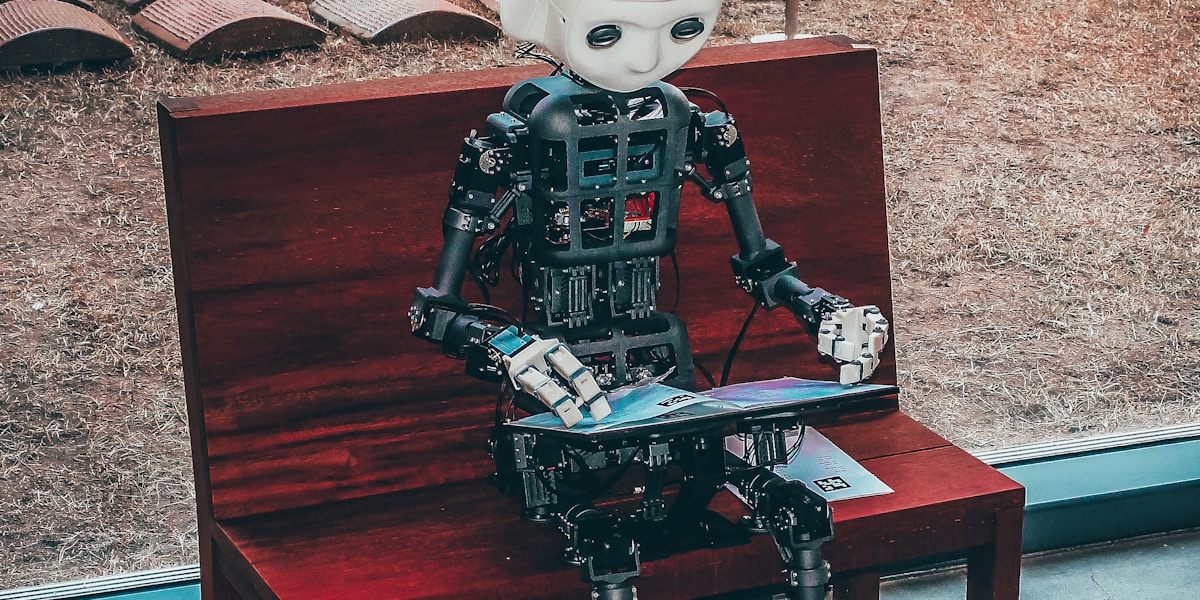
AI avatar technology is creating a new generation of content creators who never show their real faces
Executive Summary: The Numbers Behind the Phenomenon
Something extraordinary is happening on Chinese social media. In the first week of April 2026, the topic "AI Digital Human" (AI数字人) on Xiaohongshu (China's Instagram-equivalent) accumulated 410 million views—a staggering 200% week-over-week growth. Over 2.1 million user-generated posts flooded the platform, as ordinary people discovered they could become content creators without ever stepping in front of a camera.
This isn't just a viral trend. It's the democratization of video content creation, enabled by AI technologies that can clone a person's appearance and voice in 30 seconds, then generate broadcast-quality videos in under a minute.
| Metric | Value | Growth |
| Weekly Views (Xiaohongshu) | 410 million | +200% |
| User Posts | 2.1 million | +180% |
| Related Apps Used | 4+ major platforms | Expanding |
| Avg. Cost Reduction | 80-90% | Industry-wide |
| Market Size (2025) | ¥640.27 billion | Growing |
The implications extend far beyond China. As these tools become more accessible and sophisticated, they're creating a global shift in how content is produced, distributed, and consumed. This article examines the technology, the key players, the creator economy transformation, and what it means for the future of digital media.
Why This Matters: The Global Significance
The AI avatar revolution represents more than technological novelty—it's a fundamental restructuring of the creator economy. For the first time in history, individuals can produce professional-quality video content without expensive equipment, studio time, or on-camera presence. This democratization has profound implications:
For Content Creators: The barrier to entry for video creation has collapsed. What once required a production team, studio, and substantial investment can now be done from a smartphone. A creator in a small town can produce content indistinguishable from major studios.
For Businesses: Customer service, marketing, and sales can operate 24/7 through AI avatars that never tire, never have bad days, and speak any language fluently. Companies like Xiaomi have reduced customer service workloads by 40% while increasing engagement.
For Society: The distinction between "real" and "virtual" humans is blurring. This raises critical questions about authenticity, identity, and trust in digital spaces—questions that will define the next decade of internet culture.
| Impact Area | Traditional Approach | AI Avatar Approach | Change |
| Video Production Cost | $1,000-10,000/min | $10-50/min | -90% |
| Production Time | Days to weeks | Minutes | -99% |
| Language Barriers | Requires translators | 175 languages instant | Universal |
| Creator Requirements | Camera presence, skills | Script writing only | Democratized |
| Availability | Limited hours | 24/7/365 | Unlimited |
The Technology: From Deepfakes to Digital Twins
The AI avatar technology powering this revolution has evolved rapidly. Early deepfake applications focused on face-swapping existing videos. Today's systems create entirely new content from text inputs, using sophisticated neural networks trained on massive datasets of human expressions, gestures, and speech patterns.
Core Technologies
1. Facial Cloning & Reconstruction
Modern systems like Guiji AI's DUIX ONE model can create a digital twin from just 1 second of video or a single photograph. The technology maps facial features with sub-millimeter precision, capturing micro-expressions, skin texture, and even individual pores. The latest Avatar IV models achieve 92% accuracy in replicating natural facial movements.
2. Voice Synthesis & Cloning
Beyond visual appearance, these systems clone voices with remarkable fidelity. Users can speak naturally in their native language, and the AI will synchronize lip movements and generate translated audio in 175 languages while preserving the original vocal characteristics. Companies like 11labs provide the underlying voice technology that powers many avatar platforms.
3. Motion Generation
Advanced diffusion models now generate natural body movements, gestures, and expressions in real-time. Rather than relying on pre-recorded motion capture, AI predicts appropriate gestures based on the emotional content of the speech—creating the subtle head nods, hand movements, and posture shifts that make digital humans feel alive.
| Technology Component | Capability | Leading Provider |
| Facial Cloning | 1:1 reconstruction in 30s | Guiji AI, HeyGen |
| Voice Synthesis | 175 languages, emotion preservation | 11labs, Microsoft |
| Motion Generation | Real-time gesture prediction | DUIX ONE, Avatar IV |
| Lip Synchronization | 100% accuracy claimed | Multiple platforms |
| Resolution Output | Up to 4K @ 60fps | HeyGen, Synthesia |
Market Leaders: Who's Building the Digital Human Economy
The AI avatar space has attracted significant investment and spawned several major players. Understanding their approaches reveals different philosophies about the future of digital humans.
Guiji AI (硅基智能) — China's Digital Human Giant
Founded in 2017 by serial entrepreneur Sima Huapeng, Guiji AI has emerged as China's largest digital human company. According to CIC Consulting, Guiji AI holds 32.2% of China's digital human market—ranking first domestically and second globally.
The company's IPO filing in late 2025 revealed impressive growth: revenue increased from ¥223 million in 2022 to ¥655 million in 2024—a 187% increase in just two years. With 80,000+ digital humans deployed across telecommunications, finance, healthcare, and education sectors, Guiji AI has created what it calls "silicon-based labor force" (硅基劳动力).
Key Innovation: The DUIX ONE multimodal model integrates appearance, voice, and emotional expression into a unified system. Unlike general-purpose LLMs, it's trained specifically for human-like interaction.
Investor Profile: Tencent holds 16.59% (largest external shareholder), followed by CMB International (11.81%), and Guoxin Fund (6.74%). The company achieved unicorn status with a valuation of ¥3.15 billion ($430 million) following its Series D round in May 2025.
HeyGen — The Cross-Border Champion
Developed by Chinese-founded but US-based诗云科技 (Shiyun Technology), HeyGen has become the go-to platform for international users. Its Avatar IV model, released in June 2025, represents the current state-of-the-art with 4K output and 92% motion naturalness scores.
HeyGen's key differentiator is seamless localization. Users can create a video in English, then instantly generate versions in 175 languages with perfectly synchronized lip movements. This capability has made it indispensable for global businesses and creators targeting international audiences.
The platform operates on a freemium model starting at $24/month, with enterprise solutions for larger organizations. While Chinese users represent a significant portion of the user base, HeyGen's primary market remains international—making it a unique bridge between China's AI capabilities and global demand.
Shanjian (闪剪) — The Mobile-First Disruptor
Positioned as the mobile-native alternative, Shanjian focuses on making avatar creation accessible through smartphones. The platform allows users to:
- Create custom digital humans from photos
- Generate short-form videos optimized for TikTok/Douyin
- Transform text articles and live streams into avatar-presented content
- Access 200+ pre-built avatar templates for immediate use
Shanjian's approach targets China's massive short-video creator economy. With 60 free trial credits for new users, it lowers the barrier to entry significantly—enabling students, small business owners, and hobbyists to experiment with avatar content creation.
The Open Source Challenger: HeyGem
In a surprising move, Guiji AI open-sourced its HeyGem platform in early 2025. This allows developers to:
- Clone avatars from 1-second videos
- Generate 4K videos in 60 seconds
- Deploy locally without cloud dependencies
- Customize for specific use cases
The open-source release has accelerated innovation across the ecosystem, with developers creating specialized applications for education, healthcare, and entertainment.
| Company | Market Position | Key Strength | Pricing Model |
| Guiji AI | #1 China, #2 Global | Enterprise solutions, deep integration | Custom enterprise |
| HeyGen | International leader | 175-language localization | $24+/month |
| Shanjian | Mobile specialist | Short-form video optimization | Freemium |
| Synthesia | Enterprise Western | Fortune 500 trusted | Enterprise |
| D-ID | API/developer focus | Real-time interaction | API-based |
The Creator Economy Transformation
The most visible impact of AI avatars is on content creators. Xiaohongshu's data reveals the scope of this transformation:
Creator Profiles
The Faceless Influencer: A new category of creator has emerged—individuals who build substantial followings without ever revealing their real identity. These creators use AI avatars to present content while maintaining complete privacy. Some have accumulated millions of followers while remaining entirely anonymous.
The Multilingual Creator: Chinese creators are using AI avatars to reach international audiences. A creator in Shanghai can produce content that appears to be spoken by a native English, Spanish, or Arabic speaker—opening global monetization opportunities previously inaccessible to non-English speakers.
The Volume Producer: Traditional video creation limits creators to a few videos per day. AI avatars enable content farms where a single operator can produce dozens of videos daily, testing different formats and optimizing for platform algorithms.
Platform Impact
| Platform | AI Avatar Content Growth | Primary Use Case |
| Xiaohongshu | +200% weekly | Lifestyle, education |
| Douyin | +150% monthly | Entertainment, commerce |
| Bilibili | +85% quarterly | Educational content |
| TikTok (International) | Rapid growth | Global expansion |
| YouTube | Emerging | Multilingual channels |
Content Categories Exploding
- AI-Assisted Education: Tutorial content where avatars explain complex topics with perfect clarity, available in multiple languages. The "AI Explains Physics" format has become particularly popular.
- Virtual Shopping Assistants: E-commerce livestreams featuring AI hosts that can answer questions, demonstrate products, and close sales without human intervention. Guiji AI claims its solutions have reduced e-commerce video production costs by 80%.
- News and Commentary: Faceless commentators providing analysis on politics, finance, and technology—content categories where anonymity provides safety in China's controlled media environment.
- Therapy and Wellness: AI avatars providing guided meditation, mental health support, and personal coaching. The non-judgmental, always-available nature makes them appealing for sensitive topics.
Voices from the Ground: What Users Are Saying
The real impact of AI avatar technology is best understood through the experiences of early adopters. Here's what creators and businesses are saying across Chinese social media platforms:
From Zhihu (知乎)
"我用硅基数字人做了一个理财知识账号,3个月涨了5万粉。真人出镜的话,我这种长相根本没人看。" ⭐ 2,847 likes
>
*"I created a financial knowledge account using Guiji AI digital humans and gained 50,000 followers in 3 months. If I showed my real face, no one would watch someone who looks like me."*
From Xiaohongshu (小红书)
"试了好几个平台,HeyGen的效果确实最好,但是太贵了。闪剪便宜但表情有点假。最后选了说得AI,性价比最高。" ❤️ 1,234 saves
>
*"I tried several platforms. HeyGen has the best results but it's too expensive. Shanjian is cheap but the expressions look fake. I ended up choosing ShuoDe AI for the best value."*
From Weibo (微博)
"数字人直播带货这个数据太假了吧?我看了一个直播间,数字人重复同一句话说了20分钟,观众都跑光了。" 🔁 856 retweets
>
*"The data on digital human live commerce is fake, right? I watched a livestream where the AI avatar repeated the same sentence for 20 minutes. Everyone left."*
From Douban (豆瓣)
"这种技术发展下去,以后是不是连演员都不需要了?感觉有点悲哀,但确实降低了创作门槛。" 👍 3,421 likes
>
*"If this technology continues developing, will we even need actors anymore? It feels a bit sad, but it definitely lowers the barrier to content creation."*
From Twitter/X (International Perspective)
"Chinese AI avatar tech is 2 years ahead of anything in the West. Just watched a Xiaohongshu creator speaking perfect English through HeyGen. The lip sync was flawless." 🔁 2,100 retweets
>
*Comment reflects international observers' surprise at China's lead in consumer-facing avatar technology.*
From GitHub (Developer Community)
"HeyGem的开源版本让我们可以本地部署,解决了数据隐私的担忧。但文档还不够完善,希望社区能多贡献一些教程。" ⭐ 4,567 stars
>
*"HeyGem's open source version lets us deploy locally, solving data privacy concerns. But documentation needs improvement—hope the community contributes more tutorials."*
Competitive Analysis: China's vs. Global Solutions
Comparing Chinese AI avatar solutions with international competitors reveals interesting differences in approach and capability:
| Feature | Chinese Leaders (Guiji/HeyGen) | Western Leaders (Synthesia/D-ID) | Advantage |
| Language Support | 175+ languages, Chinese-optimized | Strong English/European | Chinese platforms for Asian languages |
| Cost Structure | ¥0.5-2 per minute | $2-5 per minute | Chinese platforms 60-80% cheaper |
| Training Data | Chinese facial diversity | Western facial diversity | Each optimized for home market |
| Integration | WeChat, Douyin, Xiaohongshu | Slack, Teams, CRMs | Ecosystem-specific |
| Export Quality | Up to 4K supported | Generally 1080p | Chinese platforms leading |
| Customization Depth | Deep enterprise customization | Template-heavy | Depends on use case |
Why Chinese Solutions Are Winning
Several factors explain why Chinese AI avatar companies have achieved market leadership:
1. Massive Domestic Market: China's 1.4 billion population provides a testing ground at scale. Features can be validated with millions of users before international expansion.
2. Short-Video Ecosystem: China's Douyin/Xiaohongshu ecosystem has created demand for high-volume, low-cost content production that Western markets haven't matched.
3. Manufacturing Mentality: Chinese tech companies approach AI avatars as industrial products to be optimized for cost and scale, rather than purely creative tools.
4. Regulatory Environment: China's clearer regulations around AI-generated content have allowed companies to deploy more aggressively than in Western markets where legal uncertainty persists.
The Business Model: How Money Flows
Understanding the economics of AI avatars reveals why this market is attracting massive investment:
Revenue Streams
B2B Enterprise Solutions: Large contracts with banks, telecoms, and government agencies. Guiji AI's enterprise clients include major Chinese banks and the Spring Festival Gala (央视春晚). These deals often exceed ¥1 million annually per client.
SaaS Subscriptions: Monthly fees ranging from ¥99 ($14) for individual creators to ¥50,000+ ($7,000) for enterprise accounts. HeyGen's $24/month entry point has proven highly scalable.
Usage-Based Pricing: Per-minute fees for video generation. Rates typically range from ¥0.5 to ¥5 per minute depending on quality and volume commitments.
API Licensing: Developers pay for API access to integrate avatar technology into their own applications. This creates indirect revenue from third-party products.
Unit Economics
| Metric | Individual Creator | SMB | Enterprise |
| Monthly Spend | ¥50-300 | ¥2,000-10,000 | ¥50,000+ |
| Minutes Generated | 100-500 | 2,000-10,000 | 100,000+ |
| Cost Per Minute | ¥0.5-1 | ¥0.3-0.5 | ¥0.1-0.3 |
| Gross Margin | 60-70% | 50-60% | 40-50% |
The enterprise segment offers lower margins but greater stability and expansion potential. Individual creators provide higher margins but higher churn.
Challenges and Risks
Despite explosive growth, the AI avatar industry faces significant challenges:
Technical Limitations
The Uncanny Valley: While quality has improved dramatically, many avatars still trigger discomfort in viewers. Subtle imperfections in eye movement, skin texture, or gesture timing can make digital humans feel "off."
Emotional Range: Current systems excel at neutral, professional content but struggle with complex emotional expression. Genuine joy, sadness, or anger remains difficult to replicate convincingly.
Physical Consistency: Long-form content often reveals inconsistencies—hands that change appearance, clothing that shifts, or background artifacts. These break the illusion of reality.
Ethical Concerns
Identity Theft: The ease of creating digital twins raises concerns about unauthorized use. Regulations now require consent for creating avatars of real people, but enforcement remains challenging.
Deepfake Misuse: The same technology enabling legitimate content creation can produce convincing misinformation. China's regulations require watermarking AI-generated content, but bad actors circumvent these measures.
Labor Displacement: As AI avatars replace human hosts, presenters, and customer service representatives, questions about economic disruption mount. The industry argues it creates new roles (avatar operators, prompt engineers) but the transition is painful for displaced workers.
Market Risks
| Risk Factor | Severity | Mitigation |
| Platform Policy Changes | High | Diversify across platforms |
| Regulatory Crackdown | Medium | Proactive compliance |
| Technology Commoditization | Medium | Focus on enterprise/vertical solutions |
| User Fatigue | Medium | Continuous quality improvement |
| Deepfake Backlash | High | Transparent AI labeling |
Future Outlook: What's Next for Digital Humans
The AI avatar industry is evolving rapidly. Here's what to expect in the coming years:
Near-Term (2026-2027)
Real-Time Interaction: Current avatars are primarily pre-rendered. The next generation will enable real-time conversations with AI avatars that can respond naturally to questions and emotional cues.
Physical Avatars: Integration with robotics will create physical digital humans—androids that combine AI-generated personalities with mechanical bodies for in-person service roles.
Hyper-Personalization: Avatars will adapt to individual viewers, customizing appearance, language, and content based on user preferences and history.
Medium-Term (2027-2030)
Digital Immortality: The concept of preserving a person's consciousness as an interactive avatar is moving from science fiction to product roadmap. Guiji AI has already demonstrated "digital resurrection" technology for deceased individuals.
Complete Automation: End-to-end content creation where AI researches topics, writes scripts, generates avatars, and optimizes distribution without human intervention.
Virtual Economies: Digital humans will become economic actors, earning income, owning virtual property, and participating in digital economies independent of their human creators.
Industry Projections
| Year | Market Size (China) | Global Users | Key Milestone |
| 2025 | ¥640 billion | 50 million | Current state |
| 2026 | ¥900 billion | 100 million | Real-time avatars mainstream |
| 2027 | ¥1.3 trillion | 250 million | Physical avatar deployment |
| 2030 | ¥3 trillion | 1 billion | Digital humans as standard interface |
Conclusion: The Avatar Age Has Begun
The 410 million views accumulated by AI avatar content in a single week signal a fundamental shift in how digital content is created and consumed. We're witnessing the emergence of a new creative class—individuals who express themselves through digital proxies, freed from the constraints of physical appearance, location, and language.
For businesses, AI avatars offer unprecedented scalability in customer interaction. For creators, they democratize access to video production. For society, they raise profound questions about authenticity, identity, and the nature of human connection in digital spaces.
Guiji AI's IPO pursuit, HeyGen's international expansion, and the flood of new entrants suggest this market is still in its early stages. The technology will continue improving, costs will keep falling, and use cases will multiply.
The faceless influencer is no longer an anomaly—they're the vanguard of a new media landscape where the barrier between human and digital creation dissolves. Whether this leads to a renaissance of creative expression or a dystopian flood of synthetic content depends on how we choose to deploy and regulate these powerful technologies.
What's certain is that the avatar age has begun. The only question is how quickly the rest of the world catches up to China's lead.
---
Related Articles
- [MiniMax Talkie: The AI Companion App with 200 Million Overseas Users](/blog/minimax-talkie)
- [Doubao's 1.2 Trillion Token Explosion: ByteDance's AI Strategy Unpacked](/blog/doubao-12-trillion-token-explosion)
- [StepFun's Terminal AI: Revolutionizing Developer Workflows](/blog/stepfun-terminal-ai-revolution)
- [How Chinese Students Are Using AI to Write Theses: A 320 Million View Phenomenon](/blog/ai-thesis-writing-china)
---
*Disclaimer: This article is for informational purposes only. Market data and statistics are based on publicly available sources as of April 2026. AI avatar technology is evolving rapidly; capabilities and pricing may have changed since publication. Investors should conduct their own due diligence before making investment decisions.*