China's AI Playbook Is Quietly Winning Southeast Asia
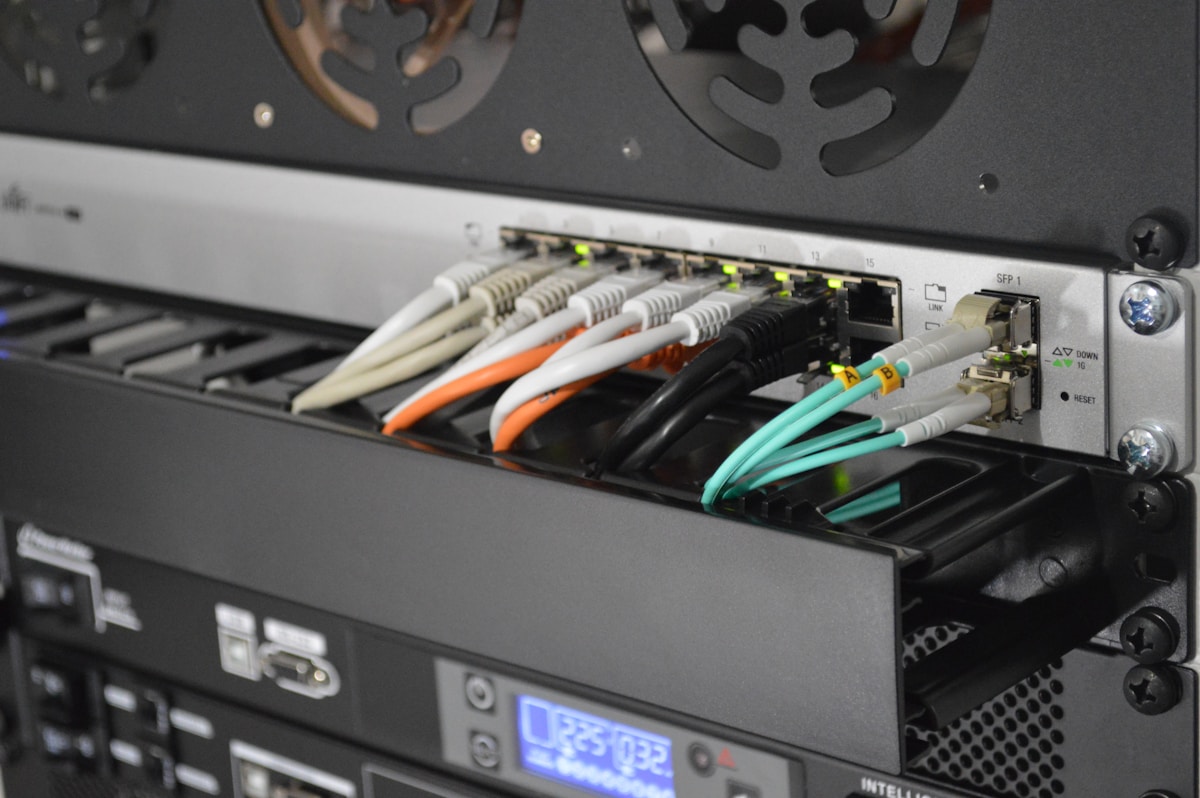
*The geography of AI influence is being redrawn not in server rooms but in rice paddies, border clinics, and livestream studios across Southeast Asia. (Image: Unsplash)*
"Speaking the language isn't the same as understanding the market."
Wei Qiaomei learned this the expensive way. The 23-year-old livestreamer from south China's Guangxi Zhuang Autonomous Region speaks fluent Thai, and for months she pitched products to Thai customers through the camera with middling results. Then, ahead of a stream promoting a portable fan, an AI system analyzed Thai e-commerce data and surfaced two selling points she would never have chosen on her own: quiet motors and long battery life. Those two data-driven phrases turned out to be exactly what her audience cared about. Her employer reported a 300 percent sales jump.
Wei is not a case study from a Silicon Valley pitch deck. She is a working livestreamer at a Guangxi trading company, and her story — told on the opening day of the 23rd China-ASEAN Expo in Nanning this week — is the most honest snapshot of where China's AI influence is actually heading.
Here is the conventional narrative: China's AI power is measured in chips, parameters, and benchmarks. Washington restricts exports of advanced semiconductors; Beijing responds with indigenous silicon; analysts score the race by whose model tops which leaderboard. That framing is not wrong. But it is wildly incomplete, and the blind spot is growing by the day.
The real China AI export is not a chip, not a model, and not a chatbot. It is a deployment playbook — a systematic method for embedding practical AI into the economic bloodstream of neighboring countries. And while the world watches the chip war, that playbook is quietly working.
What Everyone Gets Wrong
The standard analysis of China's AI ambitions goes something like this: America leads on frontier models and advanced chips; China is catching up, hampered by export controls; whoever builds the smartest model wins. Every paragraph of that analysis implicitly defines "winning" as a laboratory achievement.
But look at what was actually on display in Nanning this week. The 23rd China-ASEAN Expo, running September 17–21, drew more than 3,400 companies from over 70 countries across 170,000 square meters of exhibition space. The inaugural "AI marketplace" featured roughly 500 products from more than 70 companies across eight categories — wearables, health management, consumer technology. And the expo's own AI matchmaking system had already generated more than 8,000 buyer-seller pairings and arranged nearly 2,000 face-to-face meetings before the doors even opened.
"Last year, AI was mostly for show," said Wang Jicai, secretary-general of the China-ASEAN Expo Secretariat. "This year, it is driving sales."
That distinction — between AI that draws a crowd and AI that delivers value — is the entire story. And it maps onto a much larger economic reality that the chip-war framing completely misses.
| Indicator | 2025 | 2026 (Jan–Jul) | Change |
|---|---|---|---|
| China–ASEAN total trade | >$1 trillion (full year) | $744.41 billion | +24.7% YoY |
| Expo participating companies | — | 3,400+ | — |
| AI marketplace products | — | ~500 | First edition |
| AI-generated business matches | — | 8,000+ pairings | Pre-expo |
| New ASEAN member at expo | — | Timor-Leste (11th member) | First attendance |
The trade number is the one that should make strategists pause. China-ASEAN trade grew 24.7 percent year-on-year in the first seven months of 2026 — during a period when Washington was tightening export controls and Beijing was racing to build domestic chip capacity. The two things are not contradictions. They are parallel tracks, and the deployment track is the one delivering revenue today.
The Conventional Wisdom
Spend enough time in AI policy circles and you will hear a tidy hierarchy of technological power. At the top sit frontier models — the systems that ace graduate-level reasoning tests and write novel computer code. Below them, AI chips: the physical substrate that determines who can train the biggest models. Then cloud infrastructure, then applications, then — somewhere near the bottom — deployment services: the unglamorous work of making AI actually function in a specific place, for specific people, with specific constraints.
China's Southeast Asia strategy inverts this hierarchy entirely. The playbook does not lead with models or chips. It leads with problems — pest infestations in Laotian cassava fields, disease surveillance at the Vietnam border, manual inspection of 3,000 solar sites across Malaysia — and works backward to the technology required to solve them.
| Layer | Conventional Priority | China's ASEAN Approach | Competitive Edge |
|---|---|---|---|
| Frontier models | Highest | Rarely exported directly | Benchmark prestige |
| AI chips | Critical constraint | Worked around via deployment | Scale economics |
| Cloud infrastructure | Necessary foundation | Built locally, co-invested | Physical presence |
| Applications | Revenue layer | Customized per market | User lock-in |
| Deployment services | Afterthought | The actual product | Relationship lock-in |
This is not charity. It is an economic strategy with a clear logic. Meng Shuang, an associate professor at Beijing's Central University of Finance and Economics, described the mechanism at the expo's business summit: AI transforms industrial expertise into a service that can be sold and delivered over time. Companies increasingly package hardware, software, models, and long-term maintenance together — and the competitive advantage shifts to whoever has the algorithms, the sector expertise, *and* the local operating capability.
In other words, the moat is not the model. The moat is the relationship.
The Ground Game: Five Deployments That Actually Work
The Xinhua headline out of Nanning this week reads "Beyond expo floor, AI opens new frontiers in China-ASEAN cooperation." The phrase "beyond expo floor" is doing heavy lifting. These are not demonstration projects or pilot programs with press releases. They are operational systems running at scale right now.
The Livestream Engine. Wei's story is the consumer-facing edge of a much larger phenomenon. Her company trained its AI model on ASEAN languages, local preferences, and cultural nuances — enabling it to analyze products, process reviews, and draft localized scripts in real time. The human host decides when to pivot, how to handle tough questions, and what to emphasize. "AI didn't replace me," Wei said. "It amplified what I could do." The company's sales tripled.
The Satellite Agronomist. In Laos and Cambodia, a platform developed by a Guangxi enterprise and local partners combines satellite imagery, drones, and ground sensors to track pests and guide tropical crop cultivation. The system — built with Chinese technology, local field data, and on-the-ground training — has been tested on more than 20,000 mu (roughly 1,333 hectares) of crops. Project head Wen Biaotang confirmed the deployment is expanding.
The Border Health Net. In Guangxi's border city Chongzuo, the center for disease control and prevention has partnered with neighboring Vietnamese provinces to deploy a bilingual AI platform for early disease detection. The system slashes epidemiological reporting time from four hours to 30 minutes — an 87.5 percent reduction that could mean the difference between containment and outbreak.
The Solar Inspector. In Nanning, RunDo — a platform operated by Runjian Co. Ltd. — remotely monitors nearly 300 megawatts of solar capacity across approximately 3,000 sites in Malaysia. Drones and AI have replaced manual inspections, boosting maintenance efficiency by more than 30 percent, raising power output by up to 5 percent, and cutting labor costs by more than 20 percent. The operator has launched more than 80 computing projects across ASEAN.
The Matchmaker. The expo itself ran on AI. Before the event opened, an AI system generated more than 8,000 buyer-seller matches and arranged nearly 2,000 face-to-face meetings. During negotiations, the system provides real-time tariff and compliance guidance and tracks leads after the exhibition closes.

*AI-augmented livestream commerce is transforming how Chinese sellers connect with Southeast Asian consumers — with measurable sales impact. (Image: Unsplash)*
Five deployments, five different countries, five different sectors. The common thread is not the underlying model — it is the method. Identify a concrete operational problem. Deploy a targeted solution. Train local operators. Scale through local partnerships. That method is the export.
| Deployment | Location | Sector | Key Metric |
|---|---|---|---|
| Livestream analytics | Thailand (remote from Guangxi) | E-commerce | 300% sales increase |
| Satellite pest tracking | Laos, Cambodia | Agriculture | 20,000 mu (1,333 ha) tested |
| Bilingual disease detection | Vietnam border (Chongzuo) | Public health | 4 hrs → 30 min reporting |
| Solar monitoring (RunDo) | Malaysia | Clean energy | 300 MW, ~3,000 sites |
| Expo matchmaking | Nanning | Trade facilitation | 8,000+ matches, 2,000 meetings |
The Infrastructure Layer Nobody Photographs
None of these deployments runs on goodwill. Behind every application sits a growing lattice of physical infrastructure — data centers, computing clusters, and connectivity links — that Chinese technology firms have been building across Southeast Asia with remarkable consistency.
The scale is substantial. ByteDance has pledged $8.8 billion for regional data center development, with Thailand as a key focus. Alibaba announced in February 2025 that it would invest at least $52 billion in cloud and AI infrastructure globally over three years, and opened a second data center in Thailand that same year while expanding its footprint in Malaysia and the Philippines. ByteDance's total AI infrastructure spending may reach $30 billion in 2026 alone, according to industry estimates cited by McKinsey.
Chinese cloud and platform companies account for roughly 30 percent of hyperscaler demand in East and Southeast Asia — a share that has been growing steadily as US providers focus on their home market. Thailand is in the middle of a construction boom: approximately 2.87 gigawatts of critical power are under construction, announced, or planned, with about one gigawatt projected to be operational by 2027. Malaysia hosts one of the largest concentrations of Chinese-owned data center investments outside mainland China. Johor, just across the strait from Singapore, has emerged as a new growth corridor.
| Investor | Country Focus | Investment Scale | Status |
|---|---|---|---|
| ByteDance | Thailand (regional) | $8.8B pledged | Under construction |
| Alibaba Cloud | Thailand, Malaysia, Philippines | Part of $52B global commitment | Expanding |
| Huawei | Thailand, Malaysia | Part of broader ASEAN presence | Operational, training ~100K ICT talents |
| Tencent Cloud | Thailand, Malaysia, Singapore | Undisclosed | Operational |
| Chinese cloud share | East & Southeast Asia | ~30% of hyperscaler demand | Growing |
The Western counterweight is real but increasingly bifurcated. Microsoft invested $1 billion in its first Thailand data center in 2024. Amazon announced $5 billion for three data centers. Google launched a cloud region in Bangkok in January 2026. But these investments are concentrated in the same countries — Thailand, Malaysia, Singapore — creating a layered infrastructure landscape where US and Chinese technology stacks coexist, sometimes in the same city.
The geographic question that matters is not whose chips are faster. It is whose infrastructure the local economy depends on.
The Institutional Machine
Deploying AI across eleven ASEAN countries with different languages, regulatory regimes, and levels of digital maturity requires more than capital. It requires institutions. And China has been building them methodically.
The China-ASEAN Artificial Intelligence Application Cooperation Center, established in Nanning in September 2025, has cataloged more than 1,000 potential AI scenarios across the region and opened 279 of them to developers. It has set up offices in Vietnam, Laos, and Malaysia, backed more than 30 cross-border projects, and assembled an alliance of 55 companies. A training base in Malaysia has logged more than 1,900 hours of multilingual data annotation to address the low-resource challenge posed by Southeast Asian languages. A six-month regional competition attracted more than 200 teams.
The development model has a name: "R&D in Beijing, Shanghai, and Guangzhou — integration in Guangxi — application in ASEAN." Guangxi, China's land gateway to Southeast Asia, serves as the buffer zone where Chinese AI systems are adapted, localized, and pressure-tested before cross-border deployment. The province's China-ASEAN AI Application Cooperation Center is the institutional heart of this pipeline.
| Institution | Metric | Detail |
|---|---|---|
| AI Application Cooperation Center | 1,000+ scenarios cataloged | Established Sept 2025, Nanning |
| Developer-accessible scenarios | 279 opened | Growing |
| Cross-border offices | 3 countries | Vietnam, Laos, Malaysia |
| Backed projects | 30+ cross-border | Active deployments |
| Company alliance | 55 members | Growing |
| Malaysia training base | 1,900+ hours | Multilingual data annotation |
| Regional AI competition | 200+ teams | Six-month duration |
This is not the scattershot approach of a company trying to sell software licenses. It is the systematic approach of a country building an economic bloc — one AI deployment at a time.
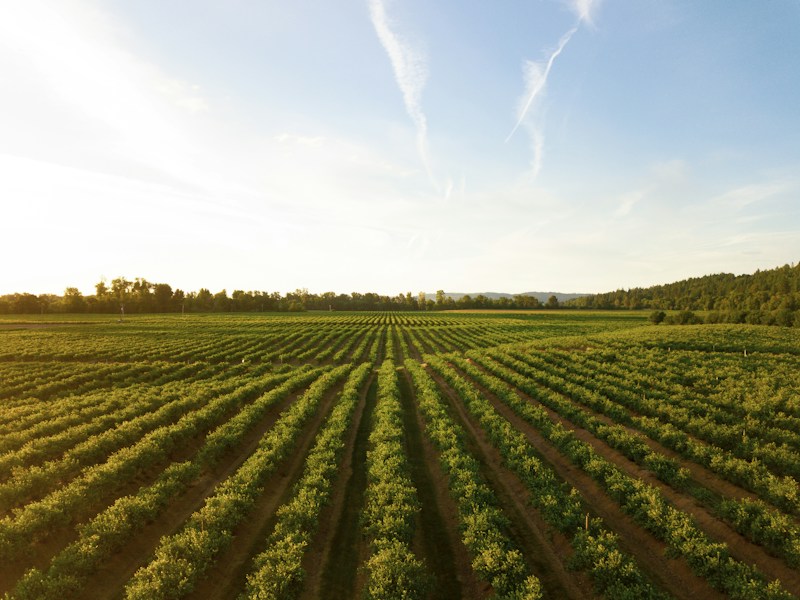
*Satellite-guided pest tracking and drone-assisted crop management are transforming agriculture in Laos and Cambodia — quietly, without headlines. (Image: Unsplash)*
The Gap in the Playbook
If this all sounds like an unstoppable juggernaut, it is worth pausing at the point where the playbook runs out of pages. The expo's own AI matchmaking system can generate 8,000 business matches, but — as the organizers themselves acknowledged — it cannot establish cross-border data protocols, guarantee electronic signatures, or assign liability when an algorithm fails.
This is not a minor caveat. It is the structural weakness of the entire deployment-first strategy. AI that operates across borders requires data that flows across borders, and data flows require rules: who owns the data, where it is stored, what happens when it leaks, whose courts have jurisdiction. None of these questions have satisfactory answers in the China-ASEAN context.
ASEAN Secretary-General Kao Kim Hourn stated the challenge plainly: "Cross-border data flows are the lifeblood of AI," and the region needs a trusted, secure, and seamless framework for data exchange. Without one, the cost of cybersecurity, data governance, and reliable AI frameworks could deepen what Timor-Leste's transport and communications minister called an "intelligence divide" — not between China and ASEAN, but *within* ASEAN, between countries that can afford robust governance and those that cannot.
Liu Jianmin, a professor at Guangxi University of Finance and Economics, framed the constraint from the Chinese side with unusual candor: "No matter how accurate a system is, if no one uses it, can afford it, or can keep it running, it remains just an exhibit." The deployment playbook depends on local capacity — skilled workers, maintainable infrastructure, sustainable business models — and that capacity is unevenly distributed across the region.
| Challenge | Description | Severity |
|---|---|---|
| Data governance | No unified cross-border framework | High |
| AI liability | Unclear accountability when algorithms fail | High |
| Local talent | Skilled AI operators scarce in smaller economies | Medium |
| Language resources | Low-resource languages limit model accuracy | Medium |
| Cost sustainability | Smaller economies may not maintain systems | Medium |
| Geopolitical bifurcation | US-China tech stacks creating fragmentation | Emerging |
The CAFTA 3.0 framework, which entered implementation in 2026 as the upgraded China-ASEAN Free Trade Area, attempts to address some of these gaps with provisions for digital economy cooperation and mutual recognition of standards. But a trade agreement is not a data governance treaty, and the gap between the two is where the deployment playbook could stall.
Who Wins, Who Loses
The implications of China's ASEAN deployment playbook extend well beyond the region. For ASEAN, the immediate benefits are tangible: better crop yields, faster disease detection, cheaper energy maintenance, more effective cross-border trade. Thailand alone has committed at least 25 billion Thai baht for AI infrastructure and practical applications in 2026–2027, approved nine AI Centers of Excellence covering education, agriculture, health, tourism, manufacturing, and Thai-language large models, and approved 522.6 billion baht in digital-sector investment in the first half of 2025 — a twenty-fold year-on-year increase. The country has already surpassed Malaysia to become Southeast Asia's second-ranked AI nation after Singapore.
For China, the payoff is strategic depth. Every deployed system creates a dependency relationship: the Laotian farmer who relies on Chinese satellite data for pest management, the Malaysian solar operator whose maintenance workflows run on a Nanning-based platform, the Vietnamese health official whose disease reports flow through a bilingual AI trained in Guangxi. These dependencies are sticky in ways that model downloads and API calls are not. They are embedded in physical infrastructure, trained personnel, and institutional relationships that take years to build and even longer to unwind.
For the United States, the risk is not that Chinese models outperform American ones in Bangkok or Kuala Lumpur. It is that the *ecosystem* around those models — the data pipelines, the deployment expertise, the local partnerships, the institutional frameworks — becomes so deeply rooted that switching costs become prohibitive. The chip export controls that dominate Washington's China AI policy address a threat that is already being routed around. Chinese cloud firms are expanding their Southeast Asia footprint precisely to support operations "under high-end chip constraints," as McKinsey observed.
The deeper competitive insight is this: in Southeast Asia, the AI race is not a model race. It is a deployment race. And China is playing a different game.
What Comes Next
Three milestones will determine whether the deployment playbook becomes a durable regional architecture or hits its limits.
First, the rules. If ASEAN and China can negotiate even a partial framework for cross-border data flows — starting with sectors like health and agriculture where the stakes are clear and the politics are manageable — the playbook gains a legal foundation. If not, every deployment carries hidden regulatory risk that could freeze expansion.
Second, the talent base. The Malaysia training base's 1,900 hours of data annotation and the 200-team regional competition are early investments in the human infrastructure that deployment requires. Scaling this from hundreds of trained workers to tens of thousands will determine whether the systems can be maintained locally or remain dependent on Chinese engineers.
Third, the trust equation. Deployments that work — that demonstrably improve crop yields, catch disease outbreaks faster, keep the lights on — build trust in ways that no summit declaration can. But a single high-profile failure, particularly in a sensitive domain like health data or border security, could undo years of accumulated goodwill.
Wang Jicai, the expo secretary-general, captured the moment: "Last year, AI was mostly for show. This year, it is driving sales." The question for 2027 is whether AI in Southeast Asia drives something more than sales — whether it builds the kind of integrated, interdependent digital economy that neither export controls nor benchmark wars can dislodge.
The playbook is already running. The only question is how far it goes before someone writes the rulebook.
Voices from the Ground
The story drew reactions across Chinese and international social media, ranging from enthusiasm to hard-nosed skepticism.
@TechAsiaWatcher (Twitter/X): "Everyone's watching the chip war. Meanwhile China's AI is literally telling Laotian farmers where the pests are. Different game entirely." *(翻译: 所有人都在看芯片战。与此同时中国AI正在告诉老挝农民害虫在哪里。完全是不同的游戏。)*
知乎用户 "数字边疆": "这个模式的关键不在技术多先进,而在于'可用、用得起、有人维护'。美国公司在东南亚卖软件许可,中国公司在帮当地建系统。五年后差距会很明显。" *(The key to this model isn't how advanced the technology is — it's 'usable, affordable, maintainable.' American companies sell software licenses in Southeast Asia; Chinese companies help locals build systems. In five years the gap will be obvious.)*
@SkepticalStraits (Twitter/X): "Cool story but who's liable when the AI pest tracker tells a Cambodian farmer to spray the wrong chemical and the crop dies? Rules matter more than deployments." *(翻译: 故事很酷,但当AI害虫追踪器告诉柬埔寨农民喷错药、庄稼死了的时候,谁负责?规则比部署更重要。)*
小红书用户 "南洋见闻": "在马来西亚亲眼看到中国公司的数据中心工地,规模真的很大。但本地员工培训跟不跟得上才是问题,不能只建不教。" *(Saw Chinese company data center construction sites in Malaysia firsthand — the scale is genuinely large. But whether local employee training can keep up is the question. You can't just build without teaching.)*
Weibo user "科技老兵": "'研在北京上海广州、转在广西、用在东盟' — 这个路径设计得很聪明。广西作为缓冲带和适配器的角色被严重低估了。" *('R&D in Beijing, Shanghai, Guangzhou; integration in Guangxi; application in ASEAN' — this pathway is cleverly designed. Guangxi's role as buffer and adapter is seriously underrated.)*
@ASEANPolicyNerd (Twitter/X): "Timor-Leste's minister warning about an 'intelligence divide' within ASEAN is the most important quote from this expo. The gap isn't between China and ASEAN — it's inside ASEAN." *(翻译: 东帝汶部长警告东盟内部可能出现"智能鸿沟"是本届博览会最重要的引述。差距不在中国和东盟之间——而在东盟内部。)*
Editor at AI in China. Tracking Chinese AI companies, funding rounds, and the technologies reshaping global tech. More about me.