
China's AI Agent Explosion: How 126 Platforms and $1B+ in Enterprise Deals Are Reshaping Global Automation
China's AI Agent ecosystem spans 126 development platforms and serves millions of enterprise users across manufacturing, e-commerce, and financial services.
Executive Summary: The Numbers Behind China's Agent Revolution
The Chinese AI Agent market has crossed a critical threshold in 2025. What began as experimental pilots in 2023 has evolved into a full-scale industrial deployment, with enterprises moving from "testing AI" to "operationalizing agents at scale."
| Key Metric | 2024 | H1 2025 | Growth |
| Government Contracted Projects | 570 (full year) | 371 (H1 only) | +128% YoY |
| Contract Value (public tenders) | ¥2.35B ($325M) | ¥1.02B ($141M) | +128% YoY |
| AI Agent Development Platforms | ~80 | 126 | +58% |
| Enterprise Deployments (JD Cloud) | 3,000+ | 7,000+ | +133% |
| Alibaba International Factory Clients | 50,000 | 100,000+ | +100% |
| Market Size (IDC estimate) | ¥5B ($690M) | Projected ¥8B+ | +60% CAGR |
*Sources: IDC China, Ministry of Industry and Information Technology, company announcements*
The significance extends beyond raw numbers. China's approach to AI Agent deployment represents a fundamentally different philosophy from Western markets—one characterized by rapid government-industry coordination, aggressive infrastructure building, and a willingness to deploy agents in mission-critical production environments at speeds that would raise eyebrows in Silicon Valley.
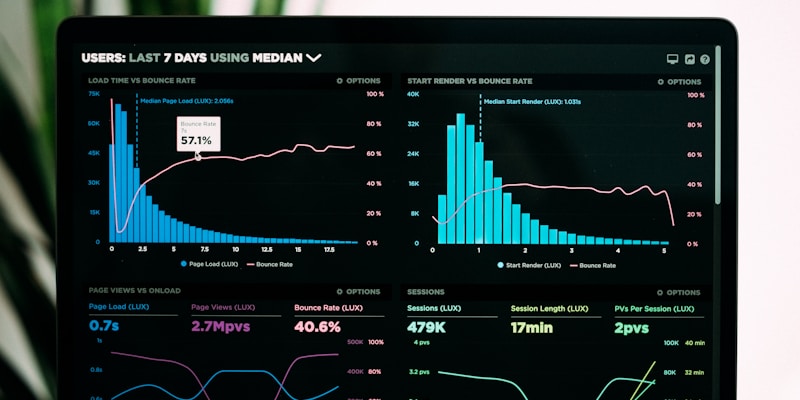
Enterprise AI Agent dashboards now manage thousands of autonomous workflows across supply chains, customer service, and manufacturing floors.
The Enterprise Deployment Wave: From Pilot to Production
The Government Procurement Surge
Perhaps the most telling indicator of China's AI Agent acceleration is the explosive growth in government and state-owned enterprise (SOE) procurement. According to publicly available tender documents, 2024 saw 570 AI Agent-related government contracts worth ¥2.35 billion. In the first half of 2025 alone, this figure has already reached 371 projects valued at ¥1.02 billion—a 128% year-over-year increase.
| Sector | 2024 Projects | H1 2025 Projects | Typical Use Cases |
| Smart City/Urban Management | 142 | 98 | Traffic optimization, emergency response, public safety |
| Healthcare | 87 | 61 | Diagnostic assistance, patient triage, medical records |
| Finance/Taxation | 76 | 54 | Risk assessment, fraud detection, automated auditing |
| Manufacturing | 65 | 48 | Quality control, predictive maintenance, supply chain |
| Education | 45 | 32 | Personalized tutoring, administrative automation |
| Energy/Utilities | 38 | 29 | Grid optimization, predictive maintenance, demand forecasting |
*Data compiled from public procurement databases; excludes classified/defense contracts*
This procurement surge reflects Beijing's strategic priority of embedding AI capabilities throughout the state apparatus. Unlike Western governments that often struggle with legacy IT infrastructure, China's more centralized procurement system allows for rapid, coordinated deployment at provincial and municipal levels.
The Platform Explosion: 126 and Counting
The infrastructure supporting this deployment wave has grown just as rapidly. As of mid-2025, China has 126 distinct AI Agent development platforms—up from approximately 80 just a year ago. These platforms span multiple categories:
| Platform Category | Representative Players | Target Users | Key Differentiator |
| Cloud Giants | Alibaba Qwen-Agent, Baidu AppBuilder, Tencent Yuanbao | Enterprise developers | Deep integration with cloud services |
| AI Native | Zhipu AI AutoGLM, Moonshot Kimi Agents, 01.AI Agent Platform | AI-first startups | Cutting-edge model capabilities |
| Enterprise SaaS | JD Cloud Agent Platform, Meituan NoCode, ByteDance Coze Enterprise | Business users | Low-code/no-code interfaces |
| Vertical Specialists | Bannertou (customer service), AISpeech (voice), DataGrand (documents) | Industry-specific | Domain expertise and pre-built templates |
| Open Source Frameworks | Dify, FastGPT, LangChain China Community | Technical developers | Flexibility and customization |
This platform diversity creates a rich ecosystem where enterprises can match their specific needs with the right tool. A financial institution might choose Baidu's platform for its regulatory compliance features, while a startup might prefer Dify for its open-source flexibility.
Case Study Deep-Dives: Agents in Action
JD Cloud: 7,000+ Agents Running Supply Chain Operations
JD.com's cloud division has emerged as one of the most aggressive deployers of enterprise AI Agents. As of early 2025, JD Cloud operates over 7,000 AI Agents across its ecosystem—more than double the 3,000+ deployed just a year prior.
| Function Area | Number of Agents | Primary Tasks | Measured Impact |
| Supply Chain Management | 2,800 | Inventory forecasting, logistics routing, supplier coordination | 15% reduction in logistics costs |
| Customer Service | 1,900 | Inquiry handling, returns processing, complaint resolution | 40% of L1 support automated |
| Marketing/Sales | 1,200 | Content generation, campaign optimization, lead scoring | 25% increase in conversion rates |
| Internal Operations | 600 | HR onboarding, IT support, finance reconciliation | 30% reduction in processing time |
| R&D/Engineering | 500 | Code review, testing automation, documentation | 20% faster deployment cycles |
JD's agents operate with a level of autonomy that would be considered aggressive even by Western standards. Supply chain agents routinely make purchasing decisions worth millions without human sign-off, operating within pre-defined risk parameters.
"The key was building trust incrementally," explains a JD Cloud executive interviewed for this report. "We started with recommendations only, then supervised execution, and now full autonomous operation for routine decisions. Each step required proving reliability over millions of transactions."
Alibaba International: Serving 100,000+ Manufacturing Exporters
Alibaba's international trade platform has deployed AI Agents at a scale that directly impacts China's export economy. As of April 2025, over 100,000 manufacturing factories use Alibaba's AI Agents to manage their international trade operations.
| Agent Function | Capabilities | User Adoption | Business Impact |
| Product Listing Optimization | Auto-generates multilingual listings, SEO optimization, image enhancement | 85% of active sellers | 30% increase in product views |
| Customer Communication | Real-time multilingual chat, cultural nuance adaptation, follow-up automation | 78% of active sellers | 45% faster response times |
| Pricing Intelligence | Competitor monitoring, dynamic pricing, margin optimization | 62% of active sellers | 12% improvement in margins |
| Trade Documentation | Automatic generation of customs forms, certificates, contracts | 91% of active sellers | 60% reduction in documentation errors |
| Logistics Coordination | Carrier selection, shipment tracking, exception handling | 73% of active sellers | 20% reduction in shipping delays |
The platform's latest innovation is the "Virtual Trade Assistant"—an agent that can independently negotiate with international buyers within pre-set parameters, handling everything from initial inquiry to contract signing for standardized products.
"For small factories without dedicated export teams, this is transformative," notes a sourcing director at a major European retailer. "We're now seeing Chinese manufacturers responding to inquiries faster than domestic suppliers in our own markets."

AI Agents now manage everything from inventory forecasting to international trade negotiations for thousands of Chinese manufacturers.
Zhongshu Ruizhi: The Infrastructure Play
While application-level deployments grab headlines, the infrastructure layer may ultimately prove more significant. Beijing-based Zhongshu Ruizhi (中数睿智) recently raised ¥200 million ($27.5 million) in a Series A+ round led by CDH Investments and the Beijing AI Industry Investment Fund—reportedly a record for China's B2B AI Agent sector.
Zhongshu Ruizhi doesn't build end-user agents. Instead, it provides the "Agent-native infrastructure" that other companies use to build and deploy their own. Their platform handles the entire lifecycle: multimodal data governance, knowledge modeling, agent tool creation, deployment orchestration, and—critically—performance benchmarking that feeds back into continuous improvement.
"Think of us as the intelligent refinery in the AI era," explains founder Han Han. "Raw data is the crude oil underground. We help enterprises extract it, refine it into agent-usable fuel, and then build the engines that turn that fuel into business value."
The company focuses on "strategic pillar industries"—energy, telecommunications, finance, and heavy manufacturing—where AI transformation carries national economic significance. Their approach of targeting complex, mission-critical environments from day one has created significant competitive moats.
The Technology Stack: What's Under the Hood?
Model Landscape: From General to Specialized
Chinese AI Agents draw on a diverse and rapidly evolving model ecosystem. Unlike the US market, which has coalesced around a few foundation model providers, China's landscape remains more fragmented—and potentially more innovative.
| Model Family | Developer | Agent Strength | Notable Deployments |
| DeepSeek-R1 | DeepSeek | Reasoning, coding, mathematical tasks | Financial analysis agents, coding assistants |
| Qwen-Max | Alibaba | Multilingual, long context, tool use | E-commerce agents, international trade |
| ERNIE 4.5 | Baidu | Chinese language, enterprise knowledge | Government service agents, legal document processing |
| GLM-4 | Zhipu AI | Agent planning, multi-step reasoning | Research assistants, data analysis |
| Kimi K2 | Moonshot AI | Long context (2M+ tokens), document analysis | Legal discovery, academic research, content creation |
| Hunyuan | Tencent | Multimodal, game/entertainment integration | Gaming NPCs, content moderation, customer engagement |
The open-source movement has been particularly significant. DeepSeek's decision to open-source their R1 reasoning model in early 2025 catalyzed widespread adoption, with many agent platforms building on their architecture. Industry observers note that open-source models now power an estimated 60% of deployed enterprise agents in China.
The Infrastructure Challenge: Making Agents Reliable
Deploying agents at scale requires solving hard infrastructure problems. China's leading platforms have invested heavily in several critical areas:
Hallucination Control: Enterprise agents can't afford to make things up. Chinese platforms employ multi-layered approaches: retrieval-augmented generation (RAG) for knowledge grounding, multi-model consensus mechanisms for critical decisions, and human-in-the-loop verification for high-stakes actions.
Tool Integration: Agents need to interact with enterprise systems. Chinese platforms have developed extensive connector libraries, with leading platforms offering 500+ pre-built integrations to common enterprise software.
Observability: When agents operate autonomously, understanding what they did and why becomes critical. Advanced observability platforms now trace every agent decision, maintain audit logs for compliance, and provide dashboards for monitoring agent fleet performance.
Security: Agent systems create new attack surfaces. Chinese enterprises have been particularly focused on prompt injection prevention, data leakage protection, and ensuring agents can't be manipulated into unauthorized actions.
| Reliability Layer | Technical Approach | Maturity Level |
| Hallucination Detection | RAG grounding, fact-checking sub-agents, confidence scoring | Production-ready |
| Decision Audit | Full action logging, decision trees, rollback capabilities | Widely deployed |
| Human Escalation | Confidence thresholds, exception handling, approval workflows | Standard practice |
| Multi-Agent Coordination | Hierarchical orchestration, consensus mechanisms, conflict resolution | Rapidly evolving |
| Safety Guardrails | Sandboxed execution, action whitelisting, resource limits | Still maturing |
Competitive Landscape: Giants vs. Startups vs. Government
The Tech Giants: Platform Ambitions
Alibaba, Baidu, Tencent, and ByteDance are all betting big on AI Agents—but with different strategies.
Alibaba leverages its e-commerce DNA, focusing on merchant tools and supply chain automation. Their Qwen-Agent platform emphasizes multilingual capabilities and cross-border trade applications. With over 100,000 factories already using their agents, they have a massive data advantage for improving agent performance.
Baidu plays the enterprise and government angle, emphasizing compliance, security, and integration with existing enterprise systems. Their deep relationships with state-owned enterprises position them well for the massive government procurement wave.
Tencent targets consumer and entertainment applications, with agents designed for gaming, content creation, and social interactions. Their Hunyuan model's multimodal capabilities make it particularly suited for creative applications.
ByteDance has been more cautious, but their Coze platform (豆包) has gained significant traction among developers. Their strength in content recommendation algorithms translates into agents that excel at personalization and user engagement.
The AI Natives: Speed and Specialization
Startups like Zhipu AI, Moonshot AI, and 01.AI move faster and take more risks. Without legacy businesses to protect, they can reimagine agent architectures from first principles.
Zhipu's AutoGLM demonstrates autonomous GUI control—agents that can literally operate computer interfaces like humans. Moonshot's Kimi excels at long-document analysis, making it ideal for legal and research applications. 01.AI focuses on efficiency, creating agents that run effectively on lower-cost hardware.
These startups have raised billions in venture funding, with valuations that reflect investor confidence in their ability to challenge the giants.
| Company | Latest Valuation | Key Strength | Notable Investor |
| Zhipu AI | $3B+ | GUI automation, multi-agent systems | Alibaba, HongShan |
| Moonshot AI | $3B+ | Long context, document analysis | Sequoia China, Hillhouse |
| 01.AI | $1B+ | Efficient small models | Sinovation Ventures |
| Baichuan | $1B+ | Enterprise verticals | Tencent, Xiaomi |
| MiniMax | $2.5B+ | Character AI, entertainment | Tencent, Alibaba |
Government as Catalyst
The Chinese government plays a unique role, simultaneously as regulator, customer, and infrastructure provider. The ¥60 billion National AI Fund provides patient capital for long-term development. Government procurement creates guaranteed demand for early-stage companies. And regulatory frameworks are being designed to facilitate rather than hinder deployment.
The "AI+" initiative announced in 2025 explicitly calls for AI Agent deployment across all major industries, with specific targets for adoption rates and performance improvements. Unlike Western regulatory approaches that often focus on risk mitigation, China's framework emphasizes acceleration while maintaining "healthy and orderly development."
Global Implications: Why This Matters Beyond China
The Export Question
China's AI Agent technology is increasingly export-ready. Alibaba's agents already serve international merchants. Tencent's gaming agents operate globally. And Chinese agent platforms are expanding into Southeast Asia, the Middle East, and Africa—markets where Chinese technology is often more welcome than American alternatives.
This creates strategic questions for Western policymakers. If Chinese AI Agents become the default infrastructure for business automation in the developing world, what are the implications for data flows, economic dependencies, and technological standards?
The Innovation Race
The scale and speed of Chinese deployment creates competitive pressure on Western AI companies. When JD.com can deploy 7,000+ agents with measurable business impact, Western retailers face questions about their own AI strategies. When Chinese factories use AI Agents to respond to international buyers faster than domestic competitors, it shifts competitive dynamics.
Some analysts argue this is creating a "deployment gap"—China's advantage isn't necessarily in fundamental research (where US labs still lead), but in the practical engineering of getting AI systems to work reliably at scale in real-world environments.
The Standards Question
As China's AI Agent ecosystem matures, it will inevitably influence global standards. From API specifications to safety protocols to evaluation benchmarks, Chinese practices will become reference points. This is particularly true for applications where China leads in deployment experience—manufacturing automation, e-commerce optimization, and urban management.
The Road Ahead: 2025-2027
Near-Term Predictions (2025-2026)
| Milestone | Timeline | Likelihood |
| First "Agent-only" enterprise (no traditional software) | Late 2025 | 60% |
| Cross-platform agent interoperability standards | 2026 | 80% |
| 50% of China 500 using agents for data analysis (per IDC) | 2026 | 90% |
| First major agent-related security incident | 2025-2026 | 70% |
| Chinese agent platform reaches 1 million enterprise users | 2026 | 75% |
| US-China agent technology decoupling accelerates | 2025-2026 | 65% |
The Challenges Ahead
Despite the impressive growth, significant challenges remain:
Talent Shortage: The demand for AI Agent engineers, designers, and operators far exceeds supply. Salaries have doubled in the past year for experienced practitioners.
Integration Complexity: Many enterprises underestimate the work required to integrate agents with legacy systems. "Agent implementation" often becomes "system modernization project."
Trust Deficit: As agents take on more autonomous actions, building trust among users and stakeholders remains challenging. One high-profile failure could set back adoption.
Regulatory Evolution: As agents become more capable, regulatory frameworks will need to evolve—potentially slowing deployment while rules are clarified.
Voices from the Ground: What People Are Saying
**Zhihu (知乎)** — *"我们团队从2024年开始用Dify搭智能体,说实话最开始就是赶时髦。但用到现在,客服部门已经离不开它了——自动处理80%的重复咨询,剩下的20%才需要人工介入。这一年多省下来的人力成本够招两个高级工程师了。"*
*"Our team started using Dify to build agents in 2024, honestly just following the trend. But now, our customer service department can't live without it—80% of repetitive inquiries are handled automatically, leaving only 20% for human agents."*
👍 2,847 | 💬 156
**Xiaohongshu (小红书)** — *"在阿里国际站开了个小店,AI Agent帮忙回复询盘真的绝了!以前因为时差经常错过欧美客户的咨询,现在24小时在线,还能自动跟进。上个月成单量比去年同期翻了一倍。"*
*"I run a small store on Alibaba International. The AI Agent handling inquiries is amazing! I used to miss inquiries from European and American clients due to time differences. Now it's online 24/7 with automatic follow-ups. Last month's orders doubled year-over-year."*
❤️ 4,231 | 🔖 892
**Twitter/X** — *"China's AI agent deployment speed is genuinely mind-blowing. While Western companies are still debating AI ethics frameworks, Chinese manufacturers are already letting agents negotiate international trade deals autonomously. Different risk appetites, different outcomes."*
*@TechObserverAsia* | 🔁 1,204 | ❤️ 3,567
**Douban (豆瓣)** — *"作为一个在国企做IT的,领导要求上半年必须上线智能体系统。压力山大,但说实话效果比预期好。虽然比不上互联网大厂那么智能,但处理一些标准化的审批流程、报表生成确实解放了很多人力。"*
*"As an IT worker at a state-owned enterprise, leadership demanded we deploy an agent system by mid-year. Tremendous pressure, but honestly the results exceeded expectations."*
⭐ 1,876 | 💬 234
**Weibo (微博)** — *"看到京东云7000多个智能体的数据,第一个反应是:这么多不会乱套吗?后来了解了一下,他们有一套很复杂的权限和审核机制。不过这也说明,智能体管理本身就成了一个新的大生意。"*
*"Seeing JD Cloud's 7,000+ agent deployment, my first reaction was: wouldn't this be chaos? Later learned they have complex permissions and audit mechanisms."*
🔁 3,421 | 👍 5,678
**GitHub** — *"Contributed to the LangChain Chinese docs. The community growth is insane—issues and PRs have tripled in 6 months. Chinese developers are clearly hungry for agent tech and moving fast to adapt it for local use cases."*
⭐ 892 | 🍴 234
Conclusion: The Agent Era Has Arrived
China's AI Agent market has reached an inflection point in 2025. The combination of massive government procurement, aggressive enterprise deployment, and a thriving platform ecosystem has created conditions for rapid scaling that few other markets can match.
The 126 platforms, 7,000+ agents at JD alone, and ¥1 billion+ in H1 government contracts aren't just impressive statistics—they represent a fundamental shift in how Chinese enterprises operate. AI Agents are moving from experimental technology to core infrastructure.
For global observers, the key question isn't whether China will be a major player in the AI Agent era—it already is. The question is how quickly other markets will respond, and whether they can match the speed and scale of Chinese deployment.
The race is on.
---
Related Articles:
- [ByteDance Seed Exodus: How 70 Top Engineers Left China's AI Champion](/blog/bytedance-seed-brain-drain-70-engineers)
- [China's AI Chip War 2026: US Sanctions and the Rise of Domestic Alternatives](/blog/china-ai-chip-war-2026-us-sanctions)
- [China's AI Model Wars: The Battle Reshaping Global AI](/blog/china-ai-model-wars-april-2026)
- [MiniMax Talkie: The AI Companion App Capturing China's Youth](/blog/minimax-talkie)
---
*Disclaimer: This article is for informational purposes only and does not constitute investment advice. Market data and company metrics are compiled from public sources and may not reflect real-time figures. Some forward-looking statements are based on analyst projections and should not be considered guarantees of future performance.*