Chery's AI Metamorphosis: From Car Exporter to Robot Maker
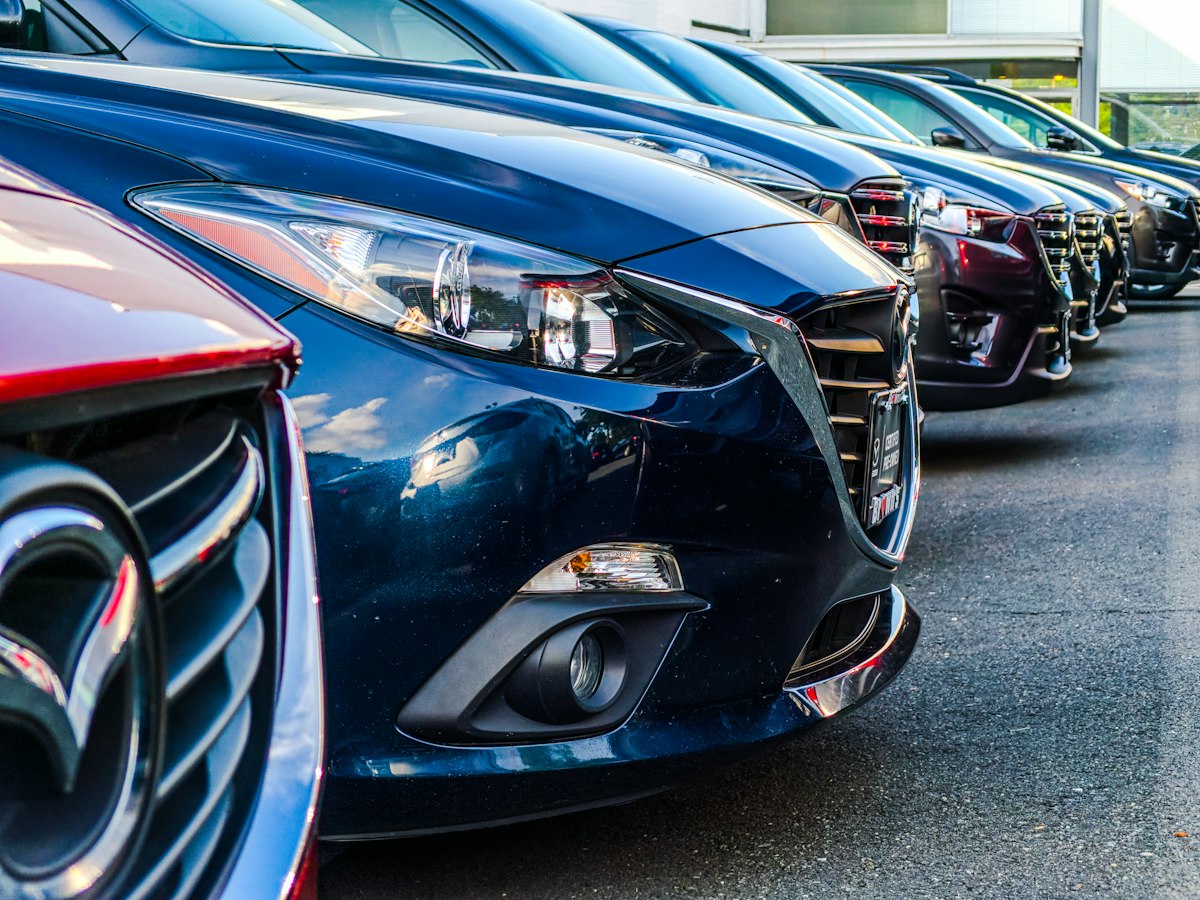
On October 20, 2026, in a convention center in Wuhu — a mid-sized Chinese city most foreigners have never heard of — a car company staged a coming-out party that looked nothing like an auto show. Chery, the company that has shipped more passenger vehicles out of China than any other for 23 consecutive years, spent ninety minutes talking about almost everything except cars. It unveiled CheryMind, which it claims is the automotive industry's first vertical large language model. It showed off Ziwei, a self-developed 3-nanometer automotive-grade chip designed specifically for physical AI world models. It debuted a factory-built Level 4 Robotaxi, a passenger eVTOL aircraft with a claimed 1,000-kilometer range, vehicle-to-grid energy technology, and — the moment that lit up Chinese social media — Mobo, a 0.9-meter-tall humanoid robot built for one purpose: keeping your family company at home.
The conference theme was a single English word: "Change." For Chery, that word carries a specific weight. This is a company that built its identity on exporting affordable, reliable combustion-engine vehicles to emerging markets from Brazil to Kazakhstan. Its robotic welding lines and lean manufacturing systems were optimized for one output: four-wheeled vehicles with a steering wheel. Now it is asking the world — and its own 19.88 million registered users — to believe that the same engineering muscle can produce artificial intelligence, silicon chips, bipedal robots, autonomous taxis, and electric aircraft.
The breadth is staggering. But so is the ambition of every Chinese automaker racing to escape the gravitational pull of commoditized car manufacturing. Chery's transformation is not happening in a vacuum. It is the most aggressive expression of a question the entire Chinese auto industry is now confronting: when your cars are good enough that they all look the same, what are you actually selling?
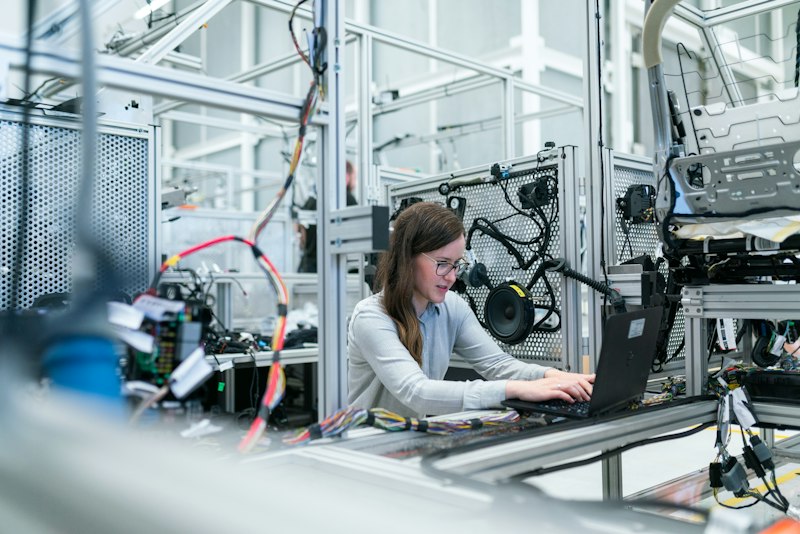
*Chery's AI ecosystem spans from factory floors to family living rooms. Image: Unsplash*
The Engine Years: Building the Machine That Builds Machines (1997–2015)
Chery's story begins in Wuhu in 1997, when the company was founded as a state-linked automotive venture in one of China's poorer inland provinces. The early years were archetypal Chinese industrialization: reverse-engineer foreign platforms, learn by doing, compete on cost. By the mid-2000s, Chery was producing its own engines — a capability that would prove foundational decades later, when the company began treating AI models and robot actuators with the same systems-engineering discipline it applied to piston tolerances.
The company's defining trait during this era was export discipline. While domestic rivals focused on China's booming urban market, Chery cultivated buyers in Russia, the Middle East, Latin America, and Africa. It learned to build vehicles that survived roads without service networks and fuel of uncertain quality. That muscle — designing for the world's hardest environments at the lowest sustainable cost — became the DNA that Chery is now porting into robotics and AI.
By 2015, Chery was manufacturing well over a million vehicles annually, but it was still fundamentally a metal-bending operation. The word "AI" appeared nowhere in its corporate vocabulary. The seeds of transformation had been planted, however: a culture of vertical integration, a global logistics network, and an engineering workforce trained to solve problems without waiting for suppliers.
The Electric Disruption: When the Ground Shifted (2016–2022)
The electric vehicle revolution hit China's auto industry like a controlled demolition. Tesla's Shanghai Gigafactory opened in 2019. BYD began shipping plug-in hybrids that made conventional vehicles feel like relics. The Chinese government's dual-credit policy forced every manufacturer to electrify or buy credits from competitors.
Chery responded with characteristic pragmatism. It accelerated its own NEV development, launched dedicated electric sub-brands, and — critically — began investing in the electronic architecture that underpins modern vehicles. The shift from mechanical systems to software-defined vehicles meant that a car was increasingly a data center on wheels.
This was the inflection point. Once a car has forty sensors, a centralized GPU, and over-the-air software updates, the company building it is no longer just a car manufacturer. It is a computing platform company that happens to ship its hardware with wheels attached. By 2022, Chery had established dedicated AI research groups and was exploring how the perception, decision-making, and motion-control algorithms developed for autonomous driving might apply to machines that don't drive at all.
The Intelligence Awakening: From ADAS to Embodied AI (2023–2025)
The period from 2023 to 2025 was Chery's deep learning curve — in both the corporate and literal sense. Falcon Pilot evolved from lane-keeping assistance to full urban navigation. The Lingxi cockpit began integrating large language model capabilities, allowing drivers to converse with their vehicles in natural language.
But the more consequential move was happening behind the scenes. Chery established AiMOGA Robotics as a dedicated embodied AI subsidiary. The logic was straightforward: a humanoid robot needs the same fundamental capabilities as an autonomous vehicle — perception, real-time decision-making, precise motion control, and navigation through dynamic, unpredictable spaces. The company calculated that roughly 70 percent of its intelligent-vehicle R&D could be directly reused for robotics.
Chery had an advantage Tesla did not: two decades of manufacturing at razor-thin margins for the world's most price-sensitive markets. Where Tesla designed Optimus as a premium research platform, Chery approached robotics with the cost discipline of a company that knows how to build a reliable vehicle for under $15,000.
By late 2025, AiMOGA had quietly deployed service robots in more than 100 commercial settings across China and overseas — hotel lobbies, hospital corridors, retail stores, security patrol routes. The robots were not glamorous. But they were real, deployed, and generating revenue. While much of the humanoid industry was still producing demo videos, Chery was accruing the only kind of data that matters: operational hours in uncontrolled environments.
CheryMind and Ziwei: The Full-Stack Gamble
The centerpiece of Chery's October 20 announcement was not any single product but the architecture connecting all of them. CheryMind, the company's vertical LLM, is designed as the cognitive layer spanning the entire ecosystem — from vehicle navigation to robot task planning to energy grid optimization. It is, in Chery's framing, the "brain" that every product in the portfolio shares.
Underneath CheryMind sits the Ziwei (紫微) chip family — self-developed, 3-nanometer, automotive-grade silicon designed specifically for physical AI world models. This is arguably the boldest claim Chery made all week. Designing competitive 3nm chips requires expertise that has historically been concentrated in a handful of companies: TSMC, Samsung, Apple, NVIDIA, Qualcomm, and Huawei's HiSilicon division. For an automaker — even one with Chery's scale — to claim in-house 3nm capability is extraordinary. The chips are fabricated by external foundries, but the architecture, design, and optimization are Chery's own.
The strategic logic is sound. By controlling both the model (CheryMind) and the silicon (Ziwei), Chery reduces its dependence on foreign semiconductor suppliers — a vulnerability that has become existential for Chinese technology companies since U.S. export controls began tightening in 2019. The Ziwei chips are designed to run physical AI world models efficiently at the edge, meaning robots and vehicles can reason about their environments without sending data to the cloud.
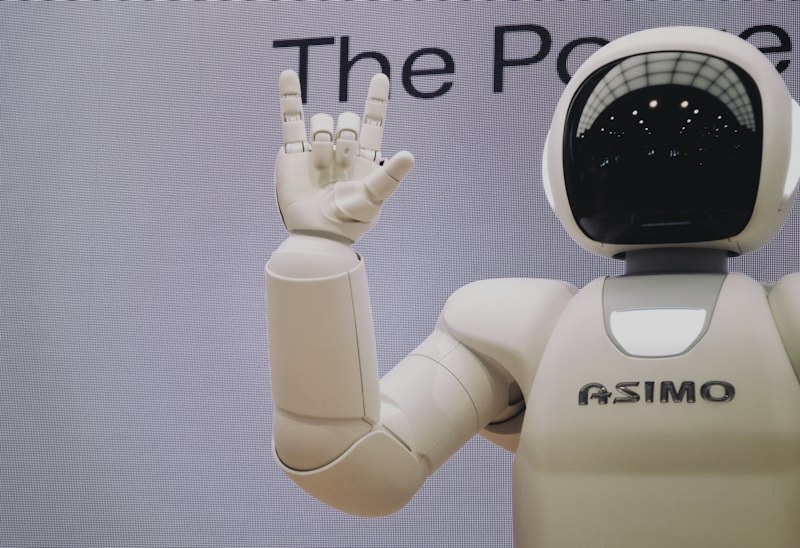
*The Ziwei chip family is designed to run physical AI workloads at the edge, without cloud dependency. Image: Unsplash*
Chery's AI Technology Stack at a Glance
| Layer | Product | Function | Status |
|---|---|---|---|
| AI Model | CheryMind | Automotive vertical LLM; perception, decision-making, task planning across all products | Launched Oct 20, 2026 |
| Silicon | Ziwei series | 3nm automotive-grade chip for physical AI world models | Showcased Oct 20, 2026 |
| Autonomous Driving | Falcon Pilot | Level 4 autonomous navigation; factory-built Robotaxi integration | Production deployment |
| Cockpit AI | Lingxi | Conversational in-vehicle AI; natural language interaction | Rolling out across model range |
| Embodied AI | MoAgent | Robot task decomposition, spatial perception, long-horizon planning | Powering Mobo and AiMOGA fleet |
| Energy | AC V2G | Vehicle-to-grid bidirectional charging; solar integration | Global debut Oct 20, 2026 |
The full-stack approach mirrors what Huawei has done with Ascend and Tesla with FSD — but no mainstream automaker outside China has attempted to build the entire stack, from silicon to foundation model to end-product robot, in-house. Whether Chery can execute on all of it simultaneously is an open question. But the architecture is not arbitrary. Each layer feeds the others: Ziwei chips run CheryMind inference; CheryMind powers MoAgent planning; MoAgent controls robots that gather real-world data that improves CheryMind's world models. It is a flywheel, if it works.
From Assembly Line to Living Room: AiMOGA and Mobo
The most emotionally resonant product Chery unveiled was not the Robotaxi or the eVTOL. It was Mobo (墨宝) — "ink treasure," a name that evokes both calligraphy and endearment. At 0.9 meters tall, with 22 degrees of freedom across its body, Mobo is designed for a single environment that has resisted robotics for fifty years: the home.
Mobo is not a industrial workhorse. It does not carry boxes or weld chassis. It tells stories to children, reminds grandparents to take medication, recognizes each family member's face and voice, and builds long-term memory of their preferences and habits. It supports more than 20 languages. It navigates around furniture, pets, and toddlers with dynamic obstacle avoidance. Its MoAgent-powered brain decomposes complex instructions — "clean up the toys in the living room and then read Mingming a bedtime story" — into executable steps.
On October 21, one day after the Global Innovation Conference, AiMOGA opened global pre-orders for Mobo. No pricing was disclosed, which suggests Chery is testing demand elasticity before committing to a number. But the company was explicit about the ambition: Mobo represents the transition of embodied AI from commercial and industrial settings (where AiMOGA already operates) into the consumer home market.
AiMOGA Robotics Portfolio
| Robot | Form Factor | Primary Environment | Function | Deployment Status |
|---|---|---|---|---|
| Mobo (墨宝) | Humanoid (0.9m) | Home | Family companionship, elderly care, children's education | Pre-orders open Oct 21 |
| Mornine | Humanoid | Commercial | High-end business reception, livestreaming, retail | Active deployment |
| R001 | Humanoid | Public spaces | Security patrol, traffic guidance | Active deployment |
| RN001 | Humanoid | Healthcare | Patient guidance, visitor assistance | Active deployment |
| Argos Pro | Quadruped | Outdoor/Industrial | Autonomous following, load carrying, specialized inspection | Active deployment |
Mobo Key Specifications
| Specification | Detail |
|---|---|
| Height | 0.9 meters |
| Degrees of Freedom | 22 (full-body) |
| AI System | MoAgent (proprietary) |
| Languages | 20+ supported |
| Memory | Long-term; family member recognition |
| Perception | Spatial awareness, multimodal interaction, dynamic obstacle avoidance |
| Architecture | Edge-cloud collaborative |
| Core Scenarios | Elderly care, children's companionship, whole-family assistance |
| Privacy | On-device processing for sensitive data |
The home is the hardest problem in robotics. Unlike a factory floor — structured, repetitive, staffed by humans trained to work around machines — a home is unstructured, every task is different, and the most vulnerable humans are the primary users. Sony's Aibo, Honda's Asimo, and SoftBank's Pepper all attempted consumer robotics and failed to achieve sustained commercial success: cost too high, capability too low, and the gap between demo and daily utility too wide.
Chery's bet is that the technology has finally crossed a threshold — not because of any single breakthrough, but because of the convergence of large language models, edge computing, and manufacturing scale. Whether that bet pays off will not be known for years. But Chery is not alone in making it.
The Everything Portfolio: Robotaxi, eVTOL, and the Grid
Beyond the home, Chery's October showcase demonstrated the breadth of its ambitions. The factory-built Level 4 Robotaxi is designed from the factory floor for driverless operation, using Falcon Pilot for perception and driving decisions, with automated passenger handling and compatibility with autonomous charging robots. Chery claims it is the first Robotaxi "born for the world" — designed for global regulatory environments, not just China's.
The Lingxiao J506 eVTOL is designed for a top speed above 350 km/h and range exceeding 1,000 kilometers — figures that, if achieved, would put it in a different category from the short urban hops targeted by companies like Archer Aviation. No launch date was given.
On energy, Chery demonstrated a vehicle-to-grid station combining solar generation, battery storage, and megawatt-level charging, partnered with China's State Grid for its first large-scale V2G station announced October 16. The company plans 20,000 such stations worldwide by 2029. Its smart agriculture machinery, which has already worked more than 66,700 hectares, also made its public debut.
Chery AI Ecosystem: Announcement Summary
| Category | Product/Technology | Key Claim | Status |
|---|---|---|---|
| AI Model | CheryMind | First automotive vertical LLM | Launched |
| Chip | Ziwei series | 3nm, for physical AI world models | Showcased |
| Autonomy | Factory-built Robotaxi | Level 4, global-market design | Unveiled |
| Aviation | Lingxiao J506 eVTOL | >350 km/h, >1,000 km range | Showcased |
| Energy | AC V2G | Solar + storage + megawatt charging | Global debut |
| Agriculture | Smart machinery | 66,700+ hectares worked | First public display |
| Robotics | Mobo home humanoid | 0.9m, 22 DOF, 20+ languages | Pre-orders open |
The breadth raises an obvious question: can any company — even one with 2.8 million annual vehicle sales — execute competently across AI models, semiconductors, humanoid robotics, autonomous driving, electric aviation, energy infrastructure, and precision agriculture simultaneously? Tesla, which has attempted a similarly broad portfolio (cars, energy, robotics, AI, chip design), has repeatedly missed self-imposed deadlines on nearly every product line outside its core vehicles.
Chery's counterargument is structural. Unlike Tesla, which built each capability as a separate vertical, Chery has architected its portfolio as a single platform with shared components. The same Ziwei chips power vehicles and robots. The same CheryMind model drives both driving decisions and household task planning. The same perception algorithms that let a car navigate a crowded intersection let a robot navigate a crowded living room. The manufacturing lines that produce a million vehicles a year can, in principle, produce robots at scale without the capital expenditure that would cripple a startup.
Whether that efficiency translates to execution quality is the central uncertainty. A robot that folds laundry reliably is harder than a car that drives itself, not because the components are different but because the tolerance for failure is zero — a car that disengages autonomy and asks the driver to take over has a fallback; a robot holding a baby bottle does not.
The Automaker AI Race: Chery vs. the World
Chery is not the only automaker attempting this transformation. Tesla has Optimus, its FSD chip, and its planned Robotaxi network. BYD has invested heavily in intelligent driving and has its own semiconductor division. Xiaomi, which entered the auto industry from the consumer electronics side, is building a full AI stack spanning phones, cars, and home devices.
The Automaker AI Race: Key Players
| Company | Core Vehicle Business | AI/Chip Investment | Robot Program | AI Model | 2025 Vehicle Sales |
|---|---|---|---|---|---|
| Chery | 2.81M units; #1 Chinese exporter | Ziwei 3nm chip; CheryMind LLM | AiMOGA portfolio; Mobo home robot | CheryMind (vertical) | 2.81 million |
| Tesla | ~1.8M units globally | FSD chip; Dojo supercomputer | Optimus humanoid | Grok (xAI partnership) | ~1.8 million |
| BYD | 4.27M units; #1 China NEV | In-house semiconductor division | Limited disclosed | Xuanji architecture | 4.27 million |
| Xiaomi | ~350K units (SU7/ YU7) | 澎湃 OS; AIoT ecosystem | CyberOne/CyberDog research | MiLM (multimodal) | ~350,000 |
Chery's differentiator is its export DNA. The company has 6.78 million overseas users and a distribution network spanning more than 80 countries. Where Tesla's Optimus is being developed primarily for the U.S. market and BYD's robotics ambitions remain largely domestic, Chery is explicitly designing products for global deployment from day one. Mobo's support for 20-plus languages is not a feature — it is a market-entry strategy. The company's plan to build 20,000 V2G stations worldwide by 2029 assumes a global customer base that already trusts the Chery brand.
This global footprint also gives Chery something that pure AI startups cannot replicate: distribution. A startup building a home robot must convince consumers to buy from an unknown brand, at a price point that reflects low-volume manufacturing, through channels that did not exist last year. Chery can put Mobo in its existing dealerships, leverage its brand recognition in markets where it has sold cars for decades, and manufacture at a scale that drives unit costs below what any startup can match.
The counterargument is equally clear: brand extension has limits. Consumers who trust Chery to build a reliable $20,000 SUV may not trust it to build a robot that interacts with their children. The safety, privacy, and reliability standards for home robotics are categorically different from those for automobiles. A car that breaks down is an inconvenience. A companion robot that malfunctions around a vulnerable family member is a catastrophe — and a brand-destroying event.
The Road Ahead: Yaoguang 2035 and the Numbers That Matter
Chery's long-term strategy is encapsulated in the Yaoguang 2035 plan — the framework it presented at the Global Innovation Conference for the transition from "automobile enterprise" to "global intelligent technology company." The plan's internal milestones have not been fully disclosed, but the public commitments are clear: 3.2 million vehicle sales in 2026, 17 new model launches, 20,000 V2G stations by 2029, and global pre-orders for Mobo starting immediately.
Chery Group: Sales Trajectory and AI Investment Context
| Metric | 2023 | 2024 | 2025 | H1 2026 |
|---|---|---|---|---|
| Total Vehicle Sales | ~1.88M | ~2.60M | 2.81M | 1.36M |
| Exports | ~937K | ~1.14M | 1.34M | 944K |
| NEV Sales | ~310K | ~584K | 904K | 475K |
| Overseas Users (cumulative) | — | — | ~6.2M | 6.78M |
| Fortune Global 500 Rank | — | — | #233 | — |
The financial foundation for Chery's AI ambitions is solid. The company listed on the Hong Kong Stock Exchange in 2025, providing access to capital markets for technology investment. Its vehicle business generates sufficient revenue to fund AI R&D without the existential cash-burn pressure that plagues dedicated robotics startups. And its 23-year streak as China's top passenger vehicle exporter means it enters every new market with brand equity that no startup can buy.
But the risks are equally visible. The 3nm Ziwei chip claim is extraordinary and has not been independently verified. The eVTOL's 1,000-kilometer range exceeds what most aerospace engineers consider feasible with current battery energy density. Mobo has no disclosed price, no shipping date, and no evidence of sustained performance in real homes. The gap between conference-stage ambition and shipping-product reality has been the graveyard of many technology transformations — and in the robotics industry specifically, it is where most consumer products have died.
What makes Chery's bet worth watching is not any single product but the integration. The company is attempting something no one else has tried at this scale: to build the AI model, the silicon, the robot, the vehicle, the energy infrastructure, and the global distribution network as a single unified system. If it works, Chery will have built the first true "physical AI conglomerate" — a company that doesn't just build intelligent machines but owns every layer of the intelligence stack. If it fails, it will be a cautionary tale about the limits of diversification, joining the long list of industrial giants that tried to be everything and became nothing.
The next twelve months will be telling. Mobo pre-orders will reveal whether consumers trust an automaker with their families. Ziwei chip benchmarks will show whether the silicon claims hold up. The Robotaxi pilot programs will demonstrate whether factory-built Level 4 autonomy works outside geofenced test zones. And the V2G station buildout will test whether energy infrastructure can scale at automotive-industry speed.
Chery built its first three decades on a simple promise: reliable vehicles at prices the world could afford. Its next three will be defined by a far more ambitious one: that the same manufacturing genius can be applied to intelligence itself — and that the company which ships the most cars out of China can also ship the most minds.
Social Voices
@机械之心V on Weibo:
奇瑞这是把特斯拉的路走了一遍,但问题是特斯拉搞了十年还没搞明白的机器人,奇瑞凭什么一年就能搞定?车展发布会看看就好,真正量产交付了再说。
>
*"Chery is literally walking Tesla's path, but Tesla has spent ten years and still hasn't figured out robots. What makes Chery think it can do it in one? Conference launches are fun to watch, but let's wait until they actually ship."*
@TechWatcher_Li on X (Twitter):
A car company launching an LLM, a 3nm chip, a home robot, a Robotaxi, AND an eVTOL in one event is either visionary or delusional. The fact that Chery exports 1.3M vehicles a year and has the manufacturing base to back it up makes me lean toward visionary. But the eVTOL's 1000km range claim needs serious verification.
>
*"A car company launching an LLM, a 3nm chip, a home robot, a Robotaxi, AND an eVTOL in one event is either visionary or delusional..."*
知乎用户 @智能制造观察员:
很多人忽略了一个关键点:墨甲机器人70%的研发复用奇瑞汽车技术。这意味着什么?意味着奇瑞做机器人的成本结构跟创业公司完全不同。Unitree的G1卖13万5,奇瑞如果认真打价格战,可能直接干到5万以下。这才是真正的威胁。
>
*"Many people are missing a key point: 70% of AiMOGA's R&D reuses Chery's automotive technology. What does that mean? It means Chery's cost structure for robotics is completely different from startups. Unitree's G1 sells for ¥135,000 — if Chery gets serious about price competition, they could push it below ¥50,000. That's the real threat."*
@AutomotiveAnnie on LinkedIn:
Chery's CheryMind is described as the "first automotive vertical LLM" but let's be precise — Mercedes, BMW, and NIO all have automotive AI models. What Chery may be first at is the breadth of application: one model spanning cars, robots, energy, and agriculture. Whether that breadth is an advantage or a dilution of focus remains to be seen.
>
*"What Chery may be first at is the breadth of application: one model spanning cars, robots, energy, and agriculture..."*
小红书用户 @科技妈妈小青:
墨宝这个名字起得真好,听起来就像家里的一员。如果价格在一万以内,我真的会考虑给孩子买一个。奇瑞造车二十多年了,质量应该有保障吧?最担心的还是隐私问题,家里有机器人听着看着一切,有点可怕。
>
*"'Mobo' is such a well-chosen name — it sounds like a member of the family. If the price is under ¥10,000, I would seriously consider buying one for my kid. Chery has been building cars for over twenty years, so quality should be reliable, right? My biggest concern is privacy — having a robot in your home that listens and watches everything is a bit scary."*
@DeepTech_Dan on X (Twitter):
Everyone focusing on Chery's robot and eVTOL is missing the real story: the Ziwei 3nm chip. If a Chinese automaker can genuinely design 3nm silicon for physical AI, that's a bigger deal than any single product. It means the vertical integration playbook that Apple ran for phones and Tesla is running for cars is now being executed by a company that ships 2.8M vehicles a year.
>
*"Everyone focusing on Chery's robot and eVTOL is missing the real story: the Ziwei 3nm chip..."*
*For more on China's robotics and AI transformation, read our analysis of China's robot giants split on the future of embodied AI, the humanoid robot production data behind China's 97% global share, China's push for global autonomous driving standards, and what the STAR 50 crash reveals about AI valuation discipline.*
Editor at AI in China. Tracking Chinese AI companies, funding rounds, and the technologies reshaping global tech. More about me.