ByteDance's Full-Stack AI Gambit: How Seedance 2.5, Seed Audio, and the Doubao Ecosystem Are Reshaping Creative AI in China
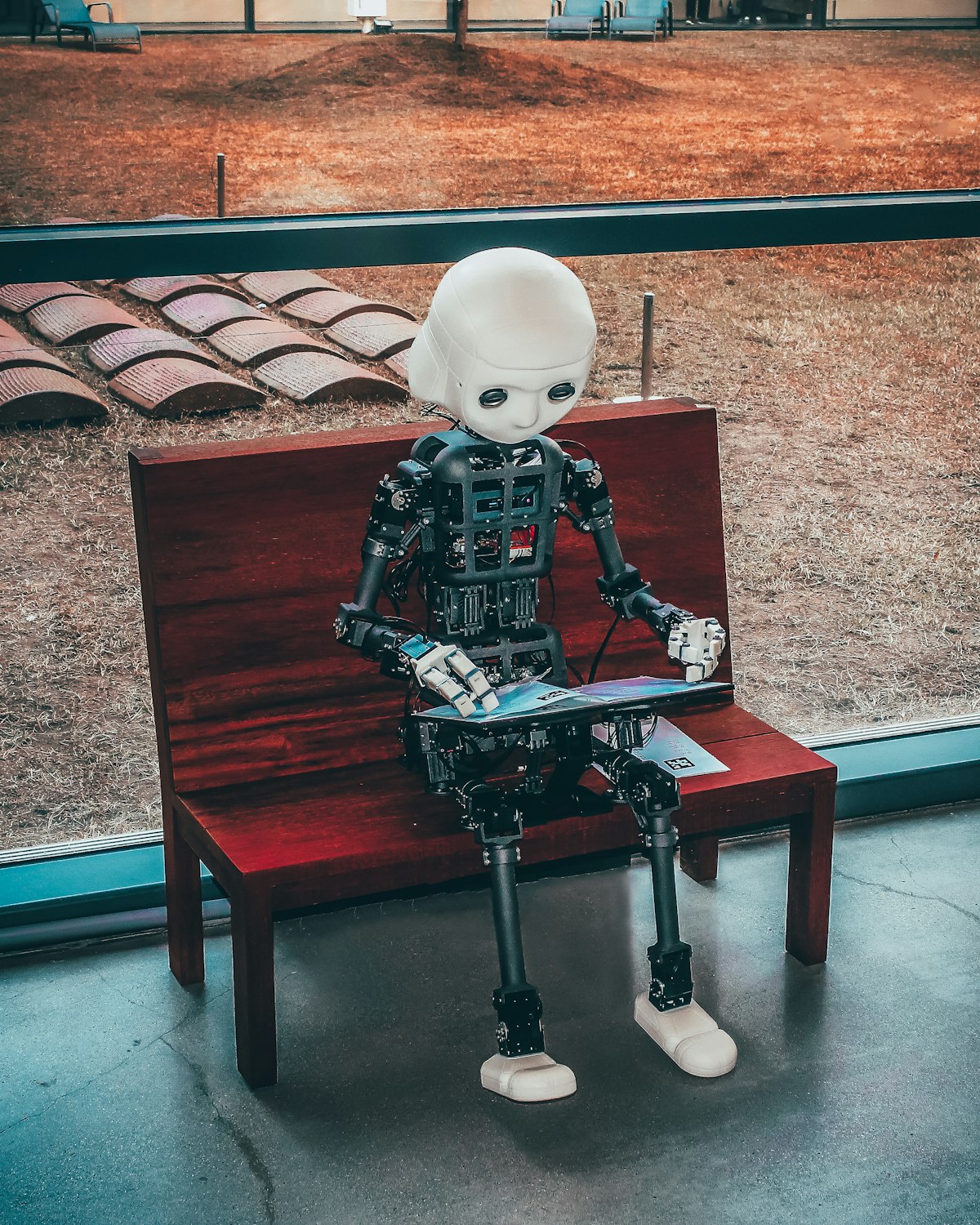
*Photo by Unsplash*
On July 31, 2026, ByteDance dropped Seedance 2.5 — a video generation model that produces 30-second 4K clips in a single pass, accepts 50 multimodal references, and edits finished videos at the timestamp level. Three weeks earlier, it had released Seed Audio 1.0, a music and sound-generation model. And somewhere in Beijing, its hardware team was tearing up the blueprints for its first AI glasses to start over. This is not a company testing AI features. This is a company building an entirely new creative operating system.
If you have been watching ByteDance's AI strategy from the outside, the past six weeks have felt like watching someone assemble a jigsaw puzzle at triple speed. Pieces that seemed scattered — a video model here, an audio model there, a chatbot with 345 million users, a hardware division that just scrapped its first product — are snapping into a picture that is suddenly coherent. And that picture is a full-stack AI platform that spans text, image, audio, video, and physical hardware, all feeding into the same creative engine.
This article unpacks what ByteDance has built, what it just announced, and why the combination of Seedance 2.5, Seed Audio 1.0, and the Doubao ecosystem matters more than any individual product. Because the real story is not about a better video generator. It is about what happens when the world's most experienced short-video company trains its entire organizational muscle on generative AI.
The Announcement Cascade: Six Weeks That Changed Everything
ByteDance's recent AI product releases have come in a rapid sequence that looks deliberate — and probably is.
On June 23, 2026, at the Volcano Engine FORCE conference in Beijing, ByteDance previewed Seedance 2.5 to an enterprise audience. The model was not yet publicly available, but the specs were striking enough to command immediate attention: 30 seconds of video per generation, up from Seedance 2.0's 15-second ceiling. Native 4K resolution with 10-bit color. Support for 50 mixed multimodal references in a single call. And a region-editing mode that lets creators modify specific elements of a finished clip without regenerating the whole thing.
On July 20, 2026, ByteDance released Seed Audio 1.0, a foundation model for music and sound generation. The model supports text-to-audio, audio continuation, and sound-effect generation — capabilities designed to slot directly into the workflow that Seedance 2.5 was already targeting.
On July 31, 2026, Seedance 2.5 went live in ByteDance's consumer apps — Dreamina internationally, Jimeng in China, and CapCut — with third-party API access through Volcano Engine expected in early August. The same day, ByteDance published a technical blog post detailing the model's architecture and capabilities.
Somewhere in between, supply chain sources reported that ByteDance had cancelled its first-generation Doubao AI glasses — a product that had reached the final pre-launch stage with supply chains finalized — and was accelerating two second-generation models for release in the second half of 2026.
Table 1: ByteDance AI Product Releases — July 2026 Timeline
| Date | Product | Category | Key Feature | Status |
|---|---|---|---|---|
| June 23 | Seedance 2.5 (preview) | Video generation | 30s single-pass, 4K, 50 references | Enterprise beta |
| July 20 | Seed Audio 1.0 | Audio/Music | Text-to-audio, sound effects | Public release |
| July 31 | Seedance 2.5 (consumer) | Video generation | Full feature set in Dreamina/Jimeng | Live in apps |
| July 31 | Seedance 2.5 API | Video generation | Volcano Engine third-party access | Expected Aug 2026 |
| H2 2026 (est.) | Doubao AI Glasses Gen 2 | Hardware | Two versions: full-feature and lightweight | In development |
The table reveals a company that is not releasing products in isolation. Each announcement builds on the last. Seed Audio fills the sound gap that Seedance 2.5 leaves open. The glasses provide a capture and interaction layer for the content that both models produce. And Doubao — the chatbot with 345 million monthly active users — provides the distribution and engagement layer that ties everything together.
Seedance 2.5: The Video Model That Thinks Like a Filmmaker
To understand why Seedance 2.5 matters, you need to understand what it is competing against.
As of mid-2026, the AI video generation landscape is crowded. OpenAI's Sora produces high-quality clips but caps at shorter durations and lacks the reference system that Seedance offers. Google's Veo 3 generates synchronized audio but tops out at 1080p. Runway's Gen-4 is popular with creative professionals but requires multiple generation passes for anything longer than 10 seconds. Kling 2.0 from Kuaishou is strong on Chinese-language prompts and physical motion but weaker on narrative coherence.
Seedance 2.5 enters this market with a clear differentiator: it is built by people who understand storytelling at the structural level. ByteDance's entire business is built on holding viewer attention across cuts, transitions, and narrative beats. That DNA is visible in Seedance 2.5's architecture.
The model's headline capability — 30 seconds of coherent video in a single generation — is not just a duration spec. It is a narrative spec. Within those 30 seconds, Seedance 2.5 can organize multiple logically connected shots, manage setup and payoff, and handle scene changes with tempo shifts. ByteDance's own demo shows a singer's backstage-to-stage journey: dressing room, corridor walk, dancer interactions, arena reveal. Each shot follows from the last. The camera movement — handheld gimbal, tracking, pull-back, wide reveal — is choreographed by the model based on the prompt alone.
Table 2: Seedance 2.5 vs. Competing Video Models (Mid-2026)
| Model | Maker | Max Duration | Resolution | References | Audio | Editing | Availability |
|---|---|---|---|---|---|---|---|
| Seedance 2.5 | ByteDance | 30s (single pass) | Native 4K, 10-bit | Up to 50 mixed | Separate (Seed Audio) | Timestamp-level region editing | Live (apps), API soon |
| Sora | OpenAI | ~20s | Up to 1080p | Limited image | None | None | Limited beta |
| Veo 3 | ~15s | Up to 1080p | Style reference only | Native synchronized | Limited | Google Cloud | |
| Gen-4 | Runway | ~16s | Up to 4K (upscaled) | 3 images + 1 video | None | Inpainting | Public API |
| Kling 2.0 | Kuaishou | ~20s | Up to 1080p | Character reference | None | Limited | Public API |
| Dream Machine | Luma AI | ~12s | 1080p | Image-to-video | None | None | Public API |
The table shows that no single model dominates every dimension. But Seedance 2.5's combination of duration, resolution, reference capacity, and editing precision creates a unique profile that targets professional creative workflows rather than casual experimentation.
The reference system is particularly significant. Seedance 2.5 accepts up to 50 mixed inputs — images, video clips, audio clips, style frames, character references, 3D white models — in a single generation call. This is more than triple what Seedance 2.0 supported (15 references) and an order of magnitude beyond most competitors. The practical implication is that brand campaigns, film previsualization, and episodic content production become feasible without the visual drift that plagues most AI video tools.
The editing capabilities are equally targeted at professionals. Timestamp-level control means a creator can specify that a character's hand movement should change at the 4-second mark, or that the camera should cut to a different angle at 12 seconds, without regenerating the entire clip. Green screen editing, camera perspective editing, and reference-based editing are all supported — features that map directly to post-production workflows in advertising and film.
Seed Audio 1.0: Filling the Sound Gap
Seedance 2.5 generates silent video. That is not a limitation — it is an architectural choice. ByteDance separated the audio and video generation stacks, then built Seed Audio 1.0 to handle the sound layer.
Released on July 20, 2026, Seed Audio 1.0 is a foundation model for music, sound effects, and audio continuation. It supports text-to-audio generation (describe a sound, get the audio), audio continuation (extend an existing clip), and sound-effect generation for specific use cases like foley and ambient backgrounds.
The model is designed to integrate with Seedance 2.5's output pipeline. A creator can generate a 30-second video clip, then use Seed Audio to produce synchronized sound — footsteps, environmental ambience, musical score — that matches the visual content. The two models do not share a latent space (unlike some competitors' approaches), but ByteDance has built tooling that time-aligns audio generation with video timestamps.
Table 3: Seed Audio 1.0 Capabilities at Launch
| Capability | Input | Output | Use Case |
|---|---|---|---|
| Text-to-music | Text prompt describing genre, mood, tempo | Full music track (up to 3 min) | Background scores, TikTok soundtracks |
| Text-to-sound-effect | Text prompt (e.g., "rain on concrete") | Isolated sound effect | Foley, ambience, UI sounds |
| Audio continuation | Existing audio clip + text prompt | Extended clip with consistent style | Loop creation, soundtrack extension |
| Style reference | Audio clip + text modifier | New audio in referenced style | Brand sound consistency |
| Tempo matching | BPM specification + mood description | Music at specified tempo | Sync to video cuts |
The strategic logic is clear. ByteDance's core business — TikTok and Douyin — runs on sound as much as visuals. The right audio track can make a video viral. The wrong one can kill it. By building its own audio generation model, ByteDance reduces dependence on licensed music libraries and gives creators a tool that produces original, royalty-free sound designed to work with its video output.
This matters at scale. TikTok's content moderation and copyright teams have spent years navigating the complexities of music licensing across hundreds of markets. AI-generated audio does not eliminate those complexities entirely — there are still questions about training data and similarity to existing works — but it shifts the balance toward content that ByteDance controls end-to-end.
The Hardware Pivot: Why ByteDance Scrapped Its First AI Glasses
The most revealing ByteDance story of July 2026 was not a product launch. It was a product cancellation.
According to multiple supply chain reports, ByteDance cancelled its first-generation Doubao AI glasses in April 2026 — after the product had reached the final pre-launch stage. Supply chains were finalized. The design was locked. The only thing left was the launch event. And ByteDance pulled the plug.
The reason was not technical failure. The glasses worked. They were built on a mature reference design from Goertek, using Qualcomm's AR1 chip and BES2800 audio. They would have been a perfectly competent product — which was exactly the problem.
In the first half of 2026, China's AI glasses market had become crowded. Rokid, Alibaba (Qianwen glasses), Thunderbird, Xiaomi, and Baidu had all released or announced camera-equipped AI glasses. ByteDance's first-generation product, based on a reference design, looked too similar to what was already on the market. The company asked a question that has become central to its product philosophy: why would users choose Doubao over anything else? Without a clear answer, it chose not to launch.
Table 4: China AI Glasses Market — 2026 Competitive Landscape
| Company | Product | Weight | Camera | Display | Chip | Price (est.) | Status |
|---|---|---|---|---|---|---|---|
| Meta | Ray-Ban Meta | ~49g | Yes | No | Qualcomm AR1 | $299 | Global shipping |
| Rokid | Rokid Glasses | ~49g | Yes | No | Qualcomm AR1 | $399 | Shipping |
| Alibaba | Qianwen Glasses | ~45g | Yes | No | Custom | ~$350 | Announced |
| Xiaomi | AI Glasses | ~40g | Yes | No | BES | ~$250 | Rumored |
| Baidu | Xiaodu Glasses | ~48g | Yes | No | Qualcomm | ~$300 | Announced |
| ByteDance | Doubao Gen 1 | ~45g | Yes | No | AR1 + BES | ~$300 | Cancelled |
| ByteDance | Doubao Gen 2 (full) | TBD | Yes | No | AR1 + BES2800 | TBD | H2 2026 |
| ByteDance | Doubao Gen 2 (light) | ~20g | Yes | No | BES2800 | TBD | H2 2026 |
The table reveals a market approaching commoditization at the first-generation level. Everyone is using similar reference designs, similar chips, and similar feature sets. ByteDance's decision to cancel rather than launch suggests a company that is willing to absorb sunk costs to avoid entering a market without differentiation.
The second-generation plan is more interesting. ByteDance is reportedly developing two models: a full-featured version with camera, speaker, and microphone (competing directly with Ray-Ban Meta), and a lightweight version weighing approximately 20 grams that strips the speaker and keeps only the camera and microphone. The manufacturing partner has switched from Goertek to Longcheer Technology. And the chip solution has been upgraded to Qualcomm AR1 plus BES2800.
The lightweight version is the more strategically significant product. At 20 grams, it approaches the weight of ordinary eyeglasses — a threshold that matters for all-day wearability. If ByteDance can deliver a camera-equipped AI wearable that users actually forget they are wearing, it creates a persistent first-person content capture layer that feeds directly into Doubao and, by extension, into TikTok and Douyin.
The Doubao Ecosystem: 345 Million Users and a Thousand-Fold Growth
None of ByteDance's AI products exist in isolation. They all feed into Doubao, the AI assistant that has become ByteDance's central AI platform.
As of Q1 2026, Doubao reported 345 million monthly active users and crossed 100 million daily active users in December 2025 — making it the fastest AI app to reach that milestone in China, and joining Douyin as the only other ByteDance product with 100 million-plus DAUs. The numbers are staggering in context: ChatGPT took significantly longer to reach comparable DAU levels, and Doubao achieved this in a market where Baidu's Ernie Bot, Alibaba's Tongyi Qianwen, and DeepSeek's assistant were all competing aggressively.
Table 5: Doubao Growth Metrics (2024–2026)
| Metric | May 2024 | Dec 2025 | Mar 2026 | Growth Rate |
|---|---|---|---|---|
| Daily token calls | 12 billion | 1.2 trillion | 120 trillion | 1,000x in 22 months |
| Monthly active users | ~50 million | ~280 million | 345 million | 590% |
| Daily active users | ~15 million | 100 million (crossed Dec 2025) | 100 million+ | 567% |
| Spring Festival interactions | N/A | 1.9 billion (single night) | N/A | N/A |
| Subscription price (standard) | Free | Free | ¥68/month (~$10) | N/A |
The token growth figure is particularly revealing. Doubao's daily token calls grew from 12 billion in May 2024 to 120 trillion by March 2026 — a 1,000-fold increase in less than two years. This is not just user growth; it is engagement deepening. Users are not just opening the app; they are having longer, more complex interactions.
Doubao's monetization strategy has also evolved. The app launched paid tiers in late June 2026: a standard subscription at ¥68 per month (~$10), an enhanced tier at ¥200 per month (~$28), and a professional tier at ¥500 per month (~$69). The pricing is aggressive by Chinese standards — Baidu's Ernie Bot premium tier is cheaper — but ByteDance is betting that Doubao's distribution advantage through TikTok and Douyin will sustain conversion rates.
The ecosystem integration is where Doubao becomes strategically powerful. ByteDance has been negotiating with major internet platforms — ride-hailing, food delivery, ticketing — to give Doubao system-level access for task completion. The vision is a true AI assistant that can not only answer questions but also execute actions across the Chinese digital economy. When combined with the Doubao phone (a second-generation device developed with ZTE's Nubia brand, expected in Q2 2026), the glasses, and the earbuds, Doubao becomes an interaction layer that transcends any single device.
The Competitive Landscape: Why ByteDance's Full-Stack Approach Matters
ByteDance is not the only Chinese tech giant building generative AI. But it is the only one building generative AI with this particular combination of capabilities and distribution.
Alibaba's Qwen family of models is technically competitive — Qwen 3.8, announced in July 2026, boasts 2.4 trillion parameters — and Alibaba has the cloud infrastructure to serve models at scale. But Alibaba's consumer distribution is weaker. It does not own a daily-use app with 345 million users.
Baidu has Ernie Bot and deep search integration, plus the Kunlunxin chip story. But Baidu's content creation tools are less mature than ByteDance's, and its video generation capabilities lag significantly.
Tencent's Hunyuan model is strong, and Tencent's WeChat distribution is unmatched. But Tencent's AI strategy has historically been more cautious, and the recent merger of its Hunyuan LLM and multimodal departments into a single Foundation Model Department (reported July 23, 2026) suggests organizational restructuring that may take time to produce results.
DeepSeek is the research leader. Its R1 reasoning model and the newer DeepSeek Agent (~284B parameters) are benchmark darlings. But DeepSeek is a research lab, not a consumer products company. It builds models; ByteDance builds ecosystems.
Table 6: China AI Platform Comparison — Full-Stack Maturity (August 2026)
| Company | Text/Chat | Image Gen | Video Gen | Audio Gen | Hardware | Consumer Distribution | Cloud Platform |
|---|---|---|---|---|---|---|---|
| ByteDance | ✅ Doubao | ✅ Seedream | ✅ Seedance 2.5 | ✅ Seed Audio 1.0 | 🔄 Glasses, phone, earbuds | ✅ 345M MAU (Doubao) + TikTok | ✅ Volcano Engine |
| Alibaba | ✅ Qwen 3.8 | ✅ Tongyi Wanxiang | ⚠️ Limited | ✅ Qwen-Audio | ❌ None | ⚠️ Alipay, Taobao | ✅ Alibaba Cloud |
| Baidu | ✅ Ernie Bot | ⚠️ Basic | ❌ Weak | ❌ None | ⚠️ Xiaodu devices | ⚠️ Search + maps | ✅ Baidu Cloud |
| Tencent | ✅ Hunyuan | ⚠️ Limited | ⚠️ Limited | ❌ None | ❌ None | ✅ WeChat (1B+ MAU) | ✅ Tencent Cloud |
| DeepSeek | ✅ DeepSeek Agent | ❌ None | ❌ None | ❌ None | 🔄 Inference chips (rumored) | ❌ Minimal | ⚠️ Limited |
The table shows that ByteDance is the only company with green checkmarks across text, image, video, audio, and cloud — plus active hardware development. This is not accidental. ByteDance's organizational structure, built to iterate rapidly on content formats, happens to map well onto the generative AI landscape where each modality requires similar creative intuition.
The Global Angle: Exporting China's Creative AI
ByteDance's AI strategy is not confined to China. The company's international products — TikTok, CapCut, and Dreamina — give it a distribution channel that no other Chinese AI company can match.
CapCut, ByteDance's video editing app, already has hundreds of millions of users globally. When Seedance 2.5 is integrated into CapCut's feature set — which is already happening — it gives creators worldwide access to AI video generation without requiring them to sign up for a separate service. The same is true for Dreamina, ByteDance's international AI creative platform.
This creates a unique dynamic. While US export controls have restricted Chinese AI companies' access to advanced chips, they have not restricted Chinese AI apps from reaching global consumers. ByteDance's products are available on the App Store and Google Play in most countries. The company is effectively exporting China's generative AI capabilities through consumer apps, even as the underlying model training remains subject to supply constraints.
The implications are significant for creative industries. A filmmaker in Nigeria, a marketer in Brazil, or a TikTok creator in Indonesia can access Seedance 2.5's capabilities through CapCut without ever knowing the model was developed in Beijing. The geopolitical layer becomes invisible; the creative utility becomes universal.
The Bottom Line: Building the Creative Operating System
ByteDance's full-stack AI strategy is best understood not as a collection of products but as an operating system for creative production. At the foundation are the models: Seedance for video, Seed Audio for sound, Seedream for images, and Doubao for text and reasoning. At the interaction layer are the devices: the phone, the glasses, the earbuds, and the apps that run on them. And at the distribution layer are the platforms: TikTok, Douyin, CapCut, and Dreamina, which collectively reach over a billion users.
This is a different architecture from OpenAI's (model-first, API-centric), Google's (research-first, cloud-centric), or Meta's (open-source-first, community-centric). ByteDance is content-first, consumer-centric, and vertically integrated in a way that no other AI company — Chinese or American — has attempted.
The risks are real. The hardware pivot could fail. The glasses could end up being another PICO — an expensive acquisition ($9 billion) that never found product-market fit. The AI models could face copyright disputes, as Seedance 2.0 did earlier in 2026 when ByteDance paused rollout in some regions after studio complaints. The valuation of Doubao as a standalone business remains unproven, and ByteDance's overall net profit reportedly declined over 70% in 2025 as AI investment surged.
But the strategic logic is compelling. In a world where AI-generated content is becoming the default, the company that controls the tools, the distribution, and the audience has structural advantages that model-only companies cannot replicate. ByteDance is not just building better AI models. It is building the entire pipeline that turns AI outputs into human attention.
And if there is one thing ByteDance understands better than any company on Earth, it is human attention.
*Image: A creative workspace where AI-generated video, audio, and imagery come together — the future of content production that ByteDance is building.*

*Photo by Unsplash*
Social Media Voices: What People Are Saying
Weibo — @数码科技前沿 (Digital Tech Frontline)
"Seedance 2.5的30秒生成+时间轴编辑,这已经不是玩具了,是正经的生产力工具。剪映如果集成这个,国内短视频制作的门槛会再降一个量级。字节这是要把创意生产的每一个环节都吃掉。"
>
"Seedance 2.5's 30-second generation plus timeline editing — this isn't a toy anymore, it's a real productivity tool. If CapCut integrates this, the barrier for short-video production in China will drop another level. ByteDance is trying to eat every link in the creative production chain."
Xiaohongshu — @AI创作实验室 (AI Creation Lab)
"试用了Seedance 2.5三天,最大的感受是参考图系统。以前做品牌视频最怕人物漂移,现在可以锁死50张参考图,角色一致性终于能看了。但4K渲染时间还是太长,等API开放了应该会有优化。"
>
"Tested Seedance 2.5 for three days. The biggest impression is the reference system. Brand videos used to fear character drift the most; now you can lock in 50 reference images, and character consistency finally looks decent. But 4K render times are still too long — should improve when the API opens."
Twitter/X — @ai_video_researcher
"ByteDance's Seedance 2.5 + Seed Audio combo is the most credible threat to Runway's enterprise business I've seen. Not because the tech is better (it's comparable), but because ByteDance owns the distribution. CapCut has 500M+ users. Runway has... a website."
Zhihu — @产品经理老张 (Product Manager Lao Zhang)
"取消第一代眼镜是个正确的决定。参考设计做出来的产品没有任何壁垒,上市就是陪跑。但第二代如果能做到20克,那就是另一个故事了。问题是:去掉扬声器只剩摄像头和麦克风,用户为什么要戴这个而不是AirPods+手机?"
>
"Cancelling the first-generation glasses was the right call. A reference-design product has no moat — launch it and you're just running alongside everyone else. But if the second generation actually hits 20 grams, that's a different story. The question is: with the speaker removed and only camera and mic left, why would users wear this instead of AirPods plus phone?"
YouTube Comments — @CreativeDirectorAsia
"I've been using Dreamina for client pitches since Seedance 2.0. The 2.5 upgrade means I can generate a full 30-second concept spot in one pass instead of stitching 4-5 clips. For agencies working on Chinese market campaigns, this cuts pre-pro time by half. The real test is whether Volcano Engine's API pricing is competitive with Runway."
Douban — @影音工作者 (Film and Audio Worker)
"Seed Audio目前生成的音乐还是缺'灵魂',做BGM可以,做主音轨不行。但结合Seedance做视频配乐,恰好不需要灵魂,需要的就是贴合画面的氛围。字节的产品经理很懂场景化。"
>
"Seed Audio's generated music still lacks 'soul' — fine for background music, not for main tracks. But combined with Seedance for video scoring, you don't need soul; you need atmosphere that fits the picture. ByteDance's product managers really understand scenario-based design."
Related Reading
- Apple Intelligence Approved for China: Why Alibaba's Qwen and Baidu Are the Real Winners
- Huawei's Atlas 950 SuperPod: The Architecture of China's AI Independence
*Published on August 5, 2026. Data current as of early August 2026. Product specifications based on ByteDance official announcements and technical blog posts. Market data sourced from The Information, 36Kr, and industry reports.*
Editor at AI in China. Tracking Chinese AI companies, funding rounds, and the technologies reshaping global tech. More about me.