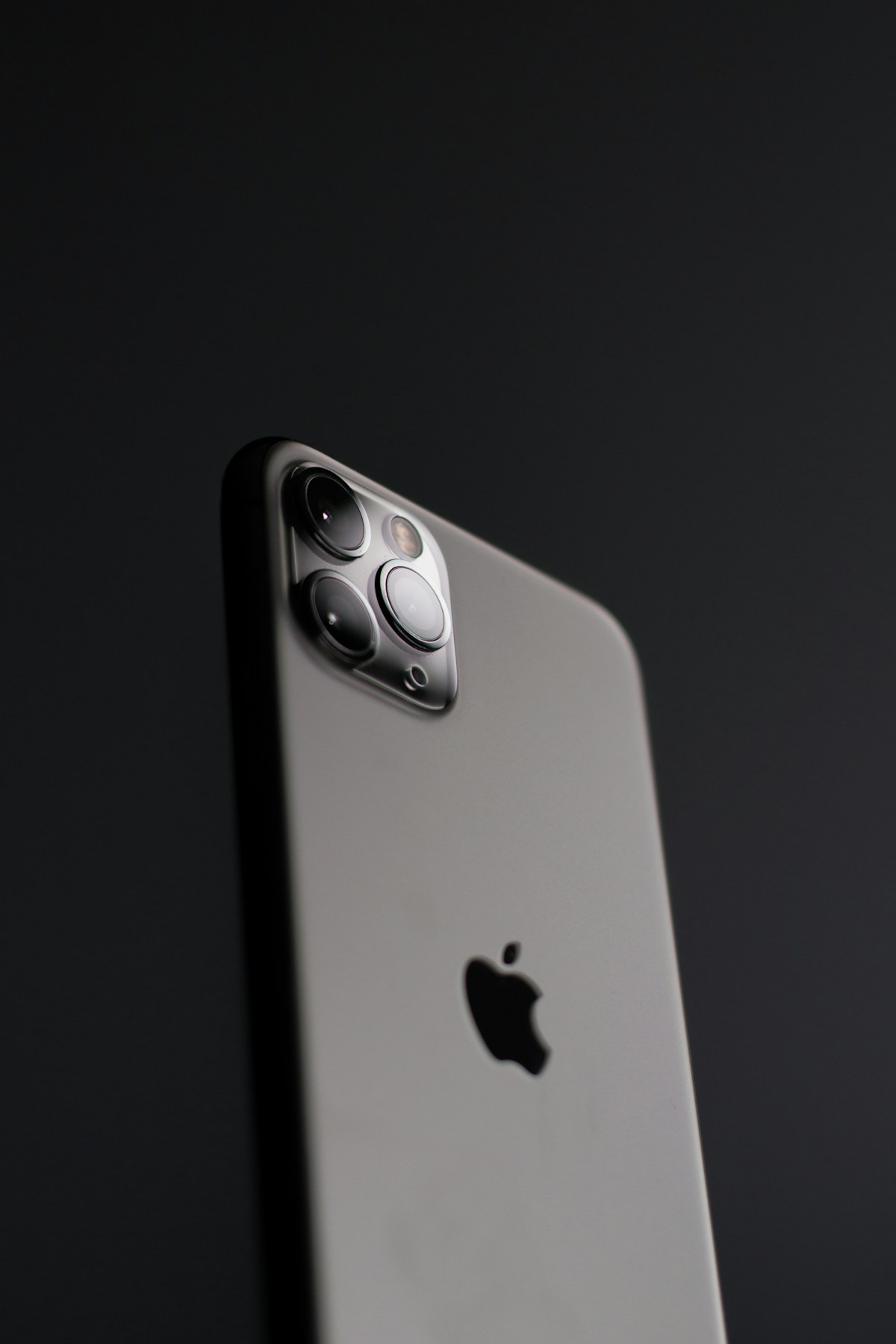
On the morning of November 4, 2026, developers in Beijing, Shanghai, and Shenzhen opened their iPhones to something no user in mainland China had ever seen: an Apple Intelligence setup screen asking whether they would like to enable Qwen.
Not ChatGPT. Not Gemini. Qwen — the open-source large language model built by Alibaba, the Hangzhou e-commerce giant that most iPhone owners outside China know mainly as "the company behind AliExpress."
Twenty-one months earlier, in February 2025, Alibaba chairman Joe Tsai had let slip during an earnings call that Apple would be using Alibaba's AI on its phones in China. The remark went largely unnoticed at the time — another executive comment in a market drowning in AI announcements. But it was the first public signal of what would become the most significant AI partnership between an American and a Chinese company in the history of the smartphone industry.
The feature list arriving this morning in the developer beta is extensive. Through Siri, Chinese users can now ask Qwen to answer questions, summarize documents, and analyze photos. "Compose with Qwen" generates original text and images inside Apple's Writing Tools. In Visual Intelligence, users can point their camera at anything — a landmark, a plant, a restaurant menu — and tap "Ask Qwen."
The full consumer rollout arrives in December with iOS 27.3. But today, November 4, the doors opened. And the story of how they got here says more about the new geometry of global AI power than any benchmark or funding round.
The Long Wait: Apple's China AI Problem
To understand why this deal matters, you have to understand the problem it solves. Apple Intelligence launched globally in October 2024 as the centerpiece of the iPhone 16 era. Apple CEO Tim Cook called it "a new chapter" in personal computing. The system combined on-device models with Private Cloud Compute, promising AI that was both powerful and private.
But there was a catch: none of it worked in China.
China's regulatory framework for generative AI requires that all AI services undergo filing with the Cyberspace Administration of China (CAC) before public deployment. Foreign AI models — including the OpenAI models that powered Siri's enhanced capabilities internationally — could not simply be switched on for Chinese users. The regulatory wall was absolute: no filing, no launch.
For Apple, this was not a minor inconvenience. Greater China generated $20.5 billion in revenue in Q2 2026 alone, up 28% year-over-year. Apple had just regained the No. 2 smartphone position in China, driven partly by aggressive pricing during the mid-year shopping festival. Every month without AI features on Chinese iPhones was a month when competitors could point to a gap that no amount of hardware polish could fill.
And competitors were not sitting still. Huawei had integrated its Pangu models into HarmonyOS. Xiaomi was shipping MiMo-powered features across its premium lineup. Oppo, Vivo, and Honor had all announced their own AI integrations. In a market where "AI phone" had become the primary marketing differentiator, Apple's silence was deafening.
| Timeline Point | Date | Event |
|---|---|---|
| Apple Intelligence global launch | October 2024 | US and international rollout begins; China excluded |
| Joe Tsai's revelation | February 2025 | Alibaba chairman says Apple will use Alibaba AI on Chinese iPhones |
| Regulatory mishap | March 2026 | Apple Intelligence briefly appears on Chinese iPhones without clearance; pulled |
| CAC filing completed | July 8, 2026 | Apple Intelligence among seven on-device generative AI services filed |
| Official approval announced | July 15-16, 2026 | CAC approves Apple Intelligence with Alibaba and Baidu; TechCrunch breaks the story |
| Tim Cook confirms | October 15, 2026 | Apple CEO announces in Shanghai that test features are coming |
| Network access permits | September 29, 2026 | MIIT grants permits for Apple Intelligence, Qwen, and Tongyi Wanxiang on specific iPhone models |
| Official announcement | October 31, 2026 | Alibaba and Apple jointly confirm the partnership |
| Developer beta opens | November 4, 2026 | Qwen-powered Apple Intelligence available for testing in iOS developer beta |
| Public rollout | December 2026 | Full consumer launch with iOS 27.3 |
February 2025: The Comment That Started It All
Joe Tsai did not mean to make news. During Alibaba's February 2025 earnings call, the chairman casually mentioned that Apple had selected Alibaba's AI models to power features on Chinese iPhones. The comment was brief, almost parenthetical. But it set off a chain of events that would take nearly two years to resolve.
At the time, Alibaba's AI credentials were solid but not dominant. The Qwen model family — short for Tongyi Qianwen (通义千问), roughly translated as "truth from a thousand questions" — had been gaining traction in the open-source community since late 2023. Qwen 2.5 had impressed developers with its multilingual capabilities. But the idea that Apple, the world's most valuable company and famously protective of its technology stack, would build its China AI experience around a Chinese model was still surprising.
Apple's calculus was pragmatic. China required local models. Alibaba had the scale, the regulatory standing, and — critically — the cloud infrastructure to serve hundreds of millions of iPhone users. Baidu was also in the mix, reportedly working on search and Siri-related features. But Alibaba would be the primary partner.
What Tsai could not have known was how much regulatory, technical, and political work still lay ahead.
The Regulatory Maze
China's AI governance framework is deliberately thorough. Any company deploying generative AI to consumers must navigate a multi-stage process: model filing with the CAC, content security assessments, network access permits from the Ministry of Industry and Information Technology (MIIT), and ongoing compliance monitoring. For a foreign company like Apple, each stage required working through a Chinese partner who understood the system.
The process was not smooth. In March 2026, Apple Intelligence briefly appeared on Chinese iPhones without complete regulatory clearance — a misstep that forced a hasty withdrawal. The incident underscored how high-stakes and tightly controlled the approval process was. Apple's global engineering teams, accustomed to setting their own deployment timelines, had to adapt to a regulatory rhythm dictated from Beijing.
July brought the breakthrough. On July 8, Apple Intelligence completed its CAC filing. On July 15, the regulator announced approval — and TechCrunch broke the story the next day, confirming both Alibaba and Baidu's involvement. The filing covered four Apple operating system families: iOS for iPhone, iPadOS for iPad, macOS for Mac, and visionOS for Vision Pro.
But a filing was not a launch. Apple still needed network access permits from MIIT — the technical authorization that would allow specific iPhone models to connect to AI services. Those permits arrived on September 29, listing Apple Intelligence alongside Alibaba's Qwen and Tongyi Wanxiang models on the iPhone Duo, iPhone 18 Pro, and earlier supported models.
| Regulatory Stage | Authority | Date | What It Authorized |
|---|---|---|---|
| Model filing | CAC | July 8, 2026 | Formal submission of AI model details for review |
| Service approval | CAC | July 15, 2026 | Apple Intelligence approved for deployment in China |
| Network access permits | MIIT | September 29, 2026 | Specific iPhone models authorized to connect to AI services |
| Developer beta | Apple | November 4, 2026 | Testing begins with iOS developer beta |
| Consumer launch | Apple | December 2026 | iOS 27.3 public release with full feature set |
The Architecture: A Bifurcated Intelligence
The Apple Intelligence that Chinese users will experience is not the same product their counterparts in Tokyo, London, or New York use. It is a parallel system, architecturally similar but powered by fundamentally different models.
Apple's global Apple Intelligence runs on the company's own on-device models, supplemented by cloud-based processing and — for Siri's enhanced capabilities — OpenAI's GPT models. The Chinese version replaces the cloud layer with Alibaba's Qwen and Tongyi Wanxiang (通义万相), Alibaba's image and video generation model. Baidu handles search integration and certain Siri-related features.
The result is what technologists call a "bifurcated stack": the same iPhone, running the same iOS, but routing AI requests through entirely different infrastructure depending on where the device is registered.
For Apple, this required building custom guardrails with Alibaba, including a process for the Chinese government to approve ongoing model updates. The company has been explicit about privacy: users must give consent before any question, document, or image is sent to Qwen. Alibaba has committed that requests and responses through the integration will not be used to train its models.
The feature set launching in December is substantial but not complete. Users will get Writing Tools, notification summaries, Genmoji, Live Translation, Visual Intelligence with "Ask Qwen," and document/photo analysis through Siri. Notably absent: the new Siri AI powered by Google's Gemini that launched internationally this year, Image Playground, and several advanced text-generation capabilities. Apple executives have reportedly expressed limited optimism about bringing the new Siri to China in the near term.
| Feature | Global Version | China Version | Model Provider |
|---|---|---|---|
| Writing Tools | Apple models + OpenAI | Apple models + Qwen | Alibaba Qwen |
| Siri enhanced knowledge | OpenAI GPT | Qwen | Alibaba Qwen |
| Visual Intelligence "Ask" | Apple + Google Gemini | "Ask Qwen" | Alibaba Qwen |
| Image generation | Apple Image Playground | Tongyi Wanxiang | Alibaba |
| Search integration | Apple/Google | Baidu | Baidu |
| Notification summaries | Apple models | Apple models + Qwen | Alibaba Qwen |
| Live Translation | Apple models | Apple models + Qwen | Alibaba Qwen |
| New Siri AI | Google Gemini | Not available at launch | — |
| Genmoji | Apple models | Apple models | On-device |
Why Qwen Won
Apple did not choose Alibaba by default. The company reportedly held discussions with multiple Chinese AI companies, including Baidu, DeepSeek, and ByteDance, before settling on Alibaba as its primary partner. Several factors tipped the balance.
Scale and reliability. Alibaba Cloud operates one of the world's largest cloud computing infrastructures. Serving AI requests from hundreds of millions of iPhone users is not a task for a startup, however impressive its models. Alibaba has the data centers, the engineering teams, and — crucially — the enterprise experience to handle consumer-scale AI deployment.
Open-source credibility. Qwen is the most downloaded open-source AI model family in the world, with over 3 billion cumulative downloads as of August 2026 — more than Google and Meta's open models combined. Over 300,000 derivative models have been built on Qwen by outside developers. This open-source foundation gives Apple transparency into the model's architecture and training, something that would be impossible with a fully closed competitor.
Regulatory track record. Alibaba has been operating AI services in China for years and understands the compliance landscape intimately. The company's models have passed multiple rounds of CAC review. For Apple, which had already experienced one regulatory misstep, partnering with a company that knew the terrain was essential.
Commercial alignment. Alibaba runs one of the world's largest e-commerce platforms through Taobao and Tmall. The integration of Qwen into Apple Intelligence creates potential synergies: imagine asking Siri to compare prices on Taobao, or using Visual Intelligence to identify a product and find it on Alibaba's platforms. Neither company has announced such features, but the commercial logic is hard to ignore.
| Candidate | Strengths | Why Apple Passed / Chose |
|---|---|---|
| Alibaba (Qwen) | Scale, cloud infrastructure, open-source credibility, regulatory experience | Selected as primary partner |
| Baidu | Search integration, Ernie model family, long Apple relationship | Involved for search and Siri features |
| DeepSeek | Frontier model performance, developer enthusiasm | Less proven at consumer scale; no cloud infrastructure comparable to Alibaba |
| ByteDance | Massive consumer reach, Doubao model | Regulatory scrutiny; potential conflict with Apple's App Store terms |
The Stakes: What This Deal Actually Means
The Apple-Alibaba partnership is not just a product launch. It is a signal — arguably the loudest yet — that the global AI industry has entered a new phase: one where Chinese AI models are not merely competitive but are the default choice for the world's most important consumer platform.
Consider the numbers. Apple's Greater China revenue hit $20.5 billion in Q2 2026, representing hundreds of millions of active devices. Every one of those devices that updates to iOS 27.3 in December will have Qwen embedded at the system level. Users may never know the name — Apple Intelligence is the brand, not Qwen — but the model powering their writing assistance, their photo analysis, and their Siri answers will be Chinese.
This is precisely the dynamic that American policymakers have feared. When U.S. export controls were first imposed on advanced AI chips in 2022, the assumption was that Chinese labs would fall behind without access to frontier hardware. Instead, Chinese companies adapted. They built efficient models that run on less compute. They open-sourced their weights, building global developer ecosystems. And now, they have secured the most valuable distribution channel in consumer technology: the iPhone.
The strategic implications cut both ways. For China, the deal validates years of investment in AI self-sufficiency. For Apple, it secures access to its most important growth market. For the United States, it raises uncomfortable questions about whether export controls have accelerated rather than slowed China's AI ecosystem.
*Every Chinese iPhone updating to iOS 27.3 in December will have Qwen embedded at the system level — a distribution channel no AI lab could buy.*
What the Beta Reveals
Early developer reactions to the November 4 beta have been cautiously positive. The integration is deeper than many expected — Qwen is not a bolt-on chatbot but a system-level capability woven into Siri, Writing Tools, and Visual Intelligence. Users can invoke Qwen's knowledge through Siri without opening any app. "Compose with Qwen" appears as a native option in the share sheet and writing interfaces.
The privacy architecture has also drawn attention. Apple requires explicit user consent before sending any content to Qwen. The consent prompt appears the first time a user attempts a Qwen-powered feature, explaining that their request will be processed by Alibaba's servers. Users can decline and continue using only the on-device Apple Intelligence features.
One notable detail: Qwen-powered requests are not used to train Alibaba's models, according to the company's commitments. This addresses a key concern about data flowing from Apple devices to a Chinese company's servers. Whether this commitment will satisfy regulators and privacy advocates in the US and Europe remains to be seen.
Chinese social media has been quick to react:
@科技观察者 (Weibo): "等了两年,苹果AI终于来中国了。用的是通义千问,不是GPT。这说明中国的大模型已经可以服务全球最挑剔的用户了。" *(Translation: "Waited two years, Apple AI is finally here. It's using Tongyi Qwen, not GPT. This shows China's large models are ready to serve the world's most demanding users.")*
@DigitalDiplomat (X/Twitter): "The Apple-Qwen deal is the most important AI partnership of 2026, and nobody in Silicon Valley is talking about it. A Chinese model is now the system-level AI for hundreds of millions of iPhones. That's not a partnership — that's a concession."
@AI产品经理论 (Zhihu): "很多人没意识到这意味着什么。苹果选合作伙伴的标准是全球最严格的。选Qwen不是因为便宜,而是因为Qwen在中文理解、多轮对话、图像生成上的综合能力确实是最好的。这是技术实力的证明。" *(Translation: "Many people don't realize what this means. Apple's partner selection standards are the strictest in the world. Choosing Qwen isn't about cost — it's because Qwen's combined capabilities in Chinese understanding, multi-turn dialogue, and image generation are genuinely the best. This is proof of technical strength.")*
@SarahChen_Tech (X/Twitter): "Everyone focused on the model. But the real story is the cloud deal. Alibaba Cloud just became the default AI backend for Apple's most important growth market. That's worth way more than any benchmark win."
@手机数码君 (Bilibili): "实测了一下开发者版的Apple Intelligence + 通义千问,写作工具确实好用,Siri的回答也比以前智能多了。但缺少新Siri还是遗憾。希望明年能加上。" *(Translation: "Tested the developer version of Apple Intelligence + Tongyi Qwen. The writing tools are genuinely useful, and Siri's answers are much smarter than before. But the missing new Siri is a shame. Hope it's added next year.")*
@GeopoliticsNerd (Reddit r/ChinaAI): "The bifurcated AI stack is now reality. Same iPhone, different intelligence depending on where you bought it. We're heading toward a world where 'AI' means fundamentally different things in different jurisdictions. The implications for AI safety, alignment, and governance are enormous."
What Comes Next
The December iOS 27.3 launch will be the real test. Apple Intelligence has been available internationally for over two years; Chinese users have been waiting the entire time. The initial reception will depend on whether the Qwen-powered features feel competitive with what Huawei, Xiaomi, and other domestic manufacturers already offer on their devices.
Several questions remain unanswered. Will Apple eventually bring the new Siri AI to China, and if so, which model will power it? How will ongoing model updates be handled, given the government approval process for each update? Will commercial integrations with Alibaba's e-commerce platforms materialize, and how will that affect the user experience?
For Alibaba, the partnership is a validation of its open-source strategy and a powerful argument for enterprise customers. "If Qwen is good enough for Apple," the pitch goes, "it's good enough for your company." For China's broader AI ecosystem, the deal demonstrates that regulatory compliance and technical excellence can coexist — and that Chinese models are ready for the world's most demanding consumer platform.
The next milestone arrives in mid-December, when iOS 27.3 ships to the public. Apple has not confirmed an exact date. But for the developers testing Qwen-powered features today, the wait is already over.
Twenty-one months ago, Joe Tsai said Apple would use Alibaba's AI. Today, it finally does. The journey from that offhand comment to this morning's developer beta is not just a story about one partnership. It is the story of how China's AI industry went from being locked out of the world's most important consumer devices to being the intelligence inside them.

*The Apple-Qwen partnership signals a new phase in global AI: one where Chinese models are the default choice for the world's most important consumer platform.*