Alibaba's Zhenwu V900: The Chip That Wants to Replace Nvidia — Inside China's Most Ambitious Silicon Bet

*On September 22, 2026, Alibaba unveiled the Zhenwu V900 — a chip that CEO Eddie Wu called "the most powerful AI chip in China today." The claims are bold, the timeline is aggressive, and the stakes could not be higher. (Image: Unsplash)*
The Unveiling
The Apsara Conference is Alibaba's annual showcase, held each September on the company's Hangzhou campus. In previous years, it has served as the launchpad for cloud region expansions, incremental model updates, and the occasional consumer product. On September 22, 2026, it became something else entirely: the stage for the most comprehensive AI infrastructure declaration any Chinese company has made to date.
Alibaba Group CEO Eddie Wu took the keynote stage and, over the course of ninety minutes, laid out a three-part strategy that touches every layer of the AI stack:
| Announcement | What Was Said | What It Actually Means |
|---|---|---|
| Zhenwu V900 AI chip | "China's most powerful AI chip," 3x performance of the M890 | A direct domestic alternative to Nvidia's export-compliant offerings, designed in-house by T-Head |
| Qwen model roadmap | Qwen4 in training; Qwen4.5/Qwen5 targeting 5–10 trillion parameters | Roughly 2–4x the parameter count of today's Qwen 3.8 Max (~2.4T), requiring entirely new training infrastructure |
| 20 GW data center target | Global Alibaba Cloud capacity to surpass 20 gigawatts by 2032 | A physical buildout comparable to some national power grids — Nvidia, for context, recently outlined 2 GW in Australia by 2027 |
*The three pillars of Alibaba's September 22 announcement, and what each one signals beyond the headline. (Sources: Alibaba, Bloomberg, CNBC, TechRepublic)*
The timing was not accidental. Chinese President Xi Jinping arrived in Washington days later for a state visit with President Trump, with AI competition at the top of the agenda. American AI leaders, including Anthropic CEO Dario Amodei, have spent the weeks preceding the summit warning that China's AI progress poses a strategic threat. Alibaba's response was not a white paper or a diplomatic statement. It was a chip, a model roadmap, and a power budget.
Alibaba's Hong Kong-listed shares rose 5.1% to a one-month high on the day of the announcement. The U.S.-listed ADRs climbed roughly 3% overnight, reaching $118.50 — still 38% below the 52-week high of $192.67, but a decisive vote of confidence from a market that has spent two years punishing Chinese tech. BofA Securities maintained its Buy rating and $175 price target.
The question that matters is not whether Alibaba's announcements were impressive — they were. The question is whether the company can deliver. To answer that, you have to go layer by layer through the stack, from silicon to software to concrete and steel.
The Chip: Anatomy of the V900
The Zhenwu V900 is a training-and-inference unified AI accelerator developed by T-Head, Alibaba's semiconductor division. It is the third generation of the Zhenwu line and the largest single performance jump the series has seen.
The headline specifications, as disclosed by Alibaba:
| Specification | Zhenwu V900 | Predecessor: Zhenwu M890 | Context |
|---|---|---|---|
| Memory (HBM) | 216 GB | 144 GB | 50% increase in on-chip memory capacity |
| Inter-chip interconnect bandwidth | 1,200 GB/s | 800 GB/s | Critical for scaling multi-chip clusters |
| Native precision support | FP8, FP4 | FP8, FP4 | FP4 support significantly reduces inference cost |
| Performance vs. predecessor | 3x the M890 | 3x the 810E | Compounding generational gains |
| Maximum cluster size | 500,000 accelerators | — | Enables training at trillion-parameter scale |
| Mass production | Q1 2027 | Already shipping | V900 servers (Panjiu) available commercially in ~6 months |
| Next generation | J900, Q3 2027–Q3 2028 | — | New in-house parallel computing architecture |
*Zhenwu V900 specifications as disclosed by Alibaba. All figures are vendor-reported; no independent benchmark data against Nvidia hardware has been published. (Sources: Alibaba, TechWeb, TrendForce, Reuters)*
The architecture is designed around a self-developed parallel computing framework, with an in-house ICN (Inter-Chip Network) Switch enabling full-bandwidth interconnect across thousands of cards. The Panjiu supernode server integrates the V900, ICN Switch, Panmai smart NIC, and Zhenyue SSD controller into a single system. Combined with Alibaba Cloud's upgraded network architecture, a single AI cluster can scale to 500,000 accelerators.
For context, Nvidia's NVL72 systems link 72 GPUs in a single rack. Meta's largest reported training clusters run in the tens of thousands of GPUs. A 500,000-accelerator cluster, if it works as described, would be among the largest AI training systems on Earth.
The predecessor M890 already runs production workloads at scale. Supernodes built on the M890 have trained models exceeding 2 trillion parameters, including Alibaba's own Qwen 3.8 and Moonshot AI's Kimi K3. As of June 2026, the Zhenwu series had shipped over 560,000 cumulative units across more than 650 enterprise customers in over 20 industries — automotive, finance, energy, and manufacturing among them.
One critical detail: the M890 was reported to deliver roughly 3x the performance of Nvidia's H20, the most capable AI chip Nvidia is permitted to sell in China under U.S. export rules. If the V900's claimed 3x improvement over the M890 holds, Alibaba's silicon would be operating at a performance tier that no export-compliant Nvidia product can reach — though it remains well short of Nvidia's flagship B200/GB300 systems available outside China.

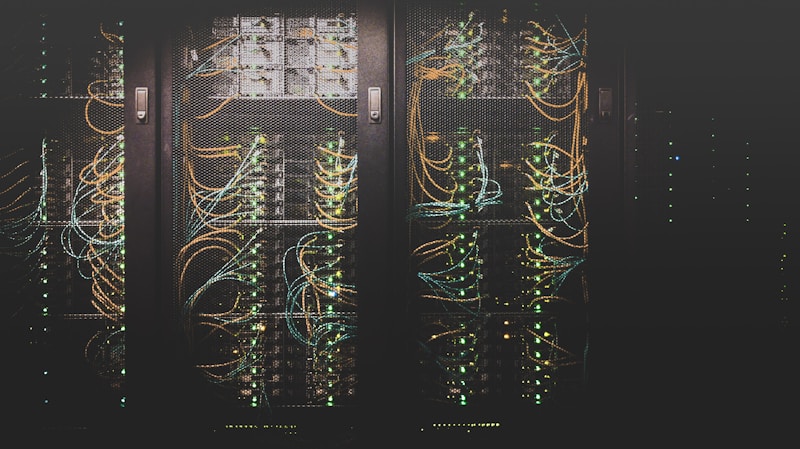
*The V900's 500,000-accelerator cluster ceiling is not a marketing number — it is a statement about the scale of model Alibaba intends to train. (Image: Unsplash)*
The Roadmap: Four Generations in Four Years
The V900 does not exist in isolation. It is the third step in a silicon roadmap that T-Head has been executing with increasing speed — and the company has now publicly committed to the next two.
| Generation | Release Window | Memory | Interconnect | Key Milestone |
|---|---|---|---|---|
| Hanguang 800 | 2019 | — | — | T-Head's first AI inference chip; established the commercial path |
| Zhenwu 810E | January 2026 | 96 GB HBM2e | 700 GB/s | First training-inference unified chip; performance between Nvidia A800 and H20; in mass production |
| Zhenwu M890 | May 2026 | 144 GB HBM3 | 800 GB/s | 3x the 810E; ~3x Nvidia H20; 560K+ cumulative shipments; runs Qwen 3.8 and Kimi K3 training |
| Zhenwu V900 | Announced Sept 2026; mass production Q1 2027 | 216 GB | 1,200 GB/s | 3x the M890; 500K-card clusters; China's highest-performing domestic AI chip by vendor claim |
| Zhenwu J900 | Q3 2027–Q3 2028 | TBD | TBD | New in-house parallel computing architecture; purpose-built for agentic AI workloads |
*T-Head's Zhenwu roadmap from 2019 to 2028. The cadence — four major generations in under three years — rivals Nvidia's historical release cycle and far exceeds what most industry observers believed Chinese chip designers were capable of under export constraints. (Sources: TrendForce, AJU Press, TechWeb, Winzheng)*
Beyond the Zhenwu line, T-Head also outlined a CPU roadmap: the Yitian 720 and 730 arrive in 2027, with the 730 featuring a fully in-house microarchitecture delivering up to 1.4x the single-core SPECint 2017/GHz performance of the Yitian 710. In 2029, the Yitian 750 will connect directly to Zhenwu AI accelerators via the ICN bus — a tight CPU-GPU coupling that mirrors the direction of Nvidia's own Grace-Hopper and Grace-Blackwell architectures.
The manufacturing picture is more complex. T-Head has reportedly shifted production from TSMC to domestic foundries — primarily SMIC at 7nm and mature nodes — to navigate U.S. restrictions on TSMC producing advanced AI chips for Chinese companies. The yield, cost, and supply chain implications of this transition are not publicly disclosed, but they represent a real constraint on how quickly T-Head can scale V900 production beyond Alibaba's internal needs.
The Model: Qwen's Trillion-Parameter Ambition
A chip is only as valuable as the workloads it can run. Alibaba's model roadmap gives the V900 a reason to exist.
CEO Eddie Wu confirmed that Qwen4 is already in training and that future iterations — Qwen4.5 and Qwen5 — will scale to between 5 and 10 trillion parameters. The current flagship, Qwen 3.8 Max, runs approximately 2.4 trillion parameters. The jump to 10 trillion would represent a 4x increase in model scale, moving into territory that only a handful of organizations globally are attempting.
| Model | Parameter Scale (approx.) | Status | Training Infrastructure |
|---|---|---|---|
| Qwen 3.7-Max | ~1.8T | Shipped May 2026 | Zhenwu M890 supernodes; sustained 35-hour complex agentic tasks |
| Qwen 3.8 Max | ~2.4T | Current flagship | M890 supernodes; also ran Moonshot's Kimi K3 (2.8T) |
| Qwen4 | TBD | In training | Likely M890 supernodes with early V900 integration |
| Qwen4.5 / Qwen5 | 5–10T target | Roadmap | Requires V900-class clusters at 500K-card scale |
*The Qwen parameter roadmap and the infrastructure each generation requires. The jump from 2.4T to 5–10T parameters is not incremental — it demands a qualitatively different class of compute. (Sources: Alibaba, TradingView, TechRepublic)*
Alibaba is also investing in what it calls Recursive Self-Improvement (RSI) research — an approach where models contribute to their own training pipeline. This is the same direction that American labs are pursuing, and it carries both promise and risk. The company has not published safety frameworks for RSI, though China introduced national AI safety regulations in 2025 that apply to frontier model development.
The Qwen ecosystem extends far beyond Alibaba's own walls. The Qwen model family is the most widely deployed open-weight AI model family in the world, with derivatives appearing in everything from smartphone assistants (Honor's Magic9 series ships with Qwen Intelligence starting September 28) to enterprise agent platforms to robotics control systems. This distribution reach gives Alibaba something no other Chinese lab has: a built-in demand pipeline for its chips. Every Qwen deployment on Alibaba Cloud is a potential V900 workload.
The Infrastructure: 20 Gigawatts by 2032
The most audacious number in Alibaba's announcement was not about chips or models. It was about electricity.
Twenty gigawatts of global data center capacity by 2032. To understand what that means, consider some comparisons:
| Entity | Data Center / Power Capacity | Timeline |
|---|---|---|
| Nvidia (Australia project) | 2 GW | By 2027 |
| Meta (Alberta, Canada) | 1 GW | ~2027; ~$9B estimated cost |
| Google (global, 2025) | ~5.5 GW total | Existing |
| Amazon AWS (global, 2025) | ~6+ GW total | Existing |
| Alibaba Cloud target | 20+ GW | By 2032 |
*Alibaba's 20 GW target in the context of global data center capacity. A single gigawatt can power roughly 750,000–1 million average American homes; 20 GW represents industrial-scale energy commitment. (Sources: CNBC, DataCenterDynamics, company disclosures)*
Alibaba's current global capacity is not publicly disclosed at the gigawatt level, making it difficult to calculate the incremental buildout. But the direction is unambiguous. CFO Toby Xu said on the August earnings call that Alibaba's servers equipped with chips typically reach breakeven within three years, with a five-year useful life — implying positive free cash flow in years four and five. The 20 GW target is, in CFO terms, a capital allocation decision justified by expected returns, not a vanity metric.
Alibaba is already putting concrete behind the ambition. On September 23 — one day after the V900 unveiling — Alibaba Cloud announced new cloud regions planned for Türkiye, Finland, and the Netherlands, plus expanded capacity in Malaysia, Germany, the UAE, France, and Hong Kong. This is not a China-centric buildout. It is a global infrastructure play that happens to be powered by Chinese silicon.
CEO Eddie Wu framed the strategy in almost philosophical terms at the conference: "The total computational capacity provided by machines will exceed humanity's needs by more than a thousandfold." He argued that current supply constraints — not just in chips but across the entire AI data center supply chain — represent the primary bottleneck on AI's growth. Alibaba's bet is that whoever removes that bottleneck captures the largest share of the value that flows through it.
The company has committed over $53 billion (RMB 380 billion) to AI and cloud infrastructure over three years. Quarterly capital expenditures hit RMB 67.7 billion ($9.98 billion) in the June 2026 quarter alone — a 75% year-over-year increase.
The Business: What the Numbers Say
The financial engine behind Alibaba's AI ambitions is its cloud business, which is experiencing its strongest growth in years.
| Metric | Q1 FY2027 (June 2026 Quarter) | Year-over-Year Change |
|---|---|---|
| Total revenue | RMB 268.95B ($39.64B) | +9% |
| Cloud external revenue | RMB 48.44B ($7.14B) | +45% (22-quarter high) |
| AI-related product revenue | RMB 12.38B ($1.82B) | Triple-digit growth, 12th consecutive quarter |
| AI share of external cloud revenue | 35% | Expanding |
| Cloud adjusted EBITA | RMB 5.63B ($830M) | +133% |
| Capital expenditures | RMB 67.7B ($9.98B) | +75% |
| Free cash flow | –RMB 44.7B (outflow) | Widened from –RMB 18.8B |
| GAAP net income | RMB 10.4B ($1.55B) | –75% |
| Adjusted EBITA | RMB 27.3B ($4.03B) | –30% |
*Alibaba's June 2026 quarterly results. The pattern is clear: cloud and AI are growing explosively, but the capital required to sustain that growth is compressing near-term profitability. (Sources: Alibaba, Reuters, Quartz, Yahoo Finance)*
The financial story is a study in intentional tension. Cloud revenue growth is accelerating — 45% year-over-year, the fastest in nearly six years. AI-related products now account for 35% of external cloud revenue and carry higher gross margins than the broader cloud portfolio. Cloud EBITA more than doubled, up 133%.
Meanwhile, GAAP net income collapsed 75%, free cash flow swung to a RMB 44.7 billion outflow, and capital expenditures surged 75%. The AI Labs and Applications segment — which houses Qwen model development, the Qwen consumer app, and the QwenWork enterprise agent — posted an adjusted EBITA loss of RMB 13.9 billion ($2.04 billion), widening from RMB 3.2 billion a year earlier.
CEO Eddie Wu has been direct about the tradeoff: "Customer demand for AI is extremely strong." CFO Toby Xu has framed the investment in return-on-invested-capital terms, arguing that AI infrastructure spending has a clear path to attractive ROIC with servers breaking even in three years. The market, for now, is willing to give Alibaba the benefit of the doubt — but the margin for execution error is thin.
The Context: Export Controls Built This Chip
The Zhenwu V900 exists because of a policy decision made in Washington.
When the United States began restricting exports of advanced AI chips to China — first the A100 and H100, then the A800 and H800 workarounds, then the H20 — the intent was to slow China's frontier AI development by denying access to the compute required to train large models. The policy worked as designed in one narrow sense: Chinese companies lost legal access to Nvidia's best silicon.
But the second-order effects were precisely the opposite of what the policy intended. Deprived of Nvidia's top-tier chips, Chinese companies had two options: pay premium prices for export-compliant variants (the H20, deliberately nerfed by Nvidia to meet U.S. rules), or build their own. They chose both, but the strategic bet shifted decisively toward domestic silicon.
| Timeline | U.S. Export Control Action | Chinese Chip Industry Response |
|---|---|---|
| Oct 2022 | A100/H100 export ban to China | Huawei Ascend 910B development accelerates |
| Oct 2023 | A800/H800 banned; H20 introduced as compliant | Alibaba T-Head ramps 810E; SMIC advances 7nm |
| 2024–2025 | Expanded restrictions on TSMC producing AI chips for Chinese firms | T-Head shifts to SMIC; Huawei Ascend 910C enters production |
| Jan 2026 | 810E enters mass production | Performance between Nvidia A800 and H20 |
| May 2026 | — | M890 launches at 3x H20 performance; 560K cumulative shipments |
| Sep 2026 | — | V900 unveiled at 3x M890; Qwen5 targets 10T parameters |
*Four years of export controls and the domestic Chinese chip response. The pattern is consistent: each restriction has accelerated, not slowed, indigenous chip development. (Sources: U.S. BIS, TrendForce, Reuters, company disclosures)*
The V900 is the clearest evidence yet that export controls have functioned as industrial policy — just not American industrial policy. By creating a protected domestic market for AI accelerators, the United States gave Chinese chipmakers something money cannot buy: guaranteed demand from the world's largest cloud companies, which had no alternative.
Jack Ma named T-Head (Pingtouge, meaning "flat-headed brother") at the 2018 Yunqi Conference, elevating chips to a group-level strategic priority. Chairman Joe Tsai said in a 2024 podcast that U.S. chip export limits "clearly impact" Alibaba Cloud but expressed a "long-term belief China will develop advanced domestic semiconductors." Eight years and billions of dollars later, that belief is showing measurable returns.
The Competition: Not Just Nvidia
Alibaba's V900 does not compete in a vacuum. China's domestic AI chip landscape has become one of the most contested technology battlegrounds in the world.
| Company | Chip Line | Status | Key Strength |
|---|---|---|---|
| Alibaba T-Head | Zhenwu 810E / M890 / V900 | 560K+ shipments; V900 in Q1 2027 | Cloud integration; CUDA compatibility; captive Qwen workloads |
| Huawei | Ascend 910B / 910C / 910D | In production; 910D targeting ~2027 | Ecosystem depth; government and telecom relationships; CANN software stack |
| Cambricon | Siyuan 590 / 690 | Commercial deployment | Early mover; fabless design; strong government backing |
| Baidu | Kunlun P800 | 30,000+ GPU-equivalent cards deployed | Tight integration with Ernie models; GPU cloud +184% YoY growth |
| DeepSeek | Custom chip (reported) | Rumored; partnering with T-Head for inference | Cost optimization focus; potential for co-designed silicon |
| Enflame / Moore Threads / others | Various | Early commercial | Niche workloads; gaming-adjacent AI inference |
*China's domestic AI chip competitive landscape. Alibaba's advantage is vertical integration — it owns the cloud, the models, and increasingly the silicon. Huawei's advantage is ecosystem depth and government relationships. (Sources: Reuters, TrendForce, company disclosures, Caproasia)*
The most interesting competitive dynamic is between Alibaba and Huawei. Both are building full-stack AI offerings: chips, cloud, models, and applications. But they are approaching it from opposite directions. Huawei started with telecommunications infrastructure and moved into chips and cloud; Alibaba started with cloud and e-commerce and moved into chips. Huawei's Ascend ecosystem uses its own CANN software framework, which requires developers to port their code. Alibaba's Zhenwu chips are reportedly designed for compatibility with Nvidia's CUDA ecosystem — a deliberate choice that dramatically lowers the migration barrier for developers already trained on Nvidia tooling.
This CUDA compatibility strategy is arguably T-Head's most important design decision. It means that a developer running PyTorch on Nvidia H20 today can, in theory, migrate to Zhenwu V900 infrastructure without rewriting their entire software stack. Whether this compatibility works as smoothly in practice as it does in principle remains to be seen — but the strategic intent is clear: meet developers where they are, rather than asking them to learn a new platform.
The Road Ahead: What Could Go Wrong
For all the ambition in Alibaba's announcement, the gap between a stage presentation and production reality is wide. Several risks stand out.
Manufacturing yield and scale. The V900 will be produced by SMIC at 7nm-class process nodes — at least one full generation behind TSMC's 3nm and 2nm processes that produce Nvidia's latest chips. SMIC's yields on advanced nodes are not publicly disclosed, and T-Head's ability to manufacture V900 at scale while maintaining cost competitiveness is the single largest operational risk. The Q1 2027 mass production timeline is aggressive.
Unverified performance claims. Every performance figure for the V900 — the 3x multiplier, the cluster scalability, the memory bandwidth — comes from Alibaba. No independent benchmark results have been published. The M890's claims of 3x H20 performance were also vendor-reported and remain unverified by third parties. Until independent testing emerges, the V900's real-world performance is an article of faith.
Software ecosystem maturity. CUDA compatibility is a starting point, not a destination. Nvidia's moat is not just hardware — it is two decades of accumulated software libraries, developer tools, debugging environments, and community knowledge. T-Head's software stack, while improving rapidly, does not yet have the depth or maturity of Nvidia's ecosystem. Real-world training efficiency — how much of the theoretical peak performance a developer can actually extract — is where this gap will show.
Capital intensity and cash flow. Alibaba is spending RMB 67.7 billion per quarter on capital expenditures while its GAAP net income dropped 75% and free cash flow is deeply negative. The e-commerce business, growing at just 4% in the June quarter, is being asked to fund an infrastructure buildout of historic proportions. If cloud growth decelerates or AI revenue fails to scale at the projected pace, the financial math becomes uncomfortable quickly.
Geopolitical escalation. The V900 exists partly because of export controls. If the United States responds to its success with further restrictions — on SMIC's equipment access, on HBM memory exports to China, or on Alibaba Cloud's international operations — the calculus could shift again. The Xi-Trump summit this week is the immediate variable to watch.
| Risk Factor | Severity | Timeline | Mitigation |
|---|---|---|---|
| SMIC manufacturing yield | High | Q1 2027 mass production | Mature-node fallback; multi-foundry strategy |
| Unverified benchmarks | Medium | Until independent testing | Publish benchmark data; third-party validation |
| Software ecosystem gap | Medium-High | Ongoing | CUDA compatibility; developer tooling investment |
| Capital intensity | High | 2026–2028 | Cloud revenue growth; EBITA margin expansion |
| Geopolitical escalation | Medium | Immediate (summit) | Diversified global data center footprint |
*The five primary execution risks facing the V900 and Alibaba's broader AI infrastructure strategy. (Sources: company disclosures, industry analysis)*
What It All Means
Alibaba's September 22 announcement is best understood not as a product launch but as a declaration of intent. The company is telling the world — and specifically, telling Washington — that it intends to be a full-stack AI infrastructure provider at global scale, using Chinese-designed silicon, trained on Chinese-built data centers, serving customers from Hangzhou to Helsinki.
The Zhenwu V900 is the most technically credible piece of that declaration. If it delivers even 70% of its claimed performance at commercial scale, it will represent a genuine inflection point in the global AI chip market — the moment when a Chinese-designed, Chinese-manufactured AI accelerator became good enough that the question shifted from "Can China build AI chips?" to "How long until China builds the best ones?"
The 20 GW data center target is the declaration's physical embodiment. Power is the binding constraint on AI infrastructure globally, and Alibaba is staking a claim to 20 gigawatts of it — more than most national utilities generate from renewable sources. This is not a quarterly guidance number. It is a generational commitment that will shape the company for the next decade.
And the Qwen roadmap — 5 to 10 trillion parameters — is the demand engine that ties it all together. Models that large cannot be trained without the V900's cluster scale. Deploying them at commercial volume cannot happen without the 20 GW of data center capacity. Alibaba is building the supply (chips, infrastructure) and the demand (models, applications) simultaneously, in a flywheel that — if it spins — becomes extraordinarily difficult to compete with.
The timing, deliberate or not, is striking. As Xi Jinping sits down with Donald Trump in Washington this week, the table is set not just with tariff schedules and trade balances, but with a new data point: China's largest cloud company just declared it no longer needs American chips to compete at the frontier. The summit's communiqué will not mention the Zhenwu V900. But it will be in the room.
*Twenty gigawatts by 2032: the physical expression of Alibaba's bet that whoever builds the most compute infrastructure wins the AI era. (Image: Unsplash)*
Voices From the Industry
Zhihu — @半导体观察者 (31k upvotes):
"从810E到V900只用了八个月,性能翻了九倍。美国禁了H20,禁出了平头哥的春天。这不是弯道超车,这是另起一条赛道。"
*"From 810E to V900 in eight months — performance up 9x. America banned the H20 and gave birth to T-Head's spring. This isn't overtaking on a curve; it's building an entirely new track."*
X (Twitter) — @ChipWarTracker, quoted by 892 users:
"Alibaba's Zhenwu V900 claims 3x M890 performance. M890 claimed 3x H20. That puts V900 at roughly 9x H20 — which would be ahead of Nvidia's B200 on paper. Vendor claims, no independent benchmarks. But the trajectory is the story, not the absolute number."
*"Alibaba's Zhenwu V900 claims 3x M890 performance. M890 claimed 3x H20. That puts V900 at roughly 9x H20 — which would be ahead of Nvidia's B200 on paper. Vendor claims, no independent benchmarks. But the trajectory is the story, not the absolute number."*
Hacker News — chipguy_throwaway (top-thread comment, 447 points):
"I've been designing AI accelerators for six years. The V900 specs that Alibaba disclosed — 216GB HBM, 1200GB/s interconnect, FP4 native — are credible for a 7nm-class design. What I can't verify is whether the software stack lets you actually use those specs. That's where every Nvidia challenger has died. Not on the die. On the driver."
*"I've been designing AI accelerators for six years. The V900 specs that Alibaba disclosed — 216GB HBM, 1200GB/s interconnect, FP4 native — are credible for a 7nm-class design. What I can't verify is whether the software stack lets you actually use those specs. That's where every Nvidia challenger has died. Not on the die. On the driver."*
Weibo — @云栖小镇村民 (22k reposts):
"二十年前的阿里云被人嘲笑是烧钱的,十年前的平头哥被人说是 Jack Ma 的玩具。现在 V900 出来了,Qwen5 十万亿参数在训了,20GW 数据中心在规划了。嘲笑的人去哪了?"
*"Twenty years ago people laughed at Alibaba Cloud as a money pit. Ten years ago they called T-Head Jack Ma's toy. Now the V900 is here, Qwen5 at 10 trillion parameters is in training, and 20 GW of data centers are being planned. Where did the laughers go?"*
Reddit r/MachineLearning — u/TensorFlowedAI (1.8k upvotes):
"The most underreported detail in the V900 announcement is the CUDA compatibility claim. If T-Head has genuinely built a CUDA-compatible toolchain, the migration friction from Nvidia to Zhenwu drops from 'rewrite your stack' to 'change your Dockerfile.' That's not a chip story. That's a platform story."
*"The most underreported detail in the V900 announcement is the CUDA compatibility claim. If T-Head has genuinely built a CUDA-compatible toolchain, the migration friction from Nvidia to Zhenwu drops from 'rewrite your stack' to 'change your Dockerfile.' That's not a chip story. That's a platform story."*
GitHub — issue comment on vllm/vllm #44901 (943 reactions):
"Every Chinese lab is about to have a chip that doesn't depend on U.S. export policy. The V900 + DeepSeek's cost optimization + Qwen's open-weight ecosystem = a stack that prices American clouds out of the Asian market. This is what decoupling actually looks like, and it wasn't supposed to happen this fast."
*"Every Chinese lab is about to have a chip that doesn't depend on U.S. export policy. The V900 + DeepSeek's cost optimization + Qwen's open-weight ecosystem = a stack that prices American clouds out of the Asian market. This is what decoupling actually looks like, and it wasn't supposed to happen this fast."*
*Related coverage: How US Sanctions Built China's AI Chip Industry · The Triple Silicon Play: China's AI Chip Independence · The Summit and the Reckoning: US-China AI Balance · China's Compute Empire: How Sanctions Boomeranged*
Editor at AI in China. Tracking Chinese AI companies, funding rounds, and the technologies reshaping global tech. More about me.